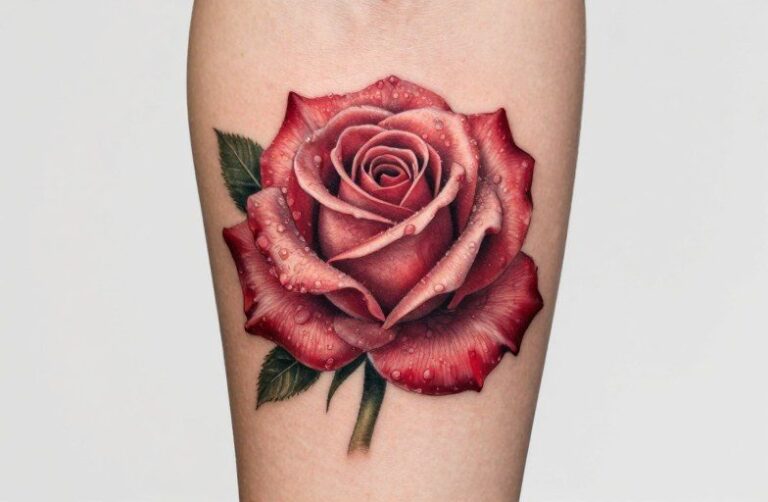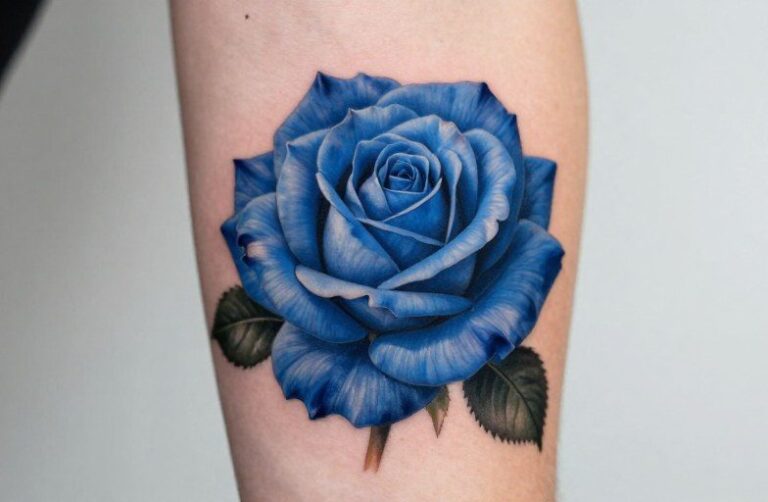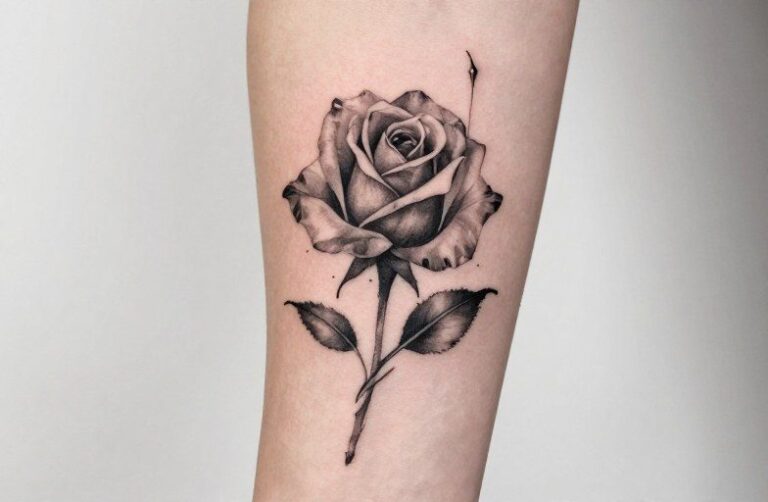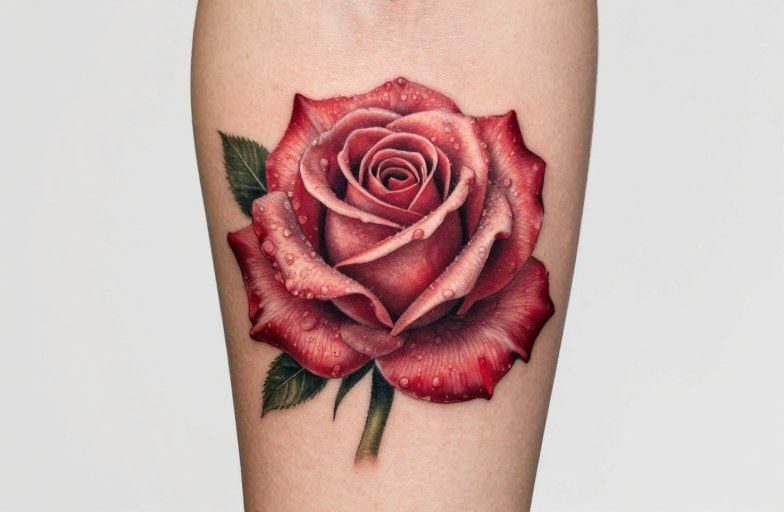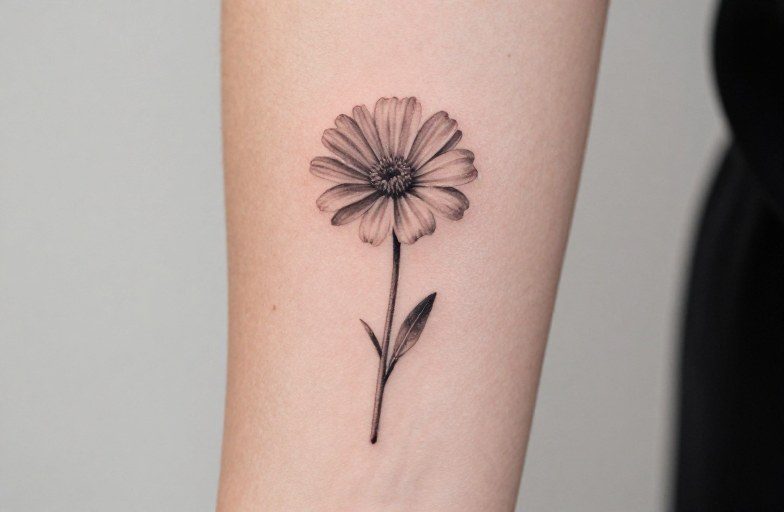
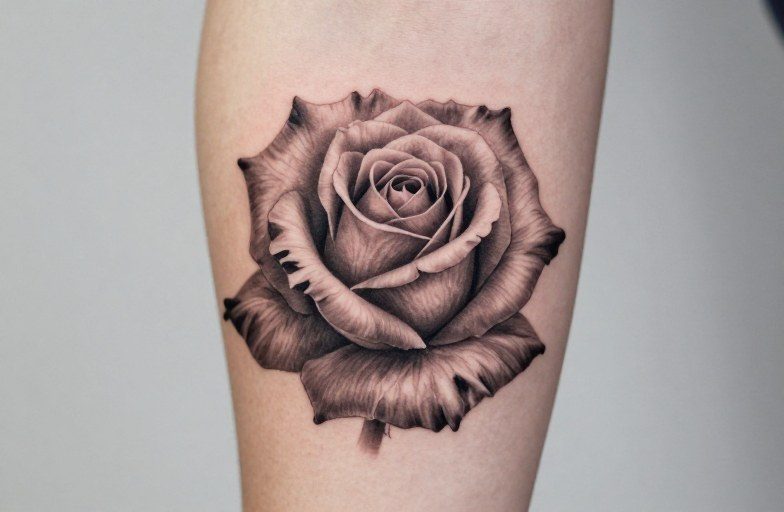
A realistic rose tattoo renders the flower as it appears in nature, petal edges that curl and catch light, subtle color shifts from deep crimson to soft pink, veins visible under thin tissue, drops of water or the powdery texture of pollen. The goal is not symbolism but botany. The artist studies reference photographs, sometimes works from life, and uses techniques borrowed from oil painting and photography to create depth on skin. Done well, the rose appears to sit on top of the skin rather than being embedded in it.
Modern Variations
Realism has loosened up in the last decade. Where early realistic roses aimed for photographic perfection, current approaches often blend techniques for more expressive results.
Neo-Traditional Realism
Some artists keep the accurate petal structure and light logic of realism but add bold outlines borrowed from traditional tattooing. This hybrid holds up better over time, the outline prevents the soft edges from blurring into soup, while still reading as a rose rather than a graphic symbol. The outline weight matters here: too heavy and it becomes illustrative; too light and it disappears in five years.
Single-Needle Detail Work
Single-needle or tight-three-needle groupings allow for almost engraving-like precision in stamens, thorns, and the fine hairs on a rose stem. The tradeoff is longevity. Those hair-thin lines can drop out during healing or fade to a soft grey within a few years. This variation works best on areas with minimal sun exposure and when the client understands that touch-ups will be necessary.
- Photorealistic: full color range, soft edges, highest maintenance
- Black and grey realism: focuses on value range, dramatic lighting
- Hyperreal with surreal elements: a rose dissolving into geometric fragments or smoke, still rendered with botanical accuracy
- Micro-realism: palm-sized or smaller, extreme detail at reduced scale
Cost & Sessions
Realistic roses demand time. A fully rendered bloom with leaves and stem, roughly the size of a hand, typically requires three to six hours for black and grey, longer for color. Artists who specialize in this style often charge $150, $250 per hour in major US cities, with rates climbing for artists with substantial waitlists. A complex piece covering a forearm might run $800, $1,500.
What Drives Price Up
Color realism costs more than black and grey, more ink changes, more saturation passes, more time. Adding background elements like soft focus foliage or atmospheric haze extends the session. Covering scars or working around existing tattoos requires additional design time and technical problem-solving.
Small, highly detailed roses are paradoxically expensive. The artist cannot work at normal speed; every mark must be precise. A two-inch micro-realistic rose on a wrist might take as long as a much larger simplified design.
Choosing the Right Artist
Not every talented tattooer can execute convincing realism. The skill set overlaps with painting more than with conventional tattooing. Look for an artist whose portfolio shows consistent light logic, highlights that make sense, shadows that ground the object, petals that read as three-dimensional rather than flat and shaded.
Portfolio Red Flags
Blurry or over-softened edges throughout the portfolio suggest the artist relies on diffusion rather than structure. Roses that look like photographs but lack clear focal points often age poorly; the eye needs somewhere to rest. Be wary of portfolios where every piece looks identical in lighting, overhead, flat, no variation. That indicates the artist works from a formula rather than solving each rose as a unique problem.
Questions to Ask
- How do you handle color saturation for long-term vibrancy?
- What reference material do you prefer, photos, life studies, or a mix?
- Can you show me a healed photo of a similar piece from six months or a year ago?
The healed photo request matters enormously. Fresh tattoos look sharper and more saturated than they will in six months. An artist with confidence in their aging process will have these images ready.
Aftercare Notes
Realistic roses, especially in color, are vulnerable during healing. The fine gradients that create dimension rely on ink sitting at precise depths; too shallow and it falls out, too deep and it blurs. Proper aftercare protects this investment.
The First Two Weeks
Keep the tattoo clean and lightly moisturized. Avoid submerging in water, no baths, no swimming pools, no hot tubs. Showers are fine, but direct water pressure on the fresh tattoo should be gentle. The plasma and ink that weep in the first days will form a thin scab if allowed to dry; keeping it slightly hydrated prevents thick scabbing that can pull ink out.
Sun exposure is the enemy of realistic color. A fresh tattoo sunburns through the skin, damaging the healing layers and the ink within them. Even after healing, UV light degrades the pigments that make roses read as red rather than pink or orange. Plan for SPF 50 on the tattoo, always.
Long-Term Maintenance
Color realistic roses benefit from a touch-up at roughly the five-year mark, sooner if on high-exposure areas like hands or forearms. Black and grey ages more gracefully but still softens. Moisturizing the skin regularly keeps the tattoo’s surface smooth, which helps the fine details read clearly.
Color vs Black and Grey
This choice shapes everything about the tattoo’s presence and lifespan.
Color Realism
Red roses in color hit with immediate impact. The eye reads them as roses without translation. Achieving true red rather than orange-red or pink requires understanding pigment behavior, some reds are notoriously difficult to saturate, others shift tone as they heal. Experienced artists layer warm and cool reds, add depth with burgundy or deep violet in shadowed areas, and use white or pale yellow for the brightest highlights.
The downside: color realism shows age faster. Reds fade toward pink, whites yellow or disappear entirely. Blues and greens in leaves tend to hold longer, creating an imbalance after years of sun exposure.
Black and Grey
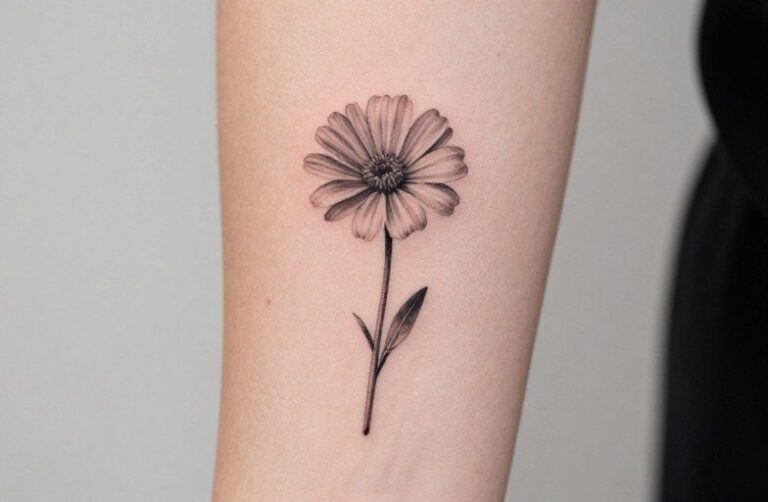
Without color, the artist must communicate the rose’s identity through structure alone, petal overlap, edge quality, the way light falls across curved surfaces. This demands stronger drawing fundamentals. The result is often more dramatic, more photographic in the noir sense, and significantly more stable over decades. A well-executed black and grey rose can look essentially the same at ten years as at one year, assuming reasonable sun protection.
Many clients choose black and grey for larger pieces or placements where color would compete with other tattoos. Others simply prefer the sober, timeless quality it brings.
Best Placements
Realistic roses need space to breathe. The detail that defines the style requires enough real estate that lines do not merge and colors do not muddy.
Where They Flourish
The outer upper arm, from shoulder to mid-bicep, offers flat, stable skin and enough canvas for a bloom at natural scale. The thigh provides similar advantages with even more room, ideal for a rose with full stem, leaves, and atmospheric background. The side of the calf, flat and visible, works well for vertical compositions.
The chest, over pectoral muscle, allows for large-scale work that moves with the body in a natural way. Ribs can work but require an experienced artist; the skin shifts dramatically with breathing, making precise saturation difficult.
Where They Struggle
Hands, feet, and fingers have thin skin, constant movement, and near-constant sun exposure. Realistic roses here blur quickly and require frequent refreshing. The inner bicep, while popular, presents challenges: the skin is soft and prone to blowouts, and the area is difficult to keep clean and dry during healing.
Neck and throat placements demand simplified versions; the scale is too small for true botanical detail, and the skin’s texture works against fine lines.
What to Remember
A realistic rose tattoo succeeds or fails on technical execution. The concept is simple, everyone knows what a rose looks like, which means there is nowhere to hide. Poor light logic, muddy color, or soft edges that will not hold are immediately apparent to any viewer, tattooed or not.
Invest in the artist, not just the design. The best reference photo in the world becomes meaningless in the wrong hands. Prioritize healed portfolio work, ask about their specific approach to color longevity or black and grey saturation, and budget for the time this work actually requires.
Protect the finished piece from sun. This is the single most controllable factor in how your rose ages. Everything else, ink quality, needle technique, your own skin’s behavior, is largely determined by the time you leave the shop. The aftercare is your responsibility, and it matters for years, not weeks.
Realism is not a style that forgives shortcuts. A rose that looks alive on day one should still look like a rose in ten years, even if the edges have softened and the color has settled. That longevity is the real mark of quality.
Frequently Asked Questions
How small can a realistic rose tattoo be before it starts to blur?
Palm-sized is generally the practical minimum for a fully detailed realistic rose. Smaller than that, and the linework needed for petal edges and stamens becomes too fine to hold. Single-needle detail can push smaller, but expect faster fading and plan for touch-ups.
Why do realistic rose tattoos sometimes look orange or pink instead of red after healing?
Red pigments are notoriously unstable in skin. Some reds contain organic compounds that break down faster than others, and individual skin chemistry affects how they settle. Experienced artists layer multiple red tones and use darker burgundy anchors to maintain depth as the brighter top tones fade.
Can a realistic rose tattoo cover an older, stylized rose tattoo?
Yes, but with constraints. The new rose must be larger than the old one, and the old tattoo’s dark lines may limit how light the new piece can read. Black and grey realism covers more effectively than color, which can turn muddy over existing dark ink. A consultation with the specific artist is essential.
How long should I wait between sessions if my realistic rose is being done in multiple sittings?
Three to four weeks minimum for most areas. The skin needs to complete its initial healing cycle before being worked again. Rushing back in too early damages the healing tissue and compromises the ink already placed. Your artist will assess readiness at the start of each session.