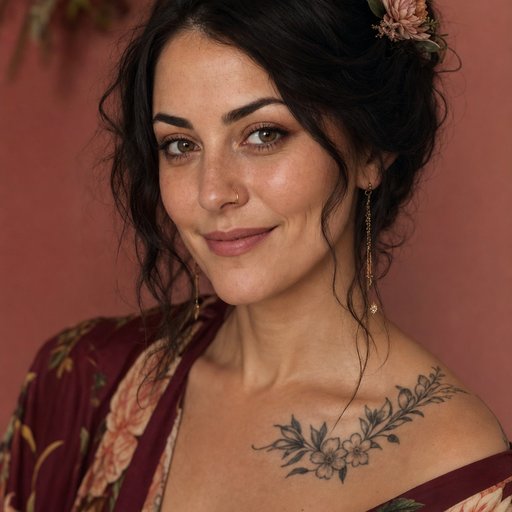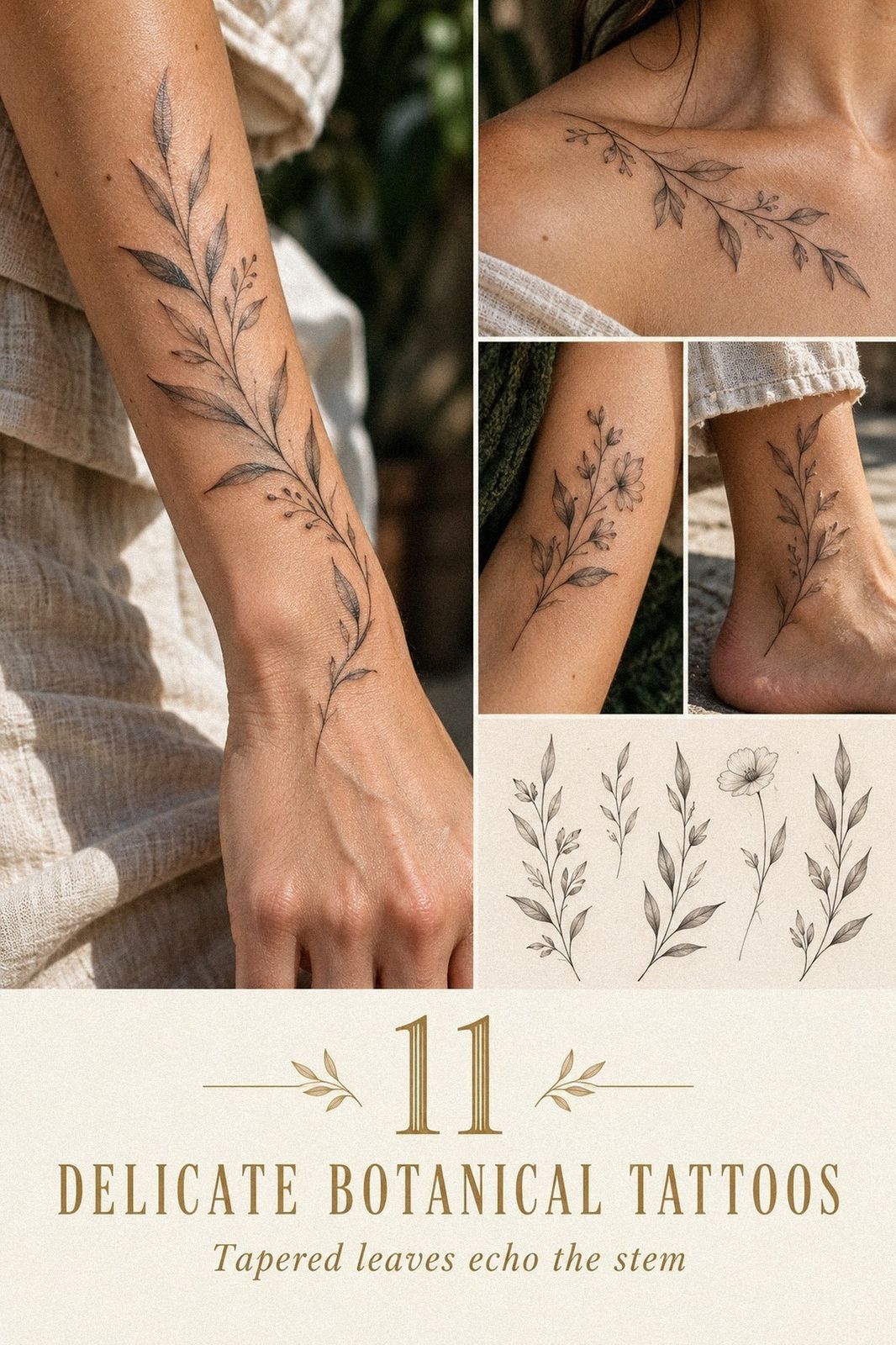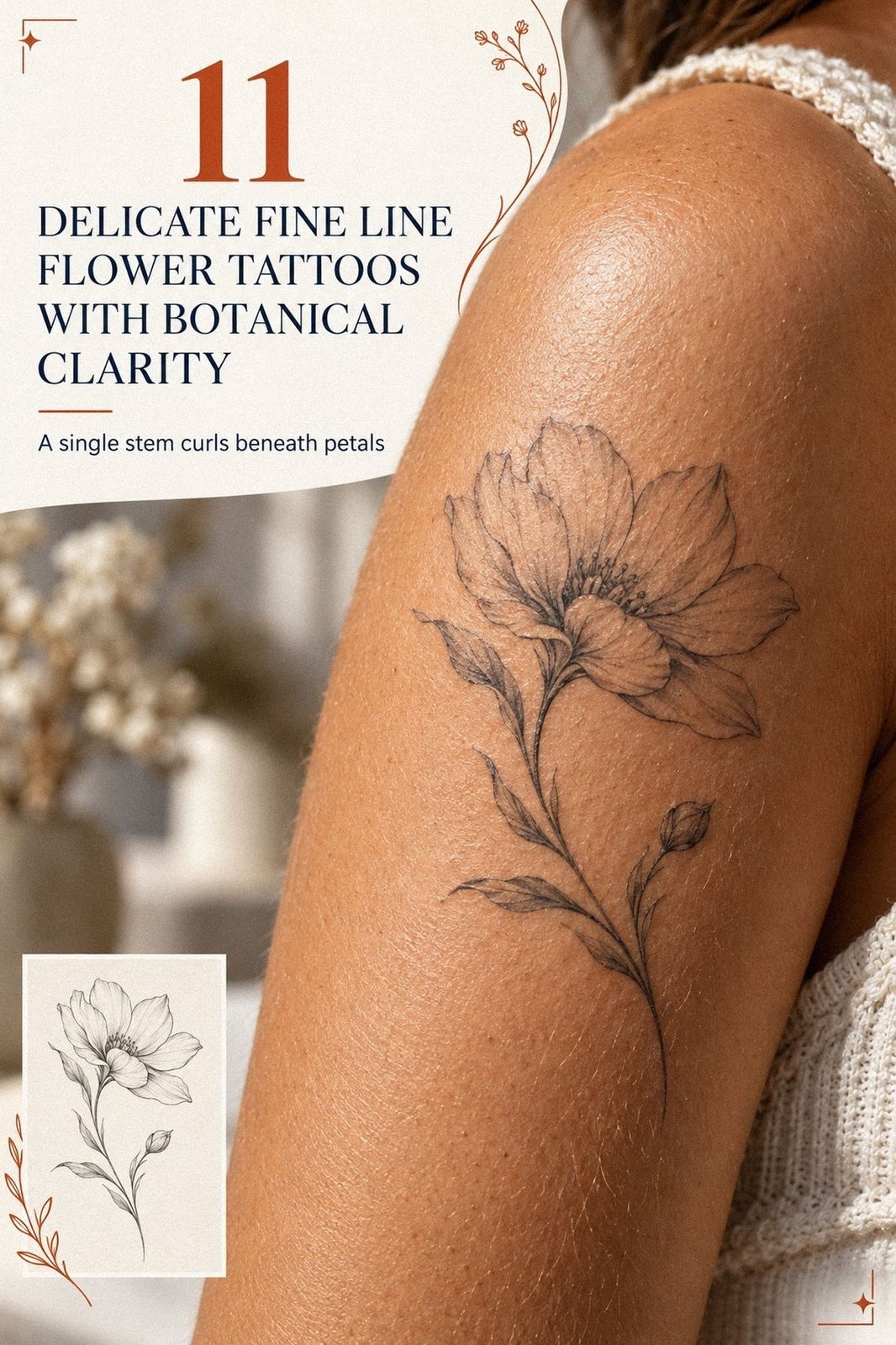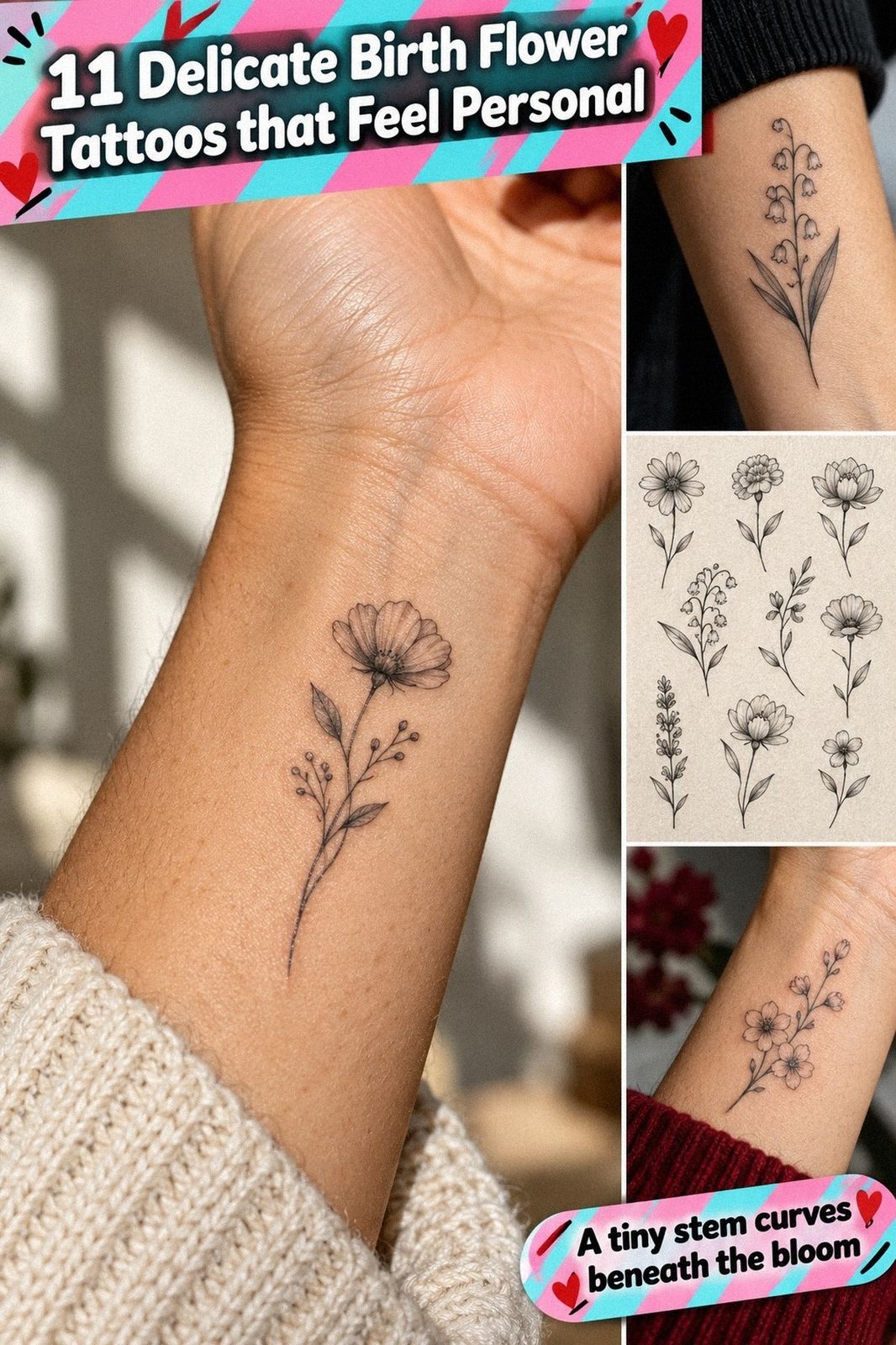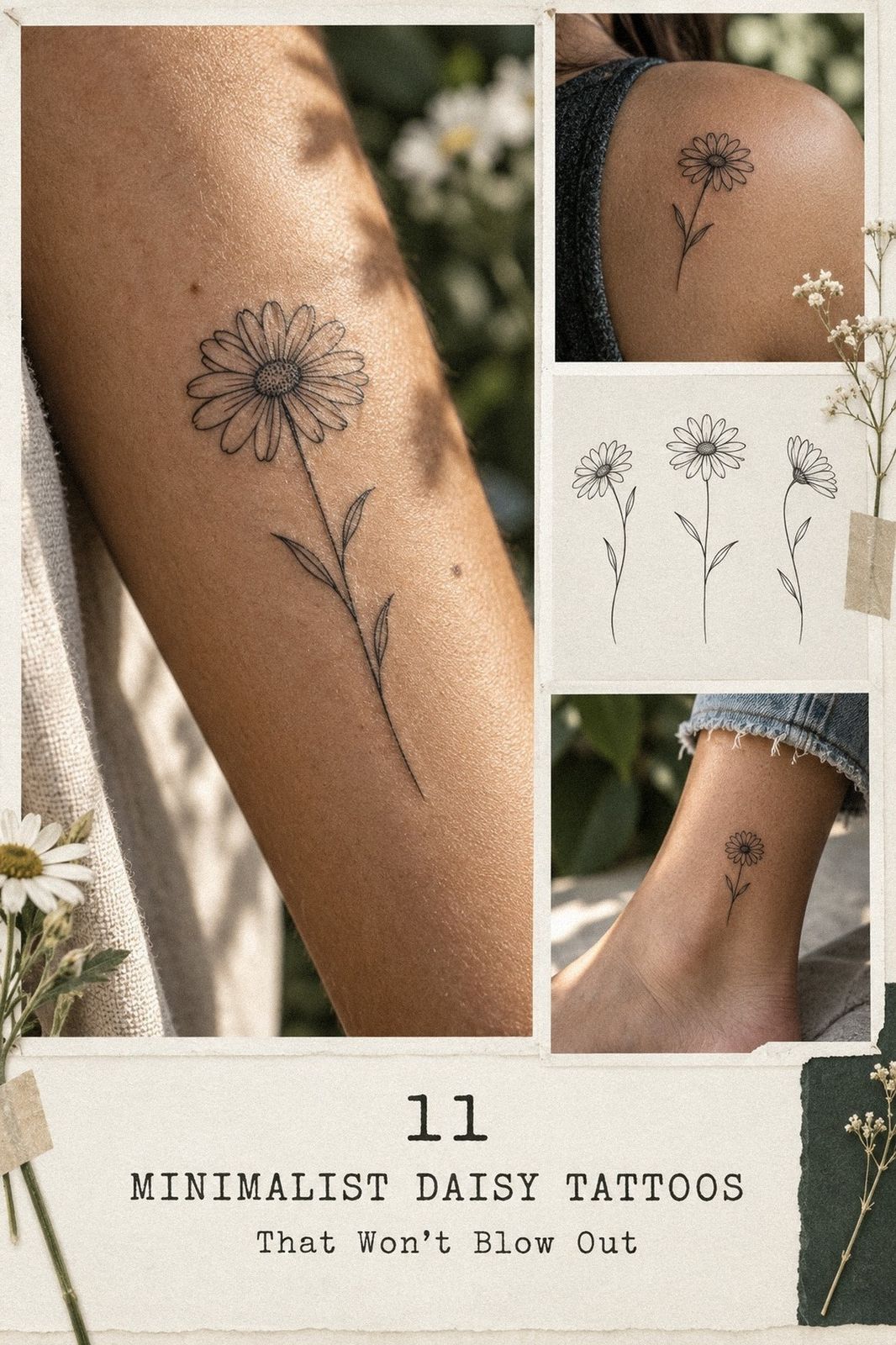
A minimalist daisy tattoo can fit a typical US shop budget of about $50 to $300, depending on size, placement, artist, and region. The hard part isn’t choosing a flower. It’s keeping the design crisp, personal, and wearable after the first excited sketch. I’ve learned that a clear plan saves more money than chasing extra detail.
You don’t need an ornate drawing to make the idea meaningful. You need the right line weight, sensible placement, and enough breathing space around the bloom. This guide walks you through each choice, from the first outline to healing.
- Start With a Crisp Single-Line Daisy
- Pick Tiny Petals for Minimalist Detail
- Place Your Daisy Along the Wrist
- Keep Stem Lines Thin and Balanced
- Plan Meaningful Leaves Around the Bloom
- Choose Bold Ink for Sharp Contrast
- Add Symbolic Details Without Visual Clutter
- Test Unique Daisy Shapes Before Tattooing
- Match Fine Linework to Your Skin
- Protect Delicate Ink During Healing
- Highlight Your Small Daisy With Placement
1Start With a Crisp Single-Line Daisy
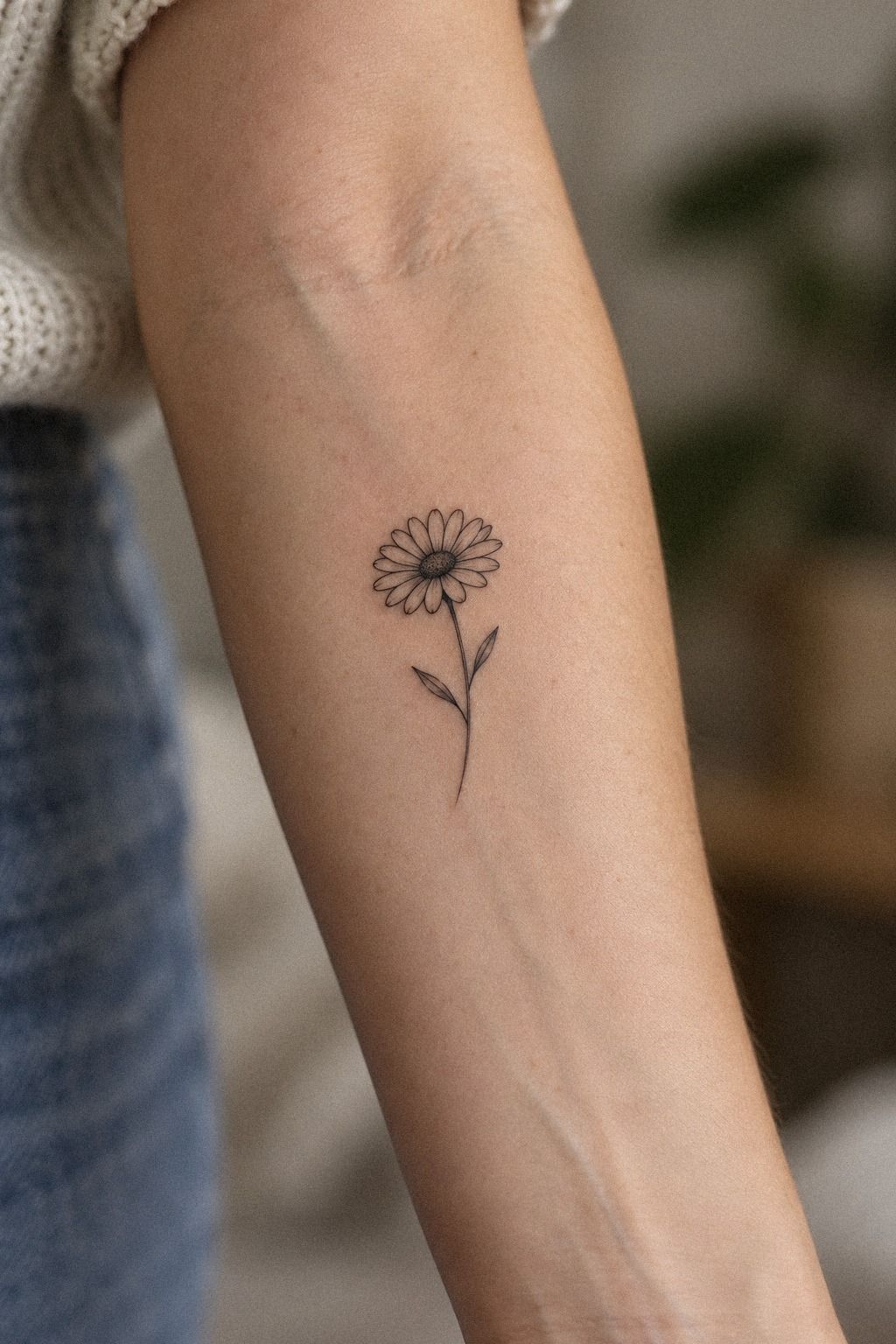
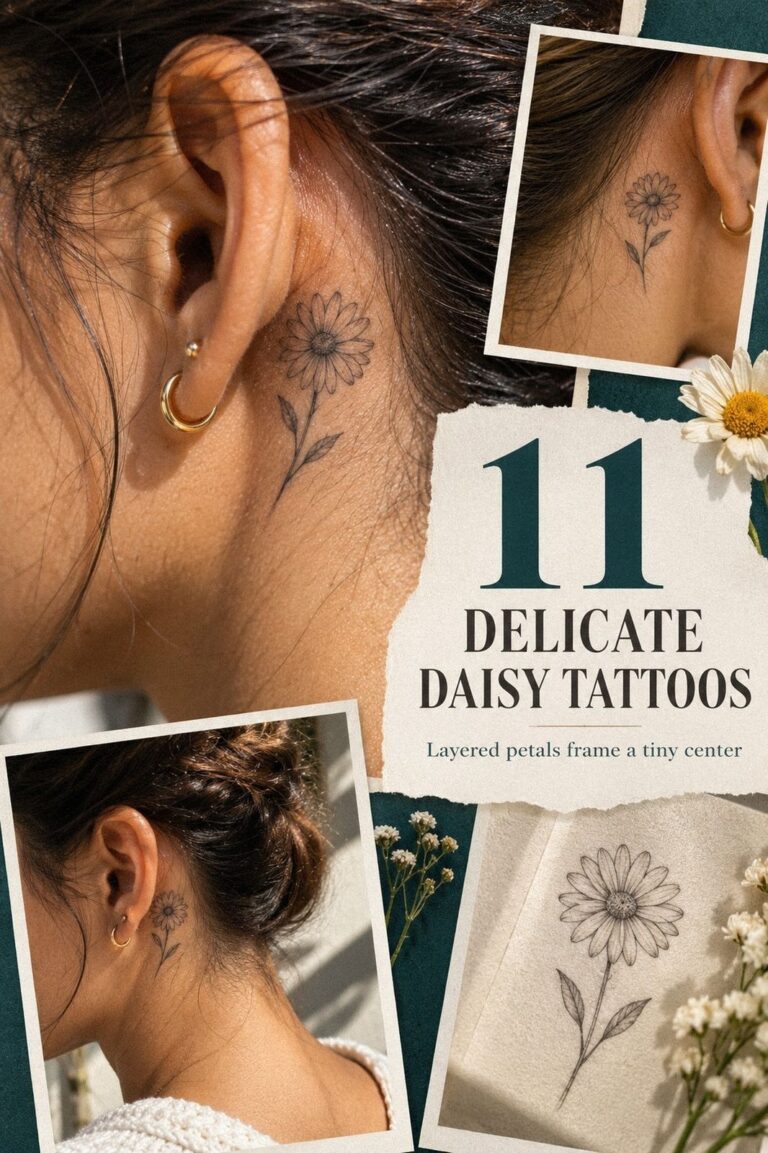
Begin with one continuous-looking outline instead of a crowded illustration. Your artist can sketch five rounded petals around a small dotted center, then connect the bloom to a short stem. The Single-Line Test is simple: if you can’t recognize the daisy at a glance on transfer paper, the design is carrying too much detail.
Keep the outline crisp and minimal. That is the whole win!
Ask yourself whether you want the flower to look delicate or slightly fierce. A small daisy on the calf can feel personal without being overly visible, and your artist can keep the curve aligned with the leg.
I’ve found that a compact design gives you more flexibility than a sprawling botanical drawing. You won’t need extra shading to make it expressive.
For this first pass, choose one clear petal shape and repeat it with small variations. A 3RL needle can create a fine outline, but your artist should decide the exact configuration after seeing your skin and intended size. Don’t copy a reference so closely that the result loses your personality.
If you want a subtle color direction, terracotta or muted olive accents can add character without overwhelming the linework. Compare this approach with these tiny daisy tattoo ideas.
The strongest examples usually have fewer marks, stronger spacing, and a more understated silhouette. Your goal is an elegant flower that still reads cleanly from several feet away.
A slightly irregular petal can also make the flower feel more human. Perfect symmetry may look polished on paper, but a tiny difference in curve or angle often creates a more personal result. I’d rather see one memorable detail than five decorative ones competing for attention.
2Pick Tiny Petals for Minimalist Detail
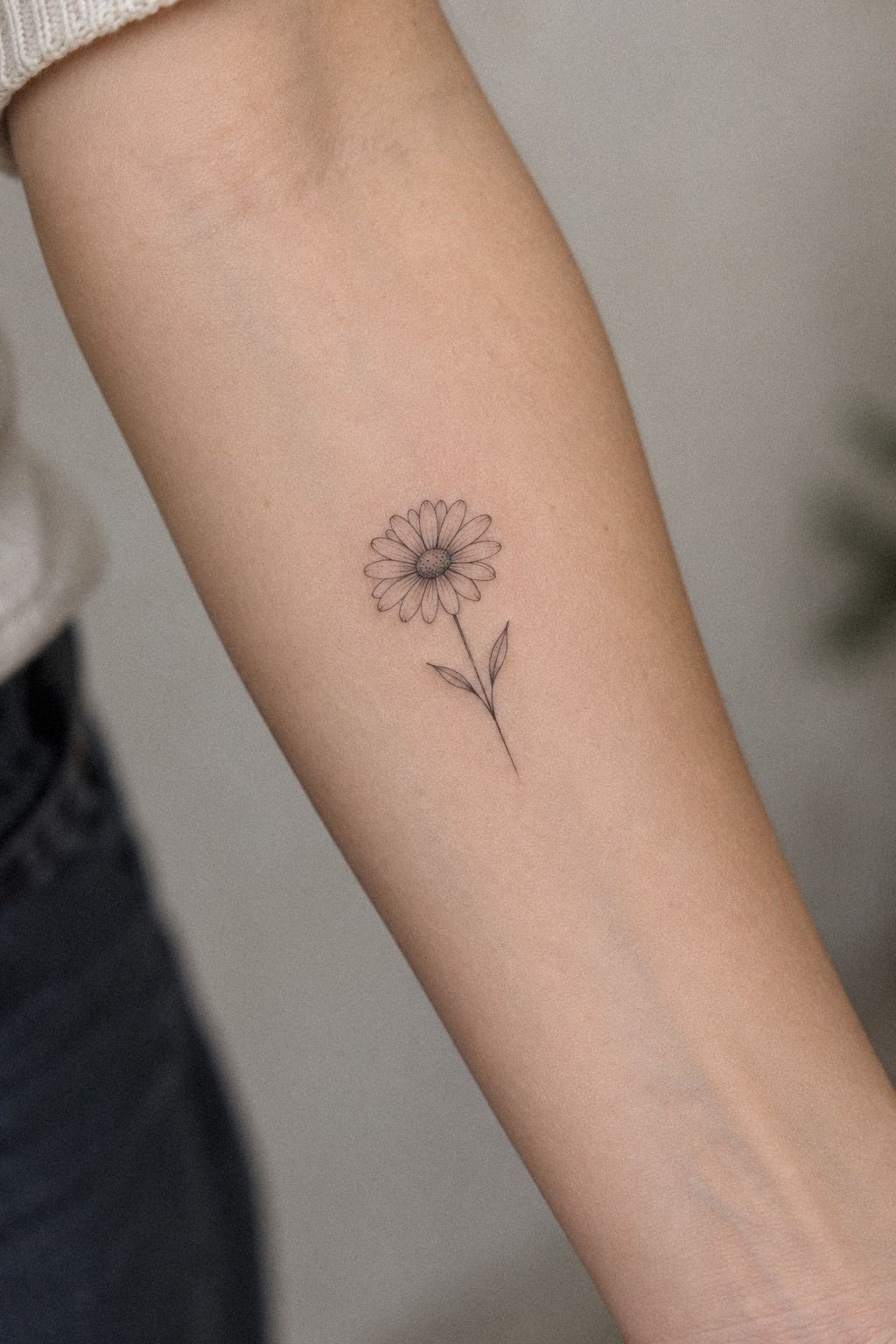
Tiny petals work best when you treat each one as a separate shape, not a miniature lace pattern. On the sternum, a dainty bloom can sit neatly below the collarbones, but your artist needs enough open skin between the petals for the outline to remain legible. The Tiny-Arc Rule keeps the flower graceful: each petal should curve toward the center without touching its neighbors.
Look closely at the black tattoo ink your artist uses and ask how it behaves in fine linework. A deep charcoal outline with a restrained clay accent can look sharp on medium warm ivory skin, while a softer grey wash may lose definition sooner.
I’d skip decorative interior stripes here. They seem intricate on a screen, but they can merge as the lines settle.
Your sternum design should also account for movement. Breathing, posture, and skin tension can subtly change how the flower appears.
If you’re choosing this spot, let your artist place the sternum stencil while you stand naturally. You’ll see whether the daisy stays balanced when your shoulders relax.
For another delicate direction, browse these small daisy tattoo references. You can compare petal spacing, center size, and outline weight before your consultation.
A meaningful design doesn’t need a symbolic paragraph attached to every petal. Sometimes the flower’s quiet simplicity is what makes it personal.
If your petals are extremely small, ask whether the center should remain open. A hollow center can age more clearly than a dark dot packed between fine lines. That choice may seem minor, but it can decide whether the bloom stays readable years later.
3Place Your Daisy Along the Wrist
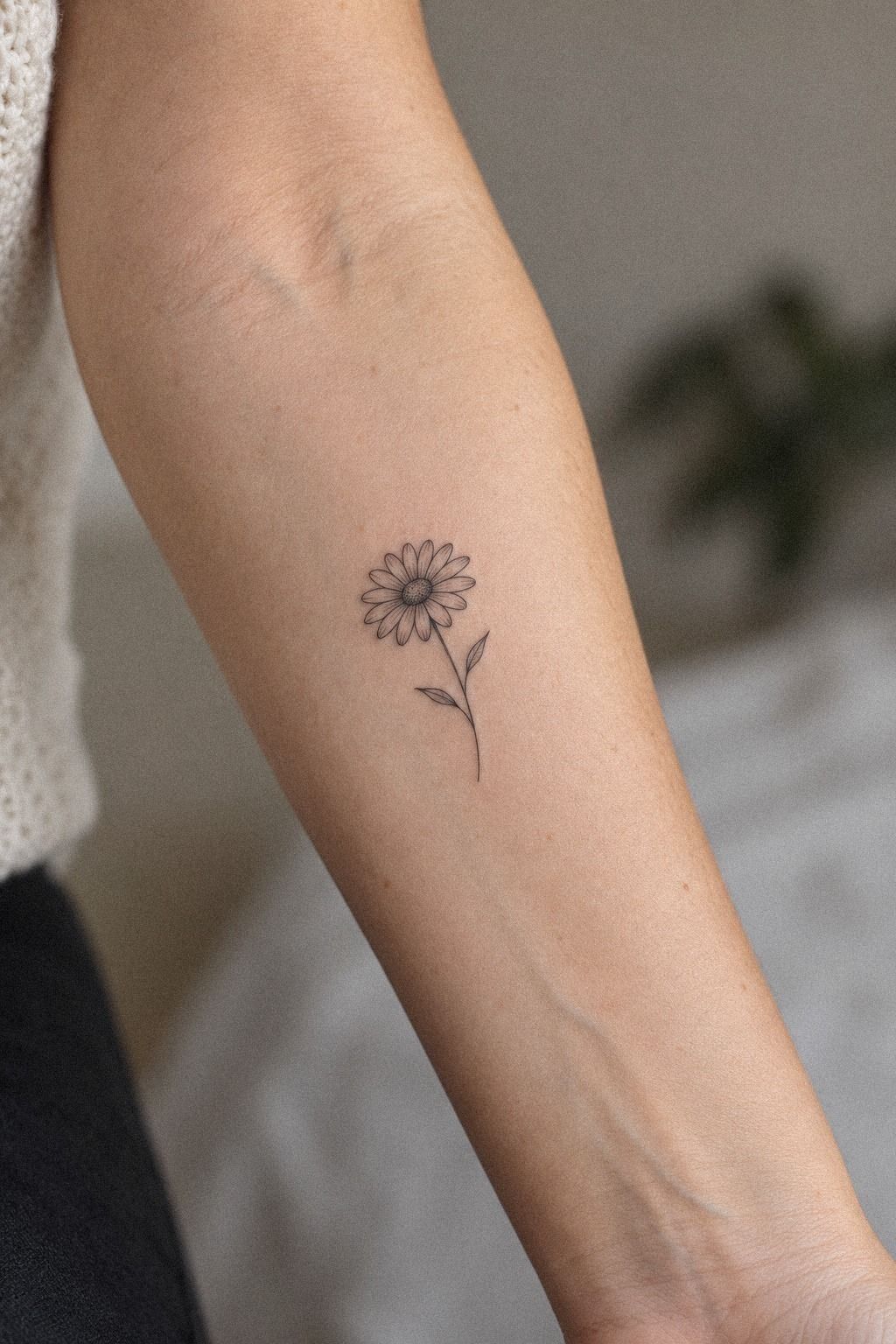
The wrist rewards a compact design with a strong outer contour. A plum center, soft grey petals, or a restrained rose-gold accent can make the daisy feel distinctive without sacrificing clarity.
Keep the bloom away from constant rubbing whenever possible. A wrist placement near a watchband may need slightly more open spacing, while the inner wrist can support a smaller, more private flower. Ask your artist to turn the stencil until the stem follows your natural wrist line.
4Keep Stem Lines Thin and Balanced
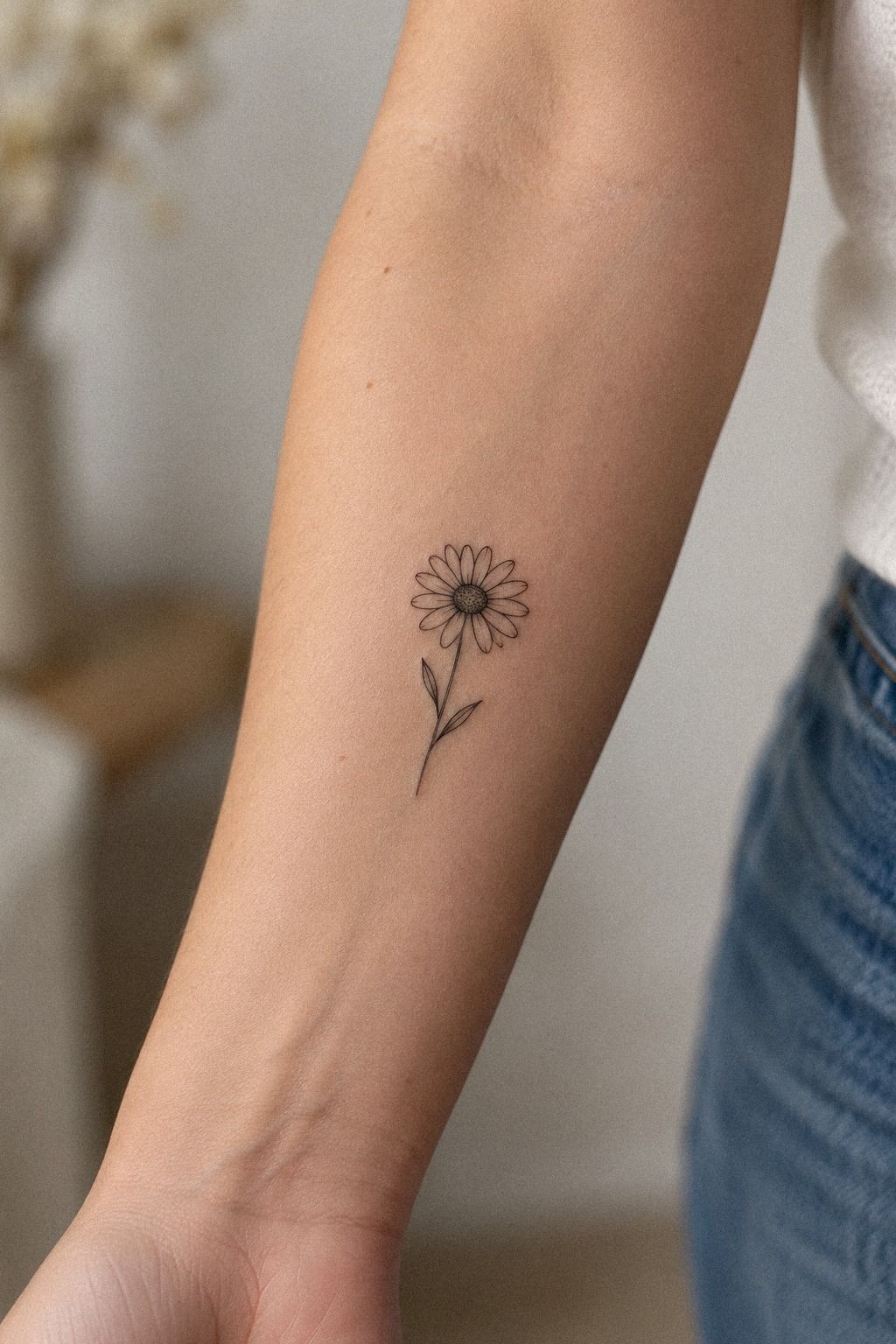
A thin stem should support the bloom without competing with it. For a rib placement, your artist can angle the stem slightly along the body’s natural curve, then leave the leaves small and open. The Balance Line method gives the daisy a flowing shape: the flower carries the visual weight, while the stem leads the eye downward.
Your ribs will move as you breathe, so the stencil should be checked while you’re standing and sitting. A sterile stencil lets you see whether the stem looks graceful or awkward when your torso changes position.
Don’t choose a long stem simply because the reference has one. A shorter line can look more polished and age more clearly.
I prefer a single stem over several crossing stems in this location. Crossed lines can make a small daisy look muddy, especially if you’re aiming for an understated result. If your artist suggests a slight curve, listen to the reason behind it.
The curve may help the tattoo follow your anatomy instead of fighting it.
A small leaf can create a visual pause between the bloom and the lower stem. Keep it open enough to read as a leaf, though. If it turns into a dark diamond after healing, it won’t add the graceful detail you intended.
You can explore more stem-based references in this collection of minimalist wildflower tattoos. Your best version may be less ornate than the first sketch, and that’s fine. Keep the line crisp, the spacing deliberate, and the center easy to read.
5Plan Meaningful Leaves Around the Bloom
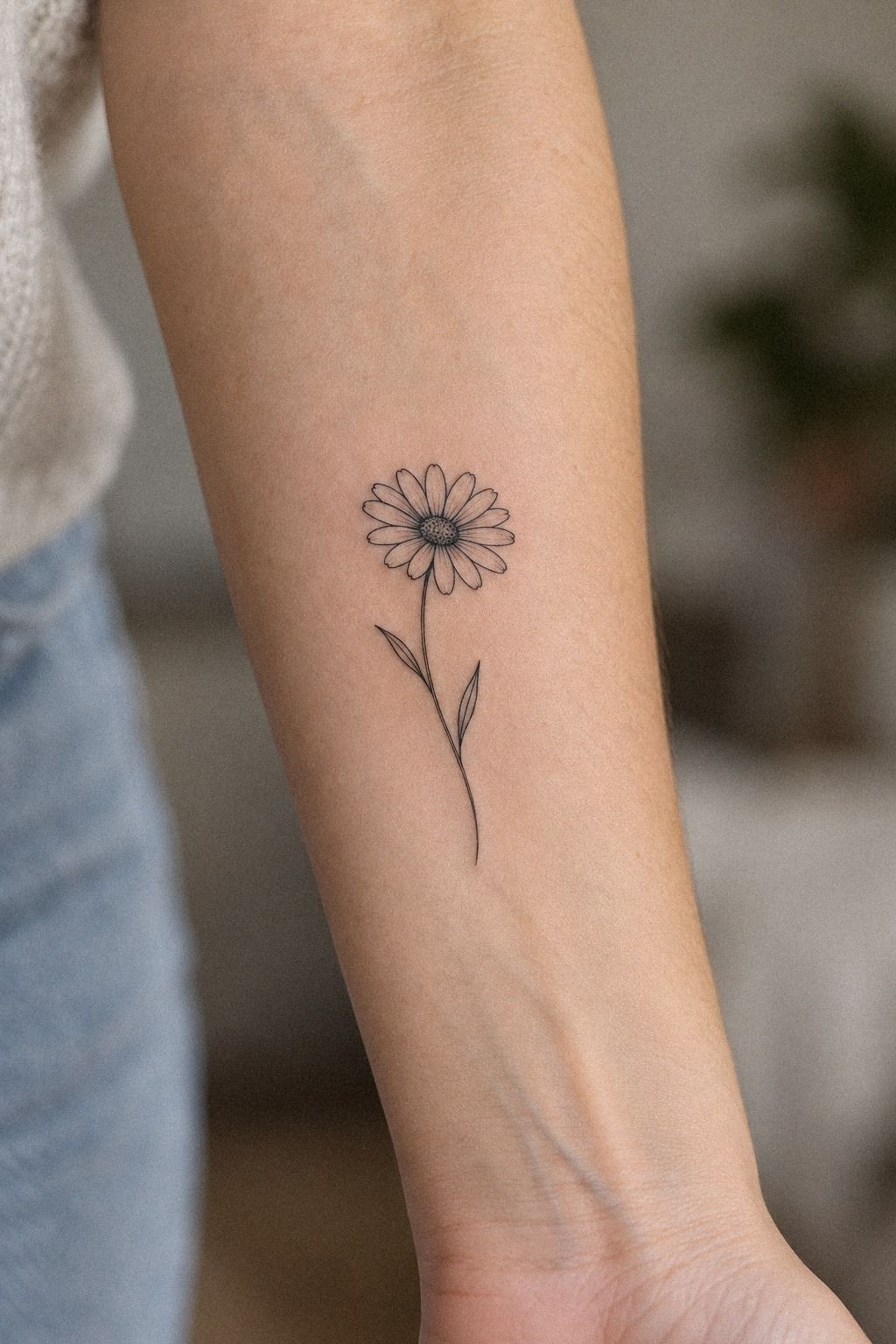
Leaves can add symbolism, but they shouldn’t become filler. Choose one or two shapes that support your story, such as a narrow leaf for resilience or a rounded leaf for softness.
The Meaningful Leaf Rule asks you to name the reason for every added mark. If you can’t explain why a leaf belongs there, your design probably doesn’t need it.
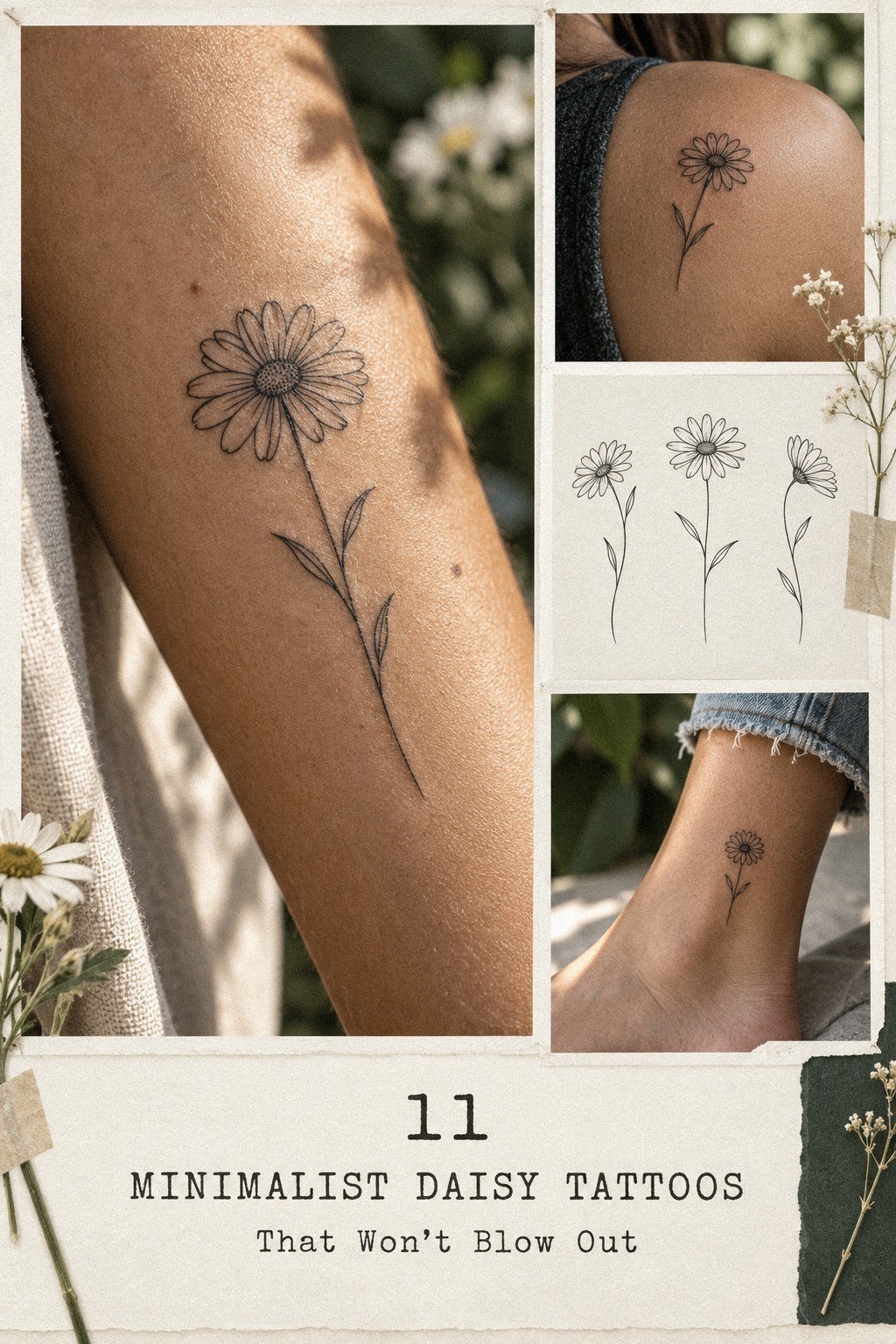
On a flash sheet, compare several daisy variations before choosing one. A black transfer sketch can show whether a leaf points toward the bloom or pulls attention away from it.
Your eye should land on the flower first, then travel naturally along the stem. That hierarchy keeps the design harmonious and expressive.
I’d skip a dense cluster around a tiny daisy. It may look ornate on paper, but the negative space disappears once the piece is reduced to skin. A single leaf can feel more polished than four competing shapes, particularly when you’re working with a modest shop budget.
If you want a botanical comparison, look at these minimalist lavender tattoo ideas. You can borrow the graceful stem movement without copying the subject. Emerald, cream, or a restrained gold-toned accent can shift the mood while keeping the final flower personal.
Leaves can also change the emotional tone. Pointed leaves may feel sharper and more daring, while rounded leaves can make the same daisy seem softer.
Neither choice is automatically better. It depends on the story you want the flower to carry.
6Choose Bold Ink for Sharp Contrast
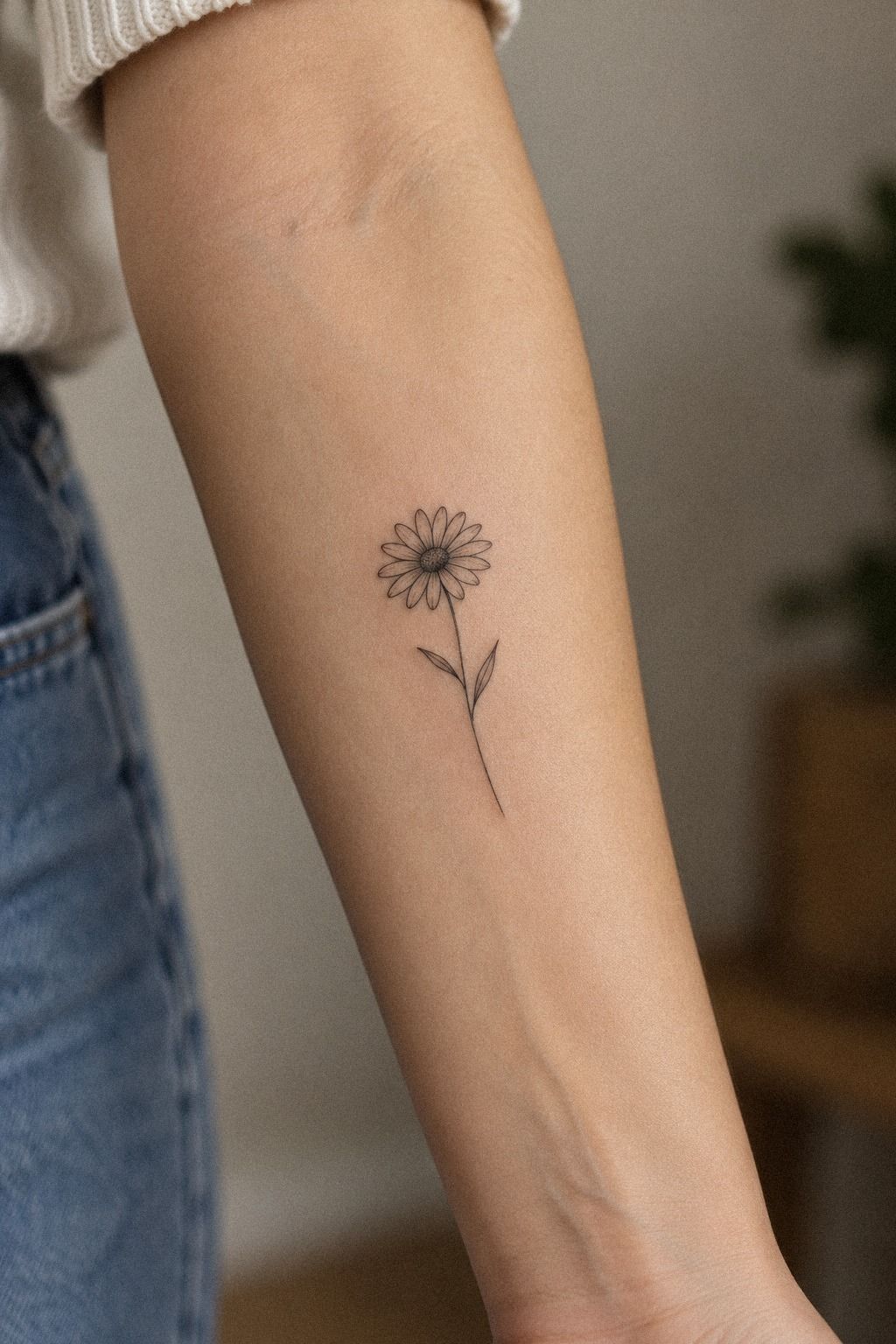
Bold ink doesn’t mean a large tattoo or a heavy outline everywhere. A confident black contour with a small forest-green or rust accent can create sharp contrast while keeping the flower compact.
Ask your artist where stronger contrast will help most. The center, outer petals, and stem do not all need the same weight. A bold black outline can anchor the design, while lighter color remains reserved for one meaningful detail.
7Add Symbolic Details Without Visual Clutter
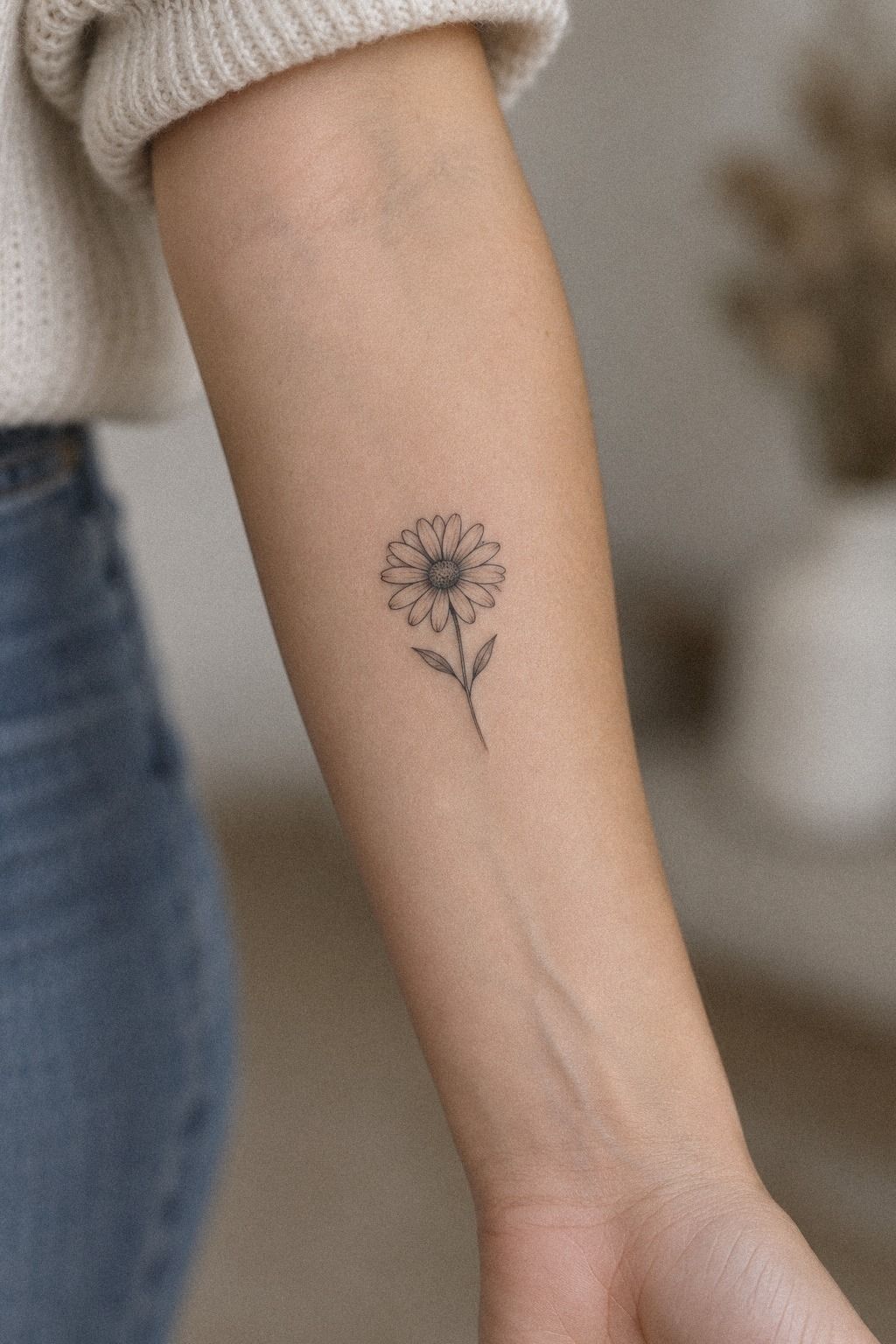
A tiny dot, initial, birth month reference, or small star can make your daisy more meaningful. Start with one symbolic detail, then pause.
The Negative-Space Promise is that your skin should still show between every mark. A fine black dot near the center may be enough to suggest a memory without turning the bloom into a coded illustration.
Write down what you want the daisy to represent before your consultation. Your reason might be family, renewal, a particular season, or a person who gave you courage. That private meaning can guide the design, but it doesn’t need to be obvious to anyone else.
Subtle can be powerful.
I’d avoid adding text beside a very small flower unless the lettering can be scaled large enough to remain crisp. Custom lettering is tempting, but it often loses sharpness faster than a clean symbol. If you’re working within a budget, spend the money on strong placement and line quality first.
For a dusty-rose, charcoal, or muted brass-toned direction, look through these minimalist lotus flower designs. You’ll see how one central idea can carry an entire composition. Your daisy doesn’t need five separate meanings to feel sacred, personal, or empowering.
If the symbol matters only to you, let it stay small and quiet. A hidden dot beneath a leaf can carry more emotional weight than an obvious quote. The most meaningful detail isn’t always the one other people notice first.
8Test Unique Daisy Shapes Before Tattooing
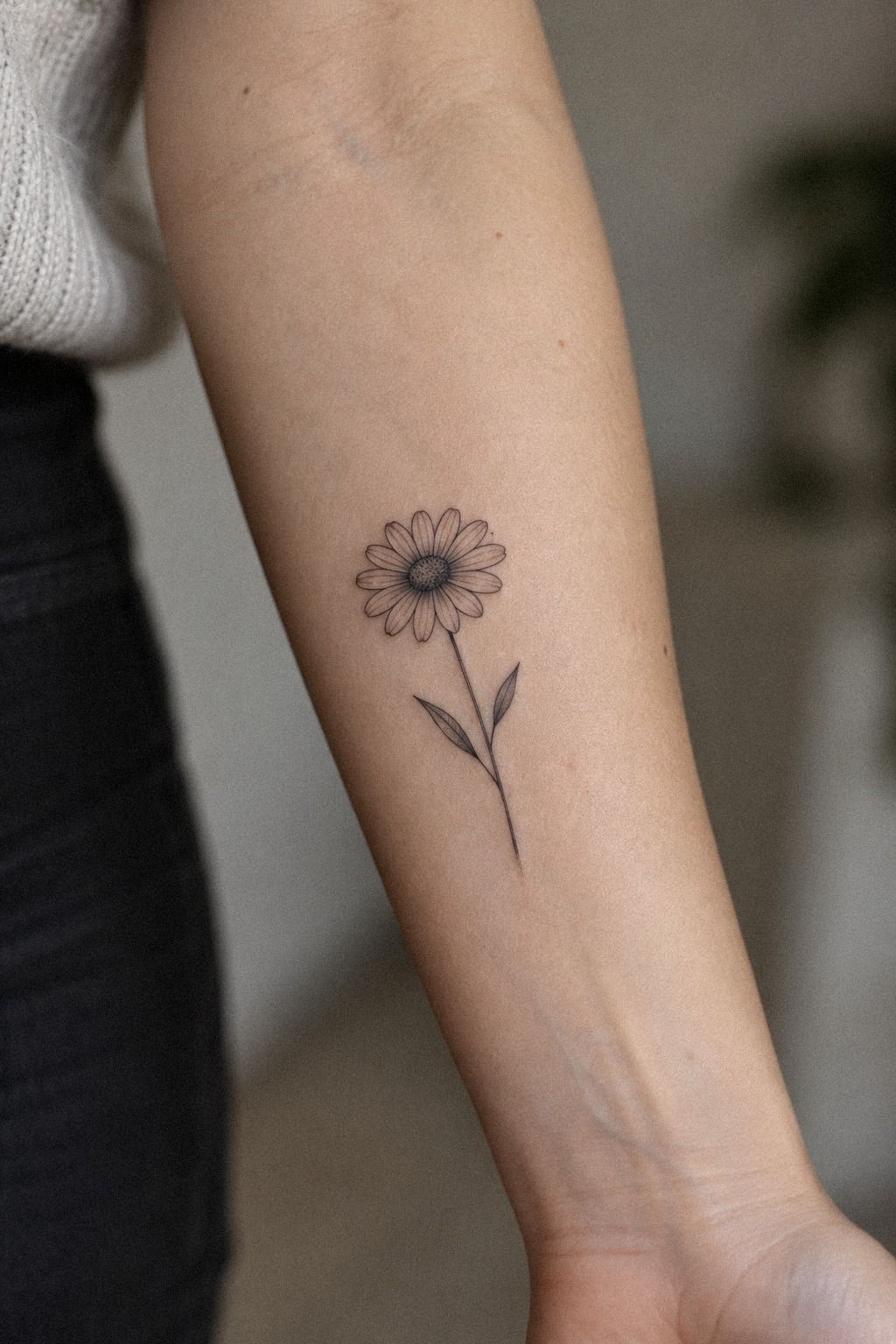
Not every daisy needs perfectly even petals. You can choose rounded petals, narrow petals, a slightly tilted bloom, or a center with tiny dots instead of solid fill.
The Shape Test means trying at least three sketches on white stencil paper before your appointment. Your favorite version may surprise you once you see the options at actual size.
Check each stencil in natural light and from the distance where you’ll usually see it. A design can look striking close up and disappear from several feet away, although your tattoo should be judged on skin and in motion. I like comparing the sketches after a few hours because the first exciting option isn’t always the most timeless.
If you’re considering the ankle, keep the design away from constant shoe friction when possible. A small daisy can look playful there, but straps and socks may irritate fresh skin. Your artist can suggest a slightly higher ankle placement that keeps the flower visible while reducing daily rubbing.
For more shape variations, save these unique minimalist daisy tattoo ideas. You don’t need a dramatic redesign. One altered petal or a tilted stem can make your flower feel distinctive while preserving a crisp, minimal structure.
Try rotating the stencil slightly before you decide. A flower that looks ordinary when it points straight up may feel more expressive when it follows the natural angle of your arm, shoulder, or rib line.
9Match Fine Linework to Your Skin
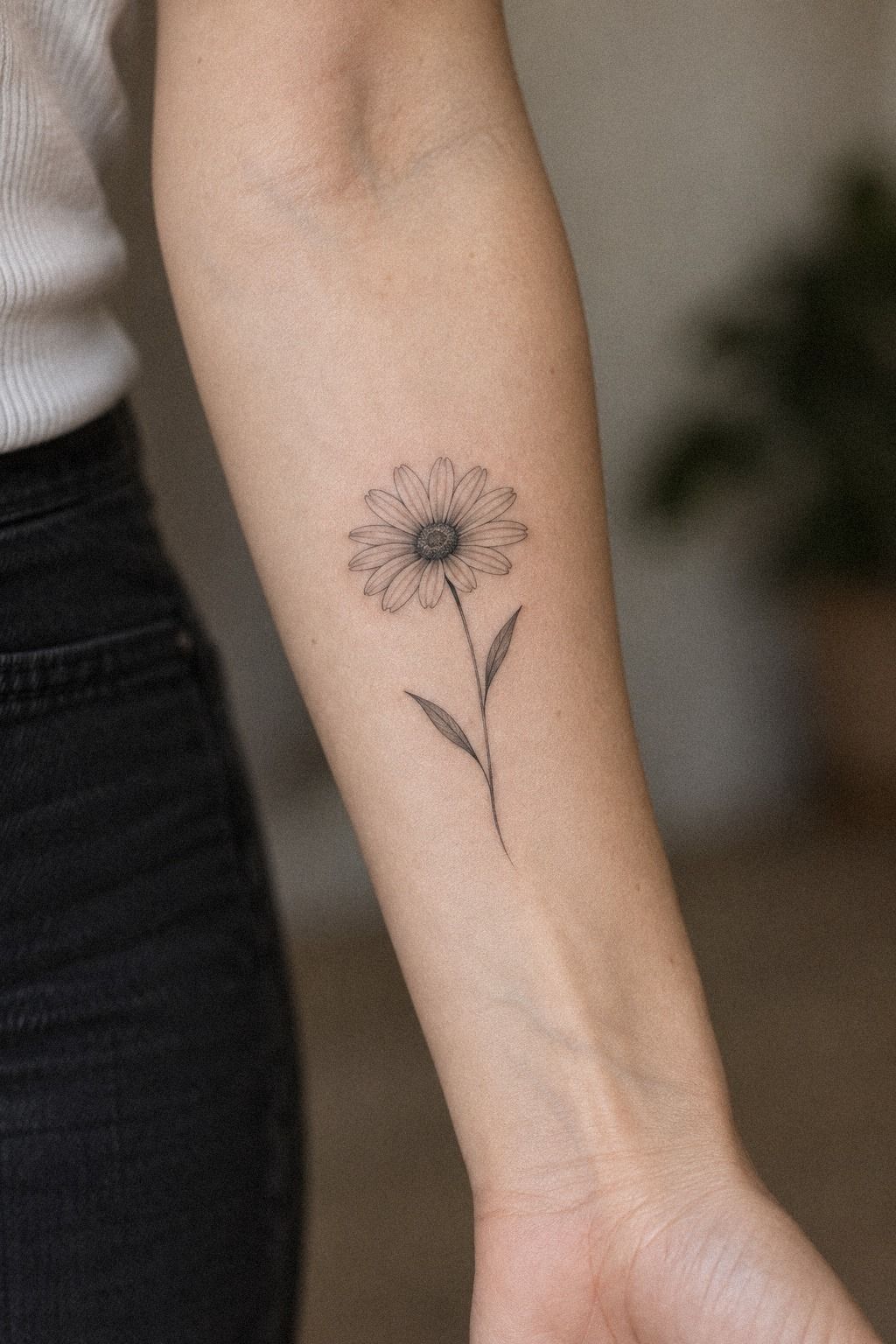
Fine linework should be chosen with your skin, lifestyle, and placement in mind. On olive-toned skin, a delicate daisy can look sleek and refined, but your artist still needs to select a line weight that won’t vanish too quickly.
The Skin Match Rule puts healed readability ahead of an ultra-thin reference. Start by discussing your olive-toned skin and how it changes the contrast.
Ask to see healed photographs, ideally several months after the appointment. A healed fine-line tattoo tells you more than a fresh photograph, because redness and surface shine can make new ink look sharper than it will later. Your artist should be comfortable discussing how fine lines may soften or widen over time.
You can also ask about sun exposure, skincare, and your usual clothing. If your collarbone sees frequent sunlight, an SPF 30 sunscreen becomes part of protecting the design after healing. Don’t assume delicate means fragile, but don’t treat it like it needs no maintenance either.
I’d choose a slightly stronger outline over the thinnest possible line if you’re unsure. A refined tattoo can still feel delicate, symbolic, and understated without being barely visible.
Midnight blue, copper, and ivory accents may look striking, but they still need enough contrast for your skin and placement. Compare your options with this minimalist tulip tattoo guide to study line weight and spacing across different flowers.
Your artist may recommend fewer petals or a more open center based on your skin. That isn’t a failure of the original idea. It’s a smart adjustment that protects the flower’s long-term clarity.
10Protect Delicate Ink During Healing
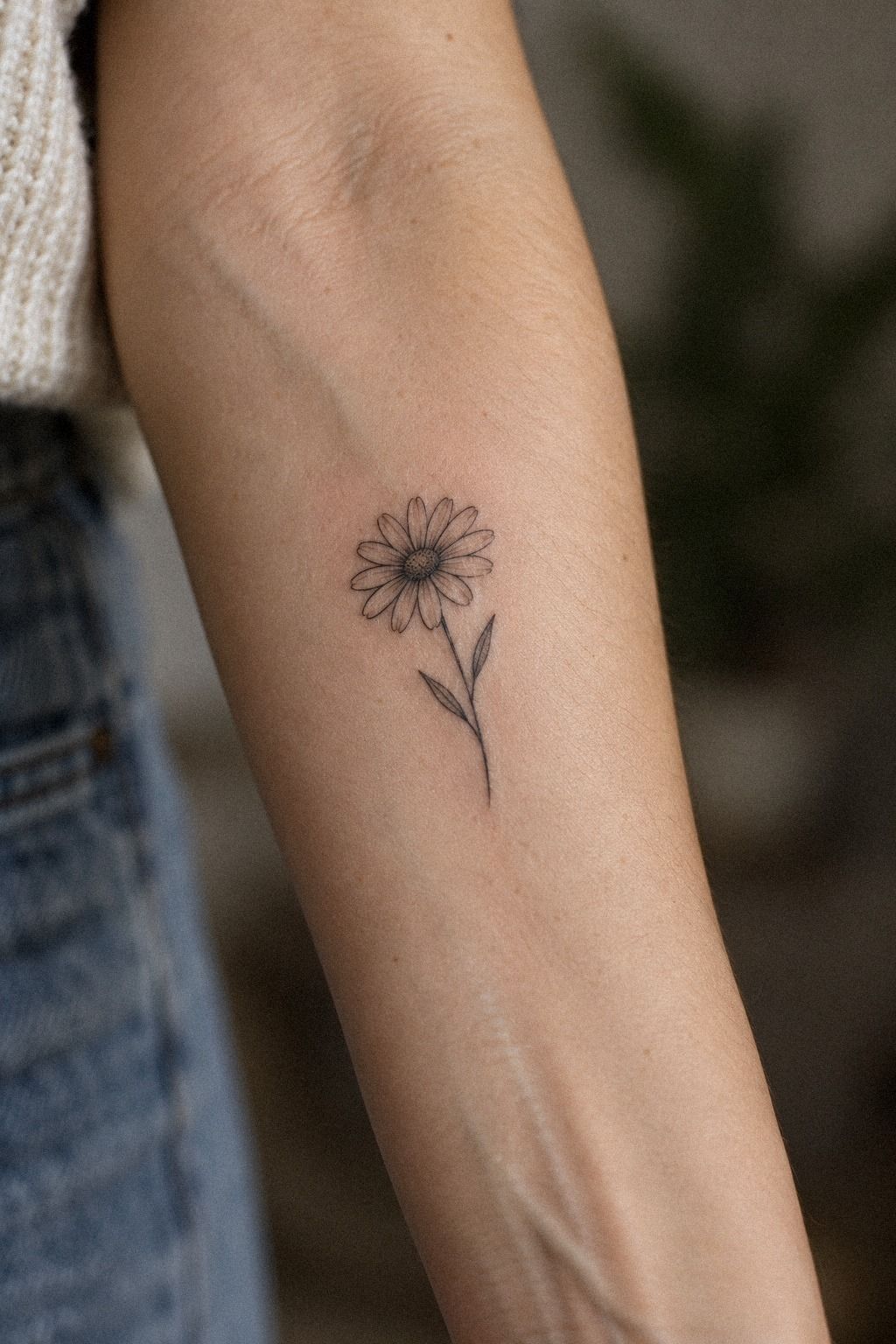
Fresh ink needs gentle care, not a complicated routine. Your artist will give you studio-specific instructions, but typical surface healing takes about 2 to 3 weeks, while complete healing can take roughly 2 to 3 months. Wash with a mild cleanser, pat dry, and apply the recommended amount of fragrance-free healing balm.
Don’t skip this!
The design may look softer than it did during the stencil stage. You shouldn’t judge the final result too early. Avoid soaking the tattoo in pools or baths during the initial healing period, and keep direct sun away from it while the surface settles.
A simple budget plan should include aftercare. You may spend about $50 to $100 at a shop minimum, or an artist may charge roughly $100 to $250 per hour, depending on region and reputation. A small daisy often falls around $100 to $300 in the US, but your quote will depend on the consultation.
Use the instructions you receive from your artist rather than combining several routines from social media. A mild cleanser and clean hands are usually more useful than a long list of specialized products.
You can read more about small proportions in these tiny peony tattoo examples. Your best aftercare choice is the one you can follow consistently, because clean healing protects both the crisp linework and the money you invested.
If the tattoo becomes unusually hot, increasingly swollen, or painful rather than gradually calmer, contact a qualified medical professional. Your artist can explain normal healing, but they aren’t a substitute for medical advice.
11Highlight Your Small Daisy With Placement
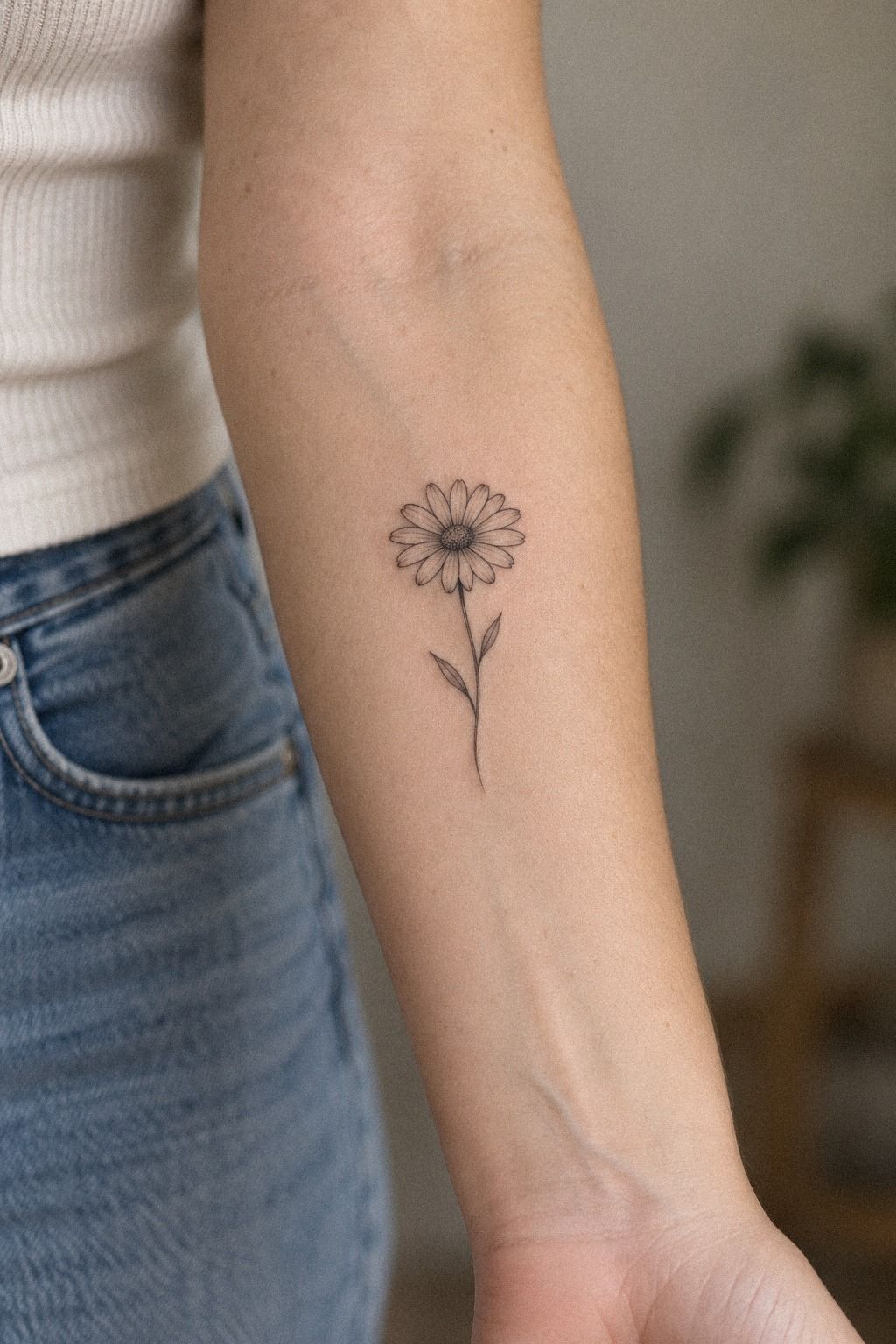
A shoulder placement gives your daisy a little more visual space and can work well on deep brown skin with a warm undertone. A terracotta or olive accent can add a vibrant note, while a clean black center keeps the flower readable.
Ask your artist to test the bloom where your shoulder naturally rests. A shoulder stencil may need a slight rotation so the petals remain balanced when your arm moves. Placement should support the flower’s shape, not force it into an awkward direction.
A Consultation Question That Saves Money
Before booking, ask what part of the design affects the price most. It might be placement, custom drawing time, size, or the studio minimum. A written quote lets you compare the actual plan instead of guessing from a general hourly rate.
Bring two or three references, but explain what you like about each one. Maybe one has a beautiful center, another has a graceful stem, and a third has the right scale. Your artist can combine the useful parts without copying a single design.
Ask whether a revision is included before the appointment. A consultation note with the agreed size, placement, and key details can prevent confusion later. You won’t need to spend extra time correcting a misunderstanding at the stencil stage.
If you want a symbolic reference point, compare the focused compositions in these minimalist lotus flower designs. One clear idea is usually easier to price, place, and refine.
Skin Tone Is Part of the Design
Skin tone isn’t an afterthought. It affects how contrast, saturation, and fine lines appear once the tattoo heals. Your artist should consider your skin undertone alongside placement and size, not treat every daisy as interchangeable.
On deeper skin, a clean black center and confident outer contour may read more clearly than extremely pale grey shading. On lighter skin, softer contrast may still remain visible, depending on placement and technique. The important question is how the finished design reads on you.
Look for a healed portfolio with a range of clients and comparable tattoo sizes. A striking fresh result doesn’t tell you how the lines settled. I’d rather see fewer examples with honest healing than a gallery full of only day-one work.
These minimalist lavender tattoo ideas can also help you compare stem density and contrast. Keep the reference, but let your artist adapt it to your skin instead of reproducing it mechanically.
The Design Rule I’d Keep
I’ve changed my mind about minimalist tattoos more than once. At first, I wanted every meaningful detail included, because removing a leaf or dot felt like losing part of the story.
Then I saw how quickly a crowded sketch became muddy at a small scale. The better decision was more disciplined: choose the flower, choose the feeling, and let the petal outline do some work.
The most timeless daisy I’ve seen wasn’t the most intricate one. It had a clear center, clean petals, and a stem that followed the body instead of fighting it.
That’s why I’d spend money on an artist with healed linework before spending it on extra decoration. A polished, delicate outline will serve you longer than a busy design that only looks impressive in a digital mockup.
Skin tone and placement deserve equal attention. A bold black center may read beautifully on deep skin, while a softer outline may suit a subtle wrist piece.
Neither approach is better in every case. Your artist should explain the tradeoff, show you healed work, and tell you when a reference needs to be simplified.
I also think budget decisions become easier when you stop treating every option as necessary. You don’t need an oversized session, multiple flowers, or custom lettering to make the tattoo meaningful.
You need enough time for a careful stencil and a clear conversation. A small, expressive daisy can be romantic, timeless, and quietly powerful without becoming a full botanical scene.
If you’re still undecided, make three versions: one crisp and minimal, one slightly bold, and one with a single symbolic detail. Wear the stencil if your artist allows it.
Look at it while walking, sitting, and wearing your usual clothes. That small test can reveal more than another hour of scrolling.
The design should feel personal before it feels impressive. That’s the standard I’d use, and it won’t steer you toward unnecessary detail.
For another restrained comparison, browse these unique minimalist daisy tattoo ideas. You may find that one unusual petal is enough to make the composition unmistakably yours.
Before You Book, Test the Stencil
A stencil test is where the abstract idea becomes a real placement decision. Ask for the transfer stencil to be checked from the front, side, and relaxed position. If the flower feels tilted in a way you don’t like, fix it before the needle starts.
Wear clothing similar to what you normally wear in that area. A shoulder tattoo may sit differently under a strap, while a wrist tattoo can disappear beneath a watch. Your usual clothing can reveal practical problems that a reference sketch can’t.
Give yourself a few quiet minutes with the stencil. Don’t decide while you’re rushed or distracted. A placement test can show whether you still like the shape once it becomes part of your body rather than an idea on a screen.
If you’re comparing more than one placement, these minimalist tulip tattoo references are useful for studying how small flowers sit on different body areas. Worth testing!
Budget Questions Worth Asking
The shop minimum may determine the price even if the daisy takes only a short session. Ask whether the consultation, stencil work, and touch-up policy are included. A shop minimum is often more relevant than an hourly rate for a tiny design.
You can also ask what would increase the cost. Extra leaves, custom lettering, multiple placement tests, or a larger bloom may all add drawing or tattooing time. Knowing the price of a design revision helps you make decisions without feeling pressured during the appointment.
A low quote isn’t automatically a bargain. Strong hygiene, thoughtful placement, and healed linework are part of what you’re paying for. I’d protect the quality of the design before cutting the budget to the absolute minimum.
For a second cost comparison, review the scale in these small daisy tattoo references. Keeping the bloom compact may help you protect money for skilled placement and careful execution.
One Detail I Would Skip
I’d usually skip tiny script beside a minimalist daisy. Tiny script can look romantic at first, but it needs enough size and spacing to remain legible. If the words matter, consider whether a simple symbol can carry the same meaning more clearly.
I’d also question decorative shading inside every petal. Decorative shading can make the sketch look intricate, yet it may reduce the clean, understated character that made you want a minimalist flower in the first place.
One carefully chosen dot may be enough. A symbolic dot can mark a person, date, or turning point without crowding the bloom. The strongest daisy designs often stop one detail earlier than expected.
If you want to compare how other flowers handle restraint, browse these tiny peony tattoo examples. The lesson isn’t to copy the flower. It’s to notice how much meaning a simple contour can carry.
What Makes a Daisy Feel Like Yours?
Meaning doesn’t have to come from a complicated symbol. It can come from the number of petals, the direction of the stem, or the place where you first saw that flower. Start with your personal meaning, then let the visual choices stay simple.
You might connect the daisy to a birth month, a family memory, a season of change, or a private promise. None of that needs to be written beside the tattoo. The design can remain quiet while the reason stays important.
If you love daisies because they feel cheerful, choose a slightly tilted bloom or a more open center. If you prefer a serious, classic mood, a steady stem and restrained petals may suit you better. Your favorite flower doesn’t need to follow someone else’s flash exactly.
Look through these minimalist lavender tattoo ideas if you want to study how a simple stem can shift the mood of a small design. A few graceful changes can make the daisy feel romantic, haunting, playful, or empowering without adding clutter.
What People Always Want to Know
How much does a minimalist daisy tattoo usually cost?
A minimalist daisy tattoo usually costs about $100 to $300 in the US, though a shop minimum may be around $50 to $100 and hourly rates often fall near $100 to $250. Your artist, region, size, and placement will affect the final quote. A clear stencil helps control unnecessary revisions.
Ask for a full estimate before booking. You don’t need to choose the cheapest artist if their healed work concerns you, and you shouldn’t pay for details that won’t remain readable. A written quote makes the budget easier to manage.
Are minimalist daisy tattoos a good idea for a first tattoo?
Yes, a minimalist daisy can be a good first tattoo because the design is compact, readable, and easy to personalize. A shoulder, forearm, thigh, or upper arm may feel more tolerable than ribs, feet, hands, or sternum. A simple outline also gives you a clear first experience.
Choose an artist who works confidently in fine linework and can show healed examples. You’ll want the flower to feel meaningful without requiring a long session. A small black center can keep the design expressive while the overall shape stays understated.
How do I choose a tattoo artist for a minimalist daisy tattoo?
Review an artist’s portfolio for clean linework, consistent spacing, and healed photographs. Look for someone who regularly creates minimalist or botanical tattoos, then confirm the studio follows sound hygiene practices. A healed portfolio matters more than a dramatic fresh photograph.
Bring two or three references and explain what you like about each one. Your artist should ask about size, placement, skin, and how visible you want the tattoo to be. A careful consultation is a strong sign that your design won’t be rushed.
How much do minimalist daisy tattoos hurt?
Pain depends on your personal tolerance and the location. Ribs, feet, hands, and sternum are often more painful, while the forearm, thigh, and shoulder tend to be more tolerable. A short session can make a small tattoo feel manageable, even if the placement is sensitive.
Tell your artist if you’re anxious or need a pause. You don’t have to prove anything by staying silent. A calm studio conversation can help you relax, and your artist can adjust the pace without compromising the result.
How long do minimalist daisy tattoos take to heal?
The surface usually heals in about 2 to 3 weeks, while complete healing can take roughly 2 to 3 months. Wash gently, moisturize as directed, avoid swimming during early healing, and protect the tattoo from direct sun. A gentle cleanser is usually enough for routine washing.
The design may look sharper or darker at first than it will later. You shouldn’t judge the final result while the skin is still settling. A fragrance-free moisturizer can support comfortable healing when used according to your artist’s instructions.
What’s the best placement for a minimalist daisy tattoo?
The best placement depends on visibility, pain tolerance, clothing, and how you want the lines to age. The shoulder, forearm, thigh, and upper arm are often practical choices, while the wrist offers daily visibility. A shoulder placement gives a small flower enough surrounding skin to remain readable.
If you want a more private tattoo, consider the upper thigh or rib area, knowing sensitive zones may hurt more. Avoid constant friction during healing, especially around shoes, tight straps, or watches. A clean stencil test will show whether the placement works with your normal movement.
Where I’d Start First
If I had to pick one step, I’d start with the crisp single-line daisy. It gives your artist a strong shape to place, price, and refine before extra details complicate the design. Pin it for later, then compare the stencil with your everyday clothes and natural posture before booking.
For additional shape inspiration, compare the line weight in these minimalist tulip tattoo references. Keep the final decision grounded in your skin, your placement, and your budget. A small daisy works best when every mark has a reason.