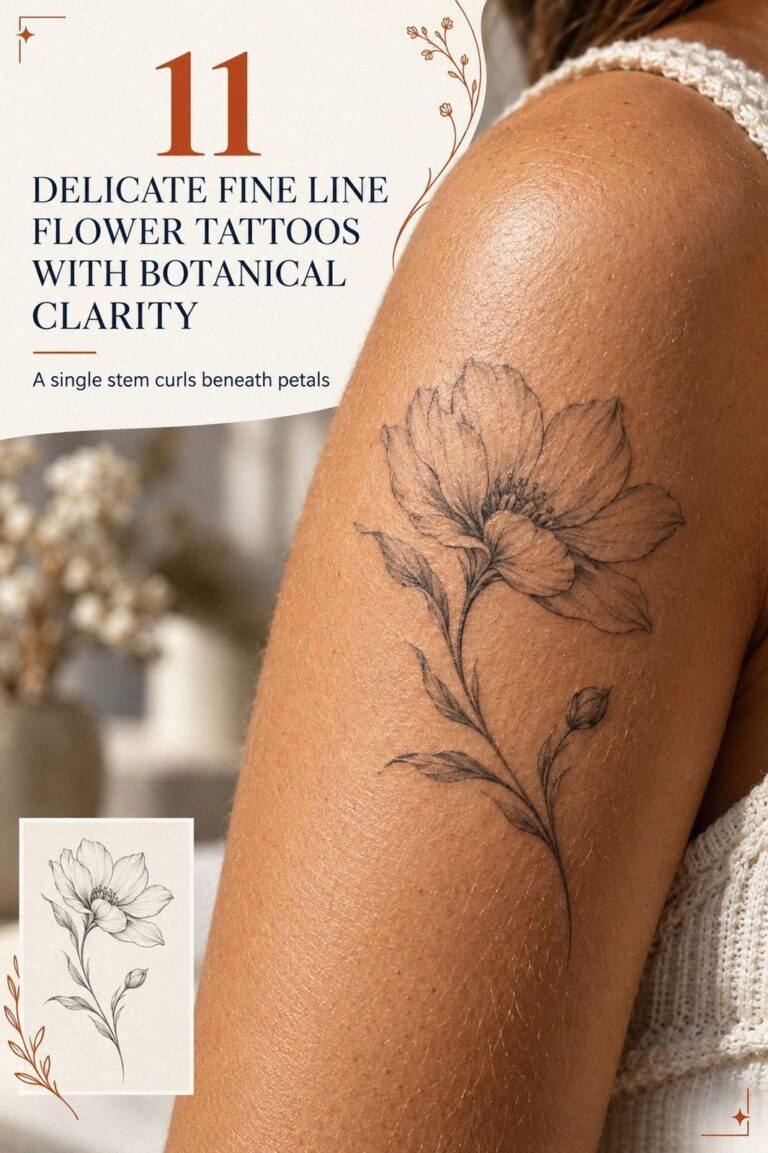
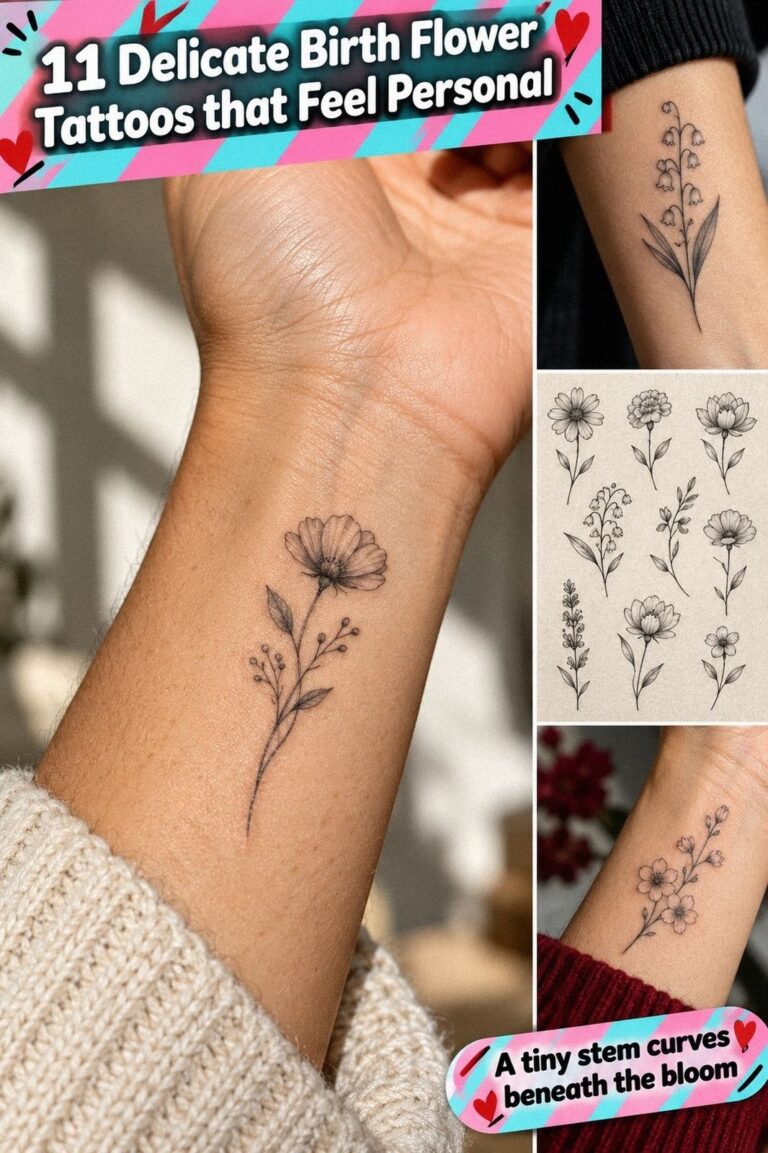
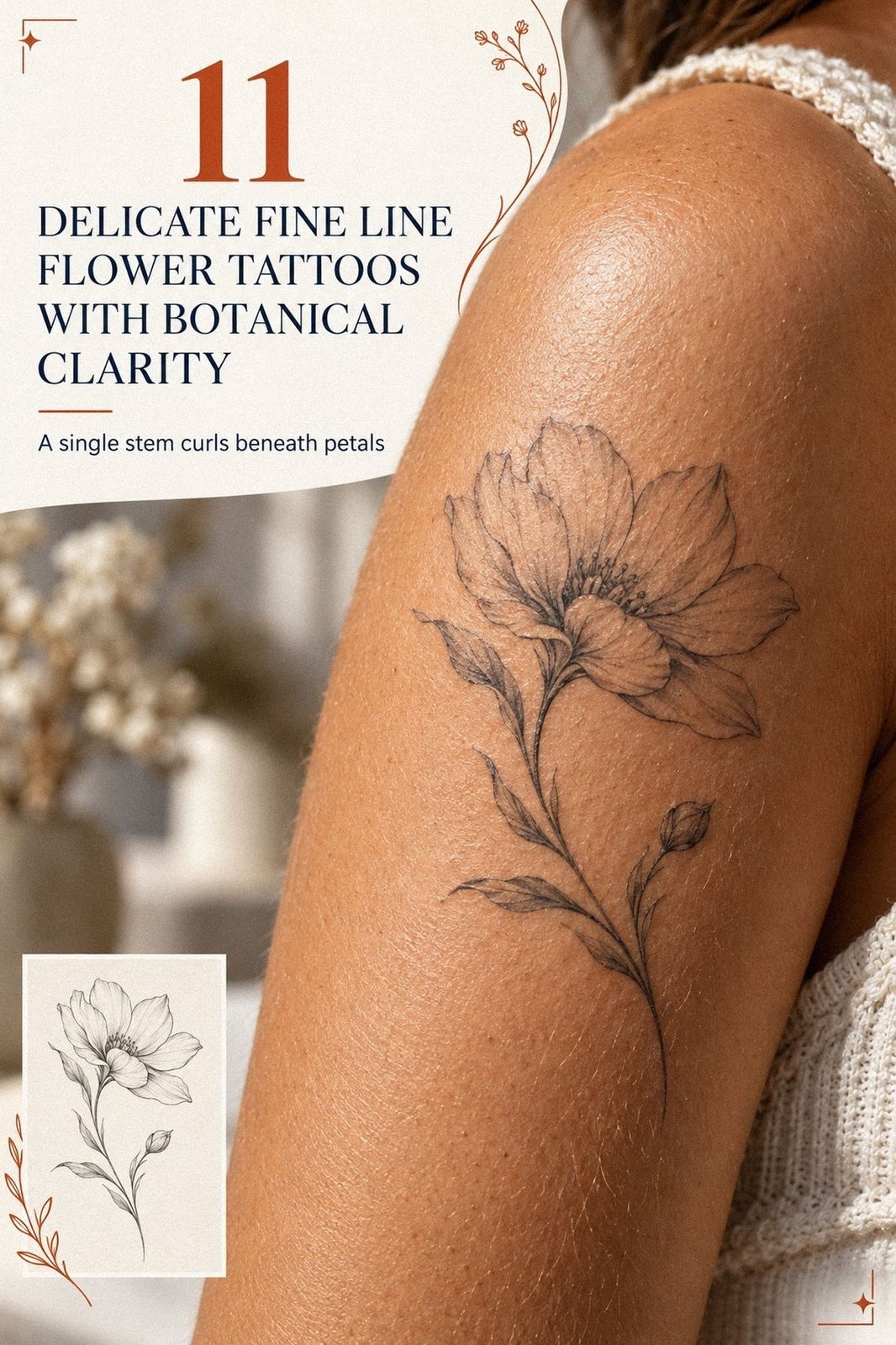
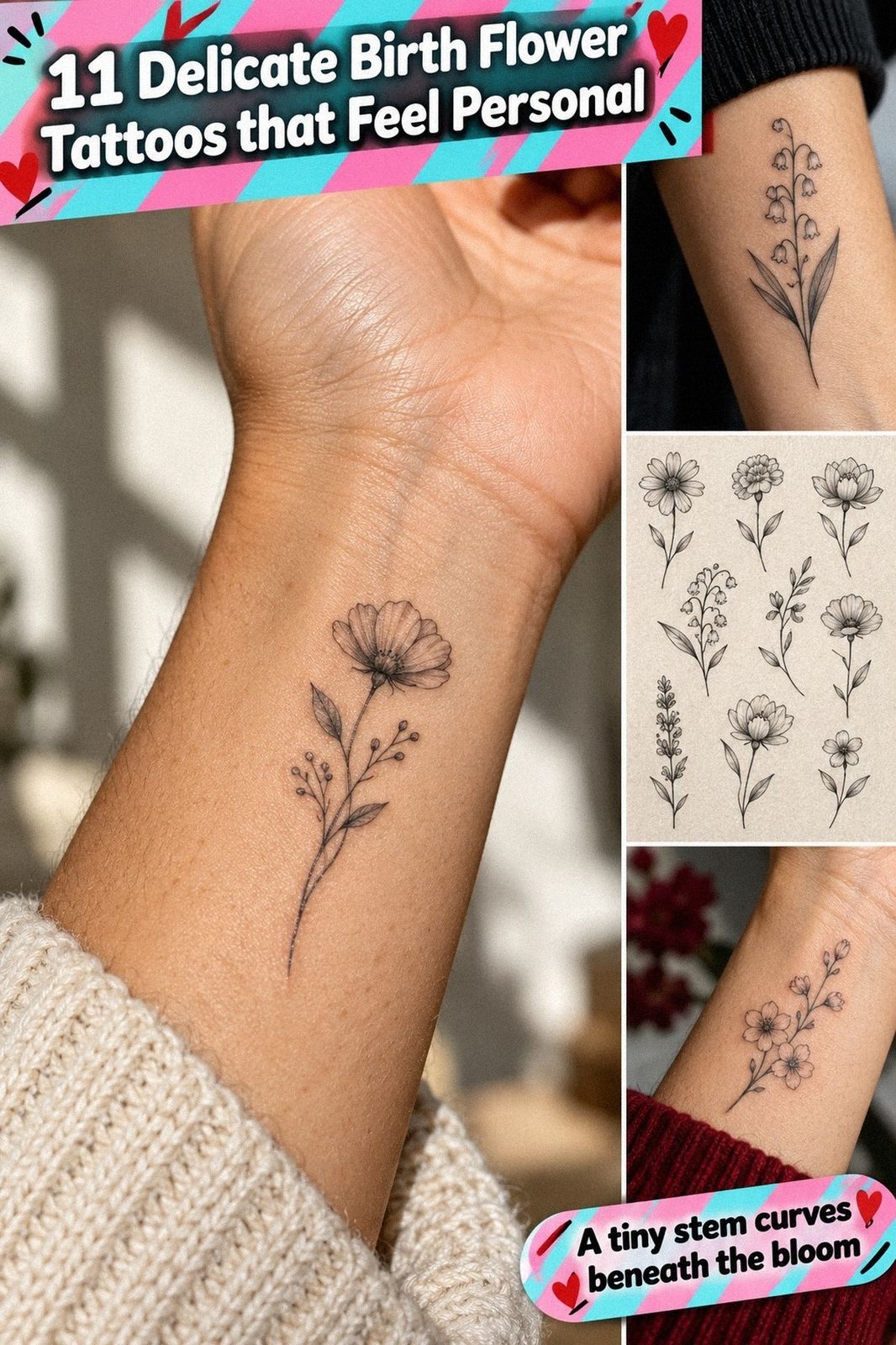
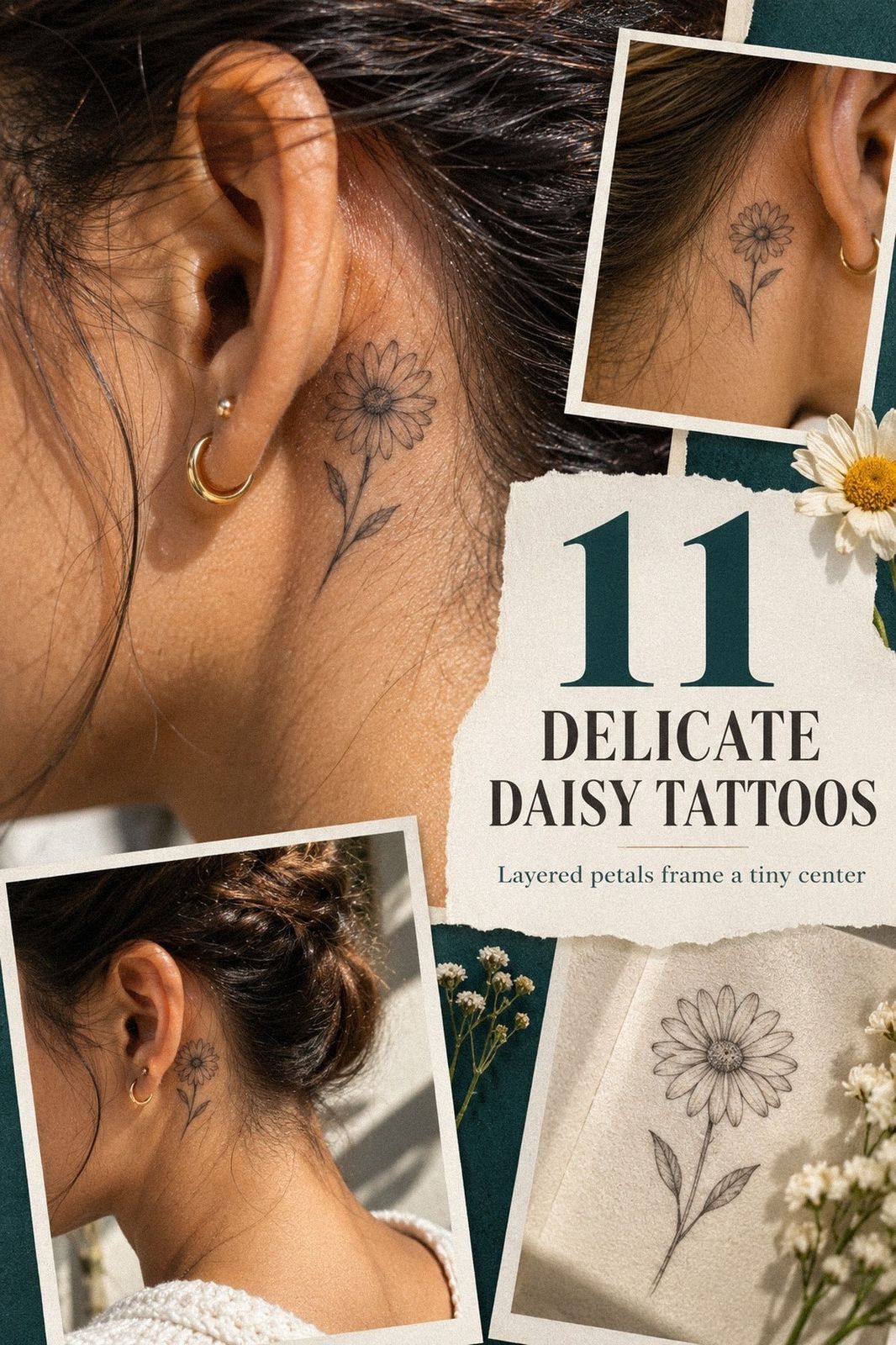
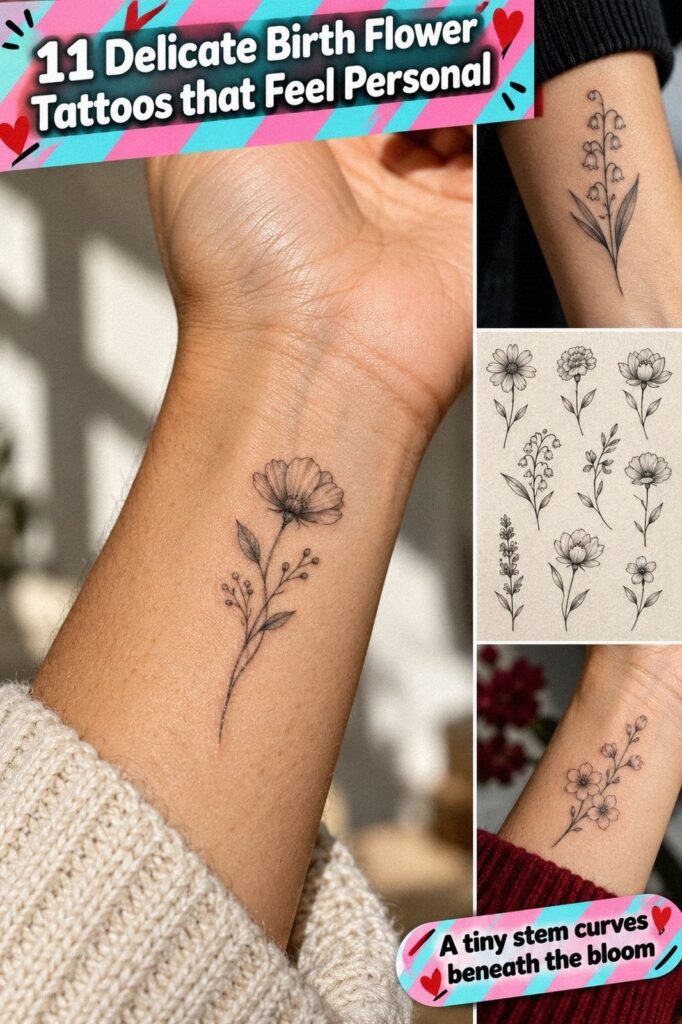
Minimalist wildflower tattoo designs work best when the flower, placement, and private meaning agree. I once chose a stem because it looked delicate, then realized its bend matched a path I took every morning. That tiny detail made the piece personal instead of decorative. Start with private meaning, then let the linework stay minimal, crisp, and yours.
A good tattoo also has to make sense for your body, budget, and future self. The most striking idea isn’t always the most intricate one. It’s the one you’ll still value when the trend has moved on.
You’ll also want to think about color honestly. Terracotta, olive, clay, plum, navy, emerald, forest green, dusty rose, and midnight blue can create a vibrant result, but colored ink may heal differently from black. Your artist can help you choose a color plan that suits your skin and the size of the design.
- Start With One Delicate Wildflower Stem
- Pick Crisp Fine-Line Petals For Contrast
- Place Small Wildflower Ink On The Wrist
- Keep Negative Space Around Each Blossom
- Plan Meaningful Botanical Details Before Tattooing
- Choose Flowing Stems For A Graceful Silhouette
- Add Symbolic Leaves Without Losing Minimalism
- Match Wildflower Scale To Your Body Shape
- Balance Unique Linework With Readable Form
- Protect Fine Details During Tattoo Healing
- Refresh Faded Minimalist Wildflower Ink Carefully
1Start With One Delicate Wildflower Stem
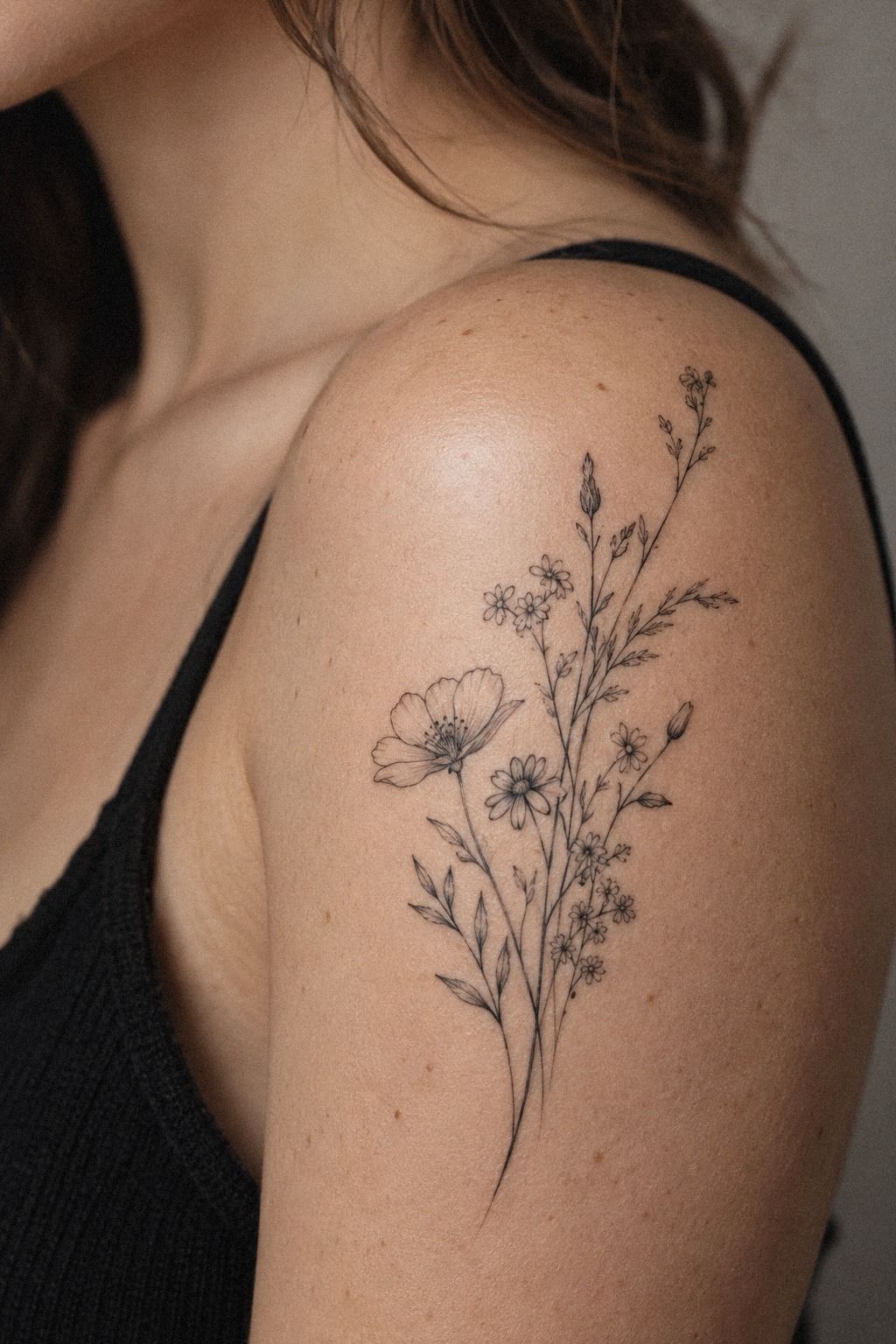
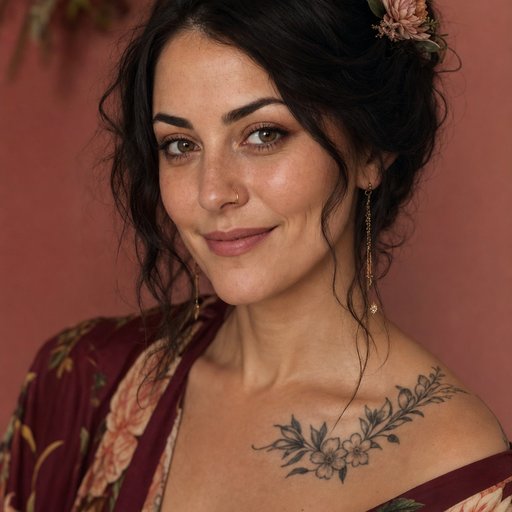
Choose one flower before you choose a whole botanical collection. On a collarbone placement, a single wildflower stem can follow the natural slope of the bone without competing with your posture or neckline. You’ll want the stem to feel delicate but intentional, with enough length for the flower to read clearly from a distance.
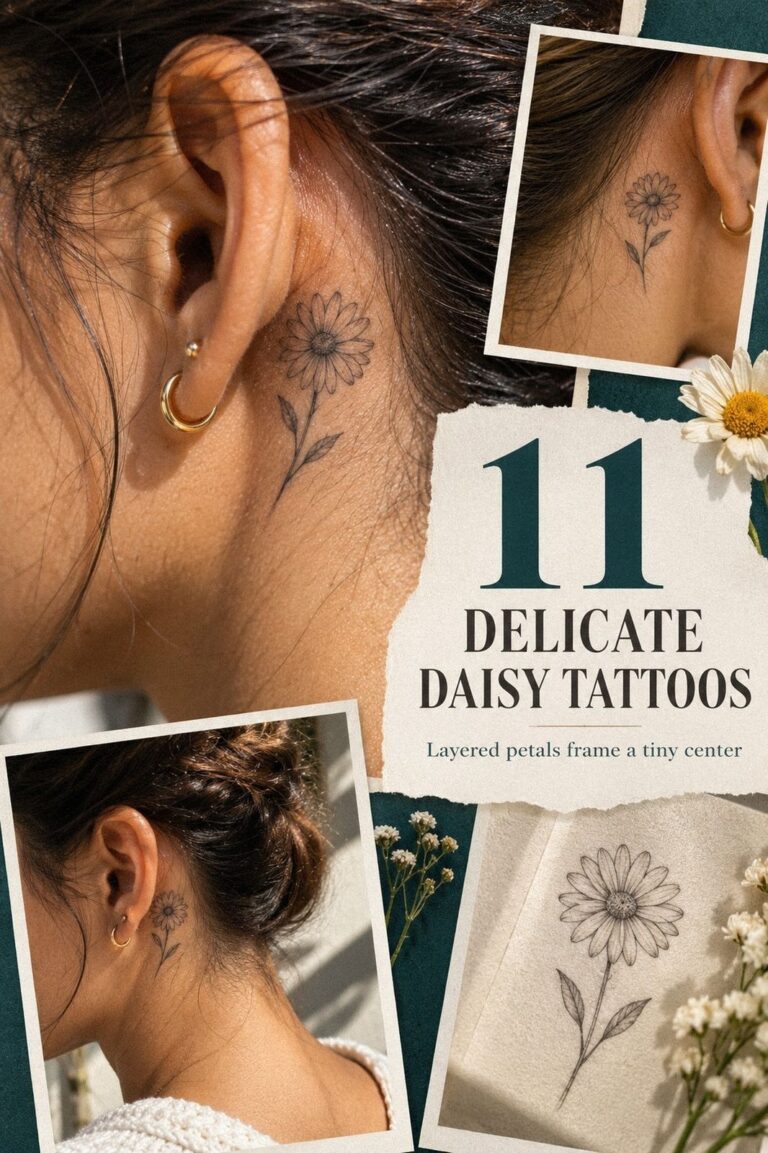
Think about the flower’s private connection. A daisy might recall a childhood garden, while yarrow could represent endurance after a difficult year. The meaning doesn’t need to be obvious to anyone else.
That’s the point. A personal symbol can stay quiet while the design remains striking.
For an earthy direction, ask whether muted terracotta or olive accents would support the flower’s meaning. Those colors can feel timeless and expressive when they’re used sparingly. Too many colored details may make a small tattoo look crowded.
Ask your artist for a clean reference drawing on sterile stencil paper before the appointment. You’re checking the direction, flower head, and stem curve, not merely approving a pretty sketch. If the shape feels too ornate, remove one detail before it reaches your skin.
I’d start with a flower that has a recognizable silhouette rather than an obscure bloom with six competing layers. Your tattoo should still make sense when it’s the size you want.
For more symbolism, compare your idea with this guide to wildflower tattoo meaning. That small research step can save you from paying for a design that looks good but means little.
And if you’re drawn to a smaller version, the examples in this tiny wildflower tattoo collection can help you judge how little detail you truly need. A graceful stem with one meaningful bend will usually age better than a crowded bouquet. That is the whole trick!
2Pick Crisp Fine-Line Petals For Contrast

Fine-line petals look crispest when their edges have room to breathe. For a spine placement, a vertical flower can feel elegant and expressive, but the design needs a clear center so it doesn’t blur into one pale shape. Your artist should show you how the petals separate before the stencil is placed.
I’d skip five layers of identical petals. They sound intricate on paper, yet they can become muddy when the flower is small.
One bold outer petal shape, two smaller inner petals, and a defined center create stronger contrast with less visual noise. That balance keeps the piece minimal without making it bland.
A restrained clay or muted rose accent can add warmth without overpowering the linework. Ask how the color will behave at the size you want, especially if the petals are dainty. A small amount of pigment can be more polished than a full colored fill.
Ask whether the artist works with black tattoo ink that produces a consistent line rather than a gray, washed-out effect. You don’t need a heavy black fill, but you do need enough contrast for the flower to remain readable after healing. A crisp design can still be dainty.
The spine is a long visual path, so your flower shouldn’t tilt randomly. You’ll want the stem to echo the body’s centerline while the petals face slightly outward. That small adjustment makes the tattoo look stylish from behind and less like a sticker placed on top of the skin.
Before you approve the stencil, ask what the design will cost if the artist needs extra setup time. A low budget can still support a stylish tattoo, but the cheapest quote isn’t automatically the best value. A minimalist tulip can teach you how a simple bloom carries shape through minimalist tulip tattoo examples.
Good contrast is worth paying for!
3Place Small Wildflower Ink On The Wrist

A wrist tattoo has an intimate, visible quality. It appears during ordinary moments, which can make a small flower feel especially personal. Choose a design that still feels meaningful when you see it dozens of times a day.
Plum, soft gray, or a restrained rose-toned accent can give the wrist piece a romantic mood without making it overly sweet. Color should support the symbol, not distract from it. If you want an understated result, keep the stem black and reserve color for one petal or leaf.
A wrist design needs to respect movement and friction. Watchbands, sleeves, and frequent hand washing can affect how the area feels during healing. Your artist may suggest shifting the placement slightly away from a crease or high-contact spot.
Ask for the wrist stencil in the position you’ll actually wear it. Bend your hand, relax your fingers, and turn your wrist gently before deciding. A design can feel right with the hand flat but less balanced when your wrist moves naturally.
I’d choose one readable blossom over a tiny cluster of unrelated flowers. A single symbolic bloom can look fierce without becoming loud. If you want more direction, compare the proportions in this minimalist wildflower tattoo collection.
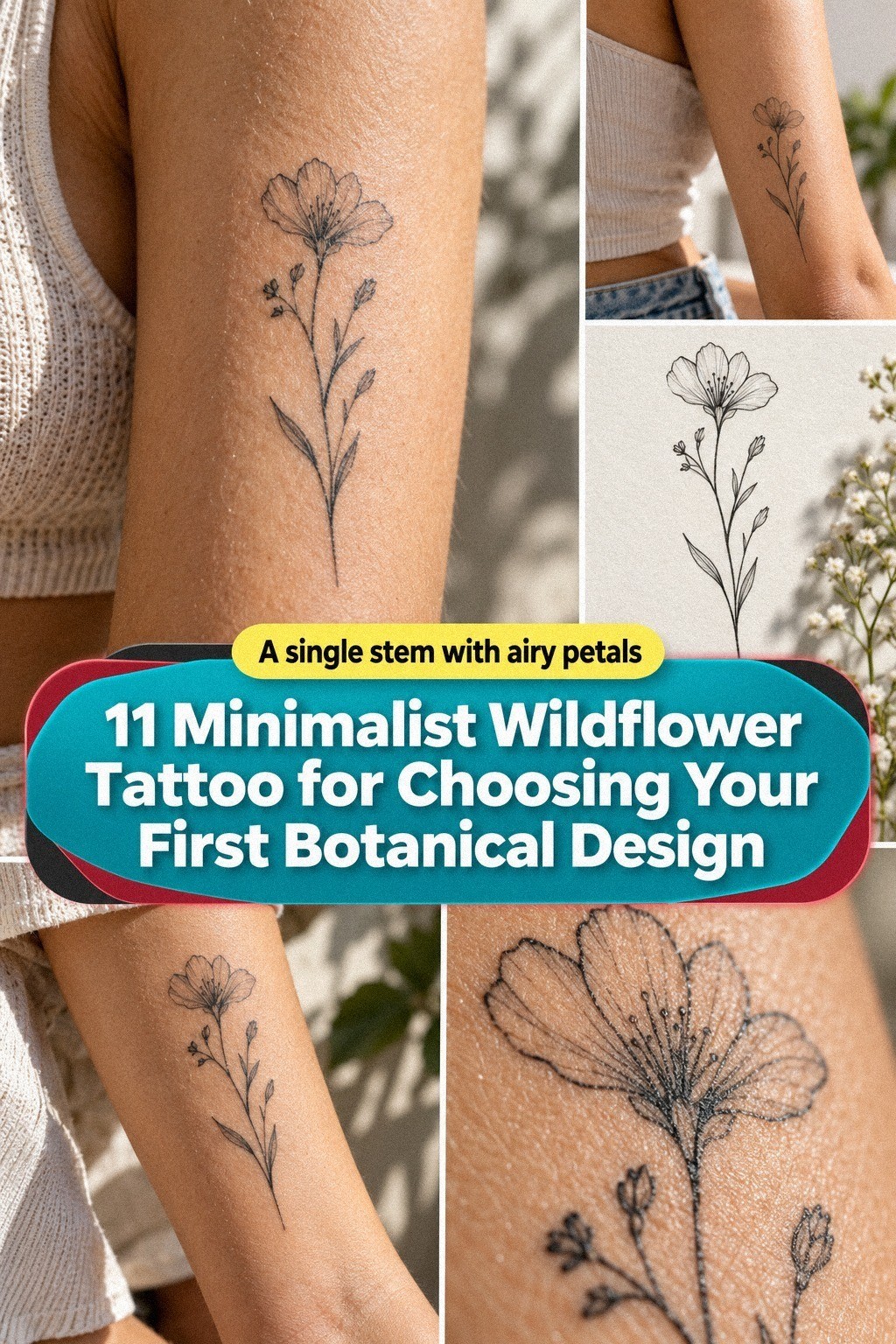
4Keep Negative Space Around Each Blossom
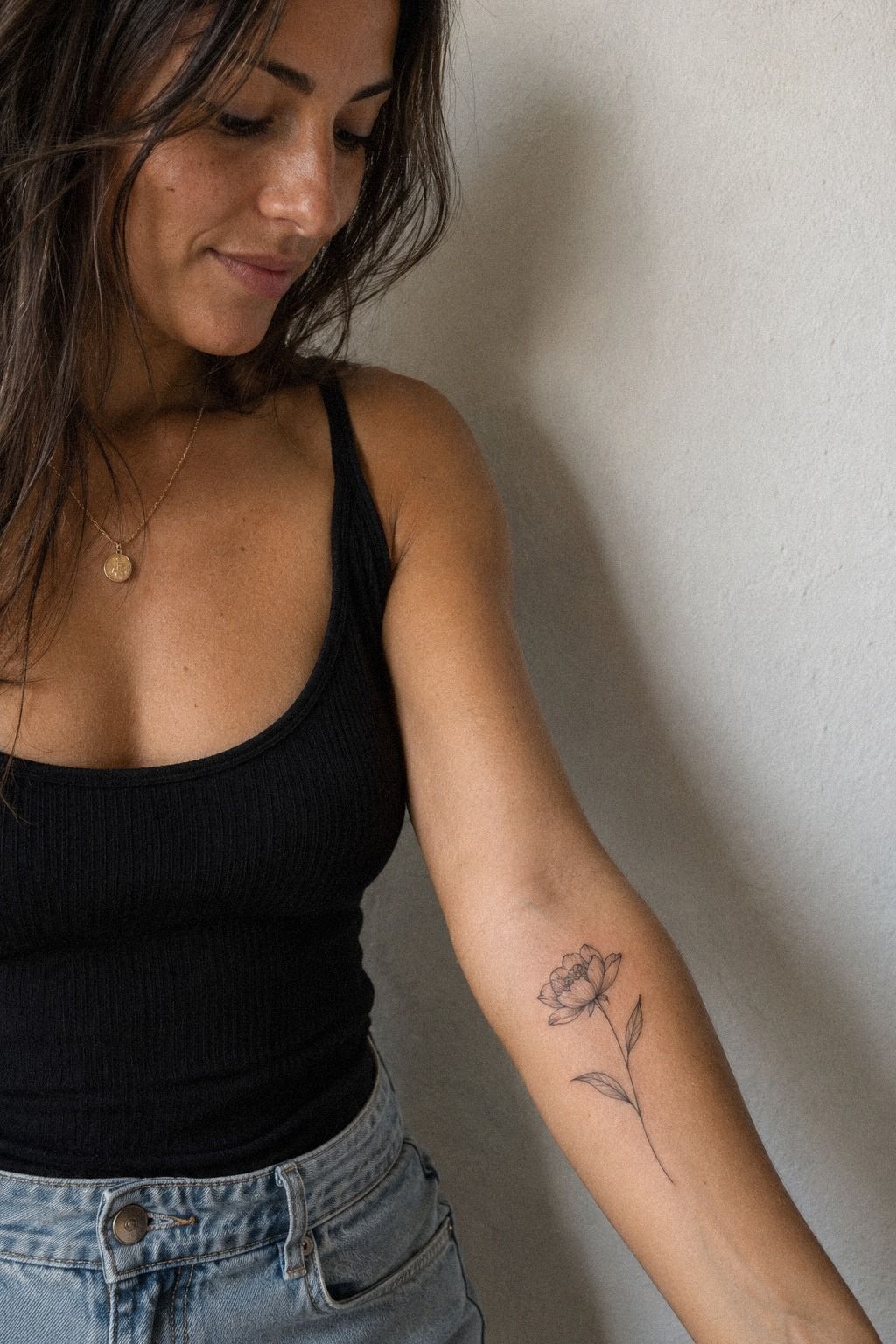
Negative space is what lets a minimalist flower stay sharp. Leave visible skin between the petals, the leaf, and the stem instead of filling every gap with dots. Your eye needs those pauses to understand where one form ends and another begins.
I like a flower that has one dramatic open area rather than tiny gaps scattered everywhere. The larger pause gives the design a flowing rhythm without turning the tattoo into something vague. It also makes the piece feel more graceful when your arm moves.
If you’re considering a navy or deep blue accent, keep it away from every narrow gap. Dark color can visually close small spaces, especially in a compact design. One carefully chosen detail may feel more vibrant than several crowded marks.
Ask your artist to test the design with carbon stencil paper at the intended scale. You’ll see whether the gaps are large enough to survive the transfer and whether the petals still read as petals. A stencil can reveal a problem long before the needle does.
Don’t confuse negative space with unfinished work. The empty skin is part of the composition, just like the stem. A bold contour beside a quiet gap can look more polished than delicate lines packed tightly together.
But if you’re tempted to add shading because the design feels too plain, wait. First compare the spacing with a minimalist lavender tattoo. Lavender depends on separation and rhythm, and that same principle can keep your wildflower expressive without making it ornate.
5Plan Meaningful Botanical Details Before Tattooing

Make a small reference sheet before you book the appointment. Include the flower, the personal memory, the preferred placement, and any colors you’re considering. A meaningful detail is easier to protect when you can explain why it matters.
Emerald, muted gold, and cream can suggest renewal, devotion, or a private promise, but they’re not equally practical for every tattoo. Ask your artist which pigments are likely to remain readable at your chosen size. The most symbolic color is still a poor choice if it disappears into the surrounding skin.
Write down what each leaf, bend, or petal represents. One leaf might stand for a sibling, while a broken stem could mark a difficult chapter you survived. That kind of private system can make a simple tattoo feel sacred without making it cryptic.
Bring your reference notes to the consultation and let the artist question them. A professional may simplify a detail so the design remains readable. That doesn’t weaken the meaning.
It gives the symbol a stronger form.
I’d avoid adding every meaningful object to one flower. A whimsical idea can become ornate when five symbols compete for attention. Choose the detail that still feels personal when nobody else understands it.
For more inspiration, compare your notes with this minimalist peony tattoo inspiration. The strongest botanical tattoos usually have one clear emotional center.
6Choose Flowing Stems For A Graceful Silhouette

A flowing stem can make a rib tattoo feel graceful instead of rigid. A clean black line can create strong contrast, while a gentle curve follows the body’s movement. You’ll want the stem to look intentional when you stand, twist, and breathe.
Rib placement gives you room for a longer silhouette, but it’s also a sensitive area. A soft, expressive curve may suit the location better than a stiff vertical line. Your artist should place the stencil while your torso is relaxed, because stretching the skin can change the apparent angle.
Forest green or a small rust-colored accent can make the stem feel fierce and organic without turning it into a heavy block of color. Use color where it clarifies the flower or supports the symbolism. The line should remain the structure.
Choose solid black tattoo ink for the main stem and keep any shading restrained. Black holds the structure together, while open skin around the leaves keeps the result minimal. Too much gray can make the piece look hazy before it has even healed.
I’d choose one longer curve over several short stems. Multiple lines can look bold in a flash drawing, yet they may lose their hierarchy on the ribs. Your eye should land on the flower first, then travel down the stem without getting trapped in tangled marks.
If you’re considering a sacred or meditative meaning, compare the calm structure of a minimalist lotus flower tattoo with your wildflower concept. Then compare longer silhouettes in these unique minimalist wildflower tattoo ideas. A longer appointment can cost more, but the added length may give the idea better value.
7Add Symbolic Leaves Without Losing Minimalism

Leaves can carry as much meaning as the flower, but they should earn their place. One narrow leaf can suggest growth, protection, or a turning point. Two leaves can create balance, but three may start to feel ornate.
Before adding foliage, tell your artist what the leaf represents. A pointed leaf can feel daring, while a rounded one may read gentler and more romantic. Those differences are small on paper, but they change the emotional tone of the finished tattoo.
Dusty rose, charcoal, or a muted metallic-inspired accent can create contrast, but ask your artist which actual pigments are suitable for skin. Some colors may soften faster than others. A sharp symbolic mark is better than a trendy color you’ll need to refresh quickly.
Use single-pass black linework for the leaf outline and avoid filling it unless the contrast needs help. You’ll want the vein to remain simple, especially if the flower already has layered petals. Minimalism depends on choosing where the eye should rest.
But don’t add leaves just because the empty stem feels unfinished. Empty skin can make the flower more expressive. I’d rather see one meaningful leaf placed with purpose than a polished cluster that says nothing specific about you.
For a more symbolic flower direction, browse this minimalist peony tattoo inspiration. Peony forms often show how one strong botanical element can carry a powerful emotional presence without becoming visually heavy. That kind of restraint can be worth the investment.
8Match Wildflower Scale To Your Body Shape

Scale should follow your body’s available visual length, not a universal size chart. On the upper back, a single wildflower needs room to breathe, but the design still needs to relate to the shoulder blades and spine. You’ll want the flower to feel placed, not dropped.
Ask for the stencil in the exact position before you approve it. Raise your arms, turn sideways, and relax your shoulders. A design that looks balanced while standing still may shift when your posture changes.
That movement matters more than a photograph taken from one angle.
A small wildflower can feel dainty and discreet, while a longer version can look more striking and iconic. If you’re considering warm white, camel, or black accents, ask whether the colors will remain visible against your skin. Your artist should recommend the safest contrast.
A white transfer stencil can help you compare a short stem with a longer one without committing to either. The shorter version may feel dainty and discreet, while the longer version can look striking and iconic. Your choice should match how visible you want the tattoo to be.
I’d avoid making a back tattoo so tiny that the flower loses its center. Small can still be meaningful, but the lines need enough separation to remain readable. A slightly larger silhouette often looks more polished because it doesn’t force every petal into the same narrow space.
If you’re unsure whether the upper back or a smaller placement suits you, compare these unique minimalist wildflower tattoo ideas with the proportions in this tiny wildflower tattoo collection. A larger design may raise the cost, but the extra breathing room can improve long-term value.
9Balance Unique Linework With Readable Form

Unique linework should give your tattoo personality, not make it difficult to read. A slightly imperfect stem or asymmetrical petal can feel personal and expressive. Your artist can introduce character without abandoning a recognizable flower shape.
Look for linework that has a clear beginning and end. A floating petal may be intentional, but random breaks can make the design appear unfinished. You’ll want every unusual mark to have a visual reason, even if the emotional reason stays private.
Midnight blue, copper-toned, or ivory-inspired accents can make a flower feel edgy, but color shouldn’t replace structure. Keep the central silhouette readable first. The unusual detail should reward a second look rather than confuse the first one.
Ask to see healed examples created with fine-gauge needle work, not only fresh tattoos. Fresh lines can look sharp and saturated, while healed lines show whether the artist understands restraint. Fine-line pieces may soften over time, so readable structure matters more than delicate novelty.
I’d skip a style that depends on dozens of hair-thin marks packed together. It may look edgy on the day, but the design has less room for natural change. A bold contour paired with one unusual interior line usually gives you a better balance.
Could your flower still be identified if the artist removed half the details? If yes, you’ve got a strong foundation. For another comparison, study minimalist flower crown tattoo and notice how repeated linework stays readable through spacing.
10Protect Fine Details During Tattoo Healing

Healing is part of the design process, not an afterthought. A fresh tattoo may look crisp, red, and more intense than expected, while the healed version can appear softer. Follow your artist’s specific care instructions and don’t judge the final line before the skin settles.
The surface usually heals in about 2 to 3 weeks, while complete healing can take roughly 2 to 3 months. During that time, wash gently, apply the recommended moisturizer, and avoid picking at flakes. You’ll protect the linework by being patient, even when the tattoo looks uneven for a while.
Use a fragrance-free moisturizer only as directed by your artist. Too much product can leave the skin wet and irritated, while too little can make normal dryness feel alarming. You’re aiming for clean, comfortable healing, not a glossy layer over the tattoo.
If your tattoo includes sage, cream, or another vibrant accent, protect it from direct sun after healing as well. UV exposure can fade delicate marks and soften contrast.
The aftercare may feel boring, but it’s one of the most empowering choices you can make for longevity. It protects the value of what you paid for!
And keep fresh fine-line work away from swimming until your artist clears it. Early soaking can complicate healing, even when the tattoo looks calm on the surface. Follow the specific advice you were given rather than copying a random routine online.
11Refresh Faded Minimalist Wildflower Ink Carefully

Fading doesn’t always mean the tattoo failed. Fine details can soften through normal wear, sunlight, and the way your skin heals. You’ll want to assess the flower after it has fully settled rather than rushing to refresh it.
Terracotta and olive accents may soften into a quieter result over time, while dense black can remain more assertive. That change isn’t automatically a problem. Ask whether the faded quality still feels understated and personal before deciding to alter it.
Take a healed photograph in natural light and compare it with the original stencil or appointment image. Look for the specific problem: a vanished leaf vein, a softened petal edge, or a stem that needs stronger contrast. A focused refresh is usually more controlled than redrawing everything.
Ask your artist whether opaque black ink is needed for one small area or whether a lighter adjustment would preserve the original character. You don’t need to make a delicate tattoo bold everywhere just because one section has faded. Selective correction keeps the piece understated.
I’d avoid refreshing on impulse after a few weeks. Complete healing can take about 2 to 3 months, and you won’t know the settled result before then. A patient review gives your artist better information and keeps you from layering unnecessary marks.
For future planning, compare the placement with other minimalist wildflower tattoo designs and ask whether the original scale still suits you. A refresh should protect the private meaning, not erase the small irregularities that made the tattoo yours. Wait until you know the result is worth the cost!
Why Does Private Meaning Make a Wildflower Tattoo Last?
I’ve changed my mind about what makes a tattoo timeless. It isn’t always the most classic flower or the cleanest silhouette. It’s the mark that keeps giving something back when you look at it.
My favorite pieces have a private detail, such as a stem bent toward a particular place or one leaf shaped after a real plant I touched.
That doesn’t mean the design should become cryptic. A tattoo can be readable and still hold a personal story.
I’d rather see a bold, recognizable blossom with one quiet reference than an intricate diagram nobody can understand, including the person wearing it. The flower gives the eye an entry point, while the private detail gives you a reason to return.
I also think people underestimate placement. A wrist can feel intimate because you see it during ordinary tasks.
A rib tattoo can feel sacred because it stays mostly yours. An upper-back flower may feel empowering when it appears only in certain clothes.
The best location isn’t the one that photographs most dramatically. It’s the one that matches how you want the memory to live on your body.
And I’ve learned not to rush the artist search. Look for healed work, clean line control, and a portfolio that includes skin tones close to yours.
Ask direct questions about longevity. A thoughtful consultation should include your habits, sun exposure, visibility preferences, and tolerance for future touch-ups. That conversation may feel less romantic than choosing a flower, but it protects the meaning better than a fast appointment ever could.
For another perspective on proportion and symbolism, compare this minimalist wildflower tattoo guide with minimalist flower crown tattoo examples. The best design is rarely the most expensive one. It’s the one with the clearest emotional value.
What People Always Want to Know
How much does a minimalist wildflower tattoo usually cost?
A minimalist wildflower tattoo usually costs about $100 to $300 in the US, depending on the artist, region, size, and placement. Some studios charge a $50 to $100 minimum, while hourly rates may run about $100 to $250. Ask for a quote after showing your reference and deciding whether the design feels worth it.
Are minimalist wildflower tattoos a good idea for a first tattoo?
Yes, minimalist wildflower tattoos can be a meaningful first choice because the design is usually small, readable, and easy to personalize. An outer forearm, upper arm, or thigh may feel more tolerable than ribs, feet, hands, or sternum. Start with a small wildflower tattoo if you’re nervous about the commitment or budget.
How do I choose a tattoo artist for minimalist wildflower tattoos?
Choose an artist with a portfolio showing clean fine-line tattoos, healed photographs, and flowers drawn with confident spacing. Check the studio’s hygiene standards, ask how the artist works with your skin tone, and discuss how the design may soften over time before booking. A careful consultation is usually better value than a rushed appointment.
How much do minimalist wildflower tattoos hurt?
Pain varies by person and placement. Ribs, feet, hands, and sternum are often more sensitive, while the forearm, thigh, and shoulder can feel more tolerable. Your appointment may still feel manageable if you choose a short design and tell the artist when you need a pause.
How long does a minimalist wildflower tattoo take to heal?
The surface usually heals in about 2 to 3 weeks, while complete healing can take around 2 to 3 months. Wash gently, moisturize as directed, avoid picking, and protect the tattoo from strong sun and swimming until your artist says it’s ready.
What’s the best placement for a minimalist wildflower tattoo?
The forearm offers visibility and easier care, while the upper arm gives you more privacy and protection from daily friction. A collarbone can look elegant, but it may experience more sun exposure. Compare your lifestyle with this tiny wildflower tattoo guide before choosing.
Where I’d Start First
If I had to pick one step, I’d start with the flower’s private meaning. A single delicate wildflower stem will stay personal long after a trend fades, and its clean silhouette gives your artist room to protect every line. Save your favorite reference, compare the value against your budget, then book only when the symbol still feels like yours.