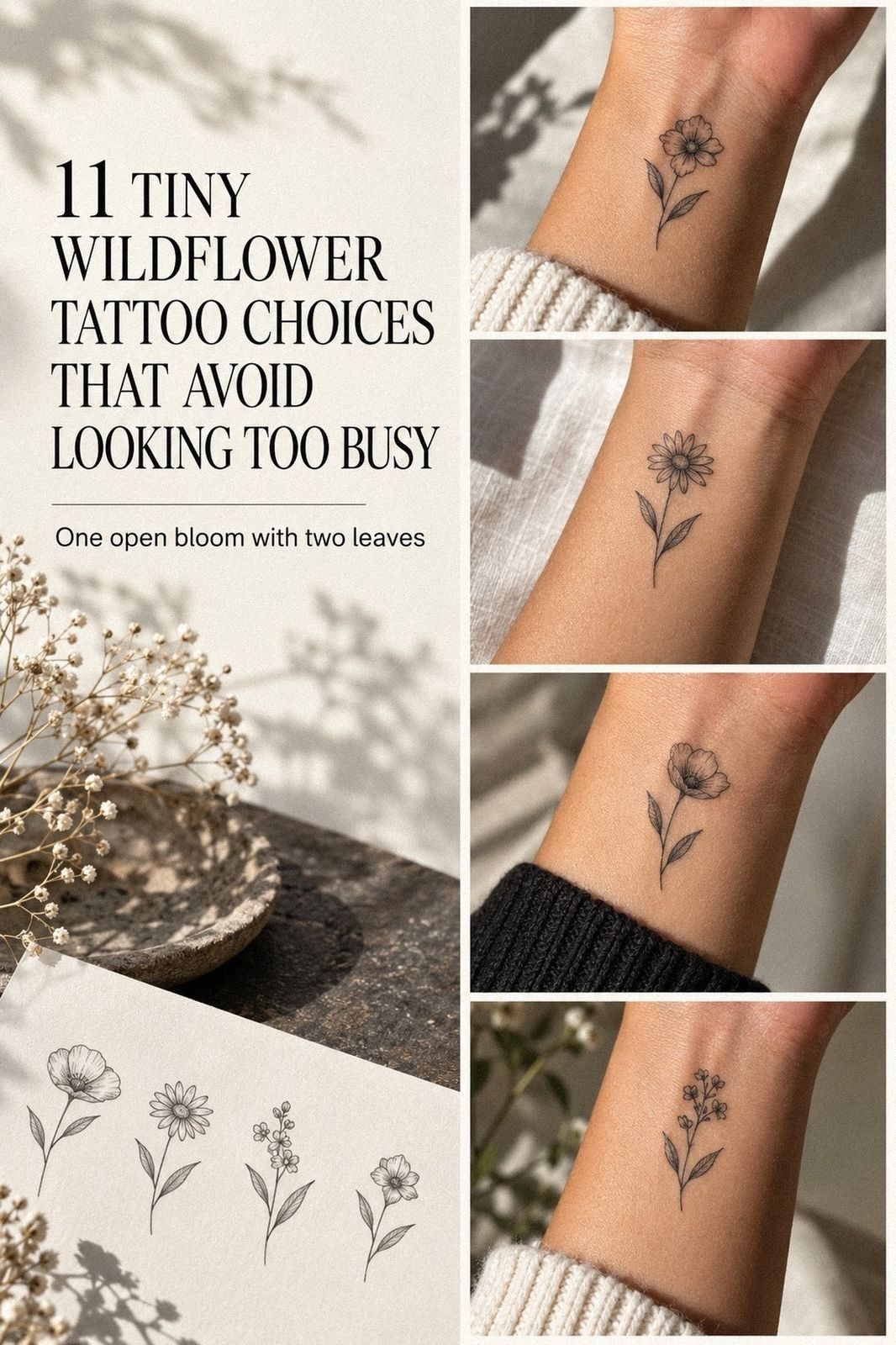
Low-maintenance tiny wildflower tattoos can stay readable for years when line weight, placement, and aftercare agree. I once chose a very fine design for a high-friction spot and watched its details soften faster than expected. You don’t need a large piece. You need a crisp plan, a patient artist, and realistic healing expectations.
The most readable tattoo design usually looks simpler than the first sketch. That can feel disappointing at first.
It’s actually empowering. Open petals, a confident stem, and one meaningful detail will often age better than an intricate miniature garden.
Start Here: The Crispness Plan
Before you book, decide what matters most. Is it visibility, symbolism, color, or easy upkeep? You can have a delicate and personal flower without asking it to perform ten visual jobs at once.
My one rule is simple: choose the placement before finalizing the petals. A striking design on the wrong part of your body can become frustrating. A minimal design in the right spot can stay stylish for much longer.
Think about your clothes, movement, sun exposure, and patience during healing. If you’re always washing your hands or wearing tight shoes, you’ll need a more practical plan. A low-maintenance tattoo still needs thoughtful decisions before the appointment.
For more inspiration, compare these small wildflower tattoo ideas with your daily habits. Notice which examples still feel meaningful without relying on excessive detail.
- Start With a Single Stem on the Inner Wrist
- Why Fine Linework Needs Open Space
- Behind the Ear: A Small, Edgy Choice
- Let Birth-Month Blooms Carry the Meaning
- Can an Ankle Flower Stay Clear?
- Black Ink on Deep Skin: What Matters Most
- Colorful Petals, Limited Palette
- Follow the Collarbone, Not the Trend
- Build the Botanical Stem First
- Is a Finger Flower Worth the Upkeep?
- A Minimal Bouquet With Room to Breathe
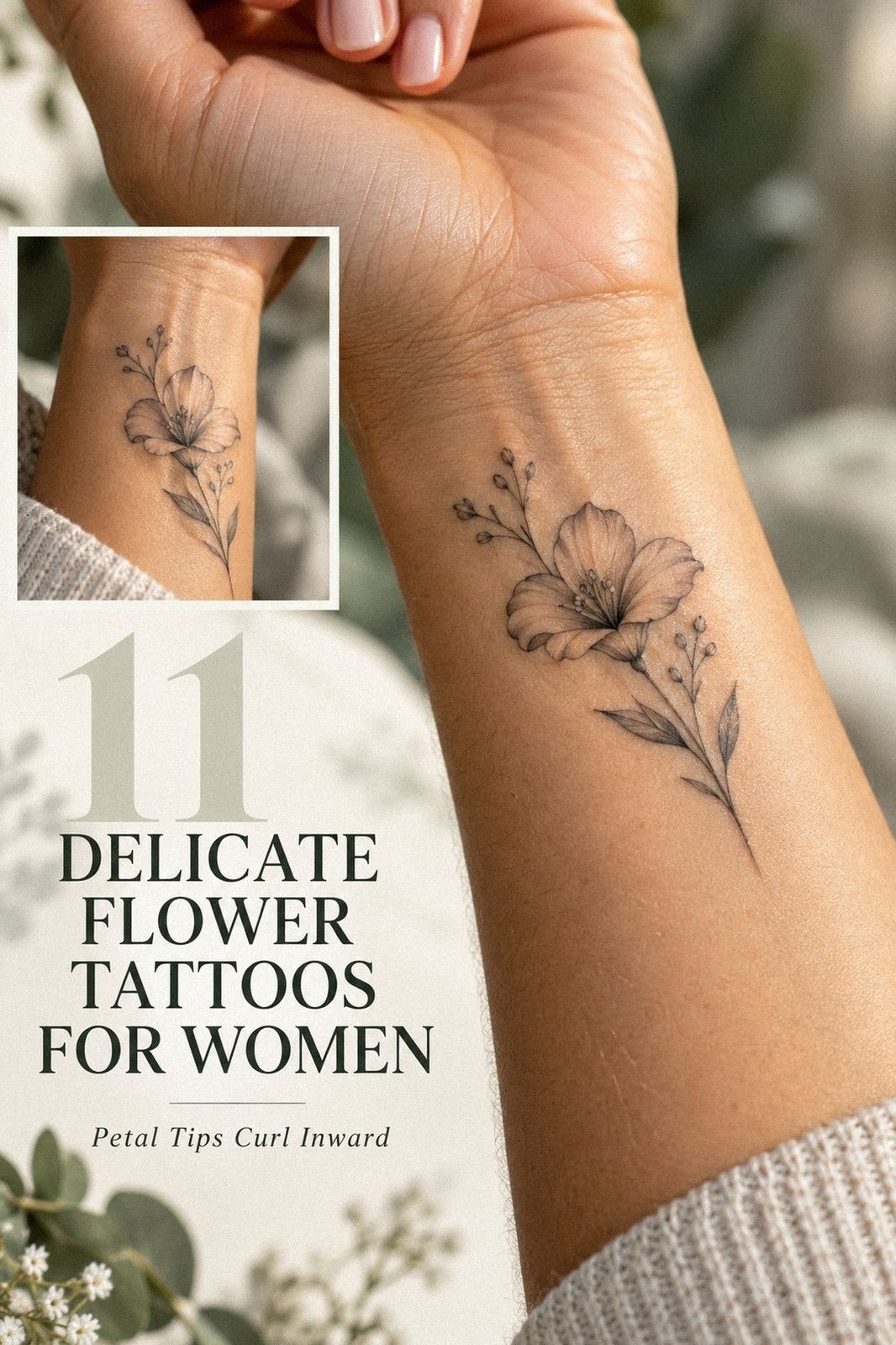
1Start With a Single Stem on the Inner Wrist
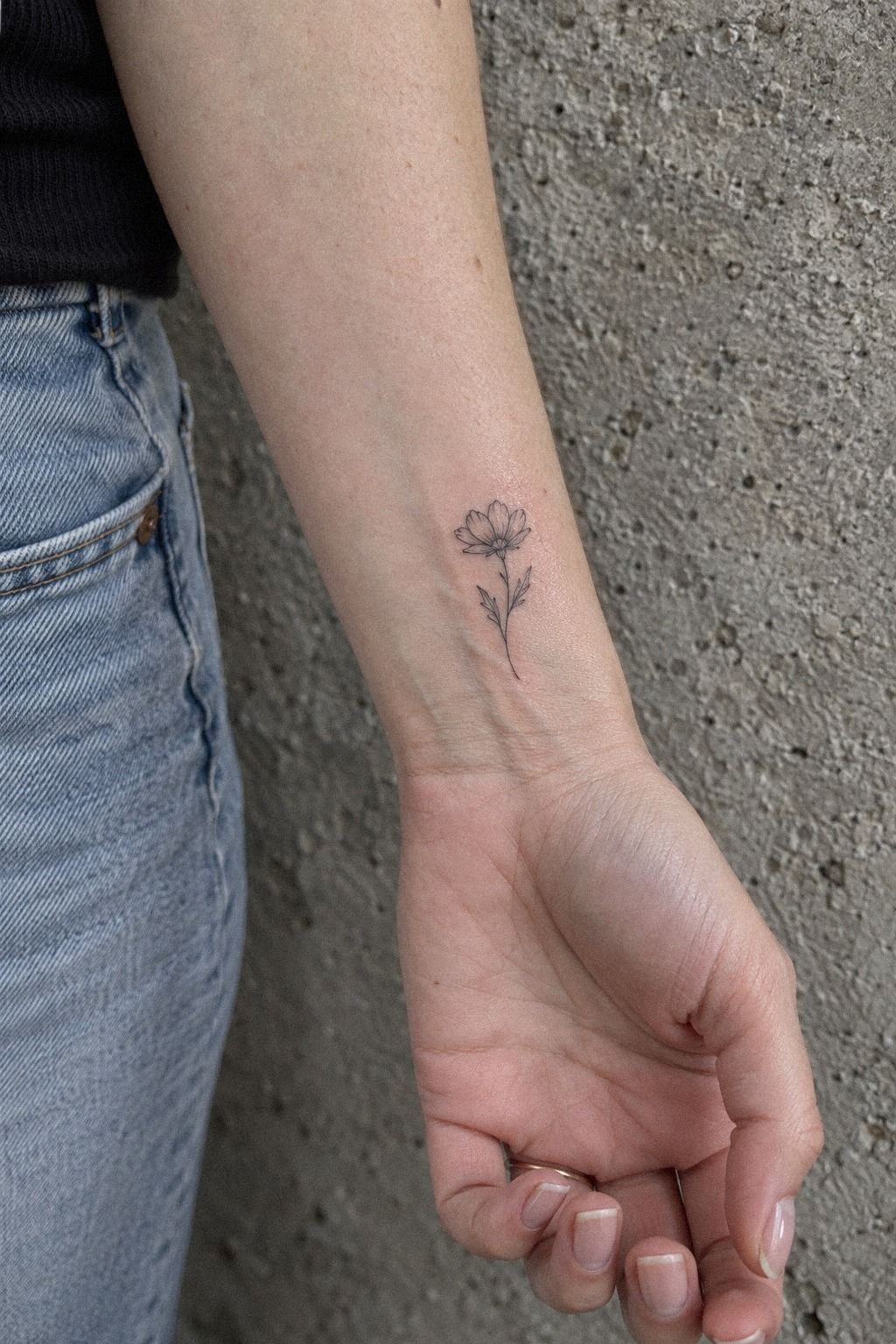
An inner-wrist single-stem tattoo looks dainty without disappearing, especially when the petals have room around them. Keep the bloom open instead of stacking too many tiny marks together. That negative space gives your artist room to make each curve readable.
I’d choose black ink here rather than several pale shades. The wrist gets regular contact from sleeves, bracelets, and movement. A sharp dark outline has a better chance of remaining expressive as the lines settle.
The Wrist Clarity Rule is simple: one flower, one stem, and enough breathing space between petals. If you’re comparing placements, read this small wildflower tattoo guide before you book.
Once the tattoo has healed, sunscreen matters. UV exposure can soften fine detail, while gentle washing and regular hydration support your skin during the first few weeks. A little discipline here matters!
2Why Fine Linework Needs Open Space

A sternum design gives your tiny wildflower tattoo a private, elegant position. On medium warm ivory skin, a single flower with layered petals can look intricate when the lines stay light but sufficiently spaced.
Your artist should resist filling every gap. Open negative space helps each petal remain distinct as the tattoo settles. Crowded detail can blur, especially when the design is smaller than your original sketch.
I’d review healed fine-line work before approving the stencil, because fresh lines can look impossibly crisp. You’ll learn more from photographs taken months later than from a brand-new appointment.
Sternum placement may feel sharper than an outer-arm tattoo, especially over the center bone. That doesn’t make it a bad choice. It simply means you should budget enough time for a calm consultation and ask about breaks.
I call this the Three-Depth Rule: an outer contour, a few interior petal lines, and one clear stem. That’s enough for a powerful silhouette without making your skin carry unnecessary marks.
If you’re considering a second botanical design, compare the symbolism in this tiny lotus flower tattoo guide. A timeless flower doesn’t need to explain everything immediately.
Why Tiny Flowers Blur
Tiny tattoos don’t automatically fail. They struggle when the design contains more information than your skin can hold.
Narrow gaps may close visually. Extremely light lines may soften. High-friction locations may need more upkeep.
The strongest plan balances line weight and spacing. A bold outer contour can protect the identity of the flower, while a few understated interior marks add character.
Think about distance, too. If you can recognize the bloom only from two inches away, it may be too complex for its size. Your tattoo should remain recognizable in ordinary light, not just in a close-up.
This is where a meaningful concept beats a complicated one. A symbolic poppy, rose, or daisy can feel personal with only a stem and two petals. Browse this wildflower tattoo meaning guide if you want the story to lead the design.
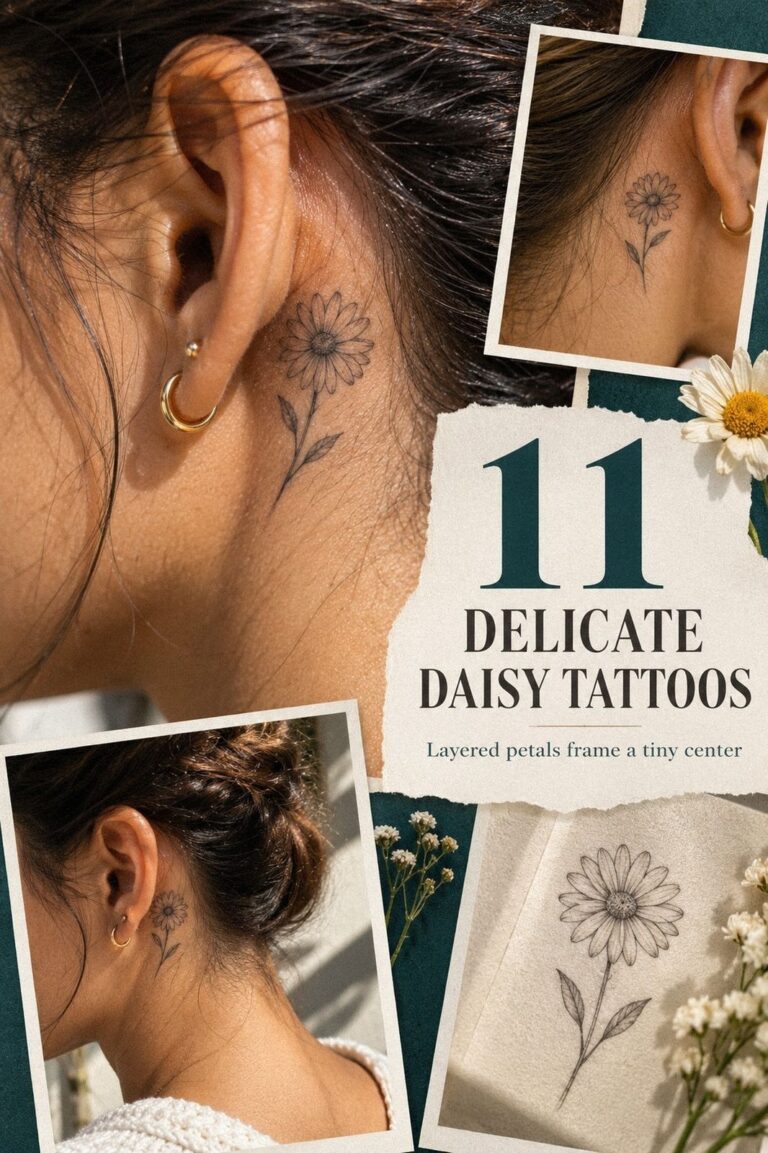
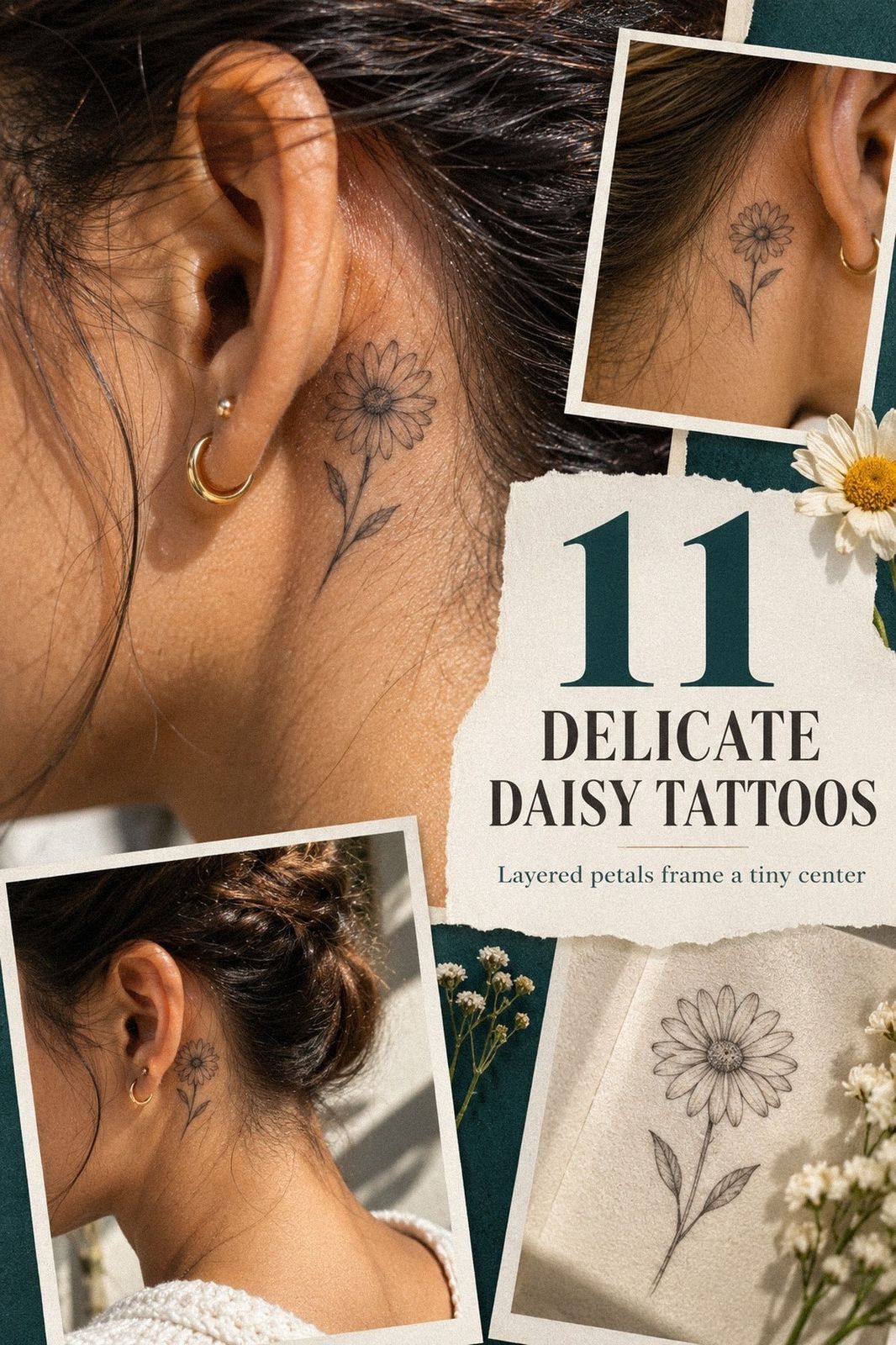
3Behind the Ear: A Small, Edgy Choice

Behind the ear, a tiny wildflower tattoo can feel dainty and slightly edgy at once. The placement already gives the design personality, so a bold concept isn’t required.
Keep the flower compact, with a strong outer shape and very few interior marks. Hair, shampoo, headphones, and repeated rubbing can affect the tattoo while it heals.
Your artist should inspect the hairline instead of placing the stencil on the first open patch. A flowing stem may look graceful from one angle but awkward when your head turns.
The Earline Test checks the flower from two views: straight on and in profile. If you can still see the stem and petal structure from both, the composition is working.
If you’re choosing between a hidden placement and something more visible, read this wildflower tattoo meaning article. Personal beats complicated here!

4Let Birth-Month Blooms Carry the Meaning

A birth-month flower turns a tiny wildflower tattoo into something symbolic without making it overly literal. A single stem with layered petals can feel romantic and expressive when the bloom reflects your birth month.
Your artist can simplify the botanical reference while keeping its recognizable shape. I’d rather see a clear black linework version than a crowded copy that loses its identity.
The Birth Bloom Method uses one recognizable petal feature, one stem, and one small leaf or bud. That’s enough to make the flower personal. One well-chosen bloom often feels more intimate than a cluster.
A symbolic poppy can suggest remembrance, resilience, or a loved one. A rose may carry love or memory. A small jasmine-inspired flower can feel feminine, classic, or quietly sacred depending on your story.
For comparison, explore the symbolism behind a yellow rose tattoo or a jasmine flower tattoo. Your final choice can stay minimal while still carrying a powerful story.
Black Ink or Color?
Black ink is usually the clearest starting point for a low-maintenance flower. It creates strong contrast and gives the design a sharp visual anchor.
Color pigment can be vibrant and playful, but it changes the value conversation. Pale shades may need more attention from you over time, especially if the tattoo sees regular sunlight.
Ask your artist to show healed color tattoos on skin tones close to yours. Fresh saturation can look dramatic. Healed work tells you much more about readability, contrast, and long-term value.
If you’re unsure, compare a black version with a limited-color palette of the same flower. The better choice is the one that still feels meaningful when the novelty wears off.
5Can an Ankle Flower Stay Clear?

An ankle flower can be stylish, but it has to deal with socks, footwear, friction, and sun exposure. I’d choose a vintage-looking outline with a strong stem rather than the smallest possible details.
The ankle can support an iconic design, but it isn’t the easiest location for fragile decoration. Ask your artist to simplify the stencil while preserving the recognizable silhouette.
Look for open space around the petals. If the bloom becomes a dark knot after healing, the original sketch won’t matter much. The goal is a clear tattoo, not a perfect copy of a drawing.
You can compare more options in this small peony tattoo collection. Your favorite sketch isn’t automatically your best tattoo. The strongest choice is the one that still looks crisp after the first impression fades.
Choose the Placement Before the Petals
Placement affects cost, comfort, visibility, and upkeep. It also changes how the flower moves with your body. A collarbone design can feel elegant and flowing, while an upper-arm design may be easier to protect.
Ask yourself how often the area sees washing, rubbing, sun, or pressure. Fingers and ankles are demanding. Thighs and upper arms are often easier to manage.
Your daily routine matters more than a trend. If you wear tight shoes every day, an ankle flower may not be the best value. If you wash your hands constantly, a finger tattoo could require more patience and future touch-ups.
For a wider comparison, read this tiny peony tattoo guide and note how the same botanical idea changes across placements.
6Black Ink on Deep Skin: What Matters Most

On deep skin, black ink can create a sharp, meaningful silhouette when the artist understands contrast and healed results.
7Colorful Petals, Limited Palette
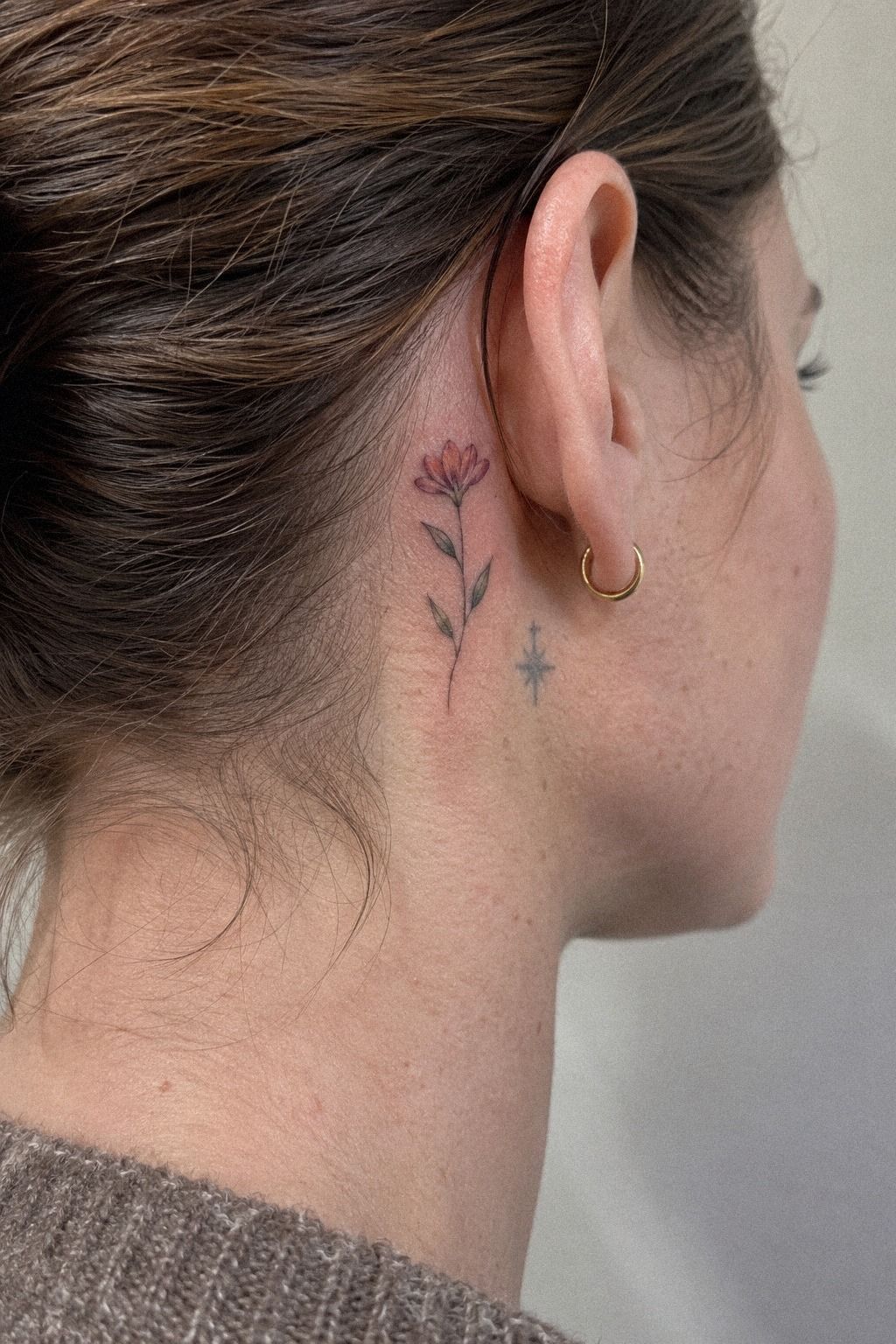
Colorful petals make a behind-the-ear flower feel vibrant and playful. A few controlled shades can separate the design from a basic outline, but the color areas need enough room for even application.
I’d choose muted coral or soft yellow over several pale pastel dots. Very light color can be harder to read as the tattoo settles. A restrained choice can still feel expressive.
The Petal Contrast Rule means each colored section needs a clear border or a deliberate gap beside it. If everything is equally light, the flower can lose its shape.
Three colors are usually enough for a minimal piece. If you’re tempted to add five, stop and ask whether each shade earns its place. A stylish tattoo needs clarity more than variety.
Read this flower tattoo meaning guide before choosing a color based only on appearance. Symbolism can help you decide what deserves emphasis.
What Should You Ask Before Booking?
Start with the artist’s healed portfolio. Ask how they approach fine lines, small petals, darker skin, color, and high-friction placements.
Then ask about studio hygiene practices, expected healing, touch-up policy, and the final quote. A professional should answer clearly. You shouldn’t feel rushed into a deposit.
Bring your budget into the conversation early. The cheapest appointment may not offer the best value if the design needs an early correction. A slightly higher cost can be worth it when the artist’s healed work supports the decision.
You can also ask whether your idea needs to be enlarged. That answer may disappoint you for five minutes. It may protect the tattoo for years.
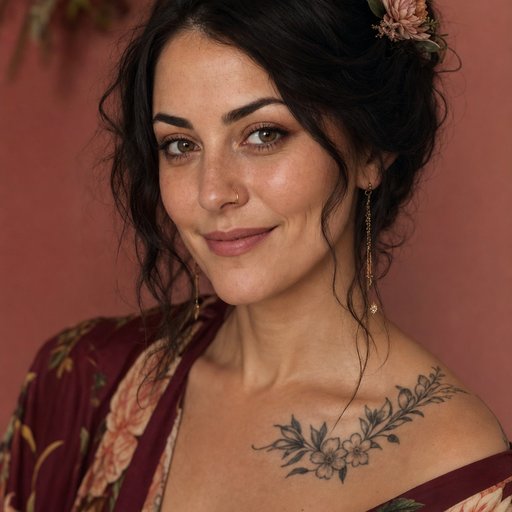
8Follow the Collarbone, Not the Trend

A collarbone placement follows the body’s natural line, which makes the design feel graceful and flowing.
9Build the Botanical Stem First

An upper-arm design gives your tiny wildflower tattoo more visual breathing space. The botanical stem can support layered petals and two leaves without forcing every detail into a narrow patch.
I’d spend most of the consultation on the botanical stem. A weak stem can make the bloom look disconnected, while a curved one gives the design graceful movement.
The upper arm is also easier to protect from daily rubbing than a finger or ankle. That can lower upkeep and improve the long-term value of the choice.
The Stem-to-Petal Ratio is my preferred test: the stem should guide the eye, but it shouldn’t overpower the bloom. If you’re adding leaves, keep them unequal in size so the tattoo feels organic rather than mechanically mirrored.
For more floral references, browse this tiny peony tattoo guide. You can borrow a peony’s layered logic while keeping your own flower minimal.
A Stem, a Leaf, or Both?
A single stem creates a minimal and understated result. One leaf adds direction. Two leaves can make the composition feel more botanical, but they also increase the visual workload.
I’d add a leaf only when it improves the silhouette. Extra marks should have a reason. Otherwise, they may turn a delicate flower into a crowded one.
A crisp botanical stencil should still work as a small shape before the needle touches skin. Stand back from it. If the design looks confusing from a short distance, simplify it.
You can find more symbolic approaches in this wildflower tattoo meaning guide. The best detail is the one you’ll still care about later.
10Is a Finger Flower Worth the Upkeep?
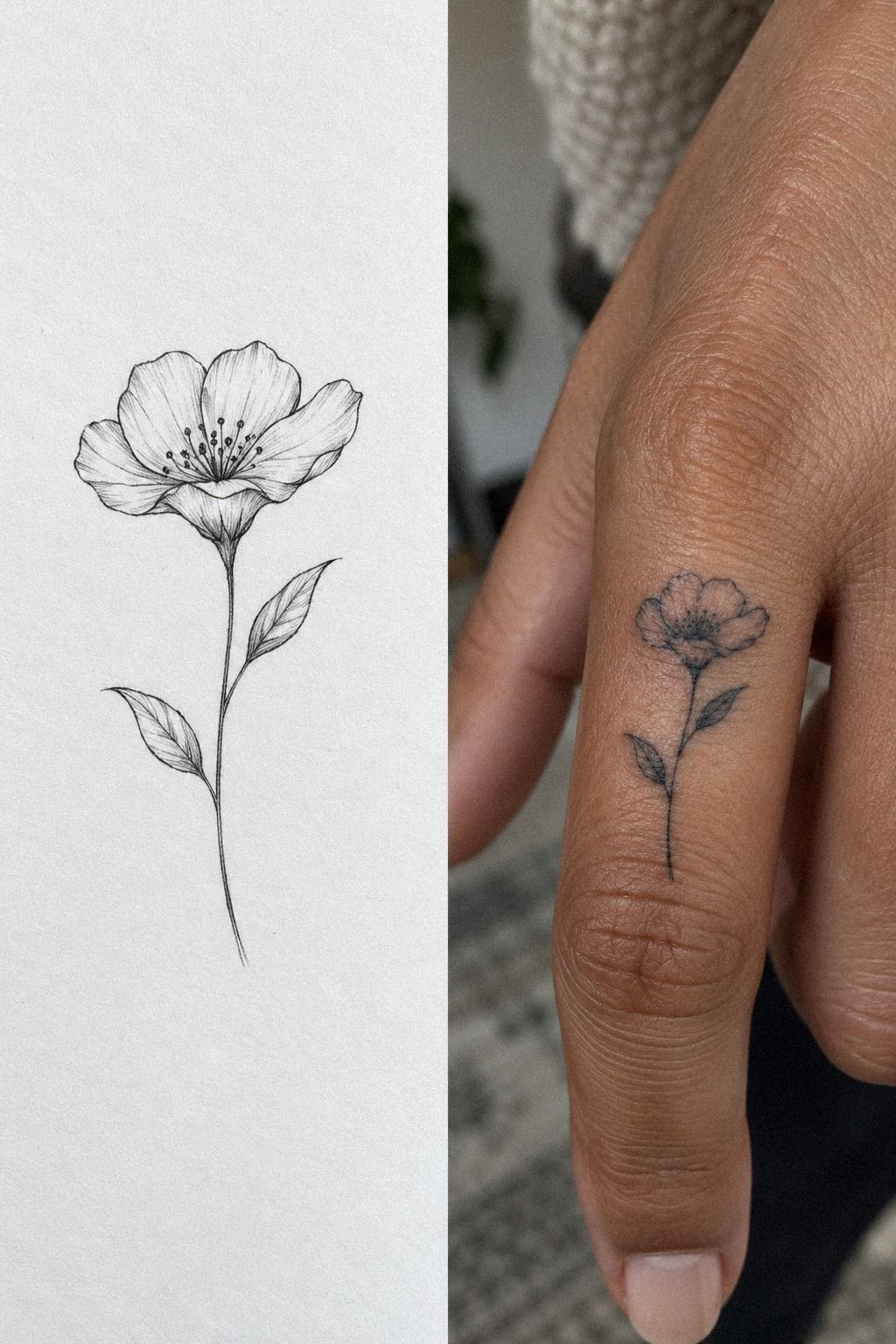
A meaningful finger flower can feel daring, visible, and personal. It can also be one of the most demanding placements because of washing, gripping, friction, and sun exposure.
I’d choose the simplest version of the stencil, with a strong outer shape and minimal interior detail. Your artist should explain what may soften and show healed finger work.
If your priority is low maintenance, I’d pick the upper arm or thigh over the finger without hesitation. The finger can be worth it when visibility matters more than longevity, but that’s a deliberate tradeoff.
The Healed Proof Rule is straightforward: don’t book from fresh photographs alone. Ask how the lines settled and decide whether you’d still like the flower if it became slightly softer.
The healed tattoo result is the part to study closely. Read this poppy tattoo meaning article while you decide whether visibility matters more than long-term ease.
Maya’s Healed-Work Checklist
Before choosing an artist, I’d look for four things:
– healed fine-line tattoos, not only fresh work; – flowers on varied skin tones; – clear explanations about placement and touch-ups; – consistent aftercare instructions.
Look for line quality in ordinary lighting. The work should remain readable without filters or dramatic close-ups.
You can also ask how the artist handles corrections. A confident artist won’t promise that every tiny tattoo will look unchanged forever. They’ll explain what affects aging and how to make the design more durable.
If you’re comparing botanical styles, this small wildflower tattoo collection can help you describe the shape you want without copying every detail.
11A Minimal Bouquet With Room to Breathe
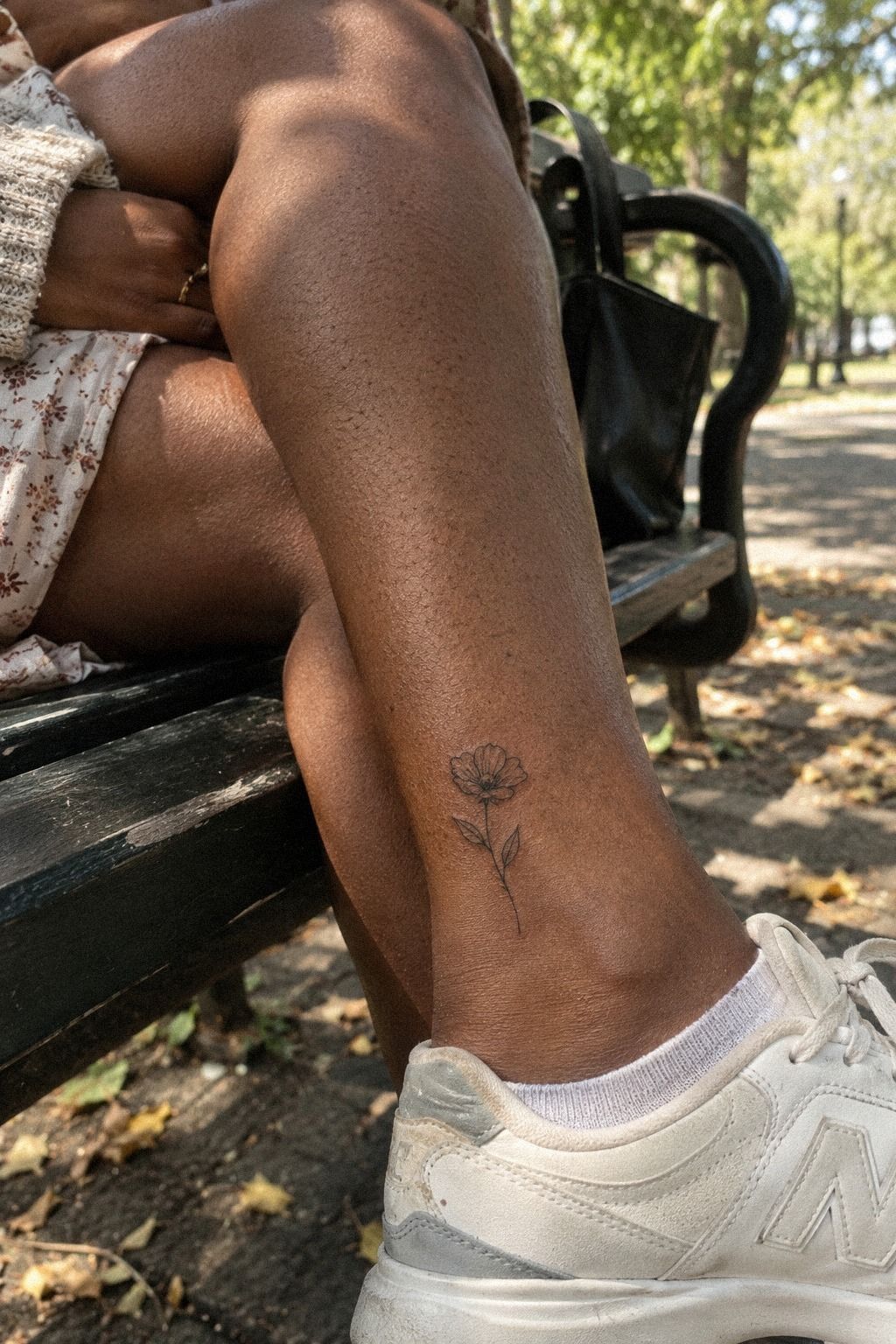
A minimal bouquet on the ankle can feel elegant without turning into a crowded cluster.
A tattoo’s price includes more than the minutes under the needle. Consider the artist’s studio minimum, consultation, design time, placement difficulty, color, and possible touch-up.
These figures are planning ranges, not guarantees. Your final hourly tattoo rate depends on the artist, region, placement, and complexity.
A low price isn’t always a bargain. If the work heals poorly, the correction can cost more than the original appointment. For a high-friction location, paying for a strong artist may be worth it.
I’d also keep a small touch-up budget aside. That doesn’t mean the tattoo failed. It means skin, sun, movement, and personal expectations vary.
The Longevity Choice I’d Make
I’ve changed my opinion about tiny tattoos over time. I used to think the smallest line was automatically the most refined choice, but that isn’t true. A line can be elegant and still be too delicate for its placement.
For me, black ink remains the safest starting point when longevity matters. Color can be vibrant and emotionally right, but it asks you to think harder about contrast and sun exposure.
I wouldn’t reject color. I’d ask for a healed portfolio and a limited palette before committing. That’s a more polished decision than choosing a shade because it looks dramatic when fresh.
Placement matters just as much. I’d choose an upper arm or thigh before a finger if the goal is low maintenance. I’d choose the wrist when visibility matters, and behind the ear when privacy matters more.
There isn’t one universally correct spot. There is a correct spot for your habits. Your daily friction level should guide the decision.
Aftercare isn’t an afterthought. The surface may look settled in roughly 2 to 3 weeks, while the tattoo can take about 2 to 3 months to fully settle. Follow your artist’s aftercare instructions and don’t rush the process.
Keep it clean, avoid direct sun during healing, and let your skin do its work. Patience protects the design better than constant checking. A careful healing timeline gives the tattoo its best chance to stay crisp.
The classic mistake is chasing maximum detail in minimum space. Your flower doesn’t need to carry a whole garden.
It needs a confident outline, enough open skin, and a meaning you won’t outgrow. That’s the choice I’d make every time!
What People Always Want to Know
How much does a tiny wildflower tattoo usually cost?
A tiny wildflower tattoo typically costs about $50 to $100 at a studio minimum or about $100 to $250 per hour in the US. Your final price varies by artist, region, placement, and complexity, so ask for a quote before booking.
Are tiny wildflower tattoos a good idea for a first tattoo?
Yes, they can be a meaningful first tattoo when the design stays visually simple. A clear outline is easier to understand than crowded detail. Choose an artist with healed fine-line work and realistic advice about size.
How do I choose a tattoo artist for tiny wildflower tattoos?
Review the artist’s portfolio for crisp linework, healed photographs, and flowers on skin tones similar to yours. A strong healed portfolio matters most, along with clear hygiene practices and direct answers about placement and aftercare.
How much do tiny wildflower tattoos hurt?
Pain depends on your tolerance and the location. Ribs, feet, hands, and sternum may feel sharper, while the forearm, thigh, and shoulder are often easier for many people. Ask about breaks if you’re nervous.
How long does a tiny wildflower tattoo take to heal?
The surface usually heals in about 2 to 3 weeks, while complete settling can take about 2 to 3 months. Gentle washing helps, and you should avoid direct sun and swimming while the surface is healing.
What’s the best placement for tiny wildflower tattoos?
The upper arm and thigh are strong choices for easier healing and better longevity. The wrist and behind-ear area offer visibility or privacy. Your daily routine matters, so consider sleeves, shoes, handwashing, and sun exposure.
Where I’d Start First
If I had to pick one, I’d start with the upper-arm botanical stem. It gives your artist enough space for a clear flower and avoids the constant friction of a finger or ankle.
I’d keep the design black, minimal, and personal. One bloom, one curved stem, and one small leaf can feel more striking than a crowded bouquet.
Pin the idea for later and compare it with this tiny peony tattoo guide before booking. The right choice should feel meaningful now, practical for your routine, and readable after the fresh shine fades.