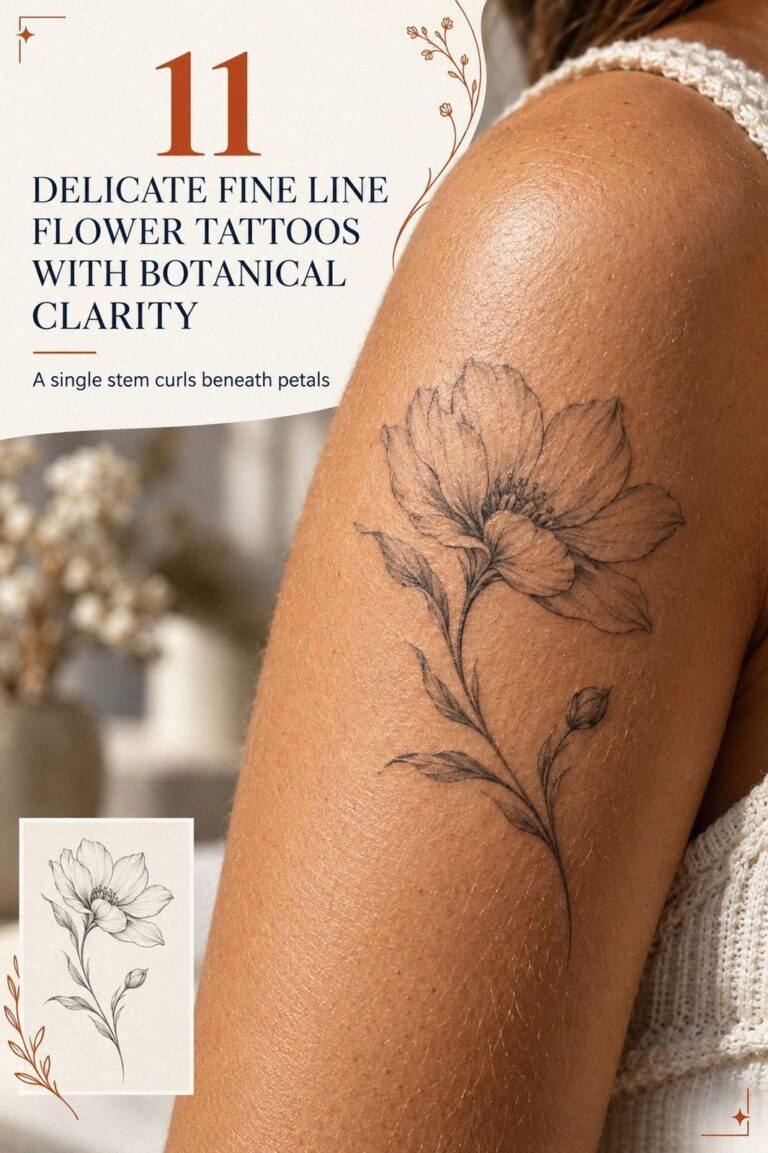
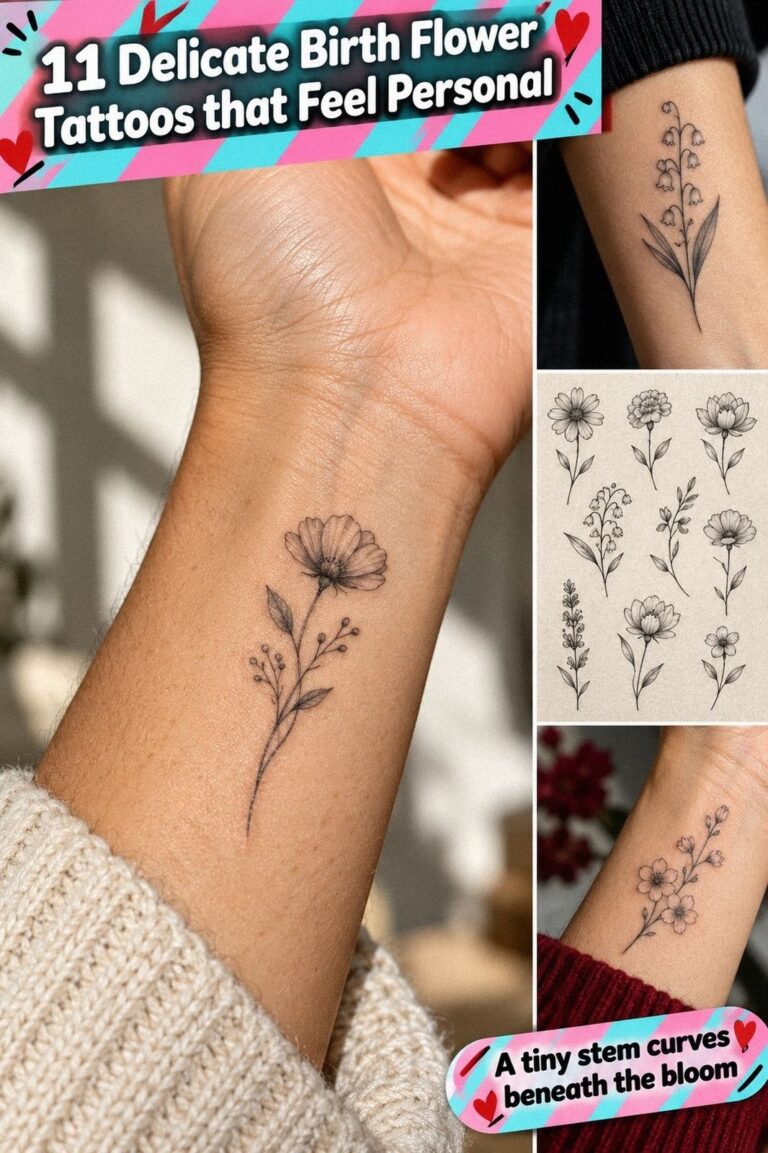
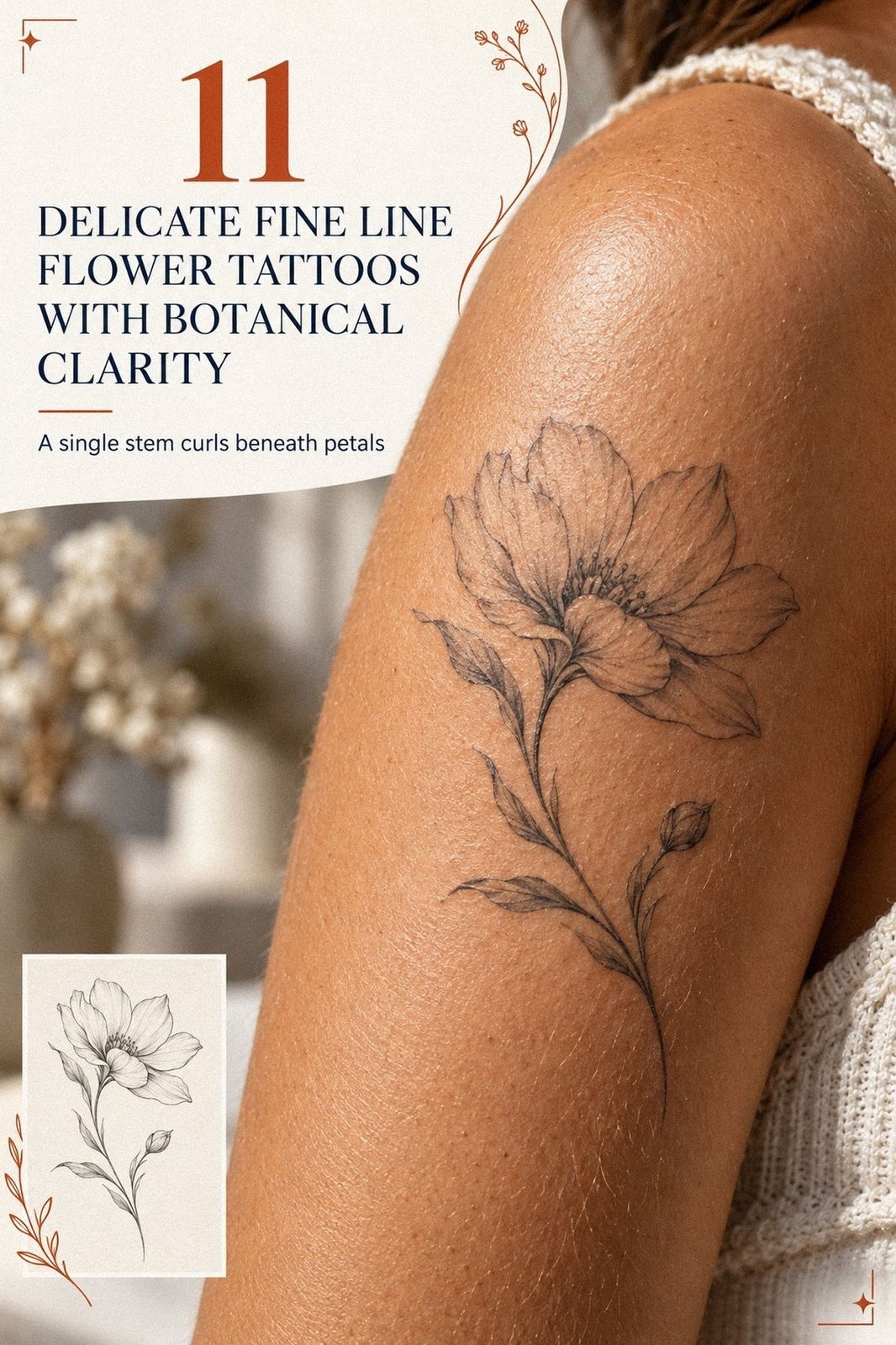
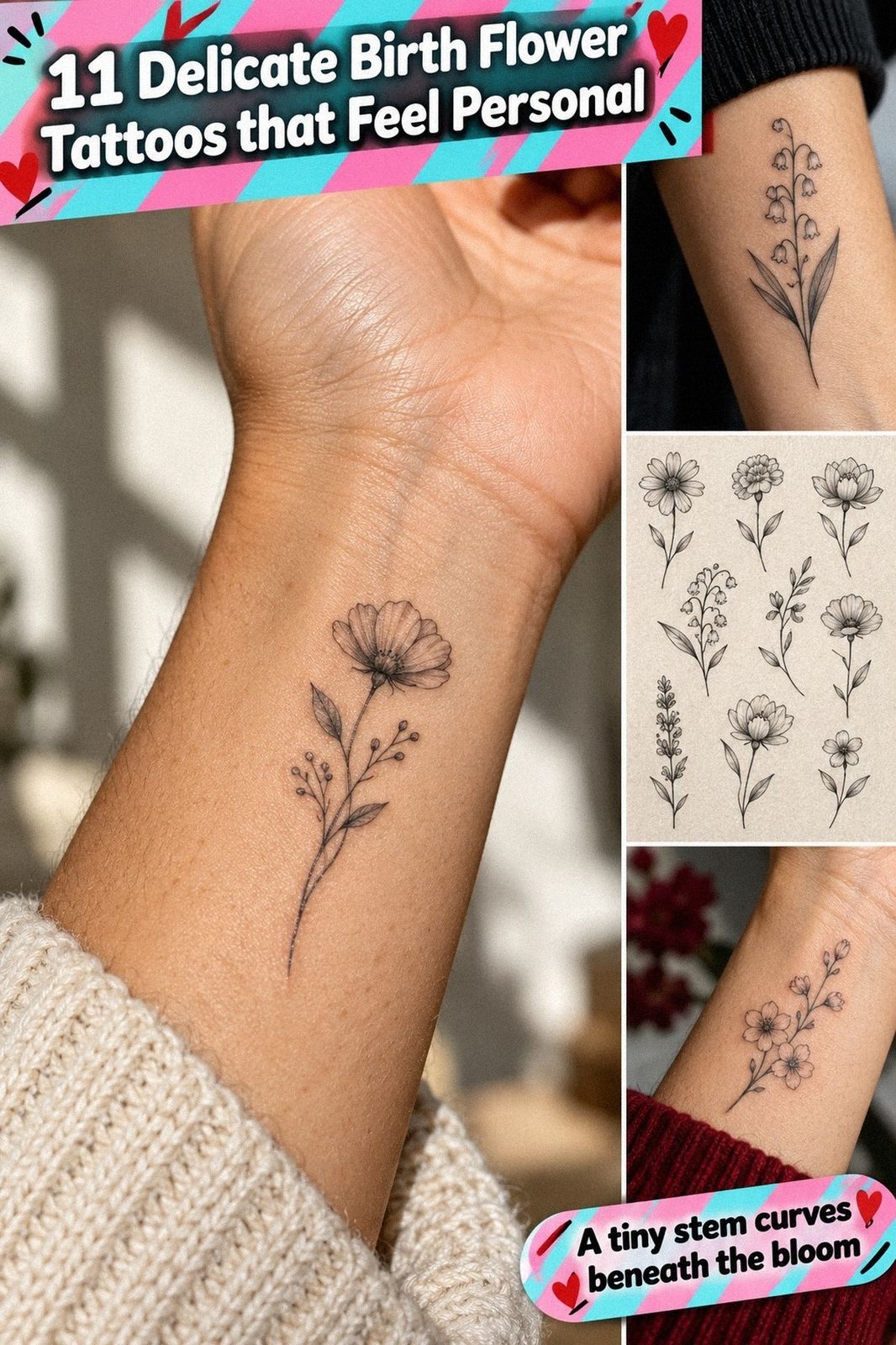
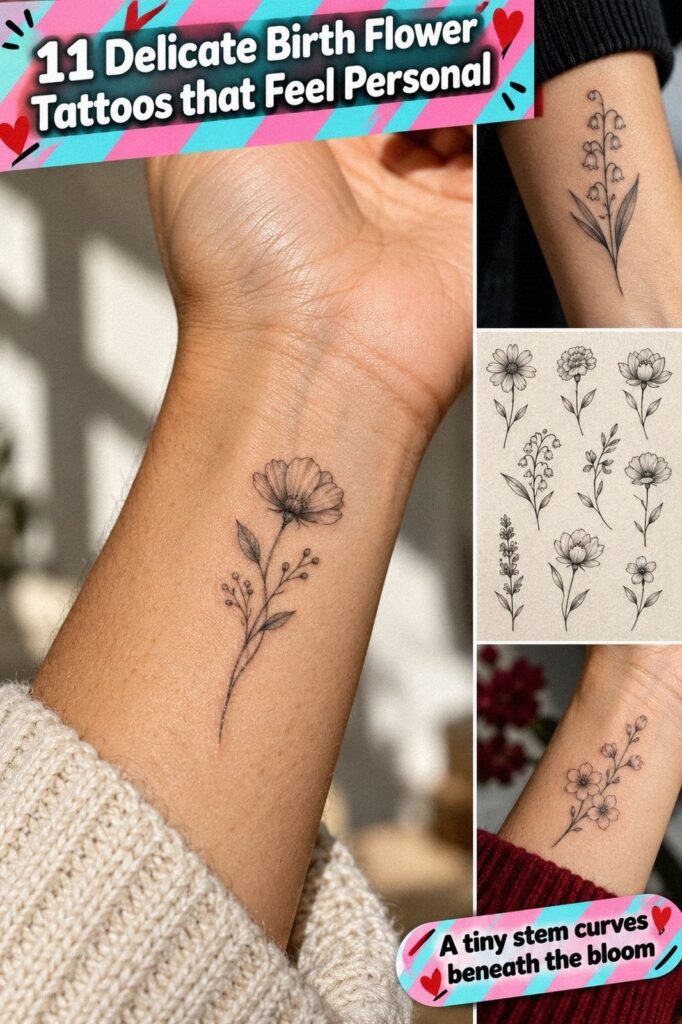
Small wildflower tattoo designs can be among the more tolerable first sessions, especially on the outer forearm, upper arm, or thigh. Mine hurt less than I expected, but I made one mistake: choosing placement before checking how the lines would age. These ideas pair delicate shapes with smarter placement. Keep your favorite references ready!
- Small Wildflower Tattoo With Fine Linework
- Why Put a Small Wildflower Along the Wrist?
- Behind-the-Ear Wildflower
- Choose Botanical Blackwork for More Weight
- Colorful Petals, One Strong Accent
- Follow the Ankle’s Natural Line
- The Tiny Stem Rule
- Can a Birth Flower Make It More Personal?
My rule is simple: choose the tattoo placement before you finalize the flower. That decision affects comfort, line strength, visibility, cost, and long-term value.
A small tattoo can still feel striking, meaningful, and personal when the proportions make sense. The best design usually feels expressive without asking the skin to carry more detail than it can support.
- Small Wildflower Tattoo With Fine Linework
- Why Put a Small Wildflower Along the Wrist?
- Behind-the-Ear Wildflower
- Choose Botanical Blackwork for More Weight
- Colorful Petals, One Strong Accent
- Follow the Ankle’s Natural Line
- The Tiny Stem Rule
- Can a Birth Flower Make It More Personal?
- Try Delicate Dotwork
- Across the Collarbone: Let the Stem Flow
- Initials That Stay Secondary
1Small Wildflower Tattoo With Fine Linework

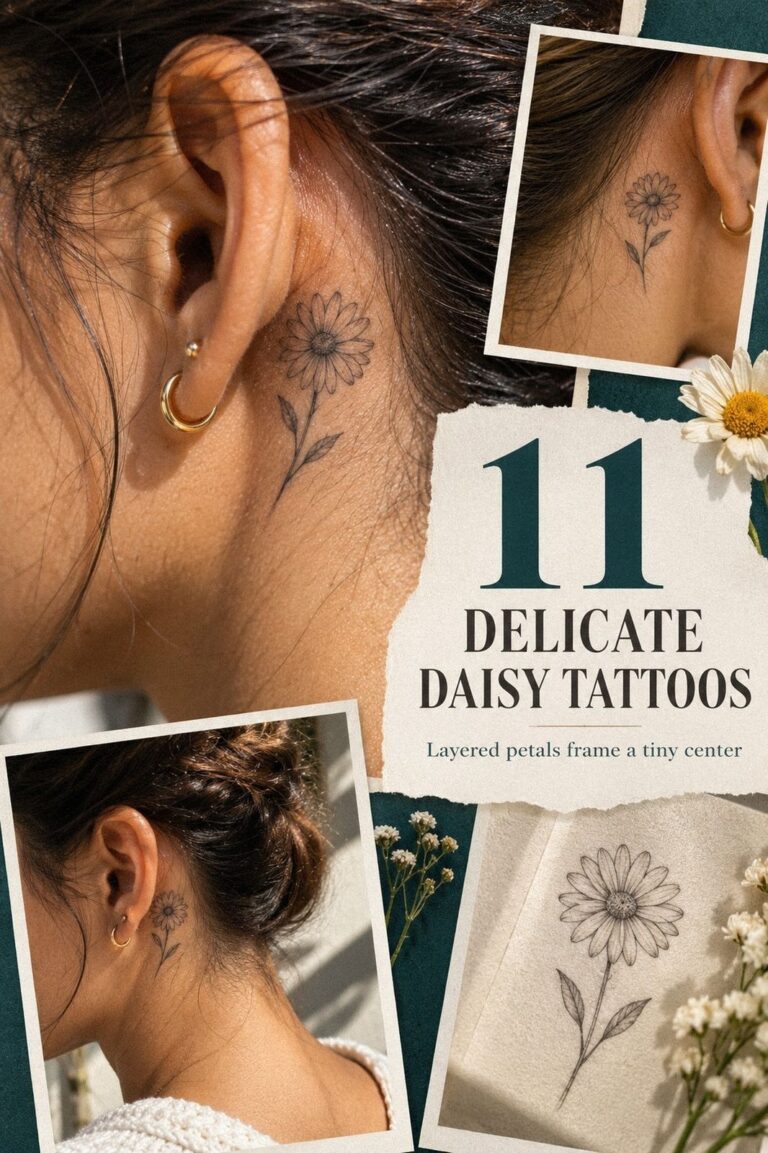
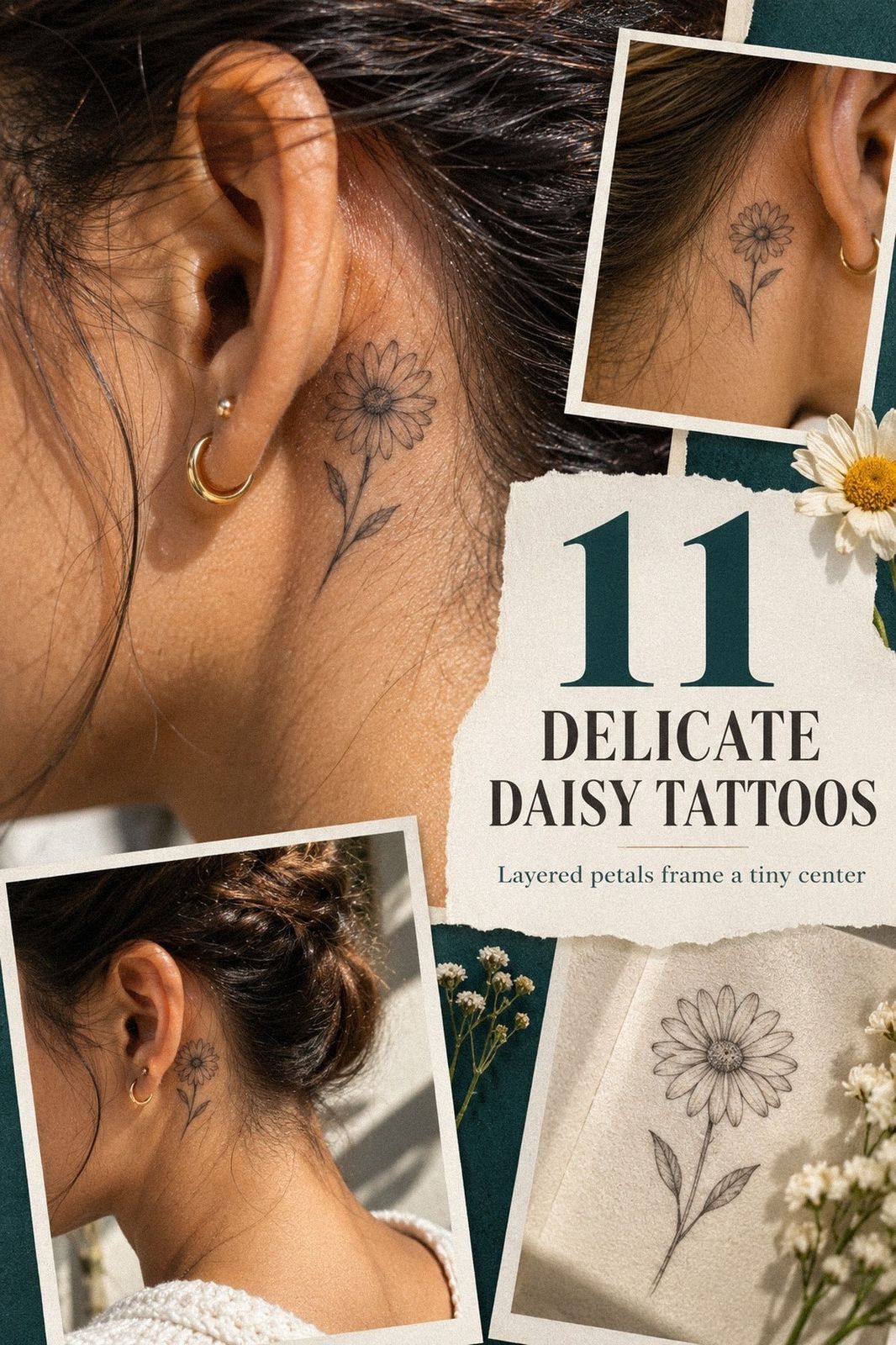
A fine-line wildflower behind the ear gives you an intimate, striking mark without taking over your face or neck. Choose one slim stem, layered petals, and crisp black contours.
If you’re choosing this placement, ask your artist to keep the silhouette readable rather than squeezing in extra leaves. A 3RL tattoo needle can create the sharp, intricate outline you want.
You’ll notice that the flower sits just below the hairline, so your design won’t vanish when your hair moves. I’d skip an oversized bloom because the curve behind the ear is small.
Crowded petals can blur sooner. The right size feels personal, not hidden.
The cleanest version uses carbon-black ink with a tiny amount of negative space between each petal. That gap matters!
As your skin heals, fine lines can soften or spread. Open spacing helps the flower remain expressive. You don’t need a heavy shadow to make this placement feel bold.
For meaning, a single wildflower can represent resilience, independence, or a specific person. If you want the symbolism to lead the design, compare it with our guide to wildflower tattoo meaning.
I’d choose this idea when you want something understated, feminine, and easy to keep mostly private. A small peony tattoo is another option if you prefer fuller petals.
2Why Put a Small Wildflower Along the Wrist?

A wrist wildflower reads delicate from a distance but becomes surprisingly powerful up close. Use a single stem and layered petals, with the bloom angled toward the hand.
If you’re planning your own version, ask for a vertical flow that follows your wrist instead of crossing it bluntly. That makes the mark look graceful when you move.
Wrist skin gets plenty of washing, rubbing, and sunlight, so your artist needs a decisive line. I’ve seen tiny details disappear when the stencil was too ambitious.
A single-needle black line can look elegant, but I’d pair it with one slightly stronger contour around the outer petals. You’ll keep the minimal feeling without sacrificing readability.
This placement can sting more than an upper arm because the wrist has less padding. Still, sessions are often short when the design stays small. Your appointment might feel manageable if you eat beforehand, hydrate, and avoid arriving with irritated skin.
Don’t treat a low-pain session as guaranteed, though.
A vertical stem also gives you room for a tiny date or initial later, but I wouldn’t add it immediately. Let the flower stand alone first.
For a softer botanical direction, look through these small lotus flower tattoo references and this small flower crown tattoo collection before you commit. Both can help you judge how much detail your wrist can carry.
3Behind-the-Ear Wildflower

Behind-the-ear placement looks discreet until you tuck your hair back, which is exactly why it feels playful. Use one stem, rounded layered petals, and a sharp black outline. If you want a meaningful tattoo that doesn’t announce itself immediately, this is one of my favorite choices.
Your artist should test the stencil from several angles because the skin curves toward the neck. A sterile purple transfer stencil lets you check whether the flower stays balanced when your head turns.
I’d reject a design that only looks good facing forward. Tattoos travel with your body, and this one needs to follow the curve.
The area can be tender, and the buzzing sound feels louder near your ear. The session itself may be brief, but you’ll want your artist to work patiently around the hairline.
Avoid booking right after aggressive exfoliation or hair removal. Your skin needs to arrive calm, clean, and ready for careful ink.
A symbolic flower earns its place here. You could choose a bloom connected to a birthday, a family member, or a private promise. For a more personal direction, read about yin yang flower tattoo meaning and yellow rose tattoo meaning.
I’d keep the composition minimal because ornate detail behind the ear can become muddy fast.

4Choose Botanical Blackwork for More Weight
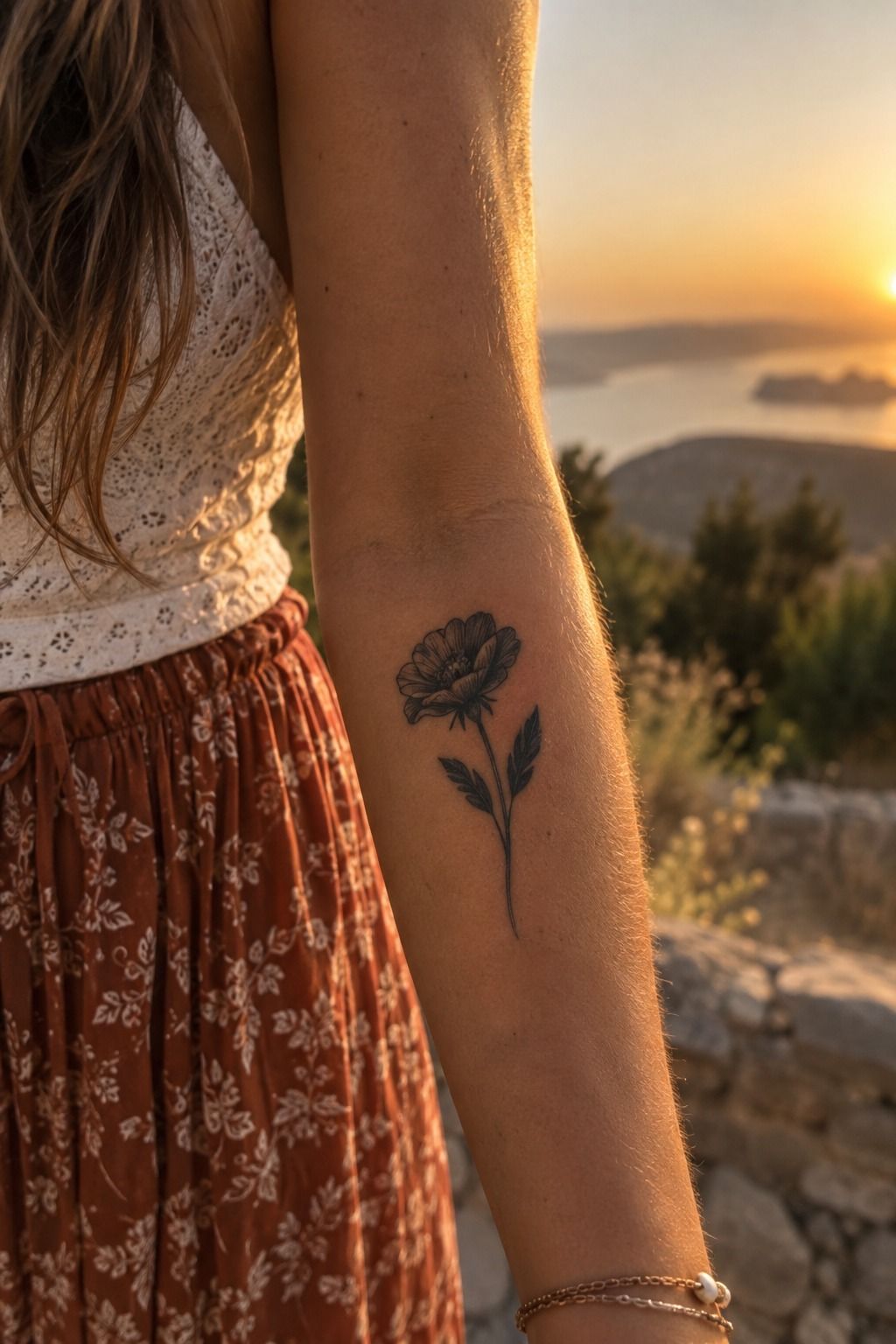
Botanical blackwork gives a small wildflower more visual weight without making it large. Use solid black contours and restrained shading. If you want a fierce design with excellent contrast, this is the strongest option in the group.
Your artist can use bold blackwork with smooth grey shading to separate the petals from the stem. I’d avoid weak grey outlines because they can disappear against deeper skin tones during healing. Ask to see healed examples on a similar skin tone.
Fresh ink is always darker and sharper.
A carbon-black pigment anchor at the stem gives the flower structure, while small areas of uninked skin keep the design from looking heavy. Try the Two-Weight Line Rule: a firm outer edge, then lighter interior marks. It’s simple, but it keeps your tattoo readable from several feet away.
Don’t let blackwork push you into filling every petal. Your skin should remain part of the drawing.
I’d choose this approach for a crisp, masculine, or edgy interpretation, especially if you’re worried about fine lines becoming too faint. These yasmin flower tattoo references may help if you want a graceful bloom with the same dark structure.
You can also compare womens flowers tattoo meaning for symbolic direction.
5Colorful Petals, One Strong Accent

A colorful wildflower can feel vibrant without becoming chaotic. Start with black linework, then choose one accent shade such as coral, yellow, blue, or red. That planning stage is useful when you’re not sure whether color belongs in your first tattoo.
A sterile paper stencil won’t show the final color, so ask your artist for healed examples with the same pigment family. I’d choose one bright accent rather than five competing shades. A red center or muted yellow petal can make the design vibrant while keeping the wildflower recognizable.
Your tattoo doesn’t need every color in the reference book.
Color can fade faster with frequent sun exposure, especially if you skip sunscreen after the tattoo has fully healed. You’ll need to follow your artist’s aftercare instructions first, then protect the skin long term.
Avoid swimming and direct sun during the early healing period. The surface may look settled before the deeper layers are ready.
Color can wait!
If you want meaning to guide the color, a yellow bloom can suggest friendship, while a red flower may feel romantic or daring. Explore wildflower tattoo meaning before choosing a shade.
I’d personally keep the linework black and let one colored petal carry the emotional weight. It looks more timeless than a tiny rainbow.
6Follow the Ankle’s Natural Line

An ankle wildflower can look dainty, elegant, and unexpectedly bold when the stem follows the natural slope above the foot. Use fine linework, layered petals, and two small leaves. Your artist should prioritize contrast and spacing so the flower remains crisp against your skin tone.
Ask for a stencil in the exact location, then walk a few steps before approving it. A white transfer outline may be harder to read on some skin tones, so your artist might adjust the preview method. The point is to judge proportion and placement clearly before the needle starts.
Ankle tattoos can be more painful because there’s less soft tissue around the bone. I’d choose a compact design with no unnecessary reworking.
You’ll probably tolerate the appointment better if the flower stays around 2 to 3 inches tall instead of becoming a miniature sleeve. Small doesn’t mean careless.
Footwear matters during healing. Tight socks and rubbing shoes can irritate a fresh tattoo, so plan your appointment around loose clothing and an easy healing period.
For a fuller but still delicate botanical idea, compare small peony tattoo references with small lotus flower tattoo designs. I’d choose the wildflower because its open shape handles the ankle’s narrow canvas better.
7The Tiny Stem Rule

A tiny stem changes the entire personality of a flower. Place the bloom on the ankle or wrist with a very short stem, so the petals become the clear focus. If you want a minimal tattoo that feels crisp rather than unfinished, this proportion can be remarkably effective.
Your artist can use 0.25 mm tattoo needlework for the smallest interior marks, but the outer contour still needs enough strength to age well. I’d remove extra leaves before shrinking the design. When you compress too many elements into a tiny tattoo, the negative space disappears.
The Tiny Stem Rule is simple: let the bloom carry the meaning, and let the stem provide enough direction to keep it grounded. You’ll get a more expressive result when the stem bends slightly instead of dropping perfectly straight. That small irregularity makes the drawing feel personal.
This is a good choice if you want something understated, dainty, and easy to place near the ankle or wrist. But you shouldn’t choose it only because it looks painless.
Bone-adjacent areas can still hurt, and your artist may recommend a slightly larger size for longevity. See these small flower crown tattoo ideas for ways to keep a tiny botanical design visually open. Yin yang flower tattoo meaning can also help if you want a symbolic angle.
8Can a Birth Flower Make It More Personal?

A birth-flower tattoo gives your wildflower a meaningful reason to exist.
9Try Delicate Dotwork

Dotwork gives a small wildflower a textured, almost vintage character. Use a fine stem, layered petals, and tiny dots for depth. If you want an intricate tattoo that feels softer than solid blackwork, dotwork is worth discussing with your artist.
A 3RL dotwork needle can create a gradual shadow beneath the petals, but the dots need breathing room. I’d avoid packing a dark halo around the entire flower because it can look bruised during healing. A few deliberate points near the center are more expressive than random texture everywhere.
The spine is not my first pick for a low-pain session. Bone, skin tension, and posture can make it intense, especially near the shoulder blades or lower back.
You’ll want an artist who works steadily and lets you pause. Why force a long session when the same dotwork could sit on an outer forearm?
Dotwork also needs sun protection because faded points can lose their rhythm. Follow your artist’s aftercare instructions, wash gently, moisturize as directed, and avoid pools during the early healing period.
For more symbolic research, visit womens flowers tattoo meaning. I’d pick this style for a haunting, timeless result, but only with someone whose healed dotwork you’ve inspected.
10Across the Collarbone: Let the Stem Flow

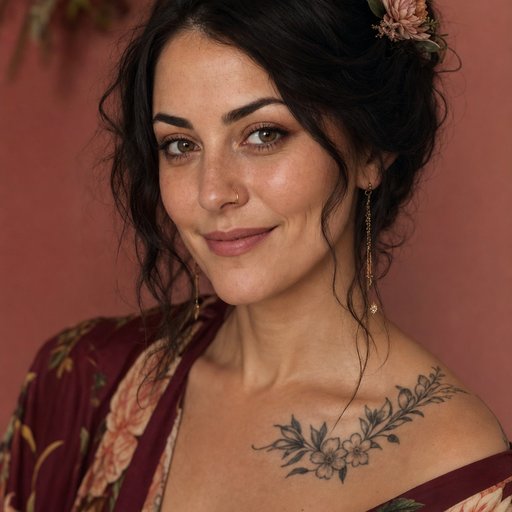
A collarbone wildflower creates a flowing line that can feel elegant without becoming oversized. Use one bloom with a measured curve and enough negative space around the stem. A horizontal design often looks polished when it respects your natural shape.
Your artist should explain how healed black ink softens after the first few weeks. I’d pay close attention to healed examples, especially where petals overlap or stems cross.
A design that looks crisp on paper may need fewer interior marks once it reaches skin. The best tattoo is drawn for healing.
Across the collarbone, a horizontal composition can be striking, but don’t stretch the flower too far just to fill space. One bloom usually carries more visual force than several cramped flowers. You can keep the design around 2 to 4 inches wide, depending on your anatomy and the artist’s recommendation.
This placement can be tender. The collarbone has less padding, but sessions are often manageable when the design stays focused.
Compare the symbolism in wildflower tattoo meaning before deciding whether you want a single bloom or a small botanical sequence. I’d choose the single bloom because it gives your skin enough negative space.
11Initials That Stay Secondary

Adding initials turns a familiar flower into something unmistakably personal. Place a fine-line wildflower behind the ear or along the wrist, with one small letter nearby. If you choose this idea, your artist should make the initial secondary to the flower.
A fine-line letter stencil lets you test whether the initial remains legible at the final size. I’d avoid ornate script behind the ear because tiny loops can close as the tattoo ages. A simple serif or clean handwritten mark will usually hold its shape better.
The strongest version uses one initial, not a full name and date squeezed beside it. You’ll keep the tattoo expressive, meaningful, and discreet. If you’re honoring more than one person, consider choosing a birth flower or a petal count instead of adding extra text.
For more ideas, compare this with a small peony tattoo or read about wildflower tattoo meaning. I’d choose this concept when the initial has a clear emotional reason. A personal tattoo should feel intentional every time you see it.
The Budget Check
Small tattoos aren’t always cheap tattoos. Many artists have a shop minimum, even when the appointment lasts less than an hour. A shop minimum may fall near $50 to $100, while a small custom piece can cost about $100 to $300.
Ask what the quote includes before you book. A lower price isn’t always better value if the artist lacks healed examples. For a meaningful tattoo, paying for clean linework and thoughtful placement can be worth it.
A custom piece may include drawing time, stencil adjustments, and a deposit. Ask whether revisions are included before you send reference images. Clear pricing makes the appointment easier to plan.
Questions to Ask Before You Book
Ask whether the artist works often with small botanical tattoos. Request healed photos, their expected session length, and their approach to your skin tone. Healed portfolio evidence tells you more than a fresh result under bright studio lighting.
Ask how the design will change if the stencil looks crowded. A skilled artist may remove leaves, widen gaps, or strengthen one contour. That small edit can improve longevity and protect your budget from an avoidable touch-up.
You should also ask about deposits, rescheduling, aftercare, and touch-up costs. Clear answers make the appointment feel more manageable.
If the artist avoids basic questions, I’d keep looking. Ask anyway!
What Will Still Read Years Later?
The most durable small wildflower tattoos use clear silhouettes, open spacing, and controlled detail. Readable linework matters more than adding every petal. Fine lines can soften, so the design needs enough structure from the start.
Sun exposure, friction, and body location all affect the result. Wrists, ankles, and hands may need more attention than covered areas. Use sunscreen only after the tattoo has fully healed, and follow your artist’s aftercare instructions during the early stage.
A tattoo can remain elegant without staying razor-sharp forever. Some softening is normal.
The goal is a design that remains recognizable, expressive, and personal as your skin changes. Healed tattoo photos can help you set a realistic expectation.
A Quick Placement Decision
Choose the outer forearm, thigh, or upper arm when comfort and readability matter most. Choose the wrist, ankle, collarbone, or behind-the-ear area when visibility and symbolism matter more. Outer forearm placement gives many first-tattoo clients a strong balance.
Think about friction, sunlight, clothing, and how often you want the tattoo visible. Your daily routine should influence the decision. A striking design becomes frustrating if it constantly catches on clothing during healing.
I’d also consider whether you may want a larger botanical piece later. A small stem can stand alone or become part of a future collection. Leave enough visual breathing room for that future collection possibility.
Why I’d Choose Placement Before Meaning
I used to think the flower itself was the important decision. It isn’t.
Placement choice controls the pain, the visibility, the way the line follows your body, and how much room your artist has to let the design age gracefully. Once I understood that, choosing the bloom became much easier.
Your favorite flower still matters, but it can’t solve a poor canvas.
My first mistake was asking for too much detail in too little space. The design looked intricate on my phone, yet the stencil became crowded when it reached skin.
I cut two leaves, widened the petal gaps, and kept one stronger outer line. That small edit made the tattoo feel more polished, crisp, and personal.
I also learned that “low pain” needs honest context. An outer forearm may be more tolerable than the ribs, feet, hands, or sternum, but everyone’s pain response is different. A short session helps.
So does eating beforehand, drinking water, and choosing an artist who won’t rush you through a sensitive spot. Low-pain session is always a relative goal.
My Three-Scale Check now comes before every appointment: does the flower read from a distance, does it still look good as a stencil, and can the smallest mark survive healing? If your answer is yes to all three, you’re ready to book a consultation.
The most empowering design isn’t the loudest one. It’s the one you’ll still understand years from now.
A Few Things Worth Answering
How much does a small wildflower tattoo usually cost?
A small wildflower tattoo typically costs about $100 to $300 in the US, though shop minimums may sit near $50 to $100 and hourly rates often fall around $100 to $250. The final price varies by artist, region, size, detail, and color.
You’ll get a better estimate after showing the artist your placement and reference. A tiny tattoo can still meet a shop minimum, especially when the artist specializes in fine linework.
Are small wildflower tattoos a good idea for a first tattoo?
Yes, they can be a manageable first tattoo when you choose a tolerable placement and a design with clear spacing. Outer forearms, thighs, and shoulders are often easier for many people than ribs, feet, hands, or sternum.
You shouldn’t choose fine linework only because it looks gentle. Ask for healed portfolio examples and make sure the flower still reads after the fine-linework softens.
How do I choose a tattoo artist for small wildflower tattoos?
Choose an artist with clean linework, healed photographs, and strong hygiene practices. Healed portfolio evidence matters more than a fresh tattoo photographed under bright studio lighting.
You’ll also want to confirm that the artist regularly works at small scales. Ask how they’d adjust the stencil for your skin, placement, and desired longevity before you book. Small-scale work should still have visible structure.
How much do small wildflower tattoos hurt?
Pain depends on your body and placement. Ribs, feet, hands, and sternum are commonly more sensitive, while the outer forearm, thigh, and shoulder are often more tolerable areas for many clients.
Your session may feel sharper near bone or thinner skin. Eat first, hydrate, and tell your artist if you need a pause. You don’t win anything by pretending you’re comfortable.
Pain response varies more than online charts suggest.
How long does a small wildflower tattoo take to heal?
The surface usually heals in about 2 to 3 weeks, while complete healing can take roughly 2 to 3 months. Gentle aftercare protects the result during that longer process.
Follow your artist’s instructions, wash gently, moisturize as directed, avoid pools during early healing, and protect the healed tattoo from UV exposure. Don’t pick flakes or scabs.
What’s the best placement for a small wildflower tattoo?
The outer forearm, thigh, and shoulder are strong choices when you want better comfort and readable lines. Behind the ear, ankle, wrist, collarbone, and spine offer more visibility or symbolism but can feel more sensitive.
You’ll also want to consider sunlight, friction, and how often you need the tattoo covered. I’d choose placement before finalizing the tattoo size.
Where I’d Start First
If I had to pick one, I’d start with the small wildflower on the outer forearm. It’s easier to monitor, usually more tolerable than bone-heavy placements, and gives fine lines enough room to age without crowding. Pin this guide for later and compare healed artist portfolios before booking.