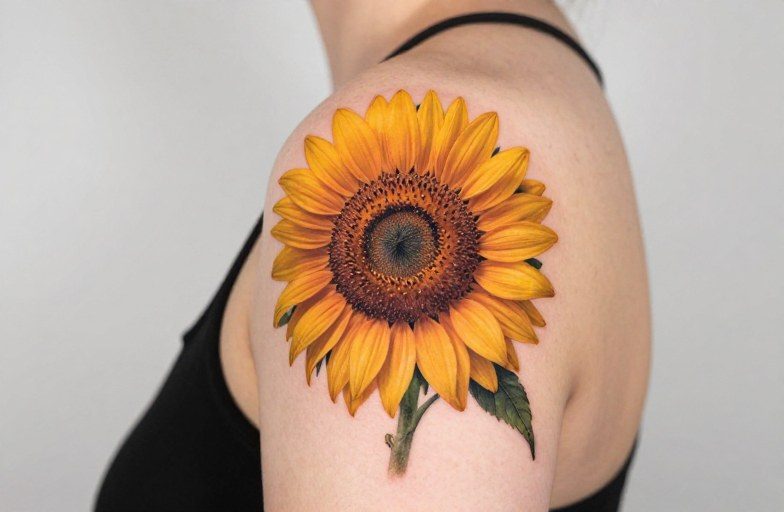
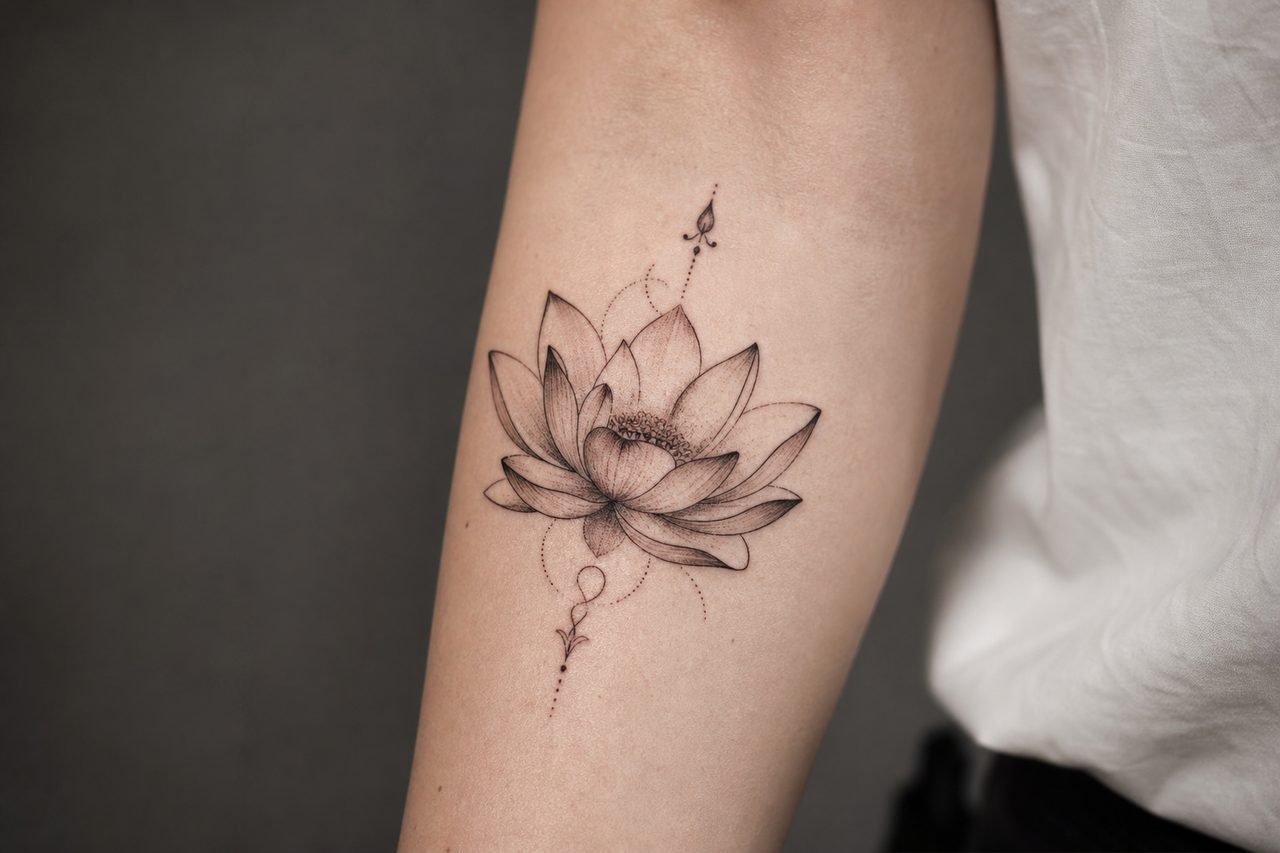
The lotus flower tattoo carries layered meaning rooted in its biology: the plant pushes through murky water to bloom clean and open at the surface. That journey from mud to flower has made it a lasting symbol of resilience, spiritual awakening, and the ability to rise through difficulty without carrying the stain of where you started. Across Buddhist, Hindu, and ancient Egyptian traditions, the lotus often represents purity of mind, rebirth, and detachment from material struggle.
Similar & Related Symbols
People drawn to lotus imagery often cross-shop designs with overlapping themes. Understanding the distinctions helps you choose what actually fits.
Water Lily vs. Lotus
Visually similar, but botanically different. The lotus (Nelumbo) lifts its bloom and leaves high above the water on stiff stalks; water lilies (Nymphaea) float at the surface. In tattooing, lotus petals tend to be more elongated and pointed, with a visible seed pod at the center. Water lily designs read softer, more decorative. If you want the “rising above” narrative, make sure your artist draws true lotus anatomy.
Related Symbols in Combination Pieces
- Unalome: The spiral-and-line symbol representing life’s path toward enlightenment, often paired with lotus in Buddhist-inspired work
- Om: Frequently placed above or below the lotus in spiritual pieces
- Koi fish: Shares the upstream struggle narrative; paired together in Japanese-influenced designs
- Mandala: The lotus naturally centers mandala compositions, its petals radiating outward in geometric patterns
- Phoenix: Both symbols of rebirth, though the phoenix carries more fire and destruction in its cycle
Single-needle lotus with unalome has become particularly common in fine-line tattooing over the past decade, though the combination risks feeling generic if not personalized through placement or scale.
How It Ages on Skin
Lotus designs age predictably based on their structural choices. The flower’s natural symmetry and defined petal edges give it better longevity than more chaotic organic shapes, but specific decisions matter.
Line Weight and Detail
Ultra-fine single-needle lotus petals blur faster than bold linework. Petal tips, being narrow points of ink, are the first areas to soften and spread. A lotus with consistent medium line weight (around 3-5RL equivalent) holds its shape for years without the “fuzzy flower” look. Interior petal details, stippling, fine hatching, or tiny dots, fade significantly within 3-5 years on high-movement areas like wrists or ankles.
The Center Seed Pod
The lotus seed pod is a cluster of small circles, often tattooed with solid black or dense stippling. This area ages poorly if over-detailed. Simplified pod shapes with larger, fewer circles maintain readability as the tattoo settles. Some artists now leave the pod as negative space with minimal outline, letting the surrounding petals frame skin tone rather than fighting to keep tiny dots crisp.
White Ink and Highlighting
White ink highlights on lotus petals rarely stay bright. Most heal to a yellowish or skin-tone tone within two years. If your design relies on white for dimension, expect to refresh it or accept the muted result. This is especially true on darker skin tones where white ink has particularly poor visibility after healing.
Color vs Black and Grey
Color choices shift the symbolic weight and practical maintenance of a lotus tattoo significantly.
Traditional Color Symbolism
- Pink/magenta: The most common lotus color, associated with the historical Buddha and spiritual awakening
- White: Purity and mental clarity; requires the lightest value range to read properly
- Red: Love, compassion, and the heart; in some traditions, the red lotus specifically represents the original nature of the heart
- Blue: Wisdom and knowledge; often linked to victory over the senses
- Gold/yellow: Achievement and enlightenment; holds well in skin but can look muddy if poorly mixed
Multi-colored lotus with gradient petals demand larger size to execute properly. Small color blends turn to mush as ink spreads. A 2-inch lotus with four color transitions will look like a bruise in five years; the same palette at 5+ inches maintains separation.
Black and Grey Approach
Black and grey lotus tattoos strip away cultural color coding and emphasize form. Smooth grey wash shading on petals creates a more sculptural, less illustrative feel. This approach ages better on skin prone to sun exposure, as black pigment holds contrast longer than most color pigments. The trade-off: without color, the lotus can read as generic flower unless the petal structure is technically precise.
Who Chooses This Tattoo
Certain patterns show up in consultation requests, though individual reasons vary widely.
Common Motivations
Recovery and survival narratives dominate, people marking periods of addiction, illness, or trauma with the lotus’s mud-to-bloom trajectory. This isn’t universal, but it’s frequent enough that artists recognize the reference. Others come from yoga or meditation communities where the lotus position and symbol are already embedded in practice. Some simply want a symmetrical, attractive floral that carries more weight than decorative roses or cherry blossoms.
Gender and Placement Patterns
The lotus has no inherent gender association, though stylistic choices skew trends. Fine-line, minimalist lotus with unalome attracts more women in current booking patterns; bolder neo-traditional or Japanese-influenced lotus draws more men. These are market observations, not rules, plenty of crossover exists, and the symbol itself carries no gendered meaning in its originating cultures.
Common Variations & Styles
The lotus adapts across tattoo genres better than most floral subjects due to its geometric potential and cultural flexibility.
Geometric and Dotwork
Petals rendered as straight lines or polygons, sometimes with mandala integration. This style demands technical precision; uneven symmetry in geometric lotus is immediately visible and difficult to correct. Dotwork shading on petals creates texture but requires sessions with consistent hand speed, rushed stippling looks patchy.
Japanese (Irezumi) Influence
Large-scale lotus as part of bodysuit or sleeve work, often with waves, wind bars, or background elements. The petals become broader and more stylized, with heavy black outlines and bold color saturation. This approach needs significant skin real estate; a Japanese-influenced lotus smaller than 4 inches loses its impact.
Realistic Botanical
Actual lotus species reference with accurate petal count, color gradation, and environmental context (water, leaves, stems). These pieces work best with experienced color realism artists who understand how to layer warm and cool tones to create dimensional petals rather than flat color shapes.
Minimalist and Abstract
Single continuous line forming the lotus silhouette, or extreme reduction to three petal shapes. Effective at small sizes but requires perfect line confidence, there’s nowhere to hide a wobble. Abstract versions sometimes lose recognizability, which may or may not matter to the wearer.
Best Placements
Lotus geometry suits certain body areas better than others.
High-Impact Locations
- Upper back/center spine: The natural symmetry aligns with the body’s midline; large pieces with mandala integration work here
- Sternum: The lotus’s radiating petals mirror the rib cage’s shape; popular for medium-sized color pieces
- Thigh front or side: Ample flat canvas for detailed botanical or Japanese-style work
- Upper arm/shoulder cap: Traditional placement for lotus in combination with other symbols
Smaller and More Discreet
- Behind the ear: Minimalist line lotus only; anything detailed becomes indecipherable
- Wrist inner or outer: High visibility but constant movement and sun exposure accelerate aging
- Ankle/foot: The lotus’s association with groundedness makes this thematically coherent, though foot tattoos fade fastest due to friction and thinner skin
- Ribs: Painful placement, but the lotus’s vertical orientation fits the rib space naturally
Hand and finger lotus tattoos have increased in popularity but face significant longevity issues. The small scale forces simplification, and hand skin sheds ink rapidly. Most artists will advise against detailed lotus on fingers unless you’re prepared for frequent refresh sessions.
Final Word
The lotus flower tattoo endures because its meaning is visually earned, you don’t need to explain why a flower that grows from mud matters. That built-in narrative makes it adaptable across styles, sizes, and personal stories without requiring text or additional symbols. Choose it for the biology and the symbolism both, but be specific about what you want: a fine-line unalome lotus and a bold Japanese lotus share a name and little else. Match the technical approach to your actual skin, your pain tolerance for the needed sessions, and your willingness to maintain it. The best lotus tattoos are the ones that still read clearly a decade later, when the meaning has had time to compound.
Frequently Asked Questions
Does a lotus tattoo have to be religious or spiritual?
No. While the lotus carries deep roots in Buddhist and Hindu traditions, many people choose it for its botanical beauty or the universal resilience metaphor. The meaning you attach is personal, though being aware of cultural context shows respect.
How big should a lotus flower tattoo be to age well?
For detailed petal work with shading or color, aim for at least 3-4 inches in diameter. Smaller sizes force the artist to simplify detail, which actually helps longevity. Ultra-detailed small lotus tattoos blur into unrecognizable shapes within a few years.
Can a lotus tattoo be covered up or reworked later?
Yes, the lotus’s symmetrical shape and dense petal structure make it decent cover-up material itself, but covering an existing lotus depends on the original ink density. Light, faded lotus tattoos are easier to rework; heavy black outlines limit your options.
What’s the difference between a lotus and a water lily tattoo?
Botanically, lotus petals are more pointed and raised on a stalk above water, while water lilies float with rounded petals. In tattoo terms, the distinction matters if you want the specific “rising above” symbolism, lotus is the accurate choice for that narrative.