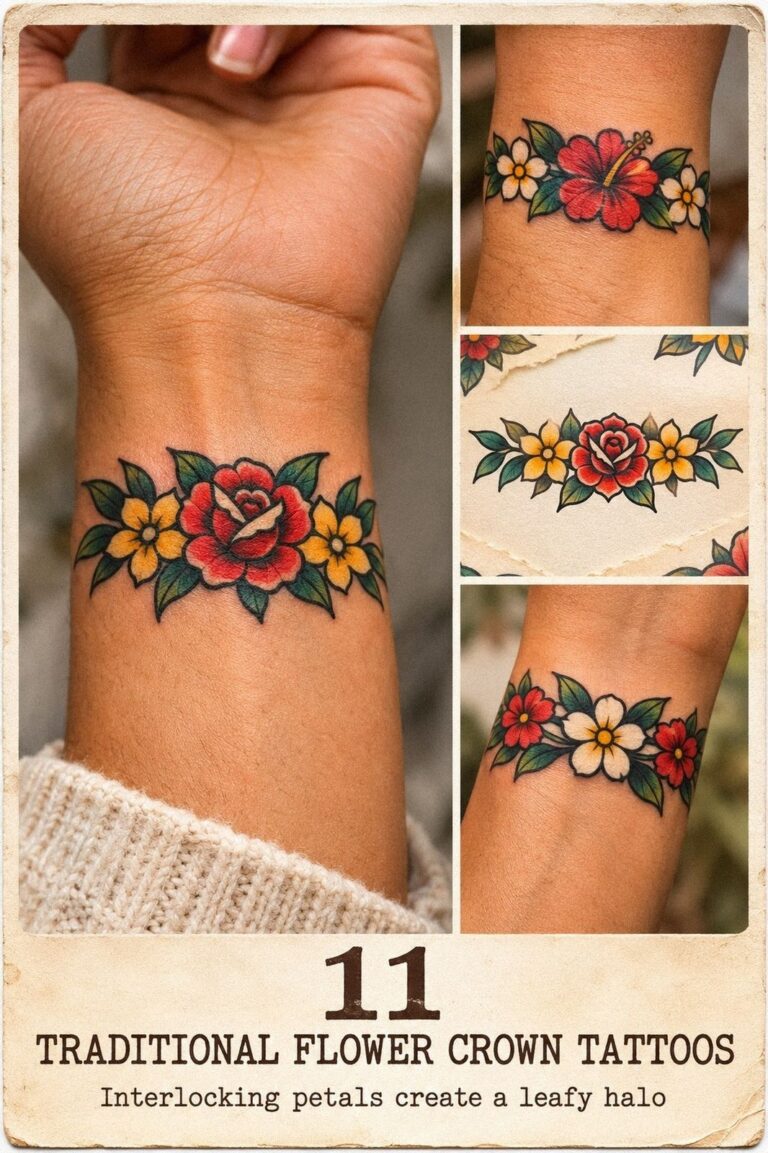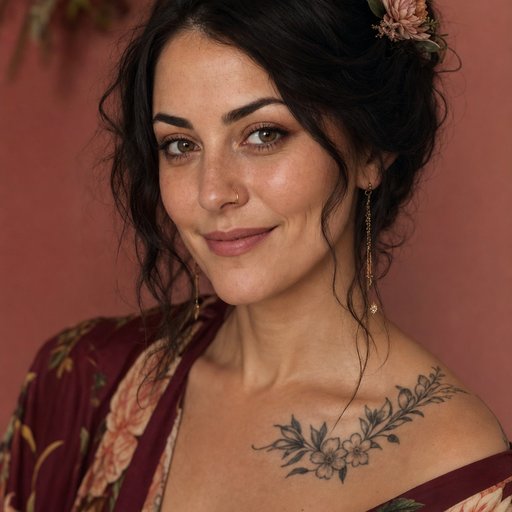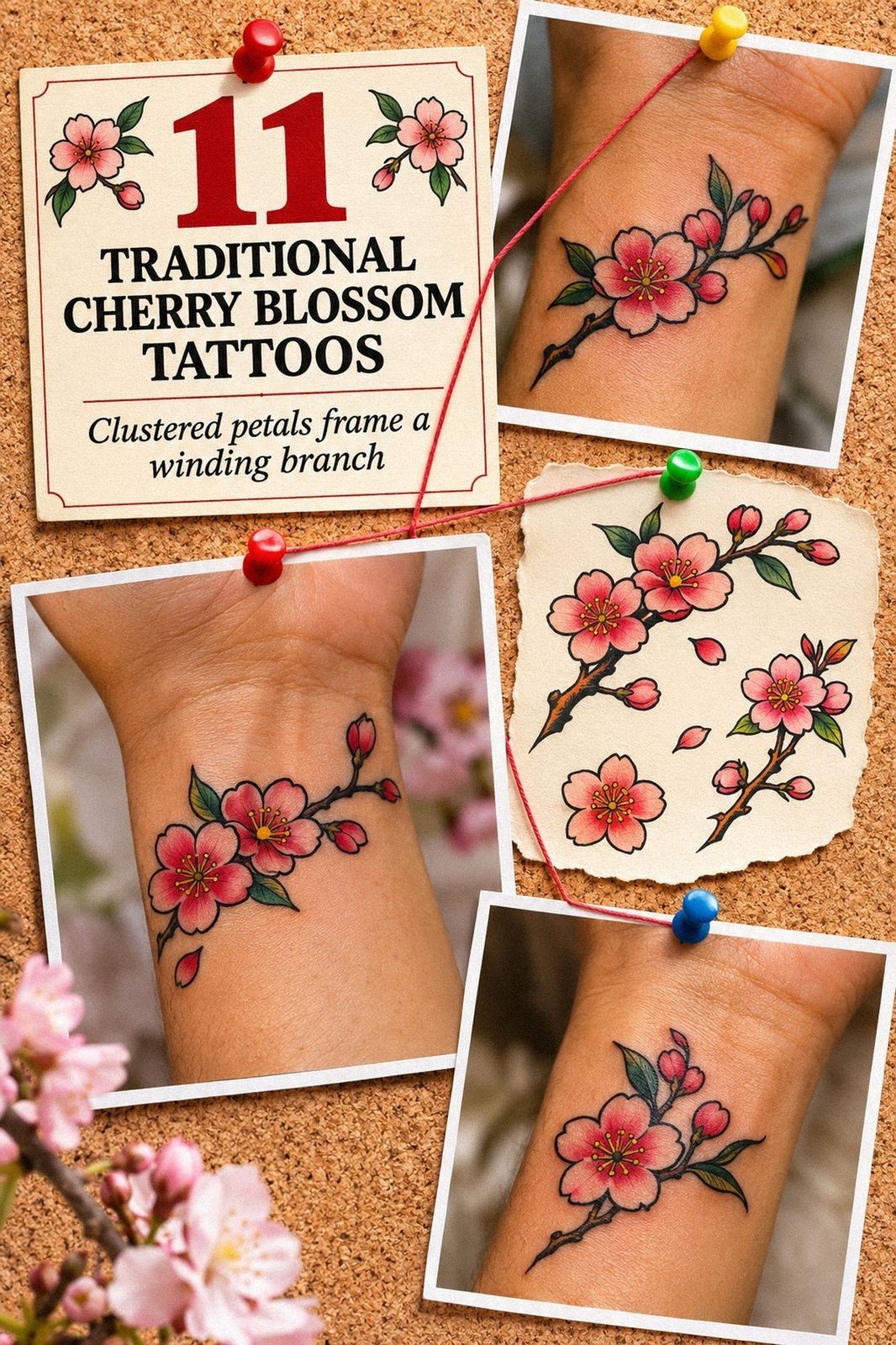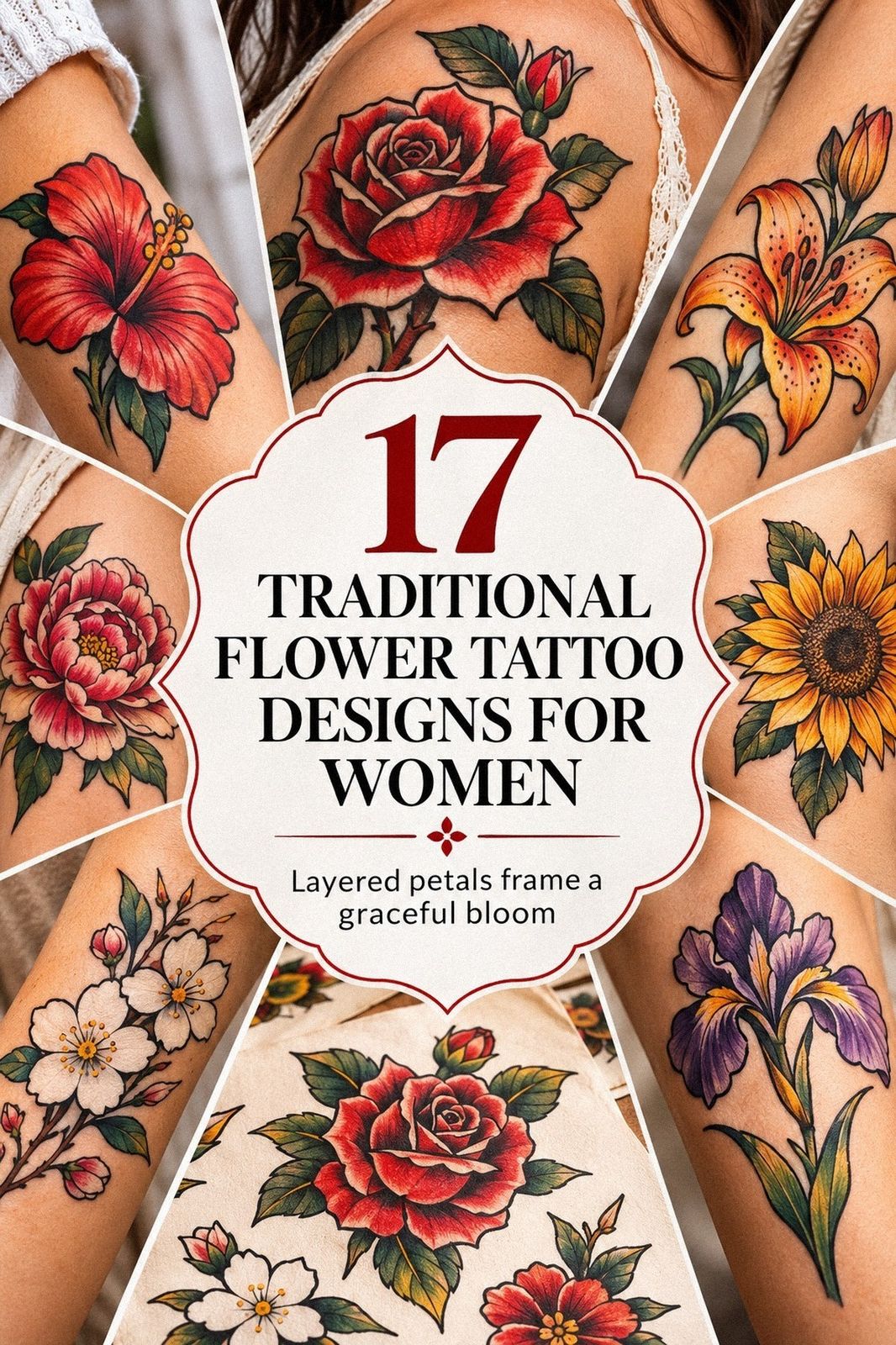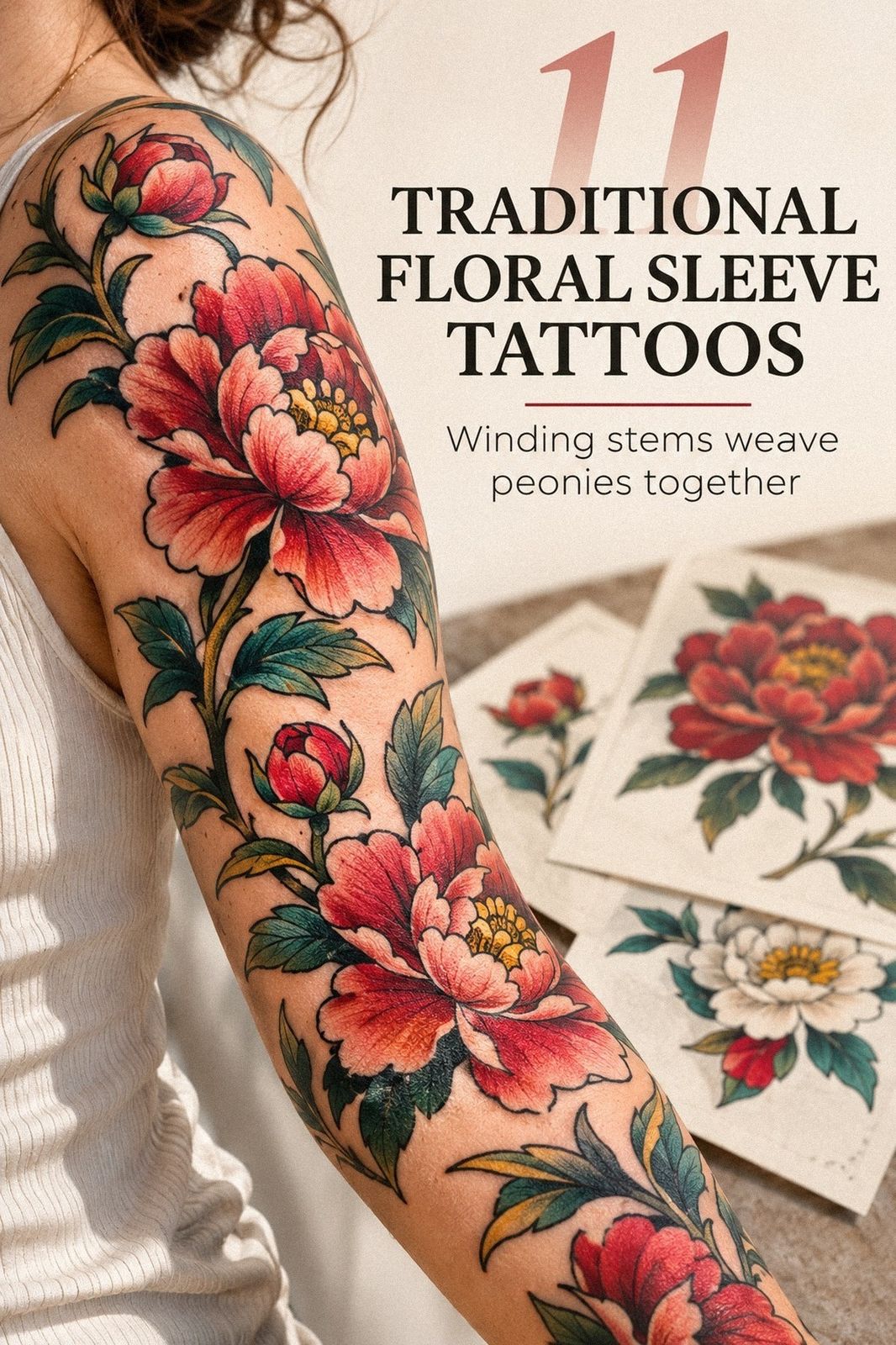
Traditional floral sleeve tattoo ideas can start with one open forearm panel, not a full-day commitment. I rushed my first floral piece and regretted the crowded center. You’ll want clean breathing room, crisp outlines, and a personal symbol before you book.
Small work can feel striking when the artist protects the skin between stems. That’s the difference between delicate and unfinished.
Start with this small floral sleeve tattoo guide if you’re still comparing scale. That skin spacing matters.
- Start Small With a Traditional Floral Sleeve Tattoo
- Would a Rose and Peony Composition Suit Your Arm?
- Let a Snake Create Fierce Movement
- Build a Blackwork Sleeve With Deliberate Contrast
- Give a Dagger and Flowers One Clear Direction
- Keep a Delicate Wildflower Sleeve Readable
- Let a Hummingbird Break the Stillness
- Choose a Colorful Arrangement With Restraint
- Make a Skull Feel Intentional With Flowers
- Use Fine Lines Without Making Every Mark Fragile
- Map a Traditional Sleeve From Shoulder to Wrist
1Start Small With a Traditional Floral Sleeve Tattoo

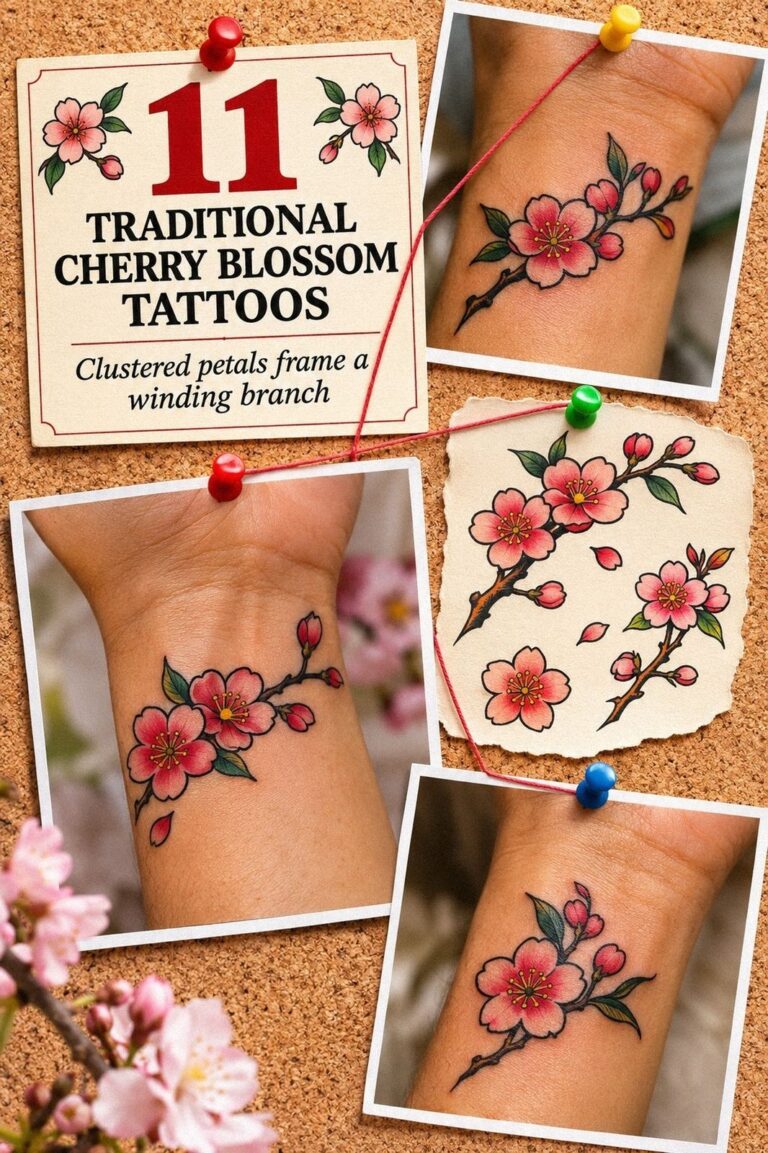
A small traditional floral sleeve tattoo works best when one wildflower sprig carries the whole idea. Choose a stem that follows the forearm instead of crossing it randomly. The shape should feel flowing, graceful, and specific, with enough untouched skin around each leaf for the design to stay readable.
You don’t need five flowers to make the piece feel complete. A solid black outline with one terracotta bloom, olive leaves, and a stone-grey center can look more expressive than a crowded arrangement. If you’re nervous about commitment, ask your artist to leave the upper forearm open for a future addition.
I’d skip tiny petals packed into a narrow strip. They may look dainty on the stencil, but they won’t have much room to age cleanly. You’ll get better contrast from a few crisp leaves, a firm stem, and one meaningful focal flower.
For your first appointment, bring references that show healed work, not only fresh examples. The tiny floral sleeve tattoo collection can help you compare spacing, but your artist should redraw the idea for your arm. That custom adjustment is where the tattoo starts feeling truly meaningful focal flower.
2Would a Rose and Peony Composition Suit Your Arm?

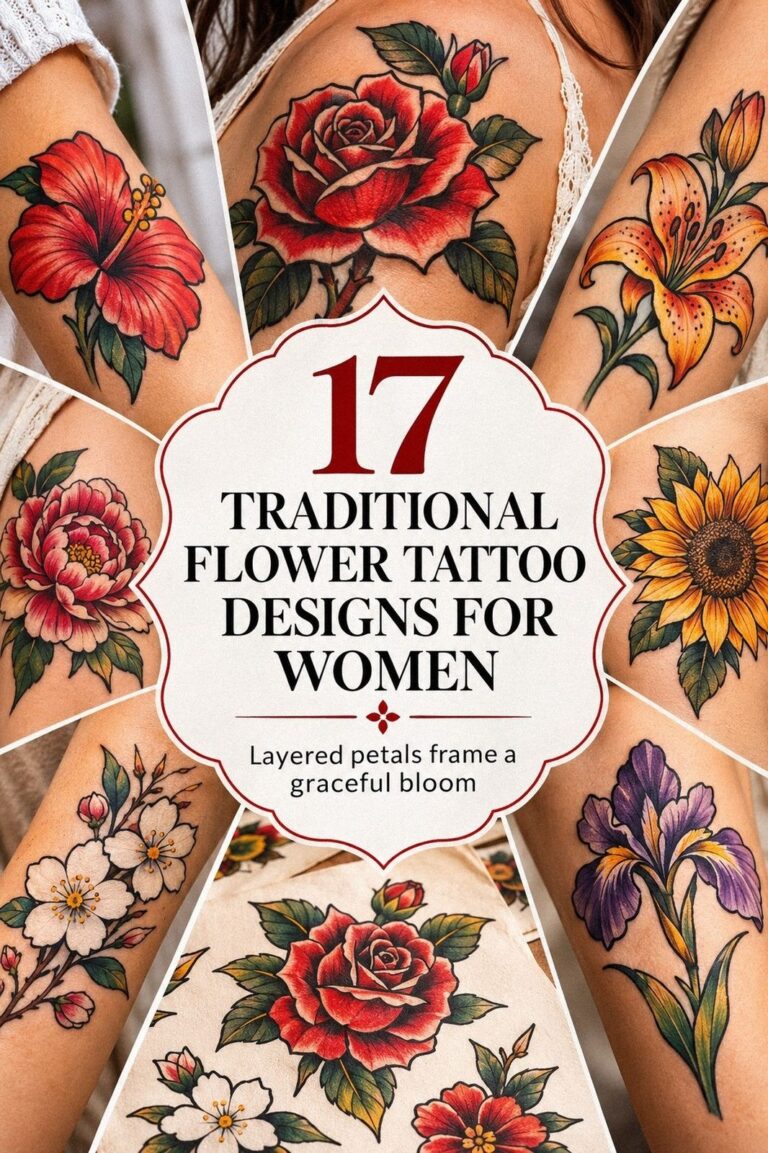
A rose and peony pairing gives you a bold center with softer movement around it. Use a clay-toned pigment for the rose and a muted cream value for the peony so the petals don’t merge into one dark mass. The result can feel romantic, iconic, and clear without losing the traditional structure.
Your artist should place the largest bloom where your forearm has the broadest visual surface. Smaller leaves can turn toward the wrist, while the upper petals point toward the elbow. That direction matters because you’ll see the composition as your arm turns, not just from one position.
Here are useful US reference points before you book:
Those numbers aren’t a promise, and your artist may quote differently. You’ll want to ask what’s included, how long the session may take, and whether the design deposit applies to the final price.
A clear tattoo estimate is worth the cost because it keeps your decision grounded. That conversation matters!
For more restrained spacing, compare this composition with delicate floral sleeve tattoo ideas. I’d choose the peony only if you’re comfortable with a larger focal shape. Otherwise, the rose will give your arm a cleaner visual anchor and a more timeless result.
How Much Should You Budget Before Booking?
A small floral panel may fit a modest tattoo budget, while a connected sleeve can require several appointments. The hourly rate is only one part of the value. Experience with traditional composition, healed work, sanitation, and custom drawing should also influence your choice.
Ask whether the quoted price includes the consultation, stencil changes, touch-up policy, and design deposit. A lower number isn’t automatically better value if the composition feels rushed or the artist’s portfolio doesn’t show healed results.
3Let a Snake Create Fierce Movement
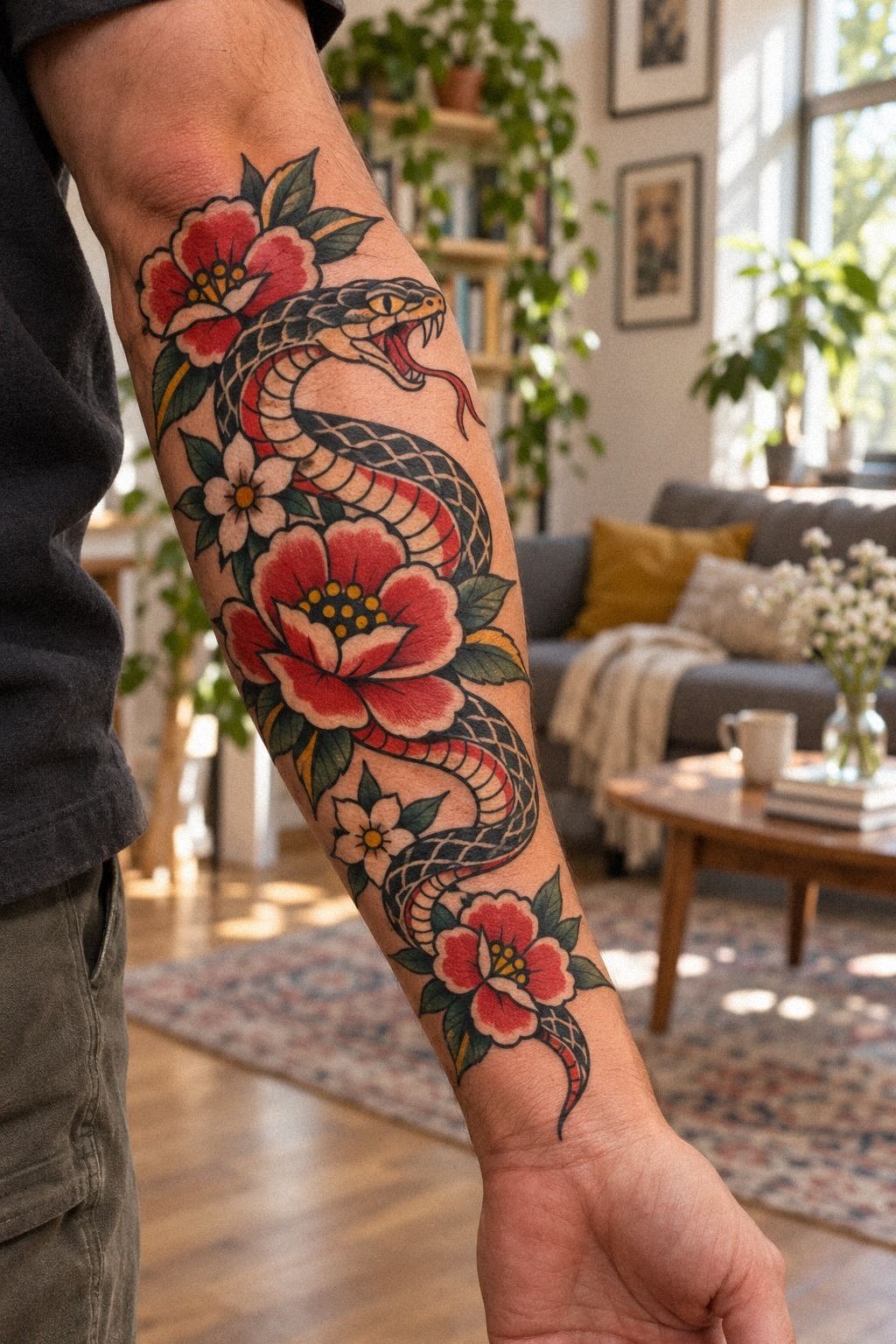
A snake gives your floral sleeve a fierce line of movement, especially when it curves behind the blooms instead of sitting on top of them. Pair the body with plum and grey scales, then add restrained rose-gold highlights where the flowers interrupt the pattern. That creates tension without turning the image into visual noise.
You’ll need to decide whether the snake is the subject or the frame. I’d make it the frame for a first piece. A coiling body can guide the eye from the wrist toward the elbow, while one flower near the bend keeps the design symbolic and gives it a symbolic reason to exist.
Avoid squeezing the narrowest coil into the wrist crease. That area moves constantly, and your artist will need space for a strong outline. Ask for an open section near the hand, then let the snake widen as it travels up your forearm.
Your references should show plum, grey, and rose-gold traditional ink, clear contours, and healed examples on real skin. If you like darker florals too, browse black floral sleeve tattoo references before you settle on color. You don’t have to copy a snake design exactly, but you can borrow its spacing logic for a more daring result.

4Build a Blackwork Sleeve With Deliberate Contrast

Blackwork can look minimal at first glance, but the strongest versions use a deliberate balance of weight and open skin. Choose deep navy pigment with warm white highlights and walnut-brown secondary shapes, then reserve the darkest fills for the flower centers or one defining form.
Your artist should vary the density. If every petal is filled equally, the sleeve may read as one heavy block from a distance. A sharper approach uses a dark flower, a lighter leaf, and a clean gap before the next form.
This style is especially useful when you want a direct result without multiple unrelated pigment colors. I’d skip weak grey outlines, though. They often lose the traditional punch that makes blackwork feel crisp and timeless.
You’ll also want to discuss sun exposure and aftercare before the appointment. Deep navy pigment with good placement can age strongly, but UV exposure still matters. Compare the line decisions with minimalist floral sleeve tattoo ideas, then ask your artist how they keep dark areas from swallowing nearby petals.
The best blackwork isn’t simply all black. It’s a measured rhythm between navy fill, white highlights, walnut-brown accents, and untouched skin. That rhythm will make your sleeve look intentional from a distance and intricate up close.
Blackwork or Color: Which Gives You Better Long-Term Value?
Blackwork usually simplifies the pigment plan and can make budgeting easier. Color can add more personality, but it may require longer appointments and more discussion about saturation. The better value is the style that still looks like you after the initial excitement fades.
If you’re comparing quotes, ask what the artist recommends for your skin, placement, and desired scale. A thoughtful plan can be worth it when it protects the long-term readability of the tattoo.
5Give a Dagger and Flowers One Clear Direction

A dagger and flowers create a flash-sheet composition, especially when the blade runs vertically through the design. Look for an emerald blade, gold handle, and cream flowers, with one bloom crossing the blade rather than hiding it completely.
The dagger can represent protection, change, or a decision you’ve already made. You don’t need to force a dramatic meaning, but you should know why it belongs beside your flowers. A personal symbol will help you choose the right angle and surrounding leaves.
I’d avoid a hyper-realistic blade beside simplified traditional petals. That contrast can feel accidental. Your artist should keep the whole design in the same visual language, using bold outlines, limited shading, and a restrained color plan.
For a more unusual reference board, compare dagger arrangements with geometric floral sleeve tattoo designs. You’ll notice how directional shapes create structure. If you’re working from a flash sheet, ask for a custom redraw so the dagger follows your arm instead of looking stamped on.
A good version feels iconic, not theatrical. Your aged-gold handle detail can add warmth, but the blade should remain the cleanest line in the piece. That contrast gives the flowers somewhere to push against.
Worth it!
6Keep a Delicate Wildflower Sleeve Readable
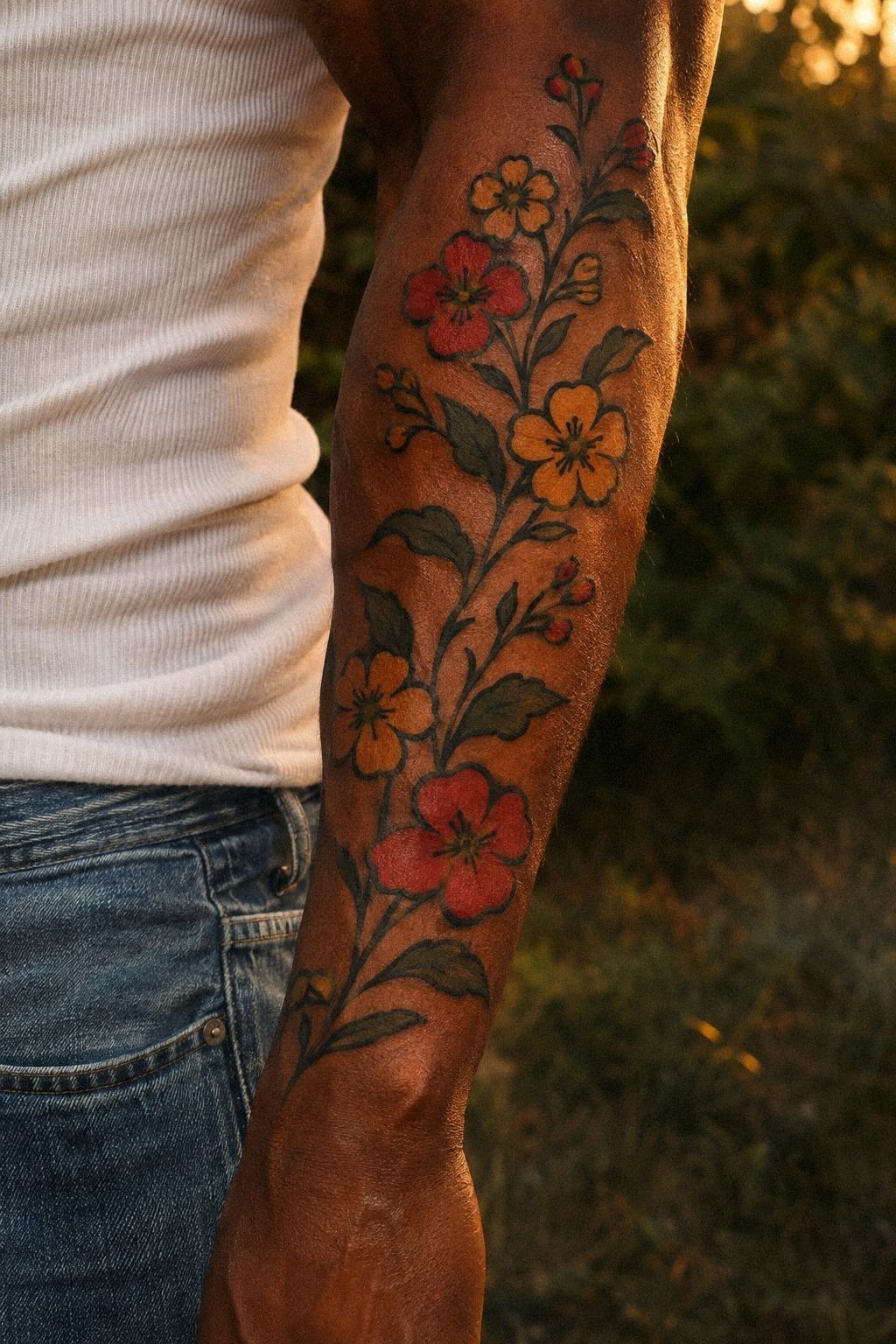
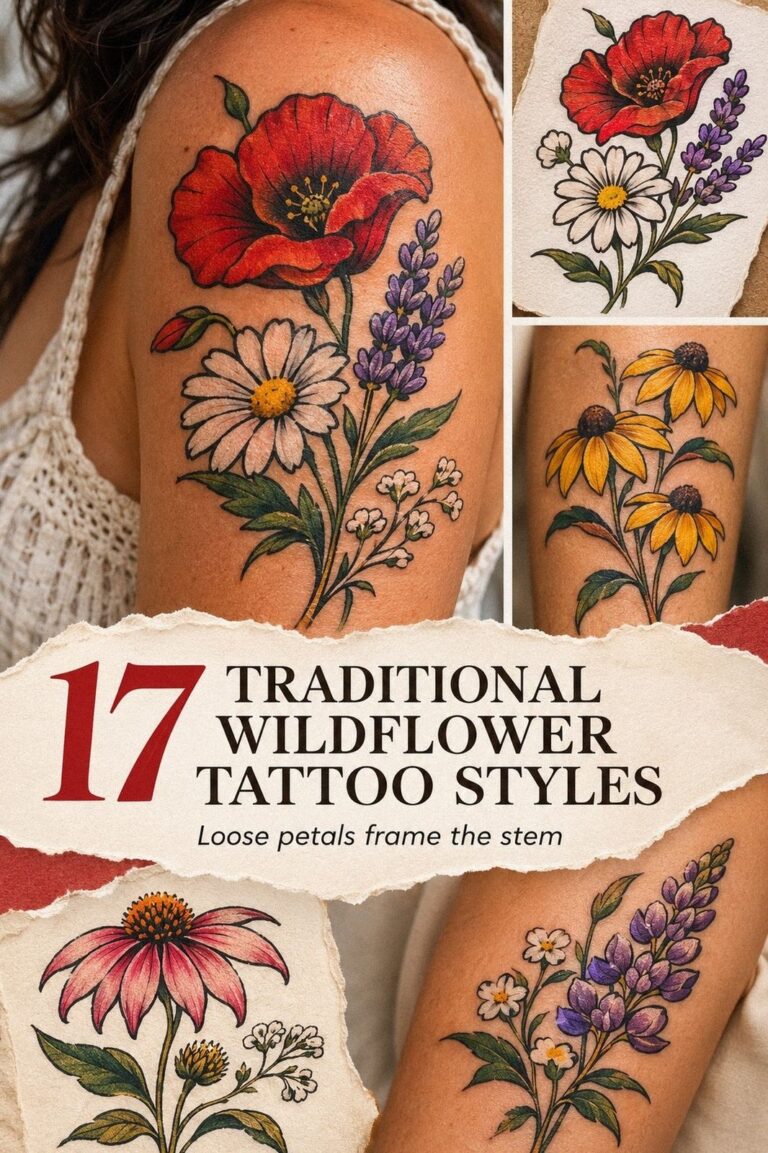
A delicate wildflower sleeve can work beautifully on deep ebony skin when the artist understands contrast and healed visibility. Ask about high-contrast pigment around forest-green stems, then use rust blossoms and natural-brown accents where the flowers need emphasis.
Your artist shouldn’t rely on pale shading alone to create softness. Those lighter values may not hold the same way across every skin tone. A graceful design can still use confident outlines, open spaces, and clear petal shapes without becoming harsh.
Choose flowers with distinct silhouettes. A daisy, poppy, or small chrysanthemum will read better than several nearly identical blossoms. You’ll want each bloom to have a reason for being there, even if the reason is simply that its shape suits your arm.
I’d ask to see healed work on skin close to yours, not only new tattoos under bright studio lights. The delicate floral sleeve tattoo gallery can help you compare layouts, but the artist’s own healed portfolio matters more than a saved reference.
Keep the design understated, not faint. Rust flower centers and strong forest-green leaf edges can make a gentle sleeve feel expressive and polished. You’ll still get softness, but it won’t disappear after the surface settles.
What Changes on Deeper Skin Tones?
The goal isn’t to force every pale reference to look identical. It’s to choose pigment contrast, line weight, and flower shapes that remain legible on your skin. Ask for healed examples rather than relying on new studio work.
A skilled artist can explain how saturated color, dark outlines, and open skin will interact. That advice has real value because it connects the design to your body instead of treating every complexion the same way.
7Let a Hummingbird Break the Stillness
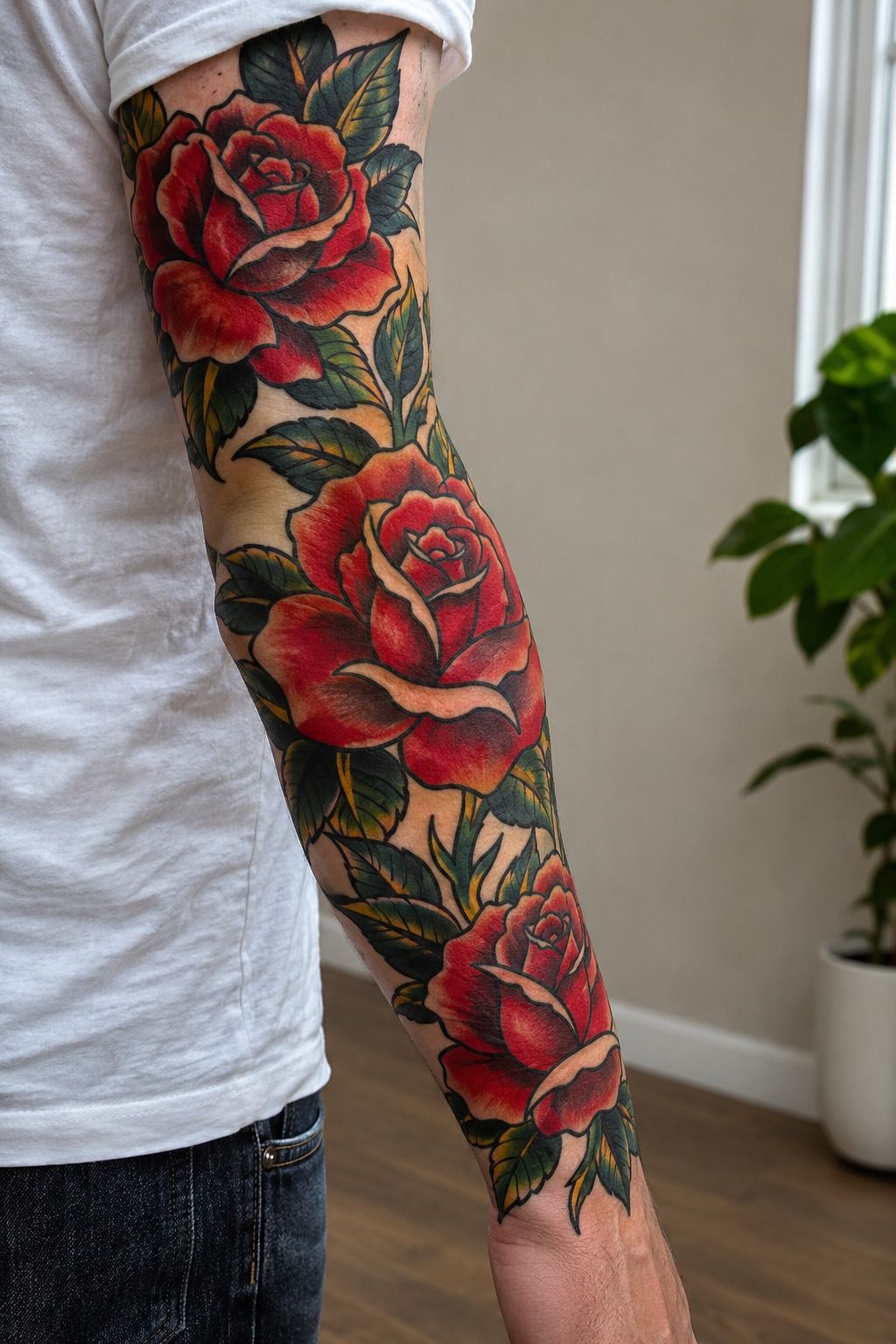
A hummingbird adds playful energy because its wings can break the stillness of a floral arrangement. Dusty rose, charcoal, and brass accents can keep the bird connected to the flowers without making it compete with them. That playful energy gives the sleeve a lighter turn!
8Choose a Colorful Arrangement With Restraint

A colorful arrangement needs a limited palette, even when the final image looks rich. Start with warm white flowers, camel shading, and black accents, then decide where the strongest color will sit. Too many equally bright flowers can flatten the hierarchy.
Your artist can repeat camel or warm white in small areas to make the design feel connected. A black accent near the wrist can echo the central bloom, while a soft camel note near the elbow keeps the eye moving. You’ll want color rhythm, not a rainbow scattered without direction.
I’d skip trendy color choices that don’t suit your skin or your wardrobe. A color can look elegant in a reference and feel wrong on you. Ask for healed examples in similar tones before you commit to brighter additions.
Use watercolor floral sleeve tattoo references only for color inspiration, not for copying the technique. Traditional work needs firm outlines and enough pigment density to stay clear. Your artist may suggest a slightly darker version of your favorite shade for that reason.
The most successful colorful sleeve feels harmonious because the colors repeat with purpose. Warm-white petals can soften the arrangement, while black accents keep it vibrant and sharp. You’ll get vibrant structure without sacrificing clarity.
When Is Color Worth the Extra Cost?
Color is worth the extra cost when it carries meaning or gives the composition a stronger focal point. It may not be worth it if you’re adding shades simply because the reference looks impressive. Your artist should explain how many pigments, hours, and appointments the plan requires.
A limited color plan often gives better value than adding every shade at once. You can also begin with a restrained palette and decide later whether the remaining sections need more pigment.
9Make a Skull Feel Intentional With Flowers

A skull changes the emotional temperature of a floral sleeve immediately. Midnight blue, copper, and ivory can soften the transition without removing the skull’s darker meaning. Keep the flowers clear enough that the design feels intentional rather than purely grim.
10Use Fine Lines Without Making Every Mark Fragile
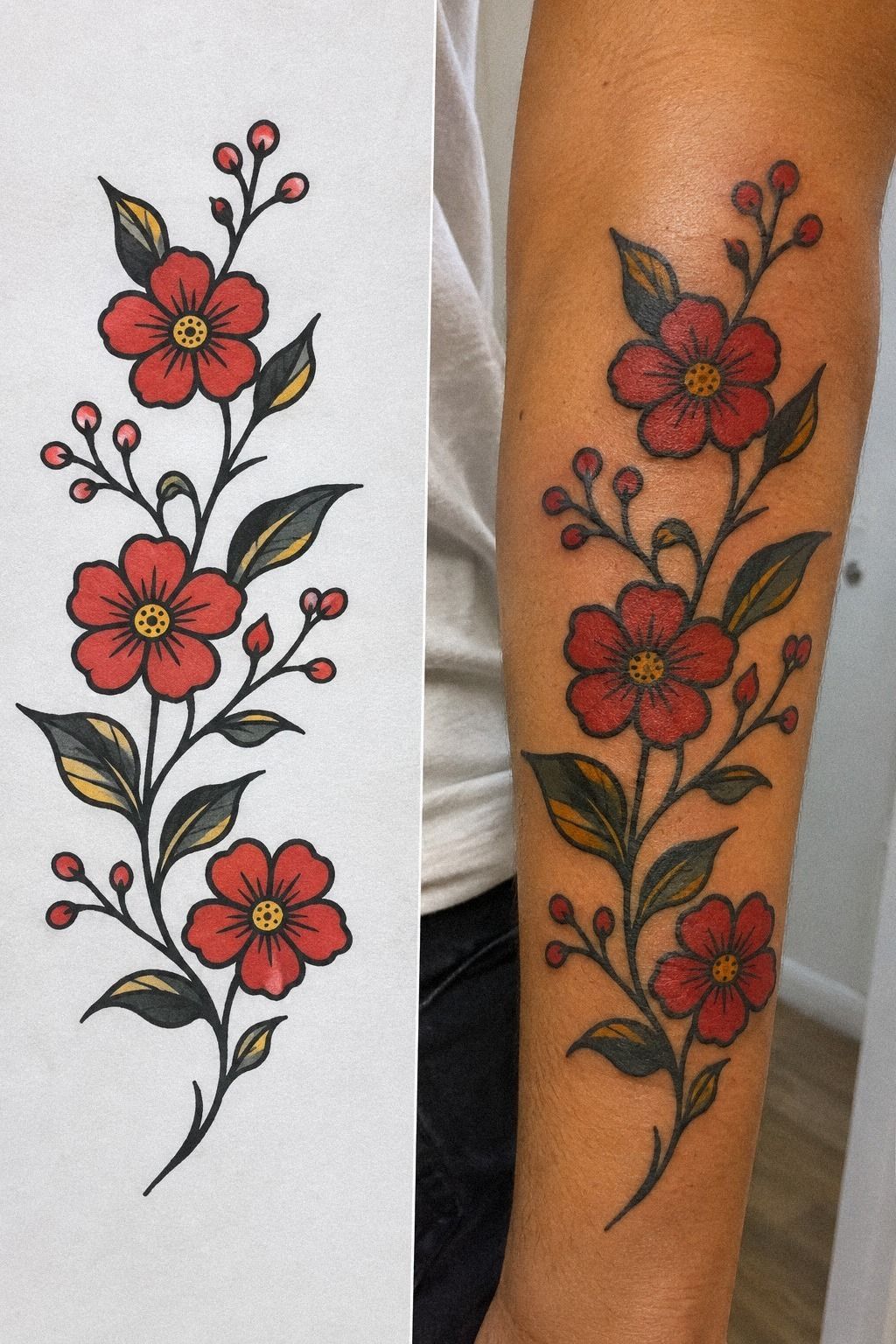
Fine-line traditional work needs a careful compromise. Use sage-green and deep-brown fine-line pigment for secondary stems, then keep the main flowers strong enough to survive normal aging. Your sleeve can look sleek and intricate without making every mark microscopic.
I’d never choose fine-line only because the stencil looks delicate on white paper. Skin changes the result, and very thin lines can spread over time. Ask your artist where they’d add a heavier contour, especially around the outer petals and major leaves.
A split stencil and finished illustration can help you compare the plan before booking. You’ll see which lines are structural and which are decorative. If you’re considering a lighter approach, the fine line floral sleeve tattoo guide can help you identify spacing that still looks intentional.
Keep the wrist area simple. Constant movement and sun exposure can make a dense cluster harder to read. Your artist may suggest one open flower, two stems, and a darker center instead of six tiny blooms competing for attention.
Fine-line doesn’t mean fragile by definition, but it does demand restraint. Medium-weight outer contours will give your delicate details a lasting frame. You’ll keep the elegant look without asking the smallest marks to carry the entire sleeve.
11Map a Traditional Sleeve From Shoulder to Wrist
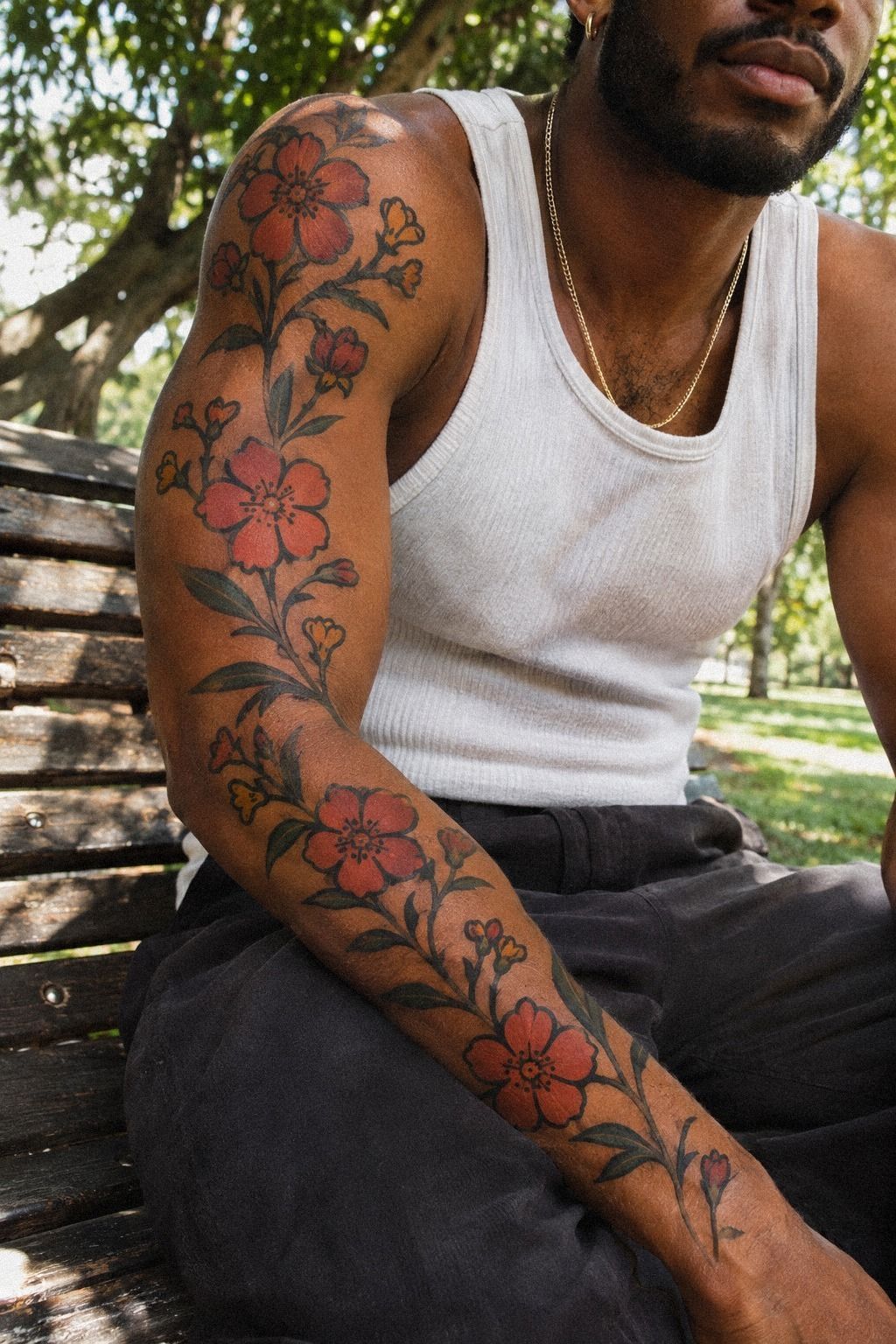
A shoulder-to-wrist sleeve needs a map before it needs more flowers. Start with connected terracotta, stone-grey, and olive panels, then decide how the design travels across the elbow and forearm. The shoulder can hold the largest bloom, while smaller stems guide the eye toward the wrist.
Your artist should plan the sleeve in sections that can stand alone. That matters if you’re booking several appointments or changing direction later. You’ll want each stage to feel finished, even when the full composition isn’t complete.
I’d avoid filling every gap just because skin is visible. Negative space gives the sleeve a cleaner, classic rhythm, especially around the elbow. A little open skin can make the next flower look more powerful and the entire design easier to read.
Compare full-length layouts with small floral sleeve tattoo references before you scale up. You might discover that you prefer a partial sleeve with a strong endpoint. If you’re planning the full shoulder-to-wrist version, ask for healed examples and a realistic appointment schedule.
The strongest full sleeve feels powerful rather than assembled. Olive leaf anchors can bridge separate sessions, while terracotta blooms keep the composition lively. You’ll have a powerful structure that can grow with your taste instead of trapping you in one crowded first decision.
How Should the Sleeve Travel Across the Elbow?
The elbow needs flexible contours, breathing room, and a shape that can survive constant movement. A flower can sit above or below the joint, while leaves and stems guide the eye around it instead of forcing every detail directly over the center.
Ask your artist how the design will look with your arm relaxed, bent, and extended. That consultation can protect the value of the full sleeve because the composition needs to work in motion, not only in one position.
What I’d Decide Before Booking
I’ve changed my mind about large floral sleeves more than once. At first, I thought the biggest design would feel the most committed, but scale doesn’t create meaning by itself.
A smaller forearm piece can be more empowering when every stem has room and every flower has a reason to stay. It can be an empowering choice.
The first decision I’d make is forearm placement. The forearm is usually more tolerable than the ribs, feet, hands, or sternum, and it gives you a clear view of the work while it heals. You’ll still need to discuss your own comfort, skin, work, and sun exposure with the artist.
My second decision would be line weight. Fine details can look stylish, but they shouldn’t carry a whole sleeve alone.
I’d combine a medium-weight outline with selective fine lines, because that gives the design both softness and structure. It’s a more honest plan for long-term readability.
Finally, I’d choose the artist before I choose the exact flower. Look for healed linework, consistent needlework, and a portfolio that shows traditional composition on real bodies.
You don’t need to rush because a saved image is popular. The right artist will make your reference feel unique and truly yours!
What People Always Want to Know
How much does a traditional floral sleeve tattoo usually cost?
A traditional floral sleeve tattoo often costs about $100 to $300 for smaller work, while a studio may set a $50 to $100 minimum. Larger designs depend on placement, artist experience, region, and session length, so ask for a written quote before you pay a deposit.
You don’t need to buy a design from a marketplace. Your artist should create or redraw the stencil for your arm. If you’re comparing smaller layouts, review this small floral sleeve tattoo reference first.
Are traditional floral sleeve tattoos a good idea for a first tattoo?
Yes, a traditional floral sleeve tattoo can be a strong first choice because the forearm placement is often more tolerable than ribs, feet, hands, or sternum. Clear outlines also give you a readable design with room for personal meaning.
You’ll still want to start at a manageable scale. A small panel lets you learn how your skin responds, how aftercare fits your routine, and whether you enjoy the artist’s style before expanding.
How do I choose a tattoo artist for traditional floral sleeve tattoos?
Choose an artist with a portfolio showing healed traditional work, not only new tattoos. Look for clean outlines, balanced composition, consistent pigment, and studio hygiene. You should also see work on skin tones and placements similar to yours.
Ask how they approach custom revisions, stencil changes, deposits, and aftercare. You’ll learn a lot from whether the artist explains tradeoffs clearly or pushes you toward a faster booking.
How much do traditional floral sleeve tattoos hurt?
Pain varies, but the forearm, thigh, and shoulder are generally more tolerable areas than the ribs, feet, hands, and sternum. The elbow and wrist can feel sharper because there’s less cushioning and more movement.
Your session length, sleep, hydration, and personal sensitivity matter too. Don’t compare your experience with someone else’s. Tell your artist if you need a pause, especially during a longer sleeve appointment.
How long does a traditional floral sleeve tattoo take to heal?
The surface usually heals in about 2 to 3 weeks, while complete healing can take about 2 to 3 months. Follow your artist’s instructions, wash gently, moisturize as directed, and avoid sun exposure and swimming while the skin settles.
You’ll want to avoid picking flakes or scratching an itch. Even a crisp tattoo can heal unevenly if you interfere with the surface. Contact your artist if the healing looks unusual or worsens.
What’s the best placement for traditional floral sleeve tattoos?
The forearm is a practical choice because it offers visibility, relatively tolerable sessions, and enough space for clear traditional outlines. The shoulder also works well for a larger flower because its rounded shape supports a strong focal point.
You should consider your work, sun exposure, and how often you want the tattoo visible. If you prefer a quieter option, compare it with minimalist floral sleeve tattoo ideas before booking.
Where I’d Start First
If I had to pick one, I’d start with the small wildflower sleeve. Its open spacing gives fine details room to age without crowding your first tattoo. Pin that reference for later, then compare it with this tiny floral sleeve tattoo guide before you book.
That choice gives you a meaningful starting point without forcing a full shoulder-to-wrist commitment. If the linework, placement, and artist feel right, you can build from there with confidence.