A traditional lotus flower tattoo can be a smart first ink when you want crisp linework, meaningful symbolism, and a design that won’t disappear into visual noise. A piece that’s too delicate for its placement can lose its shape as it settles. These 11 ideas show where bold structure wins. Start here!
Editor’s note: Your tattoo design should fit your body, budget, and reason for getting it. The most striking lotus isn’t always the largest or most ornate one. It’s the one that still feels personal years later.
- Start Small, Keep the Lotus Legible
- Choose Bold Linework Over Muddy Detail
- How Will the Forearm Lotus Read?
- Dotwork Gives the Lotus a Gritty Texture
- Black and Red: Let Contrast Lead
- Give Sacred Symbolism One Clear Center
- Behind the Ear, Keep It Dainty and Sharp
- Ornament the Lotus Without Losing Its Shape
- What Does a Sternum Lotus Need?
- Let Water Motifs Follow the Bloom
- Build a Feminine Sleeve Around One Anchor
1Start Small, Keep the Lotus Legible
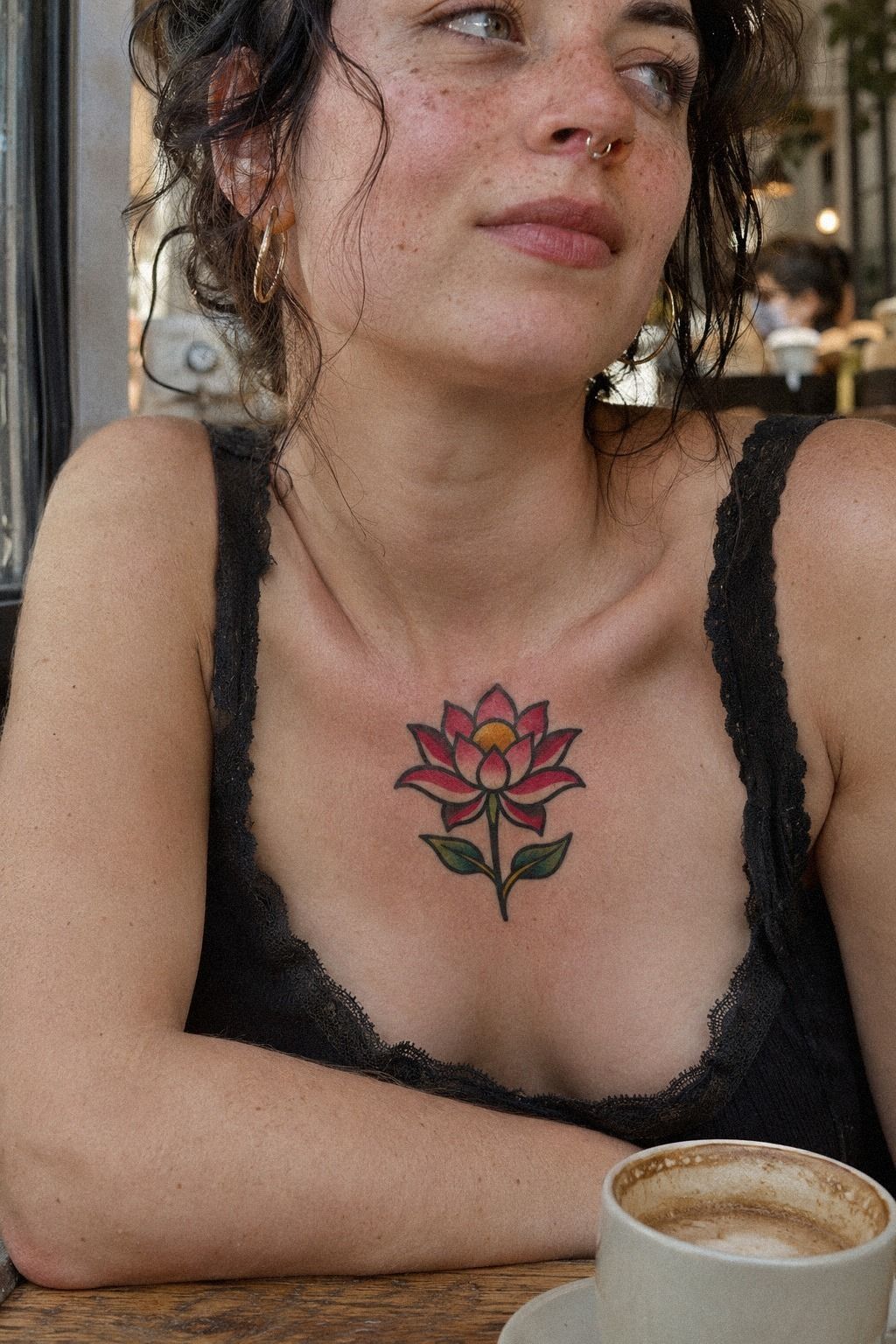
A small traditional lotus flower tattoo works best when the outline stays crisp. The petals need breathing space, too.
Ask your artist for a personal design around 2 to 3 inches. Don’t shrink a detailed flash piece until its center becomes muddy.
A single stem and three visible petal layers can still look striking on the sternum. You’ll want clean negative space between the terracotta and olive ink sections. Tiny filled areas can merge as your skin ages.
I’d choose a bold center over extra dots here. The lotus needs a readable silhouette first. That rule keeps a dainty design from becoming fragile.
A little open skin around the stem will keep the piece elegant and easy to recognize from a few feet away. If you like this scale, compare it with these small lotus flower tattoo ideas before you book.
For aftercare, your sternum may rub against clothing. Choose soft fabric and follow your artist’s instructions.
The surface often settles in about 2 to 3 weeks, while complete healing can take roughly 2 to 3 months. That patience is worth it!
2Choose Bold Linework Over Muddy Detail

Bold linework gives a traditional lotus a fierce American traditional attitude. It’s a strong choice when you want the flower to stay recognizable from across a room.
Ask your artist to establish the solid black outline before adding color or interior texture. A daring contour can make a minimal design feel complete. Too many fine marks may reduce clarity.
This approach is often worth the cost because it prioritizes longevity and readability. You’re paying for a design that works on skin, not for the highest possible number of decorative details.
3How Will the Forearm Lotus Read?
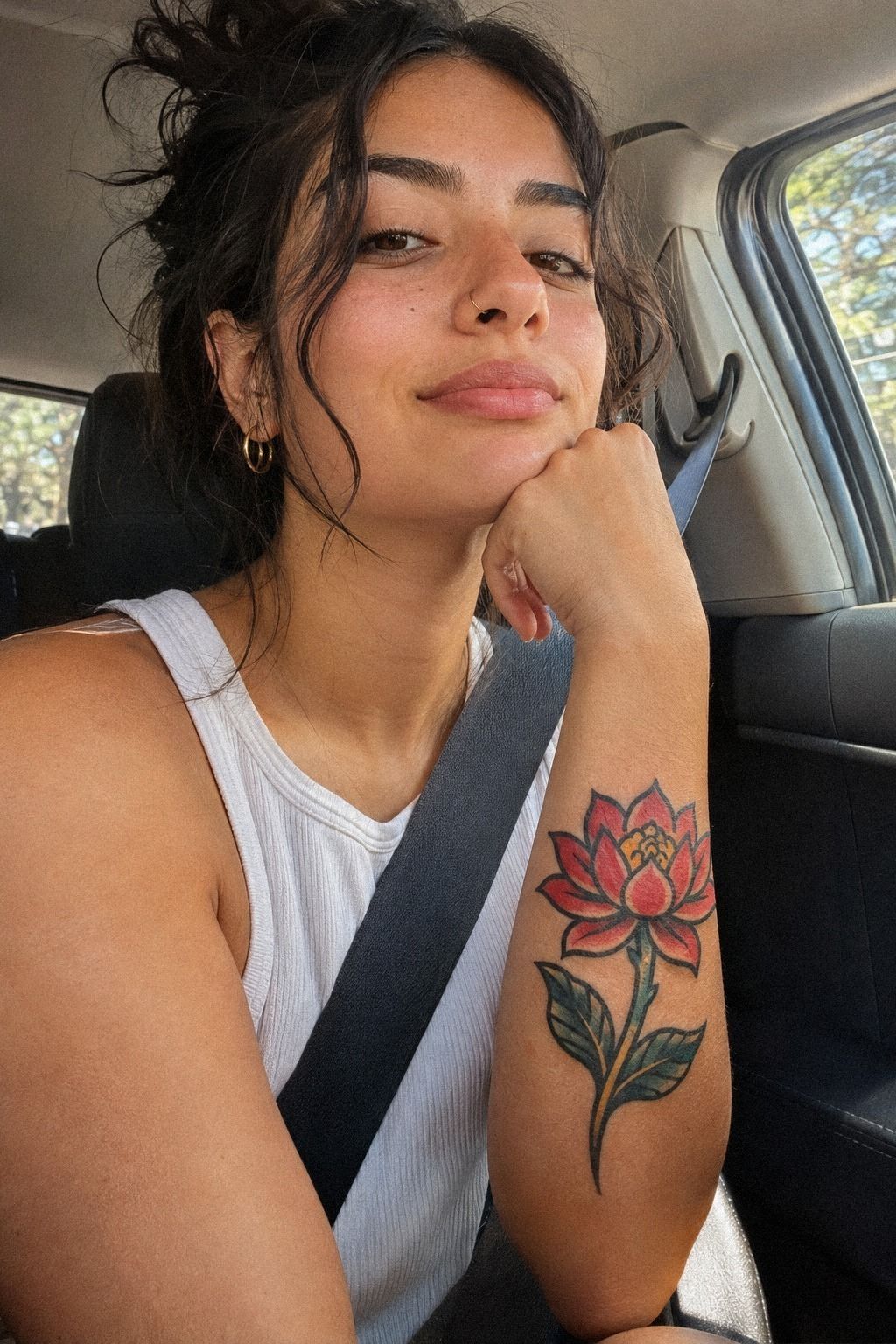
A forearm placement makes this traditional lotus flower tattoo easy for you to see and protect during healing. The plum, grey, and rose-gold palette gives the placement polished contrast. A dark center lets the petals open toward the wrist.
The result feels classic rather than overly decorative. You’ll still want to decide whether the flower points toward your hand or your elbow.
I prefer the blossom facing upward toward the elbow. It reads naturally when your arm hangs at your side. Your artist may suggest another direction based on your anatomy, and that conversation matters more than copying a reference exactly.
The read-it-upside-down test is useful. Hold the stencil in the position other people will see. Then check whether the stem, center, and petals still make sense.
What’s the point of a meaningful tattoo if only you can tell what it is? For a more personal variation, connect the lotus to a specific memory rather than adding random symbols.
You might use one open petal for renewal or a darker center for resilience. This lotus flower tattoo meaning guide can help you choose symbolism that feels honest.
Don’t overwork the shading. Smooth dark ink and plum contrast will age more clearly than a crowded wash of grey. Your design should still have a graceful outline after the softer tones settle.
4Dotwork Gives the Lotus a Gritty Texture
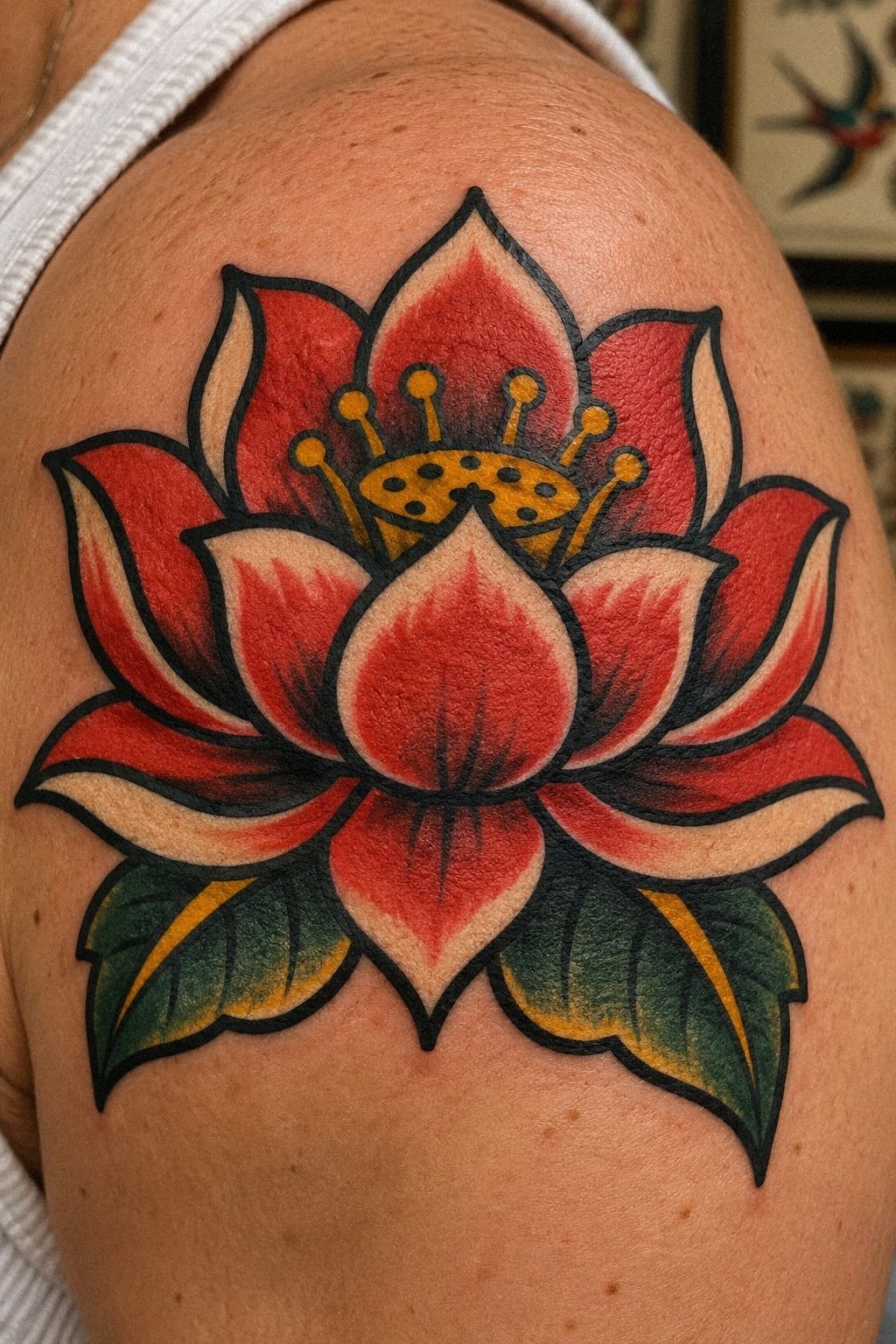
Dotwork can give a traditional lotus a unique texture without losing its recognizable shape. Your artist can use navy dot shading beneath the petals, around the stem, and near the center.
The effect is intricate, expressive, and slightly edgy. Your artist should vary the dot spacing instead of filling every gap at the same density.
Tighter dots create depth. Wider spacing preserves skin breaks. I’d avoid heavy dotwork along the smallest petal edges because those marks can blur as the tattoo settles.
This is the dots-follow-form rule. Your shading should explain the curve of each petal. It shouldn’t sit on top like a random pattern.
A thigh gives you more room for that transition. It’s often more tolerable than sternum or foot work. You can make the design meaningful with a restrained color choice.
One navy petal or a muted white stem may be enough. A full rainbow palette could compete with the dot texture. Browse this red lotus flower tattoo meaning reference if color symbolism matters to you.
The thigh also gives you practical privacy during healing. You’ll still need loose clothing and careful washing.
You won’t be constantly brushing the piece against a desk, sleeve, or strap. That makes this placement understated and surprisingly easy to live with.

5Black and Red: Let Contrast Lead

An emerald, gold, and cream traditional lotus flash sheet gives you several ways to compare shape before choosing a final tattoo. The emerald, gold, and cream flash palette feels vintage and distinctive.
Your finished piece should still be redrawn for your body. Paper proportions aren’t skin proportions. Look for the design with the clearest central bud and strongest outer contour.
Your eye should land on the lotus immediately. It shouldn’t wander through decorative curls or tiny stars. I’d choose the simpler option, even if the busier one looks more dramatic at first glance.
You don’t have to copy the flash exactly. Your artist can widen a petal, shorten the stem, or adjust the flower’s tilt so it follows your anatomy.
That small edit often turns a familiar image into something personal and empowering. If you’re comparing color symbolism, a strength lotus flower tattoo meaning guide may give you a better starting point.
Choose color for a reason that survives beyond the appointment. For the strongest aging potential, keep the dark ink areas solid and the emerald sections generous enough to remain legible.
Fine lines can spread over time. A well-placed dark anchor usually stays readable longer. That’s why this classic combination still earns its place.
6Give Sacred Symbolism One Clear Center

Sacred symbolism works when your lotus has one clear emotional center. A forest-green blackwork center can create powerful contrast. Rust accents can add depth without making the design feel loud.
Your artist should test how the chosen colors read against your undertone. You’ll also want to explain what the lotus means to you in ordinary language.
Maybe it marks recovery, spiritual discipline, or the decision to begin again. Those details help your artist build a meaningful image instead of stacking symbols that look impressive but don’t belong together.
The one-symbol, one-reason rule keeps the piece elegant. I’d skip adding a moon, eye, quote, and halo all at once.
Your lotus doesn’t need a crowded explanation. A single sacred detail can carry more emotional weight. For a deeper comparison, read what lotus flower tattoos represent before you settle on a motif.
You’ll notice that symbolism can be subtle, personal, and expressive without becoming literal. Ask your artist for healed examples on a range of skin tones.
Fresh ink can look vibrant on appointment day. Healed results tell you much more about line clarity and pigment balance. Your choice should be informed, not rushed.
7Behind the Ear, Keep It Dainty and Sharp
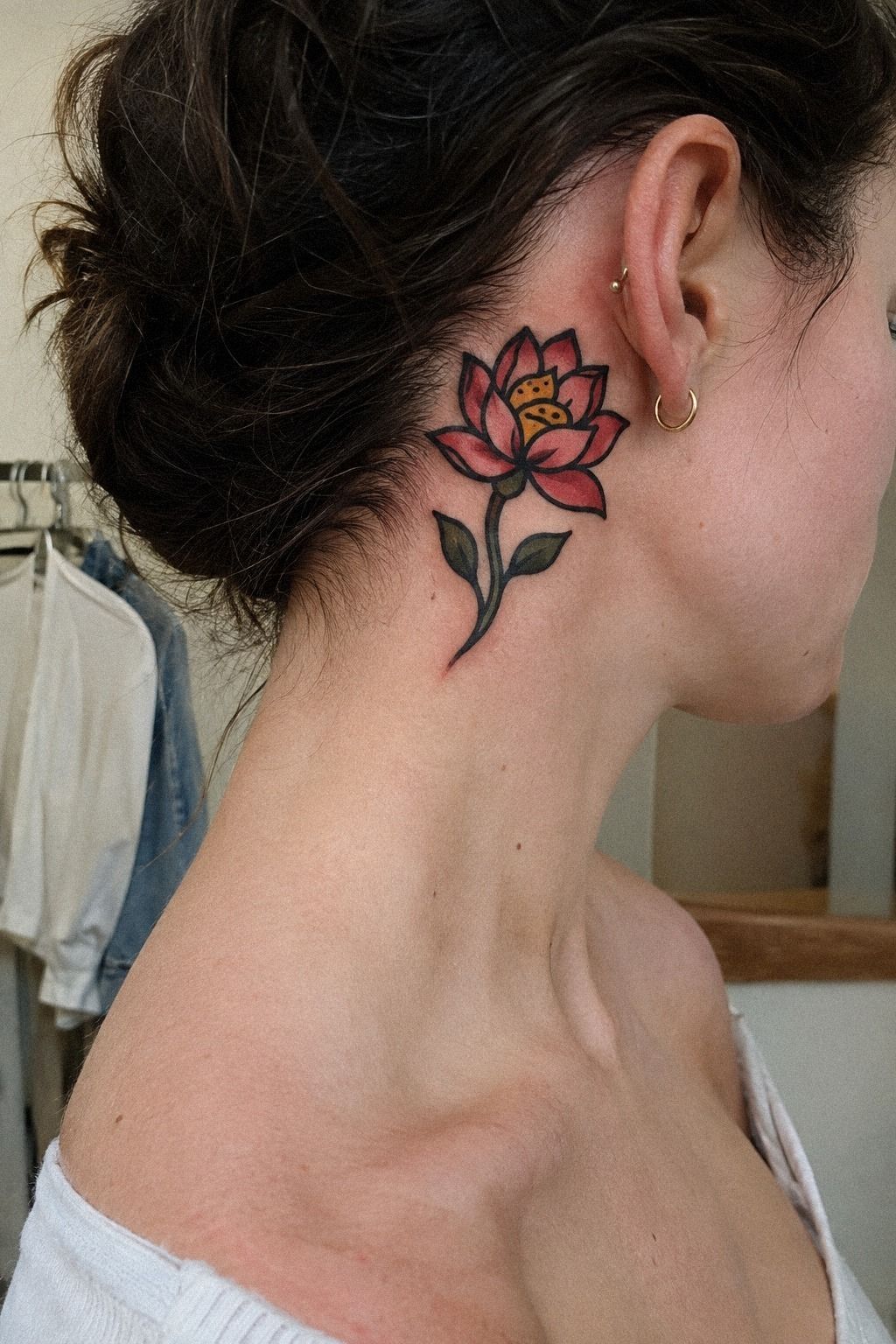
Behind-the-ear placement makes a traditional lotus feel intimate, dainty, and slightly rebellious. It’s an understated location, but the small surface leaves little room for muddled detail.
A small lotus outline should use a clean center and a short stem. Leave enough open skin between the petals. You’ll want the shape to remain sharp even when hair moves over it.
This can be worth it when discretion matters. The limited space affects the value of a highly detailed design, though.
If you’re drawn to ornate symbolism, ask whether the same idea would read better on your forearm or shoulder. A simpler mark may feel more personal in this placement.
8Ornament the Lotus Without Losing Its Shape
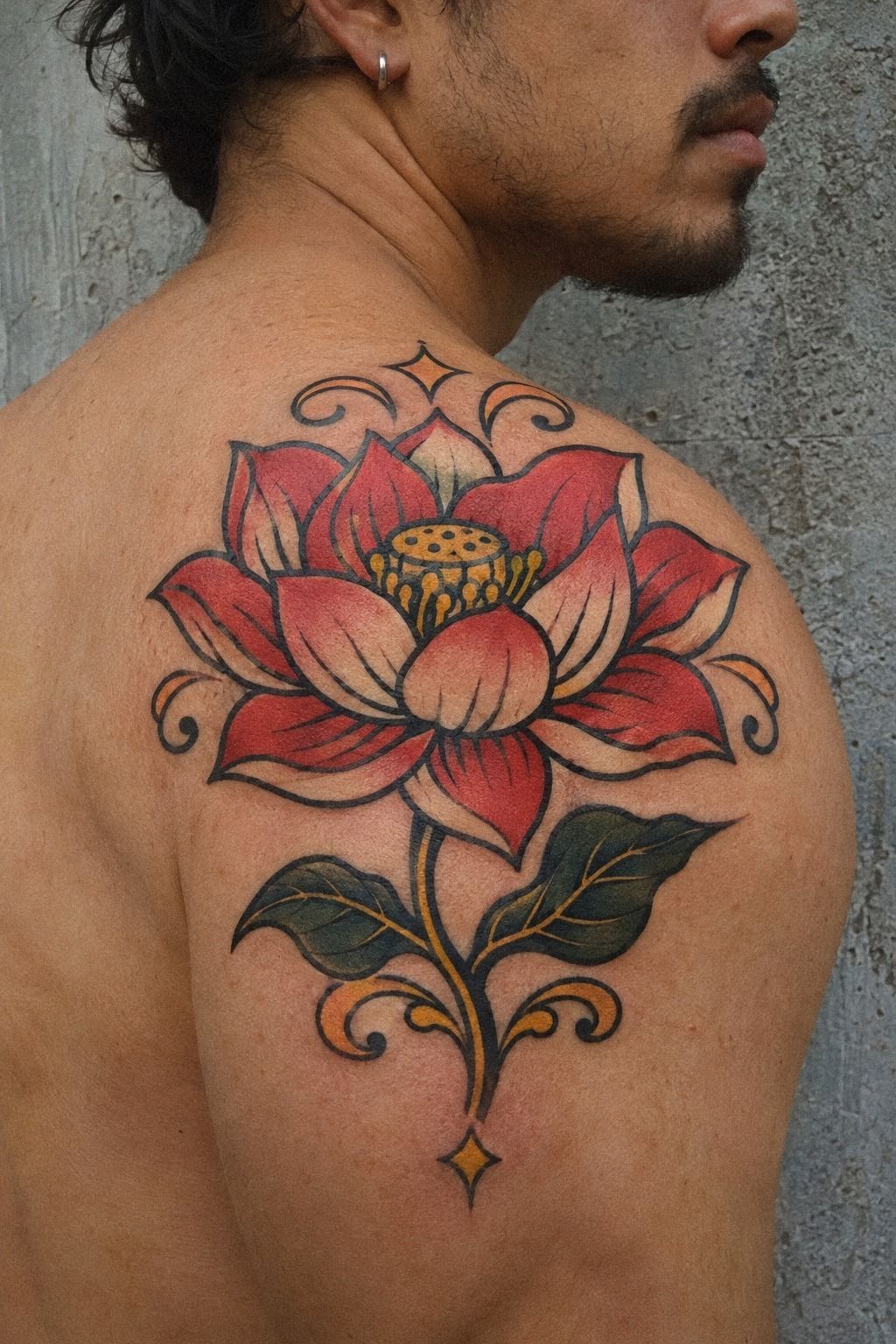
Ornamental details can make a shoulder lotus feel graceful and polished. The flower still needs a clean stem and a restrained frame. The shoulder gives your artist room to build a balanced composition around ornamental black linework.
You’ll want the ornament to support the lotus instead of competing with it. A curved border, a few dots, or a small symmetrical flourish may be enough.
I’d avoid a dense mandala behind the flower if your main goal is instant recognition. This is the center-first composition rule.
Your artist should establish the flower at full size. Add decoration around its natural edges afterward. If the frame looks exciting without the lotus, the design may be pulling attention in the wrong direction.
For another botanical direction, look at watercolor lotus flower tattoo examples and compare their use of open space. You may decide that a softer, flowing accent suits you better than a rigid border.
Shoulder skin also gives you flexibility with clothing and visibility. Your tattoo can stay discreet under a sleeve or become visible in a tank top. That balance feels personal, stylish, and practical for a first piece.
9What Does a Sternum Lotus Need?
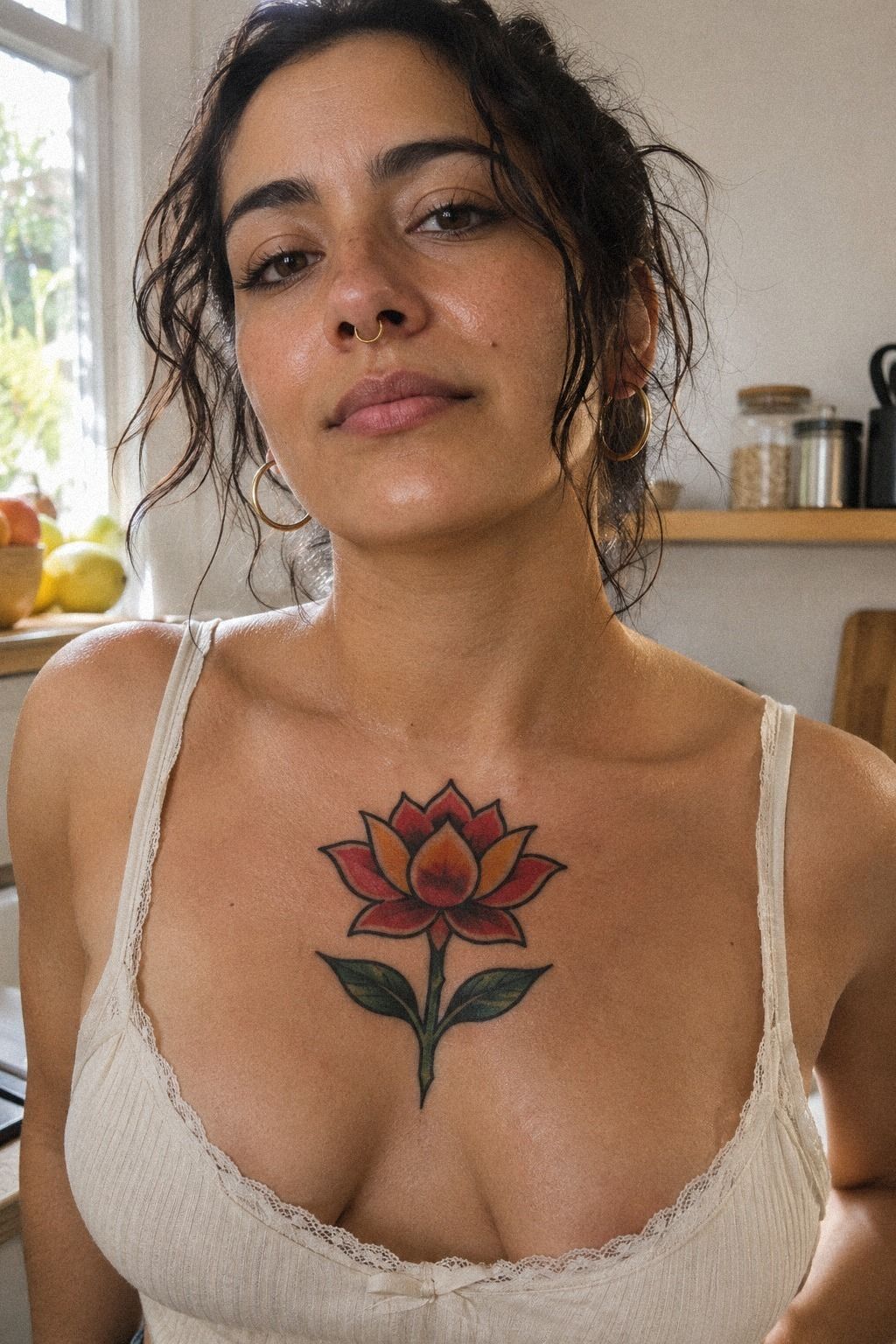
The sternum is a meaningful placement for a lotus because the stem can follow the body’s center line. A center-line lotus placement can look graceful and symbolic when the flower respects your torso’s natural shape.
Sternum work may feel more intense than a forearm or thigh tattoo. Don’t choose it only because the position looks striking.
Talk through session length, breaks, and aftercare before you commit. A bold central bud and generous spacing will usually give better value than excessive shading.
If you’re unsure, compare the symbolism with this lotus flower tattoo meaning guide before your consultation. The strongest design will feel intentional, not crowded.
10Let Water Motifs Follow the Bloom

Water motifs give a traditional lotus a flowing, symbolic foundation.
Your artist can use sage-green and warm-cream ink to suggest ripples without overwhelming the bloom. Keep the water marks secondary to the petals.
A few curved lines can create movement. Too many may make the lotus harder to recognize.
I’d keep the stem clear and let the water motifs taper away from the flower. That gives the design a graceful rhythm while preserving its traditional structure.
11Build a Feminine Sleeve Around One Anchor
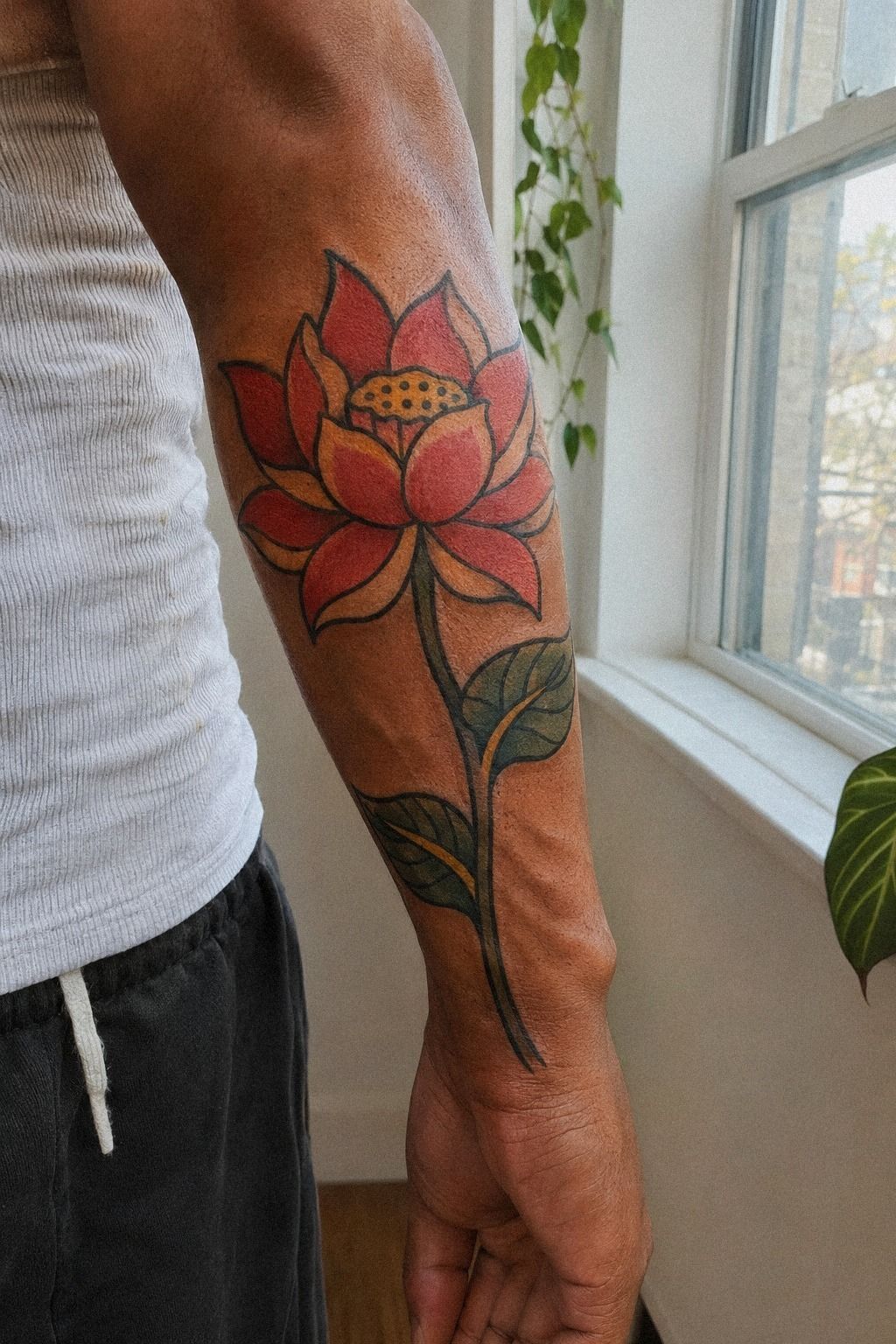
A sleeve design can make one traditional lotus part of a larger botanical story. Terracotta lotus petals can hold visual weight while olive leaves, stars, or secondary flowers create a feminine rhythm along the forearm.
You’ll want to plan the whole sleeve before tattooing the first flower. Your artist should consider spacing, future additions, and how each piece looks when your arm turns.
I’d leave intentional skin breaks between major images. Dense coverage can flatten the composition. This is the anchor-and-breathe method.
One lotus becomes the visual anchor. Smaller motifs guide the eye around it. Your sleeve can feel intricate without becoming chaotic, and that balance is what makes the design timeless.
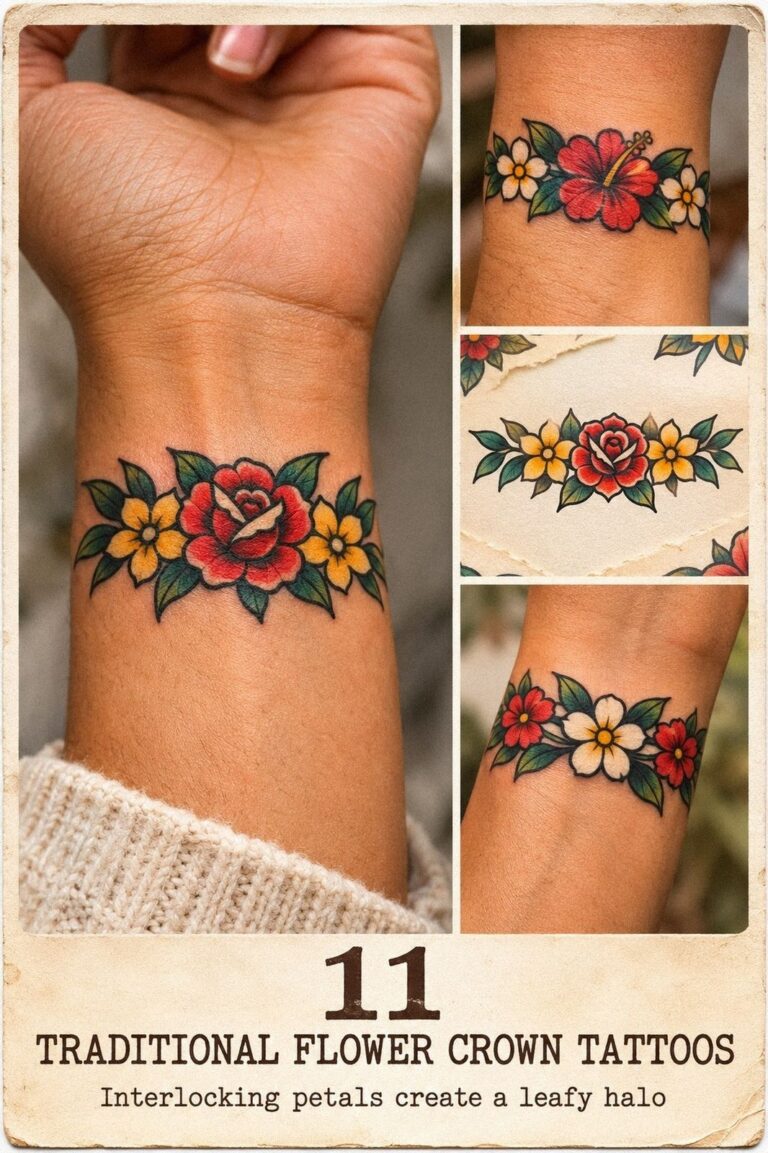
If you’re building a floral collection, compare this idea with traditional flower crown tattoo inspiration. You may find a shared line style or repeated petal shape that makes future work feel connected without matching perfectly.
Sleeve planning also means patience. You’ll need multiple appointments and careful aftercare.
Let each section heal before adding the next. The finished result can be iconic, but the process should still feel measured and personal.
Start With Placement, Then Choose the Scale
Placement changes the design more than many first-timers expect. A readable lotus silhouette needs enough room for its petals, center, and stem.
The same flash concept may work on a shoulder but fail behind the ear. If you’re comparing size, consider visibility, friction, sun exposure, and how often you’ll protect the area during healing.
A slightly larger piece may offer better value than a tiny version packed with details. For a second opinion on compact floral ideas, revisit these small lotus flower tattoo ideas.
The best choice isn’t always the lowest price. It’s the design you won’t need to correct later.
Match the Design to Your Meaning
A lotus can represent renewal, discipline, resilience, devotion, or a private turning point. Your personal symbolism should guide the mood, whether that mood is sacred, romantic, fierce, or quietly empowering.
You don’t need to explain every detail to everyone who sees it. A symbolic tattoo can stay private while still giving your artist enough direction to create something expressive.
If you’re unsure which meaning fits, compare what lotus flower tattoos represent with the more specific red lotus flower tattoo meaning reference.
That small research step can save you from choosing symbolism that doesn’t feel like yours. Your design should carry a personal reason, not just a recognizable shape.
Budget for Quality, Healing, and Future Changes
Cost matters, especially for a first tattoo. A typical shop minimum may be around $50 to $100. Hourly rates often fall between $100 and $250.
Your tattoo budget should include the consultation, aftercare supplies, and possible touch-up costs. A small lotus may fit within a minimum, while an ornate sternum piece or sleeve can require several appointments.
Paying more isn’t automatically better. A suspiciously low quote may not offer the value you need.
Ask for a clear cost estimate before booking. You’re comparing the artist’s style, healed results, hygiene standards, and communication, not just the final quote. That’s how you decide whether the tattoo is truly worth it.
Read the Portfolio Before You Book
A polished portfolio can show linework. Healed work shows whether the settled tattoo lines remain clear after the skin has recovered.
Look for consistent outlines, solid black areas, balanced color, and examples on varied skin tones. You’ll also want to check whether the artist regularly creates traditional florals.
A talented portrait artist may not be the best fit for a bold, symbolic lotus. For a different color direction, compare watercolor lotus flower tattoo examples with traditional black-and-red work.
The comparison can clarify whether you want vintage contrast, flowing color, or a more minimal approach. Trust the healed evidence more than a single fresh result.
Plan the Healing Before You Commit
Healing affects placement, timing, clothing, and daily habits. Your tattoo aftercare plan should be clear before the appointment begins.
Ask how to wash the area, which moisturizer to use, and when normal exercise can resume. You’ll also want to know how to protect the tattoo from friction and strong sunlight.
A sternum piece may rub against clothing. A foot tattoo may face constant movement and contact. A forearm tattoo may need extra sun protection.
Your artist should explain what normal healing looks like and when to ask a medical professional for help. Don’t pick at peeling skin or add products your artist hasn’t approved. Good preparation keeps the experience calmer and more predictable!
A Practical Opinion On First Traditional Lotus Ink
My practical view is that the safest first tattoo isn’t automatically the smallest possible design. Tiny work isn’t always easier to heal or easier to read.
A compact lotus with a weak outline can lose its identity. A slightly bolder piece may stay crisp and meaningful for years. Your best starting point is a design that matches your placement, skin, tolerance, and reason for getting it.
A sternum lotus can feel sacred and intimate, but it may hurt more than an upper-arm piece. A behind-the-ear lotus can be discreet, but the narrow space limits detail.
There’s no universal winner. Anyone promising one is skipping the useful part. I also prefer artists who show healed work instead of only fresh results.
Fresh ink looks vibrant. Healed ink tells you whether the line spacing, black fill, and pigment settled well. Ask how the design may age, especially if you’re considering very fine petals.
Cost matters, too. Typical US pricing may include a shop minimum of about $50 to $100. Hourly rates often fall around $100 to $250, depending on the artist and region.
A small lotus may fit within a minimum. A sleeve or detailed sternum piece can require more time. Your budget should include a little room for quality, not just speed.
I’d never choose an artist from a single perfect-looking reference. Look for consistent linework, clean healed images, clear studio hygiene, and a style that matches your idea.
You’re trusting someone with a permanent mark. Taking an extra week to compare portfolios is sensible.
That isn’t hesitation. It’s good judgment!
What People Always Want to Know
How much does a traditional lotus flower tattoo usually cost?
A traditional lotus flower tattoo typically costs about $100 to $300 in the US. Small pieces may meet a shop minimum of $50 to $100.
Hourly rates often run around $100 to $250. Your artist, region, size, color, and placement will change the final quote.
Are traditional lotus flower tattoos a good idea for a first tattoo?
Yes, they’re a strong first choice when you want clear linework and meaningful symbolism. I’d consider the forearm, thigh, or shoulder before the sternum, ribs, feet, or hands. A readable lotus can age well when the design avoids overly fine details and you follow aftercare carefully.
How do I choose a tattoo artist for a traditional lotus flower tattoo?
I’d choose an artist with a portfolio showing healed traditional work, clean linework, solid black areas, and consistent petal structure. Check studio hygiene and licensing requirements in your area. Make sure the artist regularly works with your preferred placement and skin tone.
How much do traditional lotus flower tattoos hurt?
Pain varies by person and placement. Sternum, ribs, feet, hands, and other bony areas can feel more intense. Forearm, thigh, and shoulder tattoos are often more tolerable.
Your artist can suggest breaks. You shouldn’t feel pressured to finish a long session without them. Good communication matters as much as toughness.
How long does a traditional lotus flower tattoo take to heal?
The surface usually heals in about 2 to 3 weeks. Complete healing can take roughly 2 to 3 months.
You’ll need to wash gently, moisturize as directed, avoid swimming during early healing, and keep the tattoo away from strong sun until the skin has settled.
What’s the best placement for a traditional lotus flower tattoo?
I’d start with the forearm, thigh, or shoulder because these placements are usually more tolerable. They also give the artist room for readable lines.
Sternum and behind-the-ear placements feel more intimate. They can be more sensitive and may limit detail. Choose the spot your daily routine can protect.
Where I’d Start First
If I had to pick one, I’d start with the forearm lotus. You’ll see it easily, the placement gives the outline room to breathe, and it’s usually more tolerable than sternum or foot work.
Pin that traditional lotus flower tattoo guide for later. Bring your favorite reference to the consultation.
Before you commit, compare the artist’s healed portfolio. Ask for a realistic price. Make sure the design still feels meaningful without extra decoration.
If it checks those boxes, it’s probably worth it. Bring your favorite reference and trust the conversation!