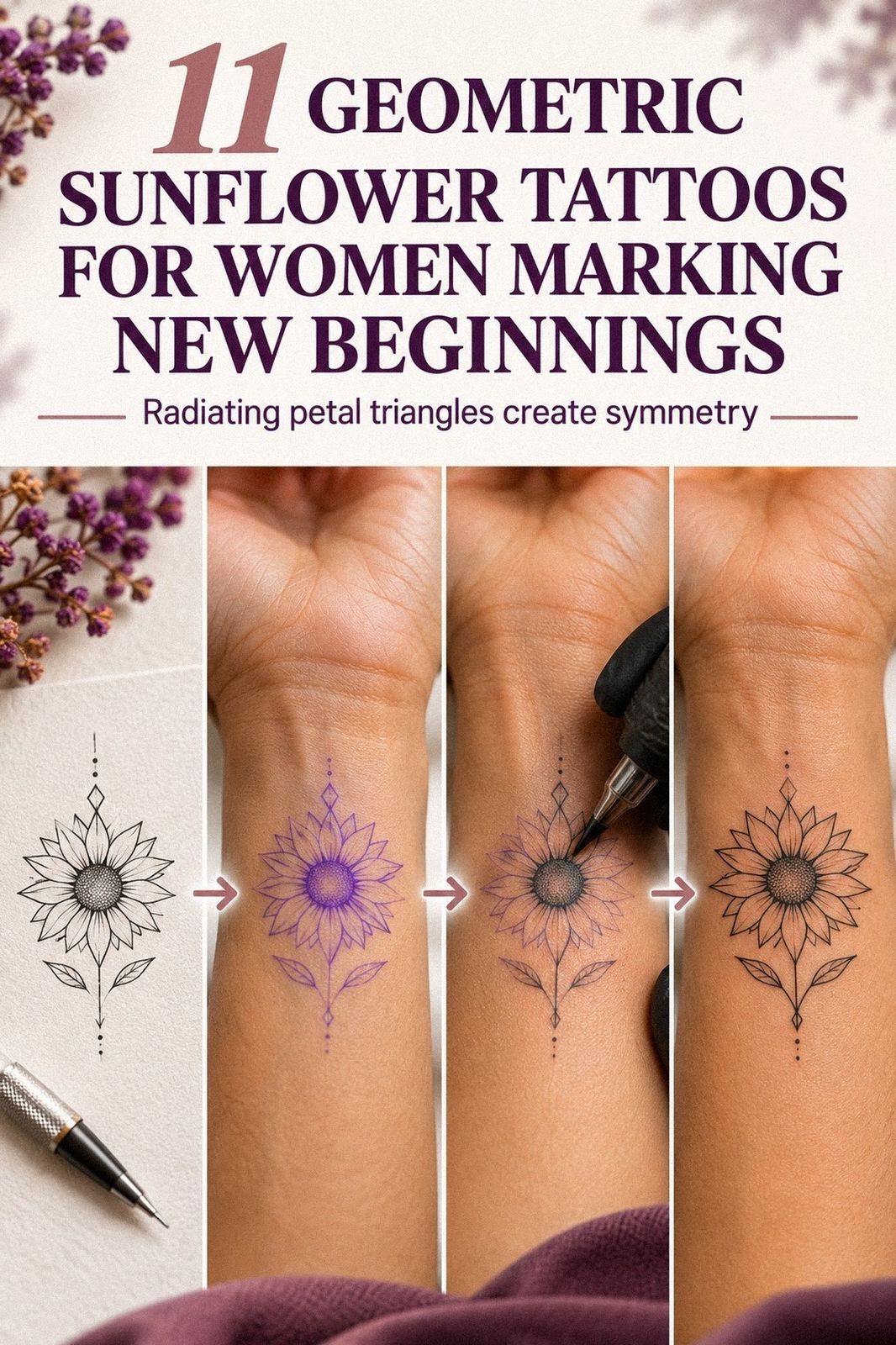
Geometric sunflower tattoos tend to hurt less on the forearm, thigh, and shoulder than on ribs, feet, hands, or sternum. I once chose a line too fine for a high-friction spot, and it softened faster than I wanted. Now I judge forearm placement, contrast, and healing first. These 11 ideas make that decision easier.
Editor’s note: Start with the placement, then choose the geometry. A delicate flower needs breathing room, while a fierce blackwork design can handle more visual weight. You’ll make a better choice when the sketch serves your skin instead of chasing every trend!
- Small Geometric Sunflower Wrist Tattoos
- Can Fine Linework Stay Readable?
- Bold Geometric Sunflower Forearm Tattoos
- Build Depth With Dotwork
- The Flash Sheet: Unique Shoulder Concepts
- Sacred Geometry, Open Space, and the Calf
- Keep the Ankle Minimal
- Blackwork or Breathing Room?
- Meaning on the Ribs
- Color vs. Crisp Geometry
- Let the Sleeve Flow
1Small Geometric Sunflower Wrist Tattoos
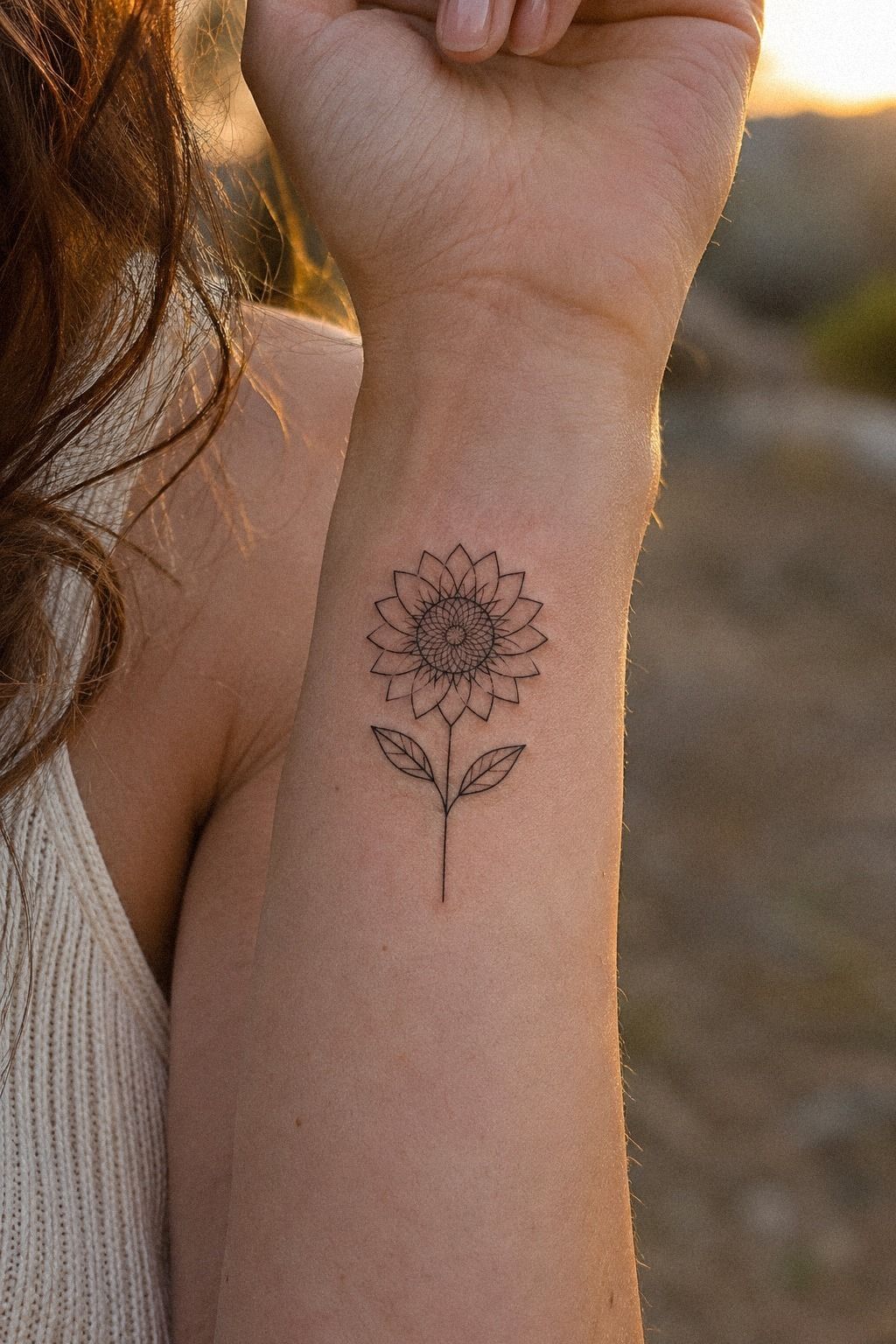
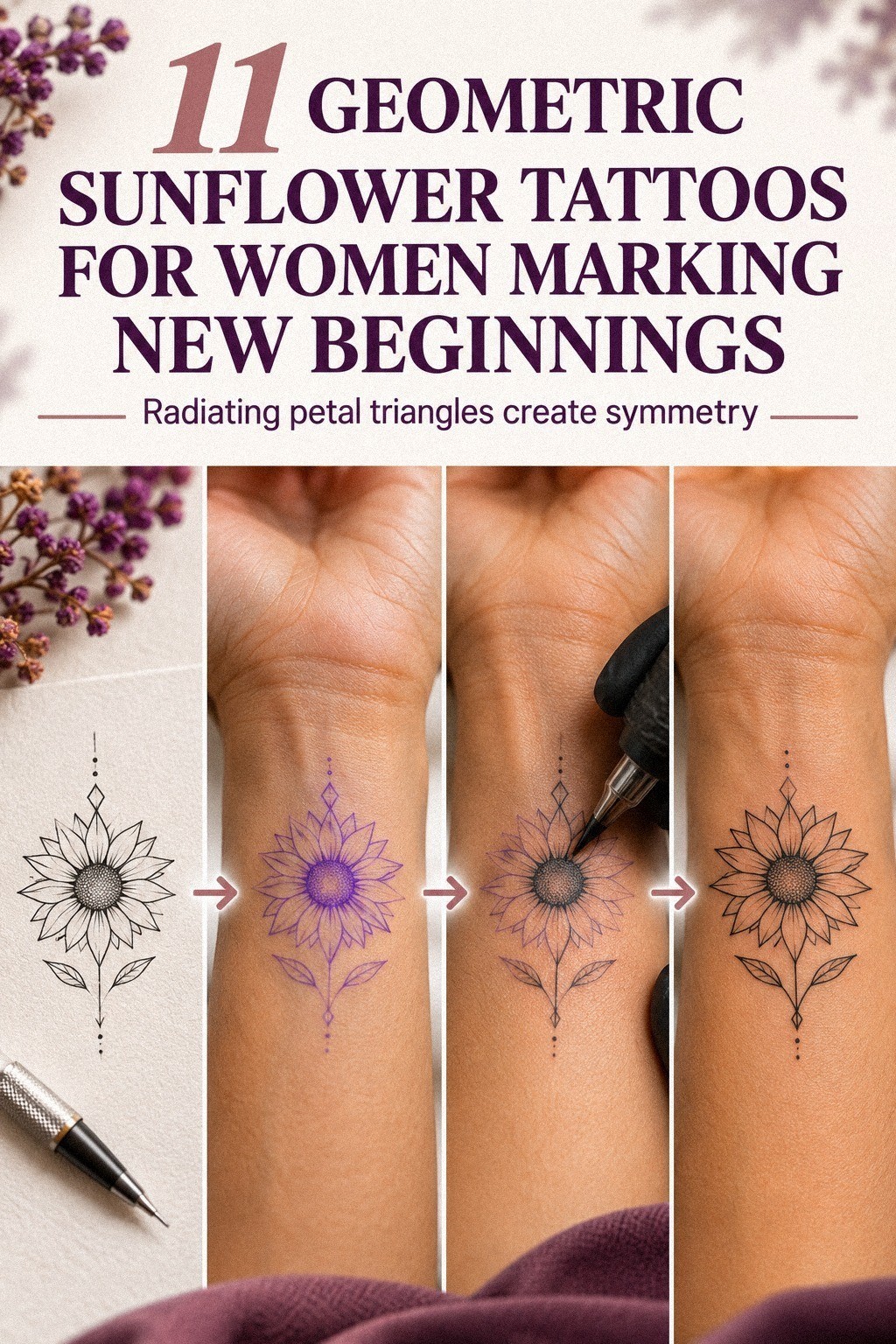
A small wrist sunflower works best with a crisp black stencil, one narrow stem, and petals that stay open instead of crowding the center. You’ll get a delicate result, but your artist still needs enough contrast for the design to read from a few feet away. I’d keep the flower around 2 inches if you want the angles to remain visible.
The wrist moves constantly, so your tattoo should use understated negative space rather than overloaded detail. A single geometric ring around the center gives it structure without making the piece feel heavy. If you’re drawn to smaller work, compare it with these small sunflower tattoo ideas before choosing your final sketch.
Ask your artist about the single-needle cartridge and whether the line weight suits your skin. Fine lines can spread as they age, especially where sleeves, watches, and sunlight rub. That doesn’t mean you need a bold tattoo, but you’ll want a clean margin around each petal.
Keep the stem narrow and the center symbolic geometry simple. A tiny mandala behind it could compete with the flower, so I’d skip it unless your artist can preserve plenty of skin between the shapes. The result can feel dainty, personal, and quietly meaningful.
Your first few days matter. You’ll wash gently, moisturize lightly, and keep your watch away from the fresh second-skin bandage if your artist uses one. The wrist is visible, meaningful, and easy to monitor, so it’s a strong choice for a first geometric sunflower!
2Can Fine Linework Stay Readable?
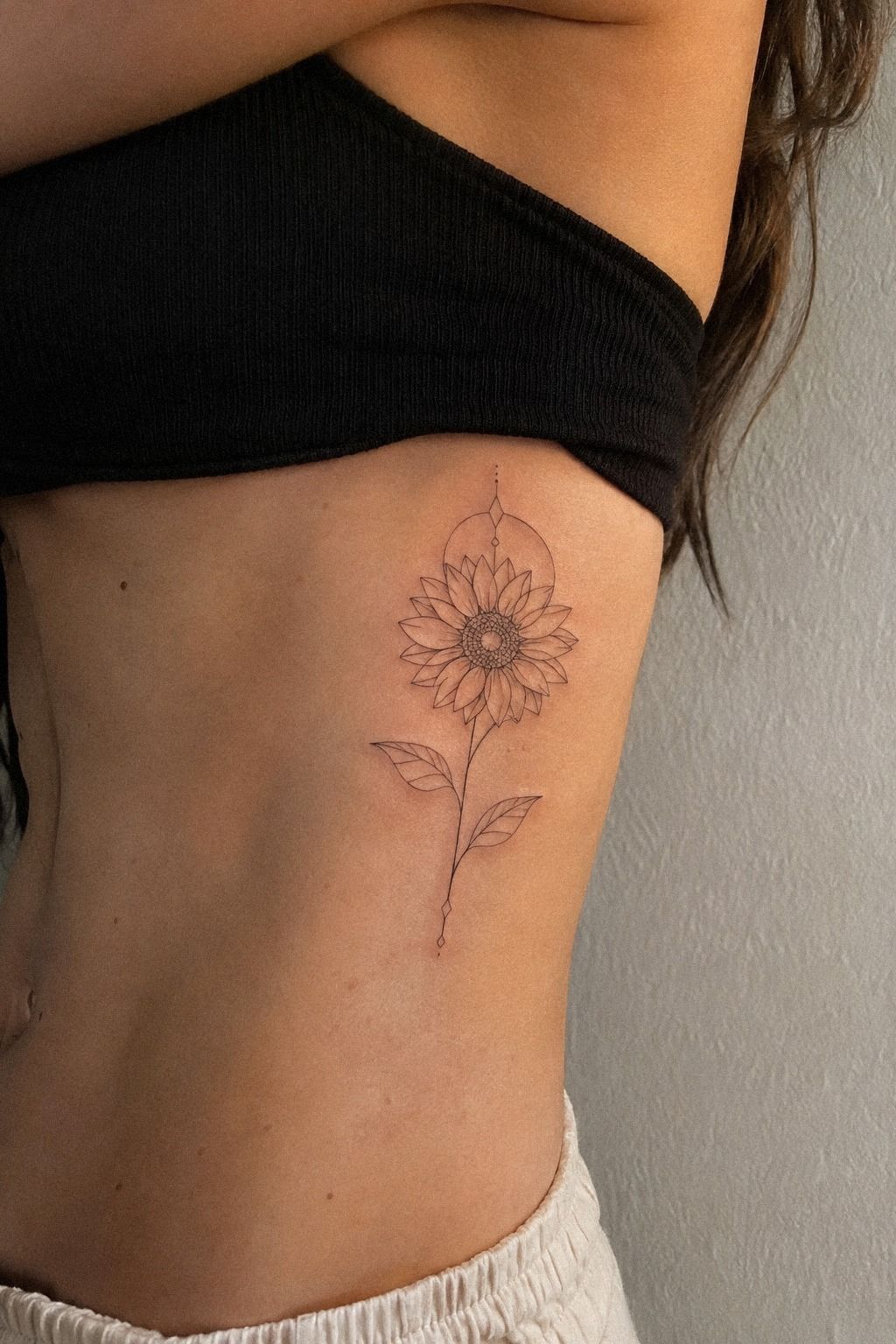
Fine linework makes a sunflower feel intricate through open petal spacing without turning it into a dense black patch. On the ribs, the single stem and layered petals can follow the body’s vertical shape, creating a graceful design that looks almost drafted by hand. You’ll need to accept that the ribs are less forgiving than the forearm.
I’d ask for a 3RL needle grouping only if your artist has healed examples showing similar work. Fresh lines can look impossibly sharp, but healed results tell you whether they stayed readable. If you’re comparing delicate options, these fine line sunflower tattoos will help you notice spacing and scale.
Keep the center geometric, perhaps a small hexagon or diamond, then let the petals remain open. That contrast gives you an elegant black outline instead of a fragile-looking one. A slightly larger design may be worth it if the extra scale protects the details.
Rib placement has a raw sensitivity because the skin sits close to bone. You’ll probably feel more intensity there than on your shoulder, and breathing can make the session feel longer.
Would I choose ribs for a first tattoo? Maybe, but only if you’re more excited by the placement than nervous about the sensation.
Your artist should mark the design while you’re standing, not only while you’re lying down. The skin shifts with posture, and you’ll want the stem to follow your natural line. A polished, expressive outline can look striking there, but it needs space to move with you.
3Bold Geometric Sunflower Forearm Tattoos
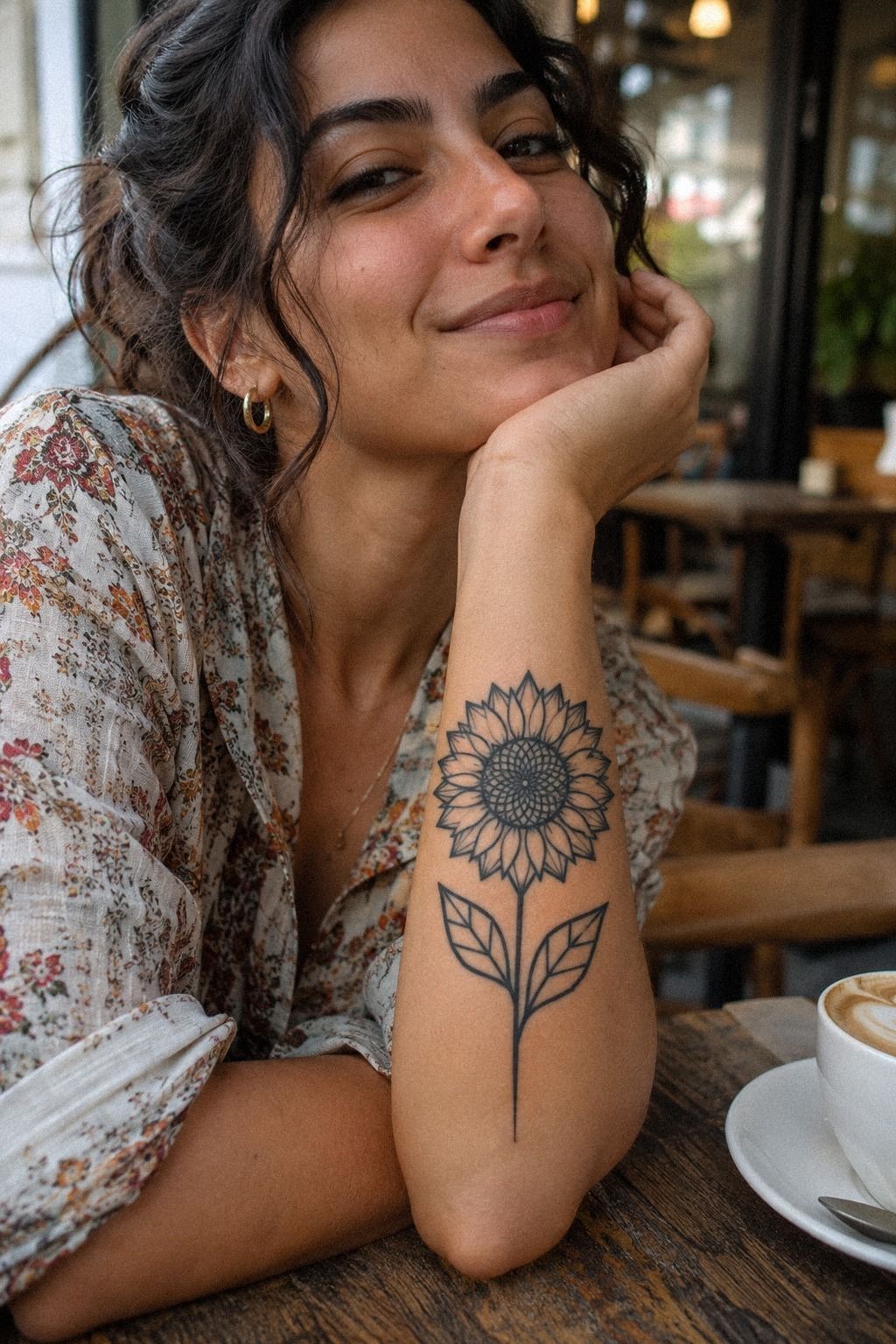
A forearm sunflower gives you more space for bold geometry, especially when the petals need sharp outer points and a dark center. On medium olive skin, solid black ink can create high contrast without requiring a huge design. You’ll see the flower clearly, and your artist can keep the stem narrow.
I’d choose the outer forearm over the inner wrist if you want lower friction and easier healing. The placement is still visible, but it usually feels more manageable than ribs, feet, or sternum. You can also show your artist this guide to minimalist sunflower tattoos if you want to reduce the number of interior lines.
The best version has a strong center, four or five major petal shapes, and a few secondary angle marks. Don’t ask for every petal to be outlined twice. That might look ornate on paper, but the detail can become muddy after years of sun exposure.
For your consultation, bring a reference of your forearm with the elbow and wrist visible. A good artist can scale the design so it doesn’t look miniature near the wrist or stranded beneath the elbow. I’d rather see a confident 3-inch sunflower than a crowded 2-inch one, especially if you’re considering the long-term design value.
And yes, the forearm can still feel intense during a longer session. You’ll want to eat beforehand, hydrate, and wear something that leaves the area uncovered. The result should feel fierce, sharp, and timeless, with enough solid black ink to age better than wispy lines alone.
4Build Depth With Dotwork
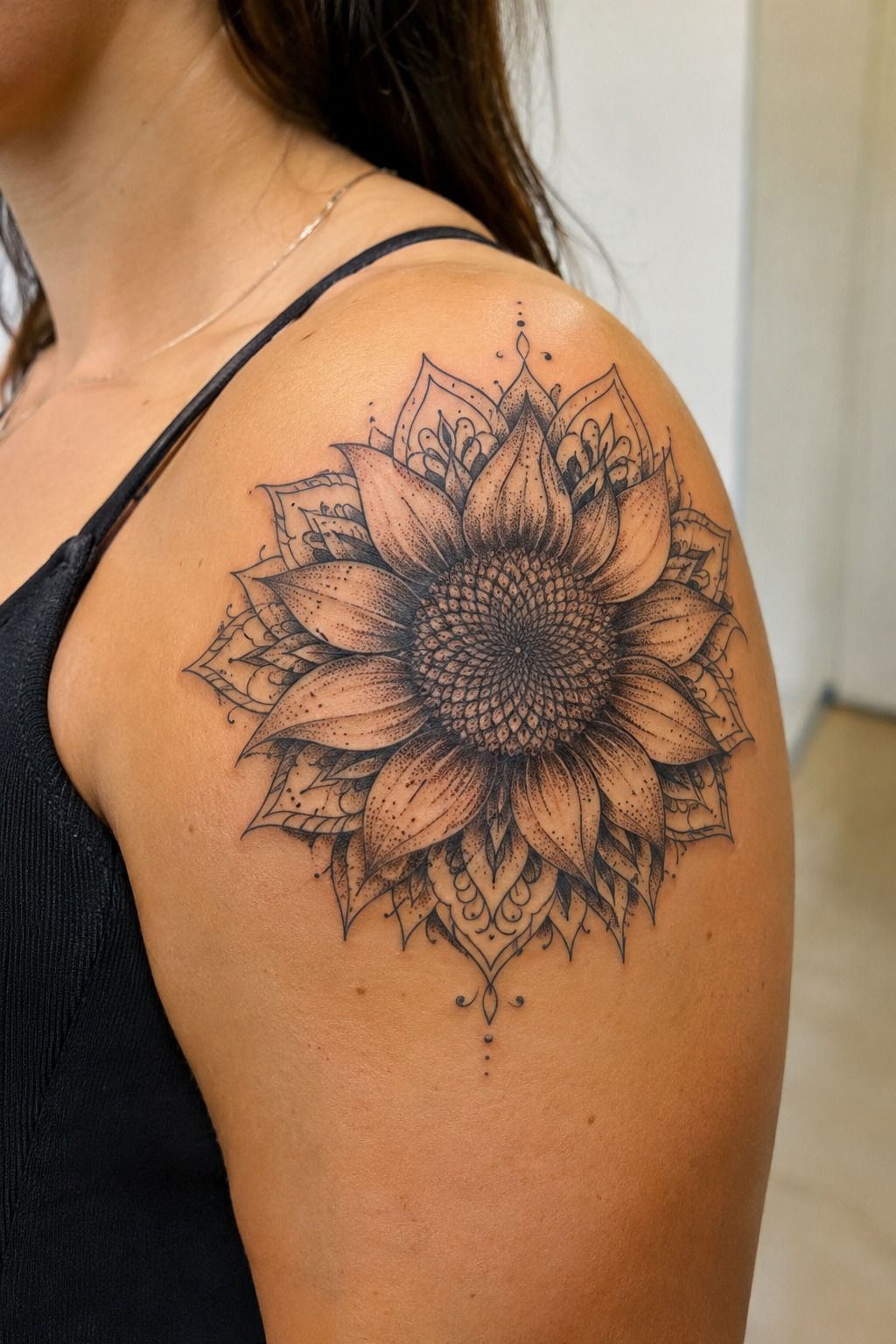
Dotwork gives this shoulder design a soft transition without using broad grey fills. The result stays controlled dotwork shading rather than becoming a heavy black patch.
5The Flash Sheet: Unique Shoulder Concepts
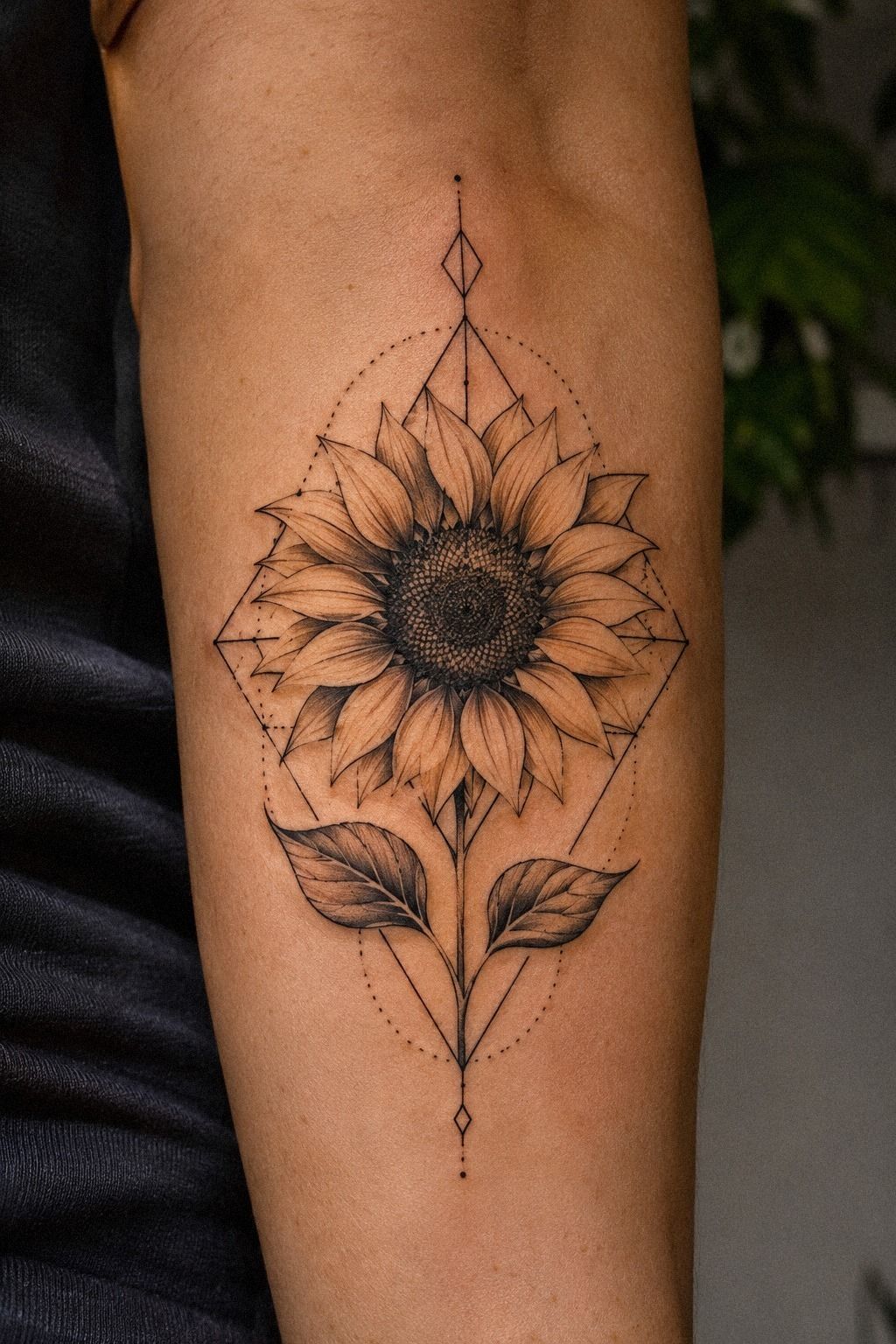
A flash sheet lets you compare several directions before you commit. Look for hand-drawn black sketches that vary through petal angles, center shapes, or stem length. You’ll be able to see which one feels personal instead of merely popular.
Look for flash paper with bold sketches and visible pencil texture. The page matters less than the design conversation it starts.
I’d circle two options, then ask your artist to combine one center with another petal shape. That’s how a unique tattoo becomes yours.
One sketch might use a diamond center and eight pointed petals. Another might use a circular center with triangular gaps.
A third could add a small crescent or star, but you shouldn’t keep every symbol in the same piece. The most striking flash designs usually have one clear idea.
If you’re collecting references, compare the sheet with these unique geometric sunflower tattoos. You’ll notice how much a tiny change in line weight affects the mood. A thick outline looks daring and graphic; a lighter one feels delicate and understated.
And don’t feel pressured to choose from the first page your artist shows you. You can ask for a custom redraw, a different stem, or a calmer center.
Your sunflower should feel iconic to you, not like a leftover design from someone else’s appointment. That extra consultation time can be worth it!
6Sacred Geometry, Open Space, and the Calf
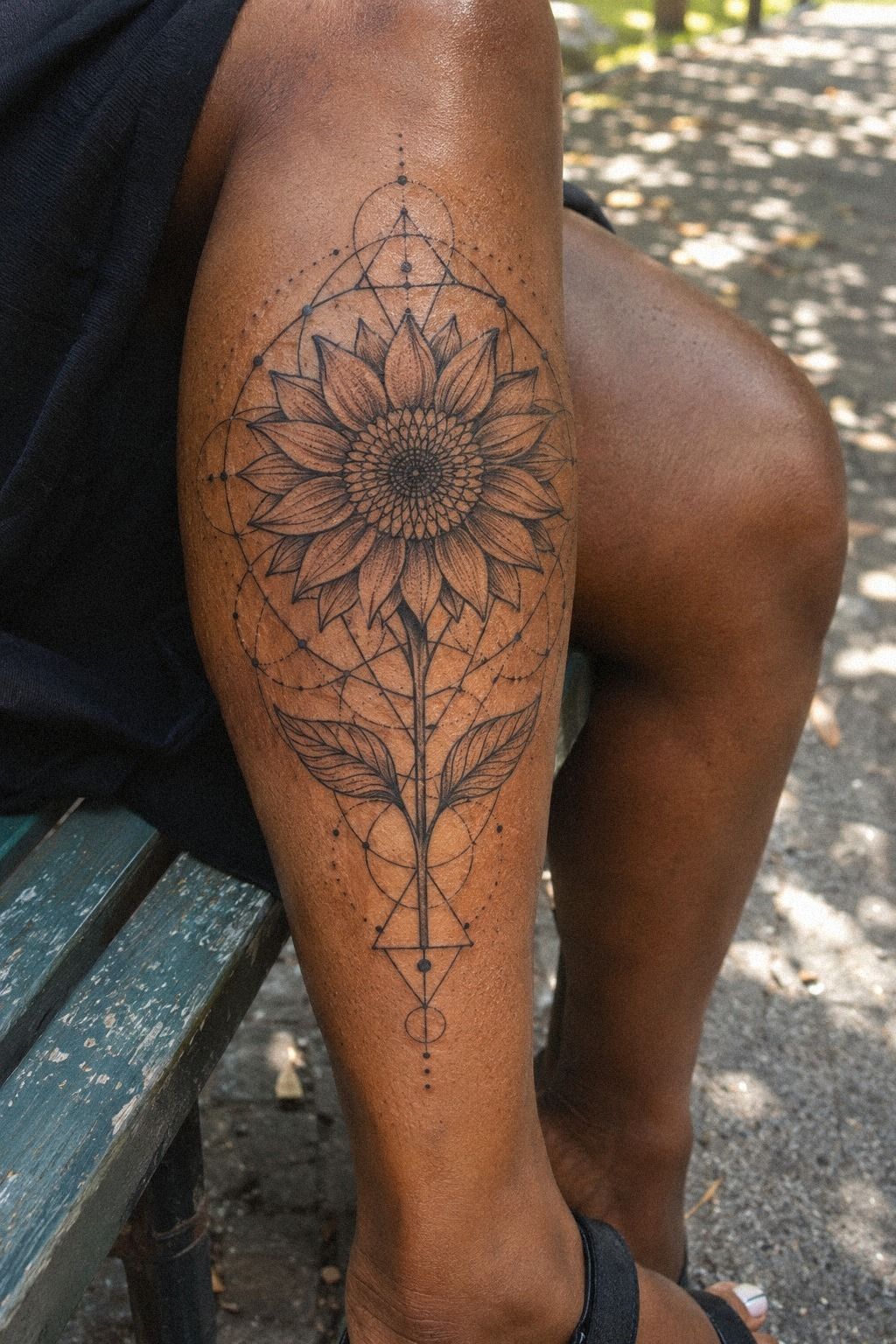
Sacred geometry gives the sunflower a structured border, especially on the calf where a vertical composition can breathe. Pair it with high-contrast blackwork, clear open areas, and a geometric border that doesn’t swallow the flower.
I’d use a triangle, hexagon, or restrained circular border, then leave a visible gap between it and the petals. You’ll need that separation so the image doesn’t become one dense symbol. A border that touches every petal can feel ornate, while a separated border feels more polished.
The calf is often more tolerable than ribs, feet, hands, or sternum, though every person responds differently. If you’re still deciding between floral symbols, browse these geometric rose tattoos to compare how different flowers behave inside the same structure. The comparison may save you from an expensive redesign.
Your artist should check the design while your leg is relaxed and standing. The calf curves, and a perfect-looking circle on a flat screen may need adjustment on skin. I’d rather have a slightly softened arc that follows your leg than a mathematically exact border that looks crooked when you walk.
Ask for a sterile carbon stencil and a dry placement check before the needle touches your skin. You’ll see whether the sunflower sits at the right height and whether the border feels too large. The finished piece can be sacred, bold, and haunting without becoming visually crowded.
7Keep the Ankle Minimal
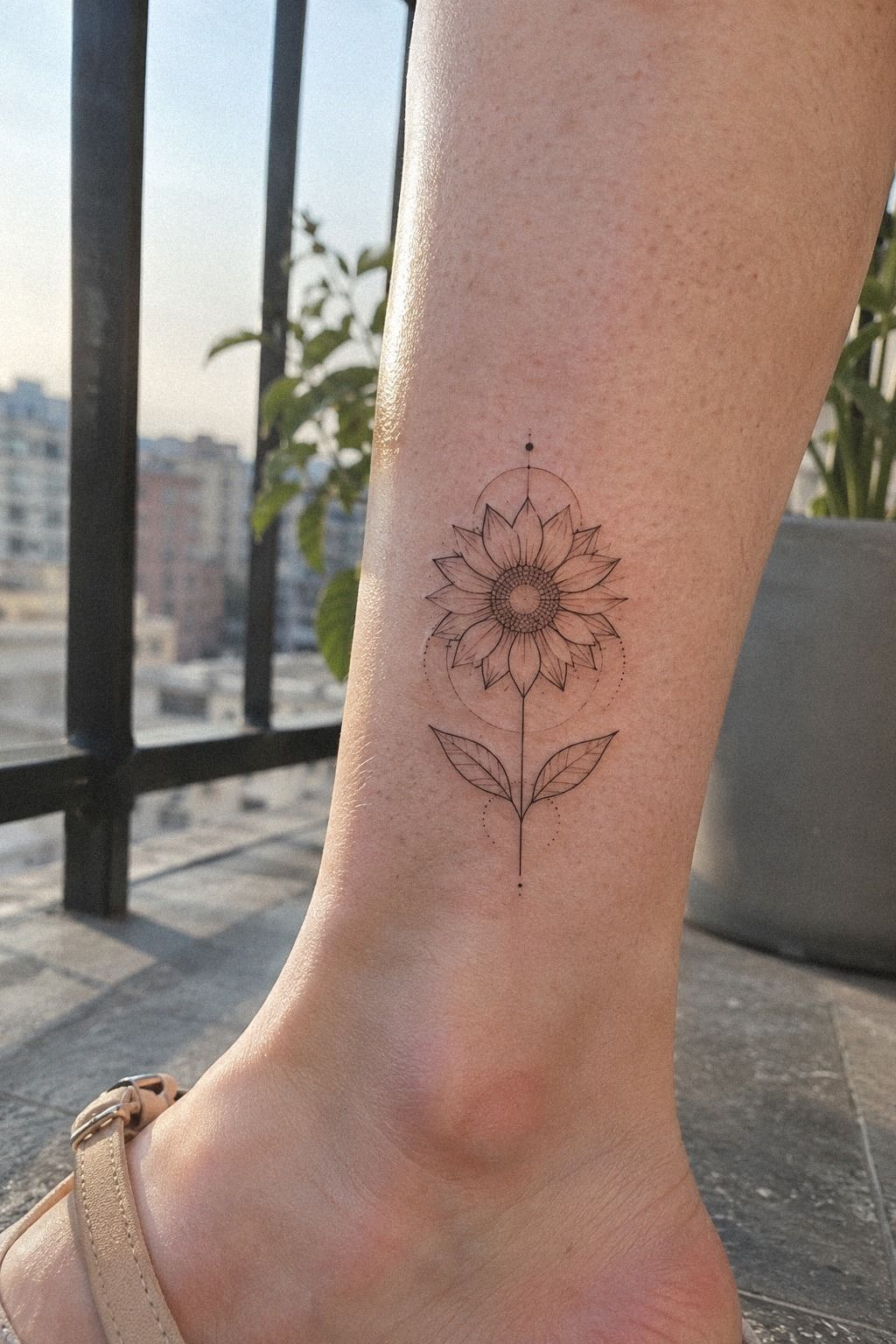
An ankle sunflower works when the design is minimal enough to survive a small canvas. Use a fine black outline, one narrow stem, and a center made from three or four simple geometric shapes. You’ll want the silhouette to read before anyone notices the details.
I’d place it slightly above the ankle bone rather than directly over it. That gives you a little more flesh, usually makes the session more tolerable, and reduces friction from shoes. If you love tiny symbolism, these tiny sunflower tattoos offer useful examples of scale.
The ankle isn’t the place for ten layers of petals. Choose five or six strong shapes, then let the skin do some of the work. A dainty tattoo silhouette can still be sharp when the negative space is intentional.
Your footwear matters during healing. You’ll want loose socks, clean shoes, and no rubbing over the fresh area. Sun exposure can also fade fine lines, so after the tattoo heals, use sunscreen when your ankle is exposed.
I’d skip a dark wraparound band because it can make a small flower look heavier than intended. A single stem with a slightly angular bloom feels elegant, personal, and easy to live with. It’s a quiet choice, but the geometry keeps it from disappearing.
8Blackwork or Breathing Room?
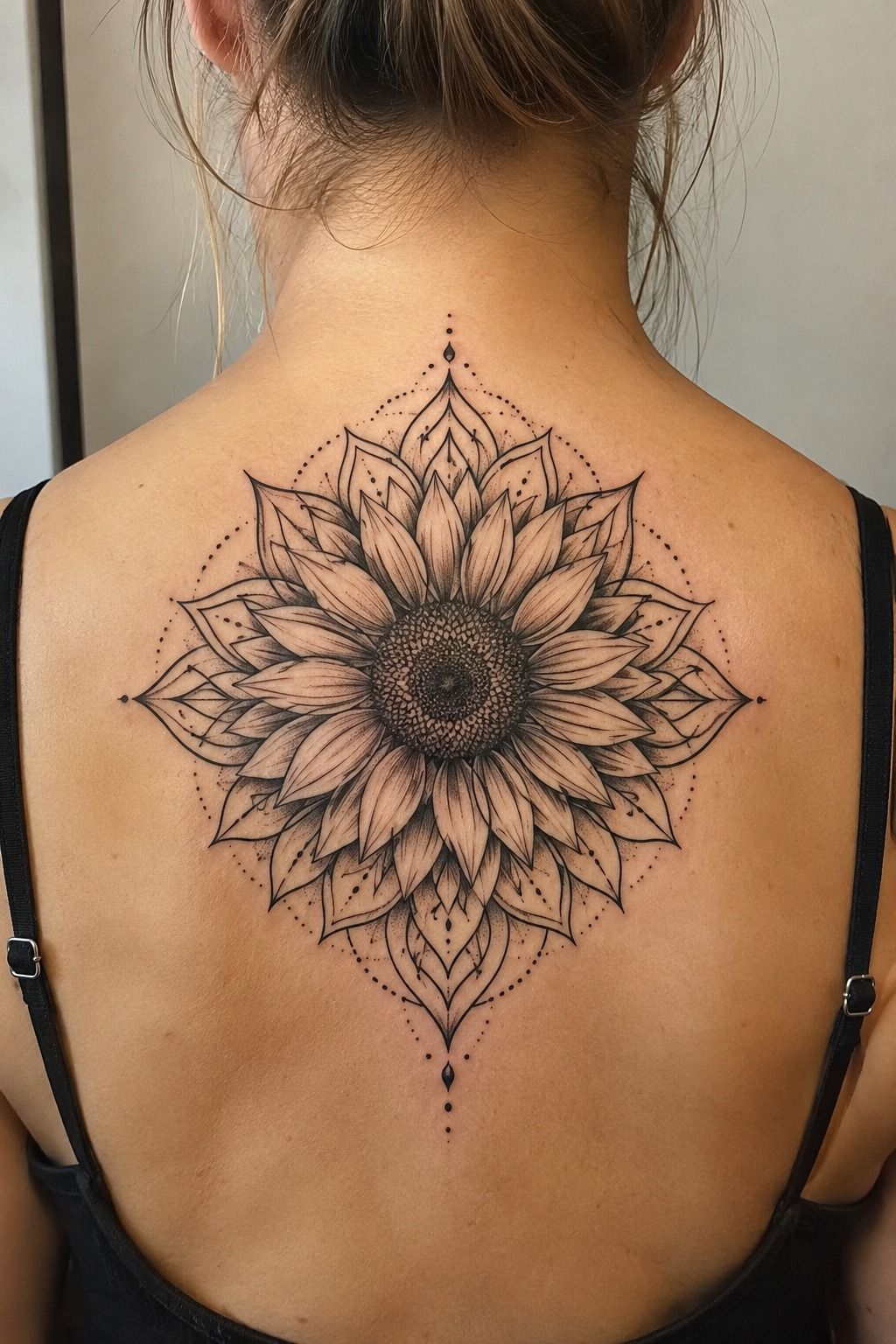
A sternum sunflower can be fierce and intimate at the same time. Keep the blackwork center strong, then preserve open skin around the petals so the placement stays expressive instead of crowded.
9Meaning on the Ribs
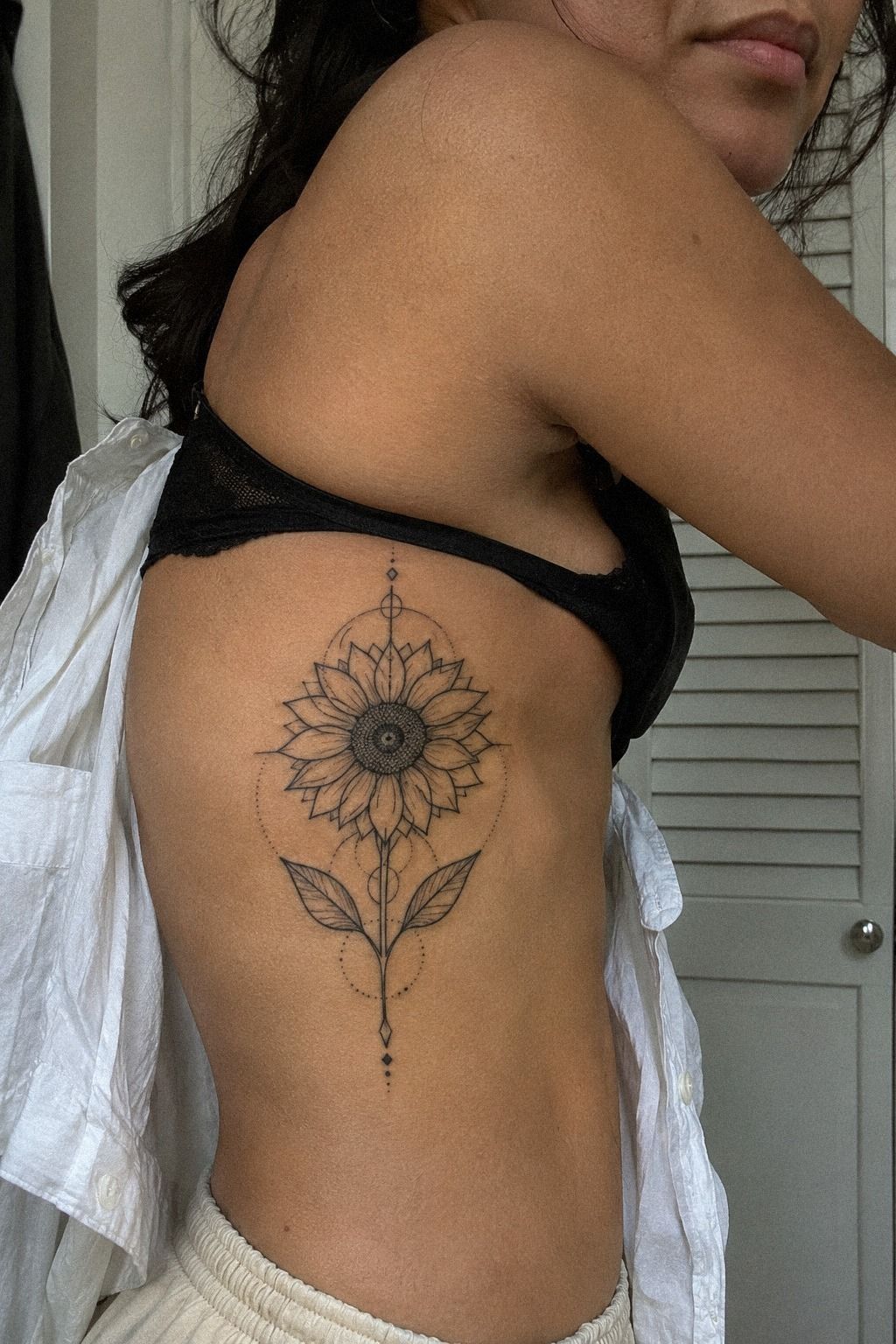
Rib placement gives a sunflower a private, symbolic quality. On medium olive skin, geometric black ink can outline layered petals, a faceted center, and a stem that follows the ribs instead of crossing them at a stiff angle. You’ll see the design move when you breathe.
The meaning should come from your own story. A sunflower might represent resilience, a family member, a season of recovery, or simply the way you keep turning toward better things. I’d avoid adding random symbols just to make the tattoo seem deeper.
Personal is more powerful than crowded.
Rib skin can be sensitive, and you may feel the vibration more sharply over the bone. If you’re worried about pain, ask your artist whether the upper side rib or a slightly lower placement gives you more workable tissue. You can also compare this idea with fine line sunflower tattoos before deciding.
Use a healed tattoo example as your standard, not only a fresh result. Fresh black ink looks darker and sharper than it will after the surface settles. Your artist should explain how the lines may soften and why avoiding strong UV exposure protects the design.
I’d choose a medium-size flower rather than a miniature one here. You’ll need enough scale for the petals, center, and stem to remain distinct. The finished piece can be meaningful, graceful, and quietly romantic without explaining itself to everyone who sees it.
10Color vs. Crisp Geometry
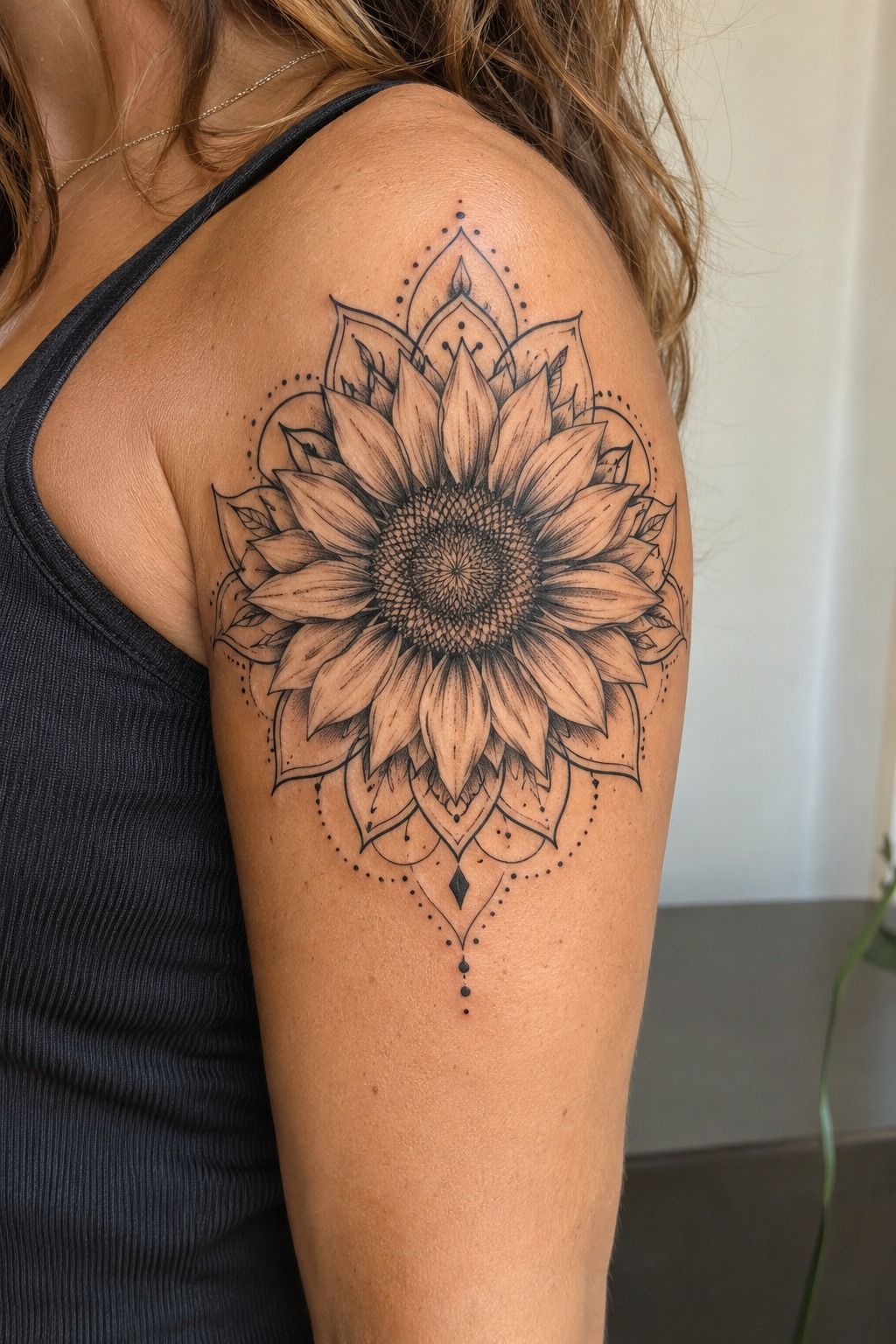
Color can make the sunflower vibrant, but it shouldn’t erase the geometry. I’d keep the center black, use yellow or ochre in selected petals, and leave some sections unfilled. The contrast gives your eye a place to rest and helps the flower remain recognizable as the golden yellow tattoo ink changes over time.
Ask your artist to show the stencil at the intended size. A 3-inch design may look spacious on paper but feel crowded on an arm once the color is packed in. If you’re considering a softer palette, these watercolor sunflower tattoo designs can help you decide how much color fits your budget.
You’ll also want a clear discussion about your artist’s color-healing experience. Some pigments settle differently across skin tones, and a knowledgeable artist can explain contrast without making promises. I’d skip a rainbow palette here.
Two colors plus black will usually look sharper than six competing shades.
A clear healed color portfolio is more useful than a dramatic fresh result. Ask how the yellow, ochre, and black behaved after several months, then decide whether the extra cost gives you enough visual value.
The finished tattoo should feel playful, daring, and expressive. Your stencil is the test, your healed portfolio is the evidence, and your skin is the final canvas. That three-step check makes a colorful decision feel much less risky!
11Let the Sleeve Flow
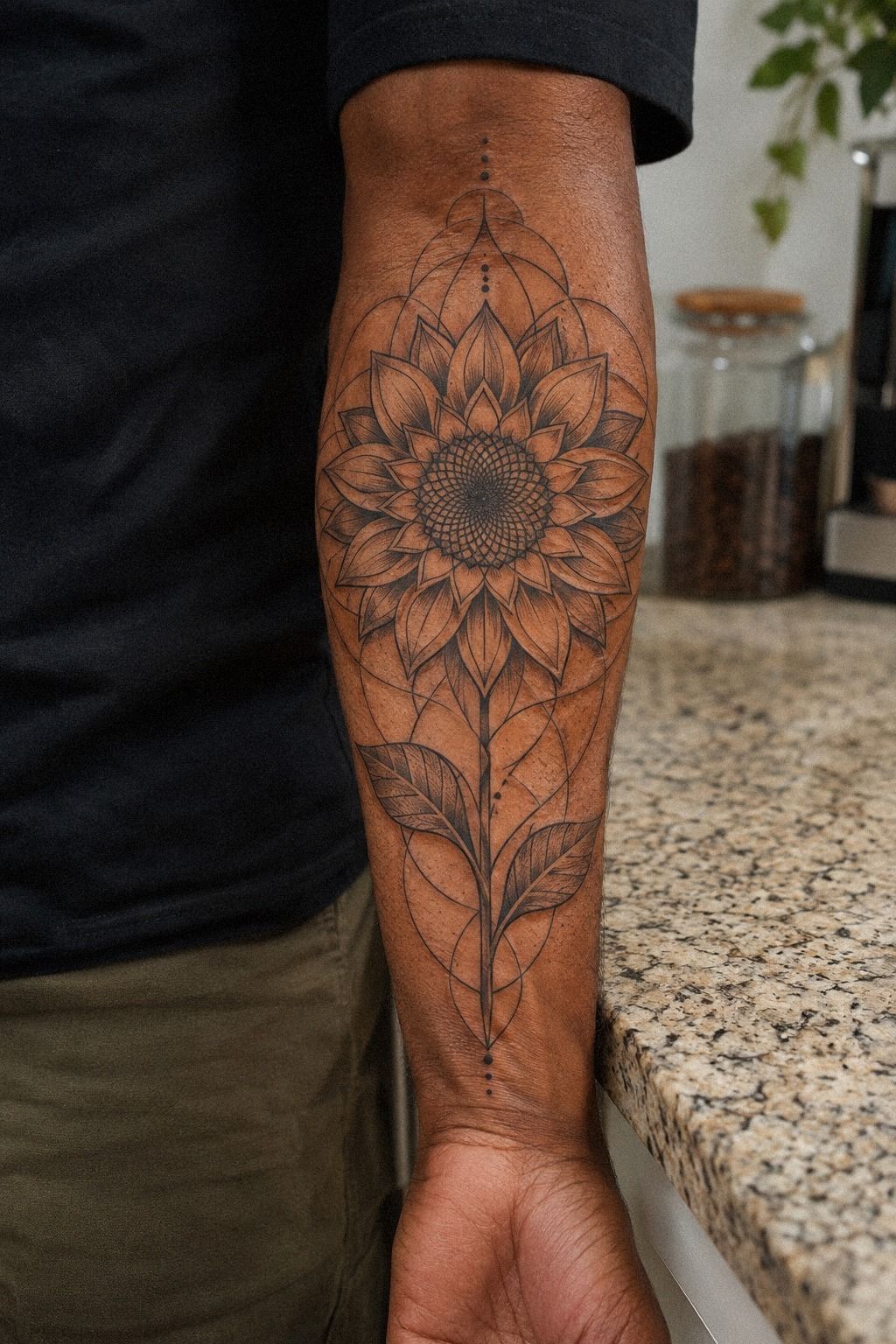
A sleeve sunflower needs to connect with the rest of your arm, not sit like a sticker placed in the middle. Black geometric linework can create a powerful anchor while flowing petals and leaves guide the eye along the forearm.
I’d begin with one main flower, then plan the supporting shapes around your existing tattoos or future ideas. You’ll want the composition to work across the front, side, and back of your arm. A sleeve is a long conversation with your anatomy, so rushing the first image can limit everything that follows.
Use mirrored petal angles, repeated triangles, and a stem that curves toward the wrist. Keep the secondary details lighter than the main bloom. If you’re building a floral collection, these geometric floral tattoos show how separate flowers can share a visual language.
Your artist should discuss how solid black areas and skin breaks will age together. Blackwork tends to hold its presence well, while very fine lines can widen with time. You’ll protect the tattoo by limiting UV exposure once healed and using sunscreen when the sleeve is uncovered.
I’d choose the sunflower as the boldest element and let the surrounding geometry stay understated. That hierarchy keeps the sleeve readable instead of noisy. The result can be masculine, elegant, and timeless, with enough movement to feel like it belongs to your arm.
Why Geometric Sunflowers Still Feel Personal
I’ve changed my opinion about geometric sunflower tattoos. At first, I thought the appeal was mostly visual, a clean flower reduced to angles and measured lines. After seeing healed pieces, I realized the geometry gives a familiar symbol a personal design language you can make distinctly yours.
That matters because sunflowers already carry shared meaning. They suggest optimism, endurance, loyalty, and attention toward light. Those ideas are meaningful, but they can become generic if every design uses the same round center and identical petals.
Geometry lets you choose the emotional temperature. A sacred border feels contemplative.
Heavy blackwork feels fierce. Sparse linework feels gentle and personal.
I also think people underestimate the importance of placement. A geometric sunflower on the wrist becomes a daily reminder.
On the ribs, it can stay private. On the forearm, it becomes part of how you introduce yourself visually.
You’ll live with the location longer than you’ll live with the excitement of booking the appointment, so ask yourself where the tattoo feels honest.
The practical side matters too. Fine lines may expand, color may soften, and every fresh tattoo needs time to heal.
Your surface healing may take about 2 to 3 weeks, while complete healing can take around 2 to 3 months. I made the mistake of judging a tattoo too early once.
The first week isn’t the final result.
If you’re choosing between a tiny wrist flower and a bold forearm bloom, I’d favor the design that gives the geometry enough space to breathe. A slightly larger, crisp tattoo often ages more gracefully than an intricate miniature that starts crowded. For more symbolism, compare these sunflower tattoo meaning ideas before you settle on the center.
Placement, Pain, and Long-Term Value
The easiest placement depends on your anatomy, not only a pain chart. A forearm placement usually offers visibility and manageable healing, while the shoulder and thigh give you more flexibility for scale. Ribs, feet, hands, and sternum can feel sharper because of bone, movement, or friction.
If pain is your main concern, choose a design that won’t require unnecessary repetition over the same area. A slightly larger center with fewer corrective passes may be better value than a tiny piece packed with fragile detail.
Ask how your daily routine affects the tattoo. Watches, shoes, athletic clothing, sun exposure, and repetitive movement can all change the practical cost of a placement. You’re buying a long-term design, not just an appointment.
These small floral tattoos can help you compare how scale changes across placements.
Budget Before You Book
Your budget should account for more than the studio minimum. Artist hourly pricing may change with experience, location, color, custom drawing time, and whether the design becomes part of a sleeve.
Request a written estimate that separates consultation, drawing, tattooing, touch-ups, and deposits. That makes the value easier to judge and helps you compare artists fairly.
A cheaper quote isn’t always the best deal if the design needs an early correction. For geometric work, paying for a polished stencil and healed examples can be worth it. You can also review geometric floral tattoos when estimating how much detail you actually want.
Protect the Geometry
Aftercare affects how the healed linework looks. Follow your artist’s instructions, wash gently, avoid soaking the fresh tattoo, and keep strong sunlight away while the skin settles.
Fine lines can look dull, uneven, or slightly cloudy during healing. Don’t judge the final result during the first week, and don’t pick at peeling skin. This fine line sunflower guide is useful when you’re comparing delicate designs.
Once healed, sunscreen helps protect contrast and color. That small habit can preserve the crisp, sharp character you paid for.
A Better Artist Consultation
Bring examples that show the elements you actually want: healed geometric tattoos, open petals, dotwork density, color limits, or sacred borders. One favorite reference is useful, but several unrelated examples can confuse the direction.
Ask how the artist scales geometry for your chosen placement. A design that works on a flat screen may need wider gaps, fewer points, or a softer curve on skin. These unique sunflower concepts can help you identify the details that matter most.
You should leave with a clear size, placement, estimated cost, healing plan, and redraw policy. If those answers stay vague, keep looking.
What People Always Want to Know
How much does a geometric sunflower tattoo usually cost?
I’d expect a small geometric sunflower tattoo in the US to run about $100 to $300, depending on size, placement, detail, artist, and region. Many studios have a minimum of roughly $50 to $100, while hourly rates commonly fall around $100 to $250. I’d request a written quote before booking.
Are geometric sunflower tattoos a good idea for a first tattoo?
I think they can be a strong first choice because you can select a tolerable placement, clear linework, and a subject that feels personal. A forearm or shoulder placement is often easier to manage than ribs, feet, hands, or sternum. I’d choose an artist with healed examples before booking.
How do I choose a tattoo artist for geometric sunflower tattoos?
I’d choose an artist whose portfolio shows clean geometric linework, healed examples, and the specific style you want. You’ll also want to confirm single-use cartridges, sterile setup, and clear aftercare instructions. Look for consistent petals, smooth circles, and confident spacing before you pay a deposit.
How much do geometric sunflower tattoos hurt?
I’d expect pain to depend heavily on your body and the location. Ribs, feet, hands, and sternum are often more painful because they sit close to bone or experience constant movement.
Forearm, thigh, and shoulder placements are usually more tolerable. I’d eat beforehand and choose a manageable design.
How long does a geometric sunflower tattoo take to heal?
I’d allow about 2 to 3 weeks for surface healing and around 2 to 3 months for complete healing. You’ll wash gently, moisturize as instructed, avoid pools, and keep strong sunlight away from the fresh tattoo. I wouldn’t judge the final lines while the skin is still settling.
What’s the best placement for geometric sunflower tattoos?
I’d start with the forearm, shoulder, or thigh if you want a more tolerable session and clear visibility. The wrist and ankle suit smaller designs, while ribs and sternum create more intimate placements with greater sensitivity. You’ll want enough scale for the geometry to remain open.
Where I’d Start First
If I had to pick one, I’d start with a bold geometric forearm sunflower. You’ll get clearer lines, easier healing, and enough space for the center to stay sharp as the tattoo ages. Pin that idea for later and compare it with our small sunflower tattoo guide before booking.