Minimalist sunflower tattoos can stay within a tight budget when you control size, placement, and line density before booking. A small, striking outline often needs less studio time than a packed design, but it still has to be planned for clean healing. You’ll save money by editing the idea first. That matters!
- ✓ Start with a Tiny Sunflower Outline: Follow the One-Sun Rule
- ✓ Pick Crisp Single-Needle Linework: Use the Crisp-Line Test
- ✓ Place Small Sunflower Tattoos Strategically: Which Spot Earns the Ink?
Your best budget comes from a minimalist sunflower tattoo with one stem, open petals, and no unnecessary shading. I’ve made the mistake of adding “just one more detail,” and that’s how a delicate design starts losing its crisp, minimal character.
- Start with a Tiny Sunflower Outline: Follow the One-Sun Rule
- Pick Crisp Single-Needle Linework: Use the Crisp-Line Test
- Place Small Sunflower Tattoos Strategically: Which Spot Earns the Ink?
- Keep Petals Delicate and Uncluttered: Apply the Negative-Space Rule
- Plan Meaningful Sunflower Symbolism: Build the Meaning Map
- Choose an Unexpected Sunflower Angle: Side Angle over Straight-On
- Add One Subtle Botanical Detail: Follow the One-Leaf Rule
- Match Stem Length to Body Placement: Use the Stem-to-Body Ratio
- Explore Unique Minimalist Sunflower Shapes: Try the Quiet Geometry
- Protect Fine Lines During Healing: Respect the Healing Window
- Refresh Faded Minimalist Sunflower Ink: Know the Refresh Threshold
1Start with a Tiny Sunflower Outline: Follow the One-Sun Rule
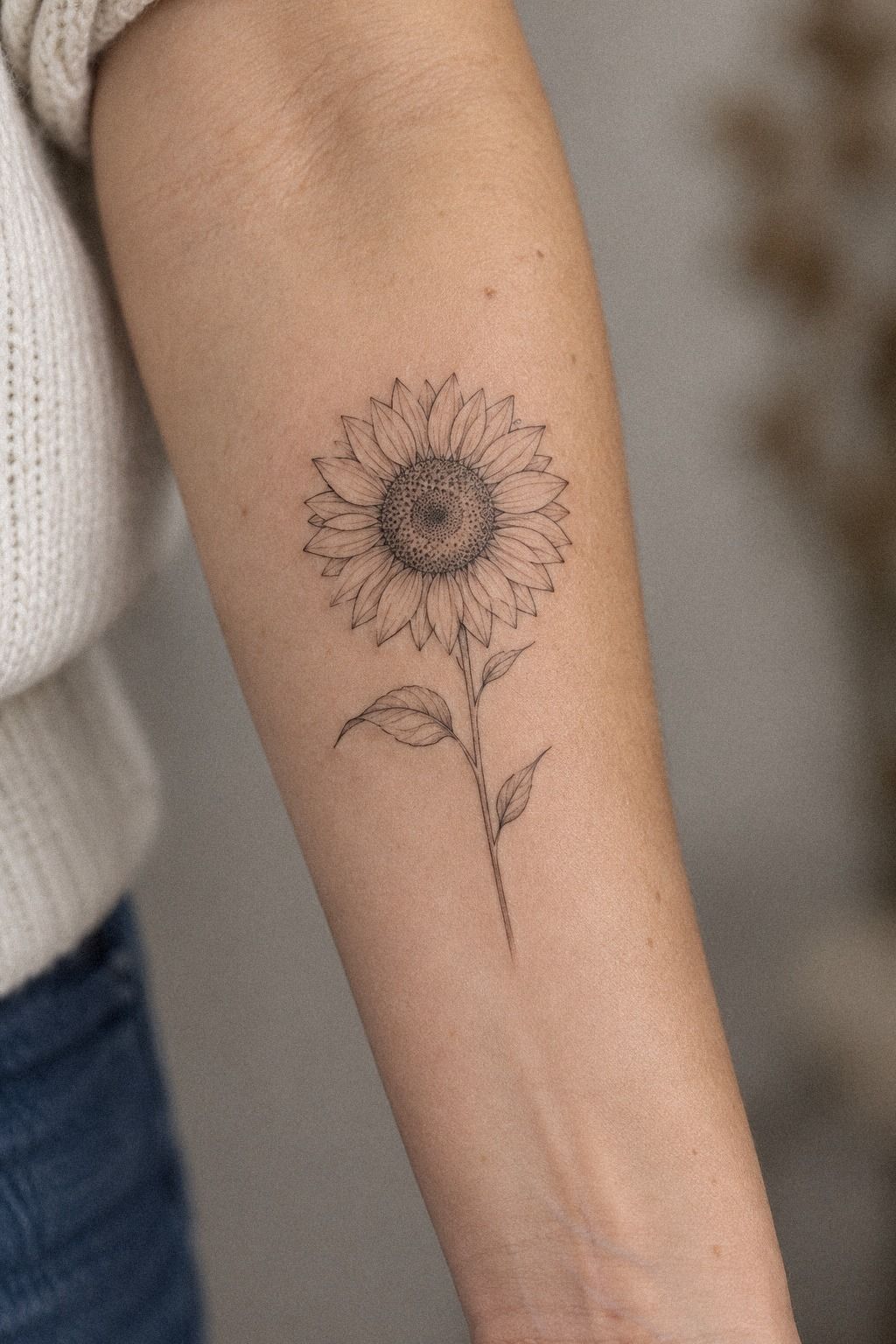
Begin with one flower, one stem, and a clear sunflower silhouette. On an ankle with fair cool-pink skin, the design should read from a short distance without needing dense fill. A striking outline with delicate petals gives you a minimal result, and you won’t pay for detail that disappears into a small format.
Sketch the bloom as a circle of uneven petals around a compact flower center. Keep the stem flowing rather than perfectly straight, because a stiff stem can make your tattoo look like a logo. If you’re comparing references, browse these tiny sunflower tattoos before you book.
I’d keep the first draft to a small ankle footprint and ask your artist how the design will read after healing. Your artist may suggest slightly opening the petals or thickening one contour, and that’s useful judgment, not a failure of the idea. The result should feel crisp, personal, and easy to recognize.
For a tight budget, ask for a consultation sketch before committing to extra shading. A typical US boutique minimum sits around $50 to $100, while a small design may land near $100 to $300 depending on the artist and region.
Keep it simple! The most expensive part of a small design is often the detail you later decide to remove.
2Pick Crisp Single-Needle Linework: Use the Crisp-Line Test

Ask your artist to show healed linework, not only fresh work. Look for consistent curves, open spaces, and a sharp finish where the petals meet the center.
3Place Small Sunflower Tattoos Strategically: Which Spot Earns the Ink?

The sternum creates a meaningful, graceful placement, but it’s also more sensitive because the skin sits close to bone. On medium olive skin, a centered flower with a short stem can look balanced without needing heavy shading. You’ll want the artist to check your natural posture before finalizing the stencil.
Ask to see the sternum placement while you’re standing normally, breathing comfortably, and keeping your shoulders relaxed. A stencil that looks centered while you’re tense may shift visually when your chest settles. I’d choose a slightly smaller flower over a crowded design that follows every curve.
Your budget also benefits from deciding tattoo visibility before the appointment. If you need the tattoo covered for work, a sternum piece may suit you better than a wrist design. If you want to see it daily, compare small sunflower tattoos and think about how often you’ll expose the area to sunlight.
Pain varies by person, but ribs, feet, hands, and sternum are commonly more painful than the forearm, thigh, or shoulder. That doesn’t make the placement wrong. It means you should plan your session, eat beforehand, and tell your artist if you need a pause.
4Keep Petals Delicate and Uncluttered: Apply the Negative-Space Rule
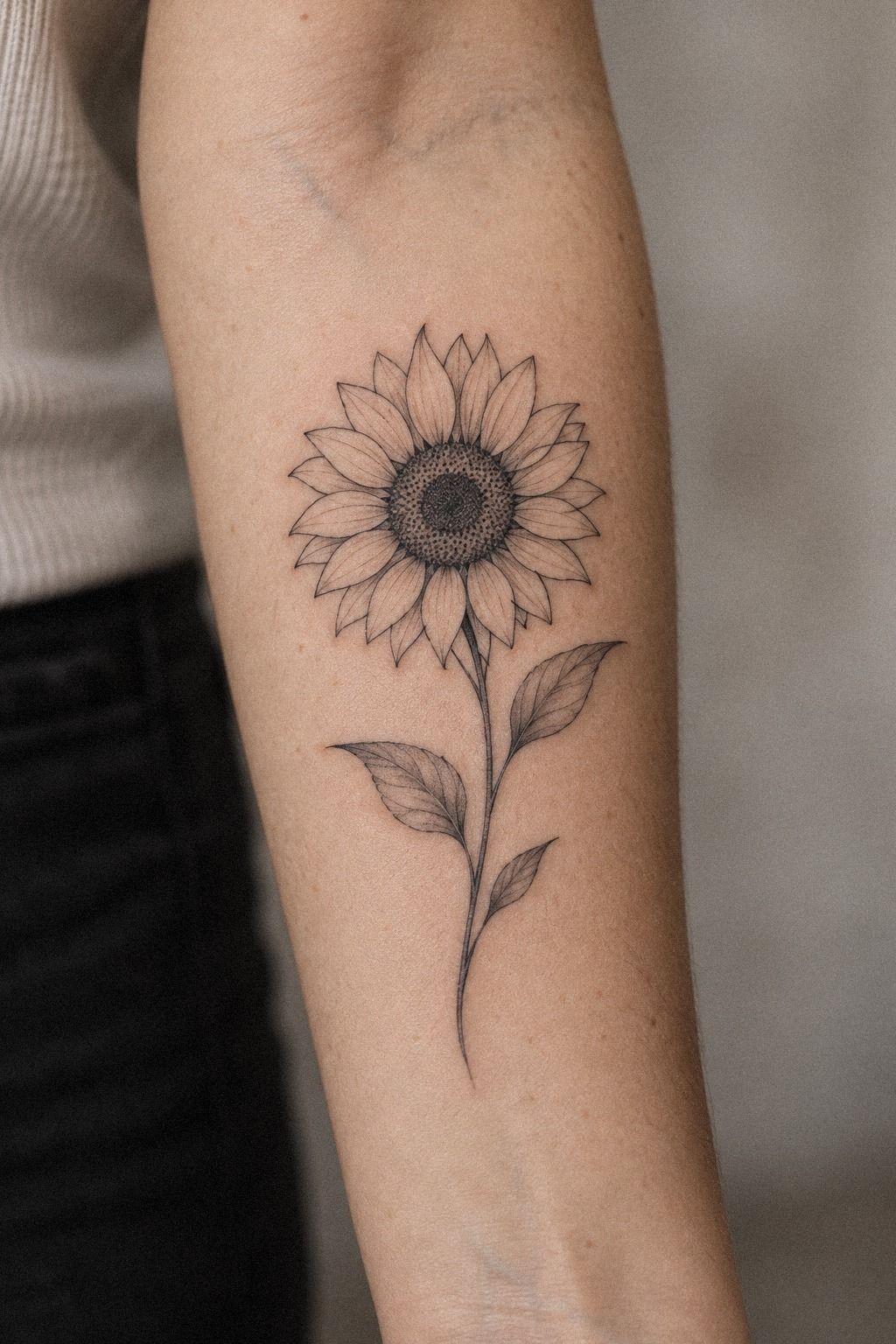
Use the negative-space rule to keep every petal readable. Keep the petals intricate but open, with visible gaps between each shape. A dainty design can look timeless when every line has a job, while extra interior marks may blur as the tattoo settles.
Use the layered petals as the focal point, then keep the sunflower leaves smaller and quieter. Your artist can vary the petal length slightly so the flower feels organic instead of stamped. I’d skip dense dotwork in this size because the dots can compete with the outline and make the center look heavy.
Before you approve the stencil, ask how much open skin will remain between the petals. Negative space isn’t empty decoration; it protects readability. If you’re building a wider floral collection, this minimalist floral tattoo guide can help you compare sunflower density with rose and leaf designs.
For a budget version, choose two leaves instead of a full botanical branch. You’ll get a more expressive silhouette with less tattoo time, and your calf will still show the sunflower clearly when you move.
5Plan Meaningful Sunflower Symbolism: Build the Meaning Map

A flash sheet gives you several directions before you spend money. A symbolic, classic approach can use black designs, simple stems, varied petal shapes, and no color. You can circle the flower that feels sacred or personal rather than choosing the first image you save.
Write three words beside your favorite flash sheet design. Maybe the sunflower represents a person, recovery, optimism, or a place you carry with you. That short note helps your artist edit the drawing without stripping away its meaning, and you won’t end up with an ornate image that says more than you intended.
I’d avoid borrowing symbolism from a caption you haven’t checked. A sunflower can suggest loyalty, light, resilience, or remembrance, but your meaning matters most. If you want more references, compare unique flower tattoos for women and notice which designs feel meaningful without relying on text.
Your budget stays controlled when symbolism comes through the flower silhouette rather than extra objects. A tiny initial, date, or star can change the session, so decide whether it truly belongs before you add it. One strong flower is often more iconic than a crowded memorial collage.
6Choose an Unexpected Sunflower Angle: Side Angle over Straight-On
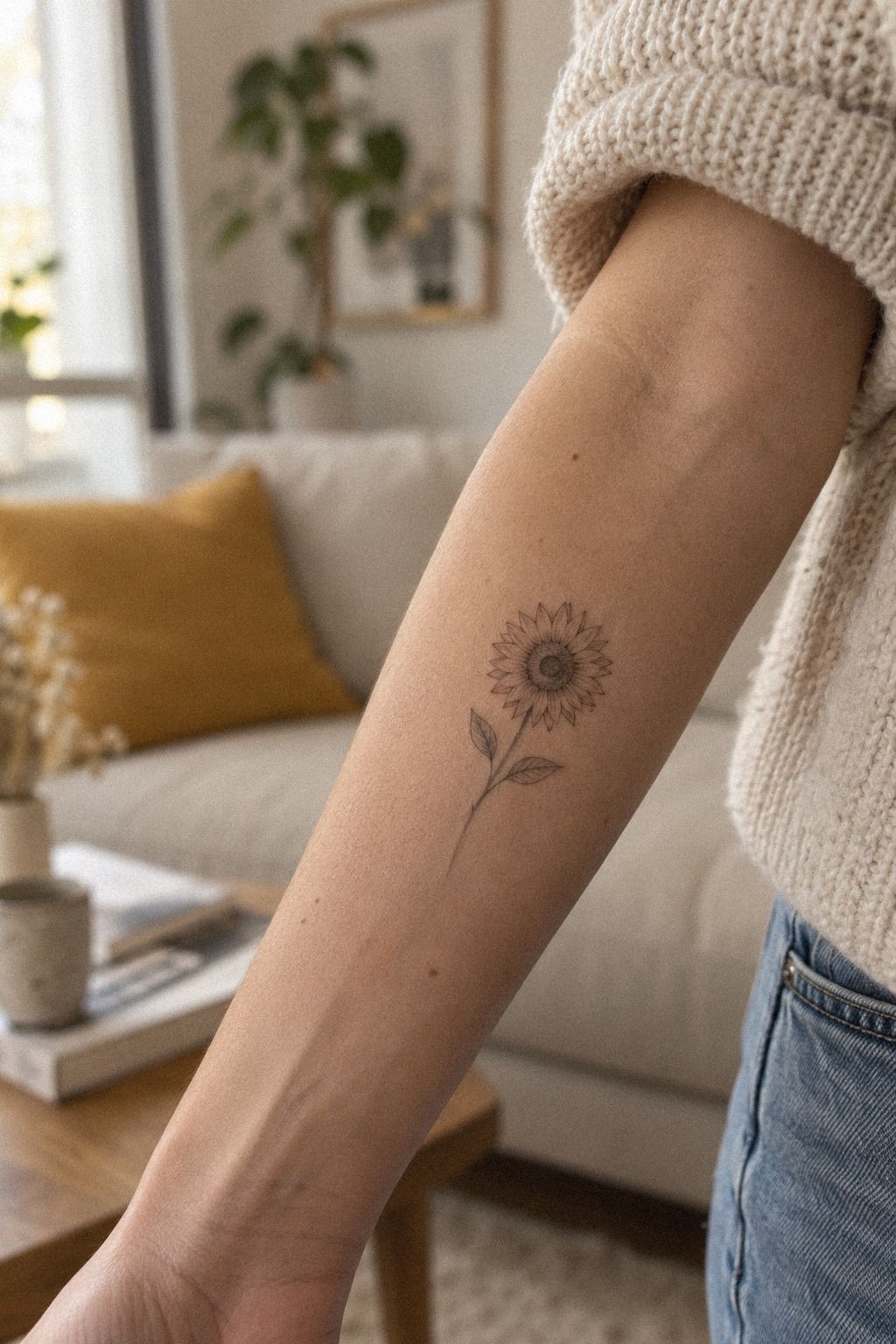
A shoulder tattoo on deep ebony skin can look powerful when the flower turns slightly instead of facing the viewer head-on. This edgy angle creates a more expressive silhouette, and it gives the petals different lengths across the top and side. Your artist should choose line weight for clear contrast, not simply copy a pale-skin reference.
Ask for a side-profile sunflower with one visible leaf and a curved stem. The design can remain bold without becoming large, especially if the center is simplified. I’d choose a side angle over a perfectly symmetrical bloom because the slight turn feels more personal and less like a stock flash image.
Request healed portfolio work on a range of skin tones, including work similar to yours. Your artist can explain how the stencil will sit and whether any line needs adjustment for visibility. A good consultation should feel practical, respectful, and specific.
If you’re comparing unusual compositions, look through watercolor sunflower tattoo ideas for shape inspiration, even if you plan to stay with black ink. You don’t need to copy the color. You can borrow the angle and keep the final design affordable.
7Add One Subtle Botanical Detail: Follow the One-Leaf Rule
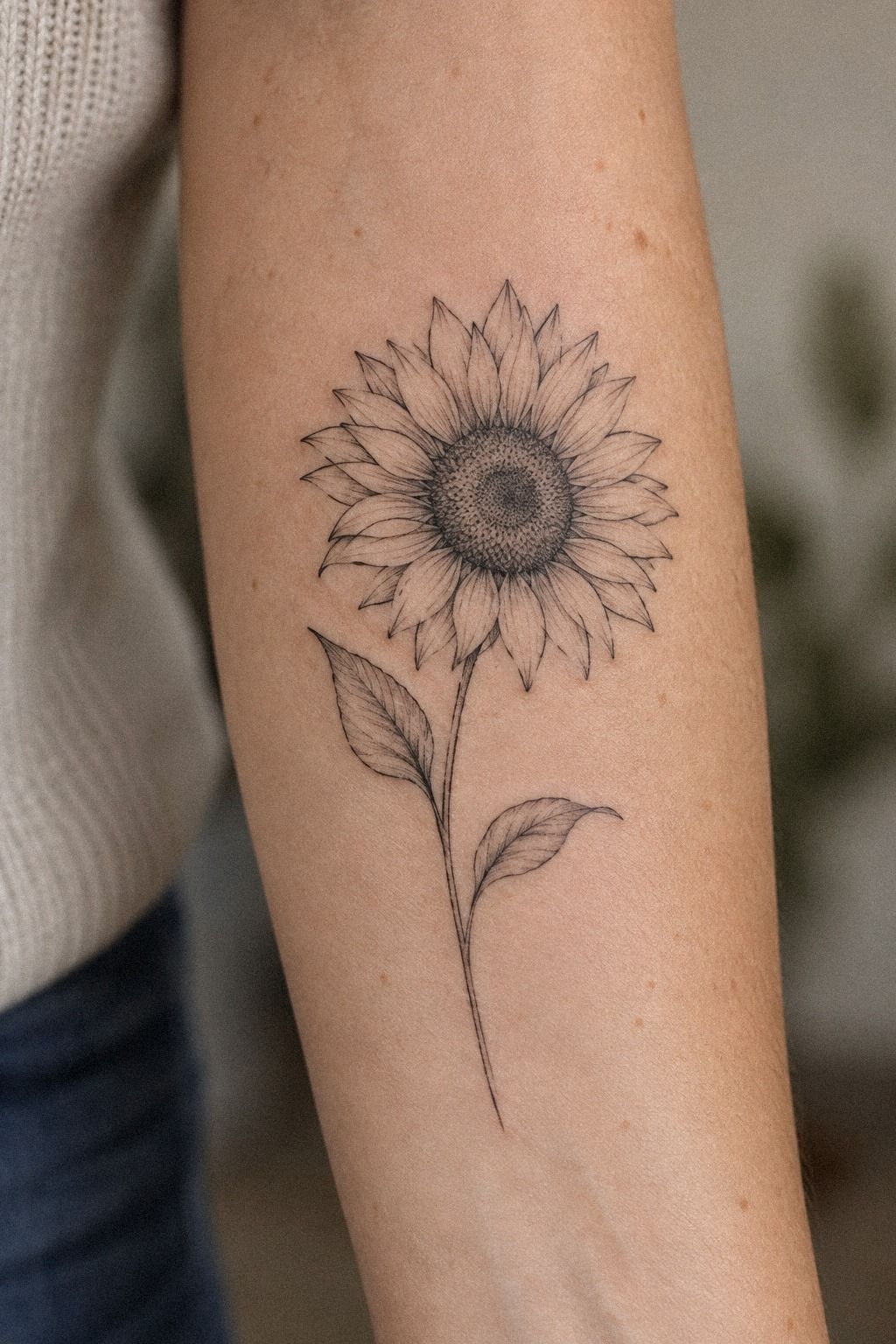
The thigh gives you more visual room, so you can add one botanical detail without losing the minimal idea. The linework should stay expressive rather than decorative, and you’ll want the sunflower to remain the first thing your eye sees.
Choose a single botanical leaf with a gentle curve that echoes the stem. That’s enough to make the design feel flowing and intentional. I’d skip a second flower, wraparound vines, and scattered dots here because each extra mark competes with the bloom and raises the editing burden.
Ask your artist to place the thigh stencil while your leg is relaxed, not flexed. Your thigh changes shape as you sit and stand, so you’ll get a more accurate view if you check it in both positions. If you like floral pairings, compare minimalist rose tattoos for leaf proportions.
A budget-friendly design can still be vibrant when the detail is selective. Choose one leaf, one center treatment, and one stem curve. You’re paying for decisions, not for filling every inch of available skin.
8Match Stem Length to Body Placement: Use the Stem-to-Body Ratio
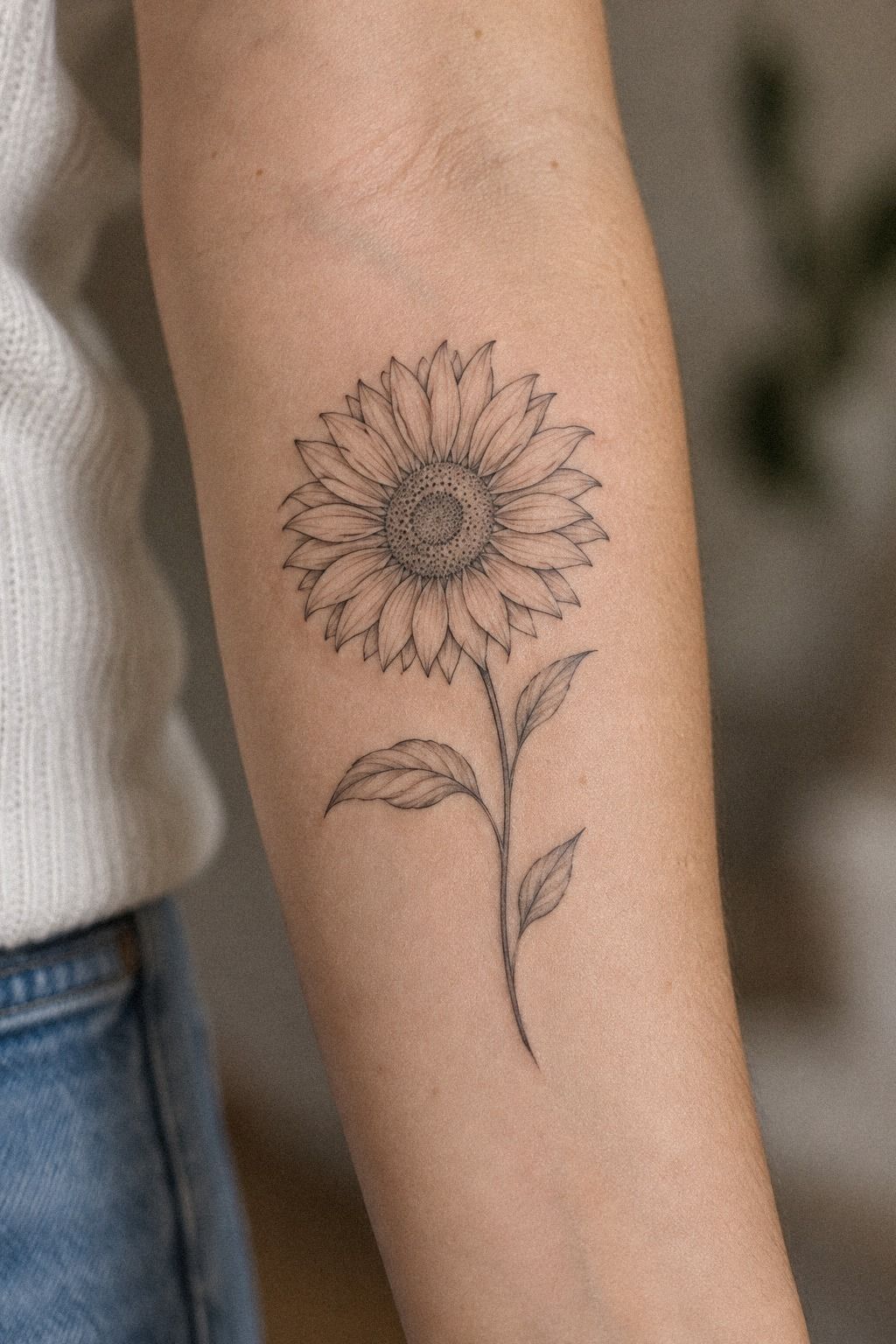
The ankle benefits from a controlled stem length. A short, graceful curve can keep the flower readable without making the design feel cramped.
9Explore Unique Minimalist Sunflower Shapes: Try the Quiet Geometry

A spine placement can make a simple flower feel architectural. On medium olive skin, a single bloom with a narrow stem can sit along the centerline without becoming ornate. The result can feel haunting and ethereal if the artist lets the negative space do some of the visual work.
Start with a spine placement stencil that shows the flower’s relationship to your natural curve. You’ll need to check it while standing straight and while turning slightly. I’d avoid stacking several blooms vertically unless you’ve already decided to accept a longer session and more complex healing.
Try three shape changes on paper: rounded petals, pointed petals, and uneven petals. Your favorite may surprise you. The pointed version can feel sharp and daring, while the uneven version feels more organic.
If you want broader references, save examples from unique minimalist sunflower tattoos before your consultation.
A budget doesn’t mean every design needs to be tiny. It means you should spend on the part you’ll still value later. If the sunflower shape is your priority, keep the stem plain and let the bloom carry the personality.
10Protect Fine Lines During Healing: Respect the Healing Window

The first few weeks matter for a minimalist tattoo healing plan. Follow your artist’s instructions closely, avoid picking, and protect the delicate lines from unnecessary rubbing.
11Refresh Faded Minimalist Sunflower Ink: Know the Refresh Threshold

The inner forearm is visible and usually easier to monitor, so you can notice whether the center or fine petals have softened. A vibrant refresh should restore clarity, not automatically make every line darker.
Book a touch-up session only after the tattoo has fully settled. Your artist can assess whether the fading is normal or whether a specific line needs reinforcement. I’d skip a rushed touch-up during surface healing because the skin is still recovering and the final appearance hasn’t arrived.
Use sunscreen after healing, especially on exposed forearms. Sun can fade black ink and make delicate details look less sharp over time. Your artist may recommend a product and timing that fits your skin, but the core habit is simple: protect the tattoo whenever you’re outside.
If your older design needs a style update, compare the tiny rose tattoo collection for restrained line edits. You can keep the original sunflower and refresh only the center or stem. That approach is often more personal than covering the whole piece with heavier work.
A Quick Budget Check Before You Book
Write down your full tattoo budget before you choose a reference. Include the studio minimum, deposit, consultation, travel, aftercare supplies, and a small cushion for an artist-recommended adjustment.
A cheaper quote isn’t automatically a better choice. I’d compare healed work, hygiene standards, communication, and experience with small floral tattoos before comparing hourly rates alone. Worth it!
What to Ask Before You Book
Ask whether the artist has healed examples of small floral linework. Then ask how they’d adapt the sunflower to your skin, placement, and preferred size.
You can also ask what happens if the design needs a minor stencil adjustment. A clear answer helps you avoid surprise costs and gives you a better sense of the artist’s process.
How Skin Tone Changes the Edit
Skin tone affects contrast, but it doesn’t decide whether a sunflower will work. Your artist may adjust line weight or simplify the center so the design remains readable after healing.
Request healed examples on skin tones close to yours when possible. A thoughtful artist won’t promise identical results; they’ll explain which details should stay open, strong, or slightly larger.
When Small Becomes Too Small
A design becomes too small when the petals, center, stem, and gaps can’t remain visually distinct. The minimum readable size depends on the artist, placement, line weight, and how much detail you want.
If your favorite reference has eight delicate petals and a shaded center, shrinking it to a coin-sized tattoo may erase what you like about it. Remove details before shrinking the whole idea.
The Consultation Questions I Actually Use
Bring two or three references and explain what you like about each one. I’d say whether you prefer the petal rhythm, stem curve, angle, or overall silhouette instead of asking for an exact copy.
Ask how the tattoo may change after healing and whether a touch-up is commonly needed for that style. You’re allowed to take notes, ask for another sketch, and leave if the conversation feels rushed.
A Simple Aftercare Plan
Before your appointment, buy only the artist-approved aftercare and make sure you have loose clothing that won’t rub the placement.
Plan a quieter first day if possible. You’ll be more likely to follow instructions when you aren’t rushing between errands, workouts, or long periods in direct sunlight. Protect it!
If You’re Comparing Styles
Compare a black outline, a tiny shaded center, a side-profile bloom, and a restrained botanical version. Minimalist flower tattoo ideas can help you see how much personality comes from shape rather than added color.
For a different mood, browse simple flower tattoo references and notice which designs still feel expressive with fewer marks. That’s the useful comparison.
How I’d Edit a Saved Reference
I’d remove extra leaves, text, ornamental borders, and secondary flowers before touching the main bloom. The edited sunflower stencil should be easy to describe in one sentence.
Save the reference with a short note about what must remain. Maybe it’s the pointed petals, the curved stem, or the side angle. Everything else is negotiable.
What I Learned About Choosing Minimalist Sunflower Tattoos
I used to think a tight budget meant choosing the smallest possible tattoo and accepting whatever shape fit. I’ve changed my mind. The cheaper decision is often the clearer decision: one flower, one stem, and enough open skin for the lines to survive.
A smaller tattoo can still be bold, meaningful, and personal when the silhouette has been edited with care.
I also learned that placement changes the entire design. An ankle wants a compact stem.
A shoulder can carry a wider bloom. A sternum piece needs more attention to sensitivity and symmetry. Your artist isn’t only translating a drawing onto moving skin, and that deserves a real consultation.
The most useful budget question isn’t, “How can I make this as cheap as possible?” It’s, “Which detail matters enough to keep?” For me, it’s the petal rhythm. I’d spend on an artist with crisp healed linework before paying for color, text, or extra leaves.
And I wouldn’t choose an artist from fresh work alone. Ask for healed work, check hygiene standards, and notice whether the artist explains tradeoffs without pressuring you.
That calm conversation is a powerful sign. If you leave with a clean plan, a realistic price range, and a design you can still describe in one sentence, you’re ready!
A Few Things Worth Answering
How much do minimalist sunflower tattoos usually cost?
A small sunflower tattoo usually costs about $100 to $300 in the US, though a boutique minimum may be about $50 to $100 and hourly rates often fall near $100 to $250. Your artist, region, placement, and session time will affect the final quote.
– Small outline – Single stem – Limited shading – Regional studio minimum
A tight budget works best when you bring one clear reference and avoid changing the design during the appointment. Ask for the full estimate before booking, and confirm whether a consultation or deposit is included.
Are minimalist sunflower tattoos a good idea for a first tattoo?
Yes, minimalist sunflower tattoos can be a strong first choice because the design is readable, meaningful, and easy to scale. Your shoulder, thigh, or forearm may feel more tolerable than the sternum, foot, ribs, or hand.
– Clear silhouette – Personal symbolism – Shorter design brief – Manageable placement
I’d choose an artist with healed linework rather than assuming a simple tattoo requires less skill. Crisp lines are unforgiving, so your first tattoo deserves a thoughtful portfolio review.
How do I choose a tattoo artist for minimalist sunflower tattoos?
Choose a tattoo artist by reviewing healed portfolio work, asking about their minimalist specialty, and checking studio hygiene. Your review should include fine petals, clean stems, and work assessed after the initial healing stage.
– Healed portfolio work – Consistent line weight – Clear consultation – Sterile studio practice
You can send two or three references before booking, but don’t overwhelm the artist with unrelated styles. I’d ask how they’d adapt the flower to your skin and placement.
How much do minimalist sunflower tattoos hurt?
Minimalist sunflower tattoos usually feel more tolerable on the forearm, thigh, and shoulder, while the ribs, feet, hands, and sternum are commonly more painful. Your experience will vary with placement, sensitivity, session length, and stress.
– More tolerable: forearm, thigh, shoulder – More sensitive: ribs, feet, hands, sternum – Short breaks when needed – Calm breathing
A small design may take less time, but you should still eat beforehand and tell your artist if you need a pause. There’s no prize for pretending you’re comfortable.
How long do minimalist sunflower tattoos take to heal?
The surface of a healing sunflower tattoo usually heals in about 2 to 3 weeks, while complete settling can take about 2 to 3 months. Your skin may look dry, flaky, or darker before the final lines become clear.
– Gentle washing – Light moisturizer – No picking – Limited sun and swimming
Follow your artist’s aftercare sheet and avoid comparing your healing timeline with someone else’s. If something feels unusual, contact your artist or a qualified medical professional instead of guessing.
What’s the best placement for minimalist sunflower tattoos?
The forearm, thigh, and shoulder are practical placements because they’re generally more tolerable and easy to monitor. Your ankle or sternum can feel more meaningful visually, but those areas may involve more friction or sensitivity.
– Forearm: visible and easy to protect – Thigh: more private and spacious – Shoulder: flexible design area – Ankle: compact and noticeable
I’d pick the placement that fits your daily clothing, sun exposure, and reason for getting the tattoo. A meaningful spot you can care for is better than a fashionable spot you’ll constantly irritate.
Where I’d Start First
If I had to pick one step, I’d start with the tiny sunflower outline. It controls the price, protects the negative space, and shows whether the design still feels personal without extra detail. Save the reference, ask for healed linework, and let your artist refine the stem.