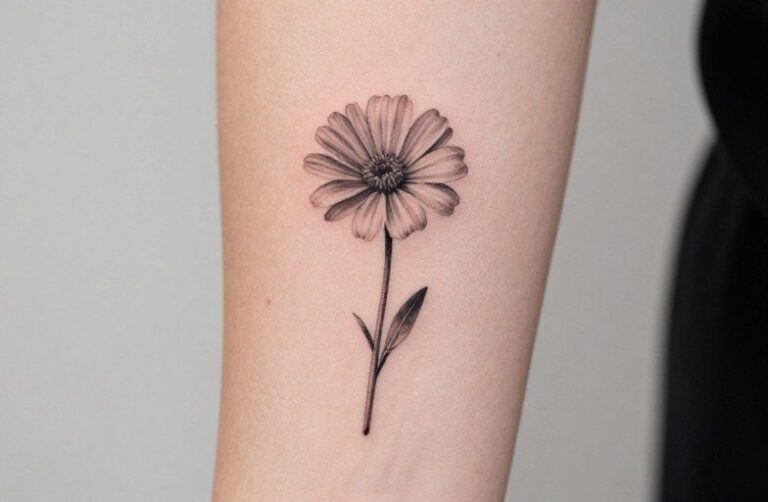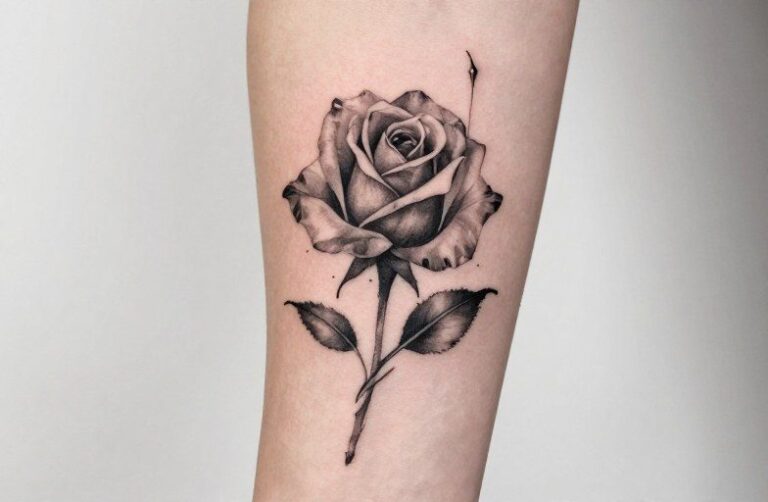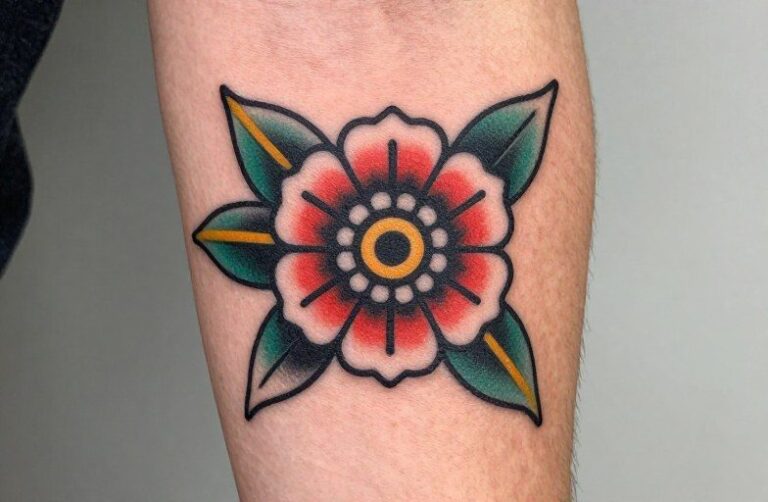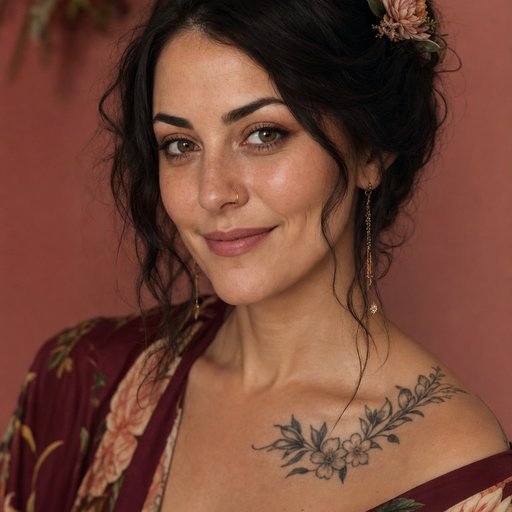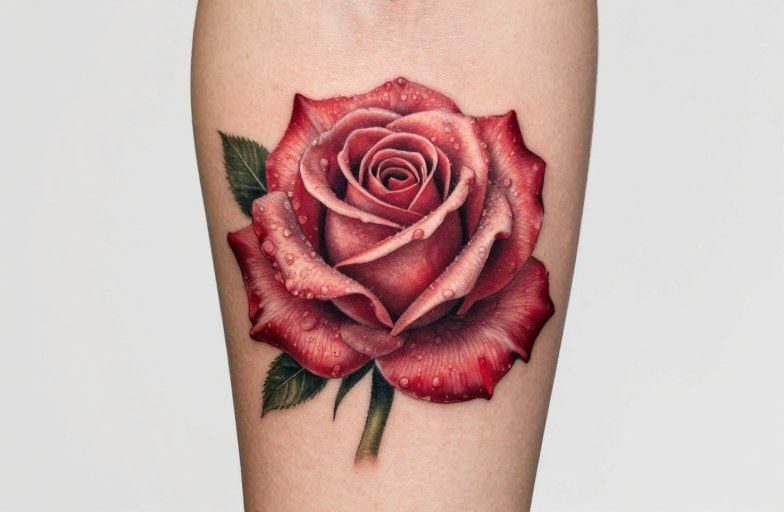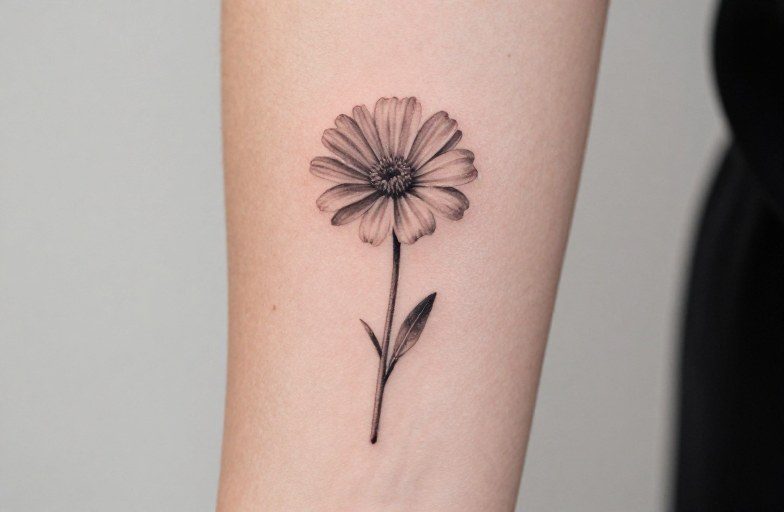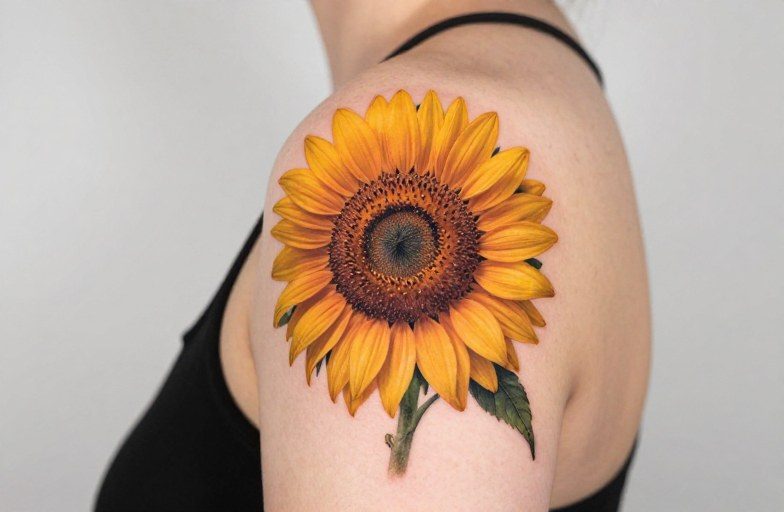
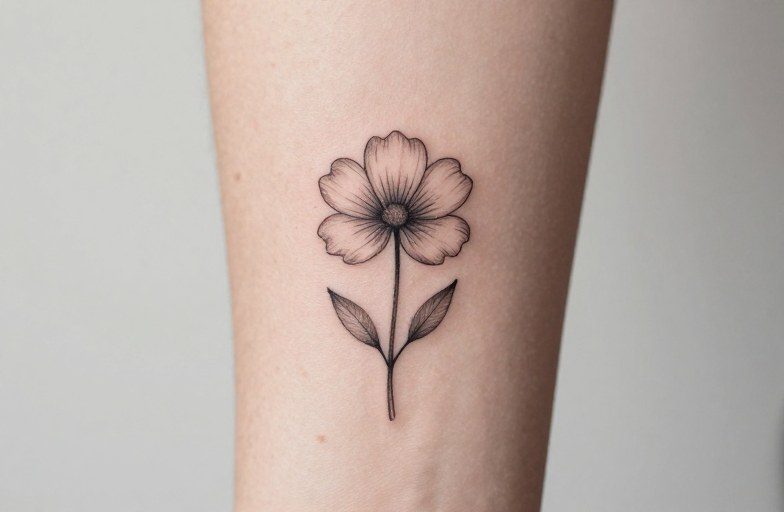
Minimalist flower tattoos strip the subject down to its essence: a few confident lines, maybe a dot of shading, sometimes nothing but contour. They fit behind an ear, along a collarbone, tucked against a rib, or floating on a forearm. The restraint is the point. What you leave out matters as much as what you put in, and that negative space becomes part of the design. These pieces age well because there’s less ink to blur, less detail to muddy, and they tend to hurt less and heal faster than dense, saturated work.
Size & Scale
Small doesn’t mean careless. At one to two inches, a minimalist flower demands precision. The artist has fewer lines to communicate form, so each one carries weight. Too small, under half an inch, and petals collapse into blobs within a few years as ink spreads naturally in skin. Too large, and the sparse style starts to look unfinished rather than intentional.
Placement and Proportion
Wrists and ankles move constantly, which accelerates fading and blur. A simple flower there should be bold enough to survive. Behind the ear, along the clavicle, or on the upper outer arm offer more stable skin. The back of the arm, just above the elbow, has become a favored spot for single-stem pieces, visible when you want, easy to conceal, and the skin holds line work well.
How Ink Ages at Minimal Scale
Line tattoos soften over time. A crisp petal edge at year one might look slightly fuzzy at year ten. Black ink holds longest; fine gray wash fades faster. Artists compensate by building in slight weight to lines, thicker than a hairline, thinner than traditional bold work. Single-needle tattoos look delicate fresh but are less forgiving long-term. A tight three-needle round liner often gives the cleanest balance of fine and durable.
Popular Styles
Several approaches have settled into recognizable categories, each with different technical demands and visual results.
- Botanical line: Accurate species depiction, think poppy, lily of the valley, or eucalyptus, rendered with minimal strokes. The artist needs actual plant knowledge to avoid generic shapes.
- Abstracted contour: One continuous line that loops through petals and stem without lifting. Visually striking, technically difficult, and unforgiving of shaky hands.
- Dot and stipple: Shading built from tiny points rather than wash. Creates soft gradients without solid fills. Slower to apply, slower to age, but distinctive.
- Negative space: The flower is the un-inked skin, surrounded by sparse black. High contrast, bold from a distance, tricky to execute evenly.
Species That Translate Well
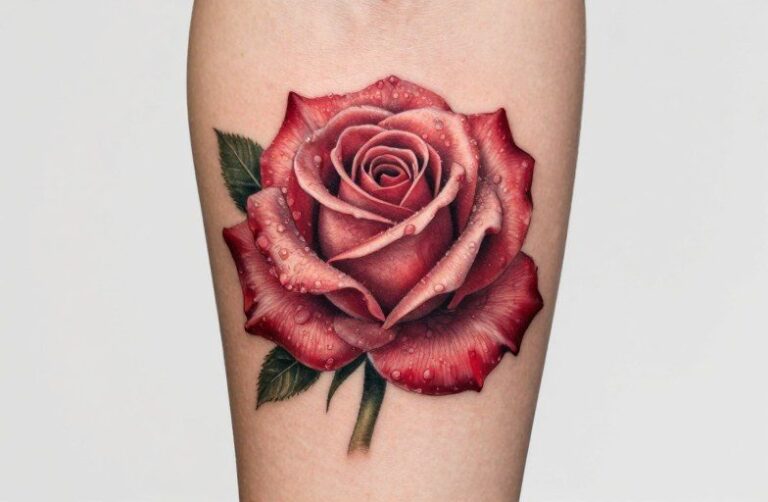
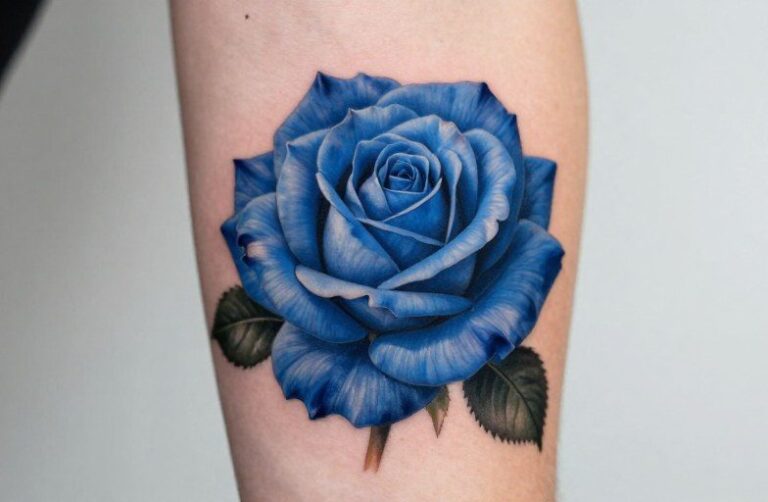
Not every flower simplifies successfully. Roses risk becoming spirals with no identity. Daisies, poppies, and cherry blossoms hold their character with fewer marks. Lavender and wheat work as linear sprays. Peonies need more information, layered petals don’t reduce cleanly, so they’re often chosen by people willing to go slightly larger or accept more detail.
For First-Timers
Minimalist flowers are common starter tattoos for good reason. The session is short, the cost lower, and the result doesn’t announce itself across a room. But first-timers often make specific mistakes.
What to Know Before Booking
Research the artist’s healed work, not just fresh photos. Instagram and shop portfolios show fresh tattoos almost exclusively; the crisp lines you see there will settle. Ask to see photos taken a year or more after application. If the artist can’t provide any, that’s information too. Bring reference images of the specific flower, not just other tattoos. A good artist will draw from life or botanical illustration, not copy someone else’s tattoo.
Pain and Healing Reality
Minimalist work involves less needle time, but some placements hurt more than people expect. The collarbone, ribs, and feet have thin skin over bone. The outer forearm and upper arm are more manageable. Healing requires the same discipline as any tattoo: keep it clean, don’t pick, avoid soaking until the surface has closed. Simple designs make it easier to spot problems early, if a line looks wrong during healing, there’s less visual noise to hide it.
Matching & Pairing Ideas
Minimalist flowers work as standalone pieces, but they also play well with others. Their quiet presence means they can sit near busier tattoos without competing.
Complementary Elements
A single stem can trail into script, though the combination requires careful spacing, too close and they merge visually, too far and they disconnect. Small insects, bees, moths, butterflies, scale naturally with minimalist florals and create narrative suggestion without explicit storytelling. Geometric shapes, thin rings or triangles, can frame or intersect a flower for contrast between organic and rigid.
Multiple Flowers
Two or three tiny flowers scattered rather than clustered read as separate moments. A small bouquet wrapped in a thin line, like a hand-tied bunch, works on the inner forearm or calf. Matching pieces on both arms or both ankles need to be drawn as mirror images, not identical copies, symmetry in nature is approximate, and perfect mirroring looks mechanical.
Trending Variations
The style keeps moving. Some current directions:
- Pressed-flower aesthetic: Flat, two-dimensional, like a specimen between glass. No shading, no dimension, just shape and sometimes a thin stem.
- Single-needle botanical: Extremely fine lines, often with subtle stippling for texture. Requires an artist with specific technical control; not every shop offers this.
- Color accents: Mostly black line with one small area of muted color, a yellow center, a pale pink wash on one petal. The restraint makes the color louder than it would be in a fully saturated piece.
- Partial flowers: Only half the bloom, cut by the edge of the design, implying continuation beyond the frame. Works well on ribs or the side of the torso where the body itself provides the boundary.
Tips for Choosing
Specificity matters. “Flower tattoo” is too vague. Start with a species that means something, or a shape you keep returning to. Consider the orientation: facing up, down, sideways? Each reads differently on the body. A flower facing the viewer, head-on, is more emblematic; one in profile, stem and all, is more narrative.
Working With Your Artist
Bring multiple references: botanical drawings, photographs, other tattoos you like the mood of (not to copy). Discuss line weight explicitly. Ask how the design will read at ten years, not ten days. A good artist will adjust spacing between petals to account for spread. They might suggest slightly thicker stems or bolder centers than you’d initially imagined. That advice is worth hearing.
Long-Term Thinking
Minimalist tattoos are easier to cover or modify later if needed. Their small scale means laser removal, should you ever want it, is more feasible than with dense blackwork. But the best approach is choosing something you’ll want to keep. The simplicity that makes these tattoos appealing also makes them hard to ignore if you fall out of love with them, there’s no detail to distract from a change of heart.
The Takeaway
Minimalist flower tattoos succeed through restraint, not absence of effort. The best ones result from an artist who understands botany and skin, who knows how a line will settle and how much information is enough. Your job is to bring clarity about what you want and openness about how to achieve it. The quietest tattoos often require the most precise conversation.
Frequently Asked Questions
How small can a minimalist flower tattoo be before it starts to blur?
Below half an inch, most fine lines will spread into indistinct shapes within a few years. One to two inches gives the artist enough room for definition that lasts. Placement matters too, high-movement areas like wrists age faster than stable skin on the upper arm.
Do minimalist flower tattoos have to be black, or can they use color?
Black line work holds longest and stays sharpest. Color can work as small accents, but full color fills in minimalist designs tend to fade unevenly and require more frequent touch-ups. Muted, earthy tones age better than bright neons.
What’s the difference between single-needle and standard needle for fine line flowers?
Single-needle creates extremely delicate marks but is less forgiving of skin texture and more prone to blowout and faster fading. A three-needle round liner gives slightly more weight and durability while still reading as fine and minimal. Most artists prefer the latter for longevity.
How do I find an artist who actually specializes in this style?
Look for healed photos in their portfolio, not just fresh work. Ask specifically about their experience with botanical subjects. Artists who draw from real plants rather than copying other tattoos will produce more distinctive, accurate results. A consultation where they sketch in front of you is a good sign.