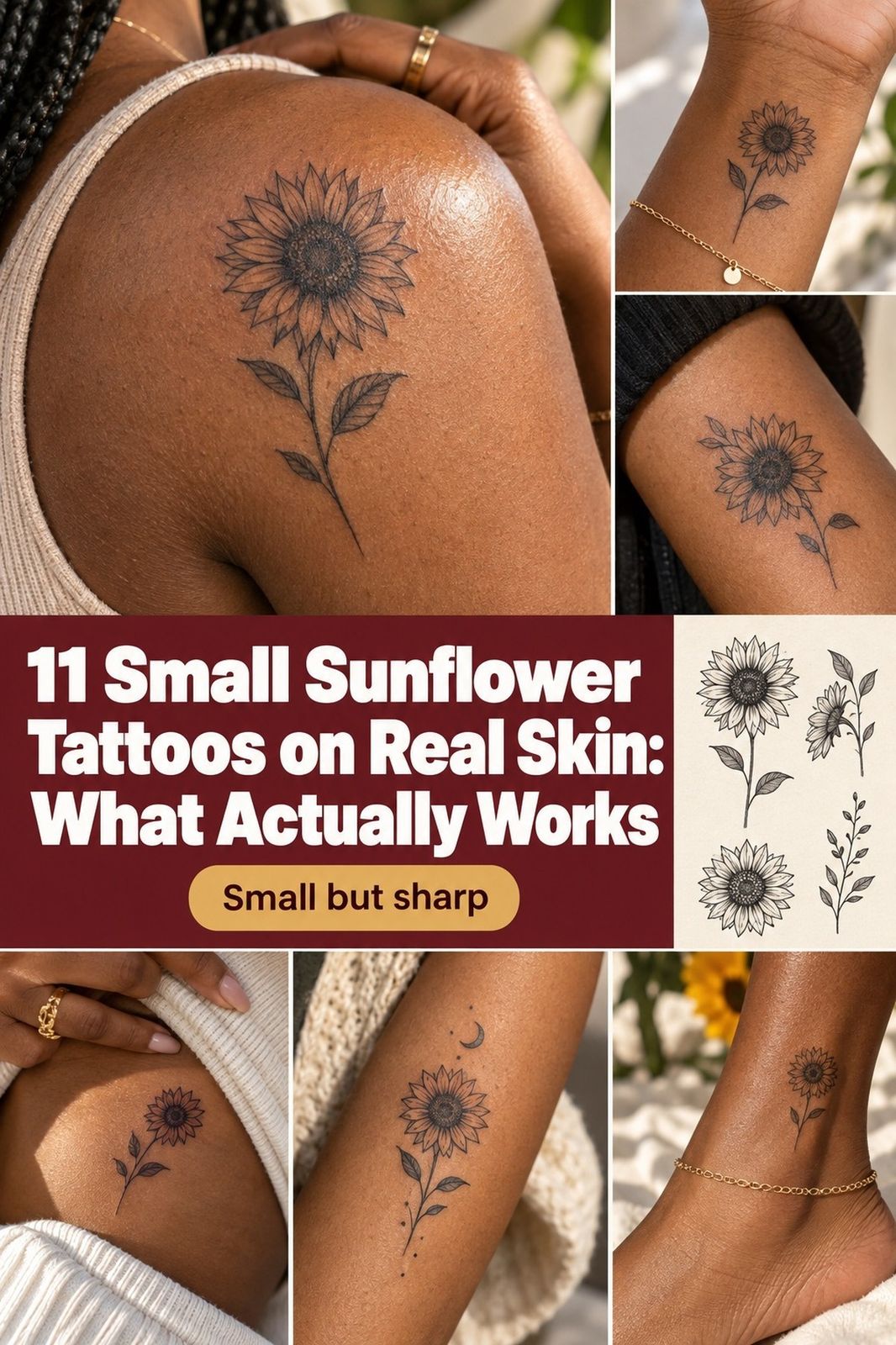
Small sunflower tattoos are having a moment, and the best ones stay readable because the artist protects the negative space. I once chose a design with petals packed too tightly. The healed result looked muddy. You don’t need a large tattoo to keep the flower expressive. You need clear linework, sensible placement, and an artist who understands aging.
My personal rule is simple: choose the smallest version that still feels meaningful and striking. Before booking, compare healed work with these small floral tattoos. Decide whether the artist’s line quality is worth the cost.
- Tiny Sunflower Tattoos With Fine Linework
- Small Sunflower Tattoos Behind the Ear
- Is a Minimal Sunflower Tattoo Right for the Wrist?
- Let Botanical Sunflowers Follow the Ribs
- Choose Geometric Petals for a Sharp Sunflower
- Follow the Collarbone With a Delicate Sunflower
- Hide a Personal Initial Inside the Stem
- Use Watercolor Yellow as an Ankle Accent
- Pair a Sunflower With a Crescent Moon
- Keep Finger Sunflowers Extremely Simple
- Make Blackwork the Main Statement
1Tiny Sunflower Tattoos With Fine Linework
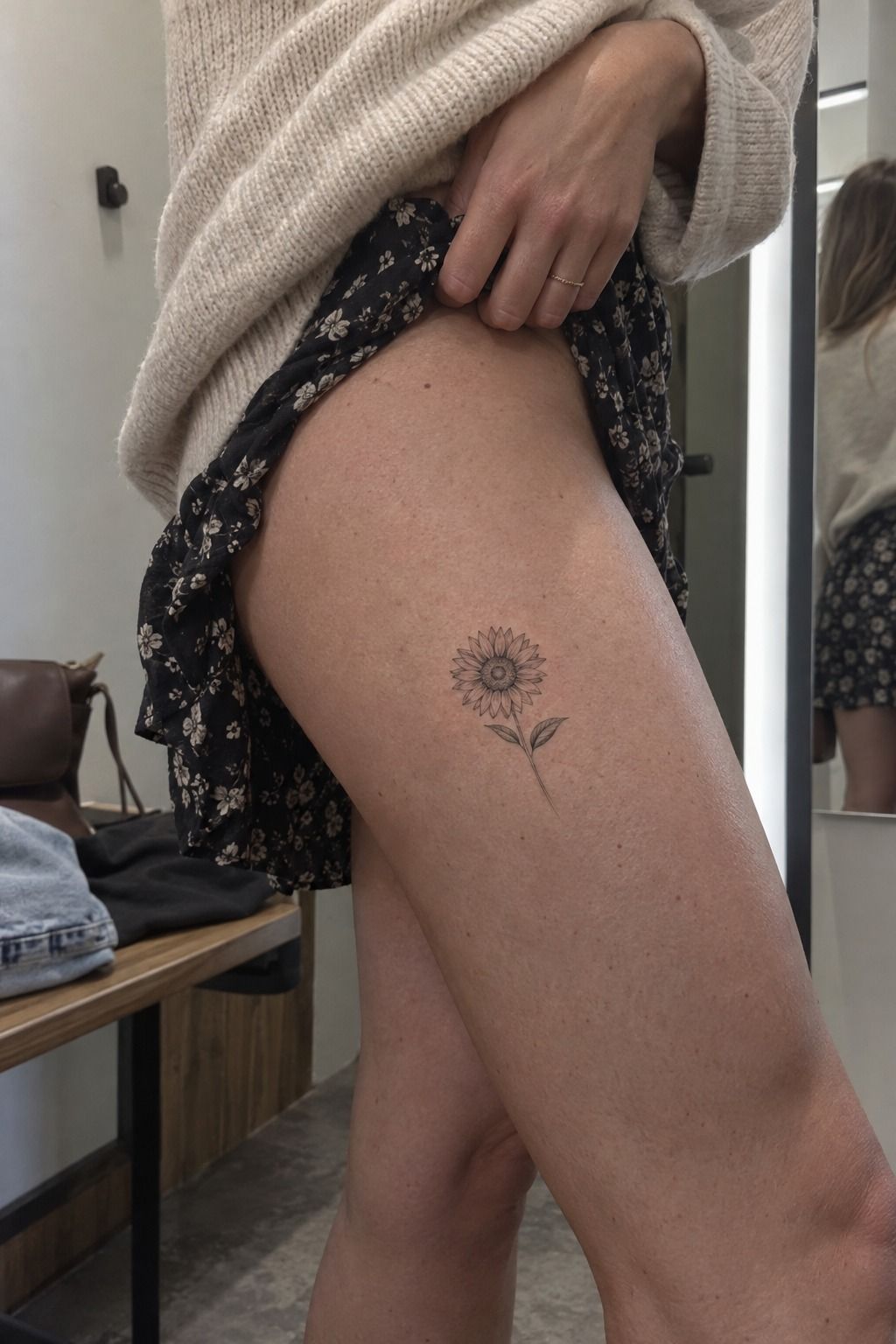
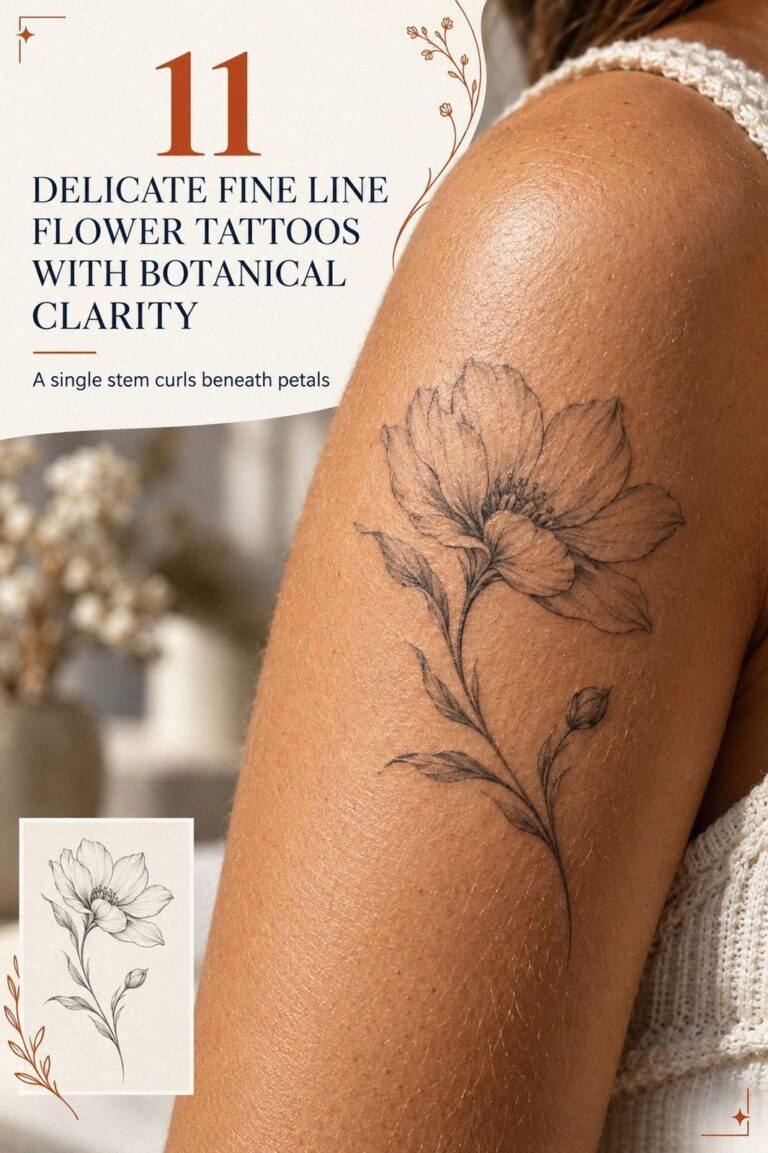
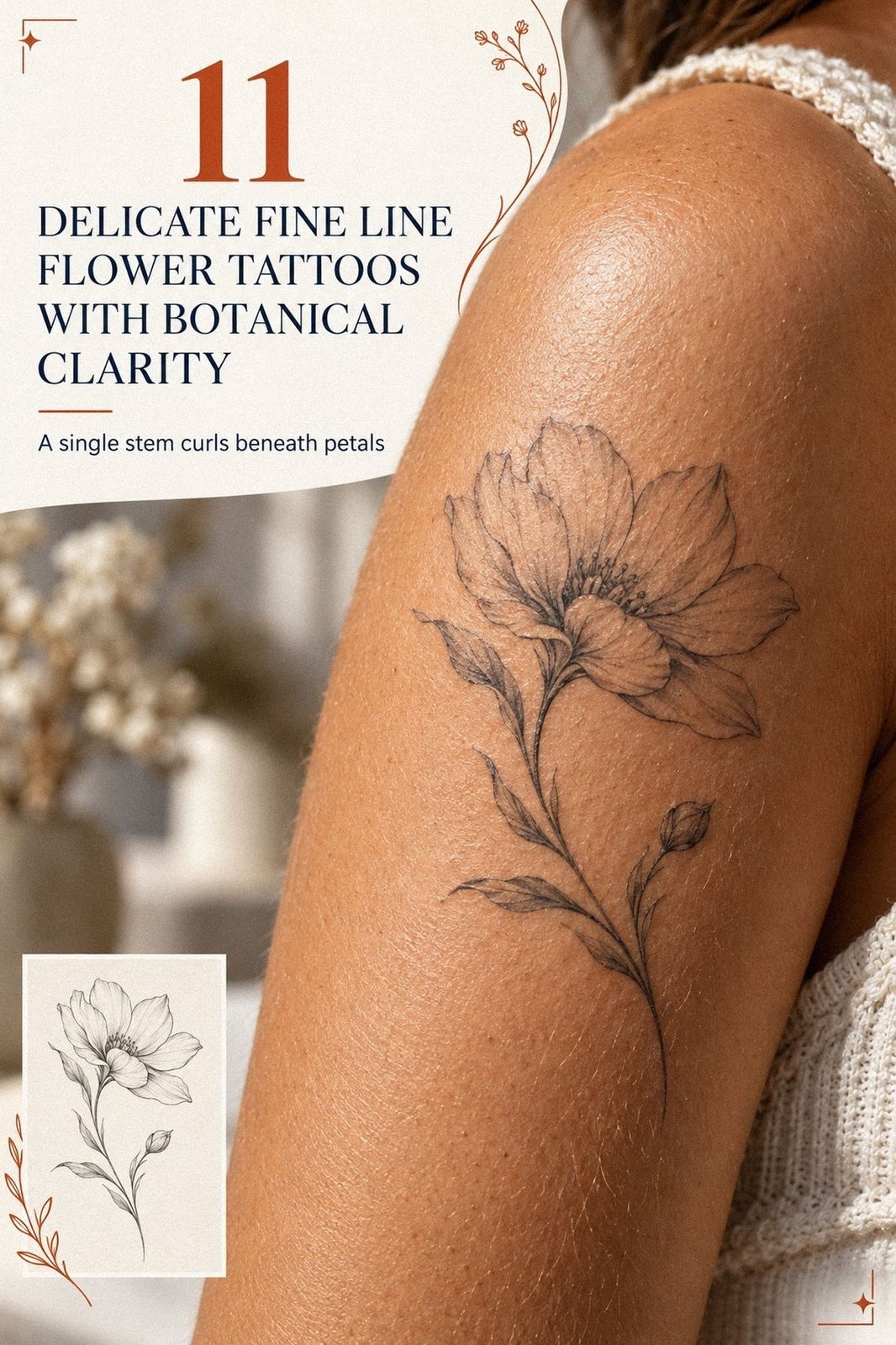
A single stem with layered petals gives you a delicate starting point. The flower won’t disappear if the artist leaves breathing room. On fair cool-pink skin, single-needle linework can look graceful when the petals stay open.
Ask for a narrow stem and clear petal shapes. Keep the center small, too. It shouldn’t become one dark dot.
The thigh is a forgiving placement. You can keep the tattoo personal while giving the artist a smoother area to work across. I’d choose it over the hand for your first fine-line sunflower because friction and sun exposure are usually lower there.
The design can stay understated, elegant, and timeless without extra leaves. Your artist might use a black ink outline with a few tiny breaks near the outer petals. Those breaks help the sunflower avoid looking like a solid sticker after years of normal skin changes.
A soft, warm wash of color can work. I’d skip heavy yellow saturation if you want the cleanest aging. Look at a healed portfolio before you book, not only fresh photographs.
A fine-line tattoo can be intricate without becoming fragile. Ask how the artist handles small details and whether they have healed examples on skin similar to yours.
2Small Sunflower Tattoos Behind the Ear
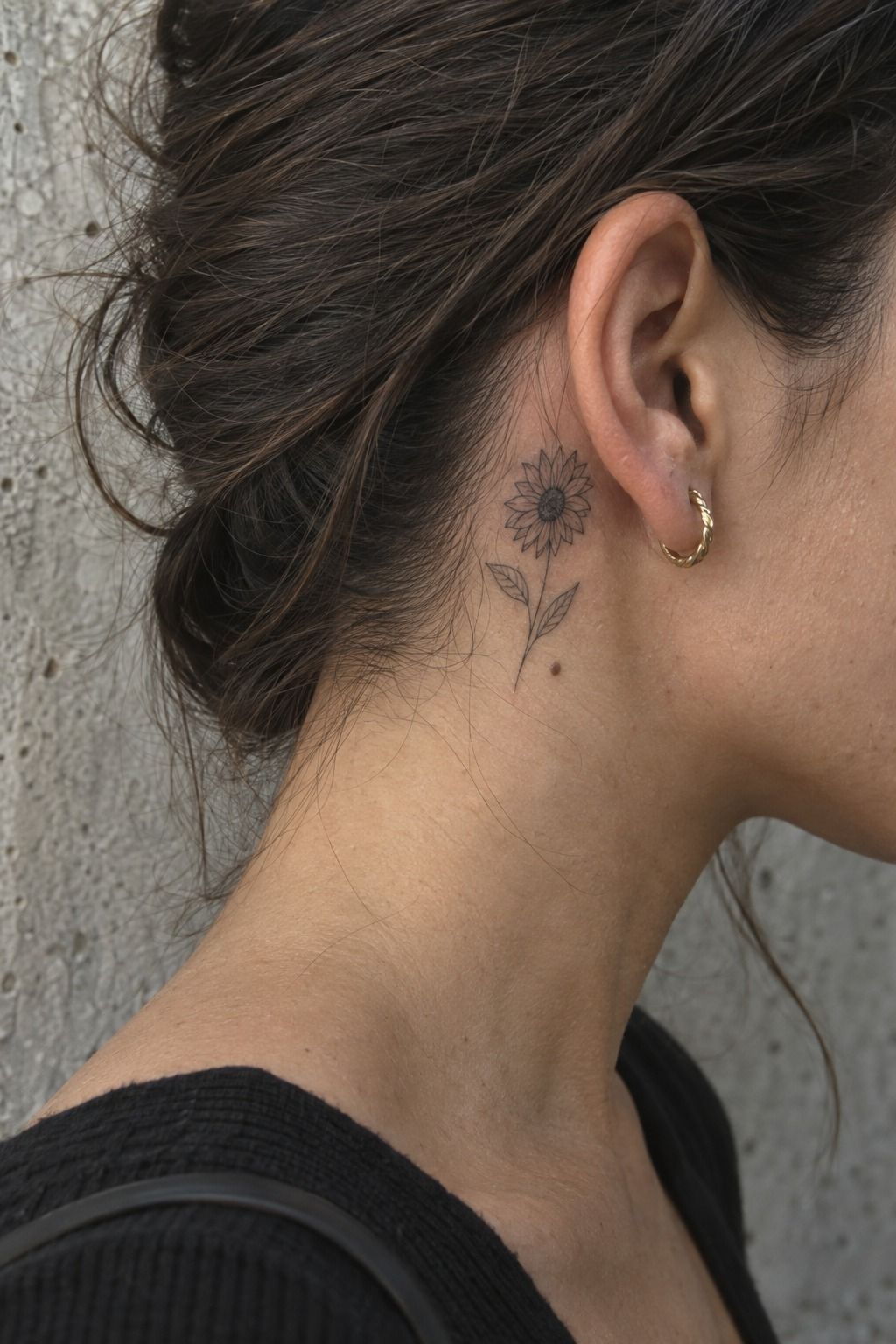
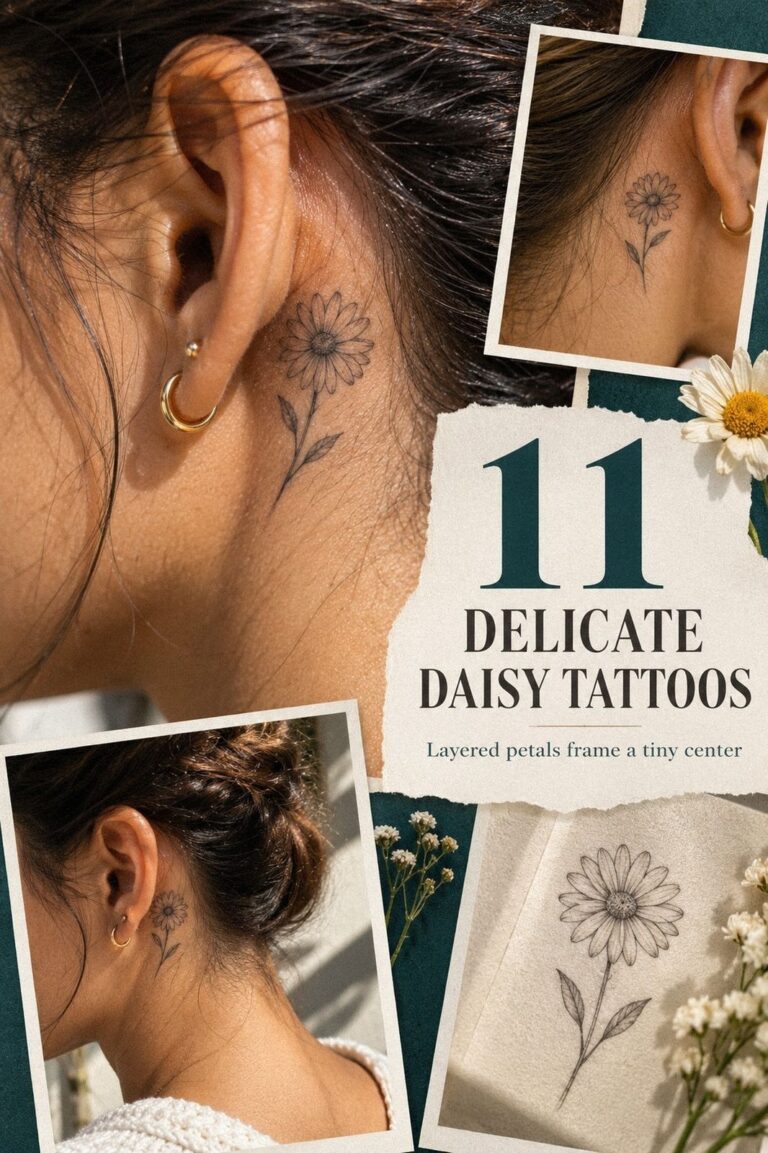
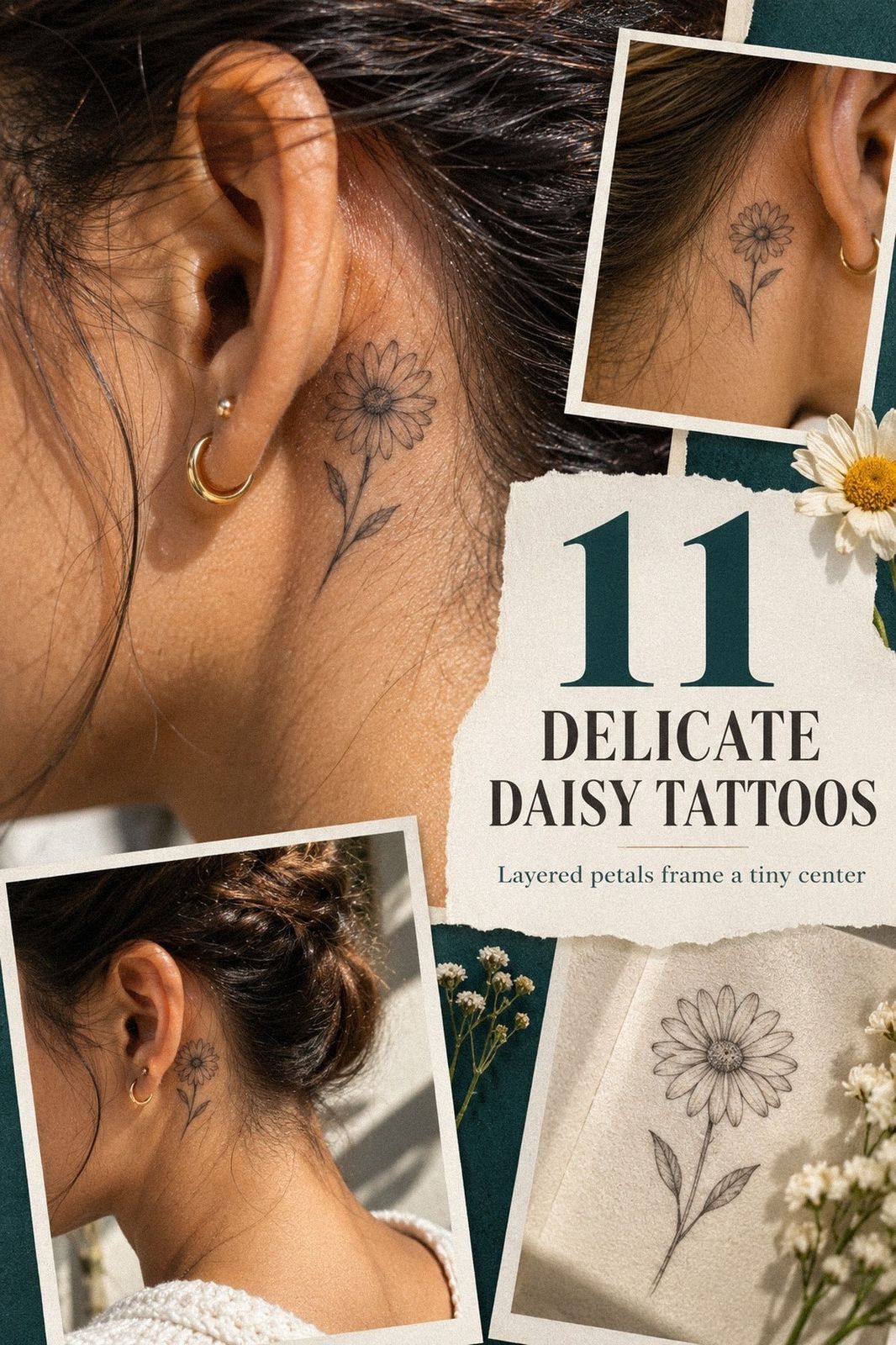
Behind the ear gives your sunflower a hidden, playful placement. It appears when you tuck your hair back. Layered petals can follow the curve behind the ear, while a short stem keeps the design sleek.
On medium warm ivory skin, fine-line black ink creates sharp contrast. The result doesn’t have to feel too fierce. Keep the center simple because this area doesn’t offer much space for dense detail.
I’d choose three or four clear petal layers. Don’t try to copy every natural fold. That choice makes the flower more symbolic, and it will still read as a sunflower from a few steps away.
This placement can feel more intense than the thigh. The skin sits close to cartilage and bone. You won’t need a long appointment, though, and the small scale keeps the session manageable.
Bring your hair tied back during the consultation. You and your artist can judge how the tattoo will sit during daily life. A touch of warm ochre pigment can brighten the center, but protect it from direct UV exposure once healed.
Keep the stem black. Let the color stay in the center. If you want a more symbolic direction, read this guide to sunflower tattoo meaning first.
3Is a Minimal Sunflower Tattoo Right for the Wrist?
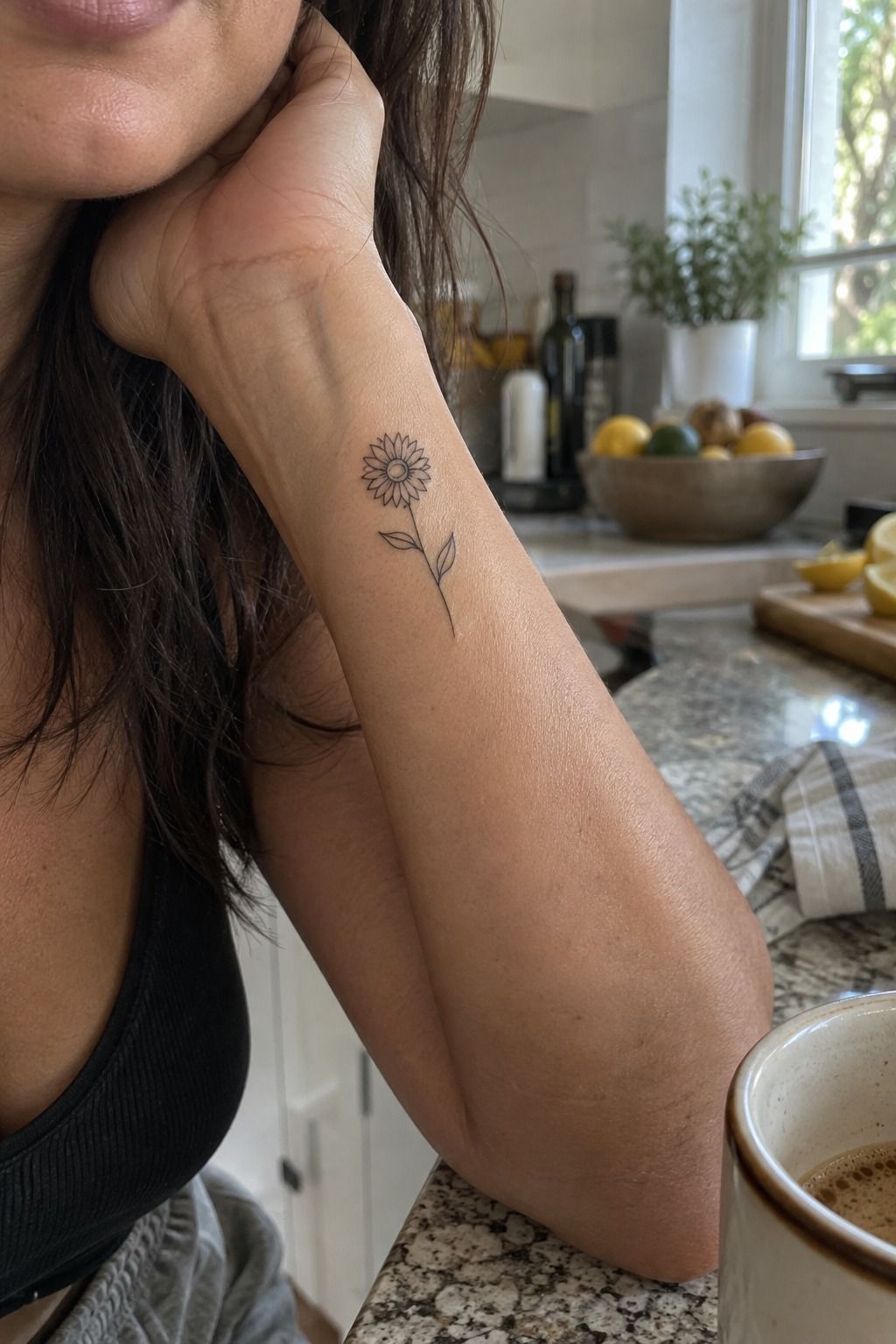
A wrist sunflower works best as a small emblem. Think clear symbol, not miniature botanical illustration. The medium olive skin suits clean black linework, especially when the stem follows the wrist’s natural vertical line.
You can keep the petals open, minimal, and recognizable. A full bouquet isn’t necessary. Your wrist moves constantly, so the design shouldn’t depend on fragile micro-details.
I’d avoid tiny interior hatching. Choose a slightly stronger contour instead. That makes the tattoo feel bold enough for daily movement while keeping its personal character.
Sun exposure is the bigger concern here. If you wear short sleeves often, your skin sees more daylight. UV can soften fine lines and fade color.
Aftercare should include gentle washing, light moisturizer, and patience. Don’t soak the tattoo in a pool while the surface is healing. The black sunflower center should anchor the petals without swallowing them.
Ask your artist to show you the stencil at actual scale. For another compact floral direction, browse these small rose tattoos. Compare how each flower handles a narrow placement.
4Let Botanical Sunflowers Follow the Ribs
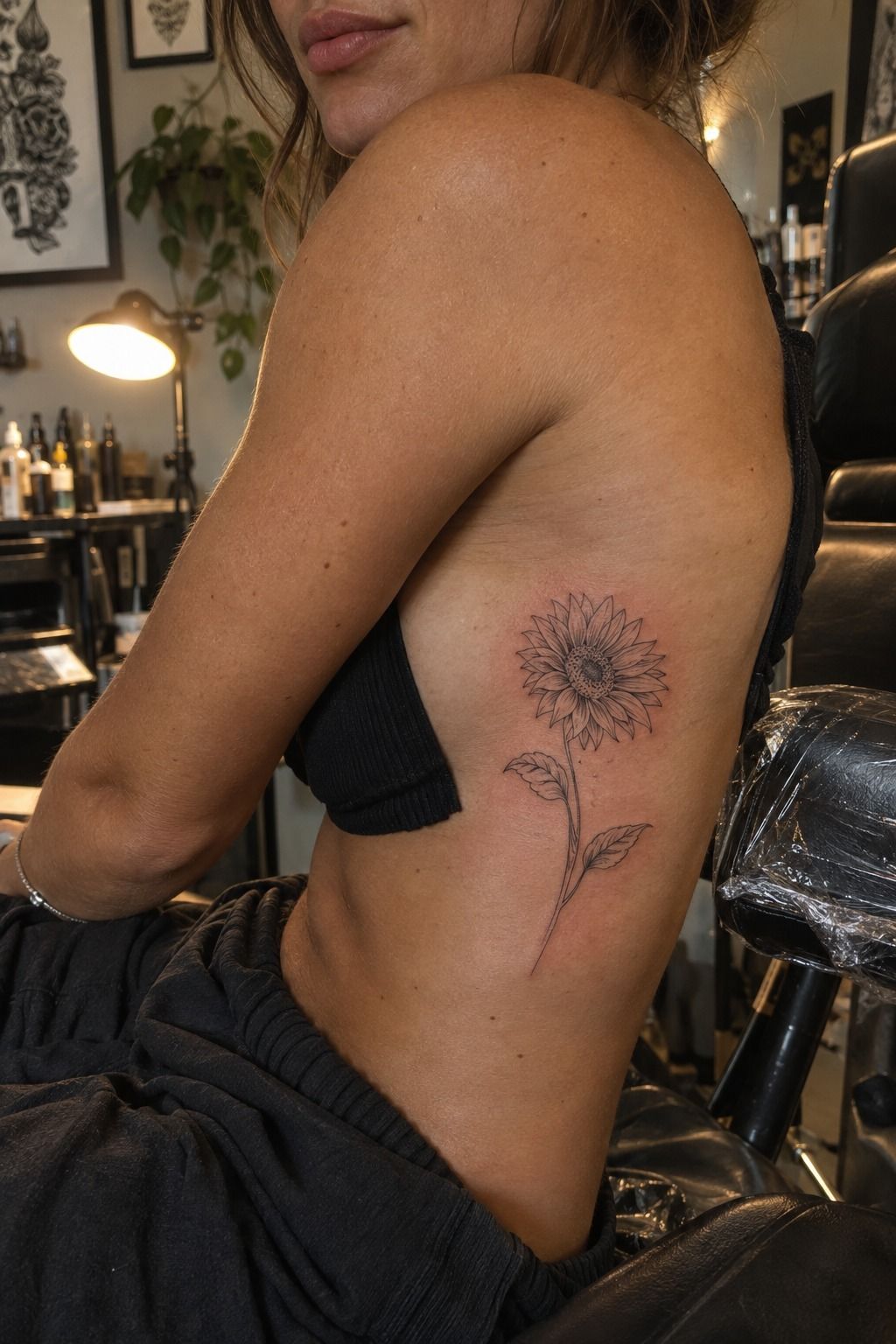
Rib placement lets a small sunflower feel expressive, flowing, and slightly raw. The curve of the body can make a short stem appear to move naturally beneath the flower instead of ending abruptly.
I’d place the bloom between the ribs and the side of the torso, then angle the stem toward the natural line of the body. A rib-placement stencil should be checked while you stand, sit, and breathe normally. A design that looks balanced on a flat sheet can shift once your posture changes.
This is not my first choice for a nervous beginner. The skin is close to bone, and the area moves with every breath. Still, the result can feel deeply personal because the sunflower remains easy to conceal.
Keep the petal count restrained. An ornate botanical study may look beautiful at a larger scale, but crowded details can merge as the tattoo settles. Three strong outer petals and a readable center will usually age better than a miniature encyclopedia of leaves.
I’d choose black structure with one muted color note rather than a full saturated treatment. The contrast gives the design a crisp edge while leaving the flower’s symbolic meaning intact. For another personal direction, compare it with this sunflower tattoo meaning guide.
Ribs suit someone who wants a sacred mark that stays private. They also demand patience during healing because clothing can rub the area. That tradeoff is worth considering before you fall in love with the sketch.
5Choose Geometric Petals for a Sharp Sunflower
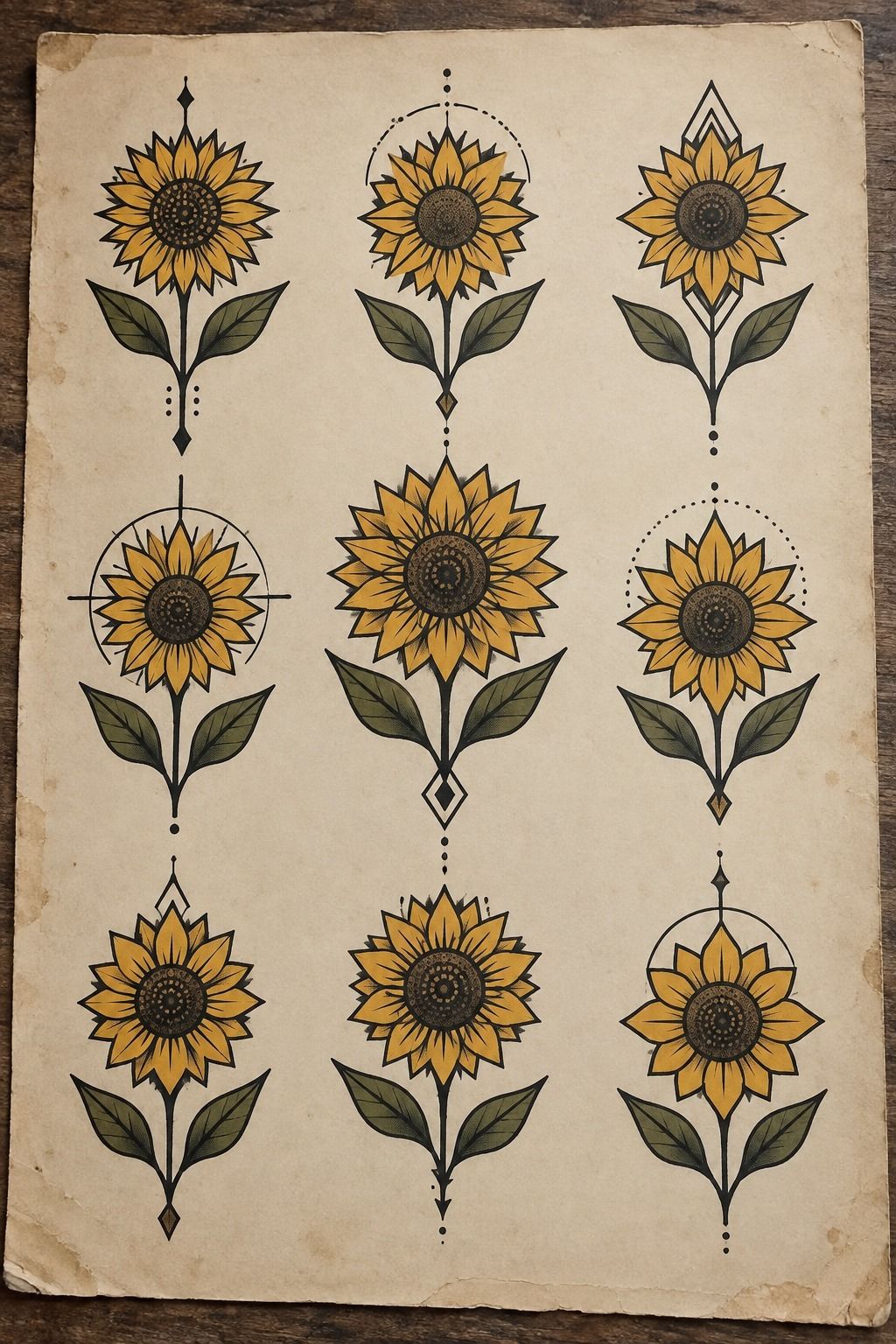
A geometric sunflower works beautifully when each petal uses a clean angle, a triangle, or a repeated line pattern. You can choose one symbol from the concept instead of copying the entire arrangement.
The result feels sharp, edgy, and graphic without losing the flower’s identity. Your artist should preserve the empty spaces between the geometric petals. Those gaps help the design stay crisp after healing.
I’d skip a tightly packed mandala center. It can blur into a dark circle at a small scale. A geometric petal grid can feel more personal when the angles reflect an initial, a meaningful date, or a private symbol.
This style suits you if you want something daring rather than soft and botanical. What would you rather remember: the flower itself or the reason you chose its shape?
Ask for a stencil before the needle starts. You’ll see whether the petals look balanced on your chosen placement. Your artist can adjust the scale without guessing.
For a related symbolic direction, compare your idea with this skull sunflower tattoo meaning guide. Keep the final design lighter if you want a classic, polished result.
6Follow the Collarbone With a Delicate Sunflower
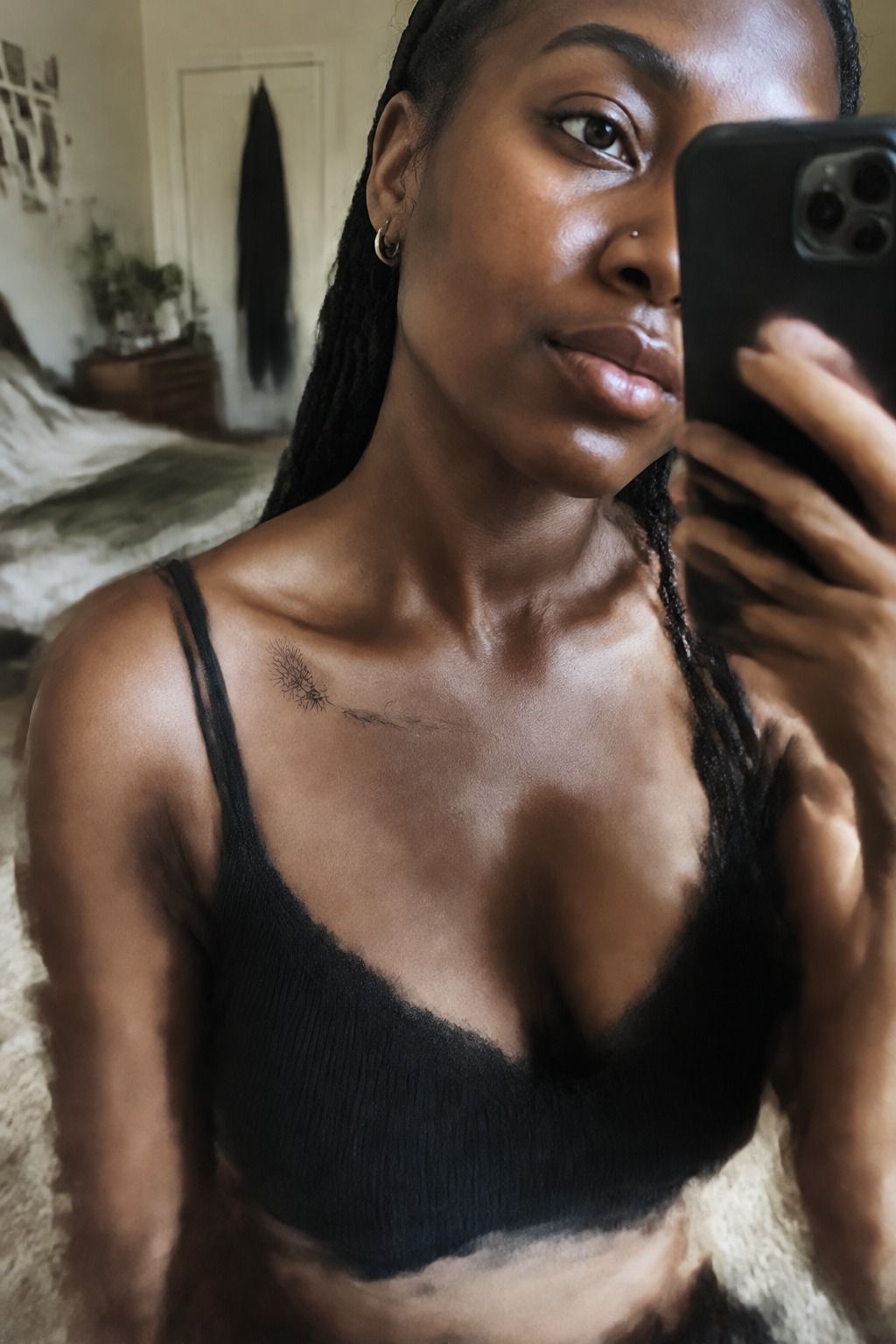
The collarbone creates a graceful horizontal path. Your sunflower can sit slightly below the bone, with the stem following its angle.
A collarbone sunflower stencil matters here because a design that looks straight on paper can tilt on the body. Test the position while standing and sitting. Your posture changes the line.
I’d keep the petals facing outward. That makes the flower easier to read from the front. A short stem can add balance without making the tattoo feel oversized.
This placement can look feminine and stylish without extra ornament. If you want a stronger effect, use a dark center and open petals. If you want a quieter mark, choose thinner lines and fewer leaves.
The collarbone can also carry a romantic quality without turning the flower into a cliché. A tiny leaf or an interrupted stem may be enough to make the design feel personal.
7Hide a Personal Initial Inside the Stem
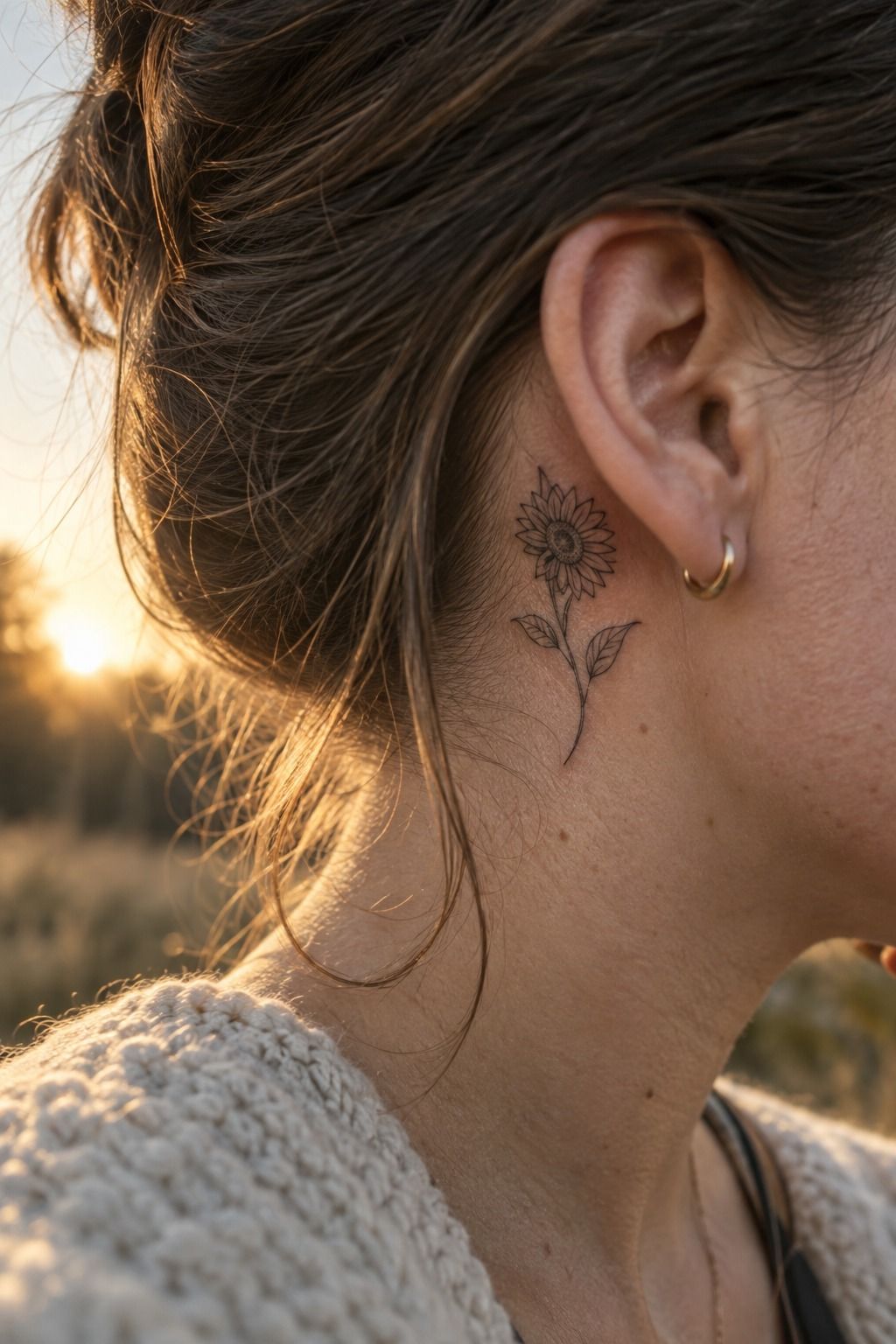
A hidden initial can sit inside the stem, beneath the center, or between two petals. Behind the ear, fine-line lettering needs to remain simple and compact.
You can make the mark personal while letting the sunflower remain the first thing people notice. I’d use one capital letter with a clean shape rather than a full name.
Your artist can weave it into the stem or place it in a small negative-space opening. That approach feels meaningful and whimsical.
You won’t have to explain the entire story every time someone sees it. That is where the idea becomes personal!
The initial shouldn’t compete with the flower’s center. Ask your artist to show two versions. Try the letter in the stem and beneath the petals.
Sometimes the quieter option is more powerful. If you’re choosing a tribute, consider whether the symbol will still feel right years from now.
A single black initial usually ages more clearly than pale color or ornate script. Keep the line weight consistent with the flower. Avoid adding a second tiny symbol just because there’s room.
For more floral symbolism, explore these small floral tattoo ideas before your appointment.
8Use Watercolor Yellow as an Ankle Accent
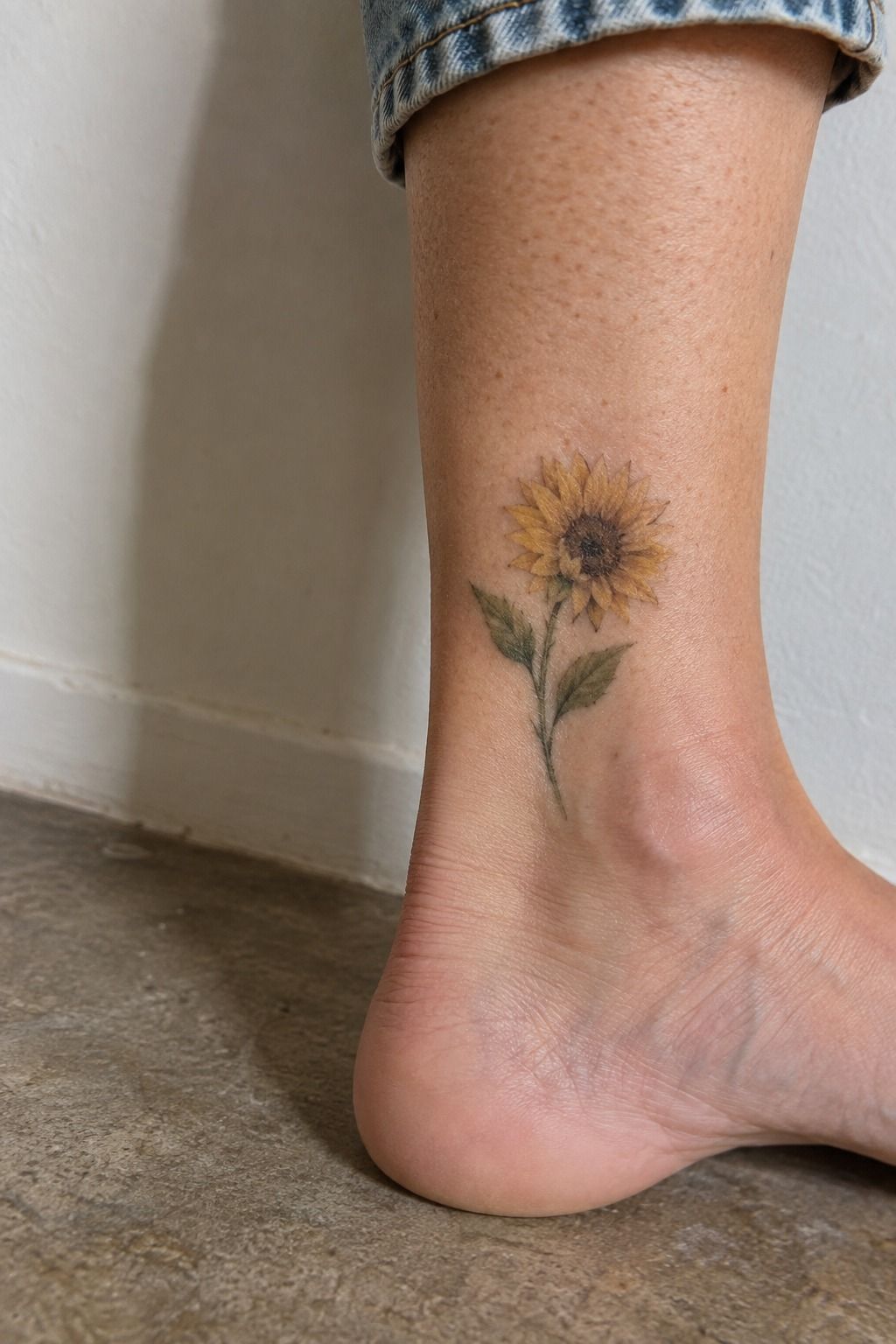
A watercolor sunflower on the ankle can look vibrant and dreamy when color is used as an accent. The petals can stay loose and ethereal, while the stem gives the design enough structure to remain readable.
You’ll need to accept that watercolor edges are intentionally soft. They won’t have the same crisp boundary as bold blackwork. Your artist should still include a readable outline or a few dark anchors.
I’d skip an entirely pigment-only version at this scale. The flower could lose its shape as the color settles. A watercolor sunflower wash looks best with one dominant yellow and a small touch of green.
Too many hues can make your tiny flower feel muddy. The ankle can also be more sensitive than the outer thigh or shoulder, especially near the bone.
Your artist may suggest placing the design slightly above the ankle joint. That can reduce friction from footwear. Choose shoes that won’t rub during healing.
A dainty ankle mark can feel playful, but it needs more maintenance than a protected placement. The color may soften sooner, especially if the tattoo is exposed during summer.
Keep the tattoo away from pools and direct sun until the skin closes. For a fuller look at this technique, save the watercolor sunflower tattoo guide and bring the reference to your artist. Let the color earn its place!
9Pair a Sunflower With a Crescent Moon
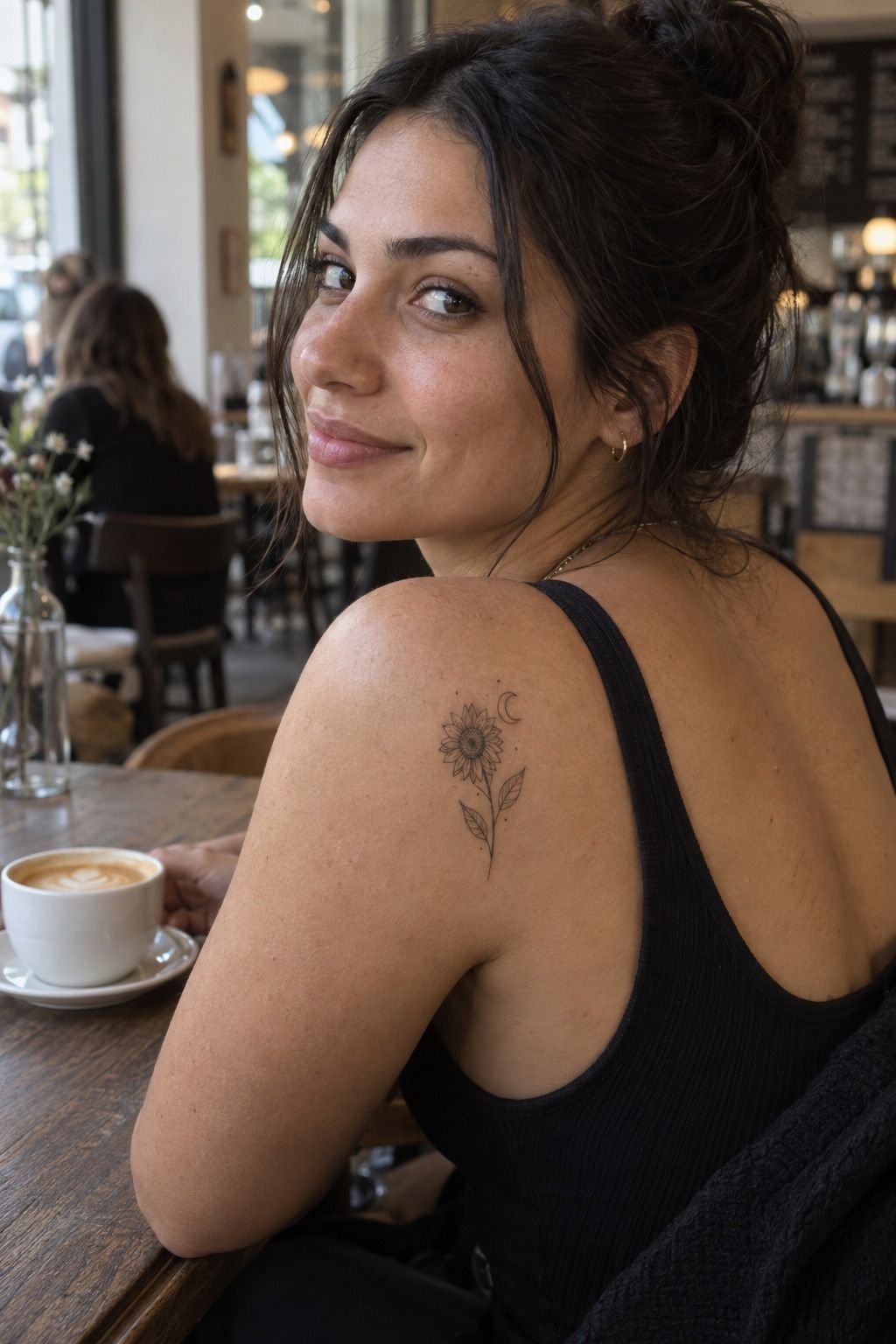
A tiny moon beside a sunflower creates a symbolic contrast between daylight and night. On the shoulder, crescent moon ink can sit above the flower without crowding the petals.
The paired symbols feel personal and slightly haunting. Your moon should be smaller than the sunflower, or the design can lose its focal point.
I’d use a simple crescent with one or two interior marks. Skip a detailed lunar scene. The result stays elegant, easy to scale, and visually balanced.
Shoulder placement is generally more tolerable than ribs, feet, or hands. Individual sensitivity still varies. You can ask for a short session if you’re nervous.
Don’t choose a placement only because it looks good in a photograph. Your daily clothing and sun exposure matter, too. A small crescent outline gives the composition a strong secondary shape.
If you want the symbolism to be more direct, compare this design with the ideas in the shoulder sunflower meaning guide. The strongest version usually has one clear story, not several competing symbols.
10Keep Finger Sunflowers Extremely Simple
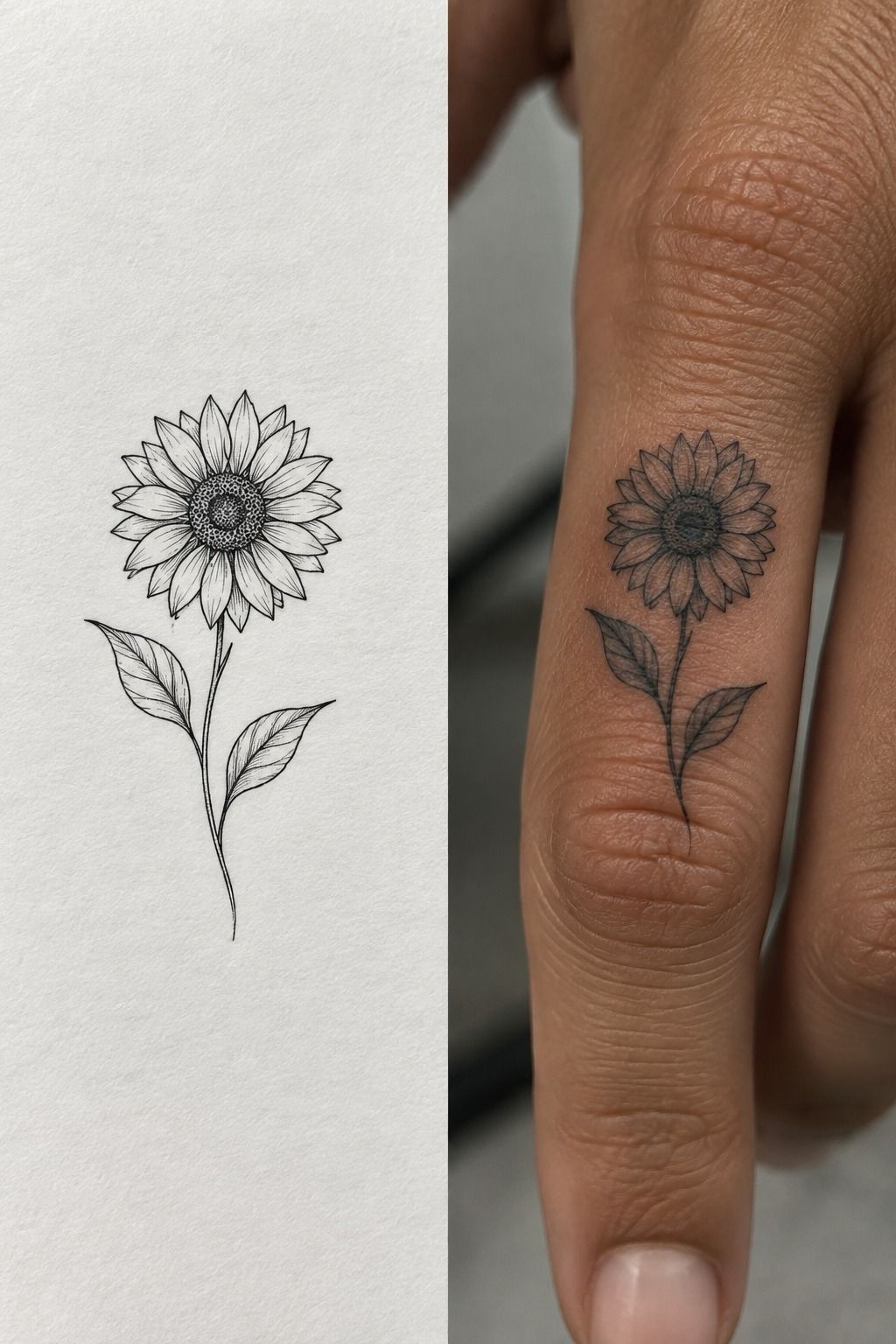
Finger tattoos demand realistic expectations. Hands face washing, friction, movement, and frequent sunlight. Fresh ink can look darker and sharper than the settled version.
Ask to see healed work before you decide. You can keep the design readable with one small flower, a shortened stem, and open petals.
I’d avoid fitting a full sunflower head across the side of one finger. The lines may crowd together. A narrow top or side placement gives your artist more control, though it still won’t age like a protected thigh tattoo.
Ask about touch-ups before you pay a deposit. Your artist should explain how finger ink behaves and whether a second pass may be needed after healing.
You’ll also want to protect the area from unnecessary friction while the surface closes. Don’t assume a tiny tattoo means zero maintenance. A healed black outline is more useful than a delicate fresh photograph.
Look for consistent lines, not just dramatic contrast. If you prefer a lower-maintenance floral placement, compare it with these small rose tattoos. Notice how the wrist or upper arm gives the design more room.
11Make Blackwork the Main Statement
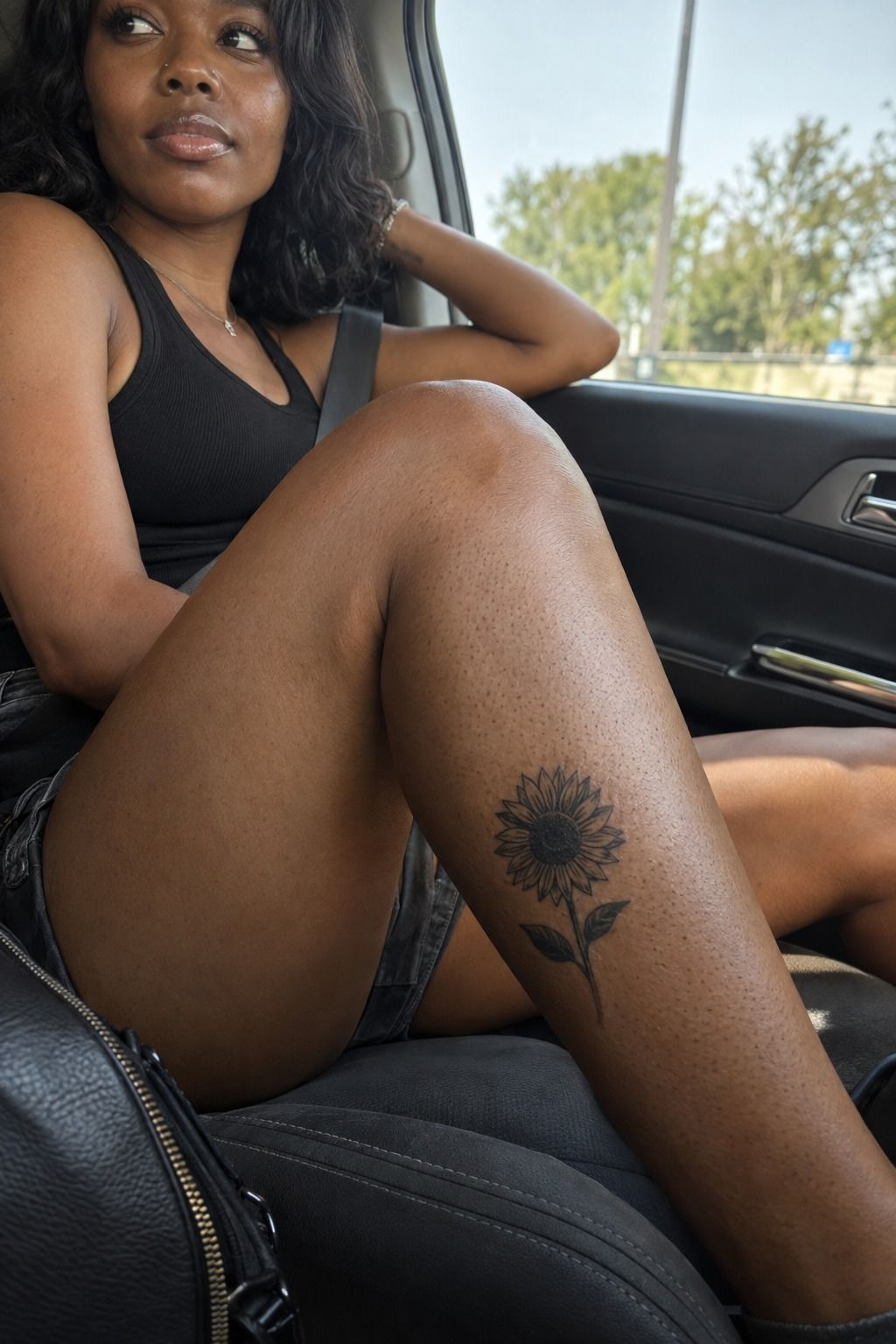
Blackwork gives a small sunflower a fierce, iconic presence through solid areas and deliberate negative space. On deep brown skin with a warm undertone, bold blackwork shading can create a powerful silhouette when the artist understands contrast.
The flower should still have open separations between petals. Choose an artist who regularly tattoos dark, saturated designs. Don’t rely on someone who only posts fine-line work.
I’d skip a gray-only version if your goal is long-term clarity. Solid black pigment usually gives the strongest anchor. Smooth shading can soften the result, but the petal structure must remain clear.
The calf is a practical placement. It offers a broad, stable area and is usually more tolerable than the foot or ribs. Your tattoo may look intense at first, then settle into a cleaner graphic shape.
Give it time before deciding whether the shading needs adjustment. Keep the design compact, but don’t force it to be microscopic. A slightly larger sunflower can preserve the negative spaces that make blackwork readable.
If you’re choosing between this and a more delicate style, ask which one still looks like you when the novelty fades. This unique flower tattoo collection may help you compare stronger silhouettes.
How to Make a Small Sunflower Age Well
The main aging problem is crowding. Lines that look separate on appointment day can soften into one shape later. A negative-space plan gives every petal room to remain legible.
Size matters, but it isn’t the only factor. Ink depth, skin movement, sun exposure, and the artist’s technique all affect the final result.
Ask to see tattoos at several stages of healing. Fresh work can look impressive. Healed work tells you whether the artist’s decisions were sound.
Your skin tone matters, too. A crisp design is not defined by one universal line weight. The artist should know how contrast, pigment, and saturation behave on your skin.
When Is Color Worth the Extra Maintenance?
Yellow can make a sunflower feel warm and alive. It can also fade faster than black ink, especially on exposed areas. A yellow pigment sample helps you discuss the expected result.
You don’t need a full color tattoo to make the flower vibrant. One colored center may be enough. Black petals with a muted yellow core can stay crisp and meaningful.
If you love watercolor, accept the softer edges. If you want maximum definition, choose black structure first. Both directions can feel expressive when the artist understands the tradeoff.
A vintage ochre or muted gold can give the sunflower a softer mood than bright yellow. Ask how the color will settle against your skin rather than judging only the fresh stencil.
The Small Sunflower Rule I Use
I’ve learned that a small sunflower tattoo succeeds or fails before the needle touches skin. The decisive choices are placement, spacing, and line hierarchy.
You can have the most meaningful reference in the world. If the petals are crowded into a tiny shape, the symbolism won’t save the design. I’d rather see three clear petals and a readable center than twelve ornate marks that merge after healing.
The first mistake I made was treating “small” as a measurement instead of a design problem. I asked for every botanical detail I loved. Then I watched the artist remove half of them for good reason.
The edited version felt more refined because each line had a job. Your artist should be willing to simplify. You shouldn’t read that simplification as a lack of creativity.
Placement deserves more attention than trend cycles. Hands, fingers, feet, ribs, and sternum can be expressive. They also bring more friction, sensitivity, or exposure.
The outer thigh, shoulder, and forearm are often more forgiving. A warm yellow center may look gorgeous on day one, while black structure will usually do more work over time.
Finally, choose a healed portfolio over a fashionable promise. Ask how the artist works with your skin tone, protects negative space, and approaches aftercare. Your surface may look healed in two or three weeks, but the tattoo keeps settling for around two or three months.
Give it that time. A crisp sunflower is created through restraint and patience, not a rushed appointment.
What Makes a Small Sunflower Worth the Cost?
The price depends on the artist’s minimum, location, color, detail, and appointment length. A low quote isn’t automatically good value if the design needs an early correction or touch-up.
I’d rather pay for a careful consultation and a proven healed portfolio than chase the cheapest appointment. Ask what the quoted tattoo cost includes before you leave a deposit.
Some artists include a stencil revision. Others charge separately for touch-ups or color adjustments. Knowing the full price makes your budget more realistic.
A small tattoo can still be a meaningful investment. It should feel worth it because it fits your body, your style, and your long-term expectations.
How I’d Compare Healed Portfolios
Start with three questions. Does the artist show healed work? Do the petals remain distinct?
Do the tattoos look consistent across different skin tones and placements?
A polished social feed isn’t enough if every example is fresh. I’d compare at least five healed sunflower or botanical tattoos before booking.
Look closely at healed linework, faded color, edge softness, and the spacing between petals. Those details tell you more about likely value than a dramatic studio photograph.
Your consultation should also reveal whether the artist listens. If they dismiss your concerns about aging, placement, or budget, keep looking. The best artist can explain a design change without making your idea feel foolish.
Placement Changes the Value of the Design
The same sunflower can have a very different value on the thigh, finger, collarbone, or ribs. A protected area may help delicate lines last longer. A high-friction placement may require more maintenance.
That doesn’t make one choice wrong. It changes the tradeoff. If longevity is your priority, ask whether a slightly larger design would be worth the extra cost.
More breathing room can protect the flower’s shape and reduce the chance that details merge. A stable placement often gives you more value than squeezing the tattoo into the smallest possible area.
If visibility matters most, the wrist, ankle, and finger can feel more empowering. Just remember that sunlight, washing, and movement may affect the result.
Your artist should help you weigh the look against the maintenance before you commit.
Aftercare for Long-Term Clarity
Gentle washing, light moisturizing, and avoiding soaking are the basics during early healing. Don’t pick at flakes, scratch the area, or cover it with anything your artist hasn’t approved.
Your skin needs time to close without unnecessary friction. Once healed, use sunscreen whenever the tattoo is exposed. UV can soften black lines and fade yellow pigment faster than you’d expect.
Broad-spectrum sunscreen is a small recurring cost that helps protect the tattoo. You shouldn’t judge the final result while the skin is still settling.
Wait several weeks before deciding whether the design needs attention. Contact your artist if you notice unusual redness, swelling, or pain. Good aftercare is simple, but it isn’t optional.
The Questions I Get Asked Most
How much does a small sunflower tattoo usually cost?
A small sunflower tattoo typically costs about $100 to $300 in the United States. A studio minimum may run around $50 to $100, while hourly rates often fall near $100 to $250.
Your artist, region, placement, color, and appointment length all affect the final price. A healed portfolio is worth prioritizing over the lowest quote.
Are small sunflower tattoos a good idea for a first tattoo?
Yes. Small sunflower tattoos can be a strong first choice because you can select a manageable placement and a clear design. A simple outline gives you a meaningful subject without a long session.
You’ll still want to avoid highly sensitive areas if you’re nervous, and your artist should show healed examples.
How do I choose a tattoo artist for small sunflower tattoos?
Choose an artist whose portfolio shows clean linework, healed photographs, and the style you want. A consistent healed portfolio matters more than one dramatic fresh photograph.
Ask about hygiene, needle configuration, placement, and how the artist adapts designs to your skin. You can also compare botanical work with this flower tattoo meaning guide.
How much do small sunflower tattoos hurt?
Pain varies by person and placement. Ribs, feet, hands, and sternum are often more painful because they have less cushioning. The forearm, thigh, and shoulder are commonly more tolerable.
A short tattoo session may feel easier for a first tattoo. Your artist can also pause if you need a break. Healing discomfort is usually more manageable when clothing does not rub the placement.
What’s the best placement for small sunflower tattoos?
The best placement depends on your pain tolerance, visibility preference, and aging priorities. The outer thigh, shoulder, and forearm are often more forgiving. The finger, foot, ribs, and sternum can be more sensitive or exposed.
A stable placement gives fine lines a better chance to stay readable. For more ideas, compare these shoulder sunflower tattoos.
Where I’d Start First
If I had to pick one, I’d start with the fine-line sunflower on the outer thigh. You’ll get enough space for open petals, lower friction, and a more forgiving healing process.
It’s a personal choice with strong long-term value. The design can stay readable without feeling oversized. Pin the idea for later, then compare it with these small floral tattoos and the sunflower tattoo meaning guide before booking your artist.