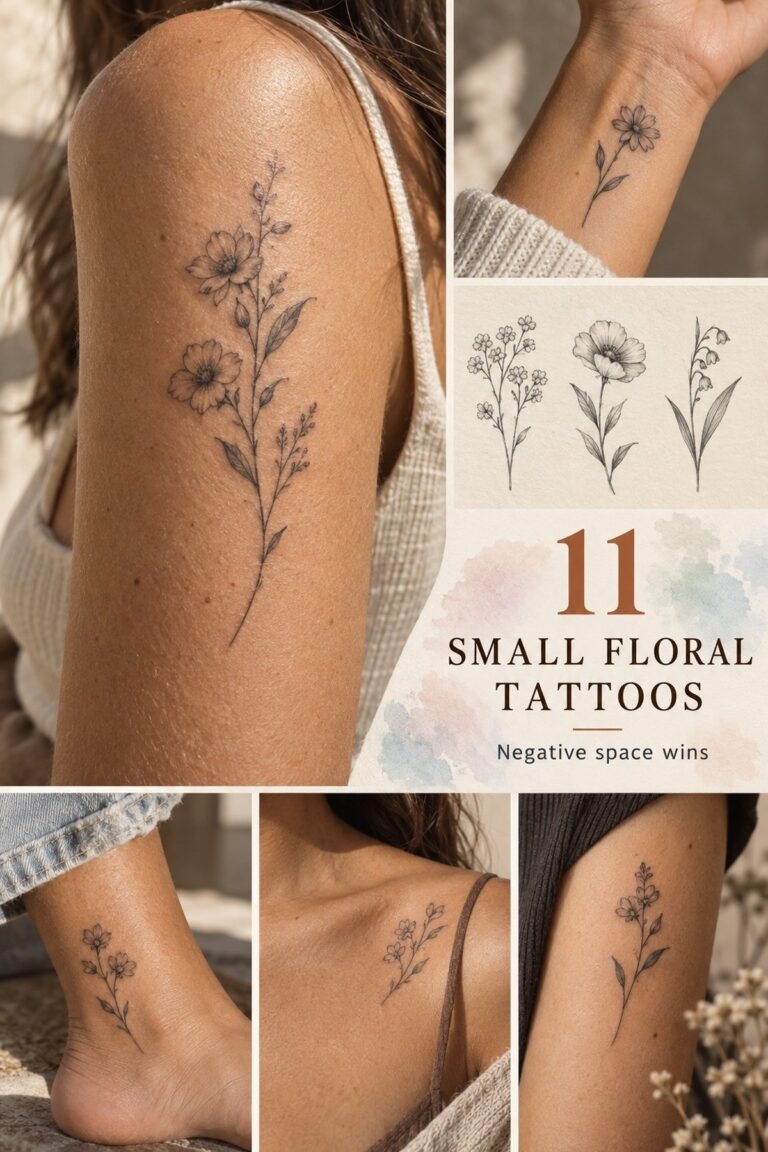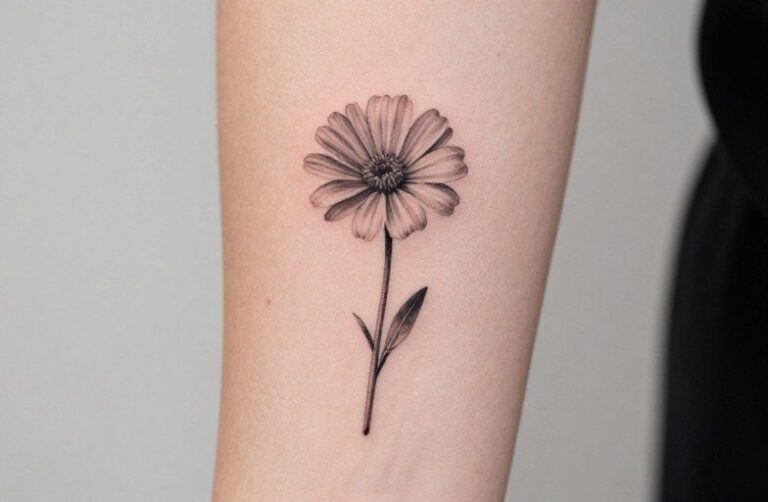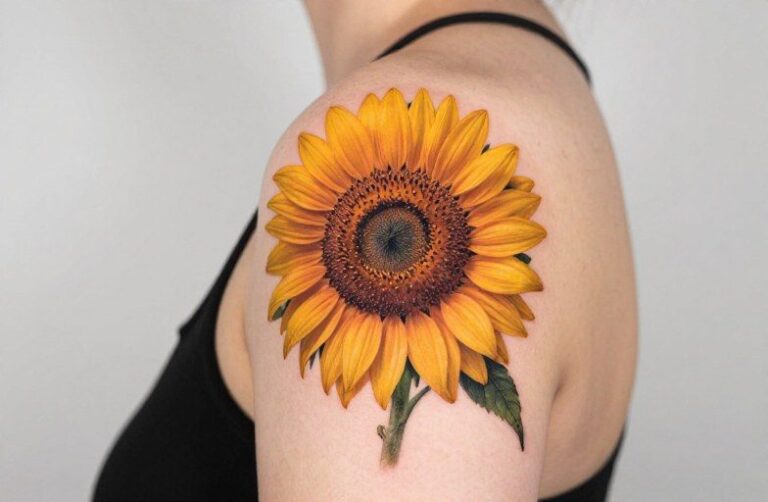
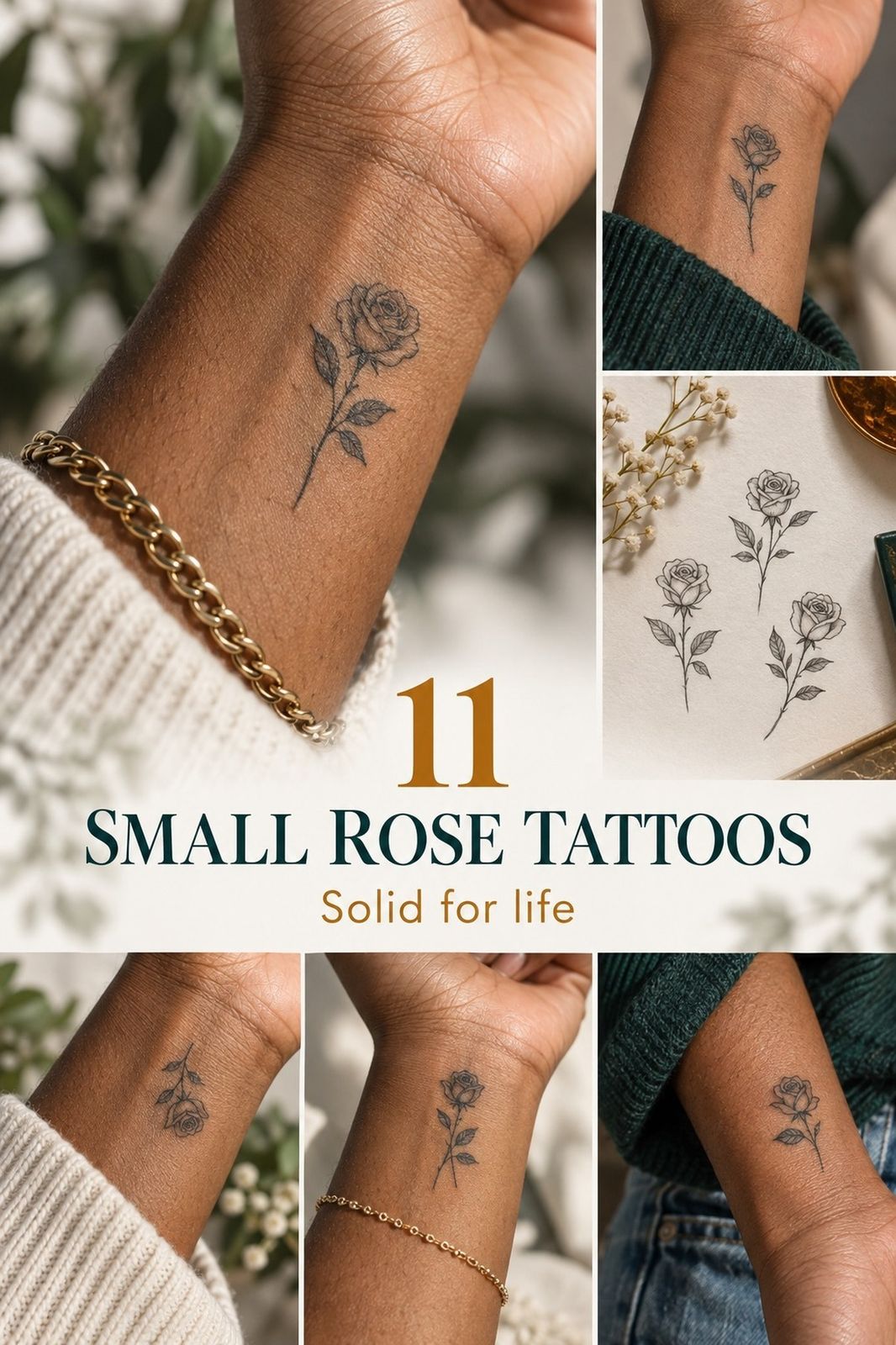
Small rose tattoos can stay crisp for years when line weight, placement, and spacing work together. I learned that after one delicate design blurred faster than I expected. You’ll see eleven striking options here, from fine-line wrist ink to bold neo-traditional petals. Each idea has a practical reason behind it. Yes, a tiny tattoo can still feel powerful!
- Tiny Fine-Line Rose Tattoos on the Wrist
- Blackwork Roses Behind the Ear
- Could a Finger Rose Stay Clear?
- Delicate Watercolor Roses on the Ankle
- Meaningful Collarbone Rose Tattoos
- Frame a Rose with Geometric Linework
- Botanical Linework with One Strong Stem
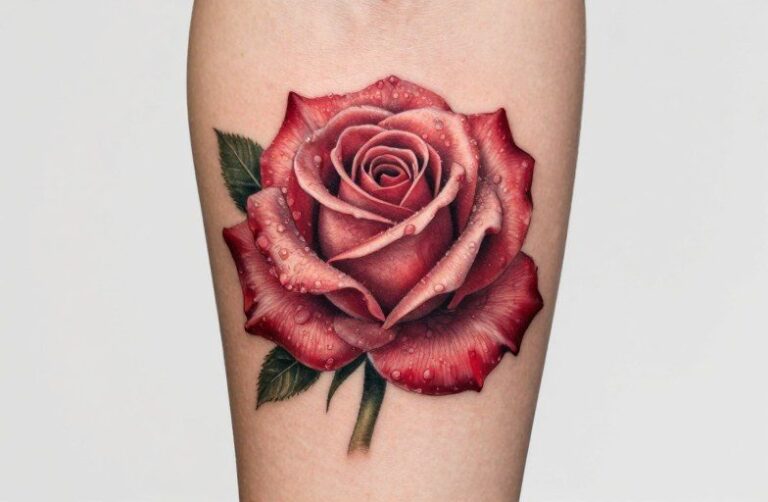
- Bold Neo-Traditional Roses in a Small Scale
- Tiny Rosebuds Along the Ribcage
- Add an Initial Without Crowding the Flower
- Matching Small Roses for Couples
1Tiny Fine-Line Rose Tattoos on the Wrist
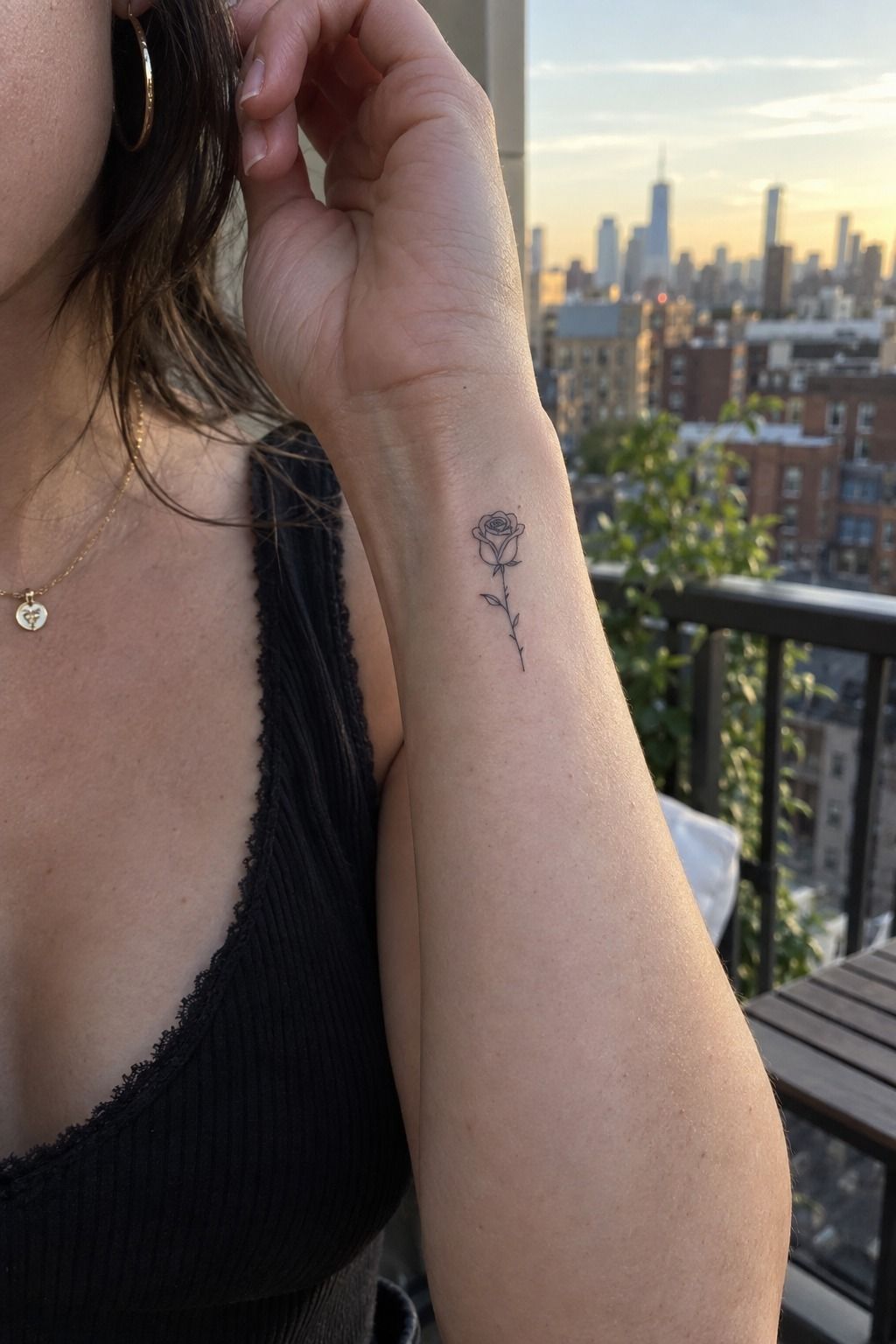
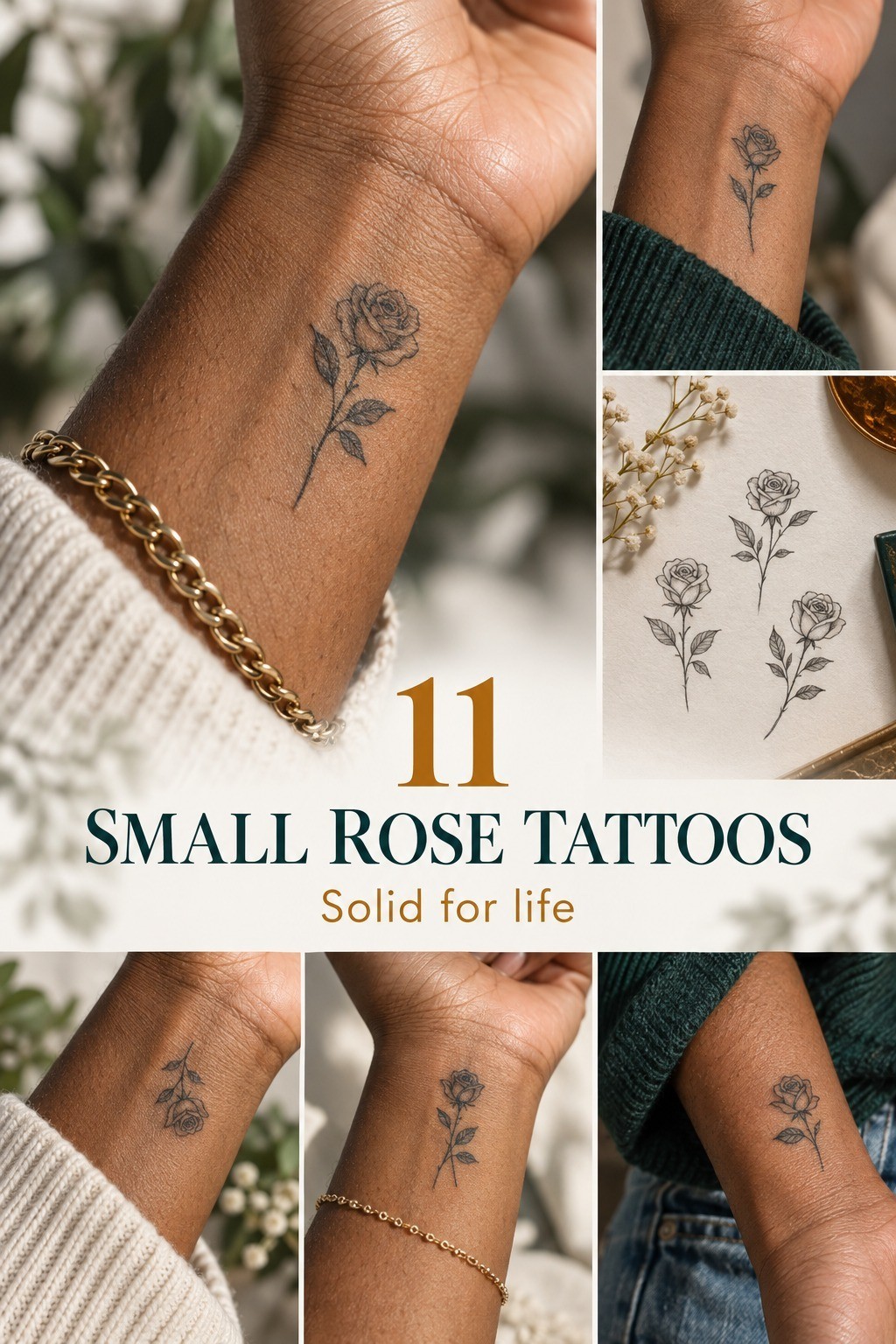
A wrist rose works best when the silhouette stays minimal and the petals remain clearly separated. Ask your artist for a single profile bloom with a narrow stem, crisp outer lines, and visible skin between each layer. That negative space gives the design a graceful finish.
For this placement, I’d choose a 3RL needle grouping and restrained black ink. You’ll want the rose slightly above the wrist crease.
Movement and friction are lower there. A delicate, understated flower can feel personal without demanding attention every time you reach for your phone.
Your artist might show you Dynamic Black or a greywash mix. I’d skip heavy shading here.
The wrist gets sunlight, movement, and contact with clothing. Fine-line work is expressive, but it isn’t indestructible.
Your aftercare instructions matter from the first wash.
Before booking, read this guide to what a rose tattoo represents. Its symbolic ideas can help you decide whether your flower should feel romantic, sacred, or quietly empowering.
2Blackwork Roses Behind the Ear
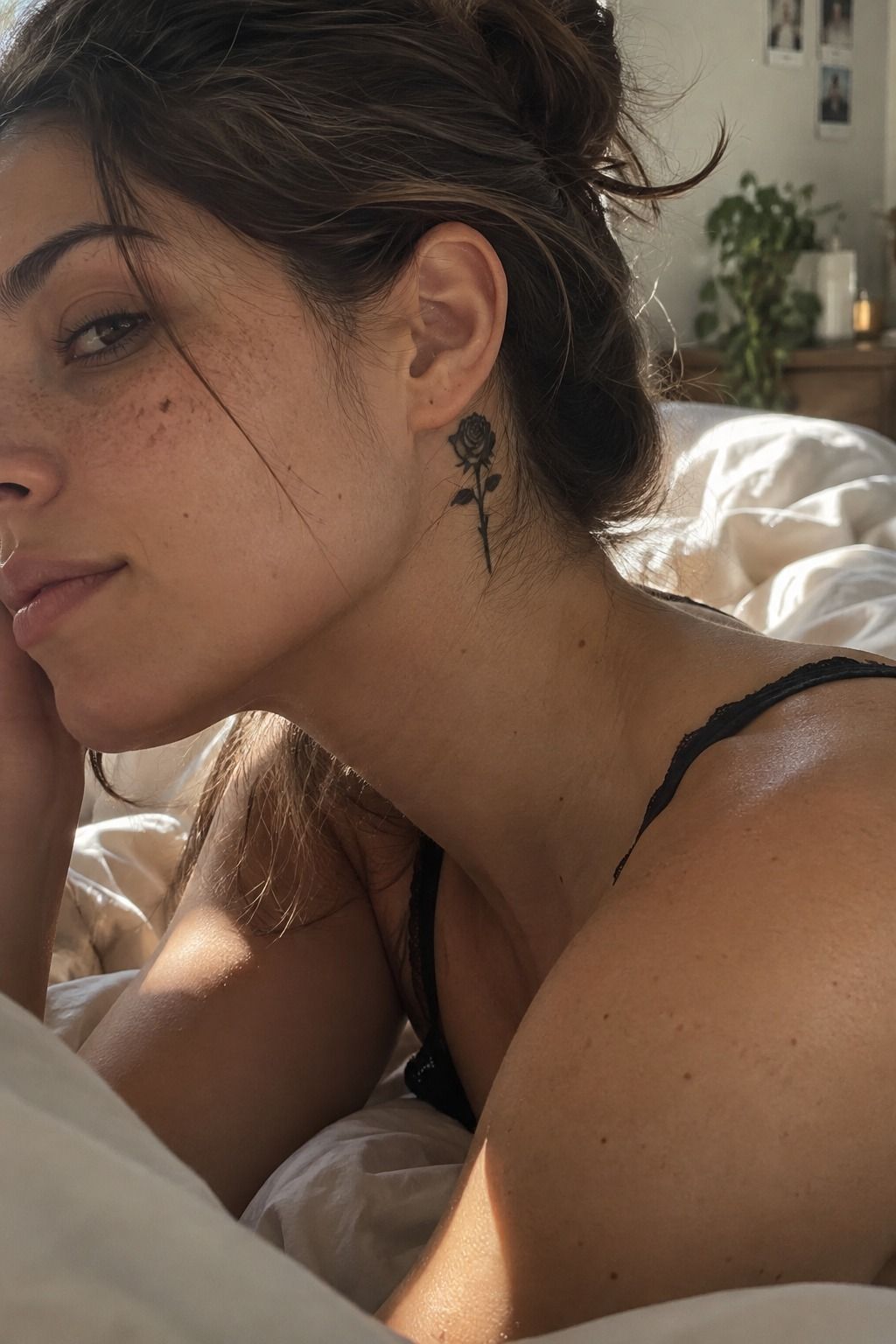
Behind-the-ear ink gives a small rose an edgy frame.
3Could a Finger Rose Stay Clear?
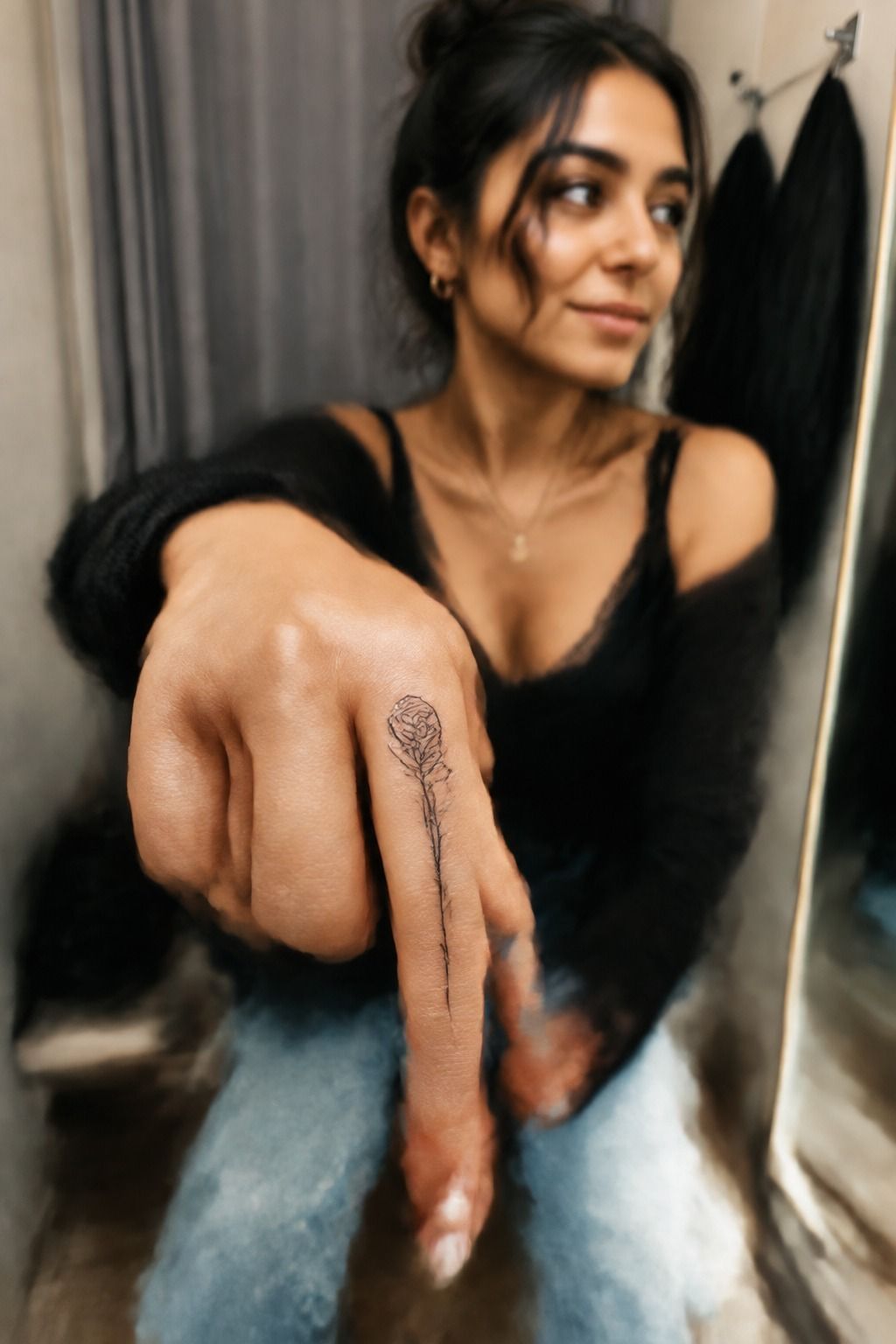
Finger roses need a realistic conversation about fading. The design can be dainty, meaningful, and wonderfully visible. Frequent washing, friction, and sun exposure may soften the lines faster than they would on your forearm.
You’ll want a compact profile rose with a strong contour and little interior detail. A single-needle black ink design can look polished on the side of the finger.
I’d skip a front-facing bloom here. A circle of tiny petals can become muddy in a small footprint.
Your artist may suggest a touch-up after healing. That isn’t a failure.
Finger skin can be stubborn. The result depends on placement, lifestyle, and how your skin holds pigment.
Choose a professional studio with healed photos, clean stations, and experience with hands.
Ask whether a touch-up appointment is included or priced separately. You’ll have a better idea of the long-term cost before committing. A tiny finger rose can be worth it when you understand the maintenance involved.
If you’re deciding between a rose and another bloom, browse these small floral tattoo ideas. You’ll see how stems, leaves, and open spaces change the feel of a tiny design.
4Delicate Watercolor Roses on the Ankle
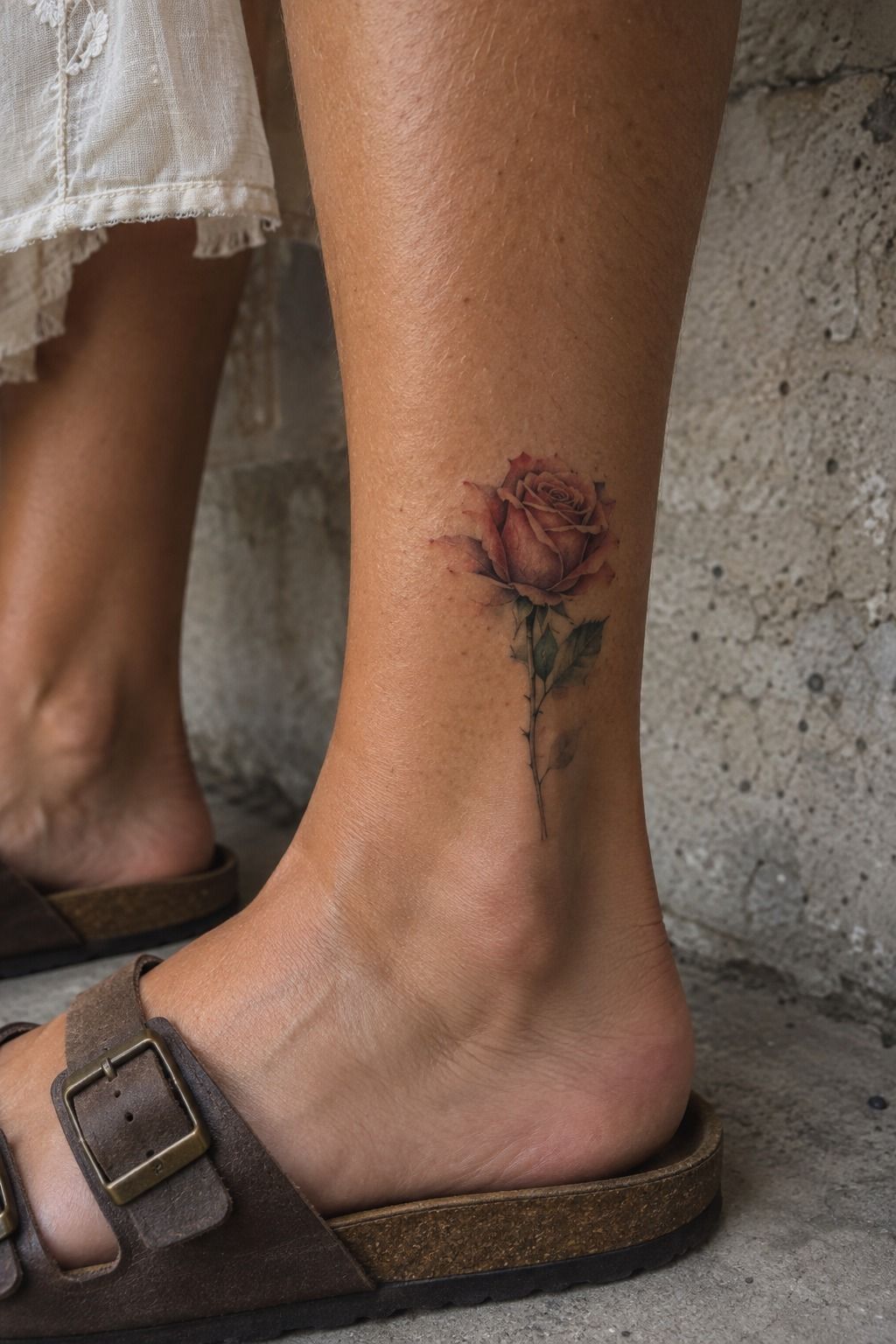
Ankle ink gives a watercolor rose a graceful vertical line. Place the flower just above the ankle bone, with a short stem beneath it.
The color may look vibrant and playful during the first weeks. It can settle into a softer, more ethereal finish later.
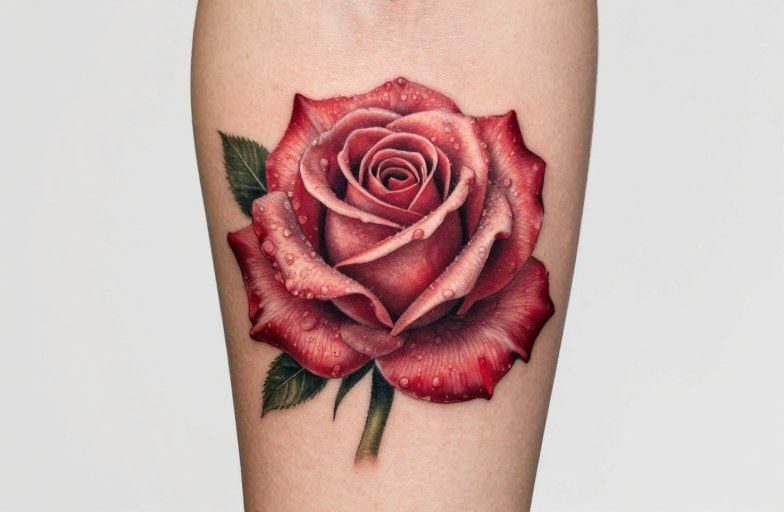
Ask about Eternal Ink watercolor shades or another professional pigment line your artist knows well. A rose in muted red, dusty coral, or deep berry can remain expressive without a heavy black border.
I’d avoid pale yellow directly over the ankle bone. Subtle pigment may be harder to read there.
Ankle tattoos can feel sharp around the ankle bone. Socks may irritate the area while it heals.
Wear loose footwear. Wash gently. Keep the tattoo away from pools and prolonged sun exposure during surface healing.
Complete healing often takes two to three months.
You can compare symbolism and color choices in this guide to watercolor rose tattoo meanings. It’s useful if you want the piece to feel romantic, whimsical, or quietly personal.
5Meaningful Collarbone Rose Tattoos
A collarbone rose can feel feminine, polished, and intimate.
6Frame a Rose with Geometric Linework
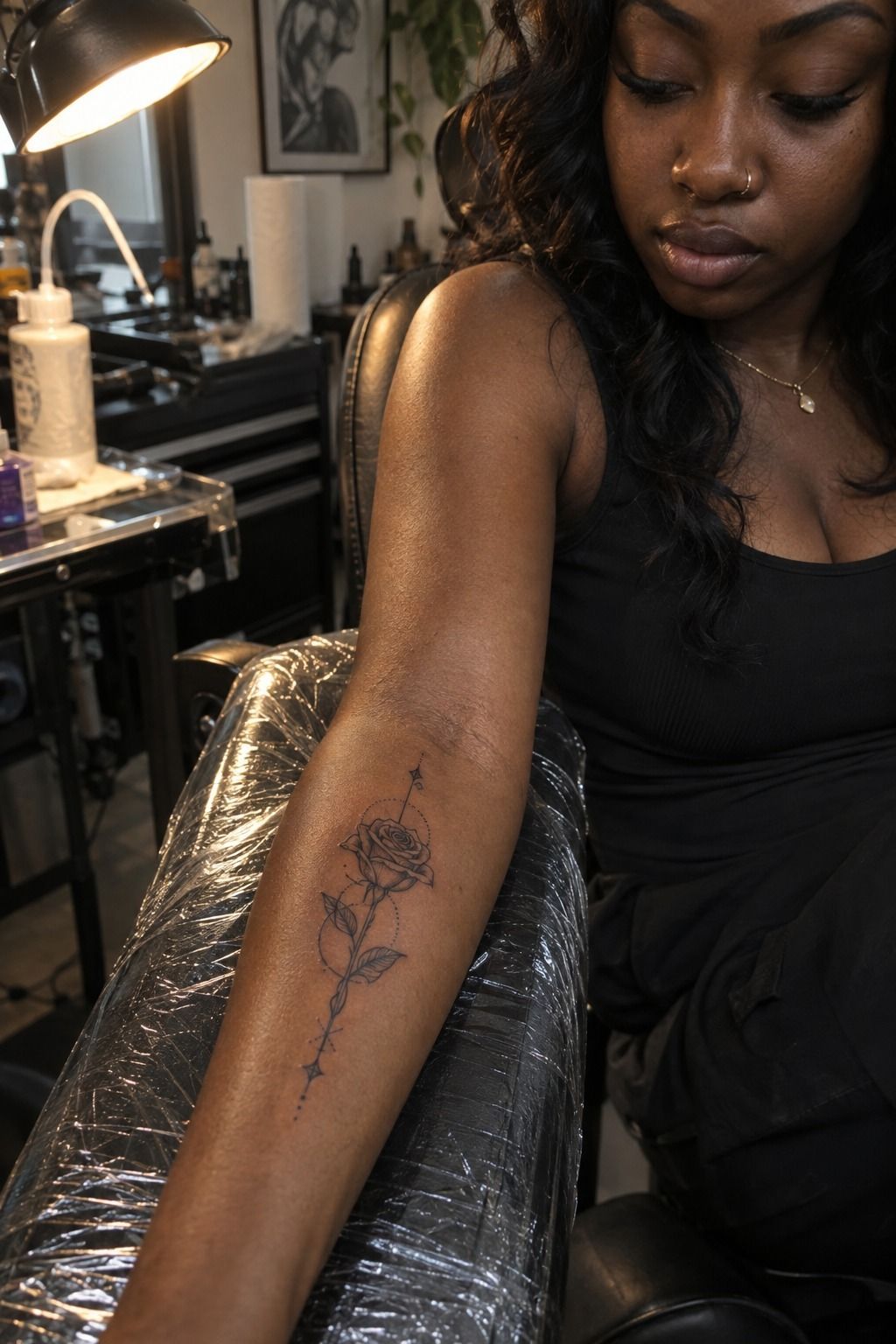
Geometric linework gives a small rose a sleek, modern, and slightly daring personality. Place the flower in profile.
Then frame it with a triangle, fine circle, or measured arc. The geometry should support the petals. It shouldn’t trap them inside a busy shape.
Ask about 4RL black ink linework for the outer rose. A thinner grouping can handle the geometric accents.
I’d skip perfect symmetry if your flower is organic. A small irregularity can make the tattoo feel more expressive.
The forearm is one of the more tolerable placements for many people. It gives your artist enough working area to protect the negative space. Your tattoo will still face ultraviolet exposure, so sunscreen matters after healing.
Black ink with sensible spacing tends to age more clearly than an overworked miniature.
If you’re drawn to unusual symbolism, compare this style with unique flower tattoos for women. Framing, direction, and line structure can make a familiar flower feel entirely personal.
7Botanical Linework with One Strong Stem
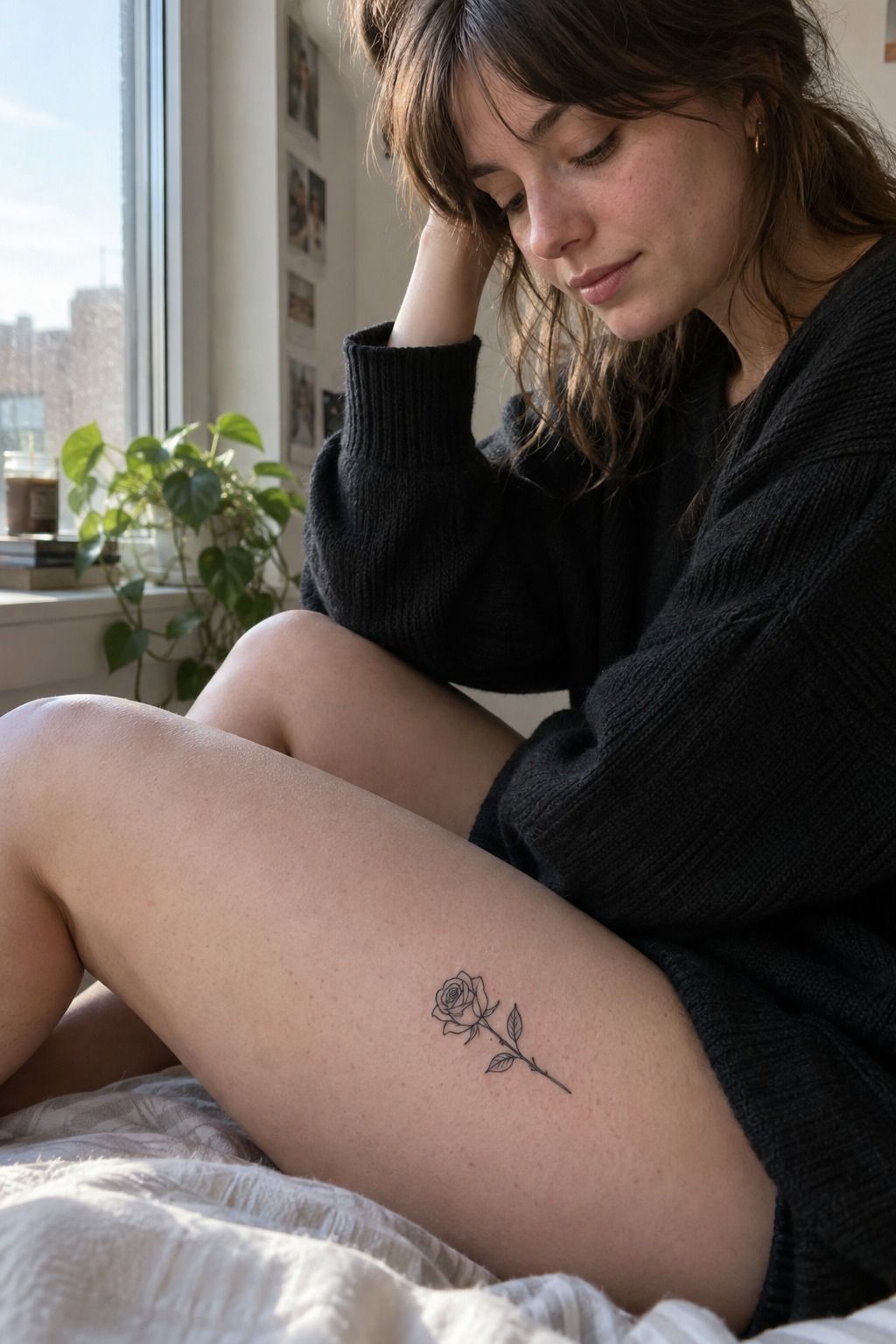
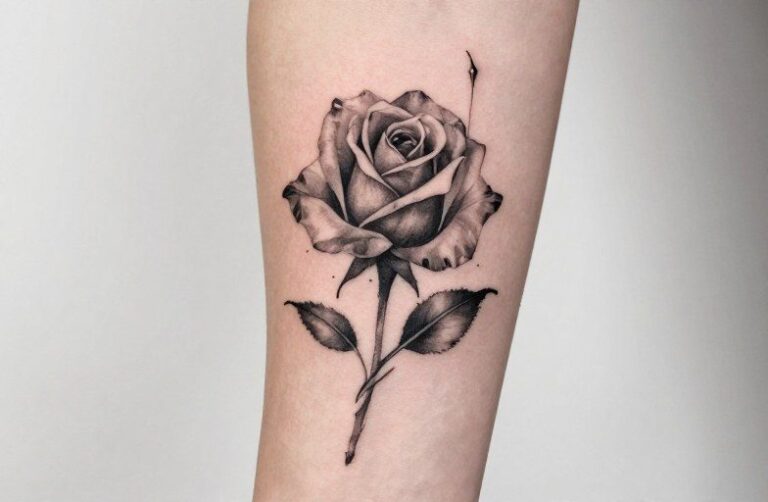
Botanical linework can make a small rose feel organic, classic, and quietly sophisticated. Instead of stopping at the bloom, extend it with one narrow leaf, a thorn, or a curved stem. The stem can follow the thigh or forearm.
Use 3RL botanical linework for the rose. A slightly stronger grouping can define the outer contour.
Keep the leaves open. Avoid filling every vein.
Too much detail may look impressive in the stencil, then lose clarity after years of movement and sun.
The thigh placement offers more skin and is often more tolerable than ribs, feet, or hands. Your artist can make the flower slightly larger without losing the small-tattoo feeling. That extra area is valuable if you want a symbolic rose with a readable stem.
Before booking, compare healed examples of botanical work. Fine leaves can soften into dark marks when they’re placed too close together. Open spacing gives each line a better chance of staying distinct.
If you’re choosing between one flower and a small cluster, start with small floral tattoos. You can study how different stem lengths change the balance before committing to your own design.
8Bold Neo-Traditional Roses in a Small Scale
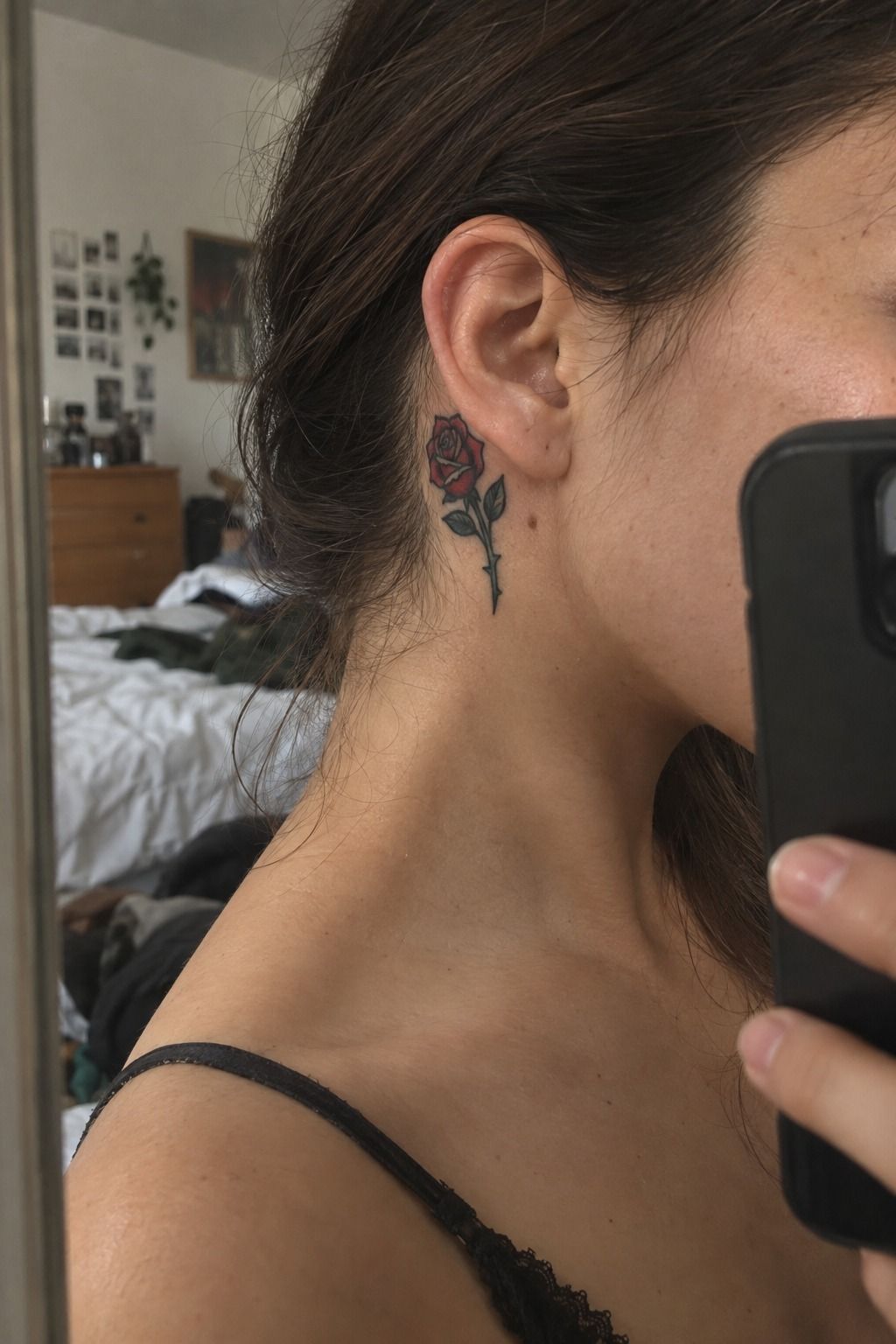
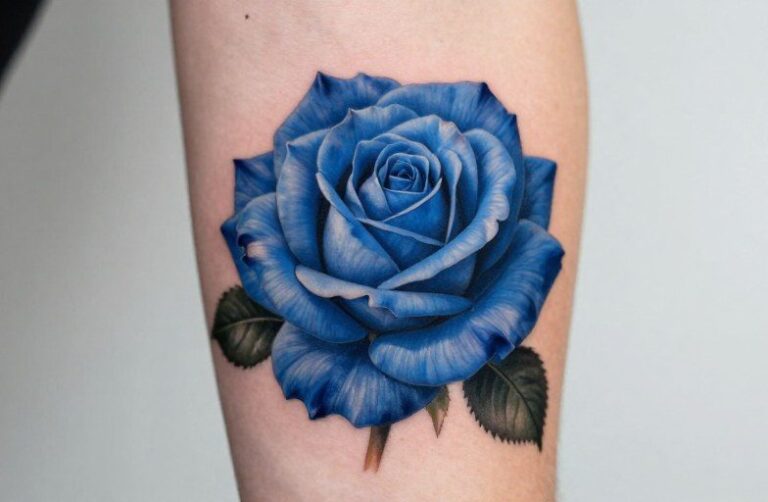
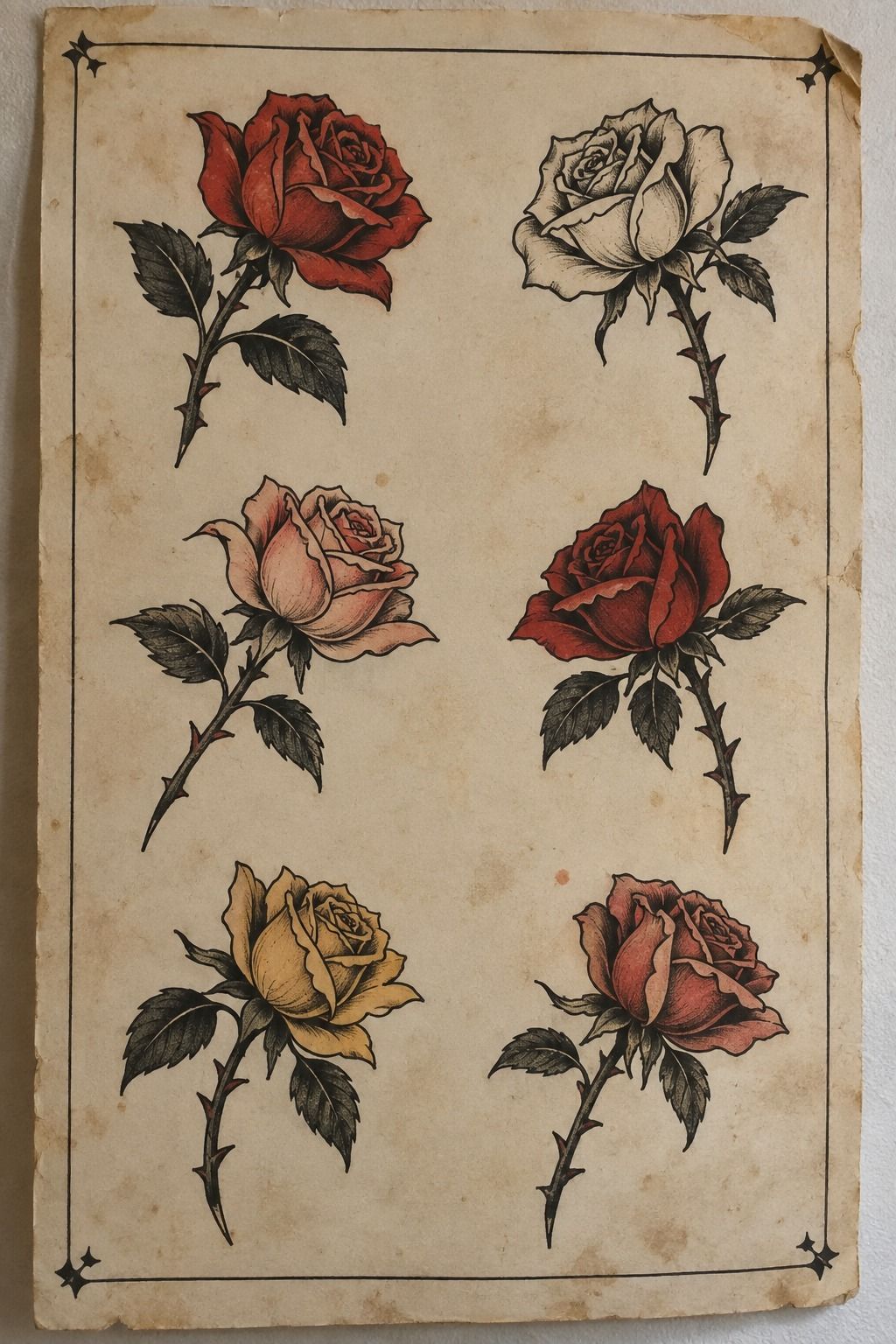
Neo-traditional roses bring bold outlines, saturated color, and a vintage attitude to a smaller format. Behind the ear, the style can feel fierce and iconic. You’ll need to simplify the petals so the tattoo doesn’t become a dense patch of color.
Ask for black lining with saturated crimson ink and one controlled highlight. I’d skip pale micro-details inside the bloom. They may disappear first.
The strongest neo-traditional rose usually has a clear outer shape, one shadow family, and a confident leaf.
This style can be more forgiving than ultra-fine linework because the neo-traditional structure gives the image visual weight. You’ll still need to respect the small scale, especially behind the ear.
A bold tattoo doesn’t mean a huge tattoo. It does need enough area to remain readable.
The behind-the-ear placement can make the rose feel personal while keeping its silhouette compact. Talk with your artist about hair, glasses, and friction before settling on the final size.
For another symbolic direction, look at yellow rose tattoo meanings. Yellow can feel bright and playful. Red or burgundy creates a more romantic mood.
9Tiny Rosebuds Along the Ribcage
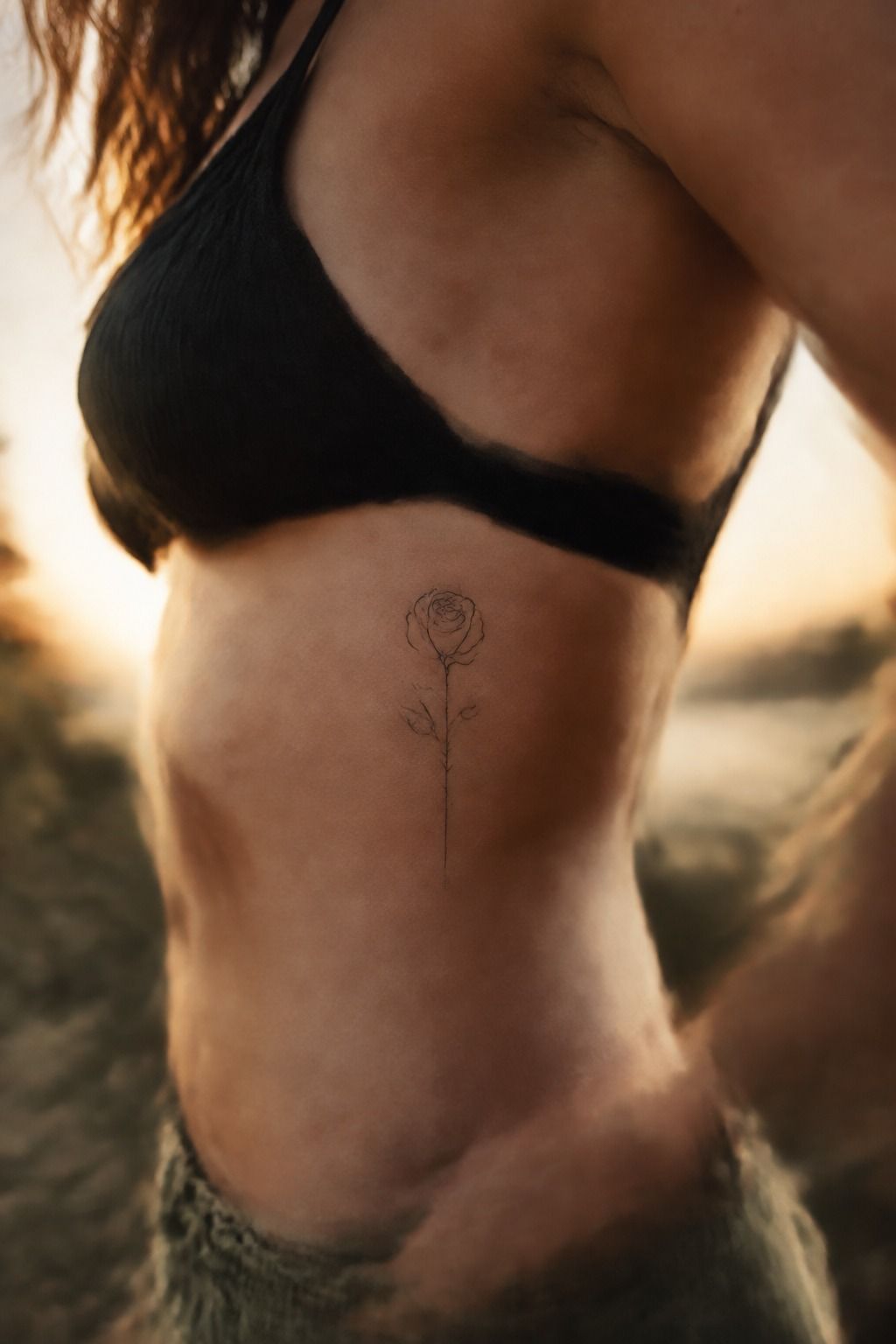
A rosebud on the ribs feels understated, personal, and slightly haunting. The closed bloom takes fewer lines than an open rose. That makes it a smart choice for a tiny design.
Angle the stem with the ribcage rather than pointing it straight upward.
Choose fine black ink with a short tapered stem and one or two leaves at most. I’d skip dense shading.
The ribcage placement has limited visual width. A small open gap in the bud can keep the design crisp.
Ribs can be one of the more painful areas. The skin sits close to bone and moves with your breathing.
Your artist may work in shorter passes. You might appreciate loose clothing afterward.
Surface healing often takes two to three weeks. Deeper layers can continue settling for two to three months.
Ask about the studio’s healing timeline before you book. You’ll need to plan around exercise, tight clothing, swimming, and sleep position while the skin recovers.
If you want the rose to carry an unusual message, explore upside-down rose tattoo meanings. Direction can change the emotional read without adding size or ornament.
10Add an Initial Without Crowding the Flower
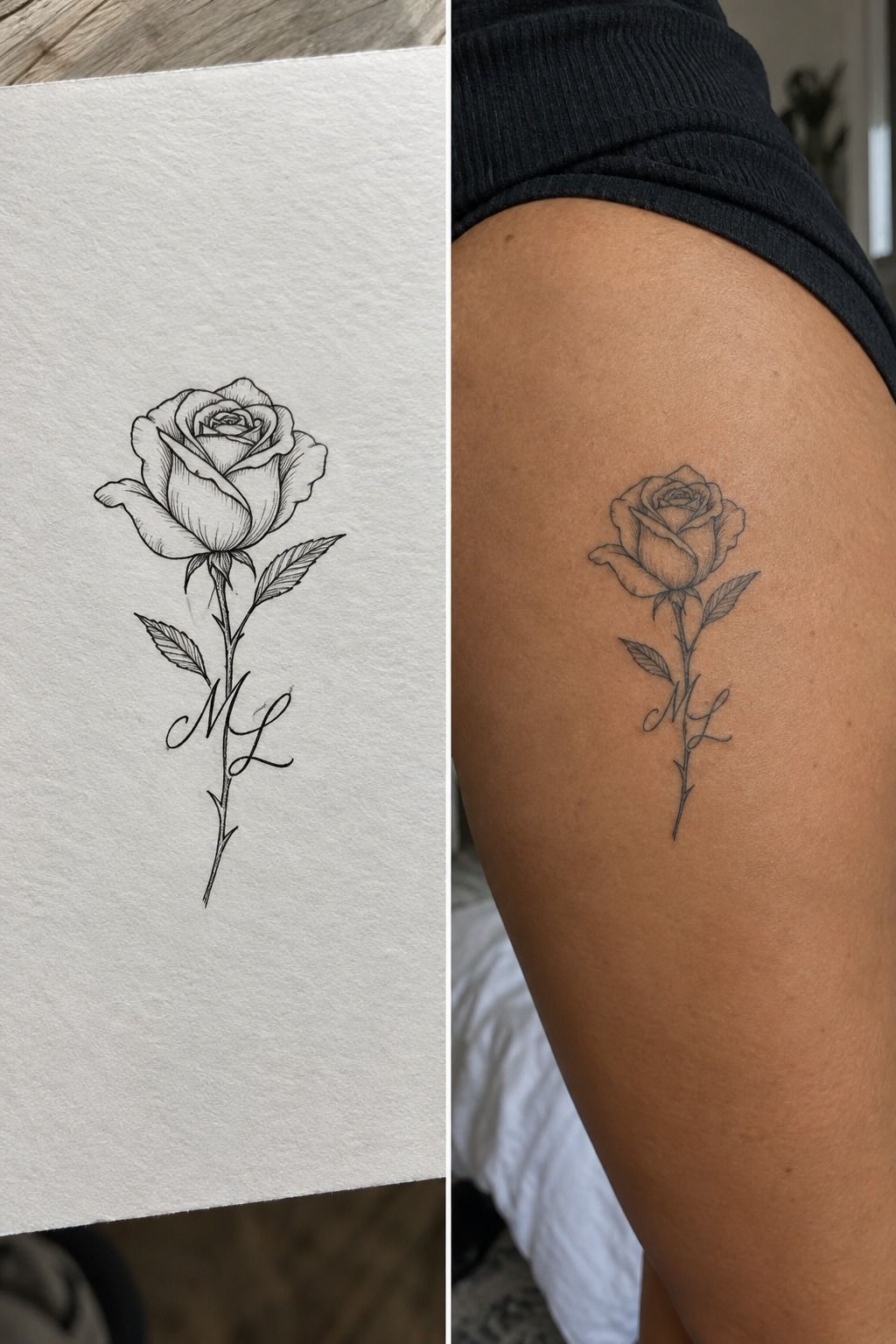
Adding an initial gives a small rose an elegant, personal anchor. The cleanest version pairs a profile flower with one letter beneath the stem or beside a single leaf. The lettering must be large enough to remain legible.
For the stencil, ask to see thermal transfer tattoo paper beside a healed reference design. That split view helps you notice how lines change after the skin settles.
I’d choose a simple serif or restrained handwritten letter. Elaborate loops can crowd the bloom.
Your artist should test the spacing directly on your skin. A rose and initial may look balanced on white paper, then shift across the curve of your arm, ribs, or collarbone. If the letter has emotional weight, choose a design that will still feel right years from now.
Ask whether serif lettering will hold at your chosen size. Tiny counters inside letters can close during healing, especially when the rose already contains fine marks.
For a symbolic alternative, compare your idea with white rose tattoo meanings. A pale reference palette can inspire a clean black design, even if you decide against color.
11Matching Small Roses for Couples
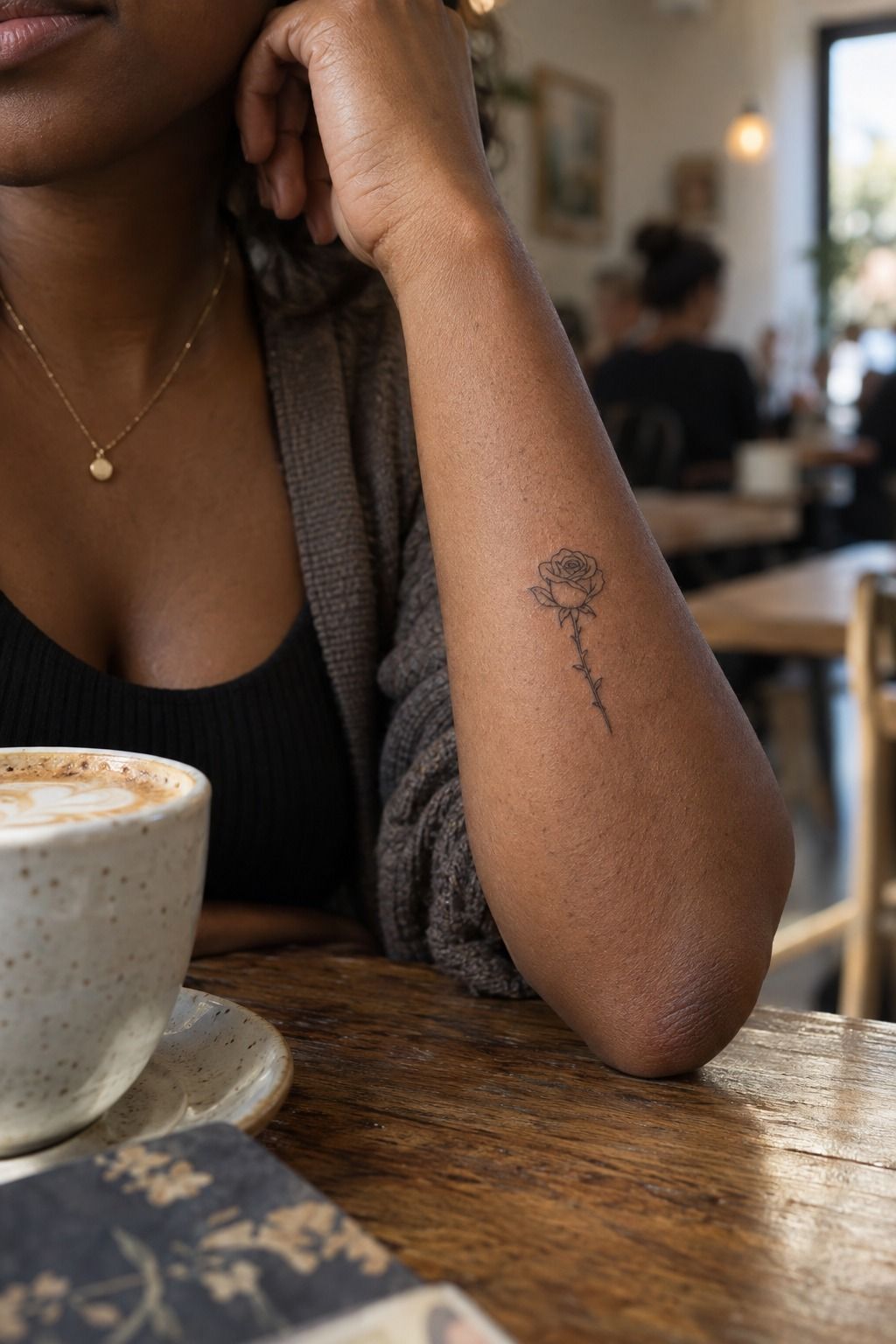
Matching roses work best when they share a visual language without being exact duplicates. You and your partner might choose the same profile bloom.
Then vary the leaf direction, stem length, or placement. Each piece can still suit the wearer’s body.
Ask for professional black liner ink and a stencil made from the same master drawing. I’d skip areas that fade quickly unless you’re comfortable with future touch-ups. Inner forearms are often practical.
The skin gives an artist enough area for clean separation.
You’ll also want to agree on scale before your appointments. One person choosing a tiny rose and the other choosing a much larger version can make the matching idea feel accidental. Talk through pain, visibility, work rules, and aftercare instructions before you book.
If your shared meaning is tied to color, read about what a rose tattoo represents. You can choose a common symbol while giving each tattoo a slightly different, personal edge.
A Quick Budget Check Before You Book
A typical small tattoo may cost about $100 to $300 in the United States. Some studios have minimums around $50 to $100.
Hourly rates may sit near $100 to $250. Your artist, region, style, and placement will change the quote.
That range is useful for a first budget. It isn’t a promise.
A delicate finger rose may take less time than a colorful neo-traditional piece. A reputable artist may charge more because the value includes a small tattoo session, consultation, skill, and healed-work experience.
Ask what the studio minimum includes. Check whether a touch-up is included.
Confirm the deposit, cancellation policy, and minimum charge. A slightly higher price can be worth it when the portfolio shows consistent healed results.
The hourly rate doesn’t tell you everything. Ask whether your quote includes setup, stencil preparation, design changes, and a follow-up review. A clear estimate is easier to compare than a low starting number.
For more planning ideas, compare these unique flower tattoo designs. You may find a style that gives better value at the same size.
Placement Changes the Price
Placement affects more than pain. It can change the time, scale, detail, and long-term maintenance of your tattoo.
A wrist rose may need simple lines. A thigh rose can support a longer stem and more open leaves.
Finger and hand tattoos often need extra discussion because they fade faster. Ribs may require breaks. The ankle can make color application slower.
A forearm usually gives the artist a steady surface and clear access.
Think about visibility too. If you work in a setting with appearance rules, a hidden collarbone or rib placement may offer better long-term value. If you want to enjoy the design daily, an inner forearm may be worth the cost.
A rib placement can be meaningful, but it may also demand more patience during the appointment and healing period. Ask how the design will follow your movement before approving the stencil.
That small decision matters! Your favorite design should fit both your body and your routine.
What Healed Photos Tell You
Fresh tattoos look sharp because the skin is still irritated and the pigment is new. Healed photos show the real result. Look for clear outer lines, open petal shapes, and color that still has structure.
A healed tattoo portfolio is one of the best things to review before booking. Ask how old the photos are.
Check whether the lighting is natural. Notice whether the artist shows small designs at full size.
You don’t need every line to remain razor-thin. Some softening is normal.
You do want the rose to keep its silhouette and emotional character. That is the real test of value.
Ask to see work photographed in natural light, without heavy editing. Strong contrast and filters can hide softened lines, patchy pigment, or details that have merged.
If your artist only displays fresh work, ask direct questions. A professional should be comfortable explaining how their tattoos age. Good tattoos reward patience!
Blackwork or Color?
Blackwork usually offers the clearest aging path for a small rose. The contrast is strong. The shape remains readable.
Color can feel more vibrant and expressive, but pale tones may soften sooner.
A professional pigment line matters more than a trendy color name. Ask which shades your artist trusts after healing. Red, burgundy, and deep berry pigment often create a stronger result than very pale yellow or white.
Your personal style matters too. A black rose can feel raw, fierce, or symbolic.
A colorful rose can feel playful, romantic, or whimsical. Neither choice is automatically better.
The right choice depends on the mood you want to carry.
Check rose tattoo meaning before deciding. Symbolism can help you choose between a dark, classic design and a brighter, more expressive one.
The Touch-Up Question
A touch-up can restore small areas that softened during healing. It can also refine a line that never settled evenly. That’s common with fingers, hands, feet, and other high-friction placements.
Ask whether the studio includes one follow-up appointment. Some artists offer a free touch-up within a set period.
Others charge based on time and materials. Put the answer in writing before you pay a deposit.
Don’t judge the tattoo too early. Your skin needs time to settle.
Peeling, dullness, and small gaps can appear during healing. Wait until the artist says the surface is ready for review and confirms the healing timeline.
A touch-up can be worth it when the structure remains strong. It shouldn’t be an excuse to repair a design that was overcrowded from the start. Follow the studio’s aftercare sheet before deciding anything needs correction.
A Studio Visit Worth Paying For
A good consultation should cover size, placement, line weight, color, pain, healing, and future changes. You should leave knowing what will happen next. If you’re still confused, ask more questions.
Look for single-use needles, clean surfaces, sealed supplies, and clear aftercare instructions. The studio should feel professional from the first message. You shouldn’t have to chase basic answers.
Bring references, but stay open to adjustments. Your artist may change the stem angle or simplify a petal group.
Those changes can protect the design. A skilled artist knows when a tiny detail will age poorly.
Check that sealed supplies are opened or prepared correctly during the appointment. Hygiene should be visible, ordinary, and easy to understand.
The cheapest quote isn’t always the best deal. You’re paying for a permanent mark. Choose the artist whose healed work matches your goal.
How I’d Compare Two Rose Designs
I’d place both designs side by side. Then I’d ask four questions.
Is the silhouette clear? Does the placement suit the shape?
Will the smallest details survive? Does the design still feel personal without explanation?
I’d also compare the total cost. One rose may have a lower starting price but need a difficult placement or future touch-up.
Another may cost more and offer better spacing from day one. That difference can matter.
Use a side-by-side stencil comparison when possible. Look at both designs at the same size and under the same light. A design that wins on paper may not work as well on your chosen body area.
Compare the total quote, not just the session price. Include deposits, touch-ups, travel, and any design consultation costs before making your choice.
If you’re choosing between a rose and another flower, browse unique flower tattoos for women. A comparison can reveal which shape suits your body best.
I’d choose the design that still feels meaningful after the trend fades. That kind of value is harder to measure, but you’ll notice it every day.
The Fine-Line Margin Rule, the Skin-Break Rule, and the Placement Rule
I’ve changed my mind about small tattoos after watching healed work in natural light. A design can look intricate and polished in a fresh studio photograph, then lose its quiet structure when the lines sit too close together.
My first rule is the fine-line margin rule. Every small rose needs breathing room between its main marks.
The skin-break rule matters too. Untouched skin inside the flower, around the leaves, or between the outline and stem keeps the piece crisp.
Then there’s the placement rule. I’d choose your body area before choosing the final style. The wrist, ribcage, finger, ankle, and forearm all ask different things from the design.
Your most romantic idea may not be your most durable one. That’s fine. An understated forearm rose can be more successful than a delicate finger rose when longevity is your priority.
The part I’d never rush is the healed portfolio review. Ask for work photographed after the surface has settled.
Would you rather have a smaller rose that still reads clearly in five years, or a busier one that impressed you for ten days? For me, the answer is obvious.
What People Always Want to Know
How much does a small rose tattoo usually cost?
A small rose tattoo usually costs about $100 to $300 in the United States. A studio minimum may run around $50 to $100. Hourly pricing may fall near $100 to $250.
Your artist, region, placement, and detail level will decide the final price.
Are small rose tattoos a good idea for a first tattoo?
Yes, small rose tattoos can be an excellent first choice. You can select a manageable placement and a clear, meaningful subject. Forearm, thigh, or shoulder placements are often more tolerable than ribs, feet, hands, or sternum areas.
How do I choose a tattoo artist for small rose tattoos?
Review healed photos, clean linework, and examples in your preferred style before booking. A strong healed portfolio matters more than an edited fresh-tattoo photo. Confirm studio hygiene, consultation policies, and the artist’s experience with fine-line or color work.
How much do small rose tattoos hurt?
Pain depends on your body and placement. Ribs, feet, hands, and sternum areas are often more sensitive.
Forearm, thigh, and shoulder placements are commonly more tolerable. Your session may feel sharp, hot, or scratchy near bone.
How long does a small rose tattoo take to heal?
The surface usually heals in about two to three weeks. Complete healing can take roughly two to three months. Wash gently, use the recommended moisturizer, avoid picking, and protect the tattoo from direct sun and swimming while it heals.
What’s the best placement for small rose tattoos?
The forearm offers visibility and steady skin. The thigh gives your artist more area for leaves and open spacing. Your best placement depends on pain, work visibility, friction, and aging, so decide those priorities before choosing the final rose style.
Where I’d Start First
If I had to pick one, I’d start with the small blackwork rose behind the ear. Its bold outline gives a tiny design enough structure to stay readable.
The placement keeps it personal. Pin that idea for later and compare it with more unique flower tattoo designs before booking.