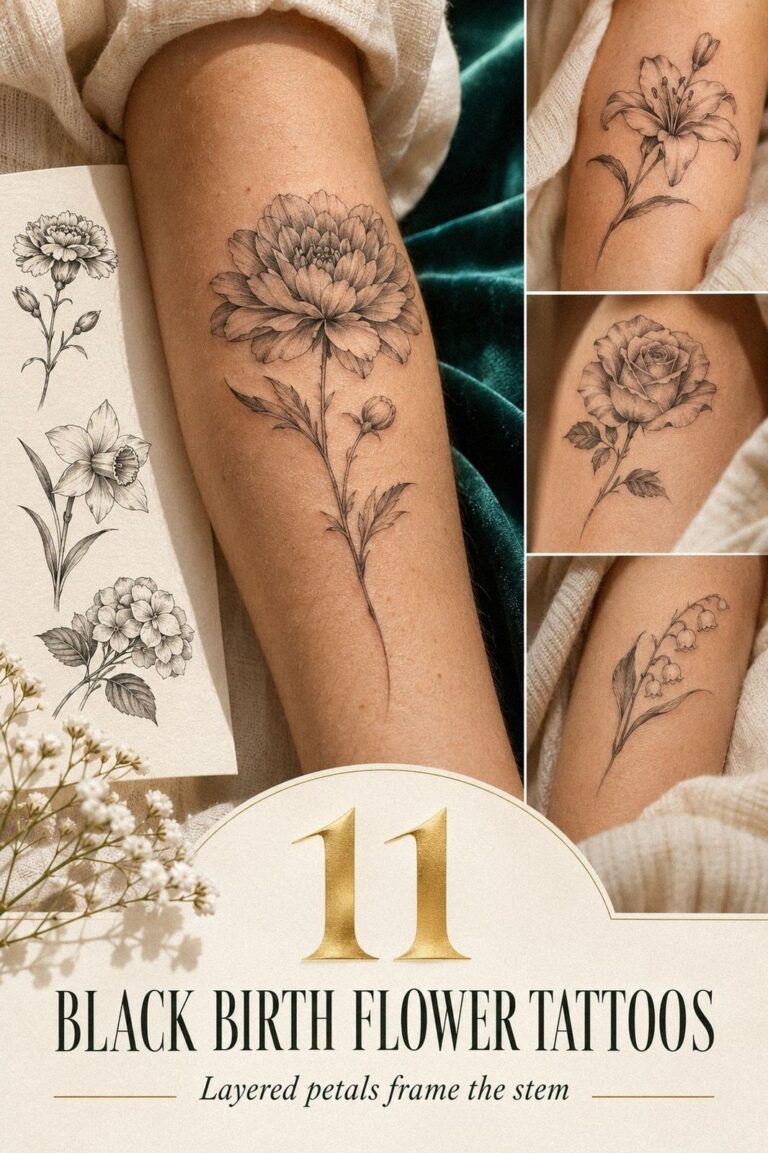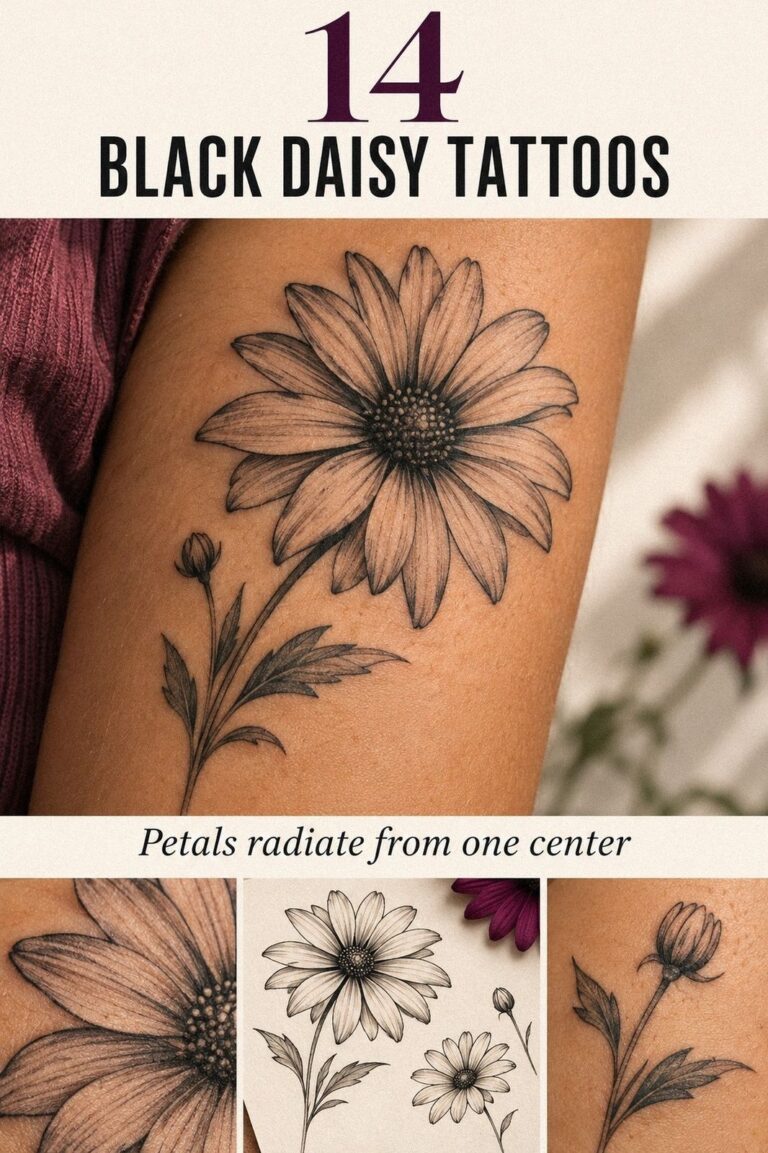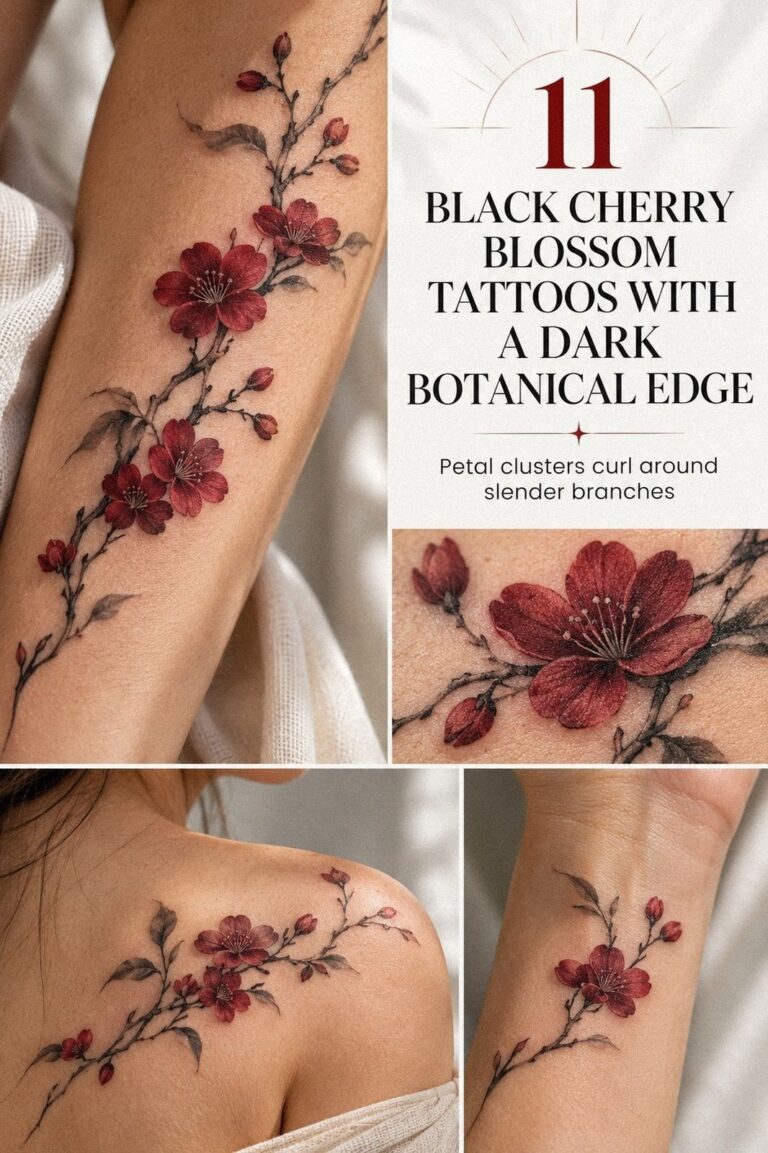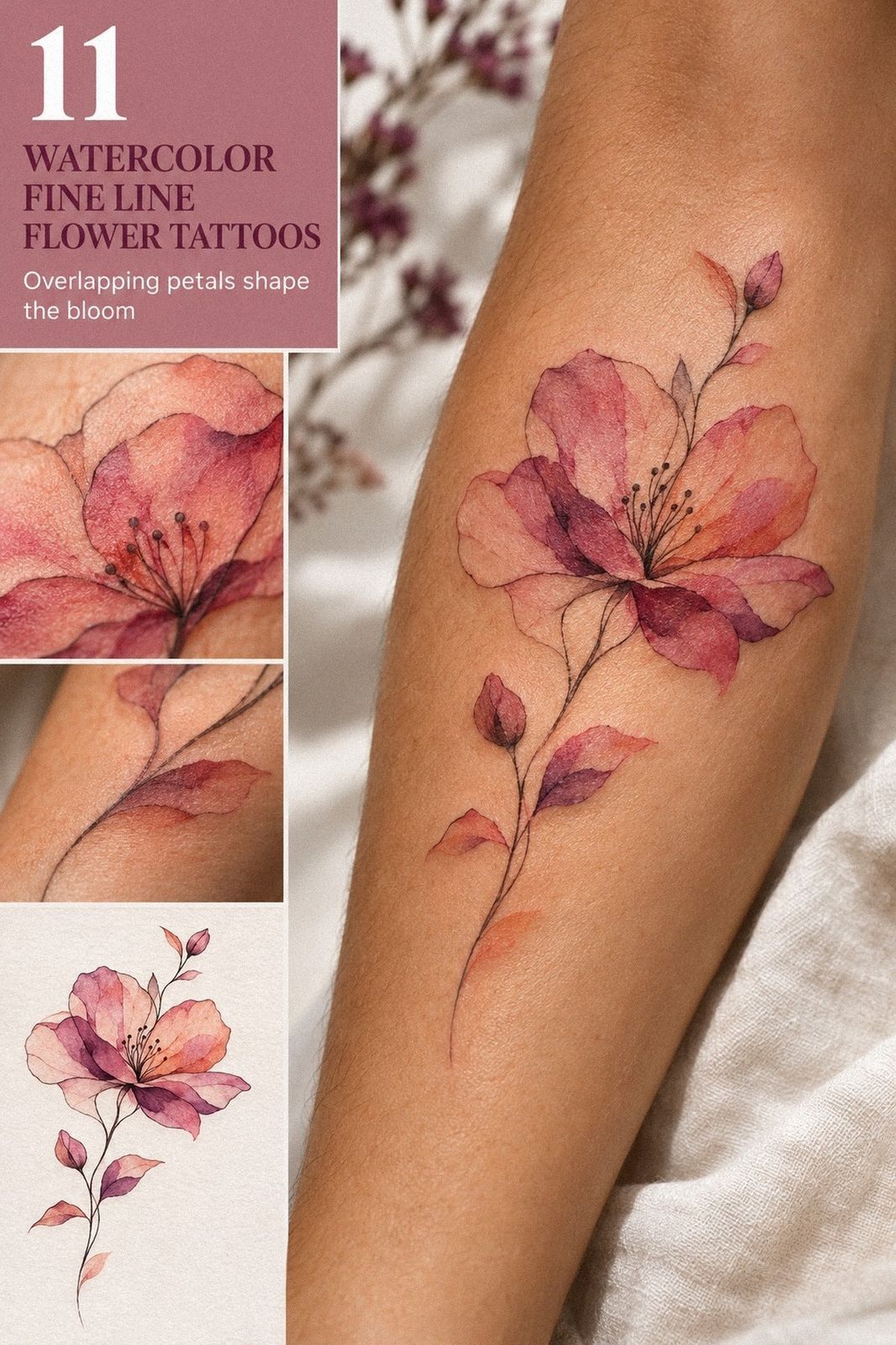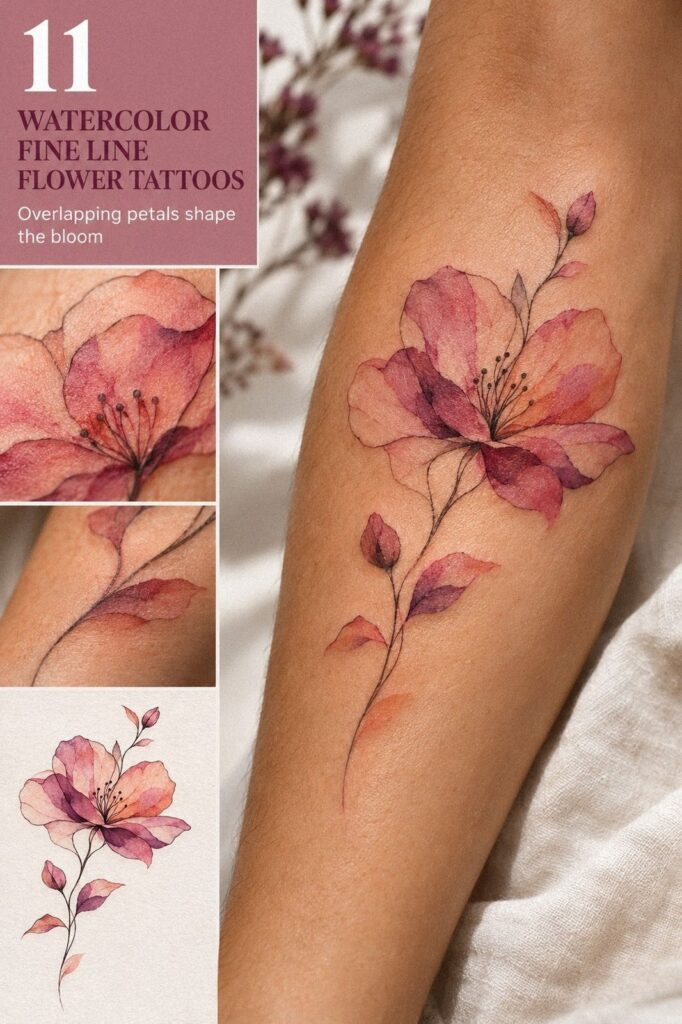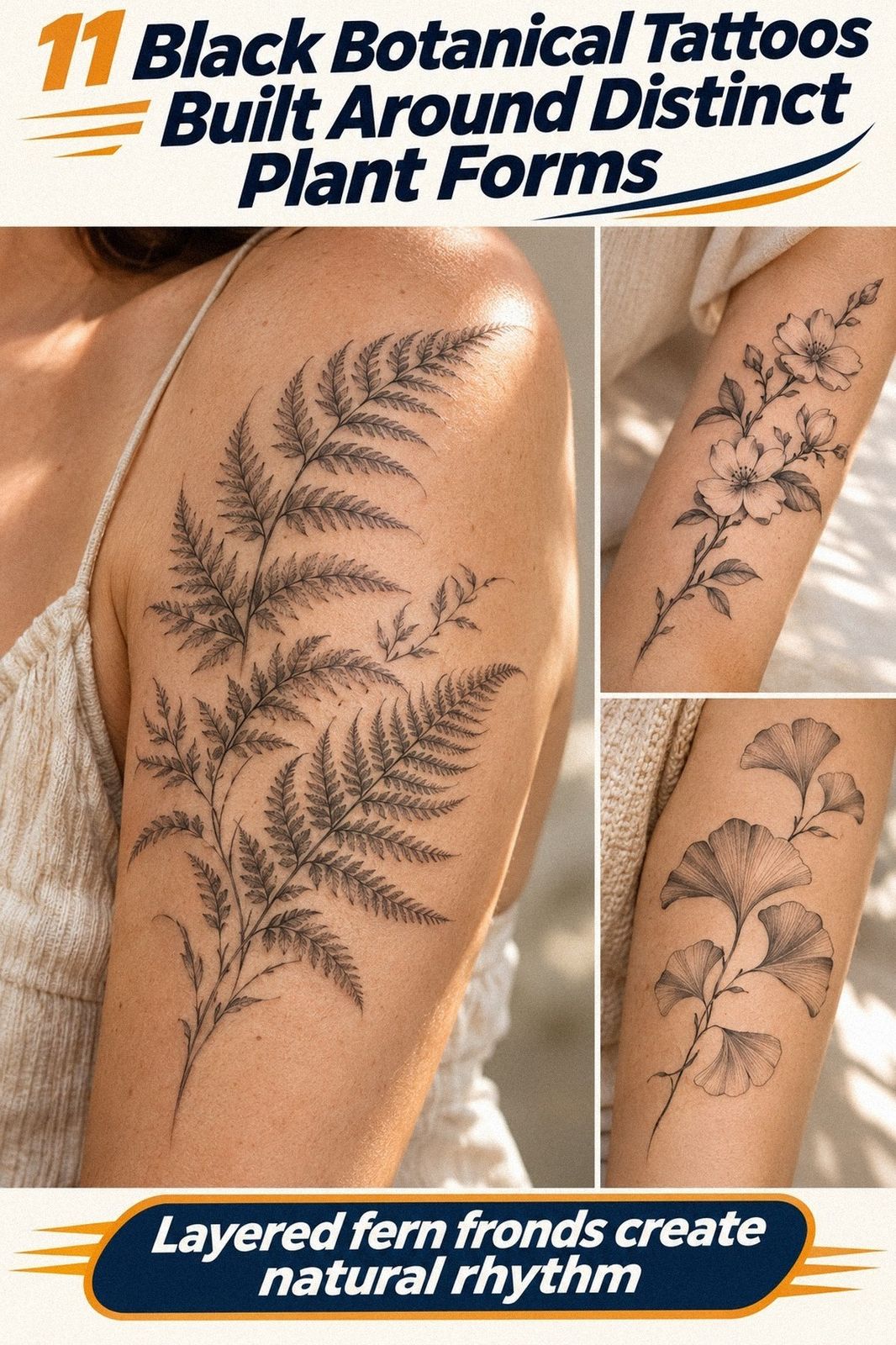
A black botanical tattoo can be a striking first tattoo when the design, placement, and line weight agree. The hard part isn’t finding an intricate flower. It’s choosing one that won’t blur into a dark knot after healing. I’ve seen people fall for an ornate reference, then regret its size or position. This guide keeps your first piece black ink, personal, crisp, and wearable.
- Start with a Striking Black Botanical Tattoo Concept
- Pick Delicate Linework for Small Black Botanical Tattoos
- Choose Symbolic Flowers for Meaningful Black Ink
My short version: choose one meaningful plant, leave enough negative space, and book an artist with healed work. A minimal tattoo can still feel iconic.
The best result isn’t always the most powerful one. It’s the one you’ll still call meaningful years from now!
Before You Start: Which Detail Has to Survive?
Start with three checks: meaning, placement, and longevity. Your tattoo should still read clearly when the skin is relaxed, the light is flat, and the lines have softened slightly. A botanical design can look sharp when fresh yet lose its identity if every leaf is the same size.
Look at your own skin and ask where you’ll see the tattoo most often. Your forearm gives you visibility and easier aftercare. Your ribs can look expressive, but they’re more sensitive.
Your calf gives a flowing silhouette and usually offers a more tolerable first session. You don’t need the most daring location to make the piece feel personal.
Your artist should show healed work, not only fresh work. A healed tattoo reveals whether fine lines stayed readable and whether black areas settled evenly. I’d rather choose a modest portfolio with crisp healed examples than a polished feed filled with fresh, saturated pieces.
Save three references, then stop collecting. One for the flower, one for the linework, and one for placement is enough. If you keep adding ideas, your concept can become ornate without becoming meaningful.
You’re building a tattoo, not a collage. That restraint is often worth it!
- Start with a Striking Black Botanical Tattoo Concept
- Pick Delicate Linework for Small Black Botanical Tattoos
- Choose Symbolic Flowers for Meaningful Black Ink
- Place Bold Botanical Stems Along Your Forearm
- Keep Negative Space Crisp Between Black Leaves
- Plan Intricate Black Botanical Tattoo Ideas
- Match Fierce Foliage with Your Body Shape
- Add Graceful Blooms to Unique Black Botanical Tattoos
- Balance Ornate Petals with Minimal Linework
- Prepare Skin for Sharp Botanical Tattoo Details
- Protect Expressive Black Ink Through Healing
1Start with a Striking Black Botanical Tattoo Concept

Begin with one clear subject. A stem, two leaves, and a small celestial accent can carry more personality than ten crowded flowers. Your first tattoo doesn’t need a full bouquet to feel iconic.
A single focal bloom gives your eye somewhere to land.
Sketch the concept at its intended scale on plain stencil paper. Hold it against your calf, forearm, or upper arm and look at it from several angles.
You’ll notice whether the stem follows your body or fights it. I’ve made the mistake of judging a design only from a flat drawing, and real skin changed everything.
Keep the main flower larger than its supporting leaves. Your eye needs one obvious entry point.
If every detail is equally bold, the tattoo becomes noisy. A sharp central bloom with understated stars feels more stylish than a busy botanical cluster.
If you want a smaller starting point, compare your sketch with these tiny botanical tattoo ideas. You’ll see how a minimal concept can stay personal without looking unfinished.
Don’t copy the reference exactly. Use it to notice what your own design is missing.
A first tattoo can be daring without becoming huge. If your budget is limited, ask whether a smaller version gives you better value or whether the design needs more scale to age well. The cheapest outline isn’t always the best cost decision.
2Pick Delicate Linework for Small Black Botanical Tattoos

Fine line works best when you respect its limits. A delicate outline can look romantic, but it still needs enough strength to remain readable after healing.
When Fine Line Needs More Breathing Room
Fine line doesn’t mean every mark has to be hair-thin. Your artist may use a slightly stronger needle grouping for the outside contour and reserve lighter marks for interior texture. That contrast keeps the flower readable.
A graceful outline can carry more emotion than a dozen interior scratches. If you want a romantic or ethereal effect, ask where the skin should remain visible. Open space creates rhythm and lets the tattoo move with your body.
Don’t choose an artist by price alone. A low-cost appointment can become expensive if you need a correction or cover-up later. Ask for healed examples and compare the total value of the consultation, skill, placement advice, and aftercare guidance.
3Choose Symbolic Flowers for Meaningful Black Ink

Choose the flower because its meaning belongs to you, not because it’s trending. A single stem feels symbolic and personal because it leaves space around the form. Your tattoo can say something quietly without spelling out an entire life story.
Research the flower’s shape before you choose its symbolism. A single-stem botanical tattoo needs a bloom with a recognizable outline.
A rose, poppy, iris, or wildflower can work, but each asks for a different balance of petals and leaves. Your artist can simplify the structure while keeping its identity.
I’d avoid assigning a grand meaning to a flower you don’t genuinely like. A sacred symbol won’t feel powerful if you chose it only because a search result called it meaningful. Ask yourself what memory, person, place, or promise you’d still associate with it in five years.
For darker symbolism, review this black rose tattoo meaning guide and this realistic black rose tattoo guide. A black rose can feel romantic, haunting, or empowering depending on its shape and surrounding space. Let your interpretation lead the design.
If you’re comparing a meaningful tattoo with a trendy one, consider the long-term value. The strongest choice usually has a personal reason behind it, not just a stylish silhouette!
4Place Bold Botanical Stems Along Your Forearm

The forearm is one of the most practical places for a first tattoo. It gives a bold botanical stem room to follow the body without demanding an oversized design.
Placement Is a Daily Decision
A tattoo’s placement changes how it feels to live with. Your forearm may give you an empowering reminder every morning, while a hidden placement may feel more intimate. Neither choice is more meaningful by default.
Test the stencil while standing, sitting, bending, and turning your arm. Your skin moves. A temporary stencil should look natural in those positions before any permanent work begins.
If you’re unsure, check the stencil in a mirror from normal viewing distance. Don’t rely on magnification. The design has to work at the distance you’ll actually see it.
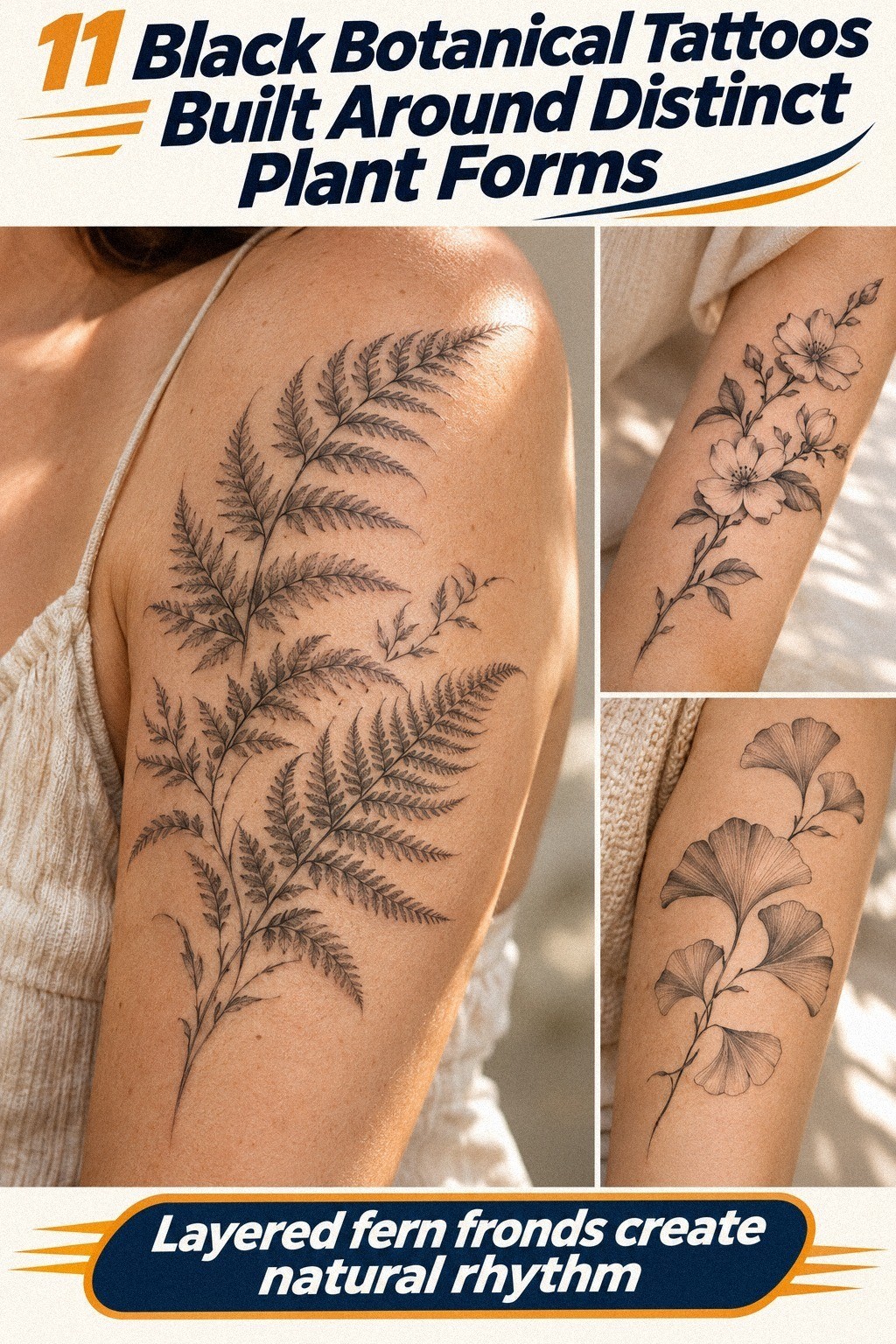
5Keep Negative Space Crisp Between Black Leaves

Negative space is the skin left visible between leaves, petals, and stems. Your artist should treat that open skin as part of the design, not as leftover space. It’s what keeps a bold shape from turning into a dark patch.
Use a simple rule called the Black Leaf Gap. Every leaf should have a visible edge, and neighboring shapes shouldn’t merge at the narrowest point. You don’t need identical gaps, because natural variation makes the piece feel organic.
You do need enough separation for the forms to remain crisp after healing.
I’d skip a dense cluster if your reference only looks good when enlarged. A bold leaf beside a dainty petal creates contrast. Five overlapping leaves create a heavy patch.
Your tattoo should have a place for your eye to rest, especially if you’re choosing a first piece.
Print the sketch in black and white, then reduce it until it’s close to your intended size. If the leaves become one mass on matte paper, they’ll probably need editing. Compare more examples in this delicate botanical tattoo collection, where spacing does much of the visual work.
Good spacing is worth protecting even when it raises the cost slightly. A larger, clearer design often offers better long-term value than a smaller version that loses its structure.
6Plan Intricate Black Botanical Tattoo Ideas

Intricate doesn’t mean crowded. Your artist can suggest small veins, seed shapes, or a second stem, but each mark should support the plant’s identity. The design needs a visual hierarchy before it needs extra decoration.
Build detail in layers. First choose the outer silhouette.
Then add the main stem. Only after that should you decide whether the flower needs interior texture. This three-layer structure keeps your plan from becoming a pile of attractive details with no direction.
Your artist may recommend a slightly larger size for intricate work. Listen to that advice. A black pigment wash can soften as the tattoo heals, and fine interior marks need room to remain distinct.
I’d rather have six readable details than sixteen that collapse into gray.
Use a tracing over your arm, not just a blank page, when testing the composition. You’ll see whether the design feels balanced against your joints and natural curves. If you want more references, study these black botanical tattoo ideas and choose the structure you can imagine living with.
If you’re working with a strict budget, ask which detail is essential and which can be removed. A thoughtful edit can improve the tattoo’s value without making it plain.
How to Read a Healed Portfolio
Fresh tattoos can look vibrant, sharp, and exciting. Healed tattoos reveal the artist’s real control over settled pigment, softened edges, and surviving details. You’ll learn more from three healed examples than from twenty fresh ones.
Look for consistent spacing, clean transitions, and botanical forms that still read at normal viewing distance. A healed portfolio should include different skin tones and placements when possible.
Ask how old the healed examples are and whether the artist can explain their aftercare process. You don’t need to interrogate anyone. You do need enough information to make a confident decision.
7Match Fierce Foliage with Your Body Shape

Your body shape should guide the direction of the foliage. A flowing composition can follow a longer limb, while a compact form may suit a smaller or more rounded area.
8Add Graceful Blooms to Unique Black Botanical Tattoos

The upper arm gives you enough space for a flower with presence while still allowing your artist to keep the design soft, feminine, masculine, or neutral depending on the form. A black floral outline can feel expressive without heavy fill.
Choose one dominant bloom and let the surrounding foliage stay quiet. Your artist might add a small bud, a curved leaf, or a short stem to connect the forms. That’s often enough to make your tattoo feel unique.
I’d be cautious with symmetrical flowers if you want an organic result. Perfectly mirrored petals can look polished, but a slight difference in shape gives the design a more personal rhythm. Your reference should guide the mood, not dictate every line.
Think about future tattoos before you commit. Even if this is your first tattoo, you may want to add another piece later. Leave visual space around the bloom so future ideas won’t have to crowd it.
This small fine line flower tattoo guide can help you compare compact compositions.
If you’re choosing between a larger expressive bloom and a smaller budget option, ask which one keeps the silhouette clearer. The best value is the design that still looks intentional after it heals.
9Balance Ornate Petals with Minimal Linework

The thigh gives you room for ornate petals, but extra space doesn’t mean you should fill every inch. A minimal linework plan can feel more elegant than an overloaded composition.
Budget the Design Before You Book
Start with the artist’s minimum, then ask how the final quote changes with size, placement, shading, and detail. You don’t need an exact number before the consultation, but you should understand the pricing structure.
A cheaper appointment isn’t automatically better value. Skill, healed results, hygiene, and communication all belong in the decision. If the artist’s work matches your goal, paying more may be the wiser cost.
Keep a small buffer in your budget for stencil changes or a slightly larger scale. You’ll make better choices when you aren’t trying to force a permanent design into an unrealistic number.
10Prepare Skin for Sharp Botanical Tattoo Details

Your skin won’t look exactly the same after healing, so your artist needs to plan for that change. The goal is a tattoo that remains expressive after the surface settles. Healthy skin gives the artist a better starting point.
Before your appointment, arrive with clean skin and skip products that leave a heavy film. Your artist will clean the area, but you’ll make the process easier by avoiding irritation, sunburn, or fresh abrasions. Wear clothing that gives access without rubbing the placement.
Bring your reference, but bring your questions too. Ask which lines may soften, whether the design needs a larger scale, and how long the appointment might take.
You don’t need to pretend you know everything. A good consultation should make you feel informed, not rushed.
The stencil is your last chance to adjust the position. Stand, relax, bend, and look from the angle other people will see.
Your tattoo should sit naturally on the body. Before you go, review this delicate flower crown tattoo guide and save the healed examples that match your expectations.
A consultation can be worth the money even when you don’t book immediately. You’re paying for information that may protect your skin, time, and final result.
11Protect Expressive Black Ink Through Healing

Ribs can look expressive and intimate, but they’re usually more painful than the forearm, thigh, or shoulder. Your artist should explain what to expect and help you decide whether the location suits your first session. Placement comfort matters.
Surface healing usually takes about two to three weeks, while complete healing can take about two to three months. During that time, follow your artist’s instructions for gentle fragrance-free cleanser and moisturizer. Don’t pick flakes, soak the tattoo, or expose it to strong sun while the skin is recovering.
Long-term care matters too. Very fine lines can spread slightly, while solid black and sensible placement tend to age better. Your best protection is consistent sun avoidance and a healed design with enough spacing.
A vibrant tattoo isn’t only about the day it’s finished.
I’d skip scheduling a rib tattoo right before a beach trip or a physically demanding week. You’ll want calm clothing, clean aftercare, and time to notice changes. For another placement comparison, look through these small botanical tattoo designs and this minimalist botanical tattoo guide.
Following aftercare is the simplest way to protect the value of the appointment. If anything looks unusual, contact your artist or a qualified medical professional rather than guessing.
What Makes the Result Worth It?
A worthwhile tattoo has alignment between meaning, design, placement, and execution. If one part feels wrong, pause. You’re allowed to revise the approved stencil.
The strongest first tattoos often look simple at first glance. Then you notice the symbolic flower, the controlled leaf spacing, or the clever curve around the body. That quiet detail can feel more timeless than a crowded statement piece.
Don’t let urgency decide for you. A stylish idea can wait a week while you test the placement, review the cost, and look at healed work. If you still want it afterward, that’s useful information.
The Three-Check Rule I’d Use Before Booking
I’ve changed my mind about tattoo designs at the consultation table, and I’m glad I did. The first draft can be striking yet still wrong for your body. My best decisions came from asking what I wanted the tattoo to communicate, where I’d see it, and whether the linework could survive at that size.
The first check is emotional. Does the flower mean something to you, or do you only like the reference?
The second is physical. Can you live with the placement, pain level, and visibility? The third is practical.
Does your artist have healed work in the style you’re asking for? Your answer should be yes to all three before you book.
I’m especially firm about healed portfolios. Fresh black ink is crisp, saturated, and exciting.
Healed work shows the real relationship between skin and design. If the lines look muddy, the artist may be relying on freshness to sell the result.
You’re allowed to ask for more examples!
There’s also a financial reality. A typical US shop minimum may run about $50 to $100, while hourly rates often fall around $100 to $250.
Those figures vary by artist and region, so your quote may differ. You’ll get better value from a skilled consultation than from chasing the lowest price.
What People Always Want to Know
How much does a black botanical tattoo usually cost?
A black botanical tattoo often costs about $50 to $100 at a shop minimum, while hourly rates may run about $100 to $250 in the US. Your final price depends on size, placement, artist, and region. Ask for a clear price estimate before booking.
– Shop minimum – Hourly rate – Artist consultation – Placement complexity
Is a black botanical tattoo a good idea for a first tattoo?
Yes, a black botanical tattoo can be a meaningful first tattoo because clear linework and practical placements are easy to understand. Your forearm, thigh, or shoulder may feel more tolerable than ribs, feet, hands, or sternum. Choose a readable silhouette first.
– Clean subject – Flexible scale – Personal symbolism – Readable silhouette
How do I choose a tattoo artist for black botanical work?
Choose an artist with clean botanical linework, healed examples, and consistent studio hygiene. You’ll learn more from three healed examples than from twenty fresh ones. Look at this delicate flower crown tattoo guide before your consultation and ask about healed results.
– Healed portfolio – Fine-line experience – Clear consultation – Hygienic studio
How much does a black botanical tattoo hurt?
Pain varies by person and placement. Ribs, feet, hands, and sternum are usually more sensitive, while the forearm, thigh, and shoulder are often more tolerable. Your first tattoo may feel intense, but your artist can discuss breaks and pacing.
Personal tolerance matters more than internet rankings.
– Rib sensitivity – Forearm comfort – Short breaks – Personal tolerance
How long does a black botanical tattoo take to heal?
The surface usually heals in about two to three weeks, while complete healing takes about two to three months. Follow your artist’s aftercare, wash gently, moisturize as directed, and avoid strong sun and swimming during early healing. Use the recommended aftercare routine.
– Gentle washing – Light hydration – No picking – Sun protection
What’s the best placement for a black botanical tattoo?
The forearm, thigh, calf, and shoulder are strong starting placements because they offer readable skin and tend to be more tolerable. Your choice should also consider visibility, work, future tattoos, and how fine lines may age. A placement consultation can be worth the cost.
– Forearm visibility – Thigh space – Calf movement – Shoulder flexibility
Where I’d Start First
If I had to pick one step, I’d start with the concept and place it on the forearm. You’ll see it often, the skin is usually more tolerable, and clean spacing gives fine lines room to age well. Save one reference, book a healed-work consultation, and let your artist refine the scale.
If you’re still deciding, compare these tiny botanical tattoo ideas with your own stencil. Choose the design that feels personal, readable, and worth living with. Good call!