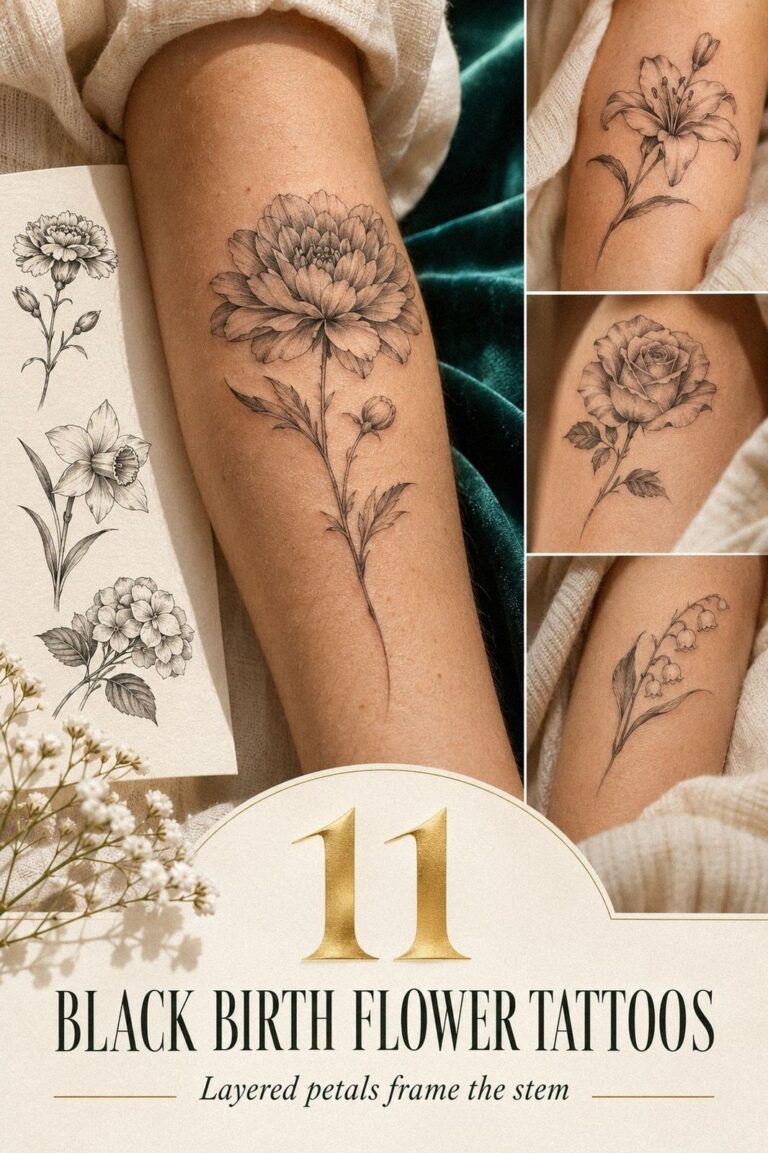
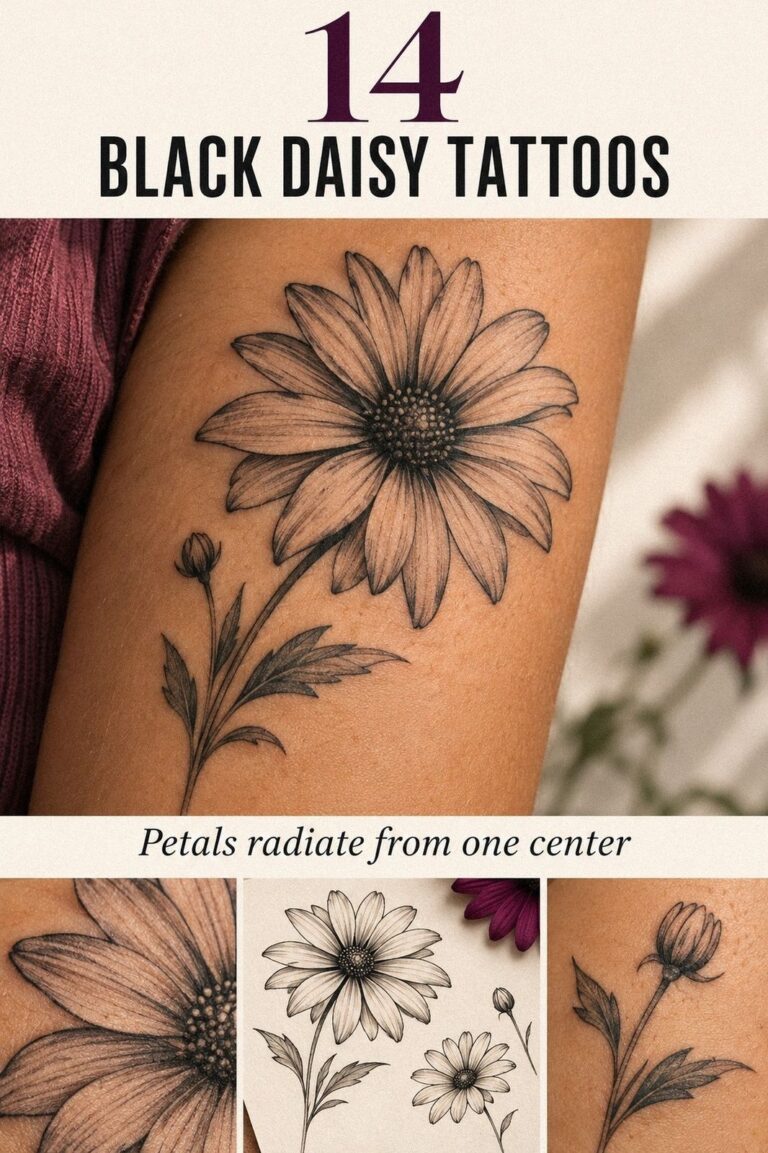
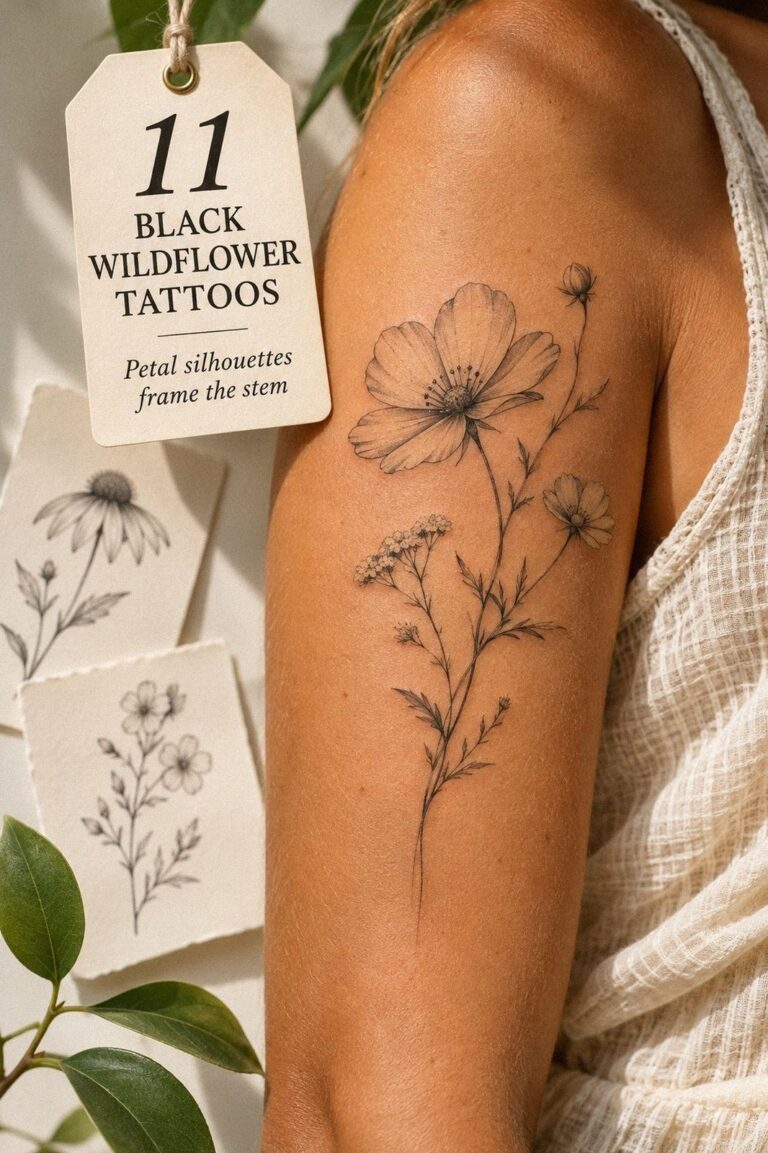
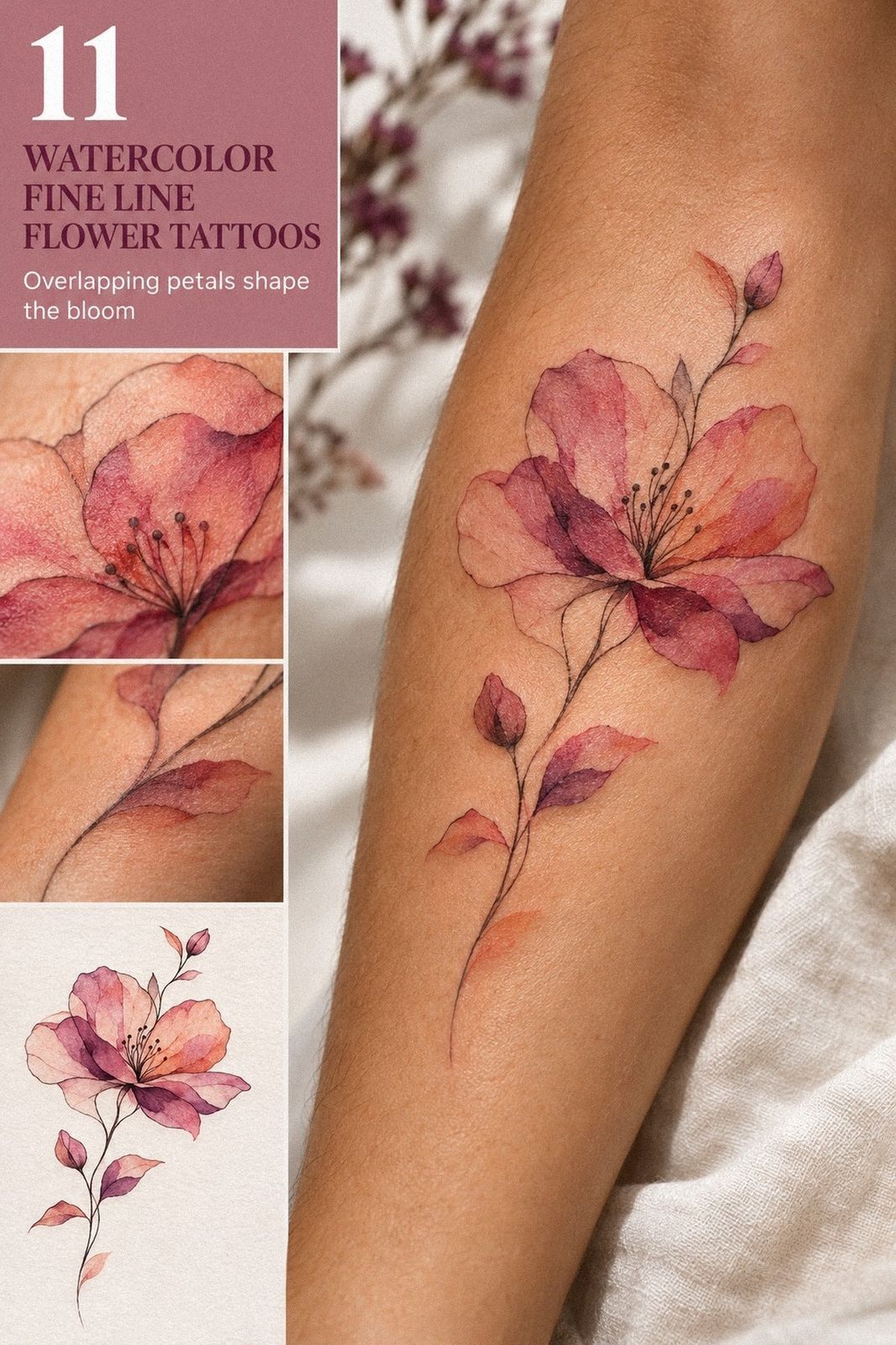
A black cherry blossom tattoo usually costs about $100 to $300 for a small or medium piece, but placement and artist rates can shift that fast. The design matters as much as the price: a striking branch can stay readable for years when you plan size, spacing, and aftercare before booking. Start here!
Before You Start: The Three-Anchor Rule
Before you message an artist, choose three anchors: placement, approximate size, and linework style. Your reference photo can show a wrist piece, but your skin may need a larger design to keep each petal readable. I’d rather see you choose a 3-inch branch with breathing space than squeeze six blossoms into a tiny area.
Use a clean stencil or simple sketch to test the flow. Stencil Stuff is commonly used by artists to transfer a placement guide, but you won’t need to buy it yourself for a consultation. Ask your artist to show the design on your actual body, because the curve of your arm or ribs will change the branch.
Your budget should include the tattoo, a tip if that’s customary for you, and basic aftercare. A small black cherry blossom tattoo often lands around $100 to $300 in the US, while many studios have a minimum of about $50 to $100.
You’ll make a better decision when you know your ceiling before the appointment. Keep that budget ceiling firm.
The Three-Anchor Rule keeps you from chasing every reference image online. Pick one meaningful detail, one visual direction, and one placement that you’ll still like when the design isn’t fresh anymore. That’s enough to give your artist room to create something personal.
And don’t book the cheapest appointment before you inspect healed work. Your skin is the canvas, but your artist’s portfolio is the evidence.
Look for healed results before you settle on scale. If you want a smaller starting point, compare these tiny cherry blossom tattoo references before you settle on scale.
Budget Signals Worth Checking
A studio minimum can make a tiny tattoo cost more than expected. Ask whether the quote covers the consultation, stencil adjustments, and touch-up policy.
A studio minimum is not automatically a warning sign; it simply reflects the time required to set up safely. That matters!
Hourly pricing also changes the calculation. A compact branch may take less time, but custom drawing, placement testing, and careful spacing can add labor before the actual tattoo begins. Request a written price estimate that separates design time, tattoo time, and any deposit.
Your budget should leave room for quality. A cheap appointment can become expensive if the piece needs correction, camouflage, or an early touch-up. I’d rather reduce the number of blossoms than compromise on an artist’s healed portfolio.
- Start With a Striking Black Cherry Blossom Tattoo Concept
- Pick Intricate Branches for Meaningful Contrast
- Place Small Black Cherry Blossoms on the Wrist
- Keep Delicate Linework Crisp Around Each Petal
- Plan Flowing Branches Along the Collarbone
- Choose Bold Ink for a Fierce Silhouette
- Add Symbolic Falling Petals to Your Design
- Shape Unique Black Cherry Blossom Tattoo Ideas
- Balance Ornate Details With Minimal Shading
- Match Tattoo Placement to Your Pain Tolerance
- Protect Your Expressive Ink During Healing
1Start With a Striking Black Cherry Blossom Tattoo Concept

Begin with the feeling you want the branch to carry. A cherry blossom can suggest change, remembrance, renewal, or a private connection to a person or place.
Your black ink concept doesn’t need a long explanation, but you should know why the flower belongs on your skin. Let the emotional meaning stay personal.
Sketch the main branch first, then place the blossoms around it. Keep the largest flower near the visual center and let smaller buds lead the eye outward. This gives your tattoo an intricate structure without forcing every inch to carry equal detail.
For a fine-line concept, ask for one clear stem, open petals, and controlled black accents. Eternal Ink Lining Black is one example of a named lining ink artists may use, though your tattooer will choose products based on training and studio standards. You’re paying for judgment as much as pigment.
I made the mistake of treating the reference image as the final design once. The result looked stiff because the branch wasn’t adjusted to my body.
Your artist should redraw the piece for your anatomy, and you shouldn’t feel awkward asking why a curve or blossom moved. Respect the body curve.
If the meaning is still vague, read a Japanese cherry blossom tattoo meaning guide and write down one sentence that feels true to you. That sentence can guide the branch, the number of blossoms, and the amount of negative space.
Sketch the Branch Around Your Anatomy
A branch should respond to the body area instead of being pasted onto it. Ask your artist to curve the stem around the natural direction of the limb, shoulder, or ribs. A body-specific sketch will usually look more convincing than a design copied at the same angle for everyone.
Move during the stencil check. Lift your arm, turn your wrist, or relax your shoulder while the artist watches the design shift. The stencil test can reveal a gap, bend, or crowded blossom before the needle touches your skin.
2Pick Intricate Branches for Meaningful Contrast

Choose a branch that gives your tattoo a firm visual backbone. A thin stem against open skin creates branch structure, especially when the blossoms are small and the line bends instead of running rigidly from one end to the other.
Ask your artist to vary the blossoms slightly. One open flower, one side-facing bloom, and a few buds will feel more natural than five identical symbols. That small change keeps the composition from becoming repetitive and gives the piece a playful variation.
For blackwork contrast, the artist might combine hair-thin lines with small areas of saturated black. Dynamic Triple Black is a named black pigment some artists use for strong fills, but your artist should decide whether it suits your skin and technique.
Don’t ask for maximum detail everywhere. Crowded petals can blur as fine lines soften over time, especially if the tattoo is too small or exposed to frequent sun.
I’d choose fewer, clearer marks over a busy branch that only looks sharp on appointment day. Protect the design’s line clarity.
Your best reference may be a style board rather than one copied image. Compare fine line cherry blossom tattoo examples with your saved images, then tell your artist which branch shape, petal spacing, and contrast level feel most like you.
3Place Small Black Cherry Blossoms on the Wrist

The wrist works well for a small black cherry blossom tattoo because you can see it often and keep the composition compact. Your artist should follow the natural length of the wrist rather than placing a round flower cluster in the center. A slightly vertical wrist placement usually reads best.
Use one main blossom and two or three supporting buds for a minimal design. Your fine-line needle grouping will determine how much detail fits, so ask the artist what size keeps the petal centers open. I’d rather see a small branch that breathes than a miniature tree with muddy intersections.
The wrist moves constantly and gets regular sun, soap, and friction from sleeves or watches. That doesn’t mean you can’t tattoo it, but you’ll need to protect the area during healing.
Keep fresh ink away from tight bracelets, pools, and direct sunlight until the surface has closed. Plan that healing protection before booking.
A wrist design can still feel understated without being forgettable. Place the darkest accent near the stem or one flower center, then let the rest stay airy.
Your eye will notice the contrast, and the tattoo won’t need thick outlines to announce itself. A dainty accent can still feel powerful.
If you’re comparing scale, look at these small cherry blossom tattoo ideas before your consultation. Bring your favorite size examples, but let your artist test the stencil on your wrist so you can see how the branch sits when your hand moves.
Where the Wrist Design Needs More Space
The wrist is narrow, so every mark competes for attention. A wrist stencil should show where the branch begins and ends, including how close it sits to the hand crease. That simple preview can save you from choosing a design that looks compressed.
If you wear a watch daily, mention it before the stencil is placed. Repeated rubbing can irritate healing skin and make aftercare harder. Your daily routine belongs in the placement decision.
4Keep Delicate Linework Crisp Around Each Petal

Petals need room. Ask your artist to leave small gaps between overlapping shapes so each flower stays legible after the tattoo settles. Your petal spacing matters more than adding another interior line.
A clean petal usually needs a confident outer line and only a few interior marks. Eternal Ink offers named black pigments used by some studios, but the brand won’t rescue a crowded design or an inconsistent hand. I’d trust an artist with healed photographs over a dramatic description of fresh ink.
Look for portfolios where the petals still have visible centers and the branches don’t look gray or fuzzy. Your artist should be able to explain how they adjust line weight, spacing, and size for your skin.
Ask direct questions, because a polished consultation is part of the work. Study the healed linework.
Keep the reference honest. A flower that looks open on a screen may become too dense when reduced to 2 inches.
I’d remove one petal before shrinking the whole piece, because your tattoo needs readable structure more than microscopic accuracy. Respect the readable scale.
For more restrained examples, browse open-petal cherry blossom tattoo designs. You’ll notice that the strongest pieces don’t depend on dozens of lines. They use deliberate gaps and a branch that gives every blossom somewhere to land.

5Plan Flowing Branches Along the Collarbone

The collarbone gives a branch a natural horizontal path, but the skin curves and shifts when you lift your shoulder. Your artist should place the stencil while you’re standing in a relaxed position, then check it again when your arm moves. That small test can prevent an awkward bend along the collarbone curve.
A flowing branch works best when it follows the bone without tracing it too literally. Let the stem rise slightly toward the shoulder, with blossoms turning into the open space above or below. The branch direction should look intentional rather than perfectly symmetrical.
For a flash-sheet starting point, ask to see several branch directions on paper. Stencil paper can show whether the concept feels long, compact, tilted, or too busy before it reaches your skin. I’d never choose a collarbone design from a flat image alone.
The collarbone can be more sensitive than the outer upper arm because the skin is thinner and the area sits near bone. You’ll want a realistic session plan, especially if your branch stretches across both sides. A shorter appointment may be easier than forcing a large design in one sitting.
Decide the session length honestly.
If you want a more symbolic direction, compare Japanese cherry blossom tattoo meaning ideas. Your branch can mark a transition without looking literal, and a lasting curve will age better than a crowded arrangement built around a temporary trend.
6Choose Bold Ink for a Fierce Silhouette

Bold ink doesn’t require a huge tattoo. You can keep the petals fine and use one solid section in the branch, flower centers, or a few leaves to give the design visual weight. Your blackwork fill should support the silhouette, not overpower every blossom.
Ask your artist where the darkest area should sit. A strong stem near the spine can make a branch feel powerful, while a dense flower center can pull attention toward one bloom.
I’d skip equal black accents in every flower because the eye loses its hierarchy. Keep the visual hierarchy sharp.
Skin tone matters to how black ink appears during healing. Your artist should show healed examples on skin tones close to yours, especially if your design uses very fine lines.
Healed skin-tone examples are more useful than a product name. Trust that signal!
For a spine tattoo, you’ll need to think about movement, clothing friction, and how long you can stay still. The area can be intense for some people, and your comfort matters more than pushing through a large session.
You’re allowed to split the appointment into stages. Make a comfort plan.
A strong silhouette can still look elegant on deep brown or ebony skin when the artist uses clear spacing and confident contrast. If you’re drawn to that balance, save a few minimalist cherry blossom tattoo references and ask which details will remain visible from normal viewing distance.
Questions to Ask Before You Book
Ask to see healed work in the same general style, not only fresh tattoo samples. Ask how the artist handles small petals, dark saturation, and placement changes. A portfolio review should leave you with specific answers, not just a pleasant impression.
Confirm the studio’s hygiene process and the artist’s aftercare instructions. You can also ask how deposits work and whether a consultation fee applies. Those details belong in your budget before you commit to an appointment.
Ask about the hygiene process.
7Add Symbolic Falling Petals to Your Design

Falling petals can show movement, time, release, or a memory that keeps traveling with you. Your artist should place them with intention, not scatter them evenly around the branch. Three petals moving in one direction often feel more expressive than ten floating without a path.
Use different angles for a symbolic effect. One petal can face forward, another can turn edge-on, and a third can sit farther away as a quiet visual echo.
Your falling-petal arrangement should have a clear direction. Give the petal motion a graceful rhythm.
Ask whether the falling shapes should be solid, outlined, or partly open. A small filled petal may read better than a tiny outlined one, especially if your tattoo is under 3 inches.
I’d choose a few clear marks over a cloud of detail that loses its meaning. Test the solid accents first.
Give yourself permission to keep the symbolism private. Your tattoo doesn’t need to explain grief, growth, family, or change to everyone who sees it. A personal detail often lasts longer emotionally than a design chosen only because it photographs well.
Keep that private symbolism sacred.
If you’re still deciding how much symbolism feels right, compare black cherry blossom tattoo meaning references. You can borrow the idea of falling petals while changing the number, direction, or placement to make the story yours.
8Shape Unique Black Cherry Blossom Tattoo Ideas

Start with the body area, then shape the branch around it. Let the unique concept follow your anatomy.
9Balance Ornate Details With Minimal Shading

Use shading sparingly when the main appeal is linework. A few soft black accents beneath petals can suggest depth, but too much gray may flatten the clean shape you wanted. Your shading plan should guide the eye toward the blossom centers and branch.
Ask your artist whether stippling, soft whip shading, or solid black suits your design. A small amount of graywash ink can create an ethereal fade, but it may need careful placement to avoid looking hazy. I’d skip shading under every petal because repetition makes the piece feel mechanical.
Choose the right shading style.
A portfolio review should include healed photographs, not only fresh tattoo samples. Your artist can explain how the chosen marks may settle, especially on the inner forearm where friction and sun exposure can vary. You’ll get a more honest plan when you ask what the design might look like after several years.
Your budget can change with detail. More custom drawing and longer appointments may raise the price, while a focused branch with open skin can keep the session shorter.
Typical US hourly rates often fall around $100 to $250, but region and artist demand matter. Include the detail budget.
A tattoo doesn’t need colored ink to hold attention. Strong black, healthy skin, and controlled spacing can look vibrant without extra pigment.
If you’re drawn to a cleaner direction, compare fine-line cherry blossom tattoo ideas before adding another layer of detail. Let the black ink stay crisp.
10Match Tattoo Placement to Your Pain Tolerance

Choose placement with honesty. Ribs, feet, hands, and sternum are often more painful because they have less padding or sit close to bone, while the outer forearm, thigh, and shoulder are usually more tolerable. Your placement stencil can show the design, but it can’t predict your personal pain response.
A daring placement may look perfect in a reference and still be wrong for your first appointment. I’d choose the upper arm over the ribs if you want a calmer introduction to fine linework.
You can always build a collection later, but you don’t need to prove anything during one session. Respect your pain tolerance.
The table below gives broad planning references for the US. Your artist may quote a studio minimum, an hourly rate, or a flat price after seeing the design. Ask what’s included before you book, because rates vary by region, experience, and appointment length.
You’ll also want to think about visibility, work clothing, and future additions. A private rib piece may suit one routine, while a shoulder branch can be covered or shown easily. Your best placement is the one that fits both your body and your daily routine.
11Protect Your Expressive Ink During Healing

Aftercare starts with following your artist’s instructions. Wash the tattoo gently with clean hands, use a mild cleanser, and apply only the recommended amount of moisturizer. Your aftercare instructions should always come from the artist who performed the tattoo.
Your healing film may be covered with a product such as Saniderm, but you should remove or keep it on only as your artist directs. Don’t improvise with extra products because a friend’s routine worked for them. Skin can respond differently.
For the first few weeks, avoid soaking the tattoo in pools, hot tubs, or baths, and keep strong sunlight away from the area. The surface often heals in about 2 to 3 weeks, but complete healing can take roughly 2 to 3 months.
You’ll need patience even when the tattoo looks settled. Plan serious sun protection.
Don’t scratch peeling skin or judge the final result while the area is shiny and irritated. Unscented moisturizer can support comfort when used as directed, but more product isn’t better. I once applied too much aftercare and ended up with a sticky sleeve; a thin layer was all I needed.
Fine lines can widen over time, particularly when they’re placed too close together or exposed to repeated UV. A solid black accent and sensible spacing usually age more reliably than a crowded micro-design. Your healed tattoo deserves sunscreen once the surface is fully closed.
The goal is a lasting piece that still reads as a cherry blossom after the fresh shine fades. If you want to compare designs built around open spacing, save these open-spacing cherry blossom tattoo references. Protecting the skin is part of protecting the meaning.
Which Detail Deserves the Ink? The Negative-Space Rule
I’ve changed my mind about black cherry blossom tattoos more than once. At first, I thought the strongest design would have the most flowers, the longest branch, and the finest possible lines.
Then I saw how quickly a crowded piece loses its rhythm when the skin is no longer fresh. The Negative-Space Rule became my standard: every petal needs enough open skin around it to remain recognizable.
That rule doesn’t mean your tattoo has to be plain. It means each detail has to earn its place.
I’d rather pay for a three-blossom composition from an artist with healed work than choose a cheaper, busier design that needs correction later. Your budget belongs in the decisions that affect readable design.
Placement is the second decision people rush. A collarbone branch can feel romantic and visible, while a rib piece can feel more private and haunting.
Neither is automatically better. Your pain tolerance, clothing, work setting, and willingness to protect the skin should shape the choice.
Consider the private placement.
I also think fine line gets judged too harshly. Yes, very fine lines can spread.
But a clear branch with sensible spacing, strong black accents, and good sun protection can remain expressive for years. Your artist should show healed work, answer uncomfortable questions, and tell you when your requested size is too small.
Maintain sun protection.
The most important budget decision is simple: don’t shrink a design below its readable size just to hit a number. Ask for fewer elements, a shorter branch, or a future second session. Keep that readable size standard!
A Few Things Worth Answering
How much does a black cherry blossom tattoo usually cost?
A black cherry blossom tattoo usually costs about $100 to $300 in the US, depending on size, placement, artist, and region. Many studios charge a minimum of about $50 to $100, while hourly rates often sit around $100 to $250. A clear quote comes after the artist reviews your design.
– Small branch and open spacing – Studio minimum – Regional artist rate
Are black cherry blossom tattoos a good idea for a first tattoo?
Yes, they can be a good first tattoo when the design is sized for readable lines and placed on a tolerable area such as the shoulder, thigh, or outer forearm. Simple linework gives you a clear starting point, especially when your artist shows healed examples.
– Outer forearm placement – Open petals – Moderate session length
How do I choose a tattoo artist for a black cherry blossom tattoo?
Choose an artist with clean botanical or fine-line work, healed photographs, and strong studio hygiene. Ask how they adapt designs to your skin and placement. Healed portfolio evidence matters more than a fresh sample, because it shows how the branch settled.
– Botanical linework – Healed photographs – Sterile studio practices
How much do black cherry blossom tattoos hurt?
Pain varies, but ribs, feet, hands, and sternum are often more painful, while the outer forearm, thigh, and shoulder are usually more tolerable. Placement changes the experience more than the flower itself, so choose a zone that matches your comfort level.
– Rib and sternum sensitivity – Forearm and thigh comfort – Personal pain response
How long does a black cherry blossom tattoo take to heal?
The surface usually heals in about 2 to 3 weeks, while complete healing can take roughly 2 to 3 months. Wash gently, moisturize as directed, avoid swimming, and keep healed skin protected from UV. Consistent aftercare helps the lines settle cleanly.
– Mild washing – Thin moisturizer – No pools during healing
What’s the best placement for a black cherry blossom tattoo?
The outer forearm, shoulder, and thigh are practical choices because they’re often more tolerable and give fine lines space to breathe. Open spacing supports longevity, while ribs, feet, hands, and sternum may hurt more and need extra placement planning.
– Outer forearm visibility – Shoulder flexibility – Thigh privacy
The One Step I’d Start With
If I had to pick one step, I’d start with the placement stencil. It shows whether your branch has enough breathing space before you spend money or skin. Ask your artist to test the size while you move, then save the small cherry blossom tattoo guide for your appointment notes.