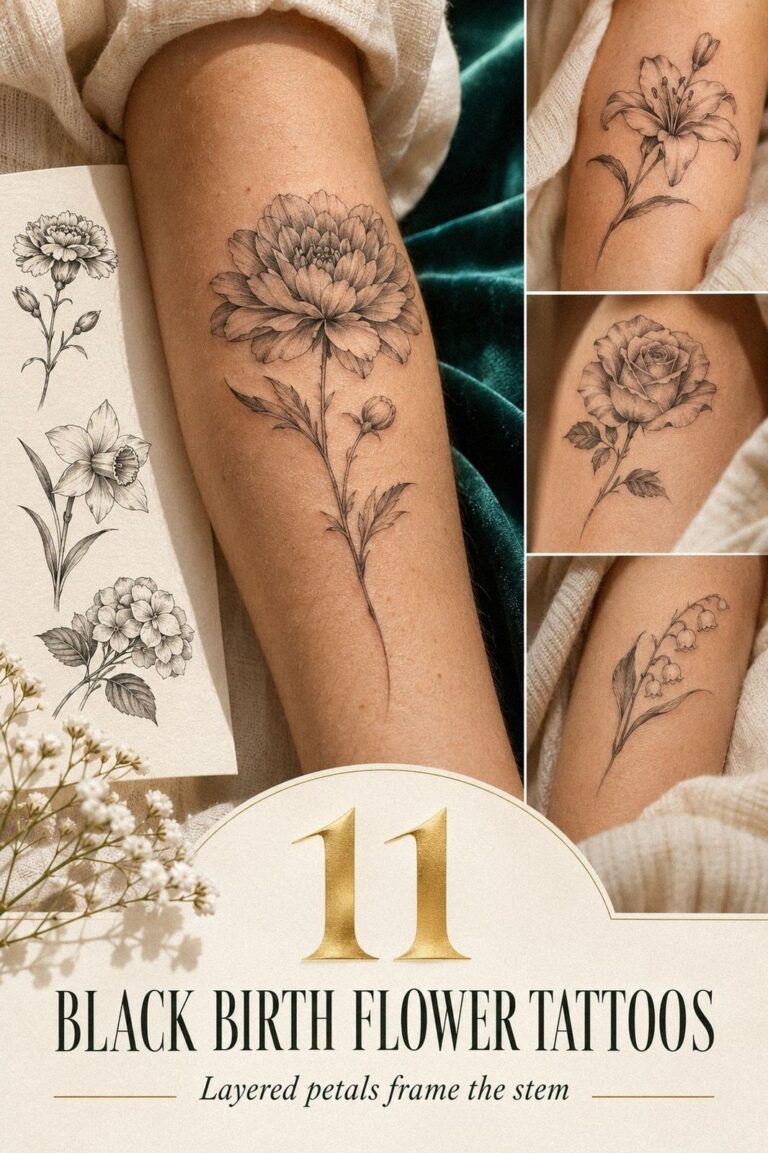
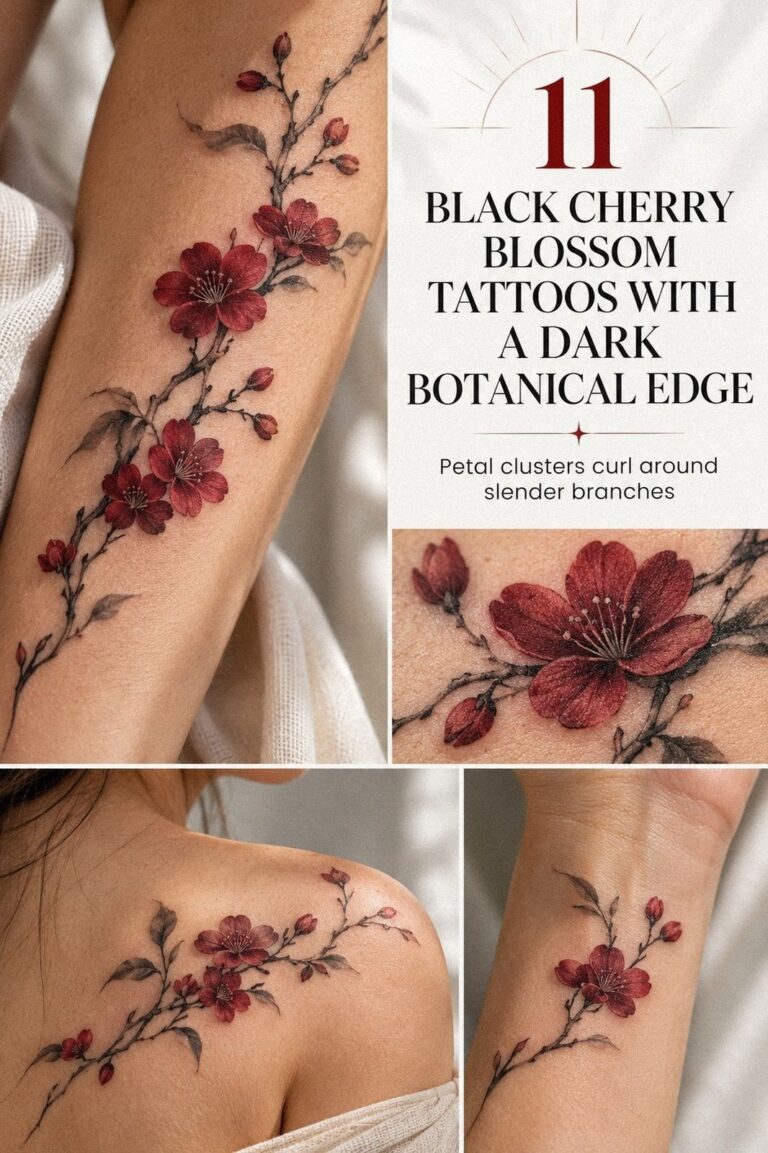
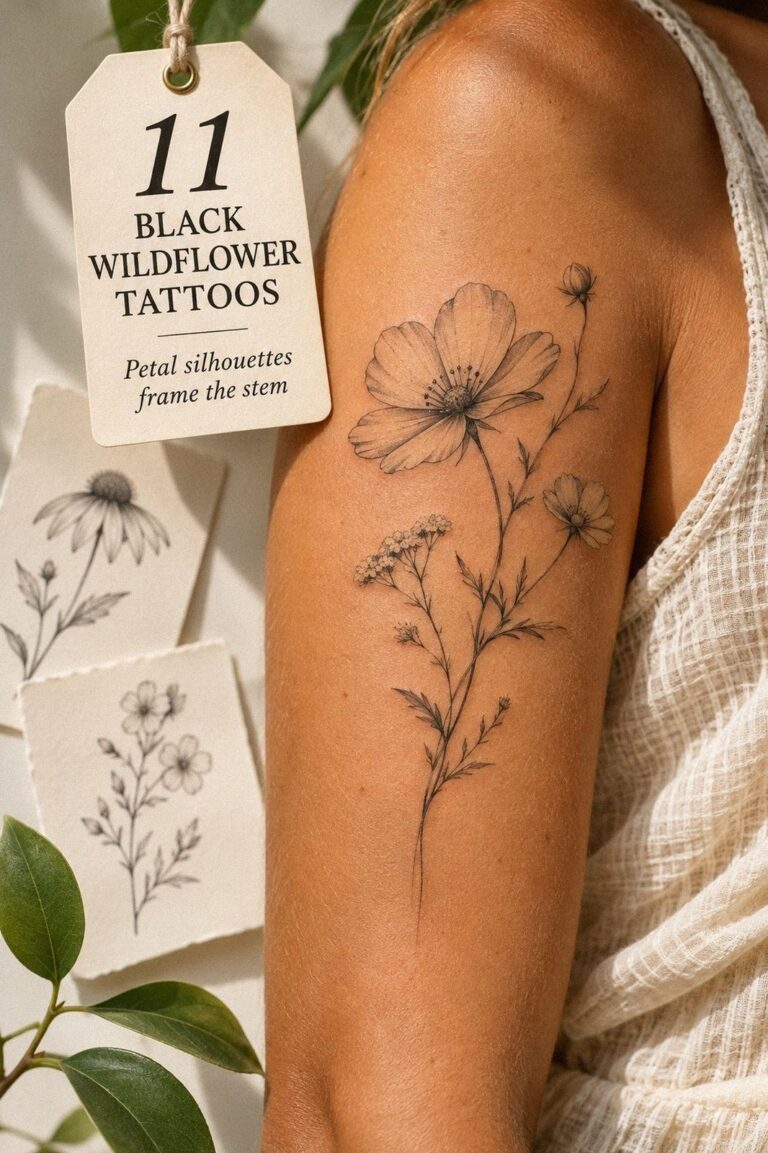
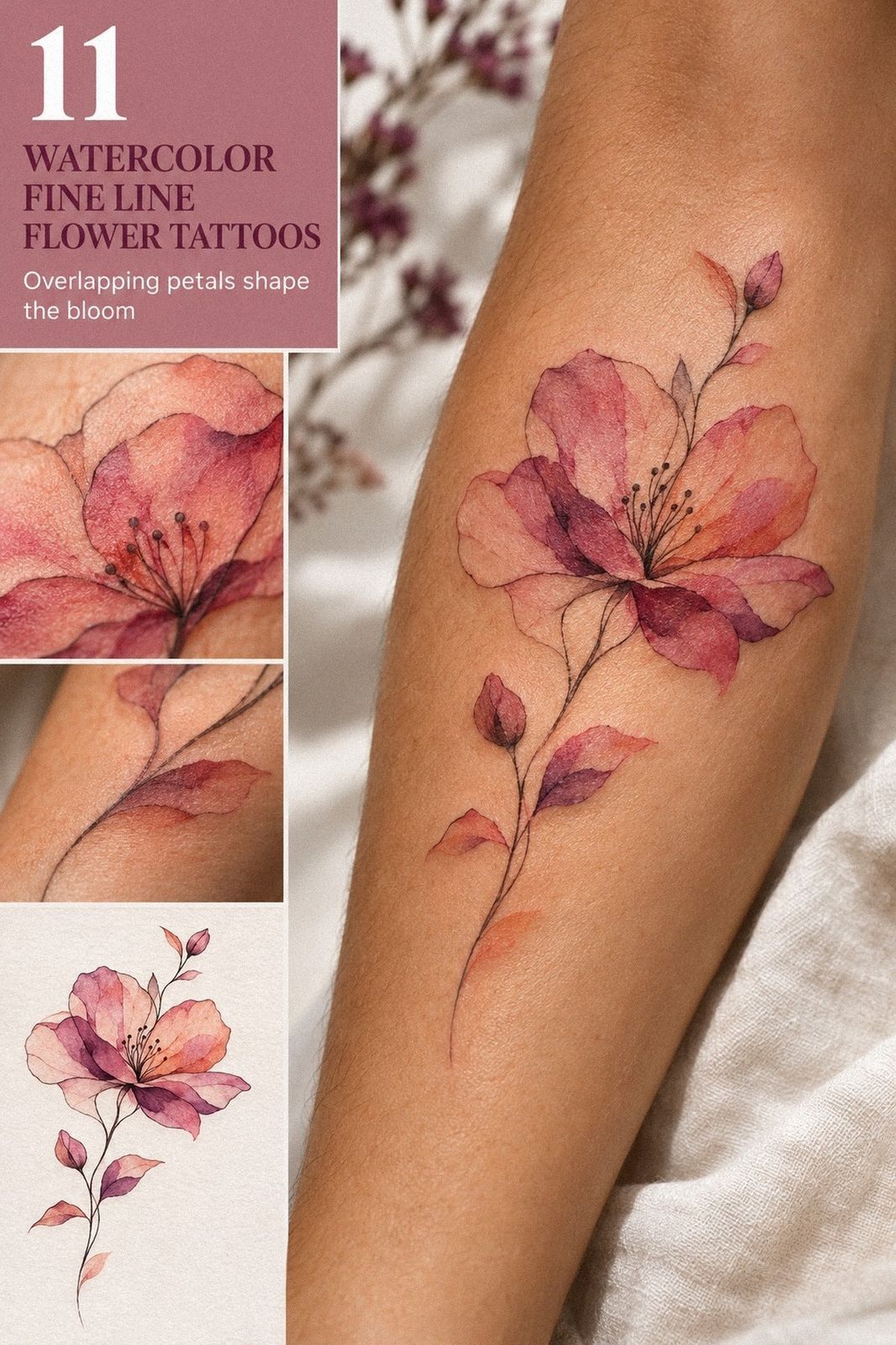
A black daisy tattoo works when the meaning, placement, and line weight agree. If you want something timeless after the first excitement fades, start with a readable shape and plan for healing before you book. I’ve learned that rushed linework is harder to live with than a slower design.
You don’t need an intricate symbol to make the choice important. A minimal flower can feel personal and quietly powerful when every mark has a reason.
Editor’s note: begin with the version you’d still want if nobody asked what it means. That usually leads to a more meaningful design than adding symbols to make the idea seem deeper.
Short version: choose one clear silhouette, one deliberate placement, and one artist whose healed work matches your goal. A personal tattoo becomes stronger when you remove everything that doesn’t belong.
- Start With the Smallest Readable Idea
- Choose Linework With a Clear Personality
- Place the Flower on Purpose
- Let the Meaning Stay Yours
- Decide What Belongs Around the Bloom
- Balance Bold Outlines With Delicate Shading
- Choose a Size That Can Age Well
- Prepare for the Appointment
- Protect the Tattoo While It Heals
- Make the Budget Feel Clear
- Ask Better Questions Before Booking
- The Black Daisy Rule I Keep Coming Back To
- Frequently Asked Questions
- If I Had to Pick One Starting Point
1Start With the Smallest Readable Idea

Begin with the smallest version that still reads as a daisy from a few feet away. You’ll want open skin between the petals, especially if you’re drawn to a readable daisy with a dotted centre.
Ask yourself whether you want the flower to feel personal, understated, or symbolic. Six rounded petals can seem gentler than narrow points, while a slightly uneven bloom may feel more raw and expressive.
I’d skip copying a reference exactly. Your artist can adjust the centre, petal spacing, and stem so the custom stencil follows your body instead of looking borrowed.
For early research, compare these tiny daisy tattoo ideas with a slightly larger small daisy tattoo. Small designs depend on negative space, not extra decoration.
Keep the first sketch simple: one flower, one centre, one direction. That’s enough. A single black bloom can look graceful, elegant, and quietly iconic without asking for attention!
2Choose Linework With a Clear Personality

Linework controls the personality of the flower. You’ll want your artist to explain how the lines will behave at the chosen size, not only on a digital canvas.
Ask whether the design uses a continuous contour, small breaks, or subtle dot shading. A continuous outline feels classic and crisp, while broken lines can seem ethereal and expressive.
I’d choose linework that follows the flower’s natural rhythm instead of adding random flourishes. The stem should enter the bloom cleanly, and every petal should relate to the centre.
What should remain memorable: the outline or the detail? A controlled contour often says more than a crowded collection of techniques.
Look through delicate daisy tattoo references before your consultation. A small change in petal length can create a completely different silhouette, from dainty to striking.
Your artist should explain the needle grouping and expected line weight in plain language. You don’t need to choose technical equipment yourself, but you should understand whether the finished piece will feel whisper-thin, medium, or visibly bold.
3Place the Flower on Purpose

The wrist gives the flower immediate visibility. That can feel empowering, stylish, and vibrant, but you’ll also see the tattoo often. Choose a design you won’t tire of.
Before booking, test the placement with a temporary stencil or printed paper shape. Look at it with your hand relaxed, bent, and turned palm-up. A wrist placement can look balanced in one position and strangely tilted in another.
If you want easier concealment, the upper arm or outer thigh may give you more flexibility. The sternum, ribs, feet, hands, and collarbone can feel more intense because they’re close to bone or experience more movement.
Read about daisy tattoo meaning before choosing a visible position. You’ll decide whether the tattoo is mainly for your own reminder or whether you’re comfortable letting strangers interpret it.
I’d avoid placing the smallest possible daisy directly on a high-friction crease. A clear stencil should leave enough skin between the flower and the fold to protect readability.
The best placement feels intentional when your body is still and when it’s moving. A visible flower can be stylish and expressive, but it shouldn’t make you monitor your arm or hand all day!
4Let the Meaning Stay Yours

The familiar daisy can feel whimsical, playful, sacred, or haunting depending on the details. Its meaning doesn’t have to be obvious to anyone else.
You might connect it to a person, a season, a private promise, or a moment when you chose yourself. A personal story gives the design staying power even when the original reference no longer feels important.
If you’re unsure what the flower means to you, read this daisy tattoo meaning guide and write down the first three associations that feel honest.
The strongest idea may be quieter than the one that sounds most impressive. A symbolic detail can remain private while still making the tattoo feel empowering.
5Decide What Belongs Around the Bloom

The simplest answer is often nothing. A single-stemmed daisy can feel flowing and graceful without leaves, text, or surrounding symbols.
If you want an added element, choose one that supports the meaning. A short stem may suggest growth, while a small star, initial, or date can make the design more personal.
I’d avoid adding details just because the centre seems empty on a screen. Open skin helps the flower read clearly and gives the petals a stronger visual role.
Ask yourself whether each extra mark improves the symbolic meaning or only increases the price. You’ll protect both the design and your budget by removing anything that doesn’t earn its place.
This flower tattoo meaning resource can help if you’re weighing several symbols. I’d still let your own memory lead, because a meaningful mark doesn’t need to be instantly legible to everyone.
6Balance Bold Outlines With Delicate Shading

You can combine a bold black outline with softer internal shading. That contrast can feel vintage and polished when the artist leaves enough skin untouched.
Ask for a clear hierarchy: outline first, petal separation second, centre detail third. If every line has the same strength, the flower can look flat.
I’d keep shading near the centre and let the outer petals stay open. That gives the black outline authority without making the whole bloom heavy.
Dotwork can create a subtle fade without turning the daisy grey. Your artist may place dots farther apart toward the petal edges, creating an ethereal transition while protecting the open skin.
Don’t ask for every possible technique in one small flower. A clean outline with a few controlled dots will usually age more gracefully than several competing methods. Good restraint is powerful!
7Choose a Size That Can Age Well

Start with the body area, then choose the size that keeps the flower readable. A readable tattoo scale matters more than squeezing every saved detail into the smallest possible space.
A one-inch daisy may work with a simple centre and open petals. A two- or three-inch version gives your artist more room for a meaningful stem, sharper separation, or a more striking silhouette.
Compare the small daisy tattoo guide with your intended placement before deciding. Size changes the relationship between the petals and the surrounding skin.
I’d rather enlarge a tiny design slightly than force intricate details into a cramped shape. The result can feel more polished design, confident, and personal when every line has space to settle.

8Prepare for the Appointment

Pain varies, but ribs, feet, hands, and sternum are commonly more intense. The forearm, thigh, and shoulder are often more tolerable, though everyone responds differently.
A short appointment can still feel sharp in a sensitive area. You’ll have an easier time if you eat normally, drink water, and tell your artist when you need a break.
I’d choose an outer-thigh placement for a first small daisy if you’re nervous. You’ll have a more forgiving surface and can focus on the experience instead of bracing through every second.
Bring water, eat a normal meal, and wear loose clothing that gives the artist easy access. You’ll want to avoid tight fabric rubbing the fresh tattoo afterward.
Before booking, compare healed examples from the artist’s portfolio, not only newly completed work. A healed outline tells you far more about technique than a fresh tattoo ever will. Take the pause if you need it!
9Protect the Tattoo While It Heals

A readable daisy depends on simple aftercare. You’ll protect the final result through gentle care, not complicated routines.
Wash gently with a fragrance-free cleanser when your artist says it’s safe. Pat the area dry, apply a light layer of recommended moisturizer, and avoid picking flakes.
The surface commonly heals in about two to three weeks, but complete healing can take about two to three months. Your artist’s instructions should take priority if they differ from general advice.
Keep the fresh bandage on for the time your artist recommends. Avoid pools, hot tubs, and soaking during early healing, and keep direct sun away from the area.
I’d never judge a black daisy while it’s peeling or glossy. The lines may look muted briefly before the healing stage settles. If you’re worried, contact your artist instead of changing the routine.
10Make the Budget Feel Clear

Tattoo cost depends on the artist, region, size, placement, and detail. These ranges give you a practical starting point, but you should request a current quote before booking.
A lower price isn’t automatically affordable, and a higher price isn’t automatically better. Compare healed work, communication, hygiene, and the artist’s ability to create the exact style you want.
I’d keep a budget buffer above the quoted amount. You may decide to enlarge the flower, add a detail, or return for a touch-up.
The best value is the design you can live with confidently. Clear pricing removes pressure, while a rushed bargain can create a much more expensive problem later.
11Ask Better Questions Before Booking

Ask how the artist handles small petals, fine lines, darker skin tones, and healed touch-ups. You’ll learn more from specific answers than from a polished social profile.
Ask whether the deposit policy applies to the final cost, how long the appointment may take, and what happens if you change the placement.
You can also ask to see the artist’s most recent healed examples. If the portfolio only shows fresh work, I’d wait before deciding.
Bring your references and explain what you don’t want. A direct consultation should feel like a conversation, not an examination.
12The Black Daisy Rule I Keep Coming Back To
I keep returning to one rule with flower tattoos: the meaning should control the detail, and the body should control the size. I’ve seen people bring an intricate reference that looks wonderful at four inches, then ask for it at one inch.
That’s where the trouble starts. The petals lose their spacing, the centre becomes a dark dot, and the design no longer says what they wanted it to say. The result may be technically neat but emotionally thin.
I’d rather see a smaller flower with a confident outline than a crowded piece carrying every symbol at once. The strongest black daisy I’ve planned had rounded petals, a dotted centre, and one slight bend in the stem.
It felt iconic because the artist knew what to leave out. That kind of understated confidence lasts longer than a dramatic effect chosen only to impress someone during the appointment.
Skin tone, placement, and body movement matter just as much as the reference. A sternum daisy needs different spacing from a wrist daisy, and a shoulder piece can use more scale than a collarbone piece.
I also think the best tattoo consultation feels honest and collaborative. Bring your saved references, explain what you want to remember, and tell your artist what you don’t want.
I’ve changed my mind after seeing a stencil in the correct position, and that isn’t failure. It’s useful information. You’re allowed to pause, adjust the petal shape, and leave with something entirely yours!
13Frequently Asked Questions
How much does a black daisy tattoo usually cost?
A black daisy tattoo usually costs about $100 to $300 in the US, depending on size, placement, artist, and region. Some studios use a minimum of about $80 to $150, while hourly rates often fall near $100 to $250. I’d ask for a written quote before booking.
Are black daisy tattoos a good idea for a first tattoo?
Yes, a black daisy can be a meaningful first tattoo because the shape is clear and the design can stay small. You may find the forearm, outer thigh, and shoulder more tolerable than ribs, feet, hands, or sternum. I’d still choose a simple first tattoo with enough open spacing.
How do I choose an artist for a black daisy tattoo?
Choose an artist whose portfolio shows clean linework and healed results on skin tones similar to yours. Look for consistent petal shapes, controlled dotwork, clear hygiene practices, and a style that matches your reference. A consistent portfolio matters more than a single dramatic piece.
How much do black daisy tattoos hurt?
Pain varies, but ribs, feet, hands, and sternum are commonly more intense. The forearm, thigh, and shoulder are often more tolerable.
I’d eat beforehand, drink water, and tell your artist when you need a pause. Your comfort plan deserves attention.
How long does a black daisy tattoo take to heal?
The surface usually heals in about two to three weeks, while complete healing can take about two to three months. Wash gently, moisturize lightly, avoid picking, and stay away from swimming and strong sun during early healing. Follow your artist’s aftercare instructions if they differ from general guidance.
14If I Had to Pick One Starting Point
If I had to pick one step, I’d start with the stencil placement. You can change petal style later, but a misplaced flower will bother you every time you move.
Check it standing, sitting, and relaxed. Notice whether the shape still feels graceful when your body changes position, and whether you can imagine seeing it years from now.
Then choose the detail that supports the memory instead of competing with it. A black daisy doesn’t need to explain your whole story. It only needs to carry the part you’re ready to keep.