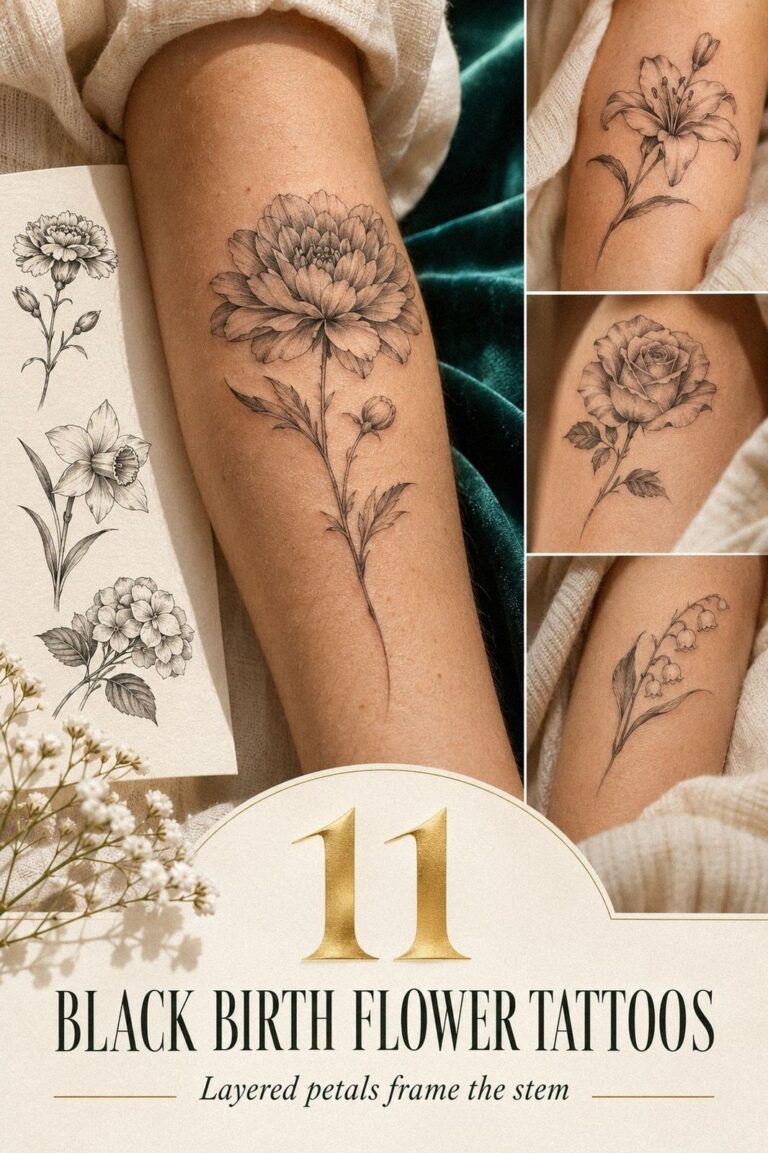
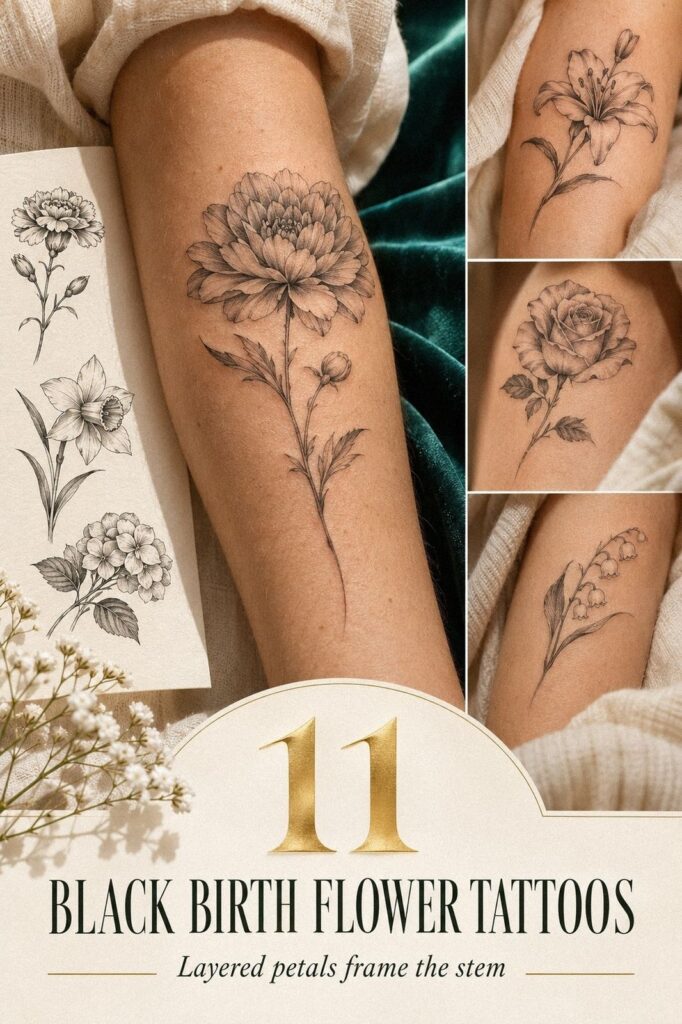
A black floral sleeve tattoo works best as a first tattoo when you plan its flow before choosing individual blooms. I learned that after sketching three unrelated flowers that looked fine alone and awkward together. This guide gives you a clear order, from placement and negative space to healing. Your skin deserves a deliberate plan!
- Start With A Bold Black Rose Sleeve
- Pick Intricate Wildflowers For Layered Linework
- Place Delicate Blooms Along Your Forearm
- What Does Negative Space Do For A Sleeve?
- Plan A Flowing Shoulder To Wrist Composition
- Choose Meaningful Flowers With Symbolic Details
- Add Sharp Thorns For An Edgy Finish
- Balance Dainty Petals Against Gritty Shading
Design note: Start with one focal bloom, then let smaller elements support it. A sleeve can feel intricate without becoming crowded when each mark has a reason.
My honest take: Your forearm composition matters more than collecting every flower you like. Decide how the design should move first. Then choose the motifs that strengthen that movement.
- Start With A Bold Black Rose Sleeve
- Pick Intricate Wildflowers For Layered Linework
- Place Delicate Blooms Along Your Forearm
- What Does Negative Space Do For A Sleeve?
- Plan A Flowing Shoulder To Wrist Composition
- Choose Meaningful Flowers With Symbolic Details
- Add Sharp Thorns For An Edgy Finish
- Balance Dainty Petals Against Gritty Shading
- Highlight Unique Blooms With Crisp Outlines
- Build A Fierce Botanical Sleeve Gradually
- Protect Your Black Floral Tattoo During Healing
1Start With A Bold Black Rose Sleeve

Begin with one black rose as your anchor, then build the sleeve around its shape. A rose gives you a dark center with curved petals, crisp edges, and enough coverage to connect smaller flowers later.
If you’re choosing a first tattoo, place the anchor where you can study it easily, such as the outer forearm. You’ll understand how the design moves before committing to a full arm.
Ask your tattoo artist to sketch the rose at the size your arm can support. A very small rose may lose its petal separation as the lines age, while an oversized one can overpower delicate sprigs. I’d choose a striking rose with three visible petal layers and restrained solid-black areas.
That balance keeps it expressive without making the sleeve feel heavy.
Bring a few references from this realistic black rose tattoo guide, but don’t copy one design exactly. Your arm bends, tapers, and changes direction, so a polished reference may need adjustment on skin. You’ll want the stem to follow your forearm rather than point straight across it.
My first sketching mistake was treating the flower like a sticker. It looked stylish in a square, then awkward when wrapped around an arm.
Give your artist relaxed, flexed, outer, and inner views of your forearm shape. That small step makes the finished composition more graceful and distinctly yours.
For value, ask whether the rose will still read clearly after the skin settles. A dramatic focal point is worth the cost only when its petals remain legible. Your artist should explain the line weight, solid areas, and petal separation before you book the session.
2Pick Intricate Wildflowers For Layered Linework

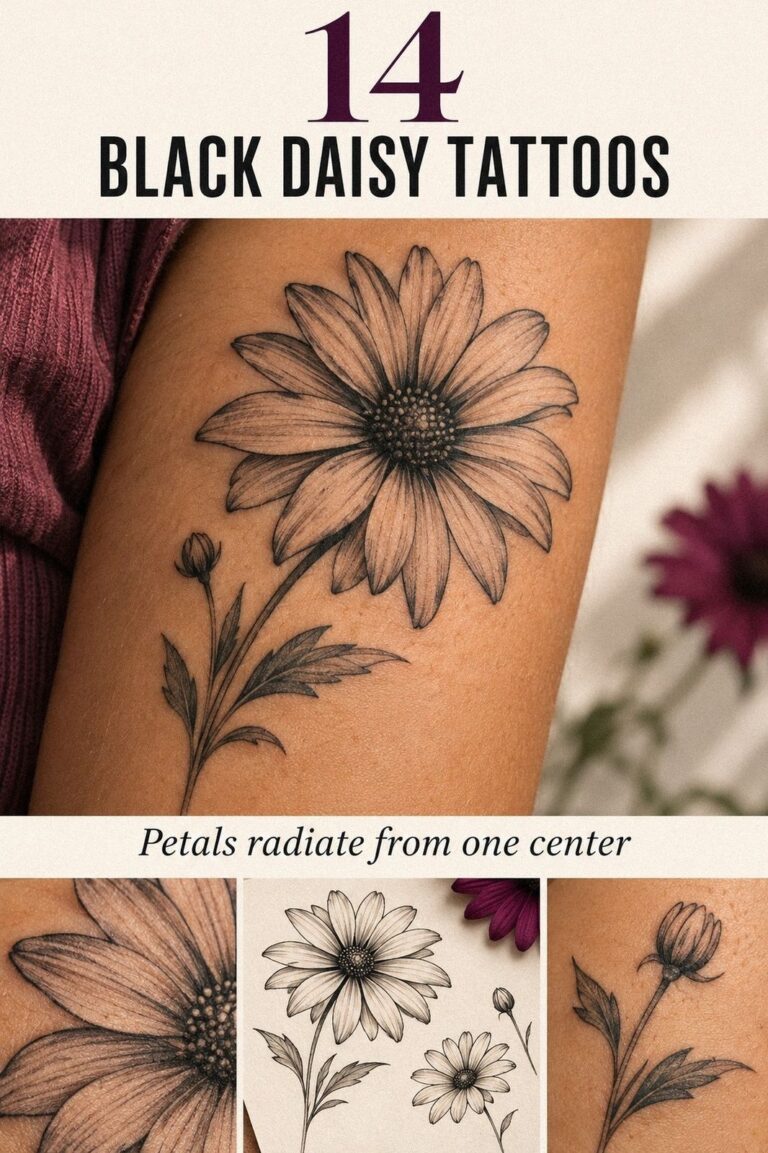
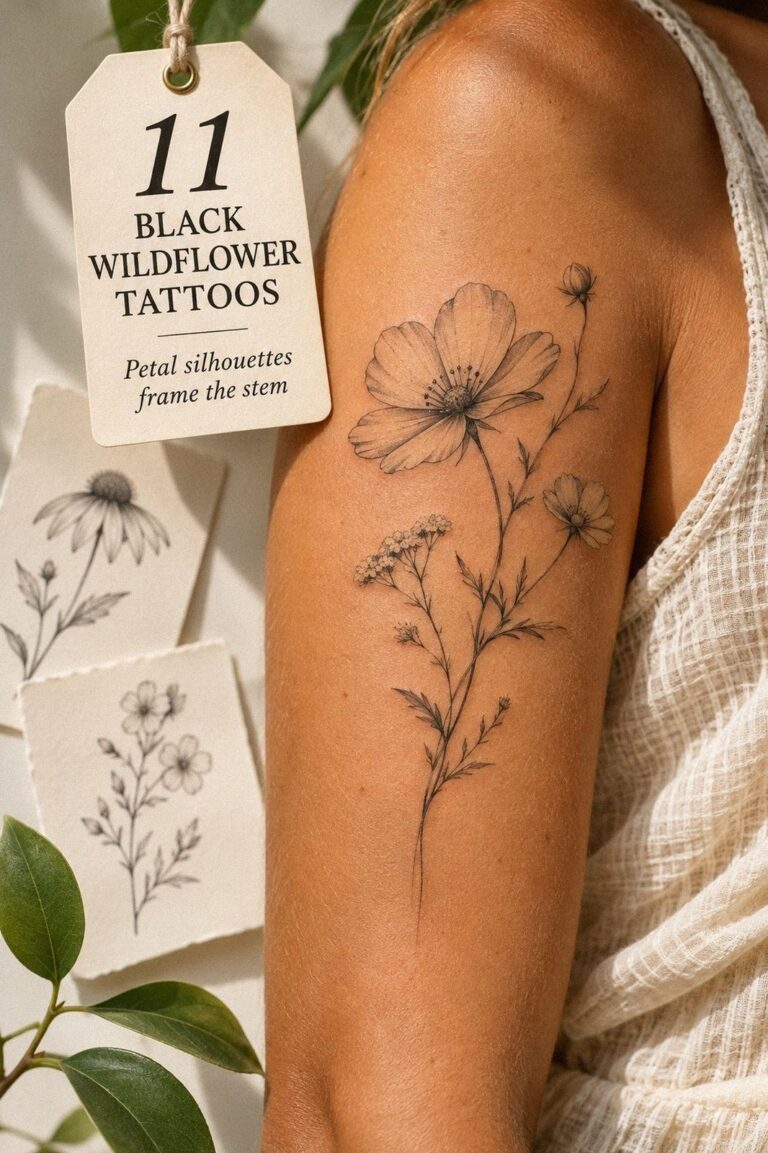
Choose wildflowers that differ in scale and silhouette. An intricate central bloom can sit beside minimal buds, airy stems, and an ethereal scatter of leaves without competing with the rose.
I like combining one expressive flower with quieter companions. That contrast keeps the sleeve delicate, rather than turning every inch into equally dense linework. A few graceful stems can create more movement than a crowded cluster.
Ask your artist to vary the line density. The most ornate blossom might need stronger outlines, while a whimsical side flower can stay light and playful. Your sleeve should feel intentional, not repetitive.
3Place Delicate Blooms Along Your Forearm

Map your delicate blooms along the wrist taper and the forearm’s natural length. The outer forearm usually offers clear visibility, while the inner forearm can create a more private placement. Your artist should account for elbow movement and how the skin shifts when you rotate your hand.
A botanical fine-line sprig looks especially graceful when its stem follows the arm rather than crossing it at a hard angle. Use one bloom near the lower forearm, another around the middle, and a smaller bud closer to the elbow.
You don’t need equal spacing. Uneven intervals can feel organic when the stems still point toward a shared flow.
Before your appointment, print the stencil at the intended scale and test it against relaxed and rotated arm positions. I made the mistake of judging placement from one angle, and the flower disappeared whenever I turned my arm. Your future self will appreciate this stencil test.
For more placement references, compare your plan with these small floral sleeve tattoo ideas. You’ll see how open stems can create a delicate sleeve without filling every inch. I’d avoid placing your most intricate bloom directly over a crease.
A professional consultation should include movement, visibility, and future additions. That conversation has real value because a cheap placement mistake can become an expensive correction. Ask to see the stencil from the front, side, and back before you approve it.

4What Does Negative Space Do For A Sleeve?

Protect negative space as carefully as you choose the flowers. It separates dark petals, gives fine lines room to breathe, and keeps a bold sleeve from becoming visually muddy.
Negative space can also make a sacred or symbolic detail feel more important. I’d rather see one meaningful opening than a sleeve packed with marks that don’t support the composition.
5Plan A Flowing Shoulder To Wrist Composition

Plan the full shoulder-to-wrist route before you commit to individual appointments. A flowing botanical composition should have a beginning, a middle, and a visual release near the wrist. Your first session might cover only the forearm, but the artist still needs to know whether future stems could travel upward.
Use a paper template or a digital arm mockup to test direction. Let larger flowers sit near broader areas of the arm, while narrow stems follow the wrist and elbow. You’ll want the design to look intentional from several angles, not only when your arm hangs straight beside your body.
A traditional flash sheet can help you compare motifs without rushing into a final arrangement. Look for repeated shapes, such as curved leaves or pointed buds, then decide which one becomes your visual signature. Vintage references can be useful, but your final sleeve should feel personal rather than copied.
Save this fine-line floral sleeve tattoo reference beside your sketches and mark the direction you like. Then ask your artist to show the stencil from the front, side, and back of your arm.
A design can be elegant from one view and strangely horizontal from another. Test it before the appointment!
Think about the total session cost before you start. A shoulder-to-wrist plan may take several sessions, so ask what each stage is likely to cost and whether the proposed pacing is worth it for your skin. A clear route protects both your design and your budget.
6Choose Meaningful Flowers With Symbolic Details

Choose meaningful flowers only after you understand how their shapes work together. A symbolic detail might be a small birth flower, a favorite herb, or a bloom connected to someone you love. You’re allowed to choose meaning that nobody else can see.
Write down three flowers and the reason each matters to you. Then rank them by visual importance.
Your most private flower may not be the best anchor if its silhouette is too small or dense. I’d give the strongest placement to the flower that combines emotional weight with a readable outline.
If you want a more delicate direction, compare your notes with this floral sleeve tattoo inspiration. Notice how small leaves and buds can carry meaning without competing with the primary bloom. Your artist can also hide initials or dates inside a stem, but subtlety usually ages better than obvious lettering.
Ask yourself whether you’d still want this flower if nobody knew what it meant. If the answer is yes, it has timeless appeal.
If you’re choosing it only to explain a story, pause. A personal meaning should feel genuine on your skin, not dependent on an audience.
The best value comes from a motif you’ll keep enjoying after the novelty fades. An ornate symbol can be meaningful, but it doesn’t need to dominate the sleeve. Let the emotional detail remain powerful without overwhelming the design.
7Add Sharp Thorns For An Edgy Finish

Add sharp thorns where the composition needs stronger movement, not everywhere a rose has them naturally. A daring thorn can interrupt a soft curve and give the design a gritty, expressive edge.
Thorns work best when they echo an existing angle in the sleeve. One pointed detail may be enough to keep a graceful arrangement from feeling too sweet. I’d use them as punctuation, not wallpaper.
8Balance Dainty Petals Against Gritty Shading

Balance dainty petals with shading that has enough texture to support them. A black shading passage can sit beneath a flower, inside a leaf, or along one side of a stem. It gives the sleeve depth, but it shouldn’t swallow the delicate outlines.
Ask your artist to keep the darkest shading near one side of the composition. A controlled gradient can make petals appear to lift from the skin, while scattered dark patches may flatten everything into one heavy mass.
I’d avoid adding soft gray to every flower just because the stencil looks more finished with it. Some blooms need clean skin inside the petals. Others benefit from a small shadow at the base.
This contrast makes the tattoo more vibrant and expressive.
For another way to compare line density, study these black floral sleeve tattoo ideas that use open petals beside darker leaves. The most elegant examples don’t treat every element equally. Your sleeve will feel more sophisticated when some marks whisper and others speak clearly.
Before you approve shading, ask how long the darker sections may take and how that affects the session price. A little texture can offer excellent value, but unnecessary saturation may raise the cost without improving the composition.
9Highlight Unique Blooms With Crisp Outlines

Highlight your most unusual bloom with a black outline and simpler surroundings. That outline gives the eye a place to land, especially if the flower has an unusual profile or layered center.
Choose one flower with a memorable silhouette, such as a curved iris, a narrow chrysanthemum, or an asymmetrical poppy. Then keep nearby leaves quieter. If every flower has the same level of detail, none of them feels special.
Your artist should review the stencil before any ink is placed. Look for broken contours, petals that merge into leaves, and lines that run too close together. These small issues are easy to correct on paper and harder to rethink during a session.
You’re not being difficult by asking for another look. A polished consultation can save money, time, and regret. For more examples of readable thin lines, browse this fine-line floral sleeve tattoo guide before your consultation.
A crisp outline doesn’t mean a rigid design. The stem curve can shift, the petals can overlap, and the leaves can vary in direction. Pair precision with fluid movement so the sleeve stays alive from every angle.
10Build A Fierce Botanical Sleeve Gradually

Build the sleeve gradually, beginning with the section that establishes your main direction. A botanical sleeve plan doesn’t need to be completed in one long appointment. Starting with the forearm lets you evaluate line quality, your skin’s response, and how the design looks once settled.
Discuss a session plan in writing. Mark which flowers belong in the first appointment, which stems can wait, and where future additions might connect. A typical shop minimum may run about $50 to $100, while hourly rates often fall around $100 to $250 in the United States.
Don’t bargain by asking your artist to rush. You’re paying for drawing time, placement judgment, sterile setup, and careful application.
I’d choose a slower, thoughtful process over a cheap session that leaves crowded lines or awkward gaps. That matters!
But gradual doesn’t mean vague. Bring your reference board, placement notes, flower meanings, and preferred line density. If your taste changes after the first piece heals, you can adjust the next section with better information.
Ask whether the artist charges by the hour, by the piece, or by the session. The lowest hourly rate isn’t always the best value if the work takes longer or requires correction. Your goal is a reliable result, not merely the smallest number on the estimate.
The complete project may become a meaningful investment. That’s fine, as long as you understand the schedule, the expected cost, and the artist’s approach before you commit.
11Protect Your Black Floral Tattoo During Healing

Protect your fresh black floral tattoo during healing by following the aftercare instructions your artist gives you. Wash it gently, use only the recommended product, and don’t pick at peeling skin.
Avoid swimming, direct sun, tight friction, and unnecessary touching while the tattoo settles. If something looks unusual or increasingly painful, contact a qualified medical professional rather than guessing.
Healing can make the lines look temporarily muted or uneven. Give the skin time before judging the final result. A careful aftercare routine supports the crisp, timeless look you planned.
A First-Tattoo Budget Worth Respecting
Set a realistic tattoo budget before you choose the final number of flowers. Include the shop minimum, hourly rate, consultation time, travel, and a small cushion for an extra session. That makes the project feel controlled rather than impulsive.
A smaller first section can be a smart test of the artist’s style and your own tolerance. You’ll learn how your skin responds and whether the line weight feels right. That information has genuine value before you expand toward the shoulder.
Use the realistic black rose tattoo guide to compare how different rose treatments affect the visual weight. A heavily shaded bloom may cost more time than a lighter outline. Ask what you’re buying before you decide what’s worth it.
I’d rather postpone a session than choose an artist solely because the price looks low. Good planning is cheaper than correction work, and your first tattoo deserves a polished process.
The Skin Map I’d Bring To A Consultation
Bring a skin placement map showing the outer forearm, inner forearm, elbow, wrist, and upper arm. Mark where you want the strongest focal point and where you prefer lighter detail.
Your artist can then explain how the design will stretch, bend, and change across the arm. Some motifs look elegant on a straight forearm but become distorted near a crease. That’s why a consultation is more useful than choosing from a flat reference.
This fine-line floral sleeve tattoo reference can help you compare flow and spacing. Notice how the stems create a route rather than simply filling available skin. Your sleeve should have direction.
Ask how future sections would connect. A good plan leaves intentional openings without making the current tattoo feel unfinished. That flexibility can be worth paying for because it protects your long-term options.
Blackwork, Fine Line, Or Both?
Blackwork gives a solid black foundation, while fine line creates lighter transitions and more fragile detail. You don’t have to choose one style for every flower. The strongest sleeves often use contrast carefully.
Delicate petals can sit beside a darker leaf. An ornate center may work best when the surrounding stems remain understated. I’d let each technique serve a different part of the composition.
Compare this small floral sleeve tattoo reference with your own stencil. You’ll see how open skin can make dark sections appear sharper. That balance can feel sleek, feminine, masculine, or completely personal depending on the motifs.
Ask your artist how each technique may settle over time. Fine lines need enough room, while dense blackwork needs thoughtful placement. A style choice is worth it when it supports the arm’s movement instead of fighting it.
When Should You Add The Next Section?
Wait until the first healed tattoo section has settled before making major decisions about the next one. Fresh work can look more dramatic than it will later, especially when the skin is still tender or slightly swollen.
After healing, check the line weight, spacing, and overall direction. You may discover that you want more open skin, stronger shading, or a quieter transition.
That isn’t indecision. It’s useful information.
Use this floral sleeve tattoo inspiration to rethink the next section without copying the first one. A sleeve becomes more personal when it develops with your body rather than following a rigid template.
I’d schedule the next appointment when the design feels clear and the budget feels comfortable. Rushing can make a powerful concept feel ordinary.
Questions I’d Ask Before Booking
Before booking, ask about the artist’s healed portfolio, hourly rate, shop minimum, deposits, touch-up policy, and expected session length. You should also ask how the artist handles fine lines, solid black areas, and movement across the arm.
Ask whether they’re comfortable adapting a botanical design to your exact anatomy. A stylish reference may not translate directly to your forearm, shoulder, or elbow. Their answer will tell you whether they’re thinking about your skin or simply reproducing a template.
Review this fine-line floral sleeve tattoo guide before your appointment and note which line qualities appeal to you. Then describe the feeling you want, not just the flower names. “Sharp but graceful” can be more useful than a long list of motifs.
Finally, ask what happens if you change your mind about one flower. A thoughtful artist will have a revision process for changes. That kind of communication is worth more than a rushed booking.
The Motif That Keeps It Personal
Choose one personal floral motif that quietly connects the whole sleeve. It might be a birth flower, a family plant, a thorn pattern, or a small symbol hidden among the stems.
Keep the meaning visible enough for you, not necessarily for everyone else. A sacred detail can remain quiet and still carry emotional weight. You don’t need to explain every mark.
If your favorite flower is visually difficult, let it become a smaller supporting element instead of forcing it into the focal position. That compromise can preserve both its symbolism and the structure of the sleeve.
A romantic or empowering detail should still work as a shape. The most meaningful choice is often the one that feels right emotionally and looks convincing visually.
The Black Floral Choice I’d Make Again
I’ve changed my mind about what makes a first sleeve successful. I used to think the most important decision was choosing the most dramatic flower. Now I think it’s choosing an artist who can control space, line weight, and movement across your actual arm.
The best black floral sleeves I’ve seen aren’t the ones with the most symbols or the darkest coverage. They’re the ones where every stem has a job.
One line guides your eye toward the wrist. One open gap separates a rose from a wildflower.
One sharp thorn keeps a graceful arrangement from becoming too sweet.
I also wouldn’t chase ultra-fine detail simply because it looks polished in a reference. Your healed sleeve will live through sunlight, friction, movement, and ordinary days. If you want delicate work, choose a scale that gives each line enough space.
My own rule is simple: choose the composition first, then the flowers, then the symbolism. That order keeps emotion from overruling structure. It also gives you room to change a bloom without losing the whole concept.
For another comparison point, revisit these black floral sleeve tattoo ideas and notice which designs still feel readable without excessive detail. A meaningful tattoo can be edited. That isn’t hesitation; it’s good judgment.
And if your first draft feels slightly quieter than expected, don’t panic. Quiet designs often become more powerful as you live with them. I’d keep the negative space, the strong anchor flower, and the crispest stems.
The Questions Worth Answering First
How much does a black floral sleeve tattoo usually cost?
I’d expect about $100 to $300 for a smaller piece, while a larger project depends on the artist, region, and hours required. US shop minimums often run about $50 to $100, and hourly rates commonly range from $100 to $250. Ask for a written estimate before booking.
Are black floral sleeve tattoos a good idea for a first tattoo?
I think they can work well because the forearm, upper arm, and shoulder are often more tolerable than bony areas. Clear placement planning helps you understand the process, while meaningful flowers give you a personal design you won’t outgrow quickly.
How do I choose a tattoo artist for black floral sleeve tattoos?
I’d choose an artist with clean botanical linework, healed tattoo photographs, and strong studio hygiene. A healed portfolio matters most because fresh lines can look sharper than they will later. Ask how the artist handles negative space, skin movement, and future additions.
How much do black floral sleeve tattoos hurt?
Pain varies by placement, but ribs, feet, hands, and the sternum are often more painful than the forearm, thigh, or shoulder. Forearm placement is usually more tolerable for many first-timers. Your session length, sensitivity, and amount of shading will also affect the experience.
How long does a black floral sleeve tattoo take to heal?
The surface usually heals in about two to three weeks, while complete healing can take about two to three months. Gentle aftercare supports healing, while avoiding direct sun and swimming protects the fresh work during the early stage.
What’s the best placement for a black floral sleeve tattoo?
I’d start with the outer forearm when visibility and readability matter most. The upper arm and shoulder give you more room for larger blooms. Your best placement depends on flow, pain tolerance, visibility, and whether you plan to extend the design later.
Where I’d Start First
If I had to pick one step, I’d start with the forearm composition. It reveals spacing, line weight, and flow before you commit to the entire arm. Save your favorite black rose tattoo reference at this guide, then ask your artist to stencil the route from wrist upward.
Review these small floral sleeve tattoo ideas at this reference before the consultation and mark what feels most personal. A clear plan prevents crowded flowers later. Start there!