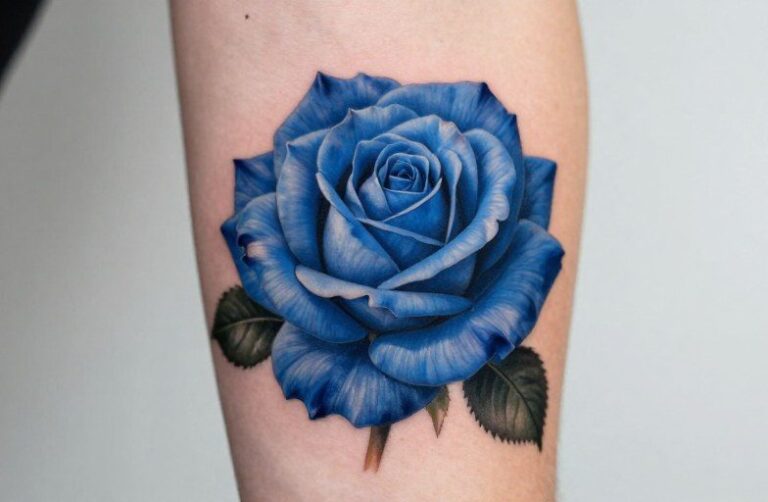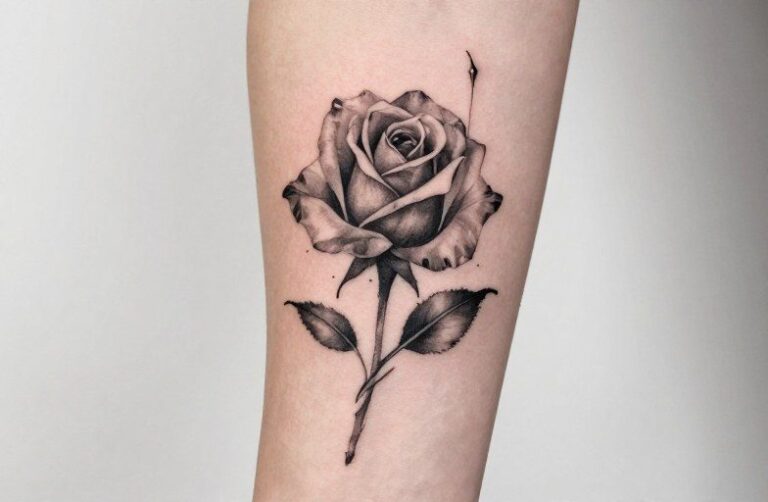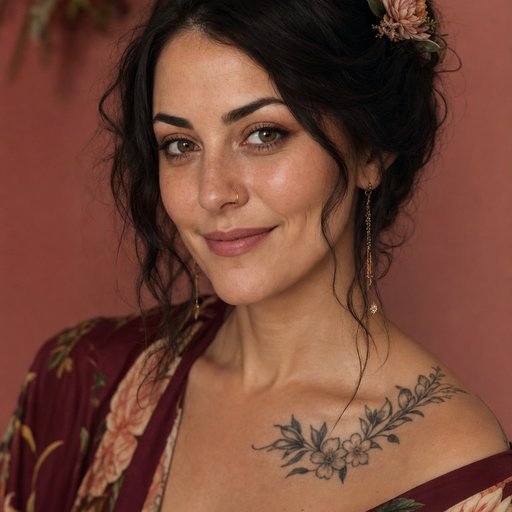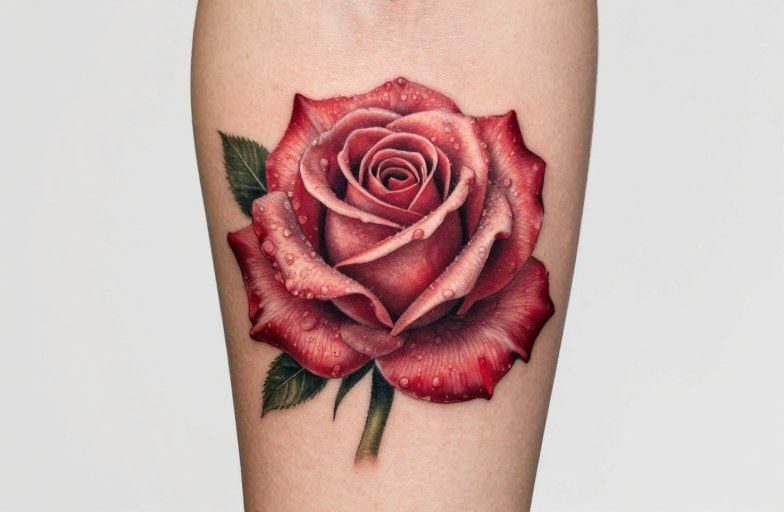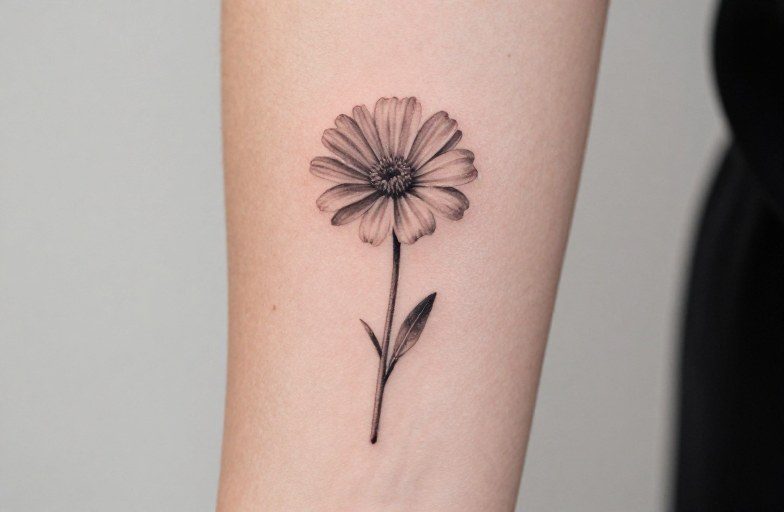
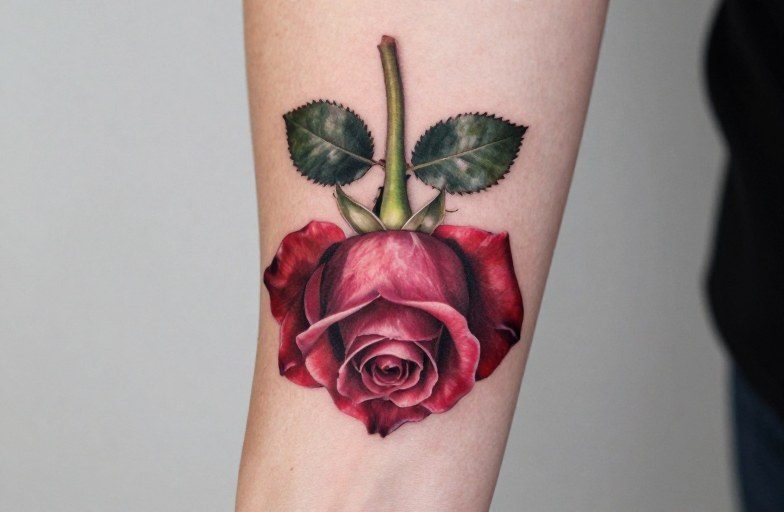
An upside down rose tattoo most commonly represents a love that has ended, a relationship in decline, or the act of turning away from something once cherished. The inverted position subverts the rose’s traditional symbolism of beauty and romance, creating a visual language of grief, closure, or rebellion against conventional sentiment. Depending on context, it can also signal personal transformation, the painful process of growth that requires destruction of the old self.
Mythology & Folklore
Classical Roots of the Inverted Flower
In Greek myth, the rose emerged from the blood of Adonis and the tears of Aphrodite, tying it permanently to love and death intertwined. The inverted position rarely appears in ancient texts directly, but the concept of “world upside down”, mundus inversus, permeated medieval European folklore as a symbol of chaos, social upheaval, or the liminal space between life and death. Tarot readers will recognize this energy: the Hanged Man suspends himself head-down to gain perspective, not as punishment but as voluntary transformation.
Some trace the inverted rose specifically to 19th-century mourning jewelry, where flowers drooped or hung to signal grief. Hairwork brooches and painted miniatures featured roses with stems pointing upward, blooms downward, in coded messages of lost affection. This visual grammar transferred naturally into tattoo culture once electric machines made detailed botanical work feasible on skin.
Sailor and Counterculture Adoption
Traditional sailor tattooing often used the upside down rose as a memorial piece, sometimes paired with a name and dates, sometimes standing alone as a more ambiguous tribute. The style’s spread through 1960s-70s biker and punk communities cemented its association with rejection of mainstream values. A rose flipped on its head became shorthand for “this beautiful thing hurt me” or “I don’t believe in your romance anymore.”
Symbolism & Core Meaning
Reversal and Subversion
The fundamental power of this image lies in its deliberate wrongness. Roses grow toward sun; gravity pulls roots down, blooms up. Reversing this creates immediate visual tension that the eye registers before the mind processes meaning. Tattoo collectors often choose this orientation specifically to reject the “pretty flower” expectation, particularly those who’ve been tattooed elsewhere and want something that reads as emotionally complex rather than decorative.
- Love lost or betrayed: the most traditional reading, especially with thorns prominent
- Death and mourning: particularly when paired with dates, skulls, or faded color
- Rebellion against sentimentality: a deliberate aesthetic choice for punk, goth, or metal subcultures
- Transformation through destruction: the alchemical concept of solve et coagula, dissolve to rebuild
The Thorn’s New Prominence
Flip a rose and the thorny stem dominates the composition. In upright designs, thorns often hide beneath leaves or get minimized. Upside down, they become unavoidable, sometimes the only element visible above a collar line or sleeve cuff. This shifts the tattoo’s emotional register significantly. A piece that reads as “beautiful but dangerous” upright becomes “dangerous that was once beautiful” inverted. The narrative reverses.
Who Chooses This Tattoo
Placement and life context matter enormously. Someone fresh out of a divorce might want this on the ribcage or inner arm, private, sharable only when chosen. A musician in a punk band might run it large on the throat or hand, broadcasting the subversion. The same symbol functions differently depending on whose body carries it and where.
Age and tattoo history play roles too. First-timers rarely choose inverted roses; the image requires enough visual literacy to understand why “wrong” orientation carries weight. Collectors with traditional work elsewhere sometimes use this as a deliberate counterpoint, something that dialogues with their existing pieces rather than harmonizing. The choice often signals maturity in collecting, a move away from pure aesthetics toward symbolic complexity.
Gender and Evolving Associations
Historically more common on men in Western tattooing, the upside down rose has shifted significantly in the last two decades. Women now request it equally, sometimes reclaiming the “damaged romantic” narrative from male-dominated counterculture. The meaning doesn’t change, but who gets to claim it has broadened. Queer tattoo spaces particularly embrace this symbol for its capacity to represent relationships that society itself inverts, love made “wrong” by external judgment rather than internal failure.
Color vs Black and Grey
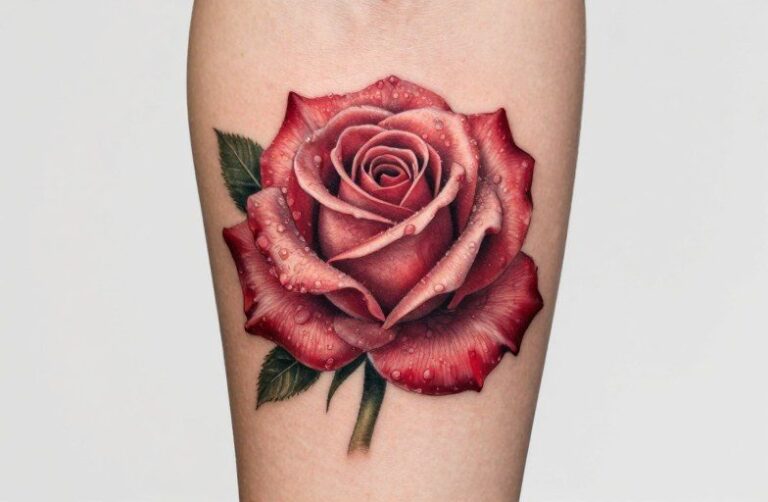
Color choices radically alter how this tattoo reads over time. Bright red ink, even when inverted, retains some romantic association, the blood still pulses. Faded red, or red deliberately muted toward brown or rust, reads as old blood, dried passion. Black and grey removes the warmth entirely; the rose becomes architectural, almost forensic. These pieces age differently too: red pigment in roses often blurs and cools within five to ten years, while black and grey holds structure longer but can muddy in the subtle grey washes that give petals depth.
- Deep crimson: passion that still hurts, wounds fresh
- Faded pink or blush: nostalgia, gentler loss, memory softening edges
- Blue or purple: melancholy, the “blue rose” of impossibility made inverted
- Black and grey: finality, documentation, emotional archaeology
White ink highlights on black and grey roses can create striking dimension, but white fades fastest and often disappears into skin tone within a few years. Experienced artists typically recommend against relying on white for structural elements in this specific design.
Personal & Modern Meanings
Contemporary tattooing has loosened the symbol’s specificity. Some now choose upside down roses purely for compositional reasons, the stem creates a natural line that wraps forearms or follows collarbones in ways upright roses resist. Others use it as a general marker of “complicated feelings about beauty,” not tied to any single relationship or loss. The symbol has become capacious enough to hold personal meanings that diverge from traditional readings.
Botanical Accuracy vs Stylization
Realistic rose varieties carry specific associations, damask for old gardens, tea roses for Victorian sentiment, wild roses for resilience. Stylized or neo-traditional designs often abandon botanical specificity for emotional impact. A geometrically simplified upside down rose reads differently than a photorealistic one: the former suggests deliberate philosophical stance, the latter documents something that actually happened. Both valid, but the choice matters for how the tattoo communicates.
Similar & Related Symbols
The upside down rose exists within a family of inverted or subverted botanical and heart imagery. Understanding these neighbors helps clarify what makes this specific symbol distinct.
- Inverted heart: more directly associated with romantic rejection, less nuanced than the rose
- Drooping or wilted rose (upright stem, dying bloom): natural decline rather than violent reversal
- Rose with snake: temptation and danger, but the rose remains upright, corrupted rather than inverted
- Broken stem rose: abrupt separation, often more violent than the slow inversion suggests
- Rose with clock or timepiece: mortality made explicit; sometimes paired with inversion for compounded meaning
The upside down rose differs from all these in its completeness of reversal. Nothing is broken, wilted, or attacked, the whole form simply exists wrong, creating unease without explanation. That ambiguity is its strength and its risk. Viewers may misread it as mistake rather than intention, especially in small or poorly executed pieces where the inversion isn’t immediately obvious.
The Bottom Line
An upside down rose tattoo works when the orientation serves the meaning, not when it merely attempts edge for its own sake. The best pieces combine technical precision, clean stem lines, readable petal structure even inverted, with genuine emotional context. Over time, as the tattoo settles into skin and the initial shock of placement fades, the image becomes part of the body’s landscape. What remains is the choice to carry something beautiful in an impossible position, a daily reminder that meaning survives transformation, even when the world gets turned on its head.
Choose an artist who understands botanical structure enough to make the inversion read clearly at a glance. Muddy execution turns subversion into confusion. The stem must be stem, the bloom must be bloom, even when gravity disagrees. That clarity of form, carrying contradiction of position, is what gives this symbol its lasting power.
Frequently Asked Questions
Does an upside down rose tattoo always mean a breakup?
Not necessarily. While lost love is the traditional meaning, many people choose it for transformation, rebellion against conventional beauty, or personal grief unrelated to romance. Context and accompanying imagery matter more than the orientation alone.
Where’s the best placement for an upside down rose?
Forearms and outer biceps work well because the natural arm position lets the rose hang downward, reinforcing the design. Inner arms and ribs suit more private meanings. Avoid spots where the inversion might be hidden by clothing or read as accidental.
Will people think my upside down rose is a mistake?
Poorly executed ones can look accidental. Strong linework, clear stem structure, and appropriate size prevent this. Many artists add subtle cues, thorns, leaves, or deliberate shading asymmetry, to signal intentionality.
How do upside down roses age compared to upright ones?
They age similarly technically, but the inverted composition can hide or exaggerate blurring differently. Stems pointing upward may blur into surrounding skin faster than stems pointing down. Black and grey typically ages more predictably than color in this specific orientation.