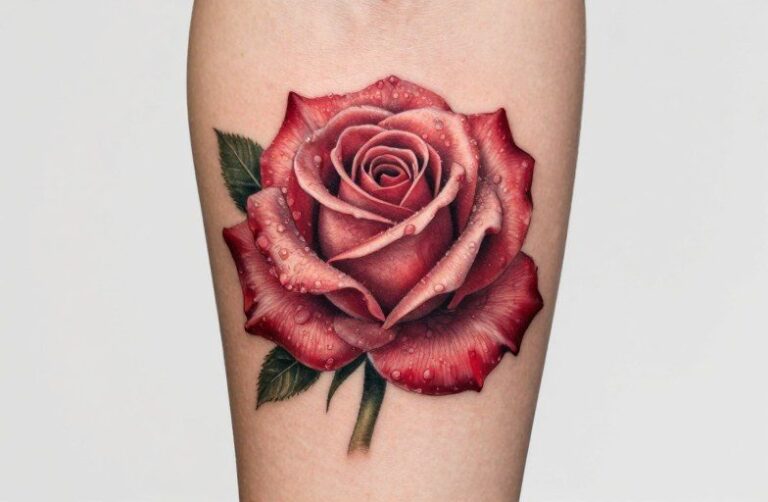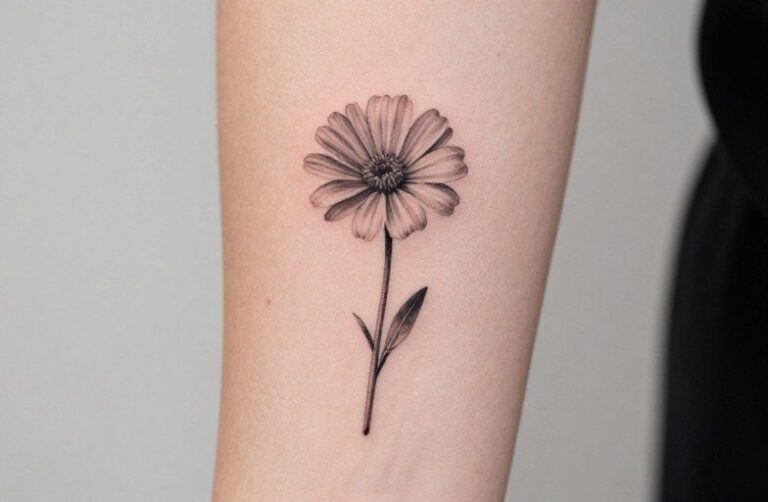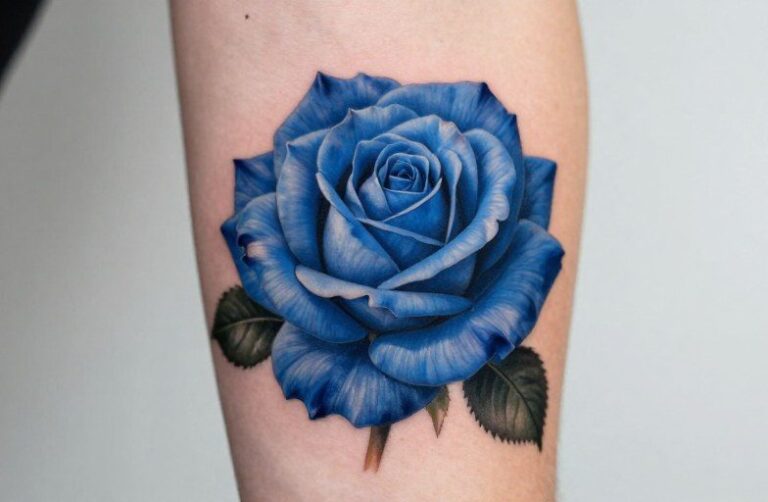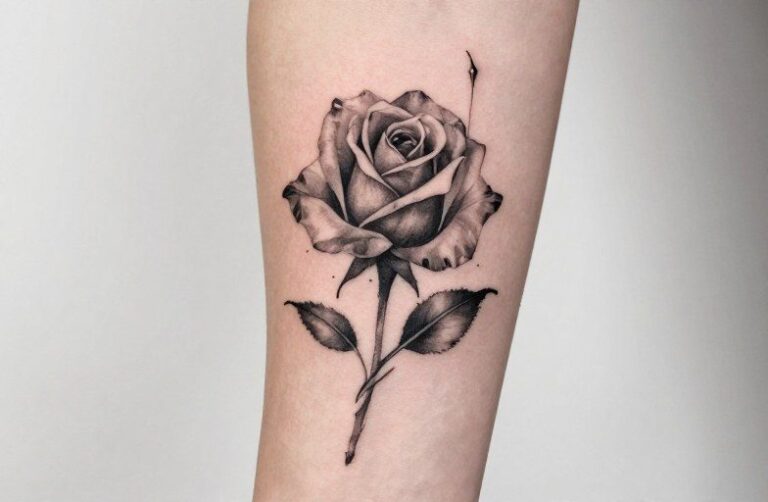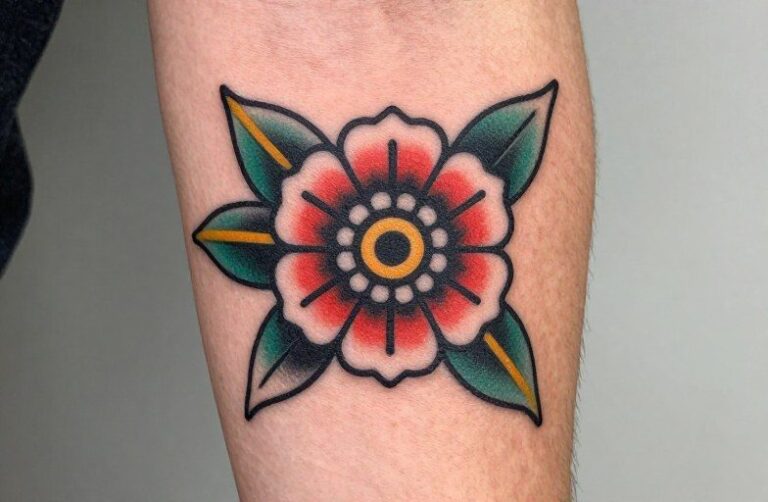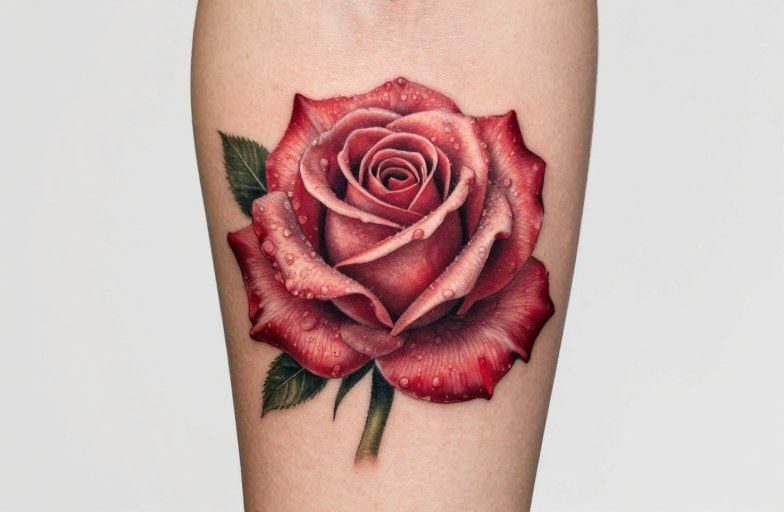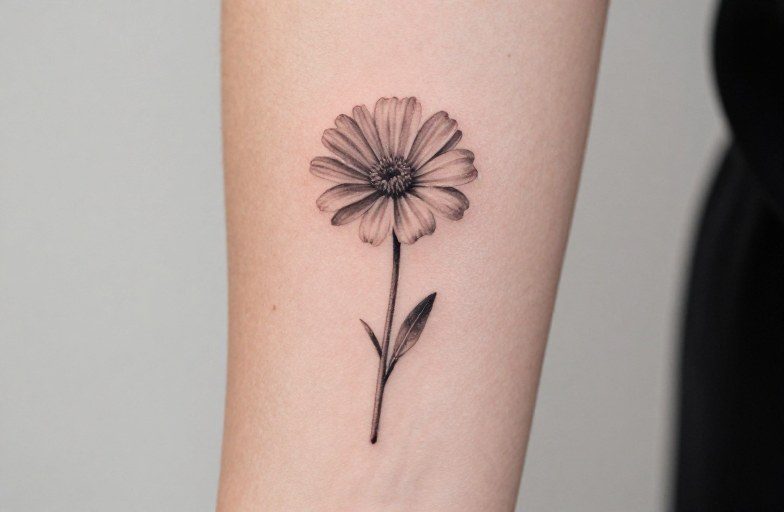
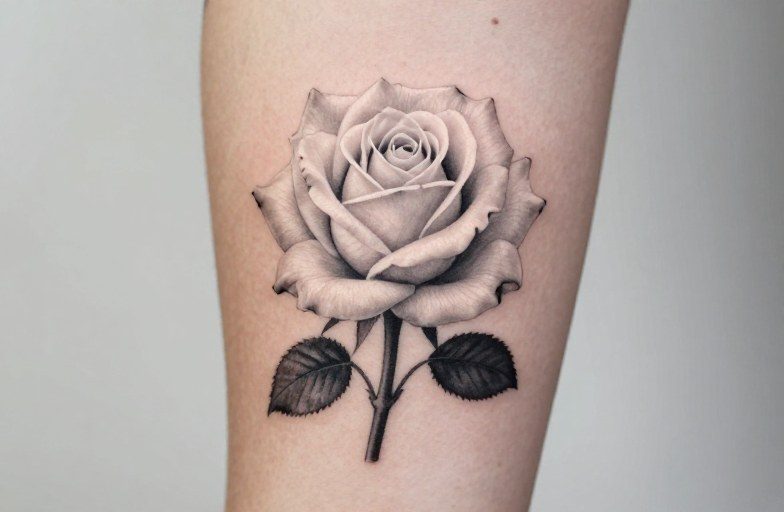
A white rose tattoo most commonly signals purity, innocence, and new beginnings. In the language of flowers, the Victorian-era system where blooms carried coded messages, it represented silence, secrecy, and reverence. Today, people wear it for memorials, fresh starts, or simply the stark visual contrast of pale petals against skin.
Who Chooses This Tattoo
There’s no single type. Memorial pieces draw parents, siblings, partners marking loss. The white rose sits alongside names, dates, or birth flowers in these compositions. People leaving religious communities sometimes choose it as a reclaimed symbol of innocence outside its original context. Others come from the straightforward aesthetic appeal: a white rose reads as elegant where a red rose might feel expected.
Gender and Style Variations
Traditionally coded feminine, the white rose has crossed over through black-and-grey realism and bold traditional work. Men often pair it with daggers, skulls, or script to masculinize the image, though that framing is loosening. Fine-line single-needle pieces attract a younger clientele; thick-lined American traditional appeals across ages. Watercolor backgrounds, where color bleeds behind a grey or white rose, remain popular for softening the image without abandoning structure.
Best Placements
White ink and light grey demand strategic placement. These tones fade faster than black, and sun exposure accelerates that process.
High-Visibility vs. Protected Spots
- Inner forearm: Moderate sun, easy to show or cover. Light grey ages reasonably here with sunscreen habit.
- Ribcage/side: Protected from UV, allows larger detail work. Painful session, but the rose holds its value.
- Behind the ear: Tiny, trendy, problematic. White ink here often disappears into skin tone within a few years.
- Thigh or upper arm: Good real estate for detail, easily covered. Traditional collectors favor these spots.
- Hand or fingers: High fade zone. White rose detail here typically requires touch-ups every 1-2 years.
Scale matters. A thumbnail-sized white rose becomes a blurry blob faster than a palm-sized piece with defined petals and negative-space highlights.
Symbolism & Core Meaning
The white rose carries layered, sometimes contradictory associations. Understanding them helps you communicate with your artist and avoid unintended messages.
Love and Marriage
In Western floral tradition, white roses signified innocent love, contrasted with red roses for passion. Bridal bouquets cemented this link. A white rose tattoo can mark commitment, celibacy until marriage, or a relationship’s clean start after difficulty. Some wear it as a counterintuitive anti-bridal statement, reclaiming the symbol from heteronormative expectation.
Death and Remembrance
White roses appear at funerals across cultures. The tattoo translates this literally: a single white rose with a loved one’s initials, or a spray of them marking multiple losses. The pale color reads as ghostly, absent, respectful. Unlike skulls or grim imagery, the white rose memorializes without confronting viewers with mortality directly.
Secrecy and Resistance
The Tudor rose, red and white combined, symbolized the end of England’s Wars of the Roses. White roses alone became associated with the Yorkist faction, then with Catholic resistance, then with various underground movements. Some trace the “sub rosa” (under the rose) concept of secrecy to Greek and Roman dining rooms where roses hung as confidentiality symbols. This lineage gives the white rose tattoo a subtle rebel quality, often unrecognized by casual observers.
Mythology & Folklore
Rose mythology is crowded, and white variants claim specific threads.
Greek tradition often links white roses to Aphrodite’s creation myth: the flower sprung from her tears and her lover Adonis’s blood, originally white before staining red with his death. The white rose thus predates passion in this telling, it represents love before loss.
Christian iconography commonly associates white roses with the Virgin Mary, sometimes called the “Mystical Rose.” St. Bernadette of Lourdes and other visionaries reportedly received white roses as signs. This Catholic resonance persists in Latin American tattoo culture, where white roses accompany Virgen de Guadalupe imagery or stand alone as devotional pieces.
In alchemical and esoteric traditions, the white rose sometimes represents the “work” completed, spiritual refinement achieved. This meaning surfaces in Rosicrucian symbolism and occasionally in tattoo requests from people with specific esoteric practice.
Similar & Related Symbols
White rose tattoos rarely stand completely alone. Common pairings and alternatives include:
- Black rose: Death, farewell, anarchist symbolism. The visual opposite; some clients agonize between them.
- Red and white roses together: Unity, compromise, or the Tudor historical reference. Compositionally busy but meaningful.
- Thorns and stem: Without them, the rose reads softer; with them, it gains defensive, “beauty hurts” undertones.
- Dove: Christian peace, or memorial pairing. Can feel sentimental unless executed with restraint.
- Clock or pocket watch: Time’s passage, often memorial. The white rose softens the mechanical imagery.
- Butterfly: Transformation, rebirth. Thematic overlap with “new beginnings” white rose meaning.
Consider whether you want the rose to dominate or integrate. A sleeve with white roses as connecting elements differs completely from a single sternum piece.
How It Ages on Skin
This is where white rose tattoos separate from darker imagery. Light pigment behaves differently than saturated black.
The White Ink Problem
True white ink, used for highlights or entirely white petals, yellows or disappears as skin regenerates. On pale skin, it becomes nearly invisible within 5-10 years. On darker skin, it can read as ashy or grey rather than white. Most experienced artists working this subject use light grey or “off-white” mixes rather than pure white for the main petals, reserving pure white for small highlight accents.
Line Weight and Contrast
Thin lines blur. A white rose with delicate petal edges needs periodic sharpening. Bold black outlines surrounding grey-wash petals age more stably than pure soft-shading approaches. Discuss this explicitly with your artist: “How will this look in 15 years?” is a fair question. Good artists show healed photos, not just fresh work.
Healing itself affects appearance. White and light grey areas scab more visibly, tempting picking that pulls pigment out. The first month often looks worse than the final result. Expect the pale tones to settle after 6-8 weeks, not immediately.
The Bottom Line
A white rose tattoo works when you commit to its maintenance and accept its limitations. The symbolism is flexible enough to carry personal weight without requiring explanation, yet specific enough to avoid generic flower-tattoo territory. Choose an artist with proven light-grey or white-ink work in their portfolio, not just fresh photos, but healed results. Place it where sun won’t bleach it prematurely, and budget for potential touch-ups down the line. The meaning you bring matters, but the technical execution determines whether you’ll still want to look at it in a decade.
Frequently Asked Questions
Does white rose tattoo meaning change if the rose is wilting or dead?
Yes, a wilted or dying white rose shifts the meaning toward lost innocence, ended relationships, or mourning. The living bloom signals hope or purity; the decayed version acknowledges that those states don’t last. Most artists can adjust petal droop and stem angle to communicate this without words.
Can dark skin get a white rose tattoo that actually looks white?
Pure white ink rarely stays white on melanin-rich skin; it typically heals to a light grey or ashy tone. Skilled artists use high-contrast designs with dark outlines and grey-wash petals that read as “white rose” visually without relying on actual white pigment. Results vary by individual skin undertone.
How much does a white rose tattoo typically cost compared to a black one?
Light grey and white-ink work often costs more because it requires more passes, slower application, and greater skill to avoid muddiness. Expect 20-40% above a comparable black-and-grey piece. Extremely detailed single-needle white roses from reputable artists can run into the hundreds per hour.
Is a white rose tattoo appropriate for a memorial if the person preferred different flowers?
The white rose carries broad enough memorial association that it works regardless of personal preference, though some prefer the deceased’s actual favorite bloom. A hybrid approach, white rose paired with their flower, honors both traditional symbolism and individual memory. Discuss compositional balance with your artist.