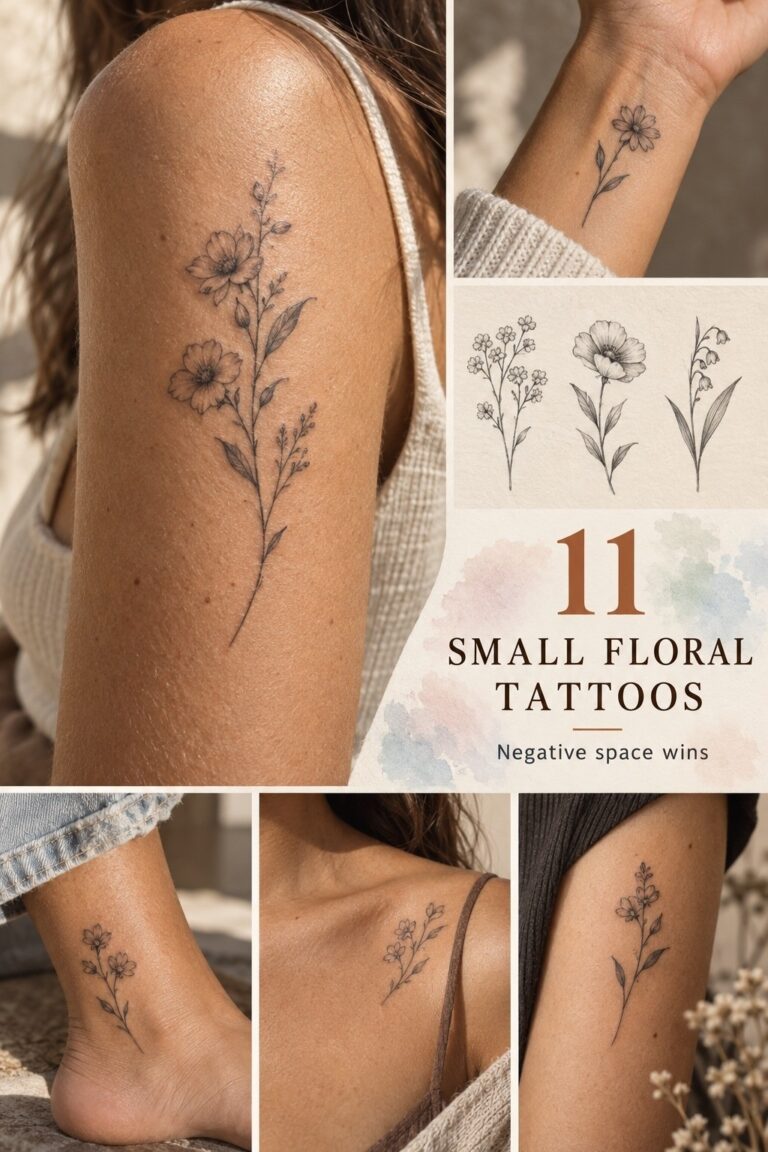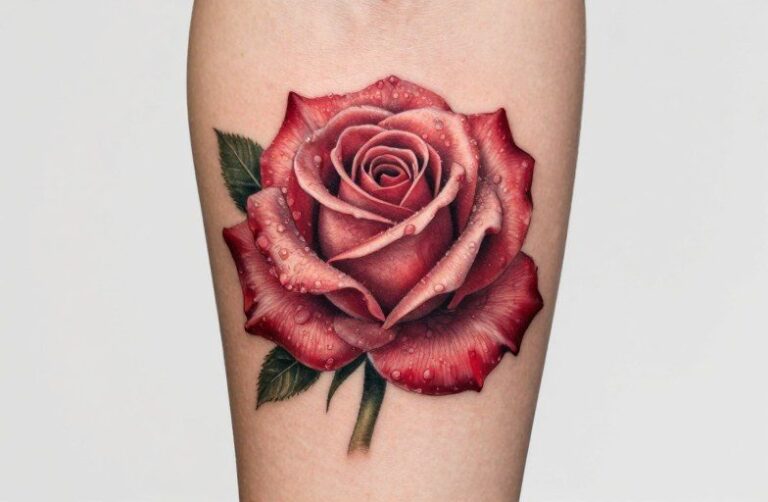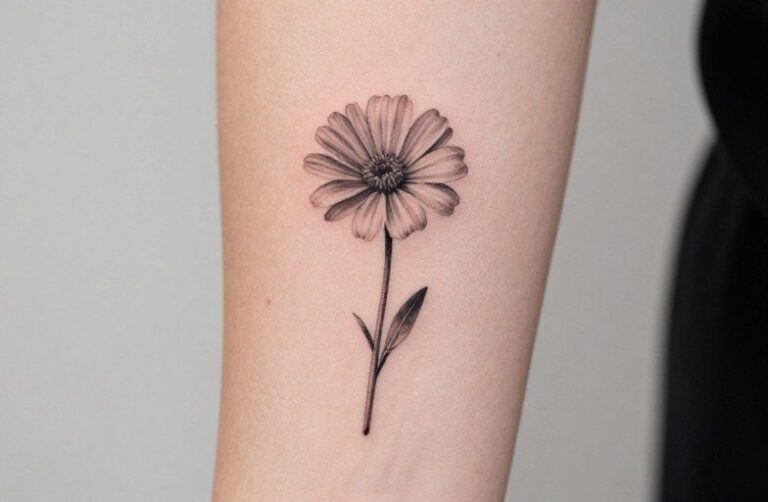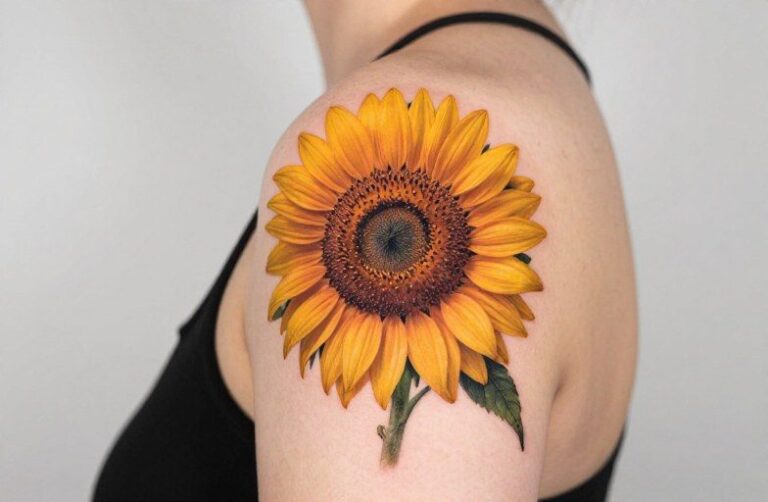
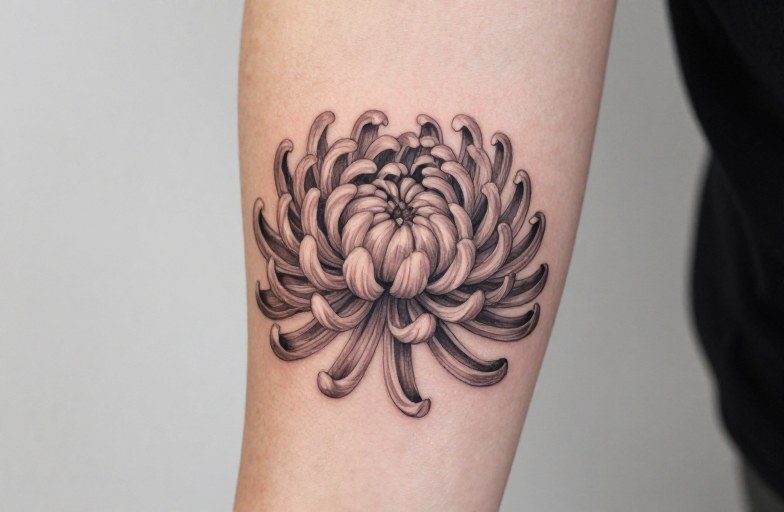
A chrysanthemum tattoo most commonly signals longevity, resilience, and the fullness of life, though in European contexts it can also mark grief and memorial. The flower’s many layered petals make for visually dense, rewarding tattoo work that holds up well over time, and its cultural flexibility means the same bloom reads differently depending on color, placement, and accompanying imagery.
Symbolism & Core Meaning
East Asian Roots
In Japan, the chrysanthemum sits at the center of the Imperial seal and the annual Festival of Happiness. The sixteen-petal form represents perfection and the ideal of a life well-lived. Chinese tradition links the flower to autumn, nobility, and the ninth month, its Chinese name, ju, homophones with “forever.” A tattoo drawing on this lineage typically emphasizes the full, radiating bloom rather than a bud or wilted form, and pairs well with waves, carp, or pagoda imagery.
European and Contemporary Readings
France, Belgium, and Italy associate white chrysanthemums with All Saints’ Day and graveside remembrance. This isn’t a contradiction so much as a different tonal register, death as completion, not truncation. Some trace the “death flower” association to post-WWI burial practices, when the bloom’s late-season hardiness made it practical for November commemorations. A memorial chrysanthemum tattoo in this mode tends toward subdued palettes, tighter compositions, and placement where the wearer controls visibility.
How It Ages on Skin
Petals and Fine Lines
The chrysanthemum’s defining feature, dozens of narrow, overlapping petals, presents a genuine technical challenge. Line-only versions without shading can blur into indistinct texture within five to seven years, especially on high-movement areas like the wrist or ankle. Solid whip-shading or stipple density in the petal centers provides necessary visual weight; open, airy linework rarely ages gracefully on this particular subject.
Color Saturation Reality
Red and gold pigments, the classic Imperial palette, fade predictably: golds shift toward mustard or beige, reds oxidize slightly darker. Purple and bronze varieties hold closer to original tone. White ink, often requested for “realistic” white chrysanthemums, virtually disappears on lighter skin tones within three years and yellows on darker complexions. Experienced artists usually suggest negative space or very light greywash to suggest white petals rather than packing white ink.
- High-detail petal tips: expect softening by year 4-6
- Heavy black outlines behind color: extends readability to 10+ years
- Stipple or pointillism shading: ages better than smooth gradients on this flower
Color vs Black and Grey
When Color Serves the Meaning
Red chrysanthemums amplify the Japanese joy-longevity association. Bronze and amber tones nod to autumn and harvest. Green-centered blooms with white-to-pink petal gradients read botanical and contemporary. Color makes sense when the cultural reference is specific, you’re signaling the Imperial connection, or the November chrysanthemum, or a particular cultivar that held personal significance.
Black and Grey Strengths
Monochrome execution excels at texture and depth without competing associations. The flower’s natural volume, petals curling forward and back, reads beautifully through contrast alone. Black and grey also accommodates smaller scales better; a two-inch chrysanthemum behind the ear stays legible in greywash where color would muddle. For memorial pieces, the restrained palette often suits the emotional register more naturally.
Common Variations & Styles
Traditional Japanese (Irezumi)
The classic irezumi chrysanthemum features bold, uniform petal shapes radiating from a dense center, often accompanied by wind bars, waves, or maple leaves. Petals get solid color fills with minimal gradient. The style demands scale, below four inches, the petals compress into unrecognizable blobs. On sleeves or back pieces, the flower anchors seasonal transition scenes or stands alone as a mon-like crest.
Botanical/Illustrative
Contemporary botanical work pursues specific cultivar accuracy: the spider chrysanthemum’s elongated, curling petals; the pompon’s tight, geometric sphere; the anemone form’s raised central disk. This approach requires reference photography and benefits from an artist with horticultural drawing experience. Line weight varies significantly, fine at petal edges, heavier where petals overlap, to create depth without heavy black.
Neo-Traditional and Decorative
Neo-traditional chrysanthemums exaggerate petal curvature, add ornamental filigree or geometric frames, and employ non-naturalistic color schemes (teal centers, lavender tips). The style sacrifices botanical accuracy for graphic impact and works well on arms, thighs, and ribs where the composition can spread without constraint.
Design Tips & Pairings
Companion imagery should reinforce the specific meaning you’re targeting, not just fill space. For longevity and life-affirmation: koi, bamboo, or sunrise backgrounds. For memorial contexts: single blooms with minimal background, sometimes incorporating dates or names in negative space within the center disk. For loyalty or devotion: paired blooms, or chrysanthemums with dogs (a traditional Korean pairing, often linked to the flower’s association with steadfastness).
- Avoid crowding the petal edges; the silhouette needs room to breathe
- Consider the center disk as a focal anchor, detail here draws the eye
- Stems and leaves add vertical movement but can distort on curved body areas
- Butterflies or dragonflies: common but effective; ensure scale matches the bloom
One practical consideration: the chrysanthemum’s radial symmetry means it has no “wrong” orientation, but it does have a heavy center. Designs with substantial central disks can appear to “pull” downward over time on vertical placements like the forearm or calf. Counterbalancing with stem weight or background elements helps, or simply accepting the natural droop as part of the living quality.
Best Placements
High-Visibility Areas
Forearms and upper arms accommodate the flower’s natural spread without excessive distortion. The shoulder cap allows radial designs to sit centered and balanced. These placements suit the celebratory, life-affirming interpretation, you’re displaying the symbol, not guarding it.
Intimate or Contained Locations
Ribs, sternum, and upper thighs offer flat planes for detailed petal work and controlled viewing. Behind-the-ear placements work for small, simplified blooms but sacrifice the layered depth that makes the flower distinctive. Hands and feet: possible, but the dense petal structure struggles with the skin’s texture and movement there; simpler, bolder interpretations survive better.
Back pieces and full sleeves allow the chrysanthemum to integrate into larger seasonal or narrative compositions. In Japanese body suit tradition, the flower often marks autumn panels, transitioning from summer peonies or lotuses toward winter plum or pine.
Final Word
The chrysanthemum rewards patience in both design and execution. Its cultural weight means shortcuts read as ignorance, the wrong petal count, sloppy center structure, or mismatched color symbolism undermines the intent. Find reference images of the specific cultivar or cultural form you want, discuss aging strategy with your artist, and accept that this flower needs scale to breathe. Done well, it remains one of the most structurally satisfying subjects in tattooing: complex enough to challenge, legible enough to last, and loaded with meaning that doesn’t require explanation to feel present.
Frequently Asked Questions
Does a chrysanthemum tattoo always mean death or mourning?
No. The grief association is primarily European, especially French and Italian tradition. In Japanese and broader East Asian context, it signifies longevity, joy, and nobility. The meaning depends on your cultural reference and color choices.
How big should a chrysanthemum tattoo be to hold detail?
Minimum three to four inches for the bloom alone if you want recognizable petal layering. Smaller works, but expect simplification, fine petal tips merge and the center disk becomes a dark spot rather than dimensional.
What’s the best tattoo style for a chrysanthemum?
Irezumi and neo-traditional styles have the longest established visual vocabulary for this flower. Botanical illustrative works well for specific cultivar accuracy. Avoid purely minimalist line-only approaches unless you accept significant aging degradation.
Can a chrysanthemum tattoo work for a couple or matching design?
Yes, particularly through the Korean and some Chinese associations with loyalty and devoted partnership. Paired blooms, mirror compositions, or shared stem work can signal commitment without the overused rose imagery.