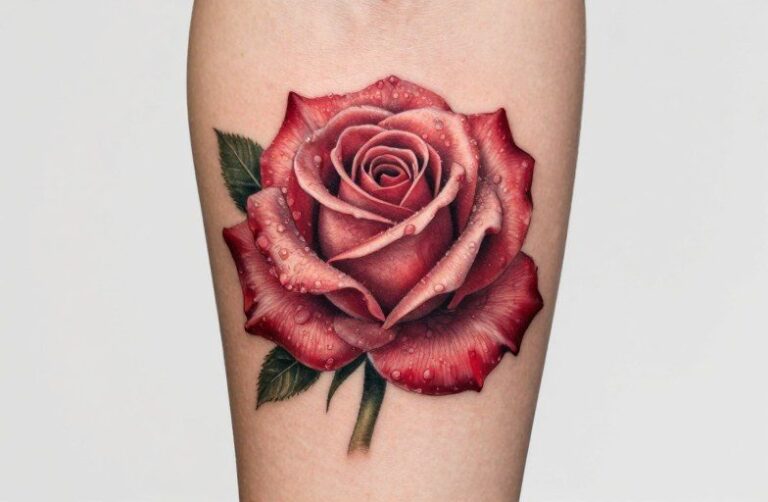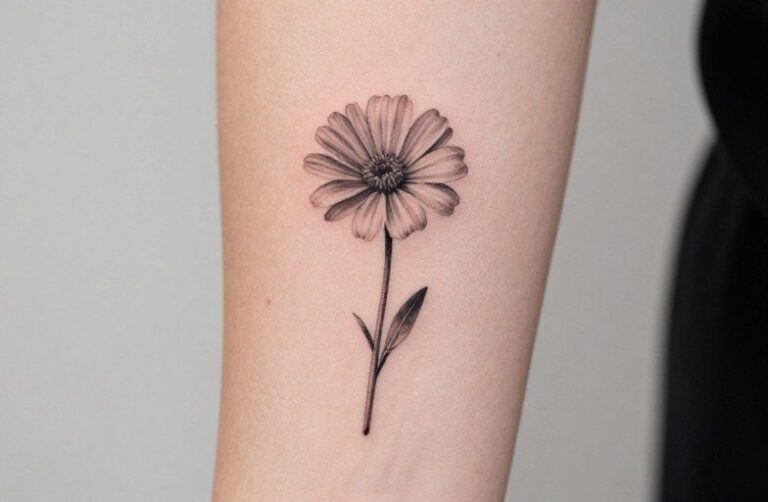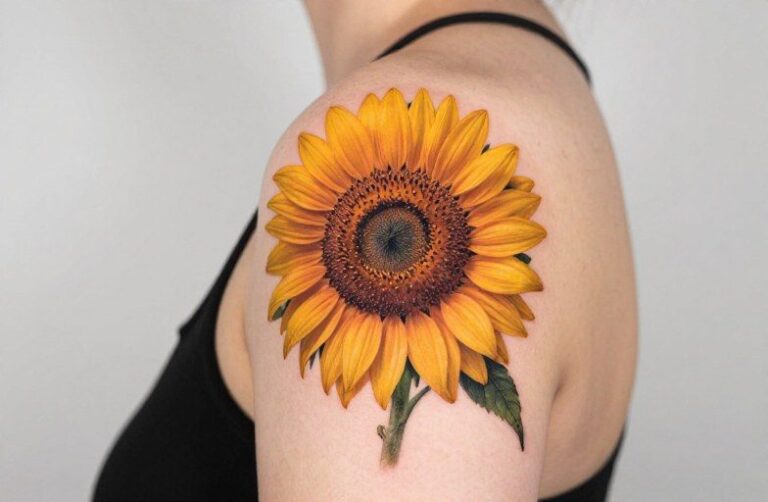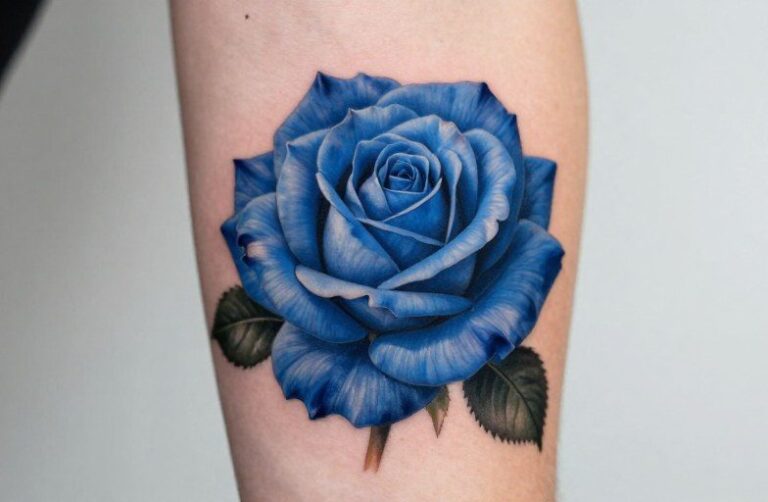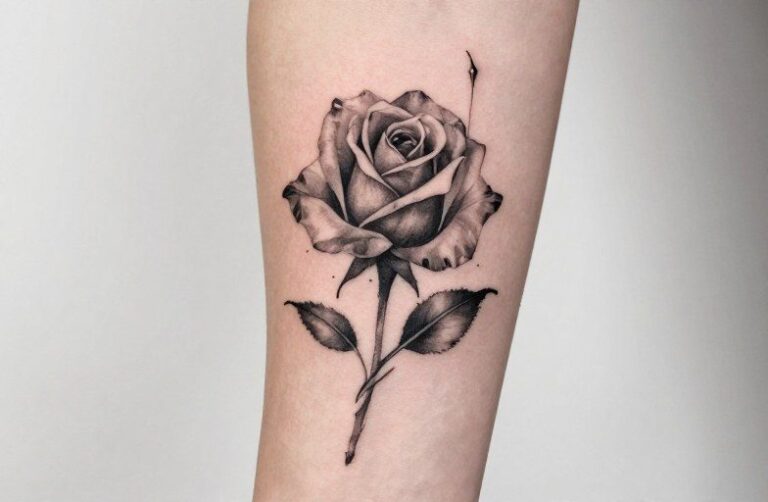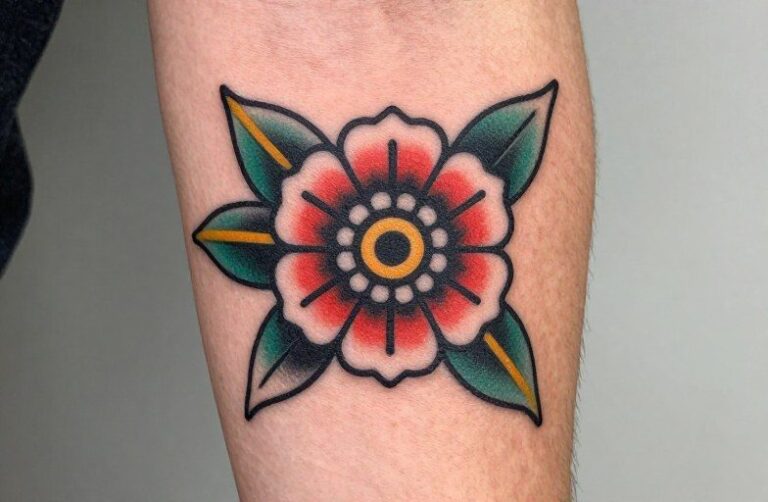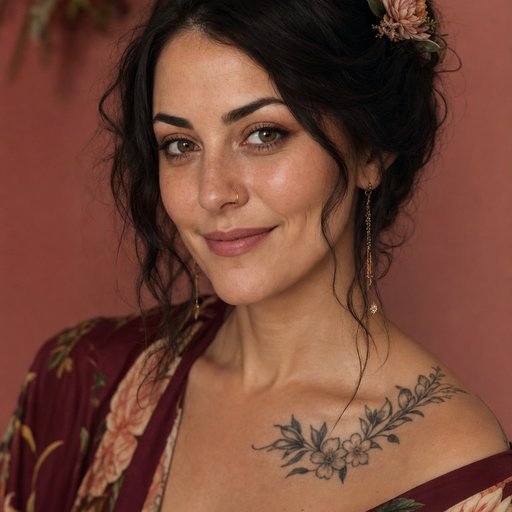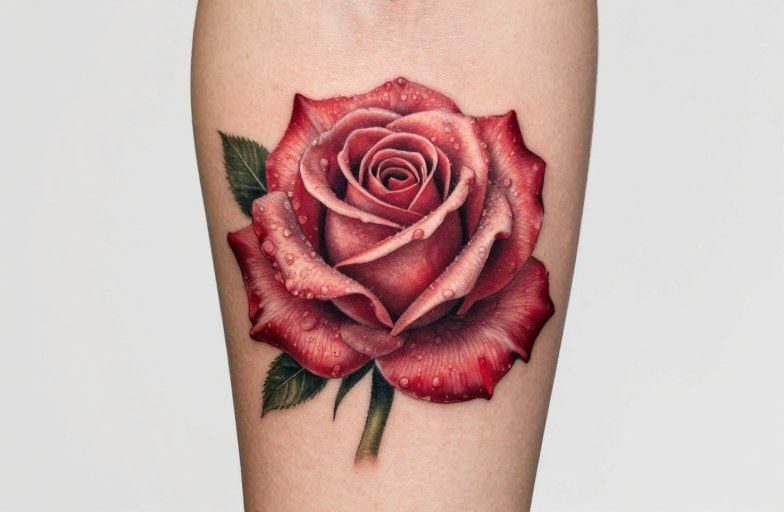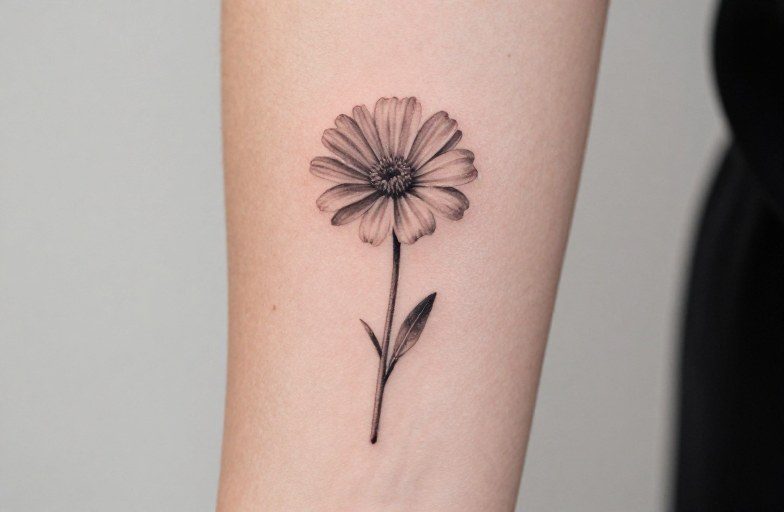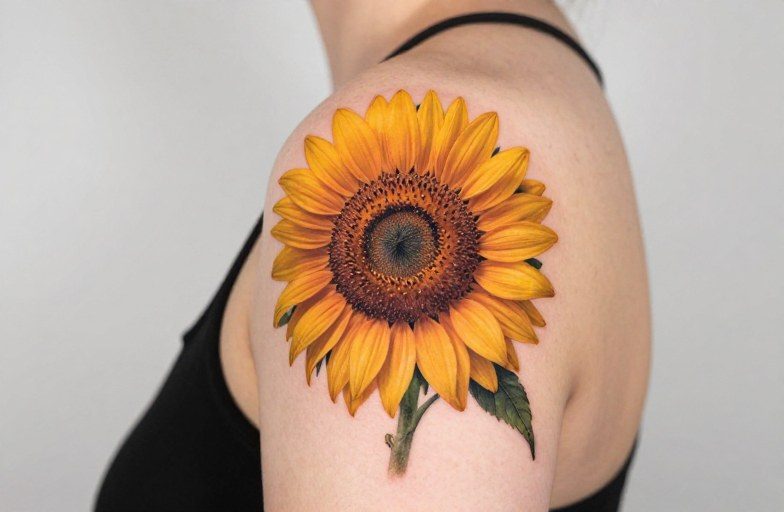
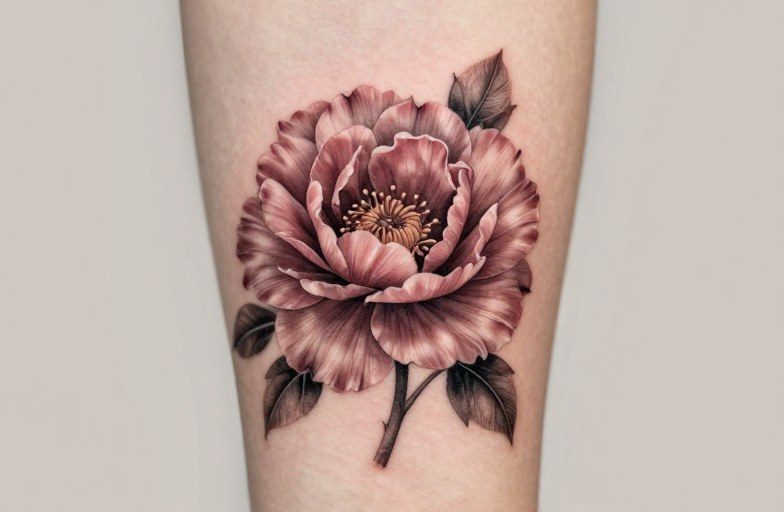
A beautiful flower tattoo most commonly represents growth, the natural cycle of life, and moments of personal significance. Beyond generic positivity, specific flowers carry distinct weight, roses for passion and pain, lotuses for emergence from difficulty, peonies for prosperity, wildflowers for untamed individuality. The meaning tightens or loosens depending on whether you choose a single bloom, a bouquet, a stem with thorns, or petals mid-fall.
Symbolism & Core Meaning
Flowers have functioned as coded communication for centuries, a practice often linked to Victorian floriography where specific arrangements conveyed messages society wouldn’t permit spoken aloud. That lineage survives in tattooing, though most people today choose flowers for more personal reasons than secret messaging.
Single Bloom vs. Bouquet
A solitary flower reads as singular focus, one relationship, one loss, one quality being claimed. Bouquets complicate the narrative, layering multiple meanings or representing interconnected people. A single rose on a wrist carries different weight than a sleeve of wildflowers, even if both symbolize love. The former isolates; the accumulates.
Life Stages and Decay
Some of the most striking flower tattoos depict wilting, browning, or skeletal blooms. These aren’t morbid by default. A falling petal or hollow stem can mark acceptance of impermanence, a concept central to several philosophical traditions. The contrast between a bold flower and a cracked seed pod in the same piece can represent lived experience, the full arc rather than the highlight.
- Rose: Love, secrecy, pain (thorns), balance of beauty and risk
- Lotus: Emergence, spiritual awakening, resilience through murky conditions
- Peony: Prosperity, honor, sometimes masculine protection in Japanese tradition
- Cherry blossom: Transience, the beauty of brief existence
- Protea: Transformation, diversity, courage through change
- Lily: Restoration of innocence, often associated with memorial
Personal & Modern Meanings
Contemporary flower tattoo choices rarely hew strictly to historical dictionaries. Someone might choose a flower their grandmother grew, a bloom from the country they left, or simply a form that resonated during a difficult season. The personal layer often supersedes the traditional.
Memorial and Grief Work
Flowers function as living grave markers in tattoo form. Birth flowers, funeral arrangements pressed and photographed for reference, or the favorite bloom of someone lost, all translate into permanent commemoration. The visual softness of flowers can carry emotional weight that harder imagery (dates, names, religious symbols) sometimes lacks. There’s permission for beauty alongside sorrow.
Reclamation and Identity
For people reclaiming bodily autonomy after trauma, medical intervention, or cultural restriction, flower tattoos sometimes mark reclamation. The choice of something “beautiful” by conventional standards can be deliberate defiance, particularly when placed on scarred skin or areas historically policed. The meaning here lives in the act of choosing and the context of placement, not the flower itself.
Religious & Spiritual Angles
Religious flower symbolism varies dramatically across traditions, and some imagery carries specific doctrinal weight that may not align with casual aesthetic choice.
In Christian iconography, the lily associates with the Virgin Mary’s purity and the resurrection. The rose connects to the rosary and, in some medieval traditions, the wounds of Christ. The lotus, while spiritually significant in Hinduism and Buddhism as a symbol of purity emerging from muddy waters, has been widely adopted by non-practitioners in ways some find appropriative. If you’re drawn to a flower with clear religious roots, understanding that context matters for respectful wear.
Japanese Buddhist contexts use lotus imagery differently than Indian traditions. Mexican Catholicism incorporates marigolds specifically for Día de los Muertos altars, using them in tattoo form without that cultural grounding can read as hollow aesthetic borrowing. The spiritual angle isn’t about gatekeeping; it’s about knowing what you’re carrying.
How It Ages on Skin
Flower tattoos age based heavily on technique, scale, and placement. This is where beautiful design meets biological reality.
Line-Heavy vs. Saturated Color
Fine-line floral work, delicate petals drawn with single needles, minimal shading, looks ethereal fresh. It also blurs faster. Lines spread as skin ages and sun exposure accumulates. A petal drawn at 1mm width may become indistinct within five to seven years without touch-ups. Heavier linework, stippled shading, or watercolor-style saturation holds definition longer but sacrifices that initial fragility.
White ink highlights, popular in flower tattoos for “dew drops” or petal texture, yellow or disappear entirely on most skin tones within two to four years. Yellows and soft pinks fade fastest; deep reds, purples, and blacks maintain longest. A realistic red rose will hold longer than a pastel peony.
Skin Texture and Placement Effects
Flowers on high-movement areas, inner arms, ribs, thighs, distort more with muscle flex and skin stretching. Detailed centerpieces placed on the sternum or upper chest often settle unevenly as breast tissue changes with age, weight, or pregnancy. The back of the arm, outer thigh, and calf offer more stable canvases for intricate petal work.
Hand and foot flower tattoos face rapid fading due to constant use, friction, and thinner skin. What reads as a delicate wildflower at twenty may become a smudged suggestion by thirty-five. If longevity matters, scale up slightly and choose placement deliberately.
Best Placements
Certain placements complement flower forms naturally; others fight against them.
- Shoulder cap to upper arm: Natural curve for blooming forms, roses and peonies sit well here; allows for future extension into half or full sleeve
- Ribcage side: Vertical stem or vine work follows the body’s line; painful but offers large, flat skin for detailed centerpieces
- Thigh: Ample space for full bouquet or large single bloom; heals relatively well; easily concealed or displayed
- Behind ear or neck nape: Small, simple flowers work; detailed work becomes indecipherable as it ages in this mobile area
- Hand or fingers: High visibility, rapid fading; best for bold, simplified forms rather than delicate detail
- Ankle to foot: Vine or stem work can follow bone structure; expect significant touch-up needs
The wrap-around flower, stem starting at wrist, bloom at inner forearm, uses the arm’s cylinder shape effectively. Back pieces allow for garden-scale composition but lack the intimacy many flower tattoos aim for.
Who Chooses This Tattoo
Demographically, flower tattoos cross gender, age, and cultural lines more than most imagery. What distinguishes choosers isn’t identity category but motivation pattern.
People marking specific life transitions, graduation, recovery, marriage, divorce, parenthood, often gravitate toward flowers as symbols of organic change. Those with agricultural or gardening backgrounds sometimes choose literal representations of plants they’ve grown. Artists and designers frequently select flowers for formal qualities: color theory, negative space, compositional balance.
The person choosing a flower purely for aesthetics, with no symbolic attachment, isn’t less legitimate. Tattooing doesn’t require narrative justification. However, the most enduring flower tattoos usually have some anchor beyond “it looked pretty in the folder.” That anchor can be as simple as a color that matched a room you once felt safe in.
Before You Decide
Reference quality determines outcome more than concept. Bring photos of actual flowers, not other tattoos. A good artist translates botanical reality into workable skin art; a mediocre one copies Pinterest iterations until they’re unrecognizable mush.
Consider the flower’s season. A cherry blossom in December, a poinsettia in July, temporal mismatches don’t invalidate choice, but they add a layer of dissonance worth acknowledging. Similarly, native vs. imported species carry different resonances. A California poppy means something different in Los Angeles than in London.
Discuss aging openly with your artist. Ask specifically how your chosen color palette and line weight will look at ten years, not ten days. Request to see healed photos of their floral work, not just fresh portfolio shots. The beautiful flower tattoo you live with is the settled one, not the Instagram post.
Finally, placement affects meaning more than most people anticipate. A flower you can see, inner forearm, thigh front, functions as reminder or affirmation. One you can’t easily view, back, ribcage, back of arm, becomes more private, sometimes more about marking than daily witnessing. Neither is superior. Both deserve conscious choice.
Frequently Asked Questions
Do flower tattoos have to be feminine?
No. Flower symbolism crosses gender lines historically and currently. Japanese irezumi features heavy peony and chrysanthemum work on men. Modern tattooing sees plenty of masculine-presenting people choosing flowers for memorial, aesthetic, or symbolic reasons without feminizing intent.
What’s the most durable flower tattoo style?
Bold linework with saturated color or solid black and grey shading ages best. Fine-line, watercolor, and heavy white ink details fade and blur fastest. For longevity, choose slightly heavier line weight than looks ideal fresh, and avoid relying on subtle color gradients.
Can I mix different flower types in one tattoo?
Yes, but consider visual cohesion and symbolic compatibility. A skilled artist can unify disparate blooms through consistent lighting, color palette, or compositional style. Random assembly without unifying elements tends to look like flash sheet sampling rather than intentional design.
How do I find an artist who specializes in floral work?
Search portfolios for healed floral photos, not just fresh work. Look for botanical accuracy, correct petal attachment, believable stem structure, natural growth direction. Artists who tattoo flowers well usually display plant knowledge or reference-gathering habits that show in the work.