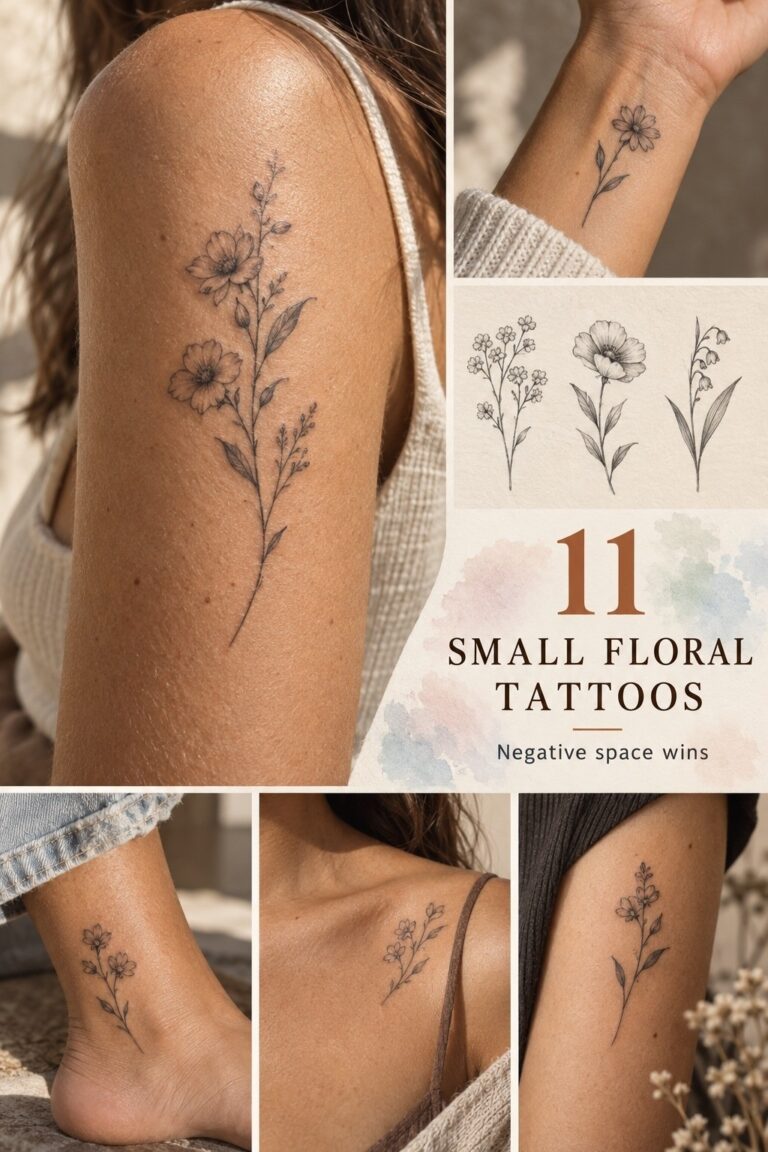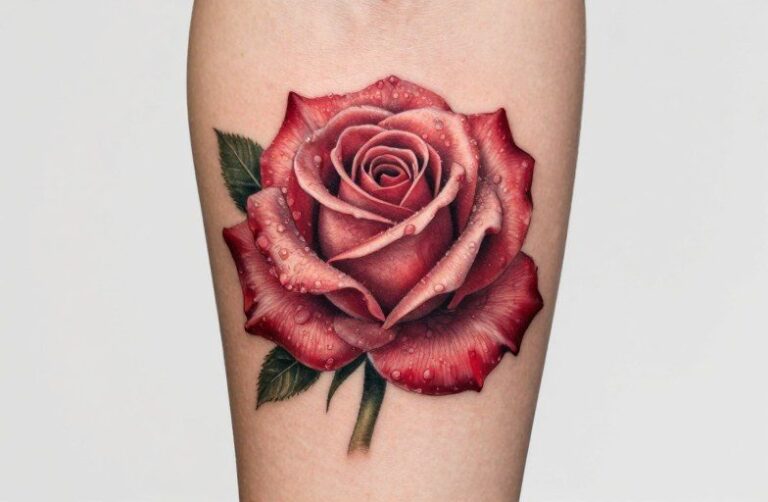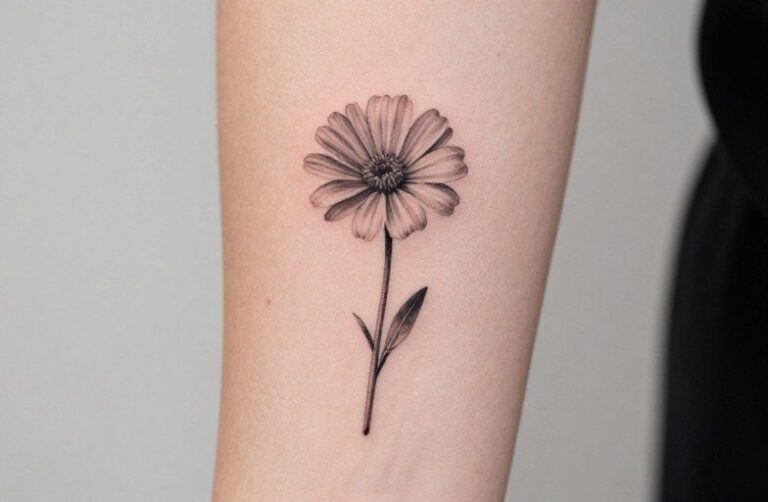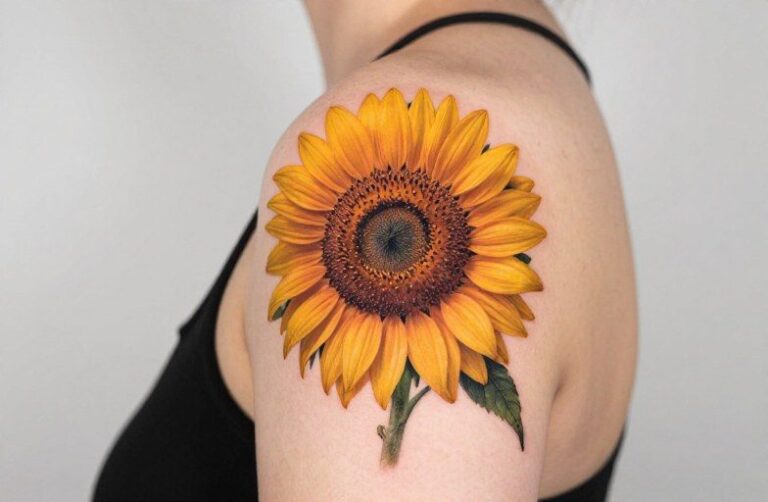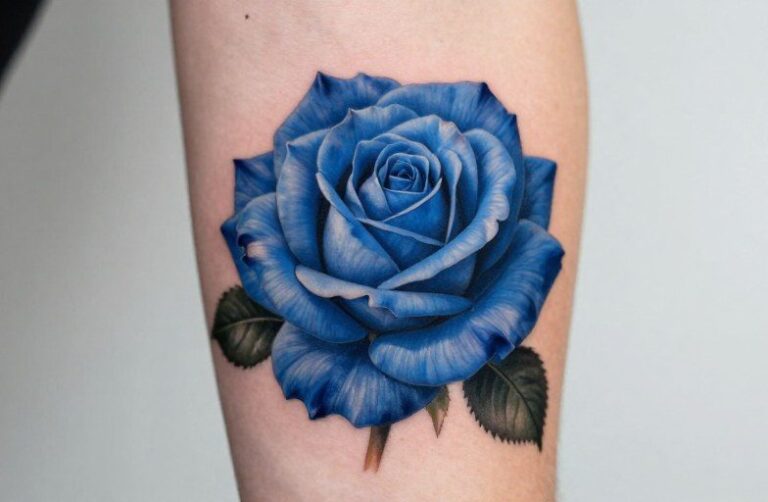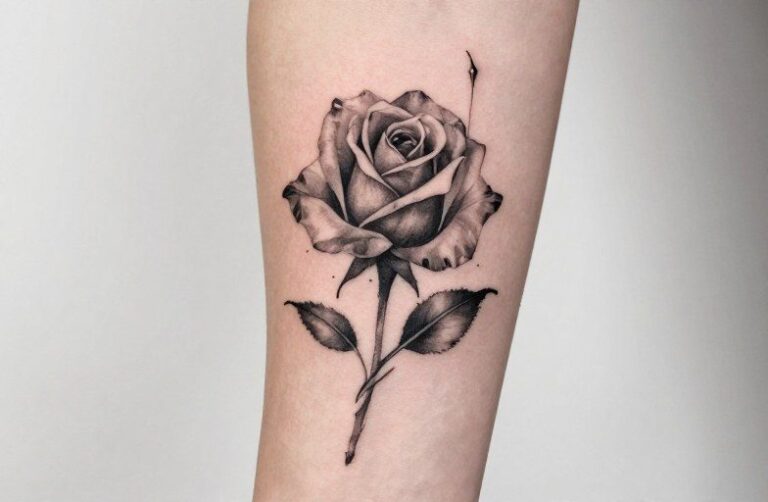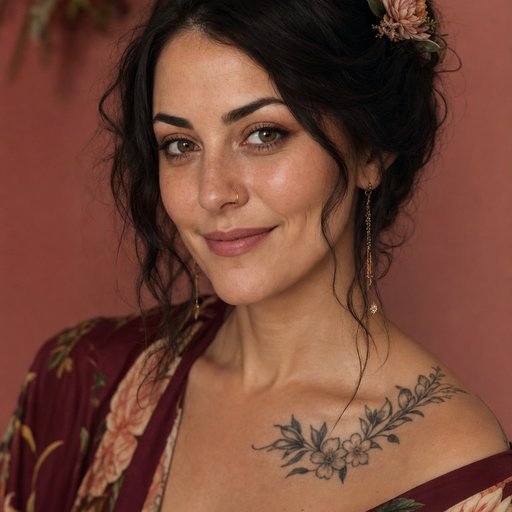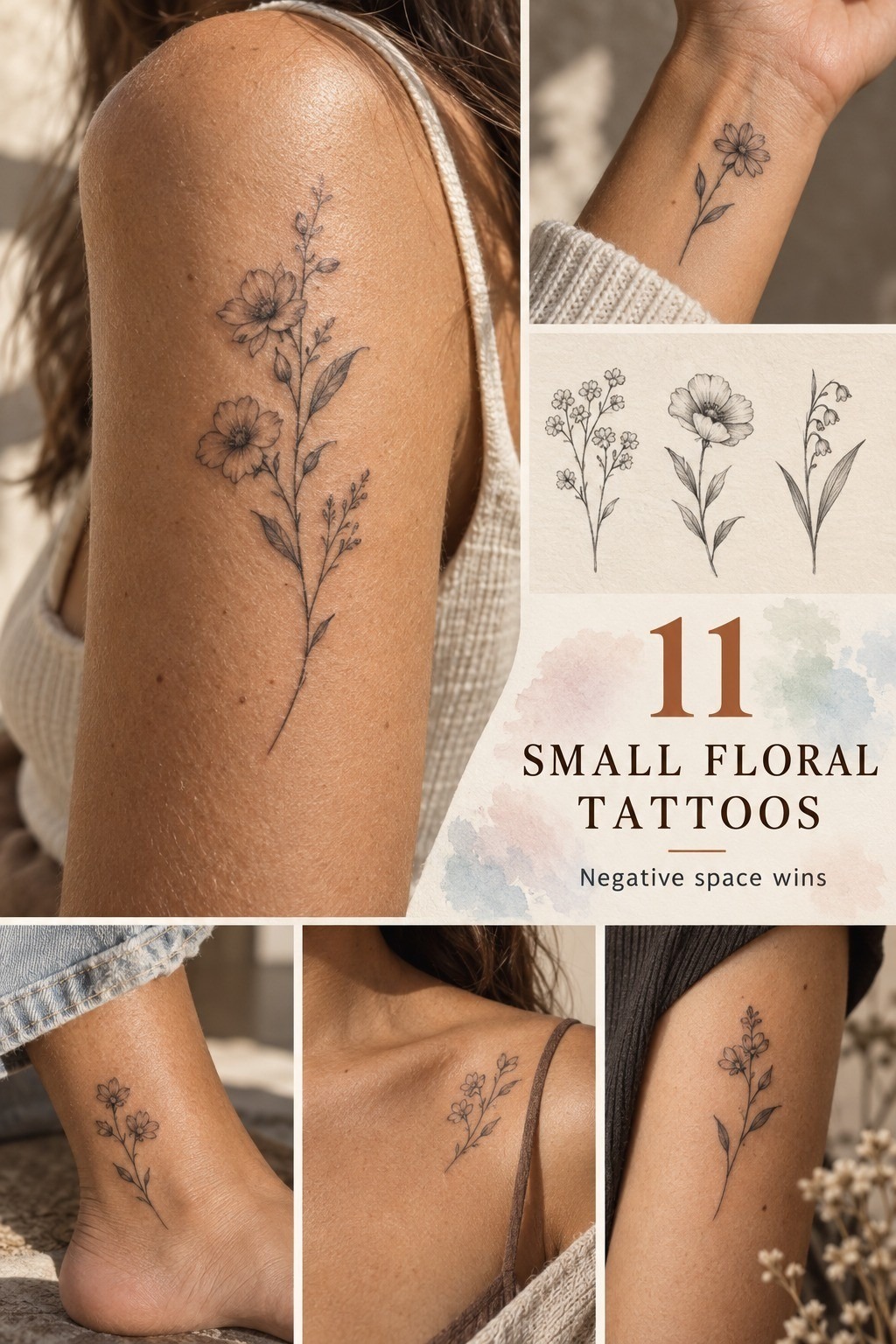
A feminine flower tattoo generally signals growth, resilience, and the full spectrum of womanhood, from softness to unyielding strength. The specific meaning hinges on which flower you choose, how it’s rendered, and where it sits on your body. A peony on a ribcage reads differently than a wildflower cluster behind an ear, even if both fall under the same broad category.
Common Variations & Styles
Not all floral work reads as “feminine” in tattoo culture, and the distinction matters when you’re browsing portfolios or describing your vision to an artist.
Botanical Realism vs. Stylized Interpretation
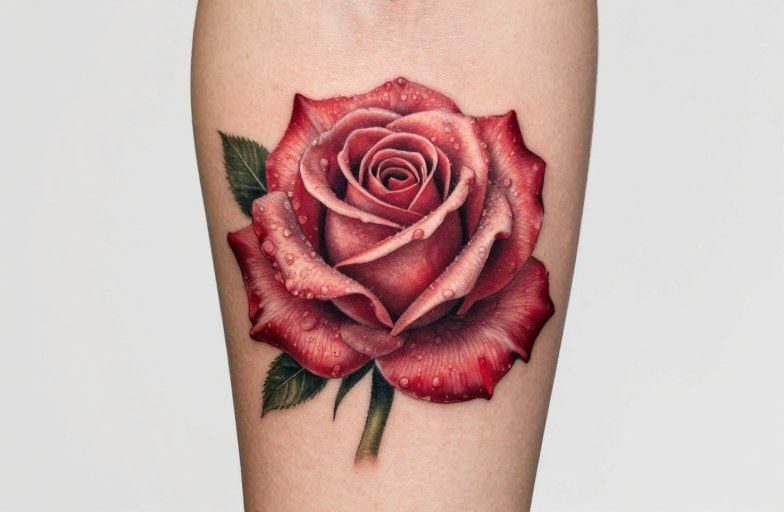
Hyper-detailed realism, think dewdrops on petals, visible stamens, veining, tends to feel more traditionally feminine because of its association with fine art and illustration. Stylized approaches like neo-traditional, with bold outlines and limited but saturated color palettes, carry a different energy: more graphic, more poster-like, still floral but less delicate. Watercolor washes without black linework have trended heavily since the early 2010s; they photograph beautifully fresh but require careful consideration for longevity (more on that below).
- Single stem vs. bouquet: One flower simplifies the message, one defining trait, one moment. Multiple flowers allow layered symbolism (rose for passion, lavender for calm, etc.).
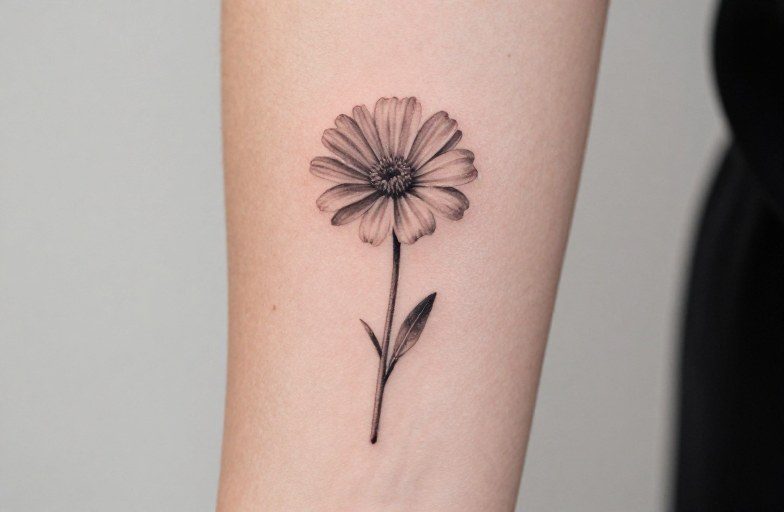
- Line weight: Hairline single-needle work feels ethereal; heavier 7-9RL outlines ground the image, make it more “tattoo-forward.”
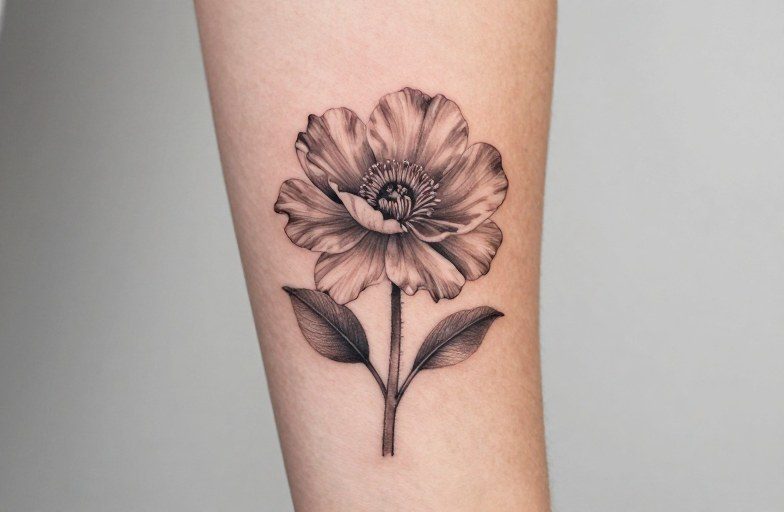
- Color vs. black and grey: Color carries immediate emotional temperature, warm reds, cool blues. Black and grey ages more predictably and suits certain skin tones better.
Species-Specific Meanings
Some flowers carry established tattoo symbolism that transcends the generic “beauty” reading:
- Peony: Prosperity, honor, sometimes a protective talisman in Japanese-influenced work.
- Lotus: Emergence from difficulty, often linked to spiritual practice.
- Cherry blossom: Impermanence, the Japanese mono no aware concept, beauty precisely because it fades.
- Poppy: Remembrance, sleep, peace; also dangerous allure (the opium connection).
- Wildflower mix: Rejection of cultivation, natural cycles, anti-perfectionism.
How It Ages on Skin
Flowers are among the most requested tattoo subjects, and also among the most frequently reworked after a decade. Understanding why helps you choose wisely.
The Fine Detail Problem
Petals rely on subtle gradations, pink deepening to crimson at the base, white highlights implying volume. Over 5-10 years, those gradations blur. A highlight that was two millimeters wide becomes four; the contrast that defined a petal’s curl softens into a blob. This happens faster on high-movement areas (ribs, inner arm) and on skin that sees significant sun exposure.
Line-based flowers age more gracefully than fully shaded color realism. A rose built from clean black outlines with minimal internal shading will still read as a rose in fifteen years. A photorealistic rose with no black lines, relying entirely on color value shifts, may become a pinkish smear.
Color Fading Realities
Reds and pinks, core to many feminine floral palettes, are relatively stable. Yellows and soft pastels fade faster, sometimes shifting to a peachy undertone. Blues and purples can go muddy. White ink, often used for “softening” effects in feminine work, frequently disappears entirely or turns yellowish, depending on skin undertone and sun exposure.
Your artist’s approach to saturation matters. Packing color densely, with solid fills rather than “washing” it in, extends lifespan. This is why experienced floral specialists often look aggressive with their color application, the tattoo will settle, and the extra density buys you years of clarity.
Similar & Related Symbols
Clients drawn to floral work often cross-shop these alternatives, sometimes combining them:
- Vines and leaves: Growth narratives, connection to nature, framing devices that soften geometric placements.
- Butterflies/moths: Transformation, often paired with specific flowers the insect would actually visit (monarchs with milkweed, not random roses).
- Snakes: Rebirth, danger, the Garden of Eden narrative; coils through flowers create tension between beauty and threat.
- Feminine faces with floral elements: The “beauty and nature” motif, Art Nouveau revival style, sometimes with eyes closed or obscured.
- Jewelry-adjacent flowers: Chains, lockets, or rings incorporating floral elements, personal memorial work, often.
The snake-and-flower combination deserves particular note. It’s surged in popularity since roughly 2019, partly driven by social media aesthetics, but the pairing has legitimate symbolic weight: the snake’s shedding against the flower’s seasonal bloom, both cyclical, both requiring decay for renewal.
Best Placements
Feminine floral tattoos concentrate heavily in specific body areas, and the placement choices carry their own semiotic weight.
High-Femininity Zones
Behind the ear, along the collarbone, down the sternum, on the hip crest, the outer thigh, these placements frame traditionally feminine anatomy. A flower here emphasizes the body’s contours; the tattoo becomes ornament, almost jewelry-like. The downside: sternum and ribs hurt significantly (thin skin over bone, constant movement), and hip tattoos distort with weight fluctuation more than, say, a shoulder piece.
Functional Considerations
Flowers wrap well around limbs because of their organic, non-geometric shapes. A forearm “bracelet” of flowers ages better than a single dense chest piece because the skin there moves less, sees less direct sun if you wear sleeves. Ankle flowers are classic but notoriously prone to blowout, thin skin, lots of bone proximity, and the artist working at an awkward angle.
Hand and finger flowers have trended recently, but they’re high-maintenance. Fingers regenerate skin rapidly; fine detail disappears within months. Bold, simplified finger flowers work better than delicate ones.
History & Cultural Roots
Floral tattooing connects to several distinct traditions, though the modern “feminine flower” aesthetic is largely a post-1980s Western development.
Japanese Horimono
The full-body Japanese tradition often incorporated peonies, chrysanthemums, and cherry blossoms, but these were overwhelmingly masculine contexts, yakuza body suits, not delicate standalone pieces. The peony specifically, often paired with shishi lions, symbolized wealth and courage. Western adoption stripped away much of this context, keeping the visual appeal while losing the narrative framework.
European Decorative Traditions
Art Nouveau’s organic curves, particularly Alphonse Mucha’s poster work, heavily influenced how modern artists render feminine florals. The flowing hair interwoven with blossoms, the circular compositions, the limited but lush color palettes, all of this DNA appears in contemporary tattooing. Earlier still, Victorian floriography (the “language of flowers”) assigned specific meanings to species, a system that some clients still reference when choosing memorial or commemorative pieces.
American traditional tattooing, from the early 20th century, included roses as standard flash, sailor territory, masculine by default. The shift to explicitly feminine floral work required the aesthetic innovations of the 1990s and 2000s: finer needles, expanded color palettes, and artists (many women themselves) who treated the subject with illustration-level detail rather than symbolic shorthand.
Mythology & Folklore
Flowers carry mythic baggage that some clients intentionally invoke, others accidentally stumble into.
The lotus, often linked to Buddhist and Hindu traditions, emerges from murky water pristine, a rebirth metaphor that resonates for people recovering from addiction, abuse, or depression. Narcissus, by contrast, warns against self-obsession; the daffodil’s downward gaze references the youth who drowned admiring his reflection. Giving someone narcissus flowers in some Victorian-derived readings was an insult.
Persephone’s pomegranate and the underworld connection gets confused with floral imagery because the myth involves her being abducted while gathering flowers. Some tattoo compositions explicitly reference this, Persephone holding a flower, the moment before capture, using the flower as foreshadowing for loss of innocence.
Marigolds, commonly associated with Dia de los Muertos, carry death-memorial functions in Mexican folk tradition. Using them without that context, simply because orange reads as “warm,” can feel appropriative or at least tonally off if the wearer understands the symbolism.
Final Word
A feminine flower tattoo works best when the species choice, style, and placement all point the same direction. A wildflower bunch in loose linework behind your ear says something coherent; a photorealistic orchid in aggressive color on your bicep says something else. The category is so broad it’s almost meaningless without these specifics. Do the research on what your chosen flower has meant across cultures and time periods, then decide whether you want to honor that lineage or deliberately depart from it. Either choice is valid, but it should be a choice, not an accident.
Most importantly: find an artist who actually specializes in the style you want, not just someone who “does flowers too.” Floral work is technically demanding, and the gap between a competent generalist and a botanical specialist becomes visible within the first year of healing.
Frequently Asked Questions
Do feminine flower tattoos have to be colorful to look good?
No. Black and grey floral work ages exceptionally well and carries a different, more graphic elegance. The “feminine” quality comes from composition and line quality, not color alone.
Which flower species are most overdone in feminine tattooing?
Roses and lotuses dominate request lists, which isn’t inherently bad, but consider whether a less common species (hellebore, anemone, wisteria) might better express your specific meaning.
Can masculine-coded flowers like thistles work in feminine floral designs?
Absolutely. The “feminine” label in tattooing refers more to rendering style than subject matter. A thistle rendered with fine linework and strategic negative space reads as delicate rather than aggressive.
How do I avoid my flower tattoo looking like everyone else’s from Pinterest?
Commission custom botanical illustration from your artist rather than bringing reference photos of existing tattoos. Specify an unusual angle, view from below, half-wilted, root system visible, to break the standard compositional habits.