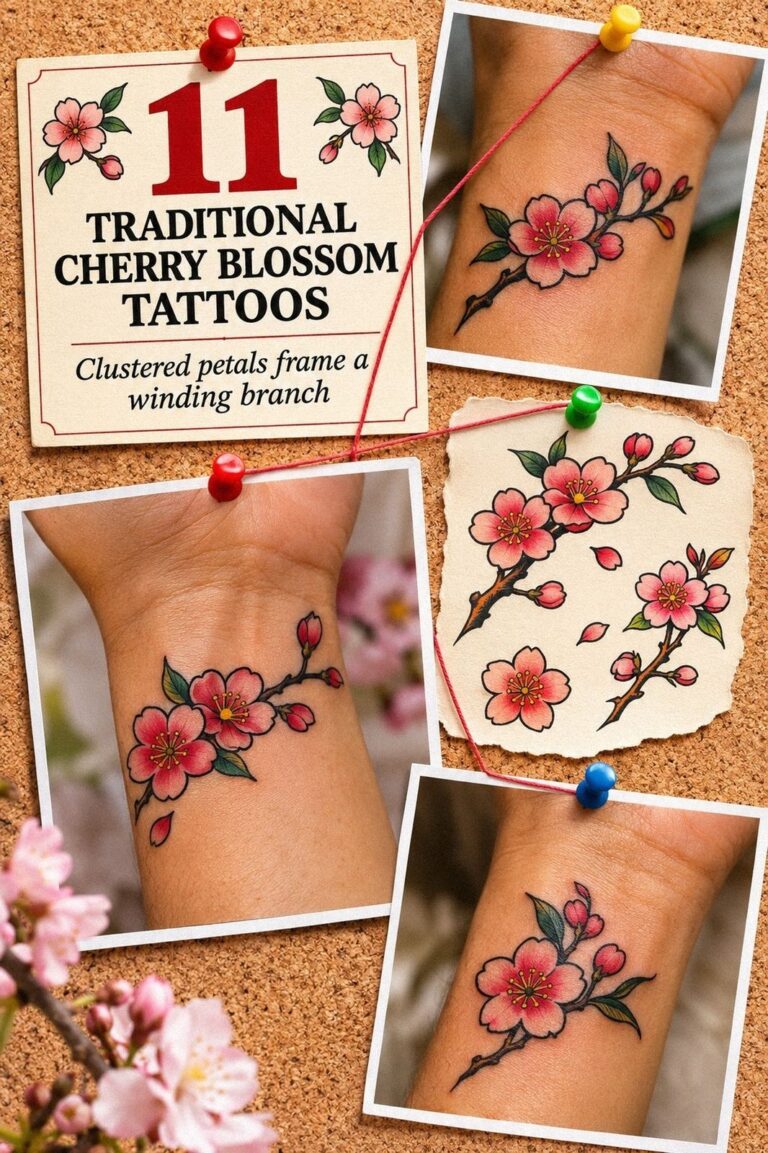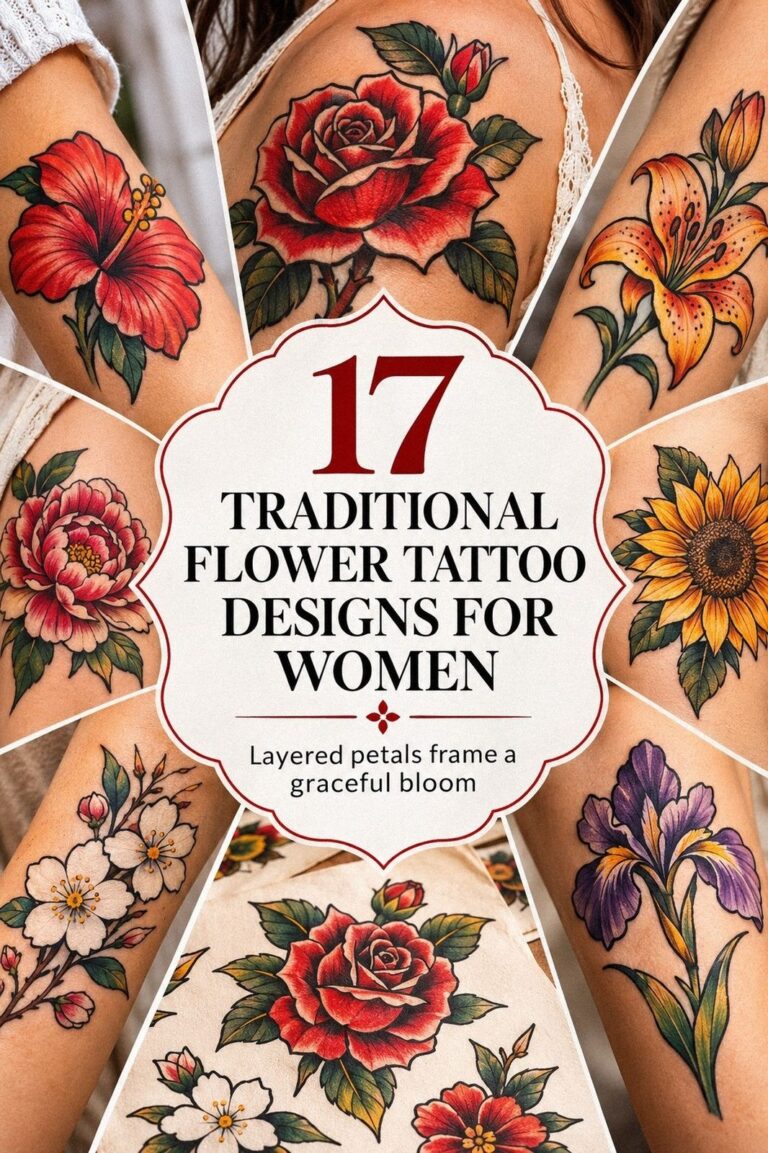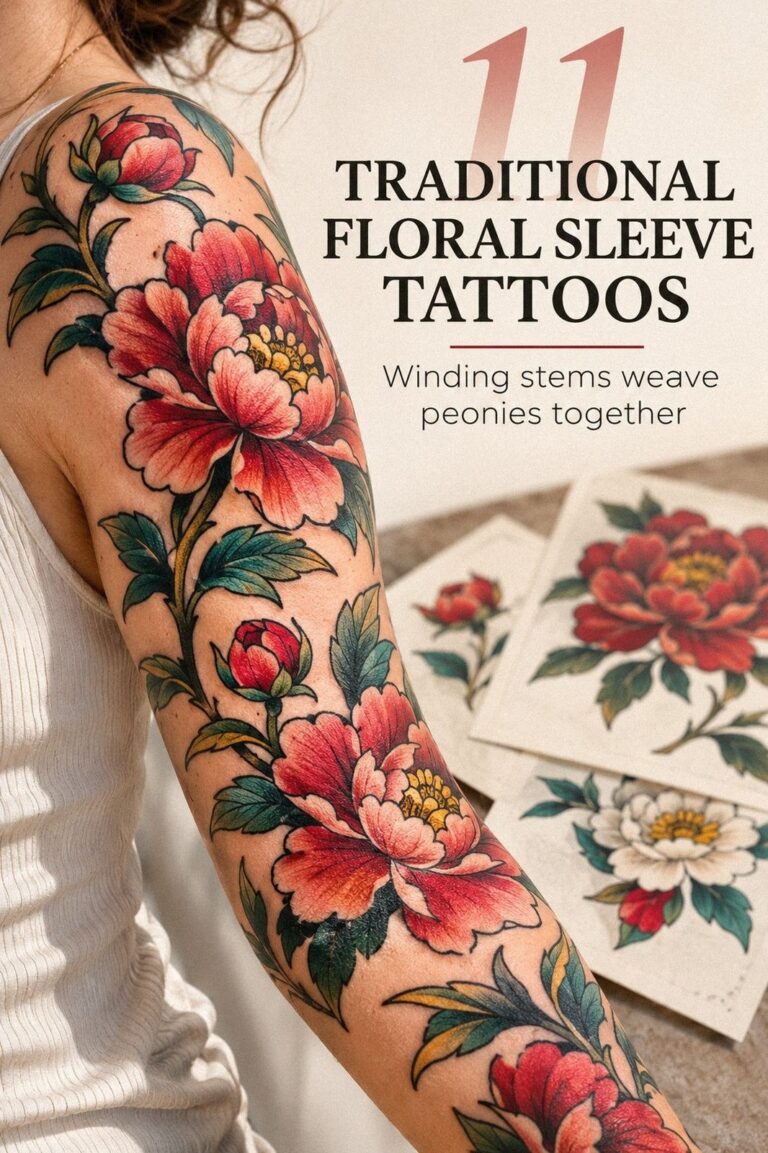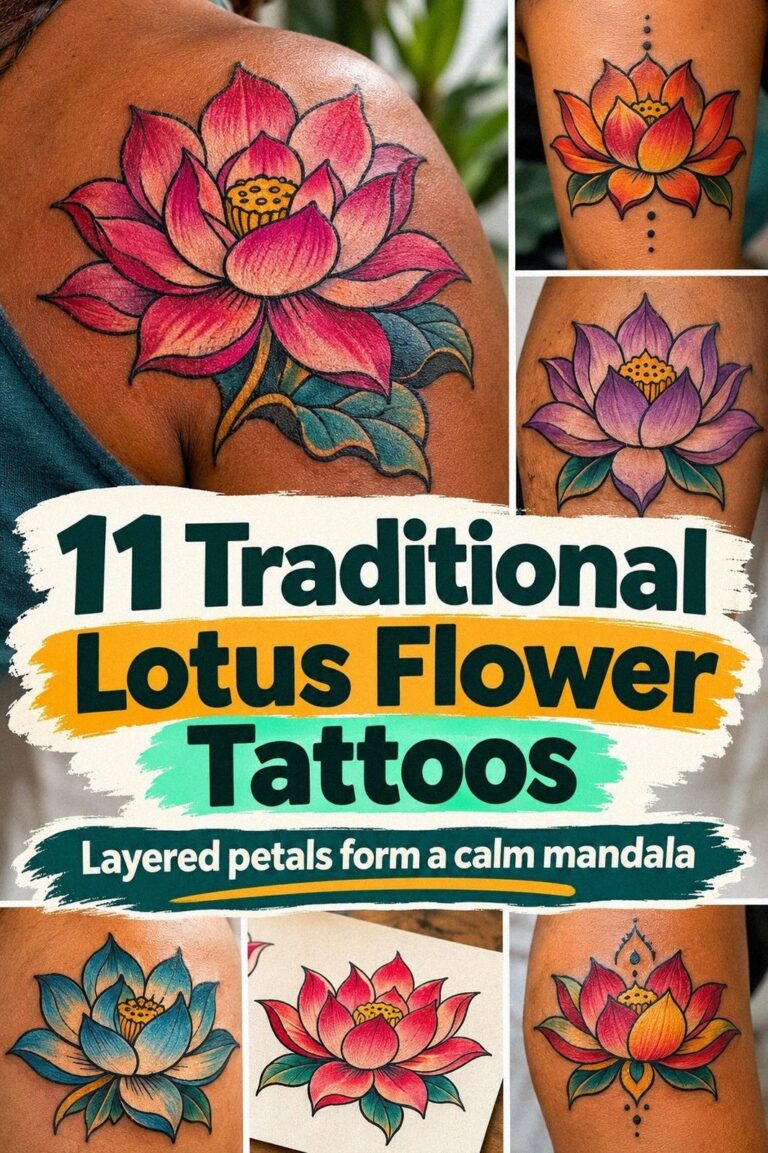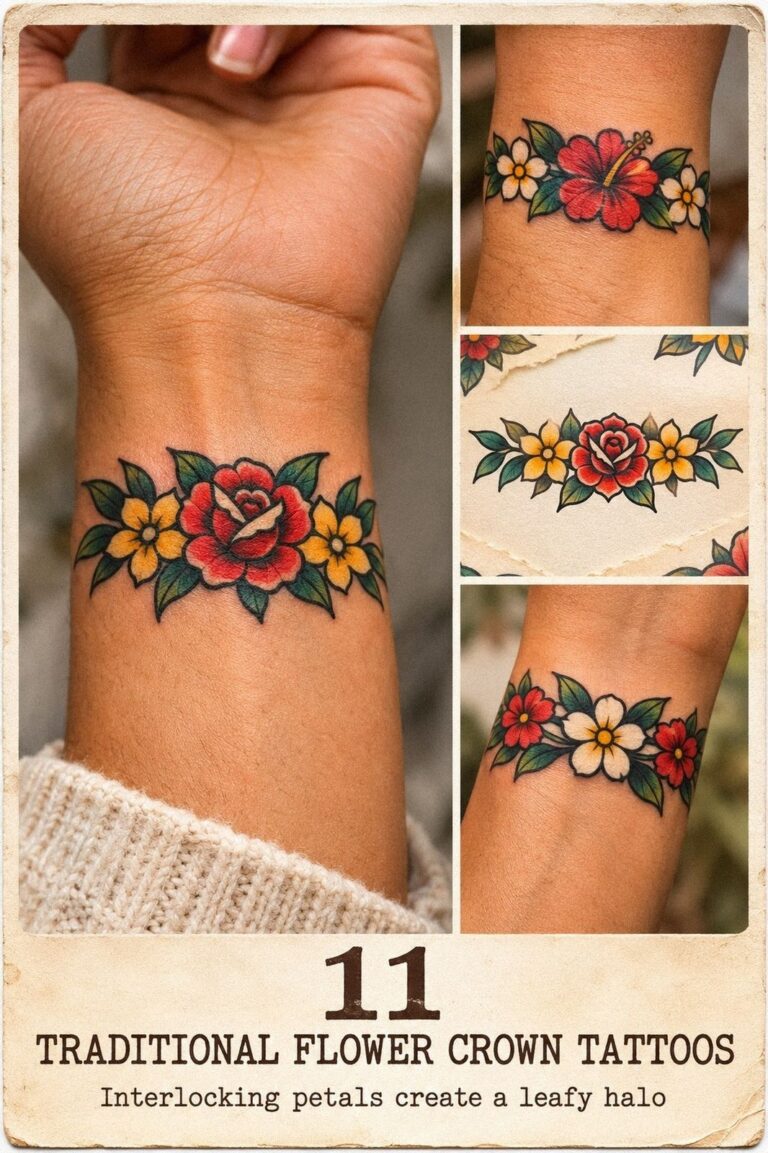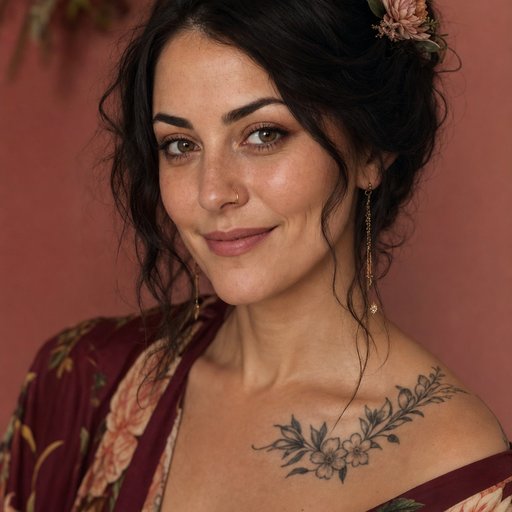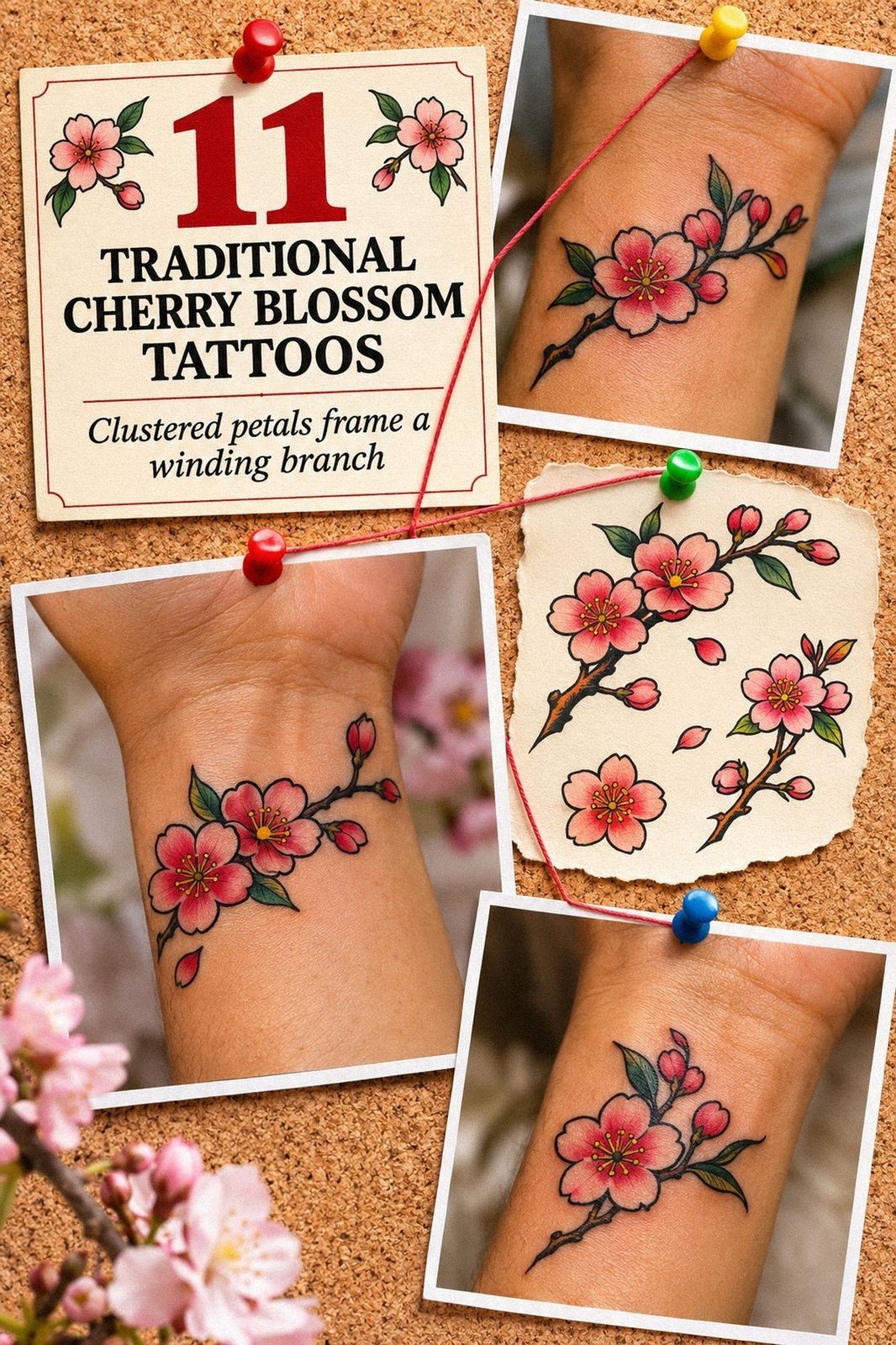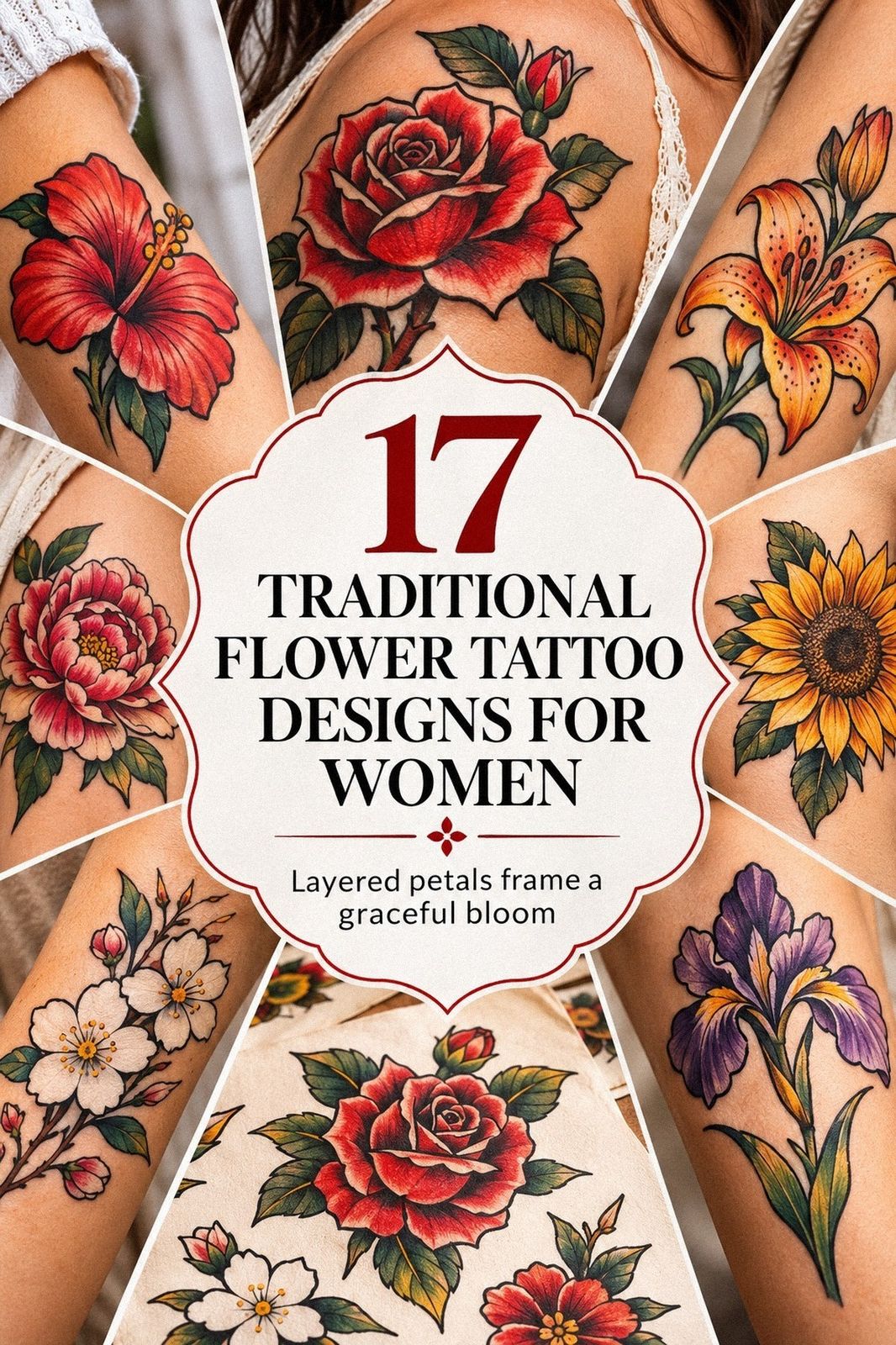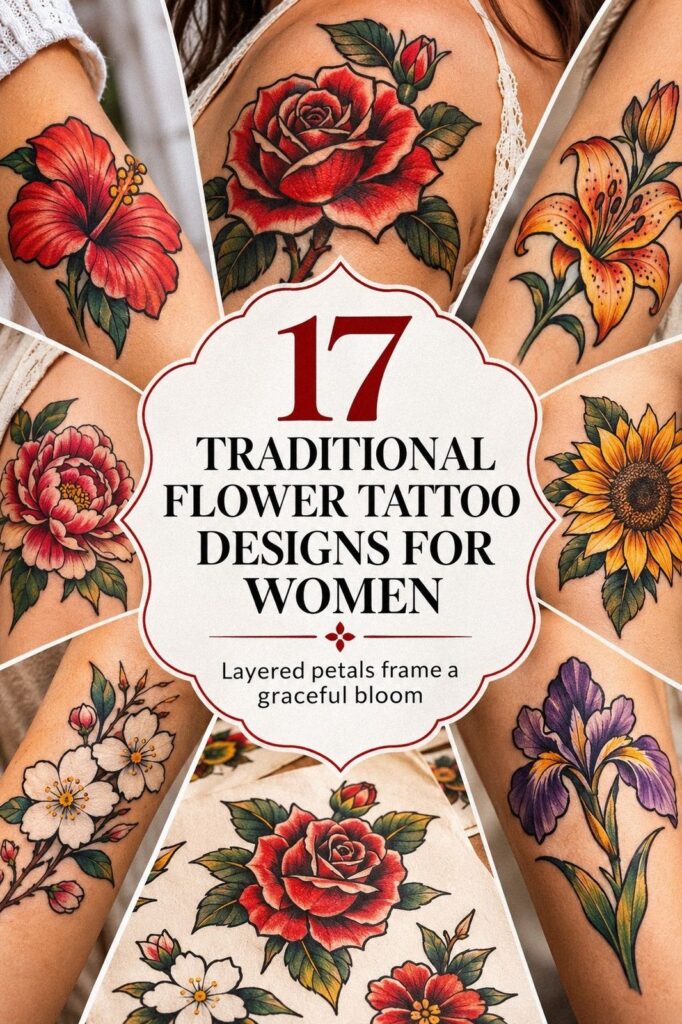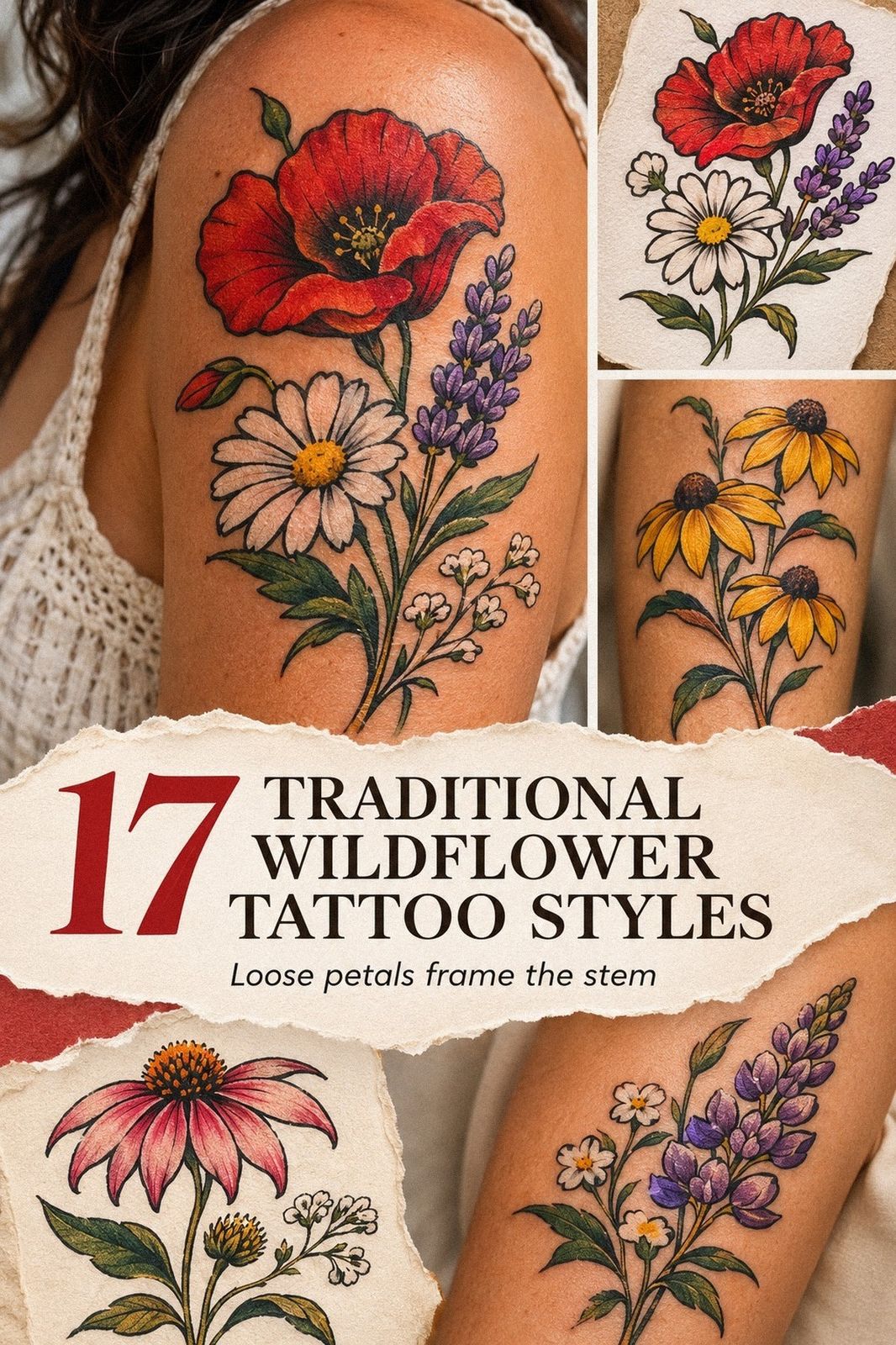
A traditional wildflower tattoo can hold a private memory without explaining it to everyone who sees it. I once chose a flower by appearance alone, then regretted missing the personal thread. These ideas pair crisp outlines with symbolic details, readable color, and placements that can age well. Start small if you’re unsure!
Editor’s note: The strongest design usually has one clear flower, one personal detail, and enough open skin to keep the shape readable. Compare healed work, ask about cost, and keep the meaning yours.
Small Traditional Wildflower Tattoo on the Wrist
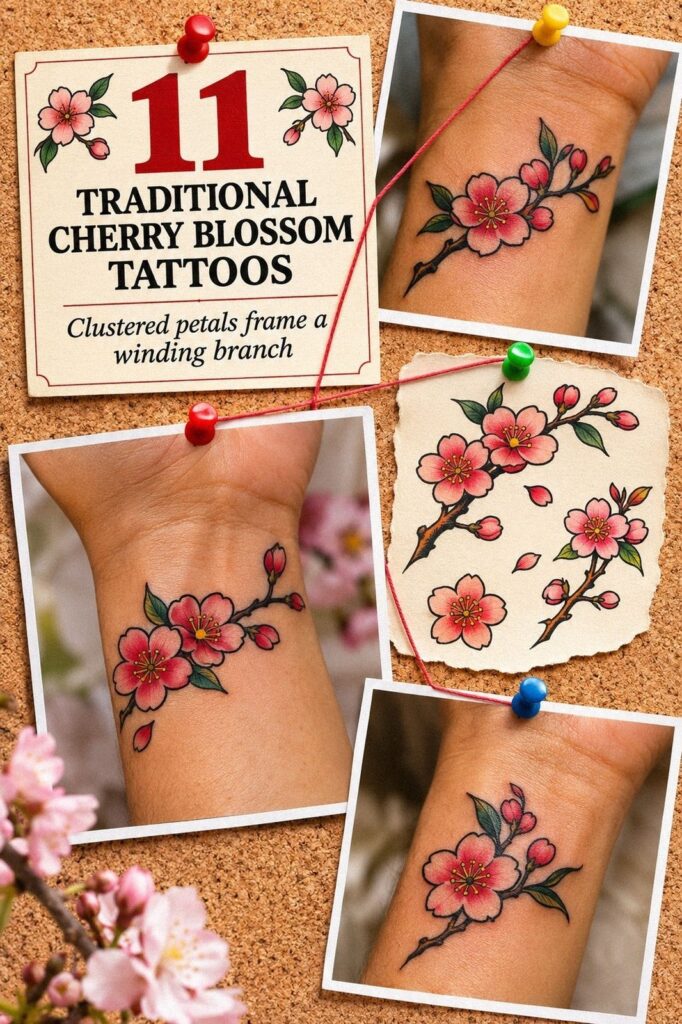
A small wrist piece works when you want a visible flower with a compact silhouette. The petals can feel delicate, but the outer contour needs enough weight to read from a short distance.
Choose one bloom and three or four leaves. A crowded cluster can lose its identity as your wrist moves through daily life.
I’d choose a terracotta bloom over pale shading here. Pale pigment may lose definition faster when your wrist sees regular sun.
Your artist can use a little solid black at the center, then leave space around the petals. That contrast keeps the tattoo light without making it weak.
The meaning can live in the species, leaf count, or stem direction. You might choose a flower linked to a person, place, or date only you recognize. I like that code because the tattoo stays personal without becoming a literal caption.
Browse these small wildflower tattoo ideas before you settle on your wrist.
Your first instinct may be to make every petal intricate. Don’t. A 3RL needle grouping can create fine interior marks, but too many lines may blur as your skin changes.
Keep the center expressive and the stem slightly thicker. That balance gives the piece a timeless shape.
Use Traditional Wildflower Tattoo Ideas with Bold Color
A bright color version gives the classic flower shape a more vibrant personality. Picture one upright stem, a clay-red bloom or muted gold bloom, olive leaves, and open skin around the design. Ask your artist how clay-red pigment will sit against your complexion.
Healed work matters more than fresh results.
I’d skip a rainbow of unrelated colors. Traditional tattoos often look more polished when you limit the palette to two or three main pigments and one strong black anchor.
A muted gold petal can feel playful, while an olive leaf adds contrast. More color doesn’t always add more meaning.
The meaning can stay private even when the tattoo is visually loud. A red bloom might represent courage.
A yellow one could recall a childhood garden. A navy accent might refer to someone only you connect with that color.
For a softer direction, compare these watercolor wildflower tattoo examples with traditional color.
Your artist should explain how the pigment may settle, especially for a small forearm design. I’d rather see one olive leaf with clear edges than five pale leaves that disappear. The best color plan gives each shape a job.
Build a Unique Traditional Wildflower Tattoo Sleeve
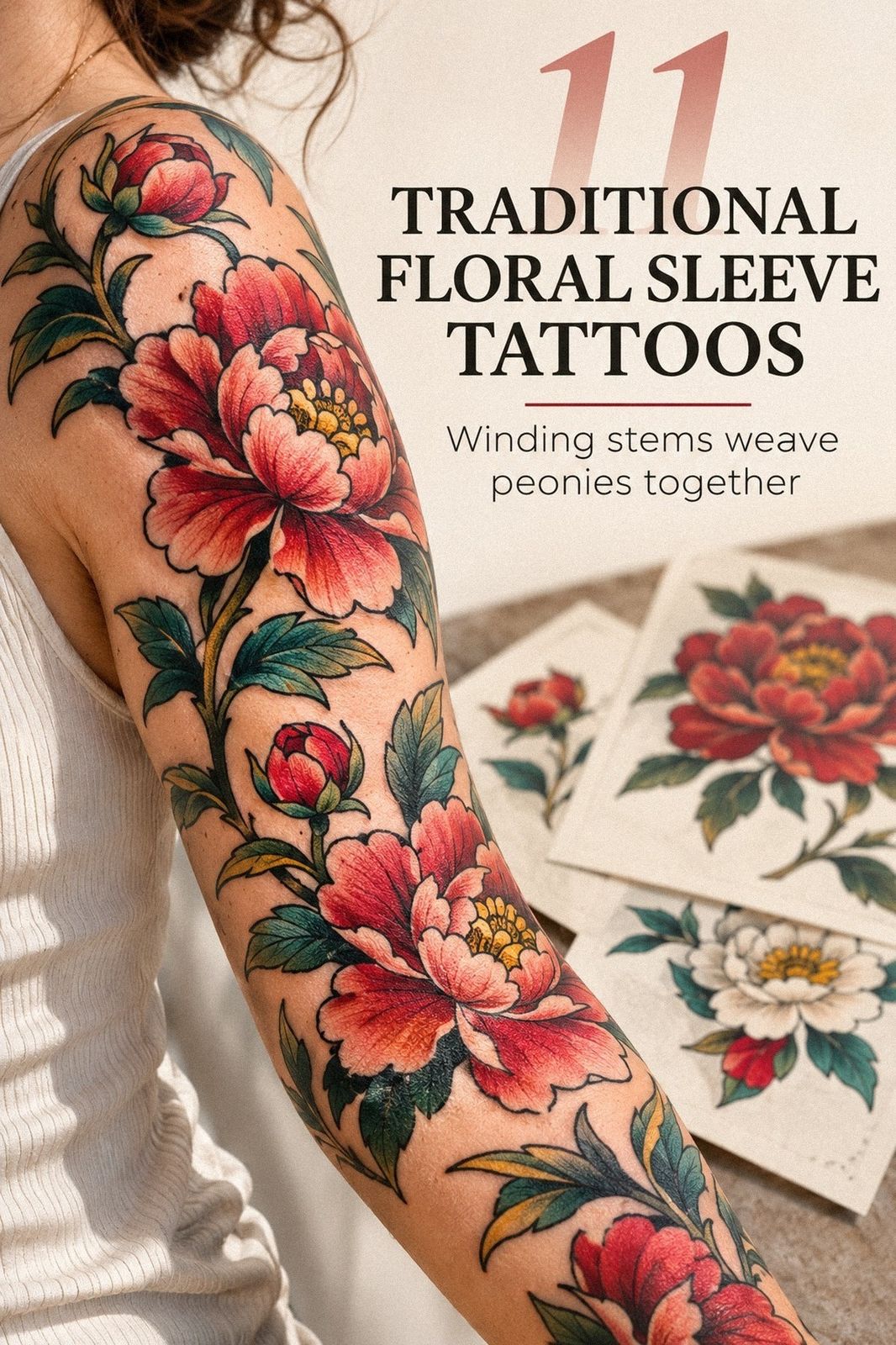
A sleeve needs a clear visual path, even when it contains separate flowers. Start with one single-stem bloom as the anchor. Let smaller leaves and buds guide the eye along your arm.
Deliberate skin breaks keep the full piece readable instead of turning it into a dense field of ink.
I’d use a plum anchor flower near the widest part of the forearm. Grey shading and a restrained rose-gold accent can give the rest of the sleeve something firm to orbit.
A neutral, feminine, or masculine direction can work because the structure comes from scale and line weight. Choose the largest flower where you can see it naturally.
One private approach is to assign each flower a different memory. Connect them with stems that don’t quite touch. That creates a meaningful collection rather than a literal bouquet.
If you’re building a larger concept, these traditional flower crown tattoo references may help you study repeated petals and rhythm.
Your sleeve doesn’t need every inch covered. Negative space lets older lines remain legible. Ask for a stencil placement session before the needle starts.
You’ll see whether the main bloom points toward your hand, elbow, or shoulder. That choice changes the entire flow.
Could a Traditional Wildflower Tattoo Sit Behind the Ear?
Behind the ear is a discreet placement with a sharp visual payoff. One stemmed flower can follow the curve beneath your ear, with the bloom close to the hairline.
Keep the design narrow if you want an intimate mark. Your artist must account for the skin’s curve.
I’d avoid a crowded bouquet here. Deep navy ink can look graceful, but overly small petals may merge when the design settles.
A compact flower with one leaf often reads better than several tiny blooms. Keep the interior shading restrained.
The location can make the meaning feel like a private signature. You might choose a flower tied to a loved one, a recovery period, or a quiet promise. For simpler silhouettes, look through these minimalist wildflower tattoo designs.
Behind the ear can be more sensitive than the forearm because the skin is thin and close to bone. Your appointment may be brief, but speed shouldn’t decide your artist.
Ask to see healed examples with grey shading. Clean application matters more.
Map a Fine-Line Traditional Wildflower Tattoo Ankle Cluster
An ankle cluster can show several traditional wildflower sketches while keeping each bloom separate. Compare a daisy-like flower, a bell-shaped bloom, and a narrow leafy stem.
Then choose what belongs on your skin. Don’t copy every option from a flash sheet.
I’d choose an emerald, gold, and cream color plan because it makes dark outlines easy to judge. The muted combination can feel vintage, but your tattoo still needs current hygiene and careful stencil placement. Ask how thin marks will hold against socks, shoes, and sunlight.
The ankle gives you room for a small, whimsical group. Place the strongest flower above the ankle bone and lighter stems toward the side.
That arrangement keeps the cluster from looking like a stamp. A tiny wildflower tattoo guide can help you decide how small is too small.
Fine line doesn’t mean every line should be fragile. Strong outer contours protect the basic shape.
Thin marks can suggest veins and folds. Skip a flower smaller than your thumbnail if it needs many interior details.
Add Banner Lettering to a Traditional Wildflower Tattoo
A banner gives your flower a direct emotional message. The lettering should support the bloom rather than swallow it.
The word “stay” works because it’s short and open to interpretation. Your artist can curve the banner lettering beneath the stem or place it behind the flower.
I’d use black lettering with one restrained rust or forest-green accent. Too many flourishes can make a short word hard to read. Your message might be a name, a single verb, or a private phrase reduced to two words.
The strongest choice is often the one you don’t need to explain.
On deep skin, contrast comes from line weight and intentional open skin. Ask your artist to show healed work on a similar skin tone.
A tattoo should be designed for your body and your actual viewing distance. Make sure the word stays readable when you move.
The banner can hold a date, but numbers may lose meaning after one chapter ends. Hand-drawn lettering has warmth and character. If you’re considering another floral symbol, compare it with this traditional lotus flower tattoo collection before committing.
Choose Blackwork for a Traditional Wildflower Tattoo on the Forearm
Blackwork gives a single wildflower a fierce graphic presence. On the forearm, your artist can build the design from a strong stem, charcoal-black structure, solid leaves, and controlled grey shading. A restrained dusty-rose or brass-colored accent can add personality without weakening the blackwork.
It reads clearly from a short distance.
I’d choose solid black leaf shapes over a complicated fill pattern. The dark areas need clean edges and enough skin breaks. A blackwork design can feel edgy, but it still needs restraint.
You’ll notice the difference when the tattoo heals.
This placement also helps when you’re thinking about how ink ages. Very fine lines may spread slightly over time.
Strong black shapes often remain recognizable when the original crispness softens. For another bold floral direction, see these traditional peony tattoo ideas.
The forearm is often more tolerable than hands, feet, ribs, or sternum. Everyone’s experience differs.
Greywash shading can add depth without filling every gap. Don’t scale down a large reference without adjusting the petal count.
Shape a Traditional Wildflower Tattoo Bouquet Across the Shoulder
A shoulder bouquet can follow the curve from the upper arm toward the collarbone. Use one main stemmed flower, supporting leaves, and a gentle spread. Avoid a perfectly round bunch.
Your artist can angle the bloom inward so it moves with your body.
I’d keep the center flower larger and the side blooms simpler. Black outlines with a camel-toned accent give the bouquet a strong identity.
Open skin keeps the shoulder from looking crowded. The result can feel elegant without relying on extra symbols.
The shoulder is useful for a private symbol that appears only with certain clothing. The bouquet might represent family, a difficult season, or several people without names.
Vary the flower species while keeping the line style consistent. That makes the story yours.
Ask for a stencil that reaches slightly onto the upper arm before approving the angle. Paper placement can reveal whether the bouquet sits naturally when your relaxed shoulder is at rest. If you’re unsure about symbolism, read this wildflower tattoo meaning guide first.
Pair a Traditional Wildflower Tattoo with a Dagger Motif
A dagger and wildflower create a striking contrast. Softness meets danger.
Growth meets endurance. Your artist should keep one element dominant. If both shapes demand equal attention, the design may feel confused.
I’d place the copper blade behind the flower and let the petals overlap its center. A midnight-blue handle, small guard, and controlled ivory accent can create an iconic traditional quality. Check the blade direction carefully if the piece sits on your shoulder or forearm.
The dagger might represent surviving a sharp chapter, protecting your softness, or choosing courage after loss. A romantic interpretation can work too.
Avoid adding symbols just to make the tattoo seem deeper. One clear contrast usually says more.
Clean open skin around the blade keeps the point visible. Skip an ultra-thin dagger if the central motif needs weight. If you prefer a gentler floral reference, compare the mood with these traditional lotus flower designs.
Place a Traditional Wildflower Tattoo on a Finger
Finger placement looks dainty and personal, but it demands realistic expectations. Compare a stencil with the finished placement before choosing the side, top, or inner finger.
Movement, friction, and sun exposure affect this area. A small flower won’t behave like one on your forearm.
I’d choose simple black linework with one sage-green accent and one compact bloom. Fingers offer little space, so a crowded flower can lose its identity quickly.
Your artist may recommend a thicker outline, fewer leaves, or a shorter stem. That’s a smart adjustment.
Finger tattoos can fade or soften faster than tattoos in protected areas. Your artist should discuss the possibility of a future touch-up without promising a fixed result. If you’re drawn to the scale, compare these tiny wildflower tattoo references.
Avoid putting the most important word on the side of a finger if you need perfect readability. Check the carbon stencil with your hand relaxed and your fingers spread. What looks centered in one pose may tilt in another.
Match a Birth Flower with a Meaningful Traditional Wildflower Tattoo
Pairing a birth flower with a wildflower combines a public tradition with a private memory. The first bloom can represent a birth month or family connection.
The second can carry a meaning only you understand. Matching outlines and leaf shapes will keep the pair connected.
I’d give the birth flower the stronger silhouette. Let the wildflower curve around it.
That creates hierarchy without making one symbol less important. The pairing can feel empowering when the story stays personal.
You might choose a flower for a parent, sibling, child, or friend. Add a small stem detail tied to a shared memory.
Your tattoo doesn’t need a date, initials, or banner if the relationship already lives in the flowers. Keep the composition clear.
A terracotta accent can connect two blooms without forcing them to match. Your artist should check that each flower has enough open skin around the petals. For more ideas, read these wildflower tattoo meaning ideas.
Start With the Flower, Not the Placement
Choose the flower before choosing the body area. Its petal count, stem length, and leaf pattern will affect scale.
A symbolic flower may need more space than a simple bloom. Write down why you chose it before collecting references.
Then decide how visible the meaning should be. A wrist or forearm makes the piece easy to revisit.
A rib, shoulder, or upper thigh can keep it more private. There isn’t one correct answer.
Your daily life matters.
Ask your artist to translate the concept into your anatomy. Don’t bring ten unrelated designs and ask for a blend. Bring one favorite flower, one color direction, and one personal detail.
That gives the consultation a clear starting point.
If the design still feels unclear, return to the small wildflower tattoo ideas and remove details. A smaller concept can reveal the part that matters most. Keep it personal!
Can Traditional Lines Stay Readable on Darker Skin?
Yes, it can work! Readability depends on contrast, spacing, line weight, and healed examples.
Your artist should show healed examples on skin close to yours. Fresh pigment alone can’t predict the final result.
Black outlines often provide the clearest structure. Color can still work, but the palette needs careful planning.
Ask about black outlines rather than relying on a bright appointment-day result. Your artist should explain the choices plainly.
Avoid designs that depend on pale grey or tiny gaps. Those details may become harder to see as the tattoo settles. A simple flower with pale grey accents can remain expressive without needing every interior mark.
If you’re comparing styles, study both traditional and watercolor references. This watercolor reference can help you notice how contrast changes between approaches: watercolor wildflower tattoo collection.
Let American Traditional Details Keep a Wildflower Clear
American traditional structure often depends on firm outlines, limited color, and readable shapes. That doesn’t mean every tattoo must look identical. Your artist can make the flower stylish through petal spacing, stem direction, and a personal accent.
A banner, dagger, or leaf can support the flower. It shouldn’t compete with it.
Ask which secondary detail would be removed first if the design feels crowded. That answer often reveals the strongest version.
A little black at the center can anchor pale petals. A single red accent can draw the eye.
A short stem can suit a finger, while a longer one may work better on the forearm. Scale changes the entire rhythm.
For a related approach, compare the structure of these traditional peony tattoo ideas with a smaller wildflower. Notice which details survive when the bloom gets compact.
What Does a Traditional Wildflower Tattoo Cost by Size?
Cost depends on the artist, location, color plan, detail, and appointment length. Ask for a quote after you share the placement and approximate size. A low price isn’t always good value if the design needs correction later.
A simple design may cost less than a detailed one, but the cheapest quote isn’t automatically worth it. Ask whether the price includes consultation, stencil work, and a touch-up policy. Compare the total tattoo cost, not only the deposit.
A private tattoo can still be a meaningful investment. Set a budget before you book. If the quote feels high, reduce the scale or remove a secondary symbol.
Don’t pressure an artist into rushing the work.
You can also compare typical pricing with the practical advice in this wildflower tattoo meaning guide. Meaning doesn’t require a huge piece. A well-planned small tattoo may offer better value for your life.
When Blackwork Wins, When Color Wins
Blackwork wins when you want a sharp silhouette, lower color complexity, and strong distance readability. Color wins when a particular hue carries the memory. Think about the reason behind the choice, not only the mood in a reference.
A blackwork flower can feel raw and direct. It suits a dagger, forearm bloom, or compact wrist design. Color can feel playful or romantic, but it needs a plan for contrast and fading.
Your skin tone, sun exposure, and placement all affect value over time. Ask your artist what will still read after the tattoo settles. A simple black shape may be the wiser budget choice for a high-friction area.
If you’re torn, compare a traditional color idea with this minimalist wildflower tattoo collection. Remove decoration until the choice feels obvious. That is usually where the strongest design begins.
How Do You Make the Meaning Private?
Use a detail that has a clear meaning to you but no fixed meaning to everyone else. It might be the number of leaves, a flower species, a stem direction, or one color. The design can remain personal code without looking cryptic.
Avoid explaining the entire story through lettering. A date or name can make the message public. A private symbol gives you more room to change how you understand the tattoo later.
You can also choose a placement that controls access. The wrist invites questions.
The shoulder, thigh, or ribs can keep the design closer to you. Visibility is part of the meaning.
If you need help narrowing the symbol, read these flower tattoo meaning ideas and make your own shortlist. Choose the association that still feels true after the first excitement fades.
Why a Private Meaning Beats a Literal Symbol
The best traditional wildflower tattoos don’t need to announce their entire story. I’ve seen people choose an obvious symbol because it looked vibrant in a reference, then feel disconnected from it later. A private meaning gives you a reason to keep looking at the piece.
That doesn’t mean the design should be vague. Strong traditional linework gives the tattoo a clear visual language.
A stem may point toward a person. A color may recall a place.
A missing petal may mark a loss.
I’m against adding symbols just because a reference includes them. A dagger, banner, date, or moon should earn its place through your own story. If you’re choosing between a clean composition and a crowded collection, choose the cleaner piece.
Healed black pigment tends to remain readable longer than extremely fine marks, especially in sun. Surface healing usually takes about 2 to 3 weeks.
Complete settling can take about 2 to 3 months. Follow your artist’s aftercare instructions.
A private tattoo also gives you permission to change the explanation. Maybe the flower begins as a memorial and later becomes a reminder of resilience. That flexibility is why I prefer a sacred memory over a literal sentence.
The Questions I Get Asked Most
How much does a traditional wildflower tattoo usually cost?
A traditional wildflower tattoo often costs about $100 to $300 in the United States. The artist, region, size, color, and placement all affect the quote. A typical shop minimum may be $50 to $100, while hourly rates often fall near $100 to $250.
Ask for a quote after sharing your placement, approximate size, color plan, and references. A compact wrist flower won’t have the same value or appointment length as a shoulder bouquet.
Are traditional wildflower tattoos a good idea for a first tattoo?
Yes. They can be a strong first tattoo because readable outlines work well at several sizes. A clear silhouette also gives your artist room to create something personal without excessive detail.
Choose a placement that matches your visibility preference and pain tolerance. Don’t select a tiny version only because it looks graceful online. The practical design may be larger.
How do I choose a tattoo artist for traditional wildflower tattoos?
Choose an artist whose portfolio shows consistent linework, healed photographs, and work on skin tones similar to yours. Healed portfolio images reveal whether the healed portfolio remains readable after the initial brightness fades.
Check the studio’s hygiene practices and ask how the artist handles stencil placement. If you want color, request healed examples with comparable pigments.
How much do traditional wildflower tattoos hurt?
Pain varies. Ribs, feet, hands, and sternum are commonly more sensitive than the forearm, thigh, or shoulder. A short forearm session may be easier for a first tattoo, though your own sensitivity matters.
Appointment length depends on size, detail, and pace. Talk about breaks before starting.
Discomfort isn’t a contest. A calm session usually gives you a better experience.
How long does a traditional wildflower tattoo take to heal?
The surface usually heals in about 2 to 3 weeks. Complete healing can take roughly 2 to 3 months. Gentle washing, light moisturizing, and sun protection support the early stage.
Your tattoo may look dull or flaky before it settles. Don’t pick at peeling skin.
Follow the specific instructions your artist gives you. If something seems unusual, contact the studio or a medical professional.
What’s the best placement for a traditional wildflower tattoo?
The forearm, thigh, and shoulder are practical choices because they offer room for readable outlines. Forearm placement works well when you want to see the flower regularly.
Hands, feet, ribs, and sternum can offer strong visibility, but they may be more sensitive and exposed to friction. Choose the placement that fits your lifestyle, privacy needs, and preferred scale.
Where can I buy a traditional wildflower tattoo design?
You don’t need to buy a finished tattoo design from a marketplace. Choose a licensed tattoo artist, review an original portfolio, and discuss a custom concept based on your flower and meaning.
You can save references for line weight, color, or composition. Your final stencil should be made for your body. Don’t use online artwork without permission.
Where I’d Start First
If I had to pick one, I’d start with the small wrist flower. Its clean outline makes the private meaning easy to carry.
The compact scale also keeps the commitment measured. Compare it with healed work before booking.
Check the artist’s portfolio, ask for the full cost, and let the design breathe. If the flower still feels right after a few weeks, trust that instinct!