Delicate wildflower tattoo ideas work best when the flower carries a personal meaning without looking overly planned. I learned that after choosing a stem that was too crowded for my wrist. The cleaner version felt more expressive, and it still reads at a glance. These 11 placements and styles give you room to make the symbol yours!
Editor’s note: The most striking wildflower tattoos usually begin with one recognizable bloom, not a crowded collection of symbols. Think about the feeling first, then choose the placement, scale, and detail that support it. That approach gives your design better value over time and keeps the tattoo personal.
- Place a Tiny Wildflower at the Wrist
- Behind the Ear: A Brief Wildflower
- Build a Fine-Line Forearm Bouquet
- Could a Birth Flower Follow the Collarbone?
- Ankle Initials, Kept Minimal
- Watercolor or Black Ink? Choose the Wildflower Color
- Let the Rib Line Guide the Botanical Stem
- Two Wildflowers, One Shared Symbol
- Finger Detail: Keep the Stem Crisp
- What Should Your Shoulder Flower Mean?
- Grow the Sleeve Around One Wildflower
1Place a Tiny Wildflower at the Wrist
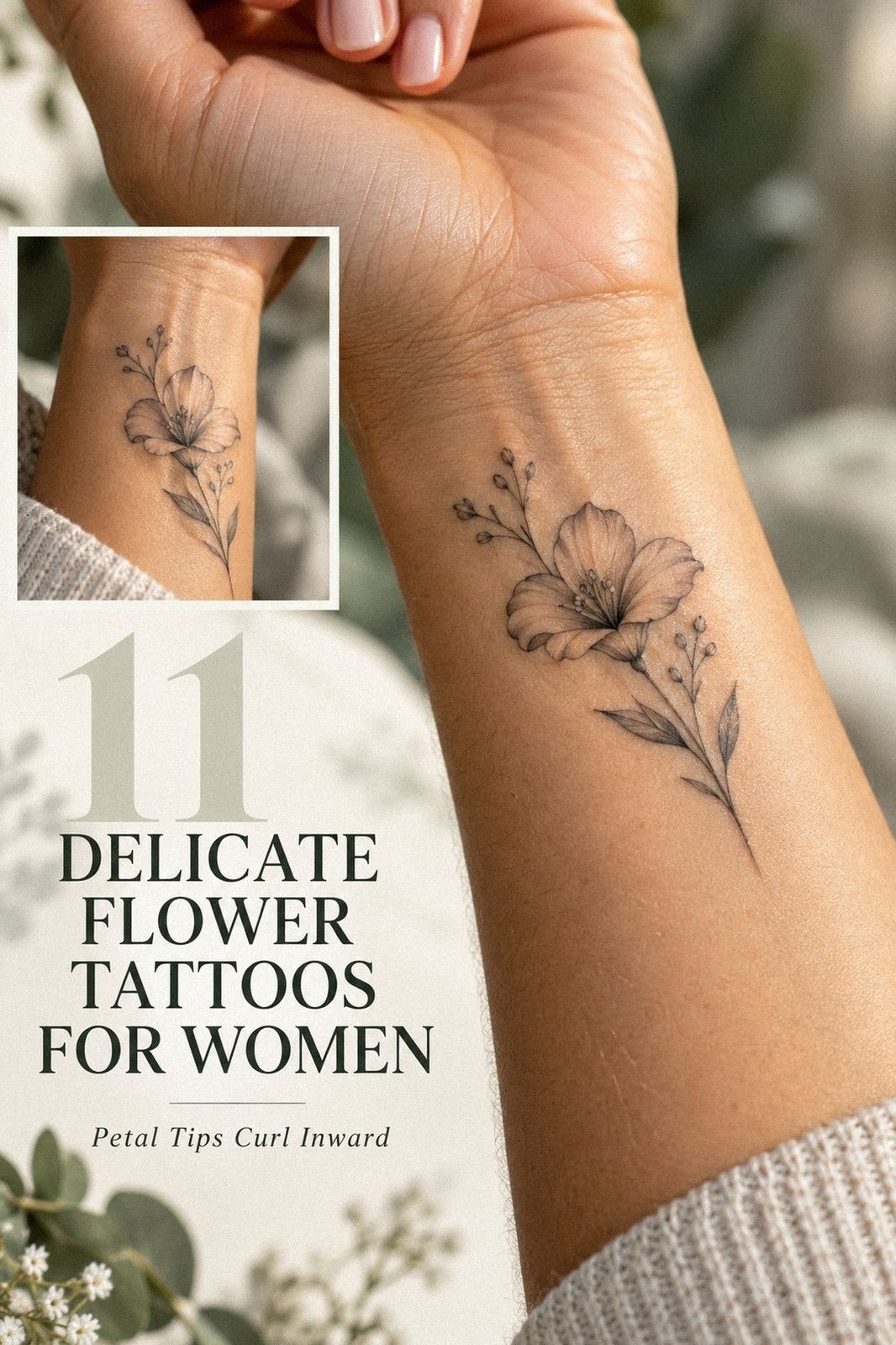
A tiny wildflower wrist tattoo can feel striking when the stem stays open and the layered petals have breathing room. With terracotta and olive ink accents, the flower can look graceful without turning into a heavy mark. You’ll want the stem angled slightly toward your hand so it follows your natural movement.
I’d skip a dense cluster here because your wrist already creates a narrow canvas.
The strongest version has one stem, several fine petals, and almost no extra foliage. That’s the right balance for a minimal design.
Fine black linework keeps the shape readable, while tiny gaps between petals protect the delicate look. It’s meaningful without announcing a whole biography.
I’ve seen wrist pieces lose their crisp edge when the design is packed too tightly. Your artist should leave negative space around the center and avoid squeezing a second flower beside it.
Don’t chase every botanical detail. A clean silhouette will age more gracefully than a miniature field guide.
If you’re collecting small designs, compare this scale with our tiny wildflower tattoo guide. Your favorite version may be simpler than you expected!
2Behind the Ear: A Brief Wildflower
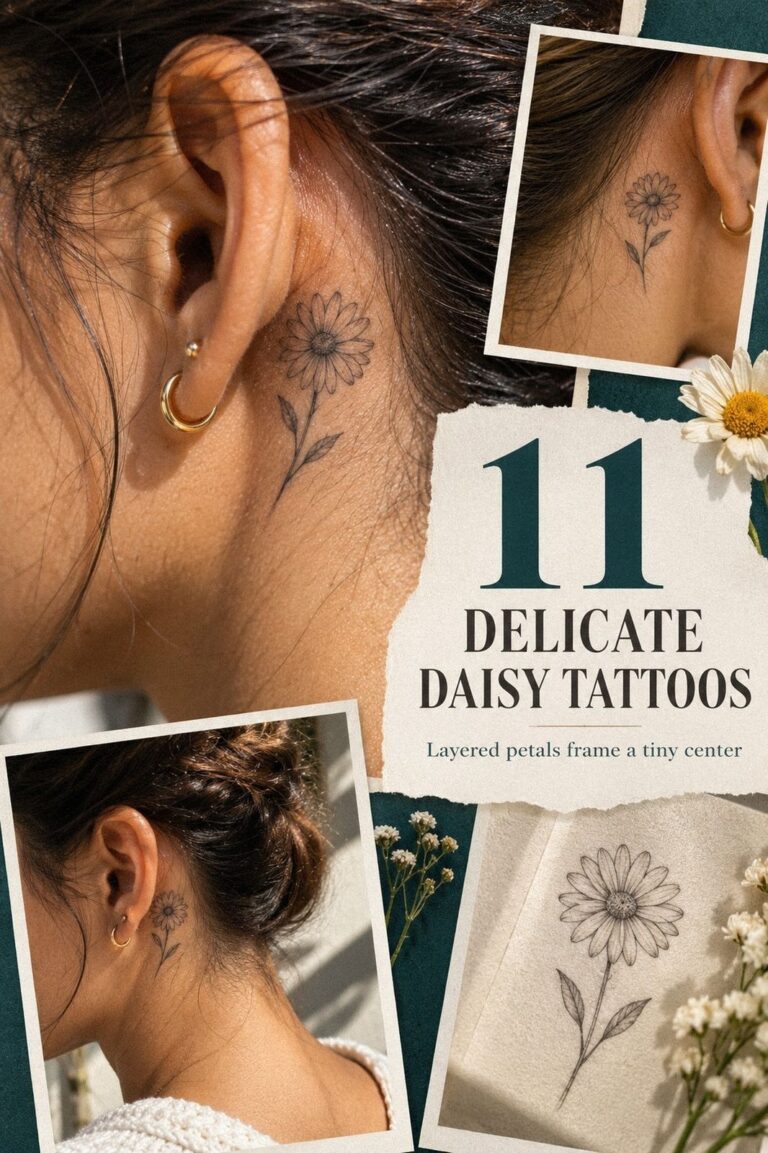
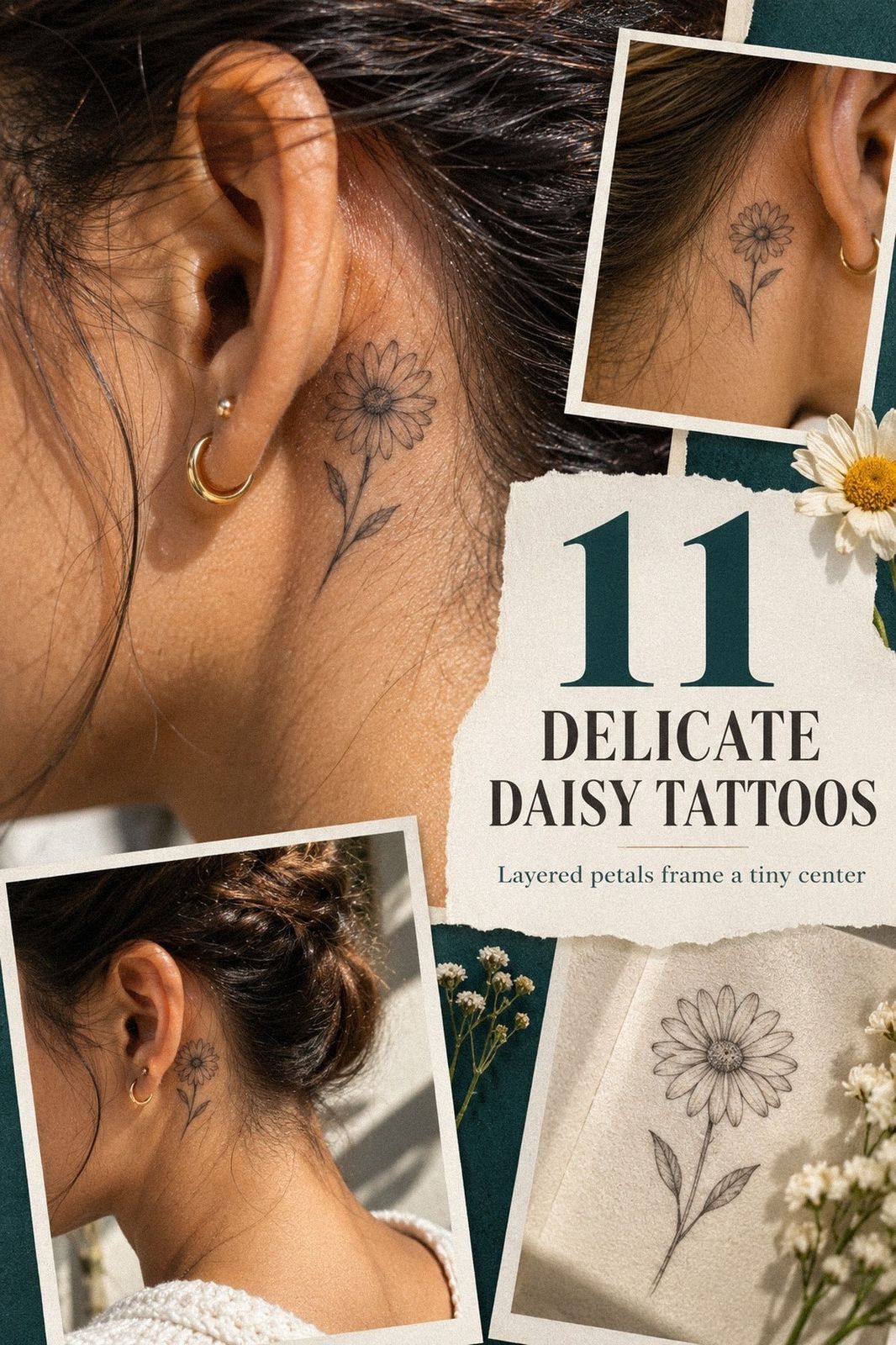
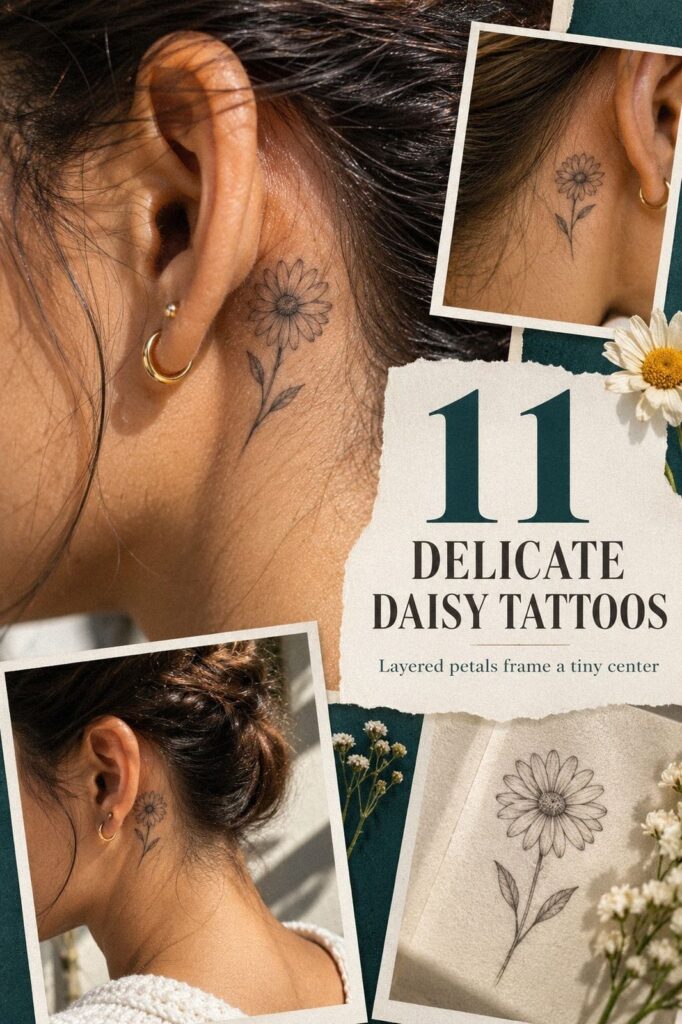
A behind-ear wildflower makes a sleek choice when you want your tattoo to appear briefly, then disappear beneath your hair. A dainty single stem can feel understated, symbolic, and quietly personal without demanding much space.
3Build a Fine-Line Forearm Bouquet
A forearm bouquet gives you more space to build an intricate wildflower composition while keeping the individual stems light. Plum, grey, and rose-gold accents create an expressive color balance that feels polished without overwhelming the bouquet. You’ll want one main flower, one smaller bloom, and a few leaves instead of six competing focal points.
Keep the stems flowing in one direction, like they’ve just been gathered by hand. That feels more organic than a perfectly symmetrical arrangement.
A three-needle grouping may suit narrow lines, but the artist should choose equipment based on your skin and the final size. Don’t request the thinnest possible line simply because it sounds refined.
If you’re weighing a bouquet against one stem, our minimalist wildflower tattoo article can help you compare visual weight. I’d place this design on the outer forearm if you want to see it often.
Your inner forearm will feel more intimate and slightly more protected. That extra surface area is often worth the cost.

4Could a Birth Flower Follow the Collarbone?
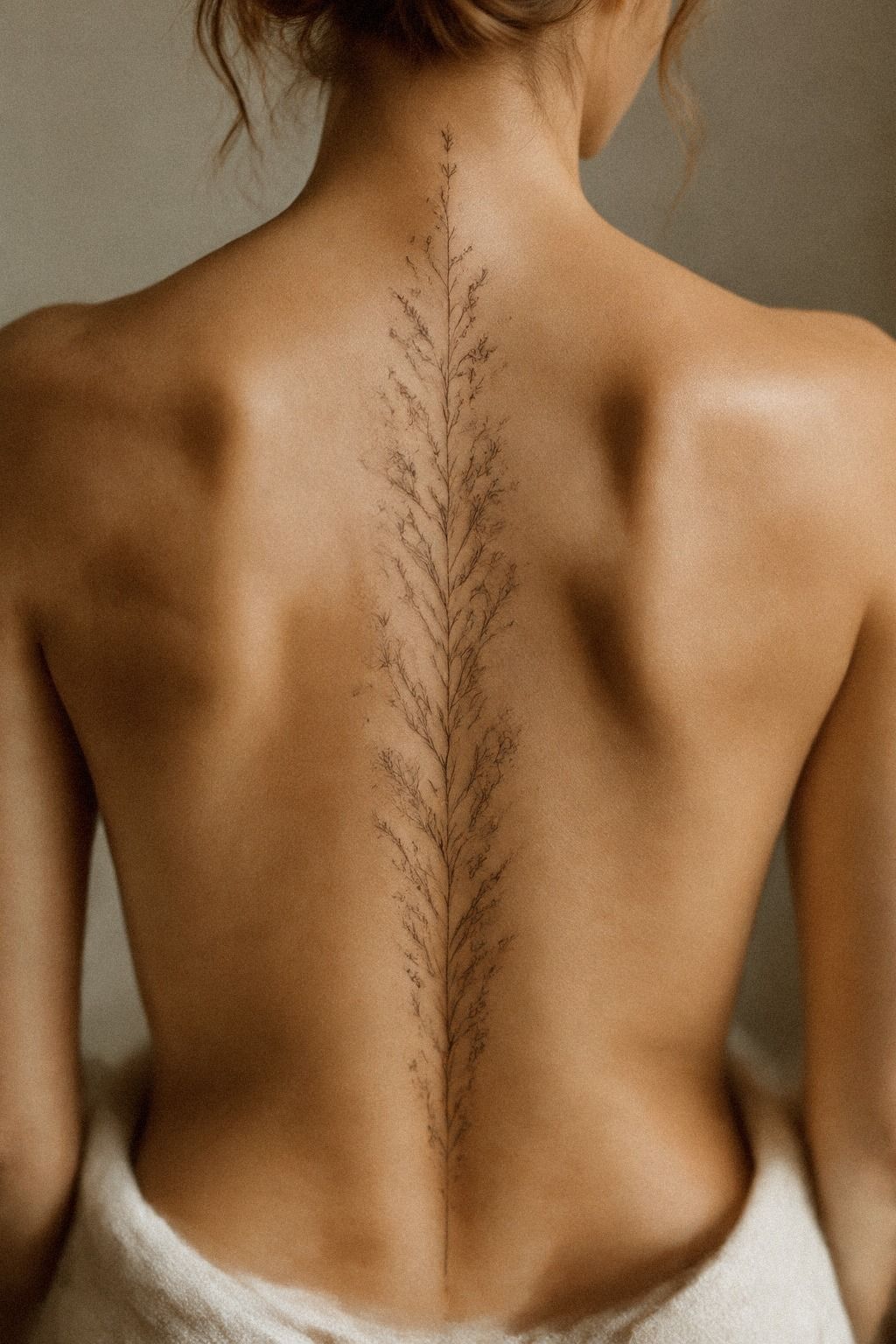
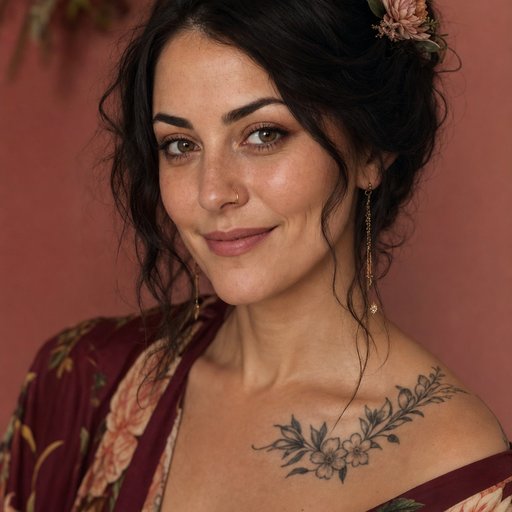
A birth flower across the collarbone can feel romantic without becoming ornate. The flower should follow the natural line of the bone, with the stem slightly off center if the meaning belongs to one specific person. Navy and white accents can give the design a timeless contrast while keeping the shape elegant.
I’d avoid adding color unless you’re ready for more maintenance. A monochrome flower feels classic, and it won’t compete with necklaces or changing clothing colors. The collarbone is visible, so the final design should feel empowering rather than impulsive.
I made the mistake of treating a meaningful flower like a tiny sticker once. The symbolism felt stronger after I removed two decorative leaves.
If you’re choosing a birth flower, read our wildflower tattoo meaning guide before your consultation. A clear reference can save time and protect your budget.
5Ankle Initials, Kept Minimal

For an ankle tattoo, I’d begin with one flower and one discreet initial. Emerald and gold accents can look vibrant and daring while keeping the design recognizable from a short distance. The bloom should remain clear where it meets socks, movement, and regular sunlight.
The strongest option is a single flower with the initial tucked beneath the lowest leaf. That feels classic without becoming overly formal. I’d skip a long quotation around the ankle because a letter has more power when your eye has somewhere to rest.
Ankle skin moves and experiences friction, so your artist should protect the open spaces between petals. Compare the proportions with our minimalist wildflower tattoo article before you commit. A smaller tattoo may offer better value if the central flower stays legible.
Your initials can remain private even when the tattoo is visible.
6Watercolor or Black Ink? Choose the Wildflower Color

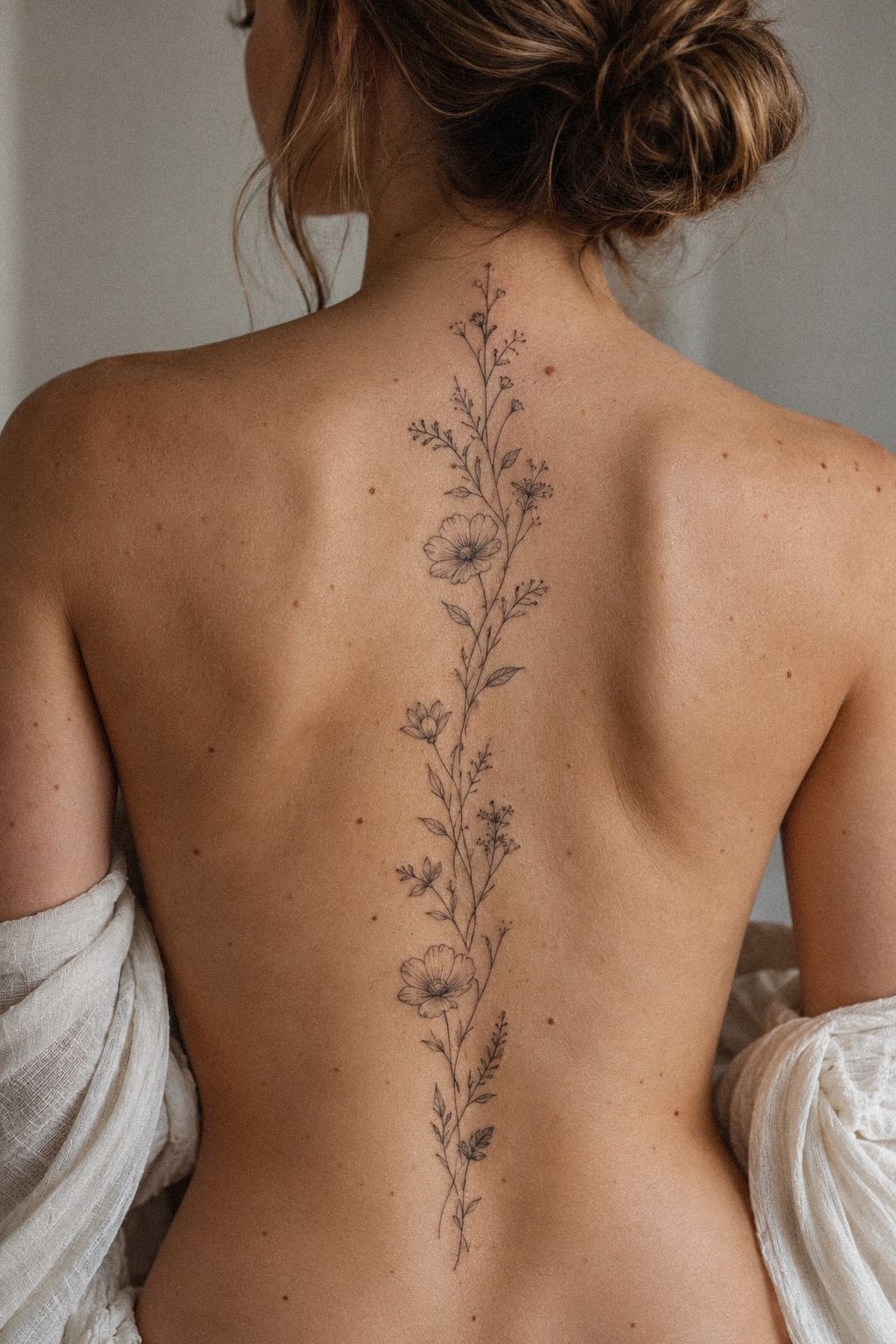
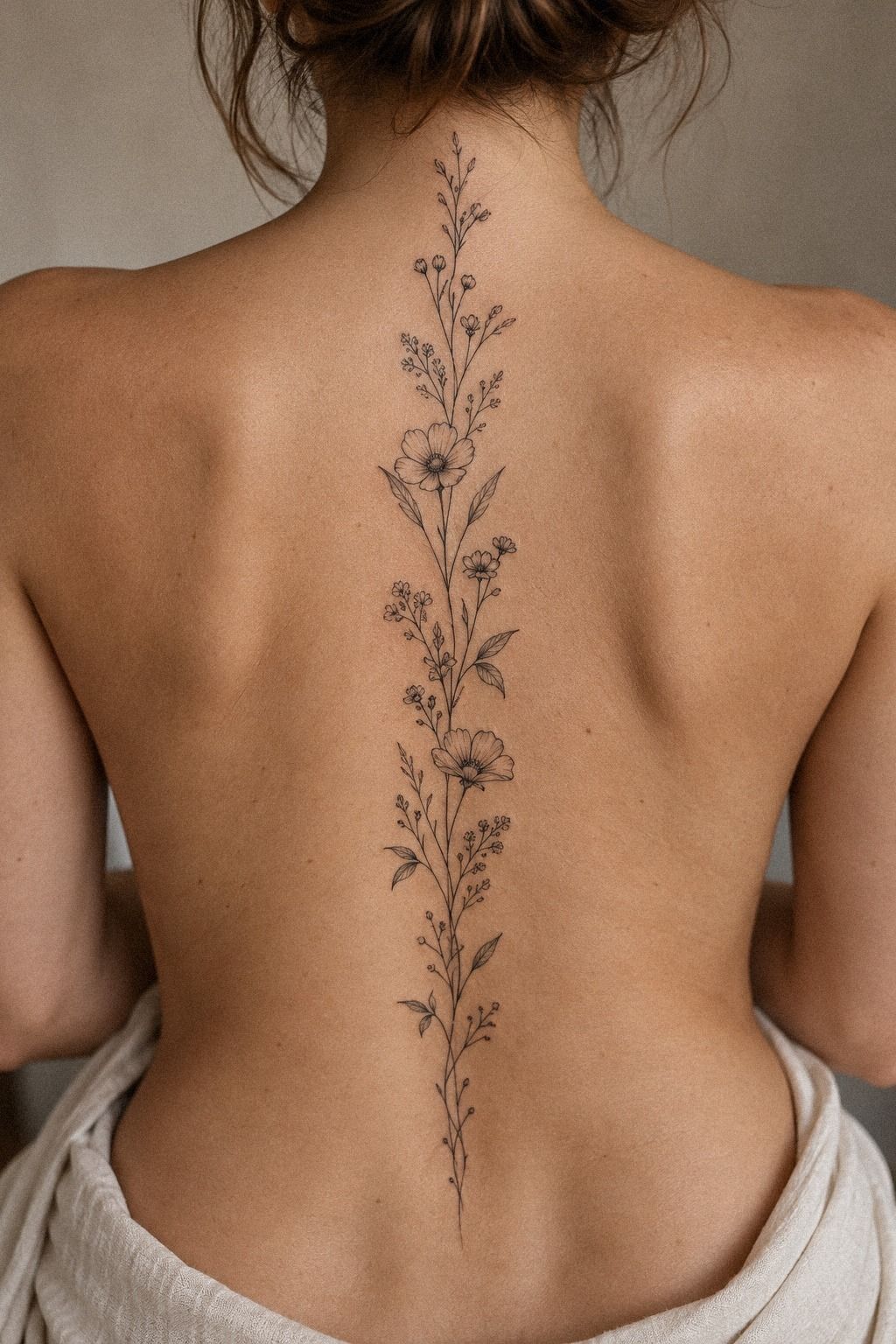
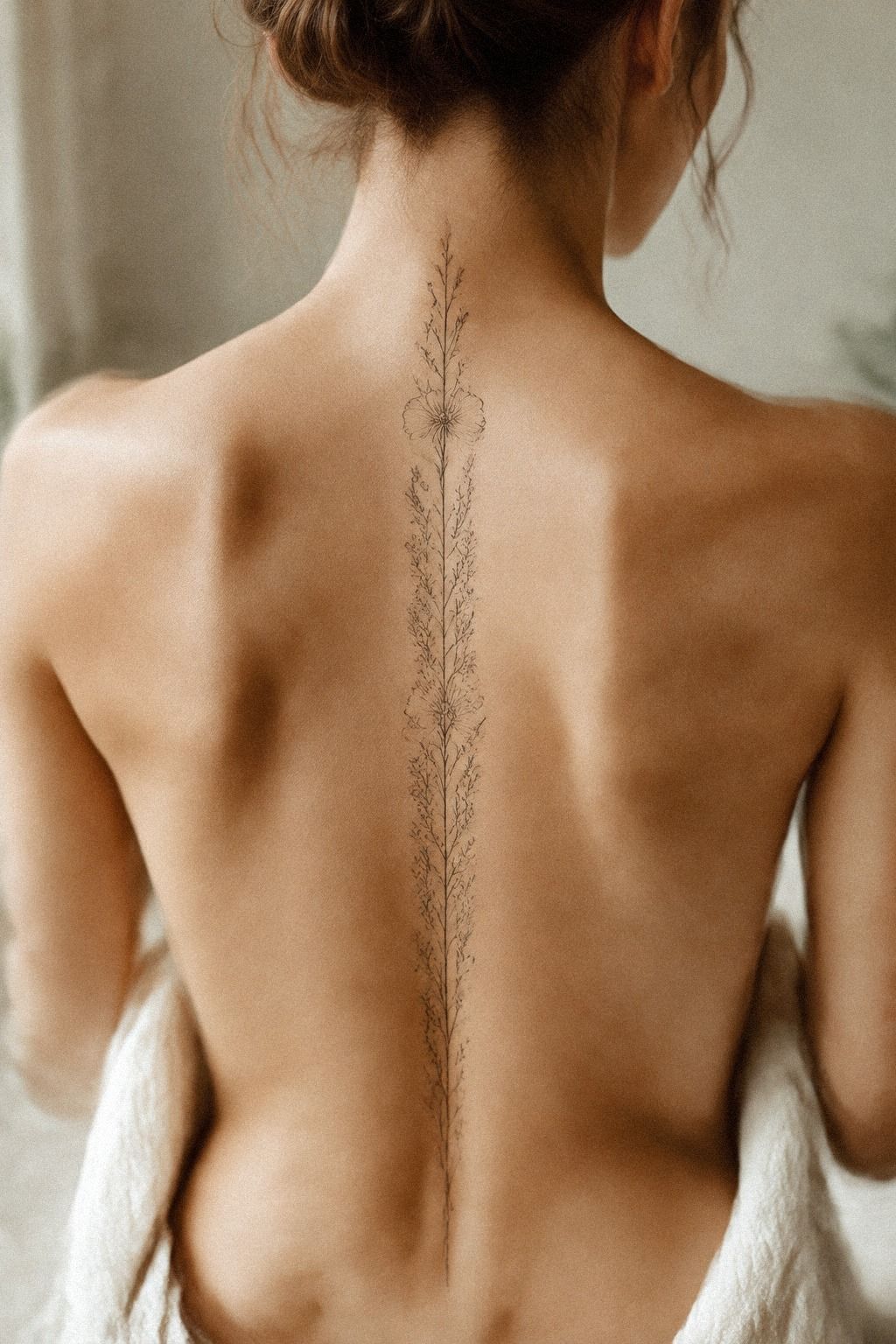
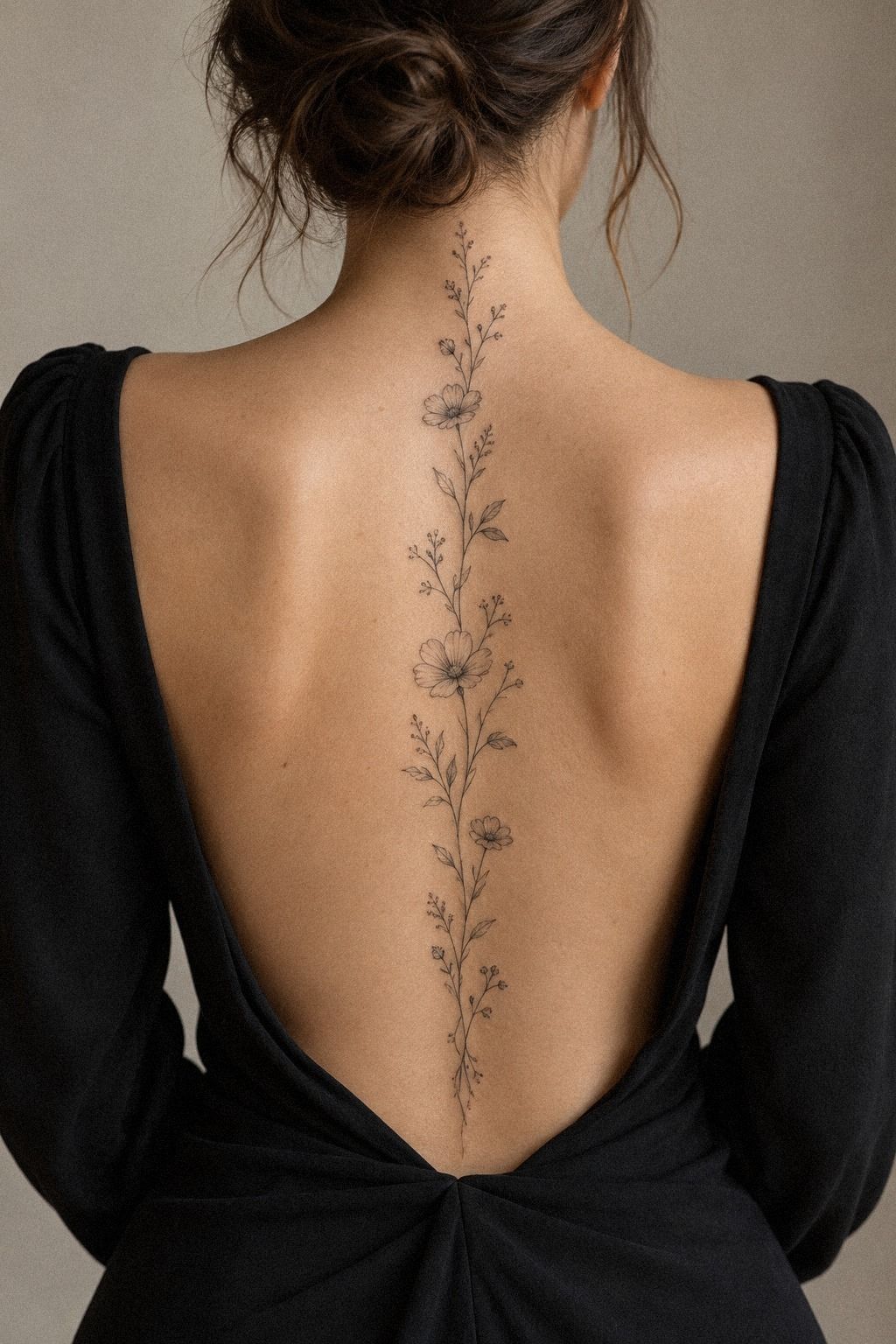
A watercolor wildflower on the spine can look ethereal when the color supports the line instead of hiding it. Forest green and rust accents can create a gritty yet elegant palette that still lets the petals breathe. You’ll want your artist to show healed color work, because fresh pigment can appear more vibrant than the finished result.
I’d choose one restrained color family rather than mixing every bright shade. A vibrant accent can be powerful, but too many shades may weaken the flower’s structure. A dark outline keeps the design legible and gives the softer color something crisp to follow.
The spine offers a long, expressive path, but it can be a demanding placement. Don’t rush the stencil because alignment matters from shoulder to lower back. If you’re comparing colored and black designs, our delicate peony tattoo examples show how layered petals can hold visual depth.
Ask about long-term value before choosing the more expensive option.
7Let the Rib Line Guide the Botanical Stem

A rib tattoo gives a fine botanical flower a raw, intimate quality. Dusty rose and charcoal accents can make the layered petals feel haunting and polished while the design stays narrow. You’ll want the stem to run with the ribs rather than across them, because that direction usually looks more natural when your body moves.
This placement can hurt more than an upper arm or thigh, especially where the skin sits close to bone. I’d keep the design compact and flowing, with one main bloom and only a few leaves. A transfer stencil should be placed while you stand naturally, not while you pose for the appointment.
Rib pieces change shape as you breathe, so placement matters as much as the flower itself. For another graceful direction, visit our delicate lotus flower tattoo guide.
Your rib tattoo can remain hidden most of the time, which gives the symbolism a quieter edge. The extra planning is worth it if privacy matters to you!
8Two Wildflowers, One Shared Symbol
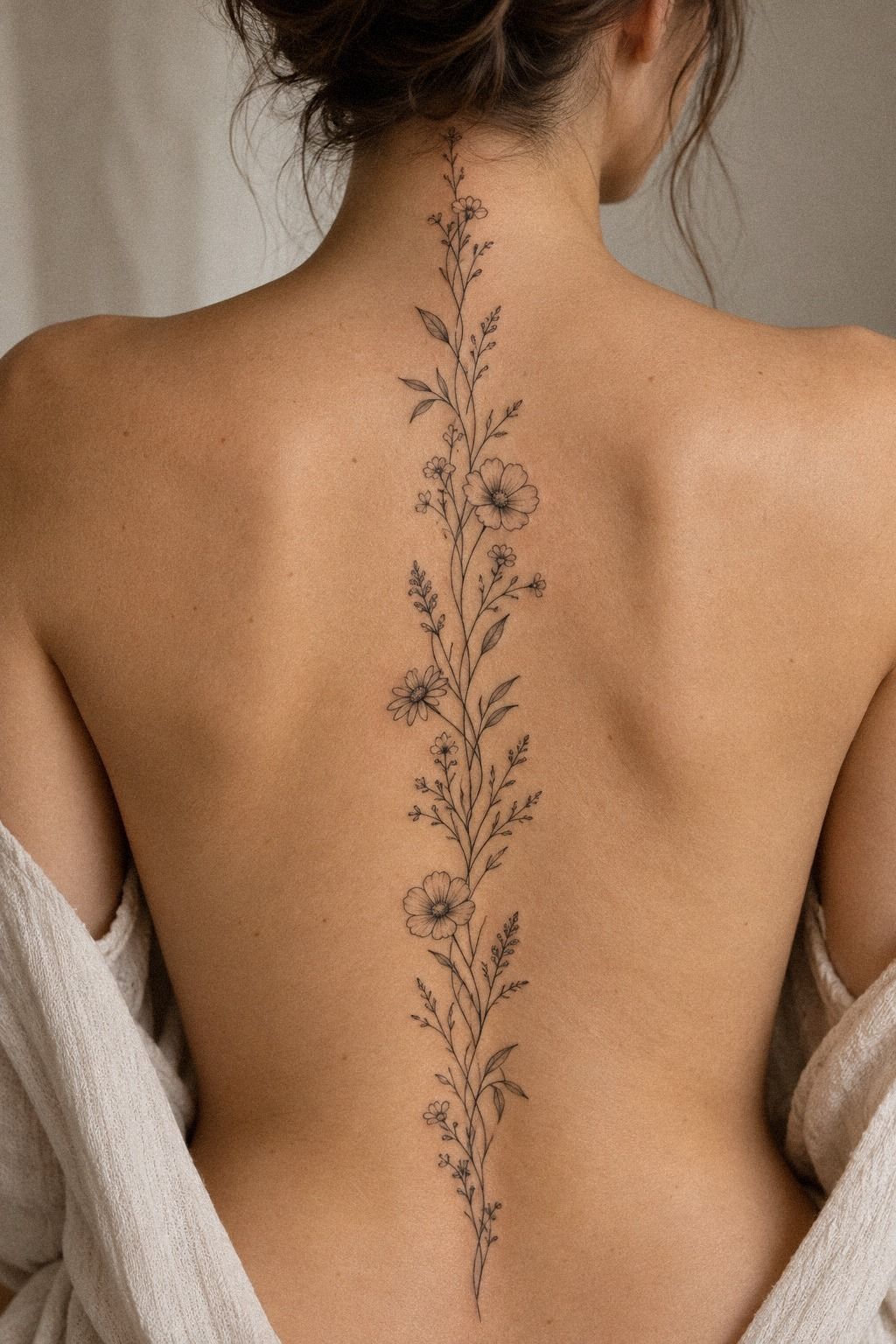
Matching wildflower tattoos work best when they share a structure but don’t look mechanically copied. A playful mirrored detail can make each piece feel personal while keeping the shared symbol recognizable.
9Finger Detail: Keep the Stem Crisp
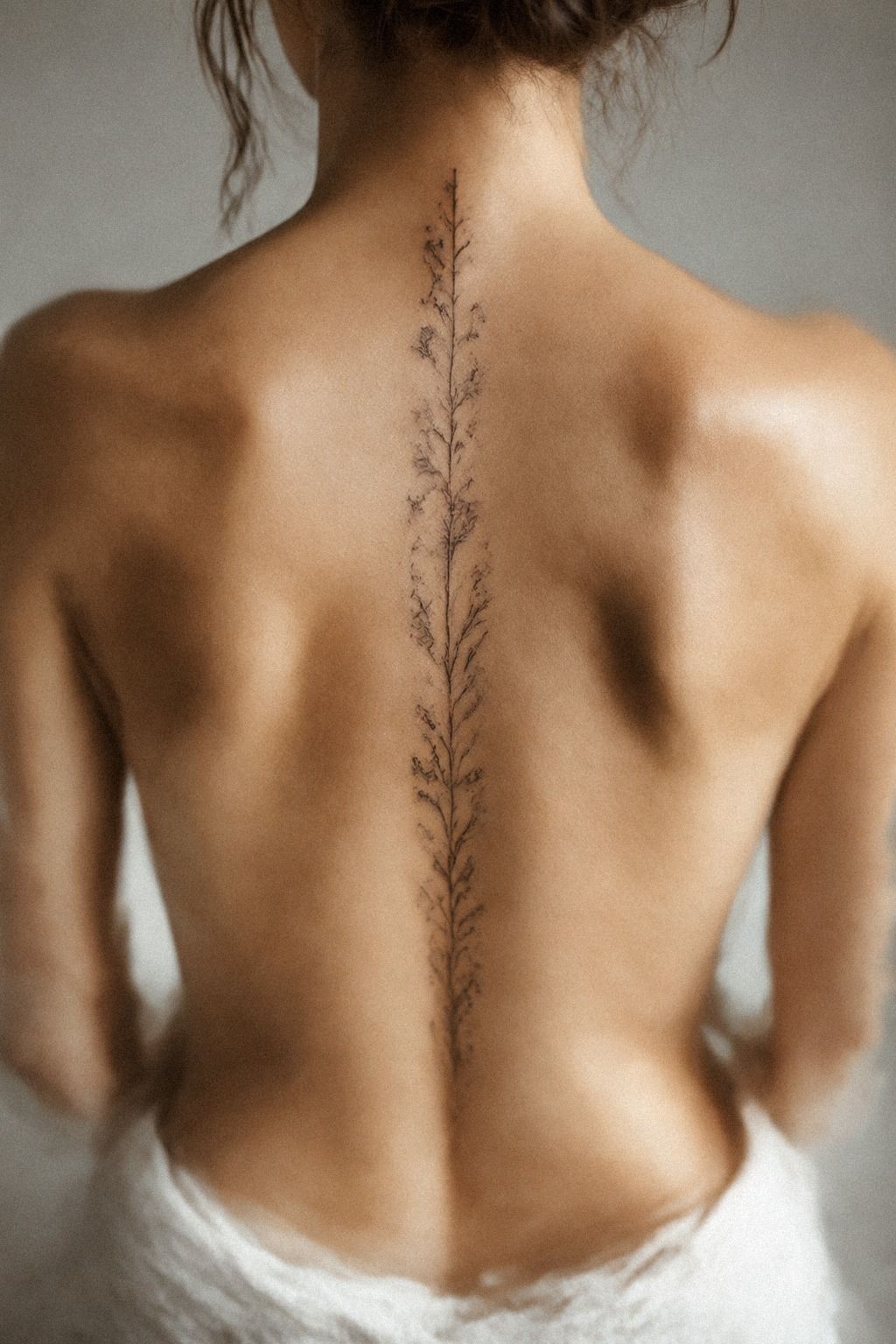
A finger wildflower needs crisp details because the available space is narrow and constantly exposed to movement. Midnight-blue, copper, and ivory accents can give the stem a sharp, iconic foundation while the petals remain almost weightless. You’ll want to simplify the flower before the appointment, not after the needle starts.
Finger tattoos can fade or soften faster than protected placements because of washing, friction, and sunlight. I’d choose a bold central stem with two or three readable petals instead of a miniature bouquet. Your artist may recommend a stronger line than you expected, and that’s usually the sensible call.
The design should leave enough room around the knuckles for clean application. Stencil transfer gel helps preserve the small shape during setup, but it can’t solve an overcrowded concept. If you’re considering a tiny hand symbol, compare it with the proportions in our tiny peony tattoo guide.
This placement offers emotional value, but it also demands realistic expectations.
10What Should Your Shoulder Flower Mean?
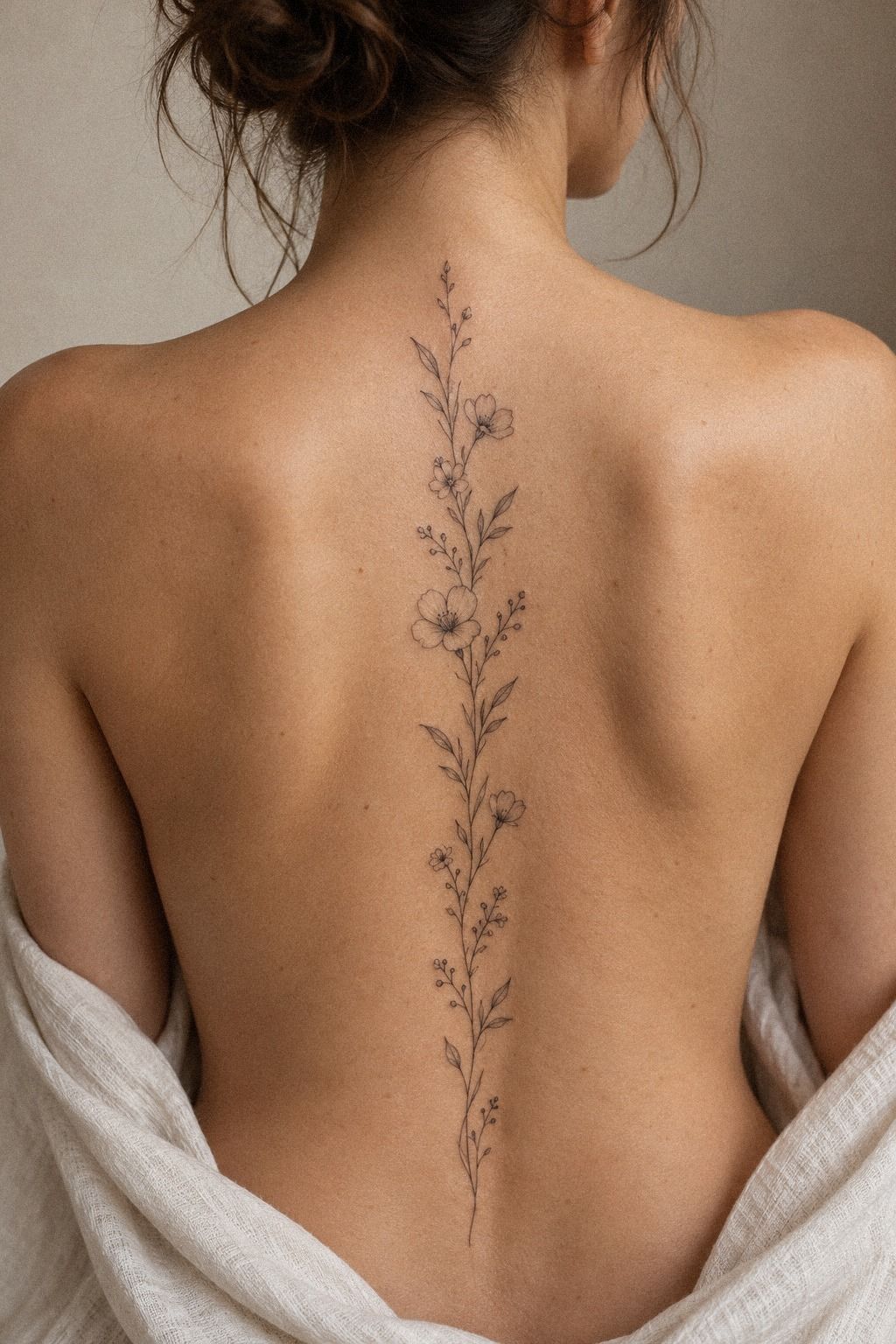
The shoulder offers enough surface for transfer stencil paper to show the stem, petal layers, and symbolic marks clearly. I’d place the most meaningful detail near the upper curve, where it follows the round shape of the shoulder. A crowded center will look less refined when your arm moves.
You can choose a flower for resilience, remembrance, growth, or someone who changed your life. Your explanation doesn’t need to be public. Sage-green and warm-cream accents can make the symbol feel sacred and empowering without filling every leaf.
If you’re unsure between two blooms, ask which one you’d still choose without explaining it to anyone. Our flower tattoo meaning guide can help you compare symbolism without making the decision for you. A meaningful shoulder piece can feel classic, personal, and quietly empowering.
11Grow the Sleeve Around One Wildflower
A sleeve composition lets a wildflower move across the forearm instead of sitting like a single emblem. Terracotta, olive, and muted neutral accents can give the arrangement a bold, vintage character while preserving the open spaces between elements. You’ll want the arrangement to look connected from every direction.
Build outward with leaves, seed heads, and one secondary bloom rather than adding random filler. A whimsical sleeve still needs rhythm. Medical-grade stencil paper can map the first section, but you shouldn’t approve a full sleeve before seeing how the design flows around your arm.
Leave deliberate gaps so the piece remains readable as it grows. Our delicate flower crown tattoo collection offers useful ideas for linking stems.
Your first session can establish the direction without deciding the entire future. That flexibility may give you better value than rushing into a complete composition.
A Better Way to Choose the Flower
Start with the flower you can identify instantly. A botanical reference helps your artist understand the petal shape, but the final tattoo should still be adapted to your skin and preferred scale. An iconic bloom often communicates more clearly than an elaborate collection of symbols.
Then remove one detail. Maybe it’s a date, an extra leaf, or a second outline.
Negative space gives a delicate tattoo room to breathe, and it can make a small design look more intentional. I’d rather see one expressive flower than an ornate concept that needs explaining.
A personal symbol can be feminine, masculine, or neither. One meaningful bloom should carry the emotional weight before you add any decorative element.
Placement Changes the Decision
A wrist or forearm keeps the tattoo visible during ordinary gestures. Outer-forearm placement can be easier to protect than fingers, ankles, or ribs, especially during the first few weeks. It’s a practical option if you want to monitor the design while it settles.
A rib or behind-ear tattoo creates a more private feeling, while a shoulder or collarbone piece can be more visible. Placement exposure affects maintenance, comfort, and how often you’ll see the symbol. Think about your daily routine before choosing based only on how a design looks online.
Color, Contrast, and Skin Tone
Your artist should evaluate contrast on your skin rather than copying a reference exactly. A healed portfolio is more useful than a fresh tattoo because it shows how lines and color actually settle. Ask for examples with similar undertones and comparable detail.
Blackwork, greywash, and color can all look stylish when the contrast is intentional. Skin-tone consultation may change the outline, pigment selection, or spacing between petals.
That adjustment isn’t a compromise. It’s part of making the design work for you.
What Makes the Price Worth It?
A tattoo budget depends on the studio minimum, artist experience, design complexity, placement, and session length. The cheapest quote may not offer the best value if the artist lacks healed botanical work. Here’s a practical US estimate:
Ask what the quoted cost includes before you book. A written estimate should cover the approximate size, placement, color, and expected session length.
I’d also ask whether a minor touch-up is included. Clear information protects your budget and makes the final decision feel less rushed.
Why I Still Prefer One Strong Flower
I’ve changed my mind about delicate wildflower tattoos more than once. At first, I thought the most meaningful design had to include several flowers, initials, dates, and a quotation. Then I saw how quickly those details competed on actual skin.
One recognizable bloom usually gives the symbol enough room to speak.
That doesn’t mean every tattoo should be minimal. An intricate bouquet can be expressive, and a flowing sleeve can become a powerful record of different seasons in your life.
But your first decision should be the symbol, not the decoration around it. If you’re adding leaves because the flower feels too plain, pause and ask whether the bloom is truly the one you want.
I also think placement deserves more attention than trend reports give it. A wrist flower is visible and conversational.
A rib flower is private and raw. A shoulder piece can feel classic, while a finger tattoo is more exposed to daily wear.
Placement durability should influence your choice as much as the design itself.
The practical side matters, too. Fine lines can spread over time, especially when the design is too small, the placement gets constant friction, or the skin sees frequent ultraviolet exposure.
Healed tattoo examples matter more than a flawless fresh reference. Your artist should explain aftercare clearly and tell you when a bolder line would age better.
For me, the most timeless option is a single stem with one recognizable bloom and one personal adjustment. Maybe it’s a petal removed for a lost relative. Maybe it’s a leaf angled toward a date.
A personal alteration can make the tattoo yours without making it busy. If the design still feels right after you’ve stopped searching for new references, you’re probably close.
A Few Things Worth Answering
How much does a delicate wildflower tattoo usually cost?
A delicate wildflower tattoo in the US usually costs about $100 to $300, depending on placement, size, artist, and region. A clear price estimate should include the shop minimum, which is often about $50 to $100, or an hourly rate around $100 to $250.
You’ll get a better quote when you send the flower, placement, approximate scale, and whether you want color. Your artist can explain what changes the total. Don’t choose only by the lowest number if healed work and hygiene are important to you.
Are delicate wildflower tattoos a good idea for a first tattoo?
Yes, they can be a good first tattoo because the subject is personal, the design can stay small, and placements like the outer forearm or upper arm are often more tolerable. A manageable placement lets you learn the process without committing to a large composition.
You’ll still want to choose an artist who shows healed fine-line work. A delicate tattoo isn’t automatically low maintenance. Your skin, placement, and aftercare will affect how the lines settle.
How do I choose a tattoo artist for delicate wildflower tattoos?
Choose an artist with a portfolio full of clean botanical linework and healed examples, not only fresh tattoos. A healed portfolio shows whether petals remain readable and whether thin lines spread in a way you can accept.
You should also ask about studio hygiene, preferred needle groupings, and how the artist approaches your skin tone. Don’t copy a reference blindly. Your artist may need to adjust contrast, spacing, or color so the flower works on you.
How much do delicate wildflower tattoos hurt?
Pain varies by person and placement. Ribs, feet, hands, and sternum are often more painful, while the forearm, thigh, and shoulder can feel more tolerable. Placement affects comfort more than the flower’s level of detail.
You’ll probably notice sharper sensation near bone and softer areas around the arm or thigh. Your artist can pause when needed. It’s reasonable to ask about session length before you book, especially if you’re working within a strict budget.
How long does a delicate wildflower tattoo take to heal?
The surface usually heals in about 2 to 3 weeks, while complete healing can take around 2 to 3 months. Gentle aftercare means washing carefully, moisturizing as directed, and avoiding sun and swimming during the early stage.
Your skin may look dry, flaky, or slightly dull while it settles. Don’t scratch it or judge the final color too soon. Your artist’s written instructions should take priority over general advice.
What’s the best placement for delicate wildflower tattoos?
The best placement depends on visibility, comfort, and how much space your flower needs. The outer forearm and shoulder are practical choices, while the ribs, ankle, fingers, and behind-ear area create a more intimate effect. A protected placement may help fine lines stay clearer.
You’ll also want to think about sun exposure and friction. If you want to see the tattoo every day, choose your forearm.
If you prefer something quieter, the ribs or shoulder can feel more personal. Our small wildflower tattoo guide can help you compare scale before your consultation.
Where I’d Start First
If I had to pick one, I’d start with the fine-line forearm bouquet. It gives your artist enough space to preserve petal detail, and the placement is easier to protect than a finger or ankle. The right starting design should feel personal, readable, and realistic for your routine.
Save the small peony tattoo guide for another reference, then choose the flower you’d still recognize with your eyes closed. That’s a strong place to start!