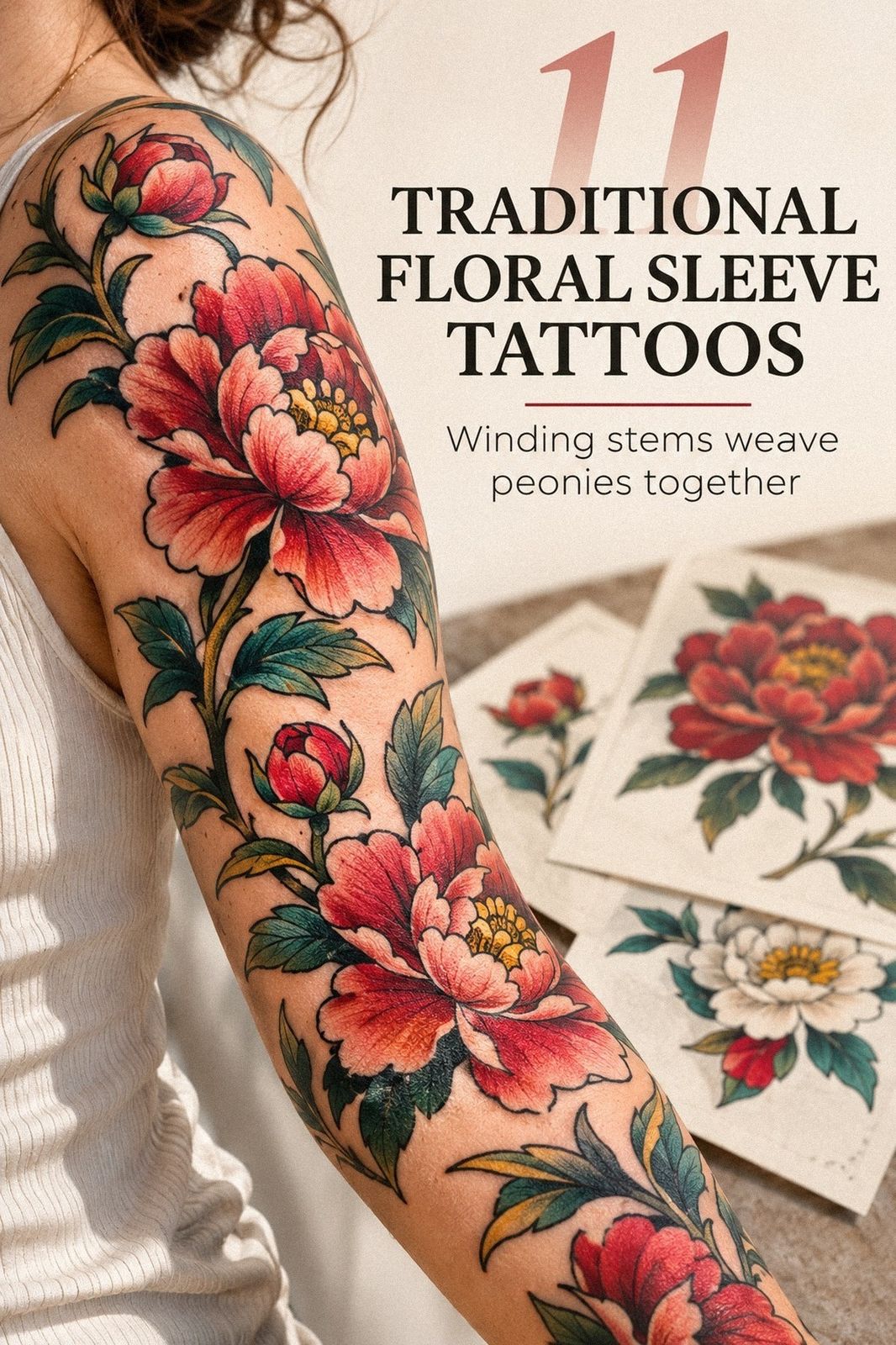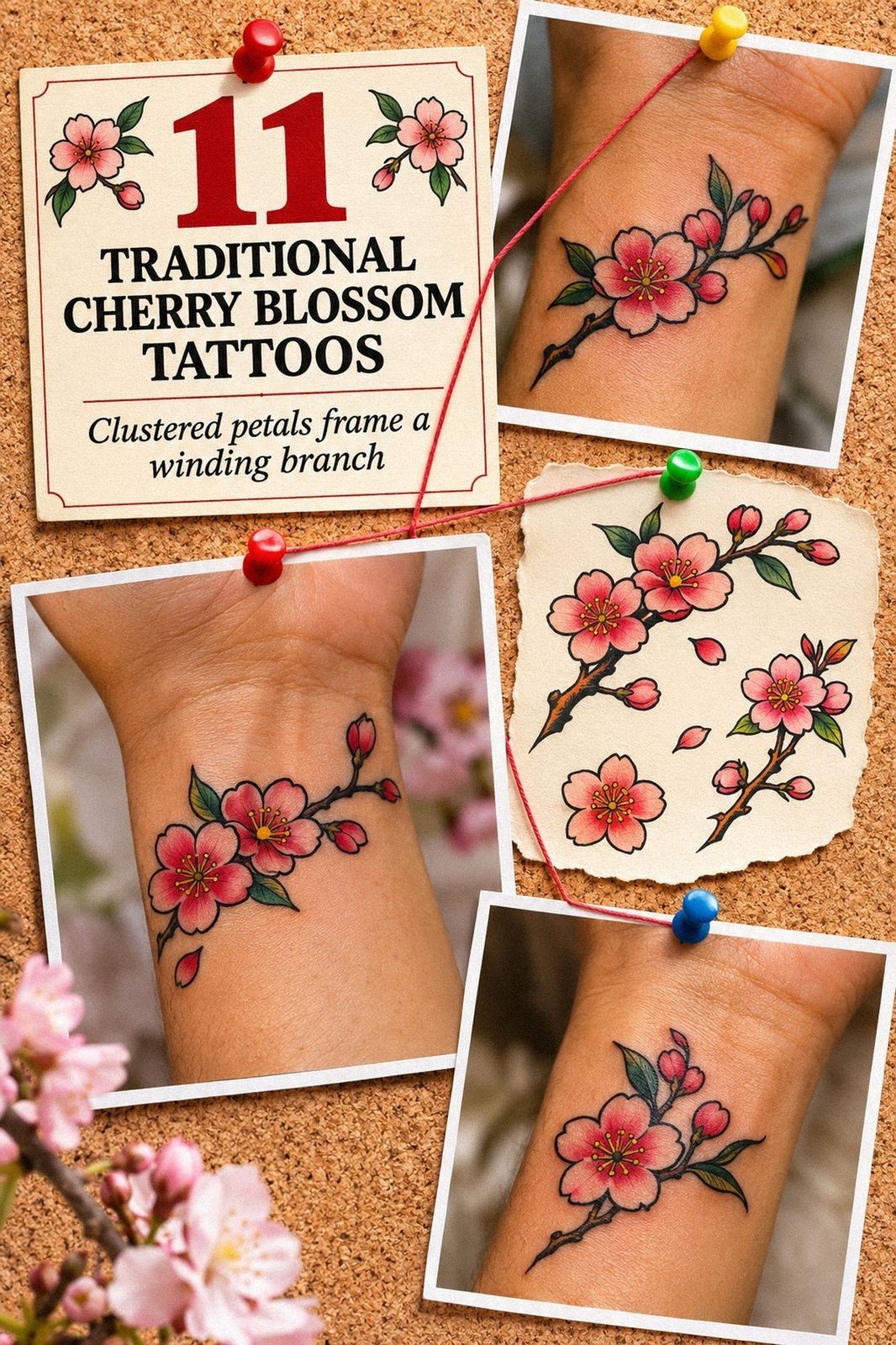
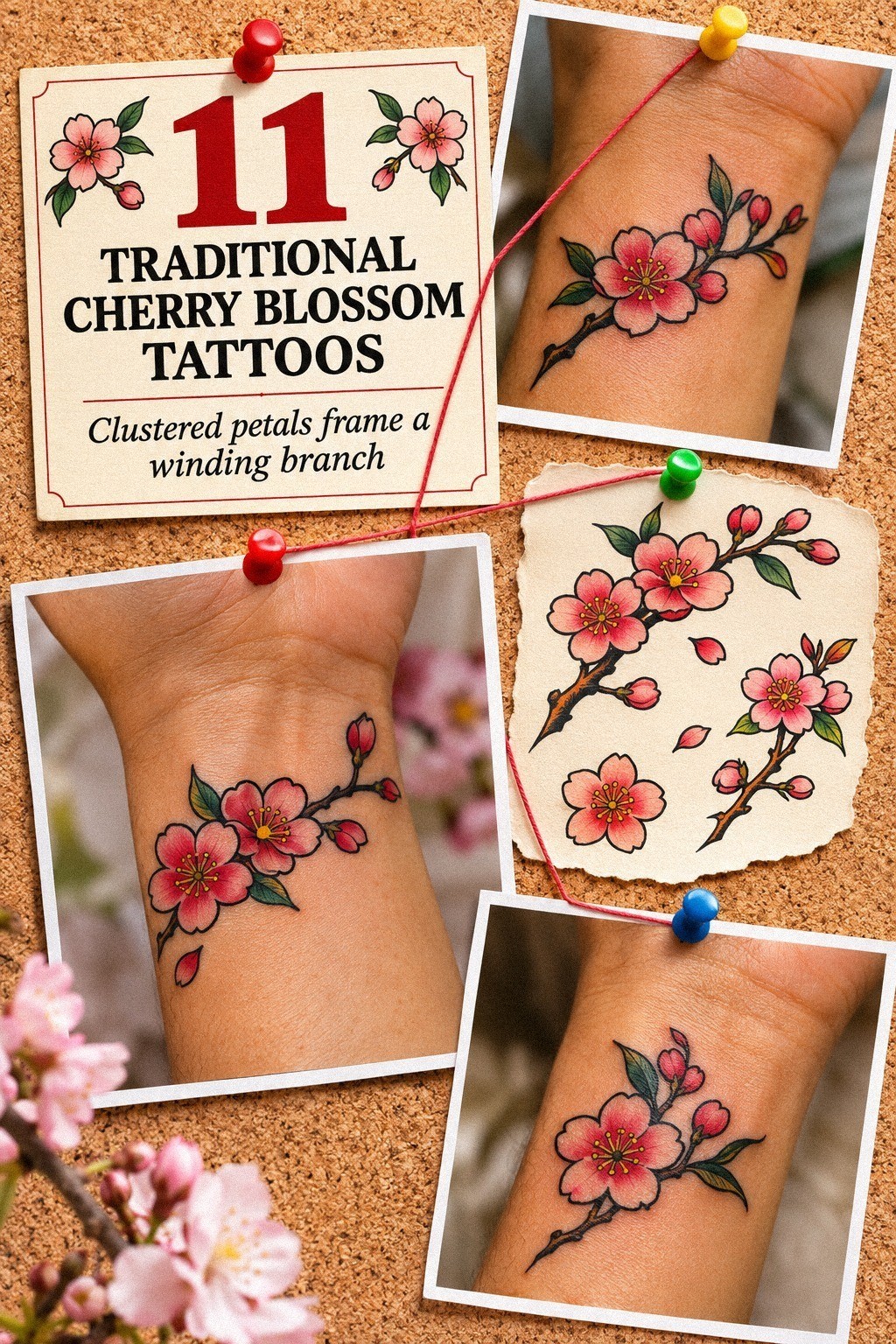
Traditional cherry blossom tattoo placement can make a first session easier, especially on the forearm, shoulder, or wrist. A traditional cherry blossom tattoo still needs to suit your movement, pain tolerance, and daily routine. Start with placement!
Your artist, line weight, color plan, and aftercare matter as much as the flower. A first tattoo doesn’t have to be tiny. It does need a clear silhouette and a realistic session plan.
- Small Traditional Cherry Blossom Tattoo on Wrist
- Where Does a Bold Traditional Cherry Blossom Tattoo on the Shoulder Work Best?
- Traditional Cherry Blossom Tattoo with Koi Fish
- Let Falling Petals Lead the Traditional Cherry Blossom Tattoo Sleeve
- Why the Forearm Still Works for a First Session
- Waves Against Blossoms: A Traditional Cherry Blossom Tattoo with Japanese Waves
- Behind the Ear, Keep It Dainty
- Red Sun, Dark Branch: Build a Clear Focal Point
- What Makes a Ribcage Placement Feel Personal?
- Hummingbird in Motion
- Neo-Traditional Colors, Traditional Structure
1Small Traditional Cherry Blossom Tattoo on Wrist
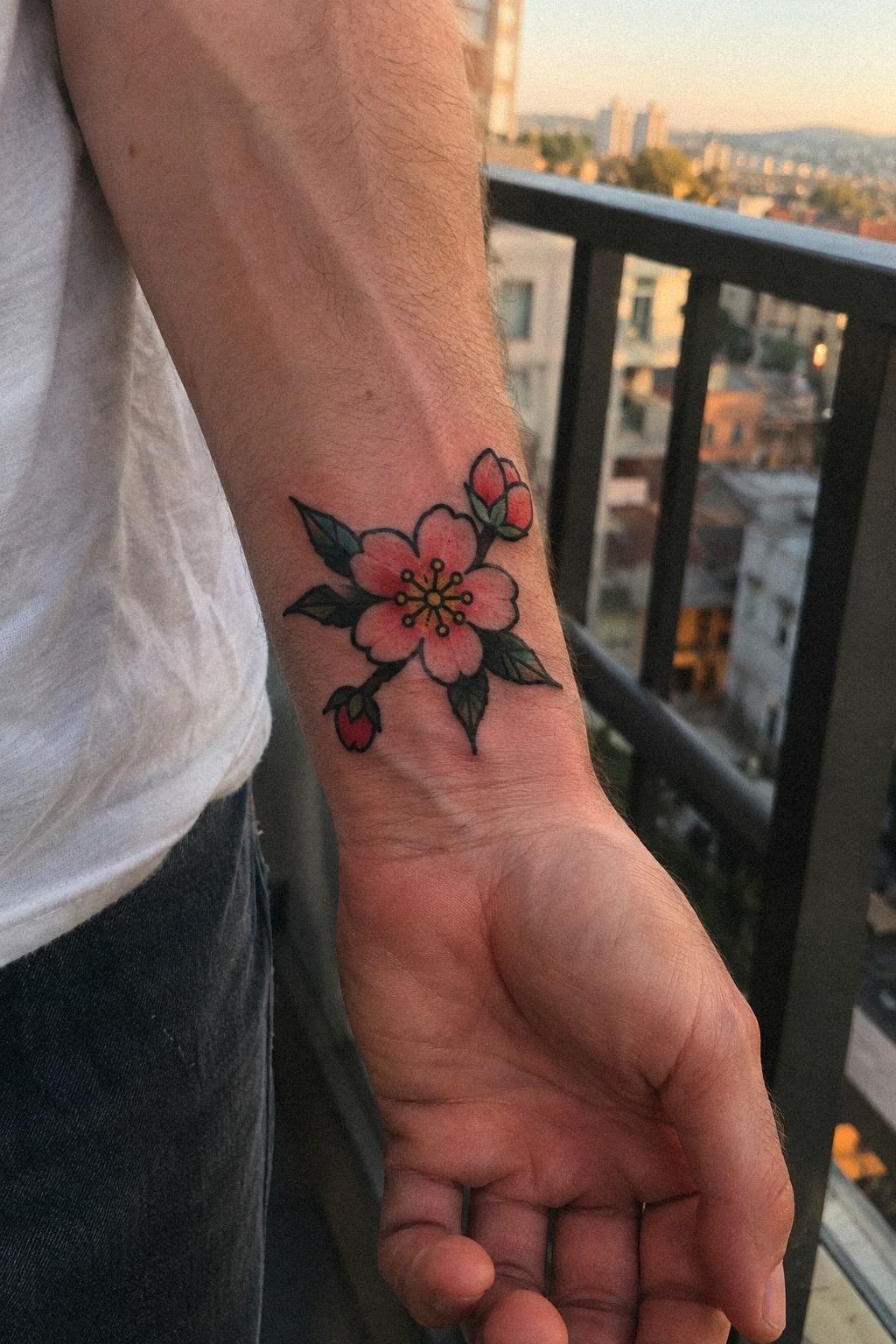
A small traditional cherry blossom tattoo on the wrist gives you a striking design without covering your whole arm. Terracotta petals, smoky grey shading, and olive leaves create an expressive contrast.
Your artist can keep the branches compact, with one blossom open and another slightly turned. The piece should still read clearly from several steps away.
The result feels delicate but personal.
Wrist tattoos stay visible, so your choice should feel meaningful before it feels fashionable. A compact cherry blossom tattoo can be worth it if you want something symbolic to see while typing, driving, or reaching for a mug.
I’d avoid squeezing too many petals into a tiny area. Crowded ink can lose sharpness as it ages.
Ask your artist for a clean stencil and check the placement with your hand relaxed. Your wrist placement bends constantly.
The design should follow that movement rather than fight it. A small branch with open negative space will look more polished than a dense cluster pressed against the crease.
For a similar scale, compare these small cherry blossom tattoo ideas and these tiny flower tattoo references before your appointment. You’ll notice that the strongest examples leave space around each petal. That breathing space keeps the design understated, readable, and graceful.
2Where Does a Bold Traditional Cherry Blossom Tattoo on the Shoulder Work Best?
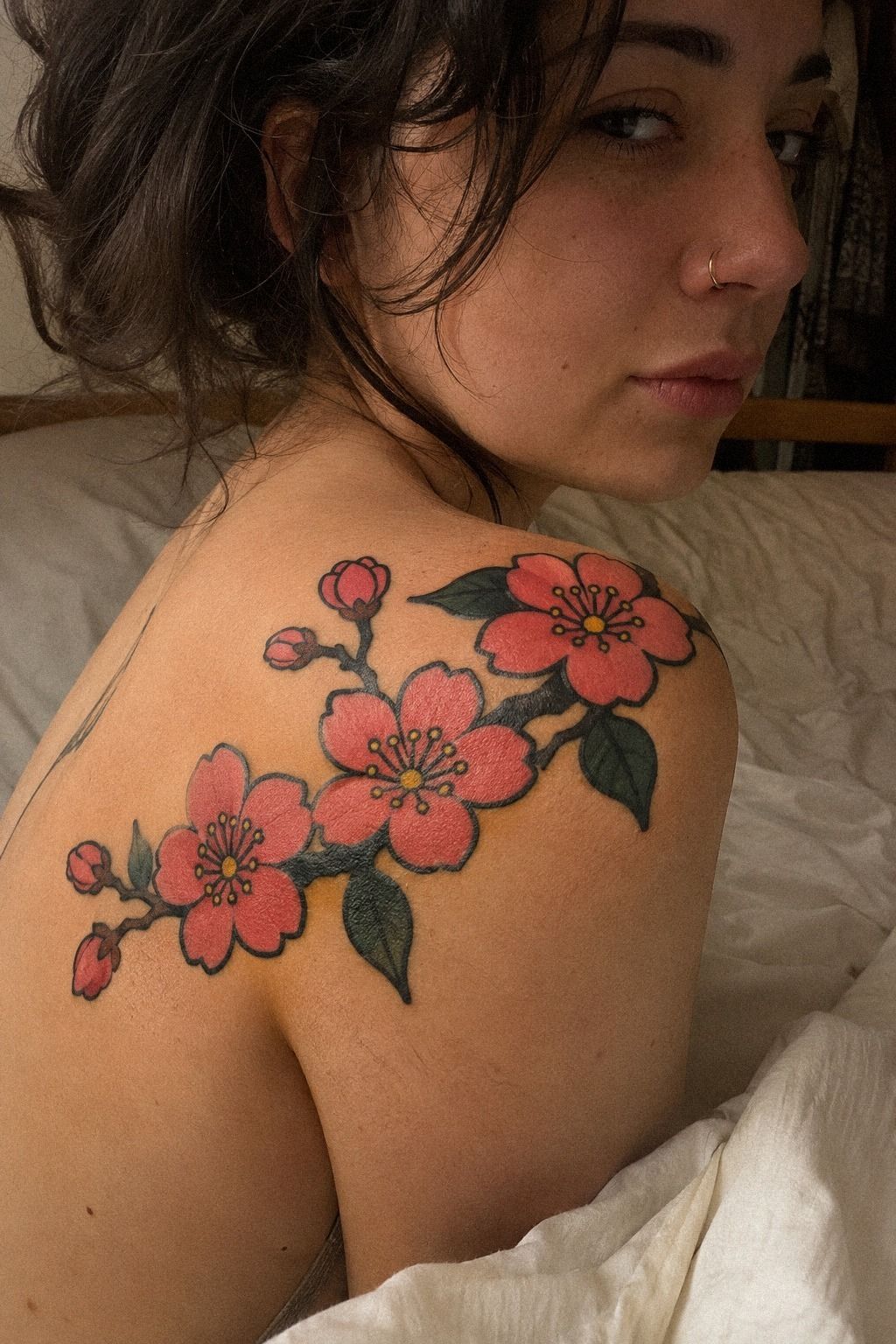
A bold traditional cherry blossom tattoo across the shoulder gives the flower enough skin to move. The rounded shape of the shoulder can support a branch that curves toward the upper arm or collarbone. A shoulder tattoo also gives your artist more freedom with petal size and line weight.
This placement can feel powerful without becoming overwhelming. A single branch, two open blossoms, and a few leaves may look more elegant than a crowded composition. If you want color, ask whether clay-red petals and muted gold accents will offer better contrast on your skin.
Think about visibility before you decide. A shoulder design can stay discreet beneath many shirts, yet it can also become a striking statement when exposed.
Ask to check the stencil with your shoulder relaxed, raised, and turned. That movement will help you judge the placement before you commit to the cost.
3Traditional Cherry Blossom Tattoo with Koi Fish
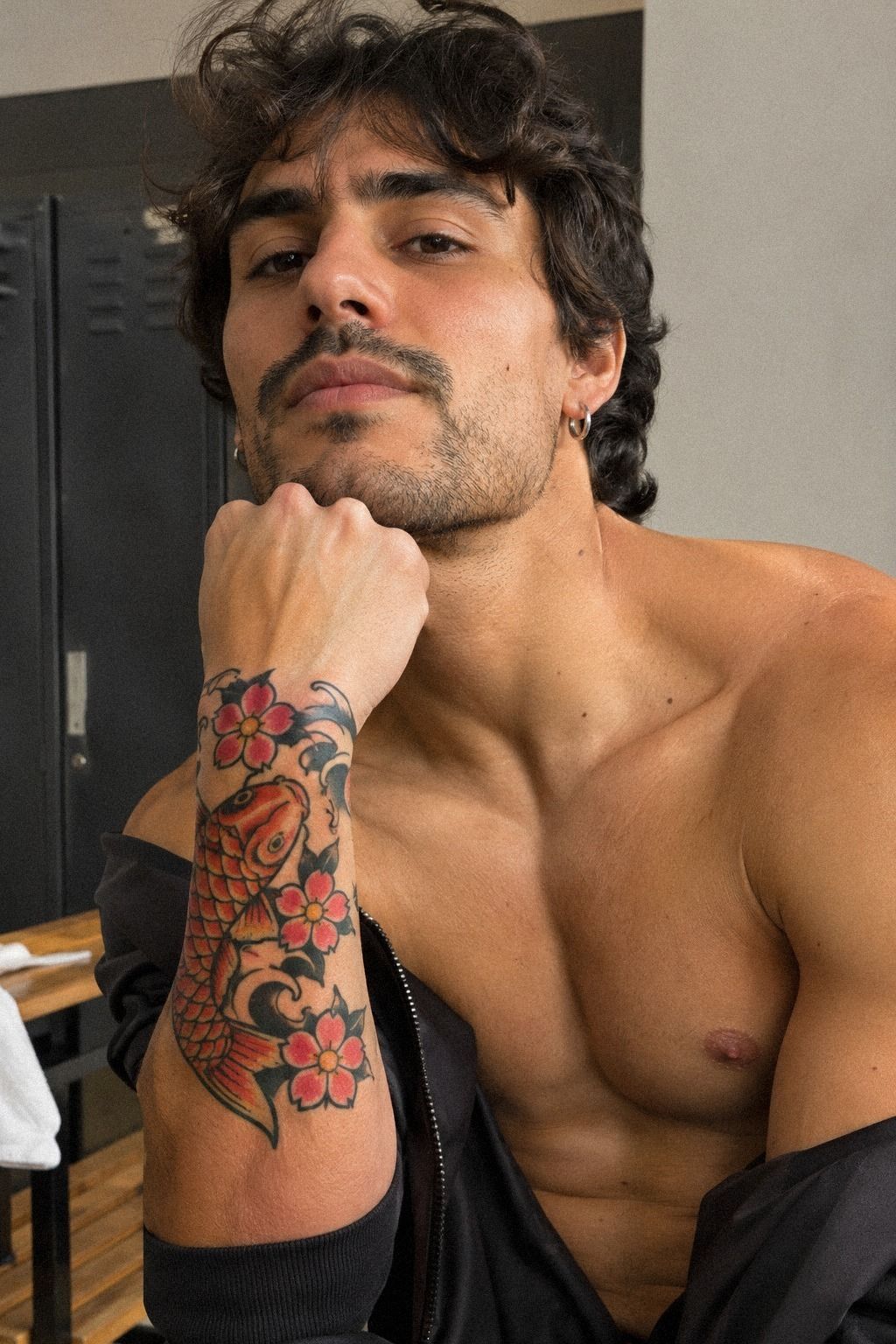
A traditional cherry blossom tattoo with koi fish creates a symbolic contrast between flowing water and still petals. Plum blossoms, charcoal outlines, soft grey water, and restrained rose-gold koi accents can produce a vibrant composition. The fish should curve around the branch, not sit beneath it like a separate sticker.
Your eye should travel through the whole design.
This is a fierce choice if you want your tattoo to carry more than one idea. The koi can suggest persistence, while the koi fish tattoo adds a meaningful, romantic note.
I’d keep the fish’s body broad enough for its scales and fins to remain legible. Tiny details may look intricate on the stencil but soften with time.
Your artist should plan the koi and blossoms together, even if the tattoo sits on the wrist or lower arm. Show your references, then ask how the design will wrap when you rotate your arm. A flat drawing can look excellent on paper and awkward on moving skin.
You can compare the flower symbolism with this guide to Japanese cherry blossom tree tattoo meaning. A second Japanese cherry blossom symbolism guide may help if you’re choosing between a koi and a simpler branch. Consider which image still feels personal without explanation.
4Let Falling Petals Lead the Traditional Cherry Blossom Tattoo Sleeve
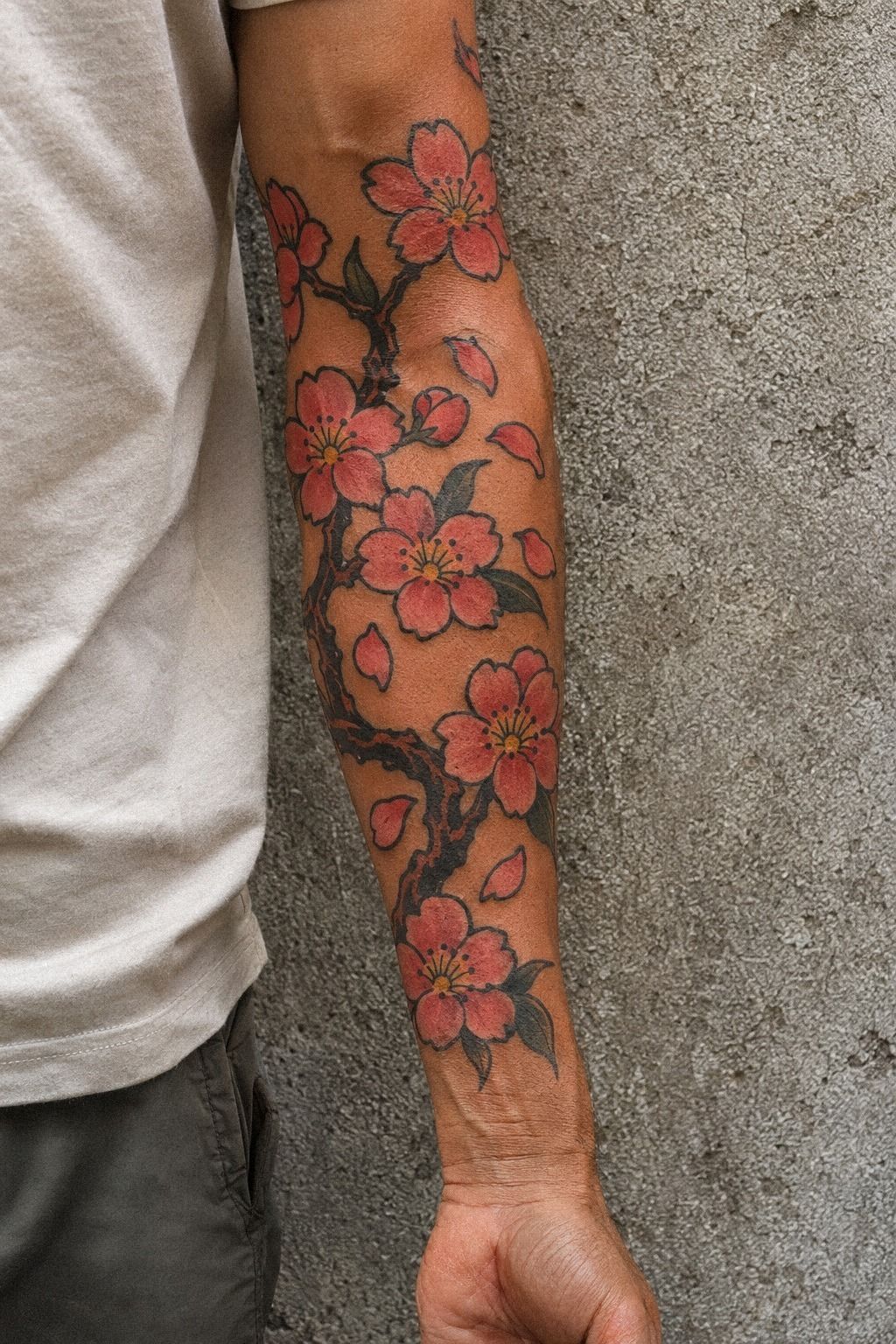
A traditional cherry blossom tattoo sleeve with falling petals has a raw, energetic quality. Deep navy blossoms, pale petals, and a dark brown branch can create an intricate flow down the forearm. The falling petals shouldn’t fill every gap.
A few isolated shapes will make the sleeve feel expansive and keep the movement visible.
Your artist can use the arm’s length to build visual rhythm. Place denser blossoms near the upper forearm, a winding branch through the center, then smaller petals toward the wrist.
I’d avoid making every petal point downward. Repetition can flatten the design. Let some petals turn sideways or overlap the cherry blossom branch.
Sleeve planning takes patience. If you’re starting with one appointment, ask how the first section will leave space for future additions. Your artist should know whether you might add a bird, wave, moon, or second branch later.
A sleeve that grows deliberately gives your budget better value than separate designs forced together.
Take a look at traditional cherry blossom tattoo ideas before you commit. The strongest sleeves use solid black anchors with open skin between them. That contrast keeps the tattoo bold without making the composition visually heavy.
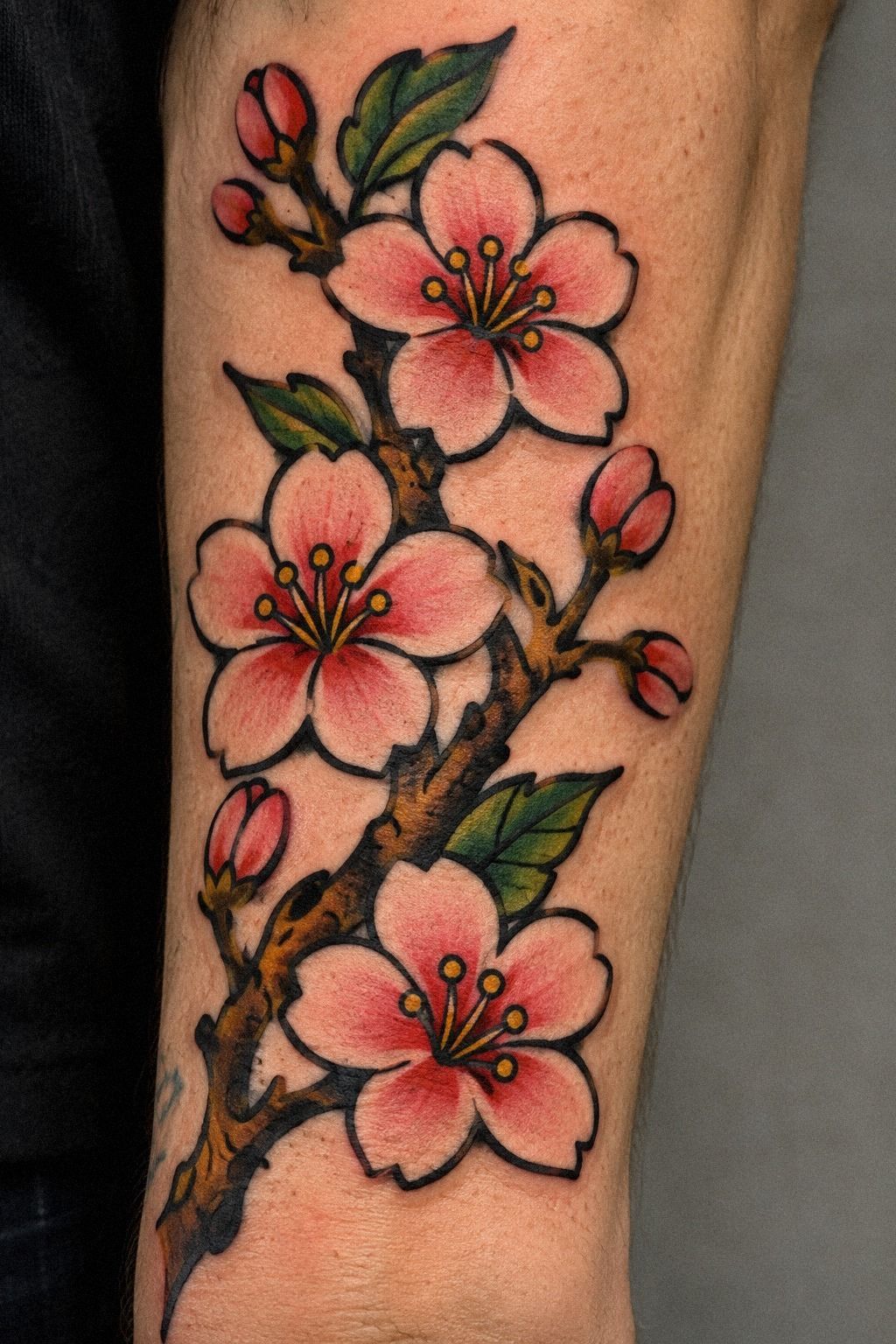
5Why the Forearm Still Works for a First Session
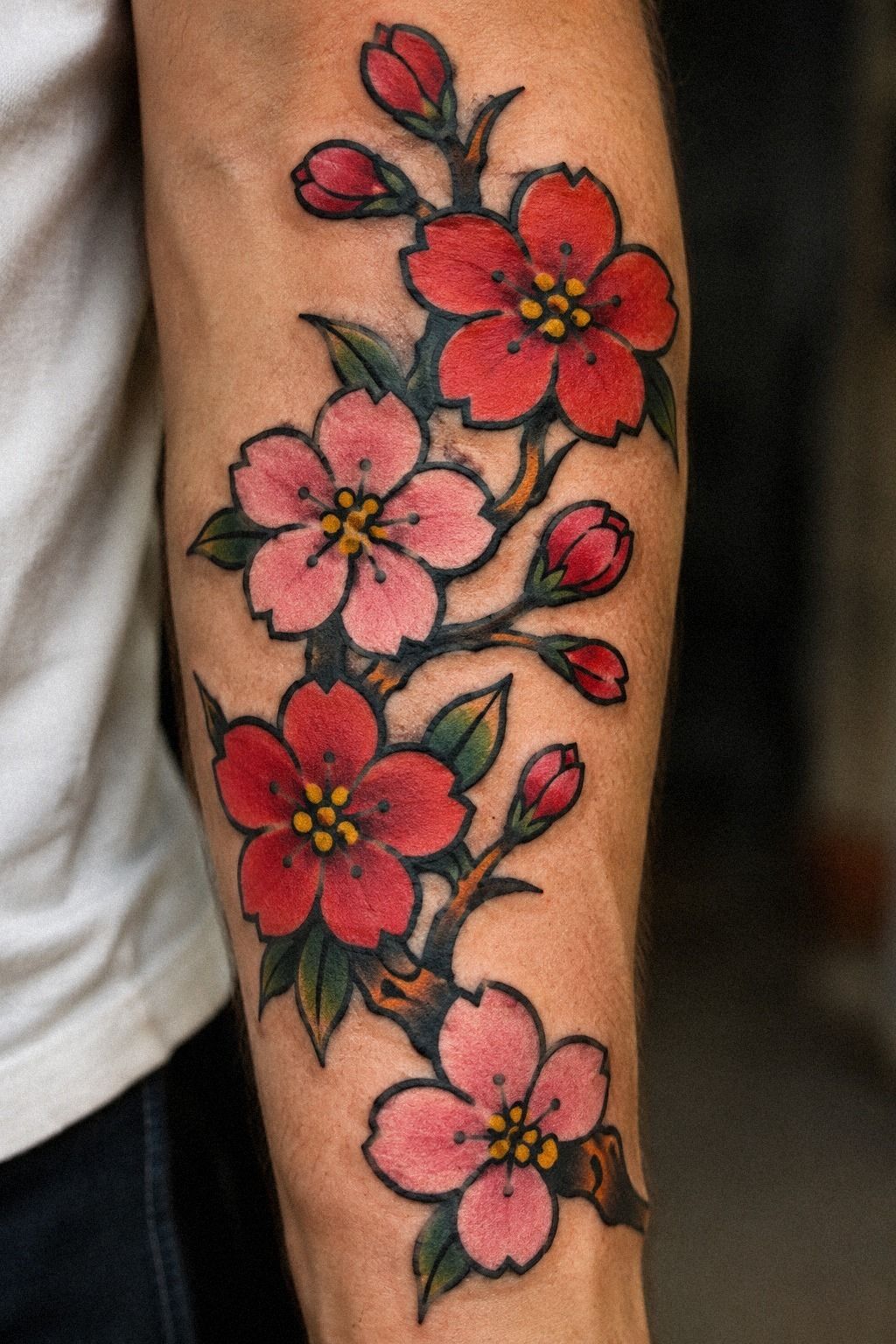
A traditional cherry blossom tattoo on the forearm is one of the more approachable choices for a first session. The forearm tattoo offers a relatively steady surface, useful visibility, and enough length for a branch to read clearly. It’s often easier to manage than ribs, feet, hands, or sternum.
A compact design can still feel stylish and expressive. Ask your artist whether the branch should follow the forearm’s length or turn slightly around it. That decision affects how the tattoo looks when your arm is resting, moving, or turned palm-up.
The forearm can also make a sensible budget choice. It usually gives the artist enough working space for clean lines without requiring an oversized design. If you’re nervous, a shorter appointment on the forearm can be a smart first step.
That’s a smart first move!
6Waves Against Blossoms: A Traditional Cherry Blossom Tattoo with Japanese Waves
A traditional cherry blossom tattoo with Japanese waves creates a flowing composition along the spine. Forest-green waves, rust-toned blossoms, and warm brown branches create a haunting contrast. The petals soften the wave without making the design timid.
Spine placement can be more sensitive than the forearm, shoulder, or thigh because the skin sits close to bone. The spine tattoo may also cost more if the design needs several long sessions.
If you’re nervous, ask for a consultation before booking the full piece. A clear estimate helps you judge whether the plan fits your budget.
The wave should have a clear direction, and the blossoms should follow it. I’d avoid stacking flowers in a straight vertical row because the spine already supplies a rigid centerline. Let the Japanese wave tattoo curl across it, with petals drifting slightly off-axis.
You can study a different approach through this watercolor cherry blossom tattoo collection, even if you ultimately choose bold traditional ink. A cherry blossom tattoo meaning guide can also help you decide whether the wave should feel gritty, sacred, or reflective.
7Behind the Ear, Keep It Dainty
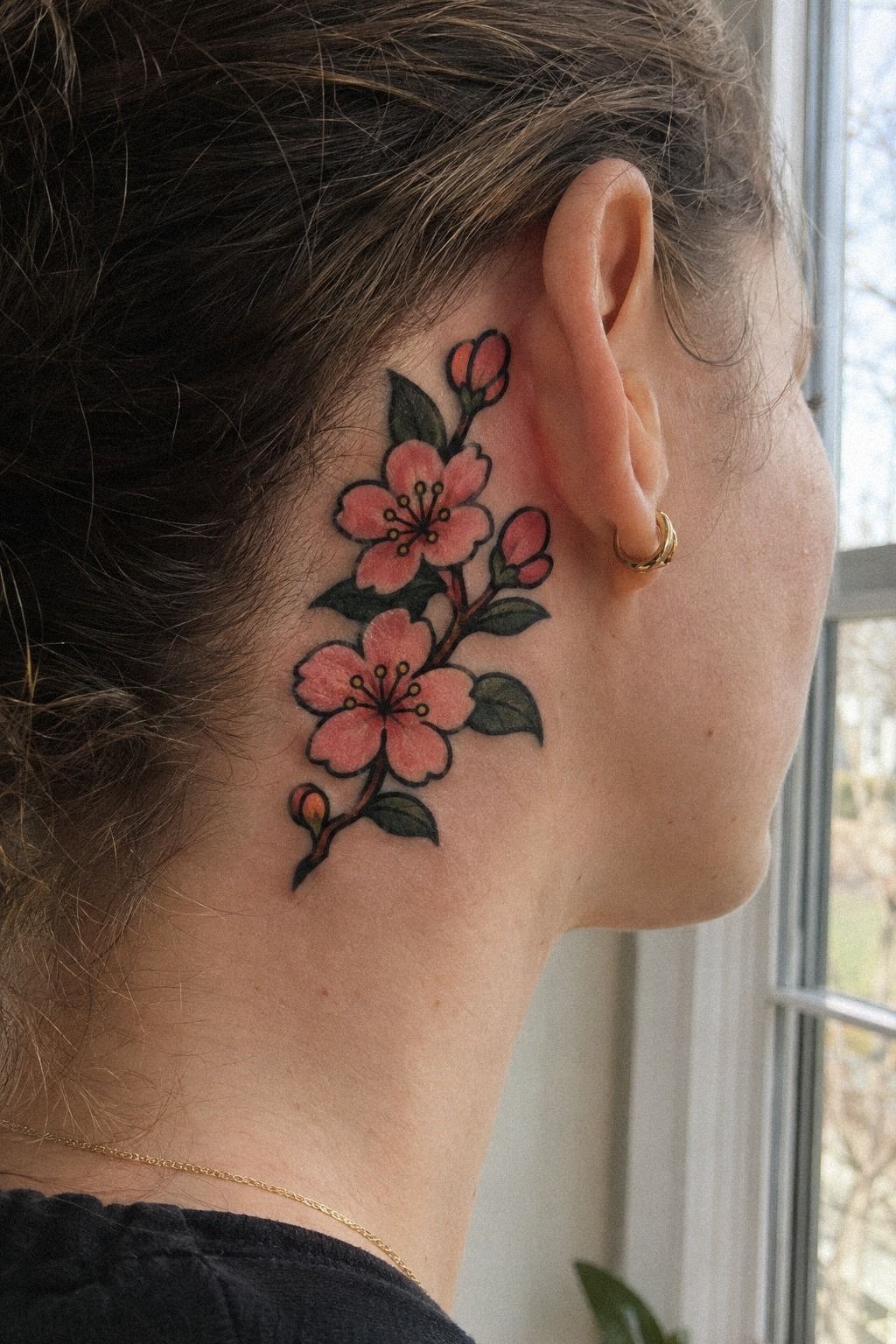
A delicate traditional cherry blossom tattoo behind the ear is dainty, visible, and surprisingly expressive. Dusty-rose petals, a charcoal stem, and muted gold accents can look crisp beside the hairline. The placement feels personal because the behind-ear tattoo appears only when your hair moves or you turn your head.
Behind-ear skin is sensitive, and the area can be awkward for both you and the artist. Keep the design simple enough to stencil accurately.
A single open flower, one leaf, and a short branch will usually read better than a miniature sleeve. Your artist can make it understated without stripping away the traditional character.
Think about hair, headphones, glasses, and daily friction before you book. If you’re wearing over-ear headphones for hours, the placement may be annoying while it heals. You’ll need to follow your artist’s aftercare instructions, wash gently, moisturize as advised, and protect the area from unnecessary rubbing.
For another tiny scale reference, see these tiny cherry blossom tattoo ideas. I’d choose one strong color accent instead of several pale shades. Sharper contrast will help the design stay visible as the ink settles.
8Red Sun, Dark Branch: Build a Clear Focal Point
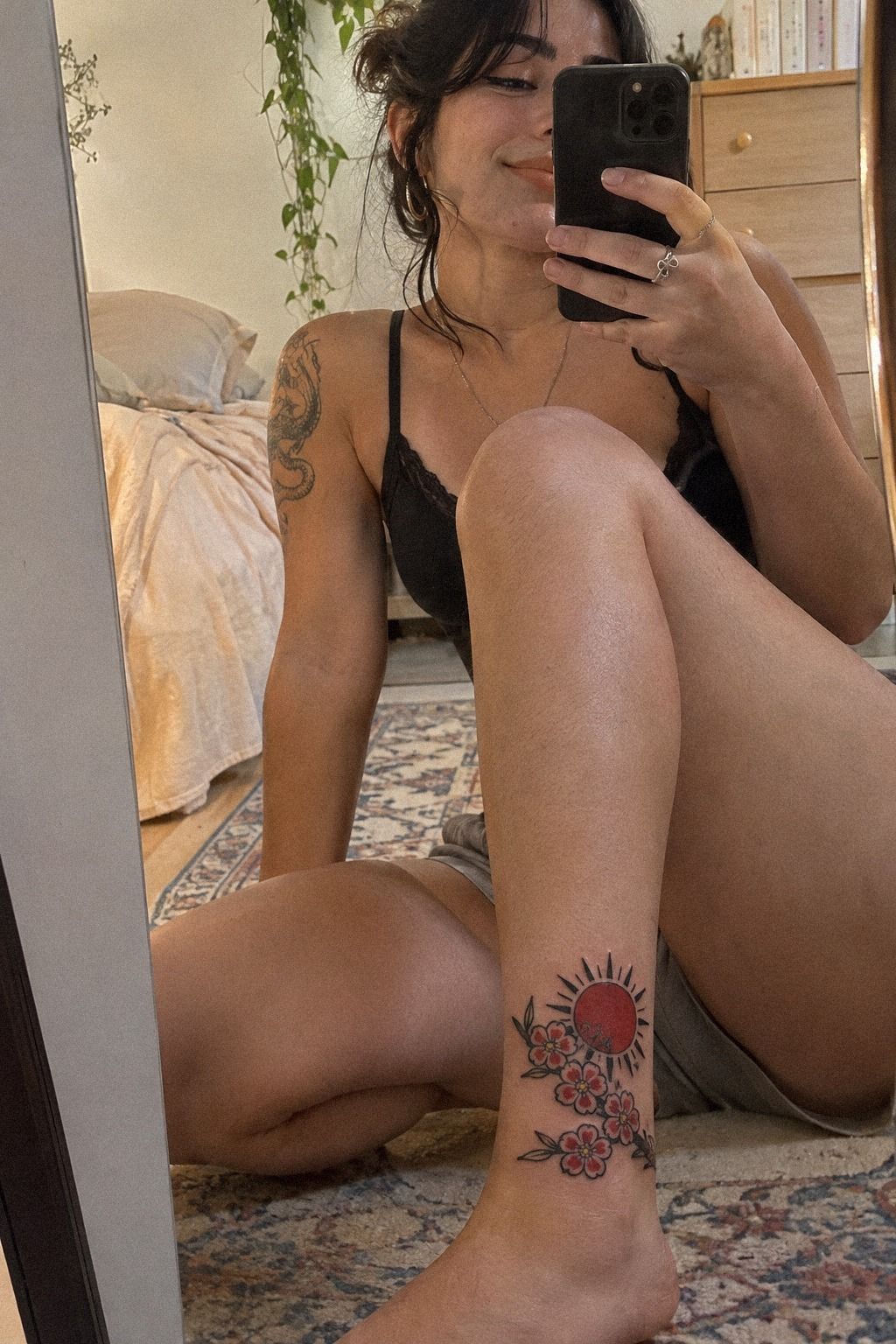
A traditional cherry blossom tattoo with a red sun gives the ankle a bold focal point. Warm-white blossoms, camel shading, and a black branch can make the red sun tattoo feel minimal without losing its traditional identity. The sun can sit behind the branch, beside it, or partly beyond the ankle’s curve.
Ankle skin gives you less flexibility than the shoulder or thigh. Keep the main branch large enough for the linework to remain sharp. A few falling petals can create motion, while too many can make the composition feel cramped.
Ask your artist to test the stencil while your foot rests naturally. Check the design while standing, too. A placement that looks minimal when seated can feel more striking once the ankle moves.
9What Makes a Ribcage Placement Feel Personal?
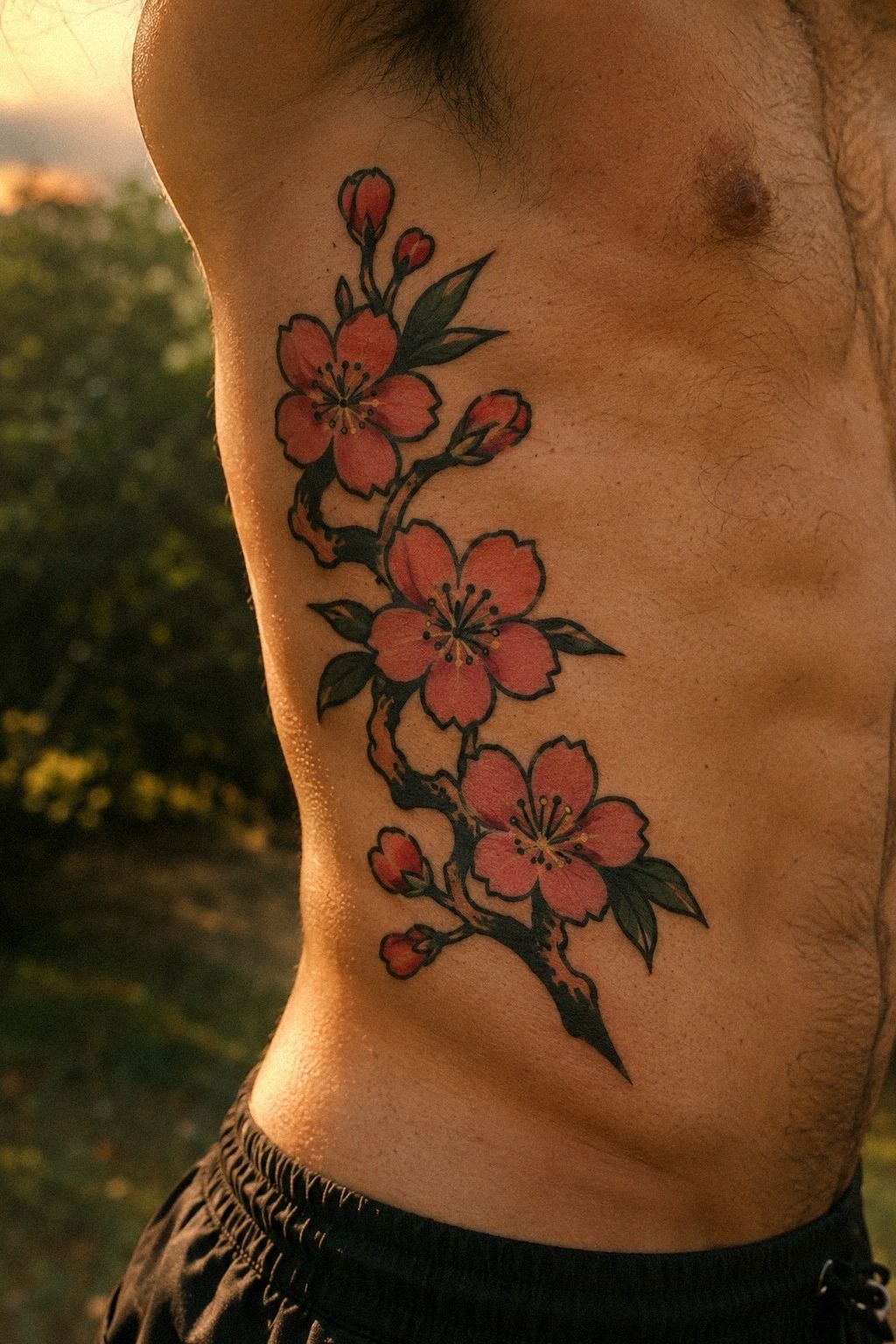
A unique traditional cherry blossom tattoo on the ribcage can feel intimate, edgy, and deeply personal. Midnight-blue blossoms, copper accents, and ivory skin breaks can make the ribcage tattoo feel expressive without becoming ornate.
10Hummingbird in Motion
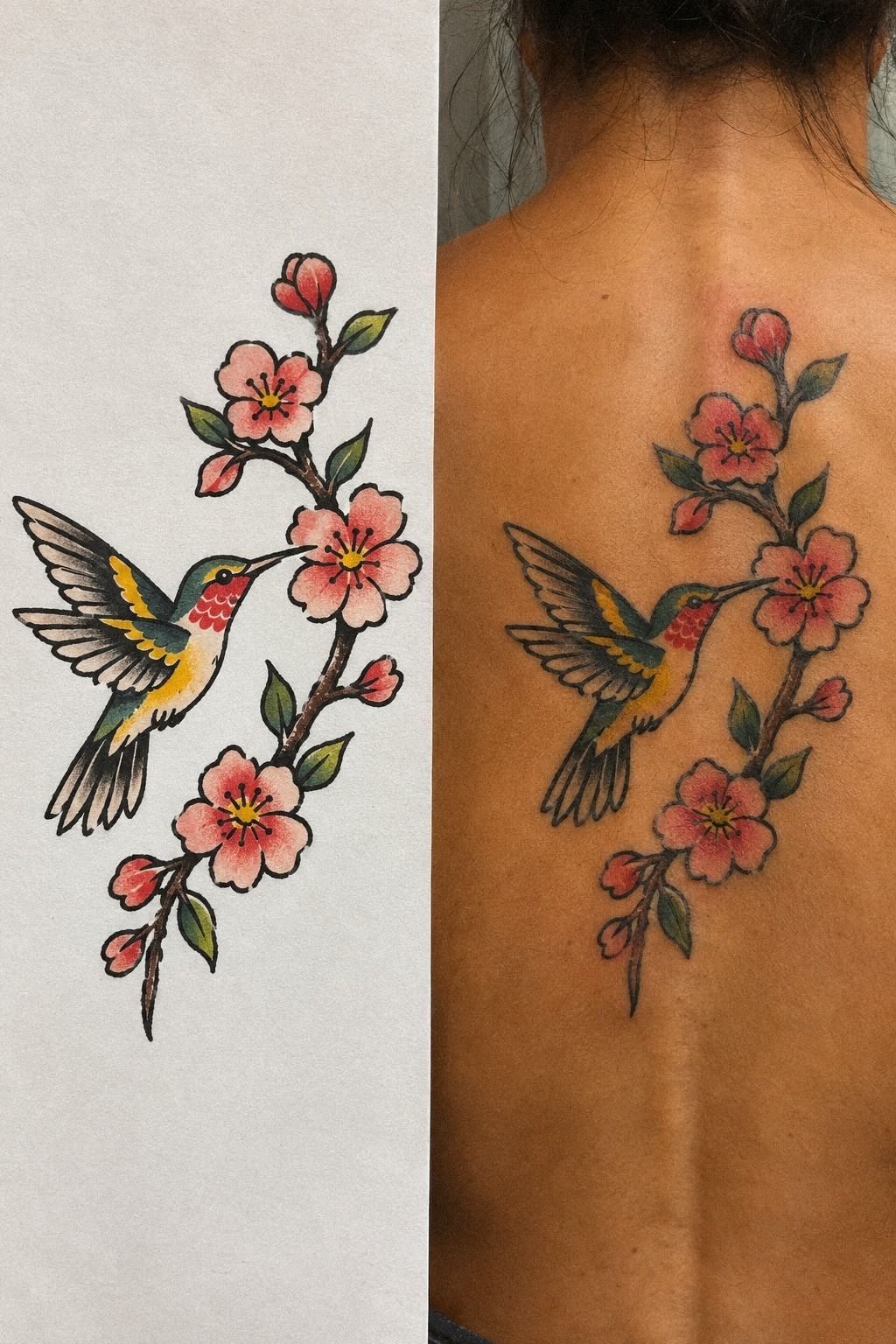
A traditional cherry blossom tattoo with a hummingbird gives you a lively, expressive composition. Sage-green leaves, warm-cream blossoms, and a brown branch give the hummingbird tattoo a clear visual anchor.
Your artist should keep the bird large enough for its beak, wing shape, and dark outline to remain clear. I’d choose one hummingbird rather than several small birds.
The single figure creates a stronger focal point. The flowers can frame the bird without competing with it.
This design works on an upper arm, forearm, shoulder, or thigh, depending on how visible you want it to be. If you’re planning a first session, the outer forearm or shoulder may be more tolerable than ribs, hands, feet, or sternum. Ask your artist how the bird will look when your arm bends.
A traditional cherry blossom tattoo with Japanese symbolism can help you refine the emotional direction. You don’t need to copy a reference exactly. Your final tattoo should feel personal, polished, and slightly unexpected.
11Neo-Traditional Colors, Traditional Structure
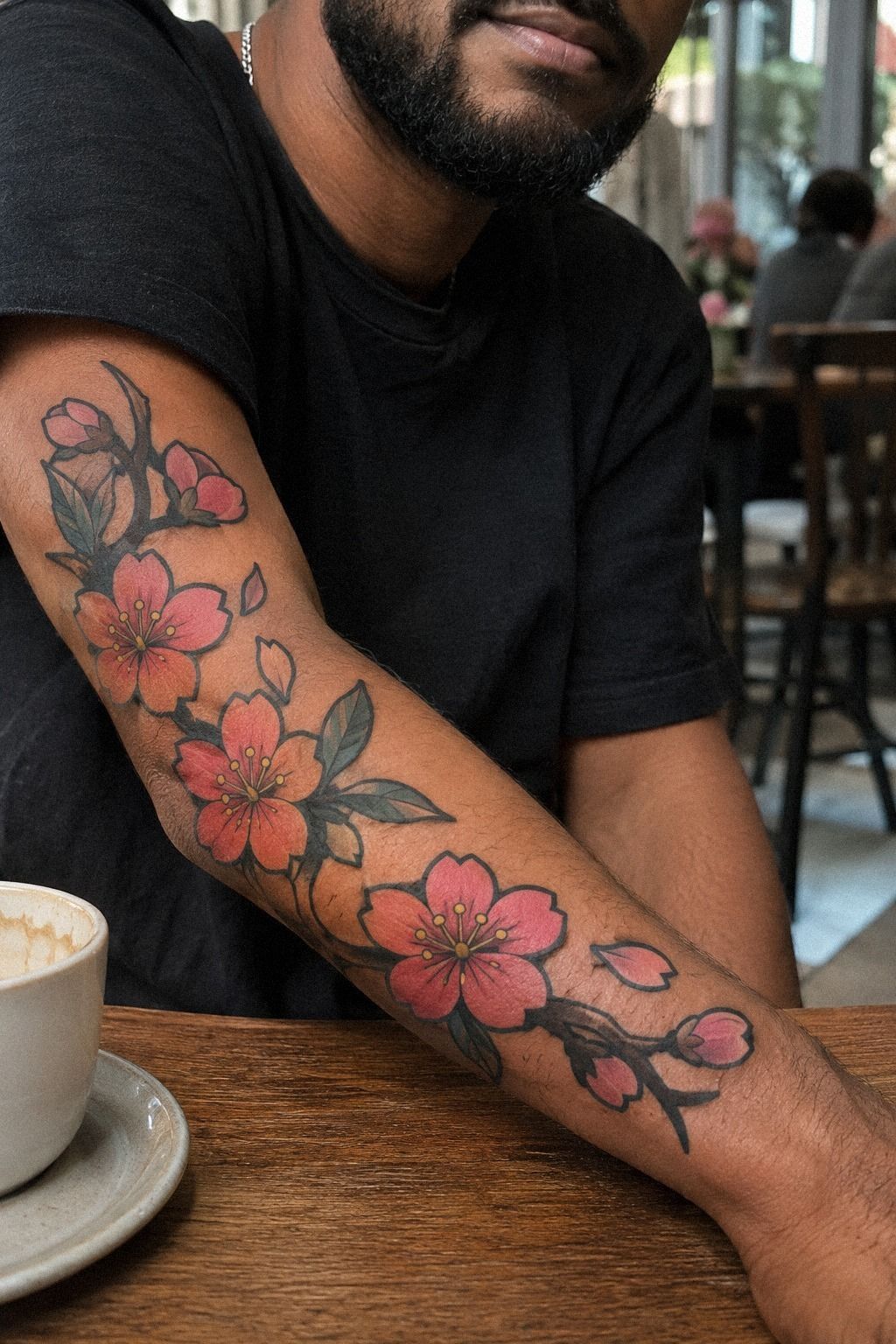
A traditional cherry blossom tattoo in neo-traditional colors can give the classic subject a more vibrant and daring finish. The neo-traditional tattoo treatment allows layered blossoms, stronger color variation, and a fuller illustrative structure without losing the recognizable flower shape.
Neo-traditional color gives you more room to personalize the palette. You might choose terracotta petals, olive leaves, and smoky grey shading.
Ask your artist which shades will contrast well with your skin tone. The strongest color plan is usually intentional, not simply the largest number of pigments.
Your artist should still protect the main silhouette. I’d avoid adding soft detail everywhere because the tattoo can lose its traditional impact. Keep the flower centers, branch, and outer contours crisp.
Let the color shading provide depth.
For another style comparison, look through watercolor cherry blossom tattoo ideas and note what you want to keep or reject. Neo-traditional color can feel elegant, playful, or fierce depending on the palette. Choose the version that still feels like you without needing a trend label.
Why I’d Choose Placement Before Color
I’ve watched people spend weeks choosing between crimson, coral, and muted pink, then rush the placement decision in five minutes. A tattoo placement that looks striking in a reference may behave differently on moving skin. Clothing, work, movement, and visibility all matter.
For a first tattoo, I’d usually rank the outer forearm, upper arm, shoulder, and thigh ahead of ribs, feet, hands, and sternum. That isn’t a promise of painless ink because bodies vary. It’s a practical starting point based on the amount of soft tissue around each area.
Placement also controls longevity. Very fine lines can widen or soften, while solid black structure and sensible placement tend to age better.
Sun exposure matters, too. If your tattoo design will sit on an ankle, wrist, or forearm, think about regular UV exposure after the surface has healed.
A consultation should cover size, body movement, line weight, color, session timing, and aftercare. Ask your artist whether the design will be measured in inches or centimeters, how long the appointment may take, and whether the reference needs simplification. You’re making sure the tattoo belongs to your body rather than only to the screen.
The Pain Map for a Calm First Session
Pain depends on anatomy, nerves, session length, sleep, stress, and the exact spot. A forearm tattoo is often easier to manage than ribs, feet, hands, or sternum, but no placement is universally painless.
A shorter appointment can be a smart choice if you’re anxious. Ask whether the design can be divided into stages without weakening the composition. Your artist may also suggest a different area if the original spot offers little working space.
The most useful question isn’t “Will this hurt?” It’s “How can I make this session manageable?” Bring water, eat beforehand if your artist advises it, wear practical clothing, and agree on a pause signal. That’s the point!
If you’re comparing locations by value, consider the whole session rather than pain alone. A slightly smaller piece may be worth it if it keeps the appointment shorter and the healing routine easier.
How Should You Compare Two Stencils?
Compare the silhouette first. A clean stencil should show where the branch travels, where the largest blossom lands, and how the design responds when your body moves.
Then check the negative space. If every petal, leaf, and background accent competes for attention, the tattoo may lose its crisp quality after healing. A simpler stencil can have more value than a busier one because the main idea remains readable.
Finally, ask which version still feels meaningful without a caption. The most expressive choice isn’t always the most ornate. Sometimes one branch and three petals carry more emotional weight than a crowded sleeve.
I’d also compare the stencil with your actual budget. Removing one secondary detail may lower the cost without weakening the central idea. That kind of edit can make the final design more polished.
A Practical Tattoo Cost and Healing Guide
Typical US tattoo pricing varies by artist, region, studio minimum, size, and time. A small design may fall around $100 to $300, while some studios quote a minimum of about $50 to $100 or an hourly rate around $100 to $250. Treat these as planning ranges, not a promise.
The tattoo cost depends on your specific consultation.
Your tattoo’s surface may look calmer after 2 to 3 weeks, but complete healing can take about 2 to 3 months. During that period, follow the aftercare instructions, wash gently, moisturize as directed, and avoid unnecessary sun and swimming.
I’d rather see you spend ten extra minutes asking about aftercare than rush out with a vague answer. Your artist should explain what normal healing looks like and when to contact the studio with a concern. A clear plan makes the whole experience feel calmer and more manageable.
If the quote exceeds your budget, ask whether a smaller size or simpler color plan protects the value of the design. Don’t remove the details that make the branch readable just to chase the lowest price.
Color Contrast and Skin Tone
Color should serve the design, not bury it. A red tattoo pigment can look bold against many complexions, but the final contrast depends on the surrounding blackwork, the artist’s technique, and how the ink settles.
Ask to see healed work on skin tones similar to yours. Fresh color can look vibrant and crisp, while healed color gives you a more useful sense of long-term value. A consultation is the right place to ask which shades may soften.
If you’re deciding between a delicate palette and a traditional one, compare watercolor cherry blossom styles with a bolder branch concept. The best choice is the one that stays readable and still feels personal after the trend fades.
You don’t need every available pigment. A focused palette can look more polished, cost less, and keep the blossoms from competing with the branch.
What I’d Ask Before Booking
Ask about the artist’s traditional portfolio, healed results, hygiene practices, and experience with your chosen placement. A strong artist portfolio should show consistent line quality, thoughtful composition, and color that still reads after healing.
Ask for a realistic quote and session estimate. If your budget is fixed, say so early. Your artist may recommend a smaller design, fewer colors, or a different placement that preserves the idea without forcing an uncomfortable compromise.
Before the appointment, confirm the stencil position, size, aftercare routine, payment terms, and rescheduling policy. Bring your references, but stay open to technical edits. A skilled artist can make the design more graceful without removing its personality.
I’d also ask how the artist handles changes on appointment day. You should know whether minor stencil edits are included, whether a deposit is refundable, and what happens if the session needs another visit.
The Questions Worth Answering First
How much does a traditional cherry blossom tattoo usually cost?
A traditional cherry blossom tattoo often costs about $100 to $300 in the US, depending on size, placement, artist, and region. Some studios have a shop minimum of roughly $50 to $100, while hourly rates may run about $100 to $250.
Your quote can change if the design needs custom drawing, color layering, or a longer session. Ask whether your artist charges by the piece or by time, and bring a clear reference for a more useful estimate.
Are traditional cherry blossom tattoos a good idea for a first tattoo?
Yes, traditional cherry blossom tattoos can be a strong first choice because bold outlines and clear shapes tend to read well. An outer forearm tattoo or shoulder placement is often more tolerable than ribs, feet, hands, or sternum.
Your design should still feel personal rather than chosen only because it looks good in a reference. Start with a manageable size, discuss line weight, and choose a placement you’ll be comfortable seeing every day.
How do I choose an artist for a traditional cherry blossom tattoo?
Choose an artist whose portfolio shows clean traditional linework, solid color packing, healed photographs, and consistent composition. A strong traditional tattoo artist tells you more through repeated results than through a single perfect stencil.
You should also check studio hygiene, consultation habits, and communication. Ask how the artist handles skin tone, placement, aftercare, and design changes. If the answers feel rushed, keep looking.
How much do traditional cherry blossom tattoos hurt?
Pain varies, but ribs, feet, hands, and sternum are commonly more painful than the outer forearm, thigh, or shoulder. A shoulder placement can be a more tolerable starting point for many people.
Your session can feel different depending on sleep, stress, hydration, and the exact spot. Tell your artist if you need a pause. You don’t win anything by pretending you’re comfortable when you’re not.
How long does a traditional cherry blossom tattoo take to heal?
The surface usually heals in about 2 to 3 weeks, while complete healing can take about 2 to 3 months. During that time, gentle tattoo aftercare helps protect the design.
Wash the area gently, moisturize according to your artist’s instructions, and avoid unnecessary sun, swimming, picking, and friction. Your tattoo may look uneven while it settles, so wait before judging the final result.
What’s the best placement for a traditional cherry blossom tattoo?
The outer forearm, shoulder, upper arm, and thigh are practical choices because they’re often more tolerable and give bold lines room to read. An outer forearm placement is also easy to show or cover.
Your best placement depends on visibility, work, clothing, movement, and pain tolerance. Ask your artist to position the stencil while your body is relaxed, then check it while your arm rests and moves before the needle starts.
Where I’d Start First
If I had to pick one, I’d start with the small traditional cherry blossom tattoo on the wrist. Its compact shape keeps the session approachable, while bold outlines stop it from fading into visual noise. That option is worth pinning!
Compare it with small cherry blossom tattoo references and consider how the design will fit your daily life. The best choice is the one that feels striking now, readable later, and genuinely yours.