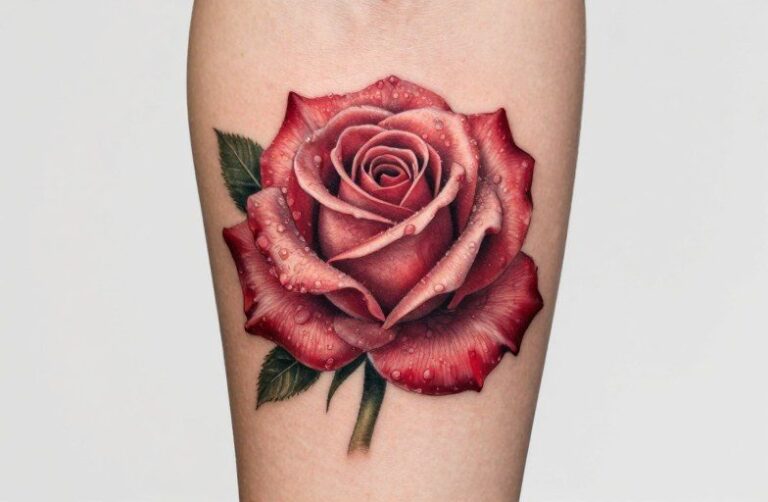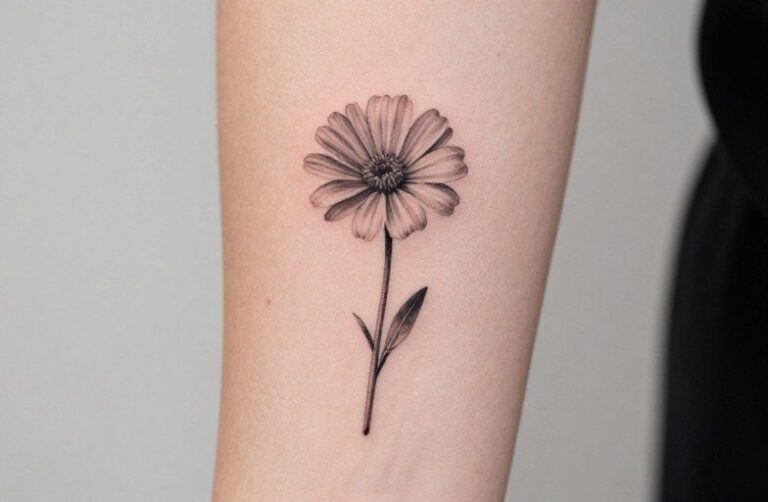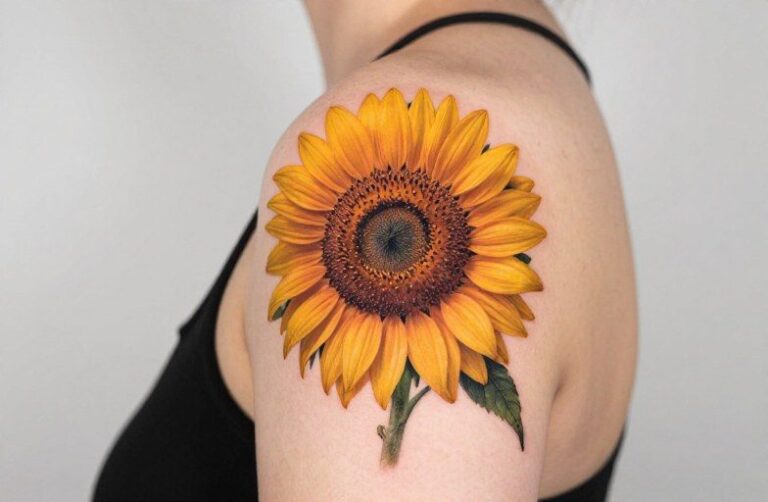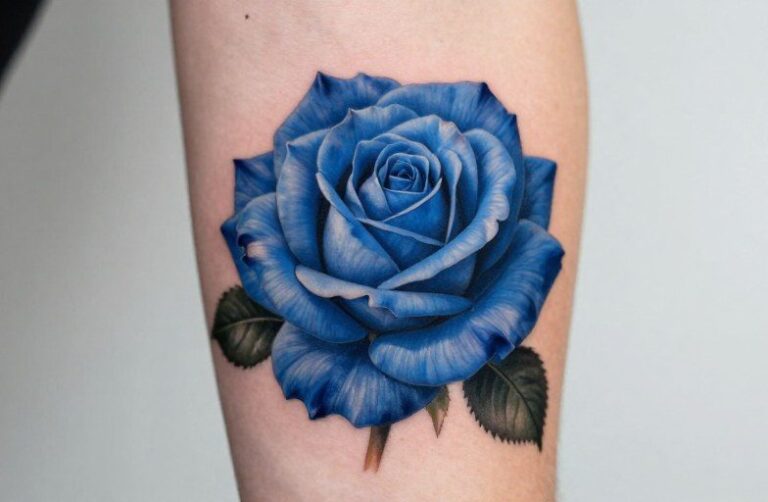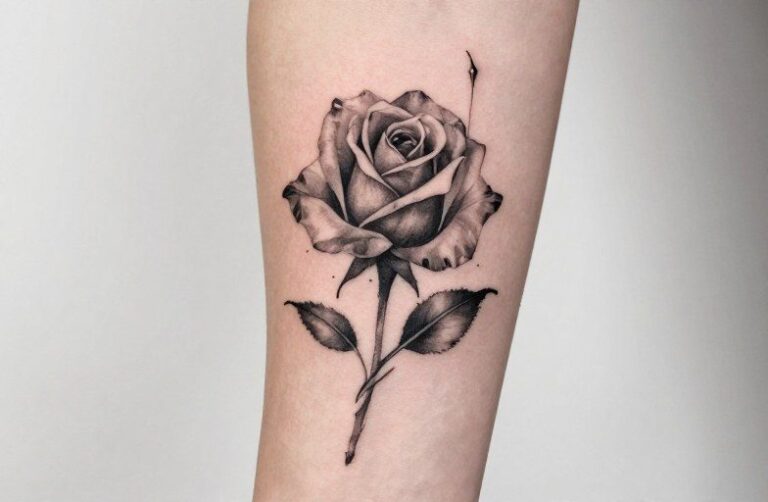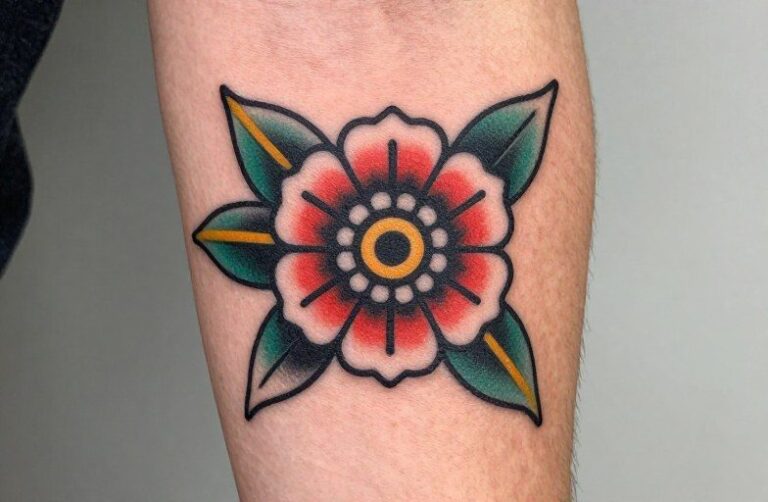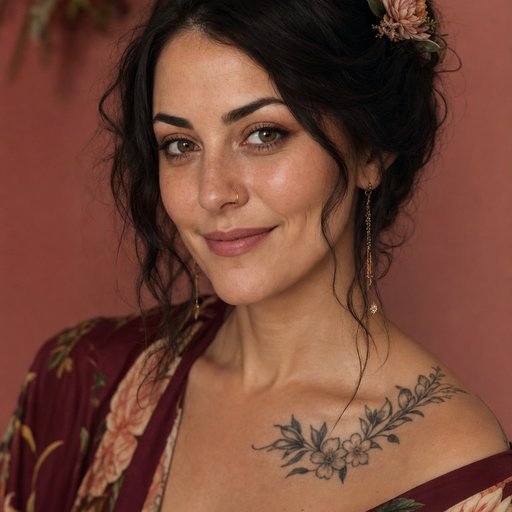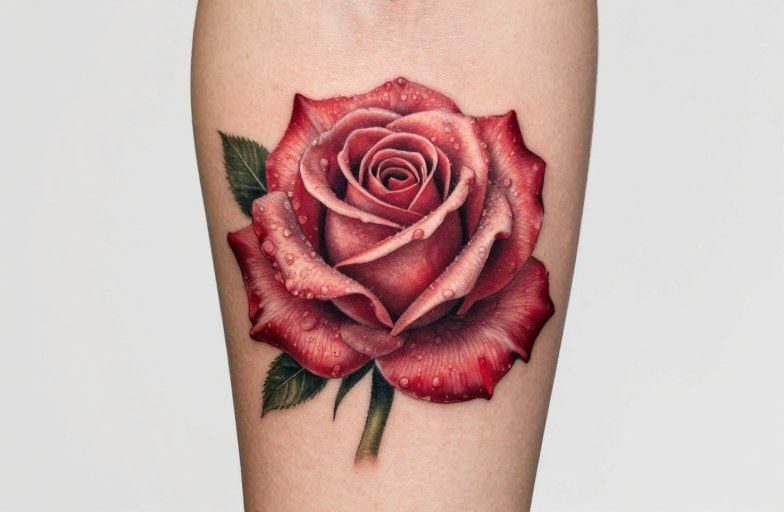
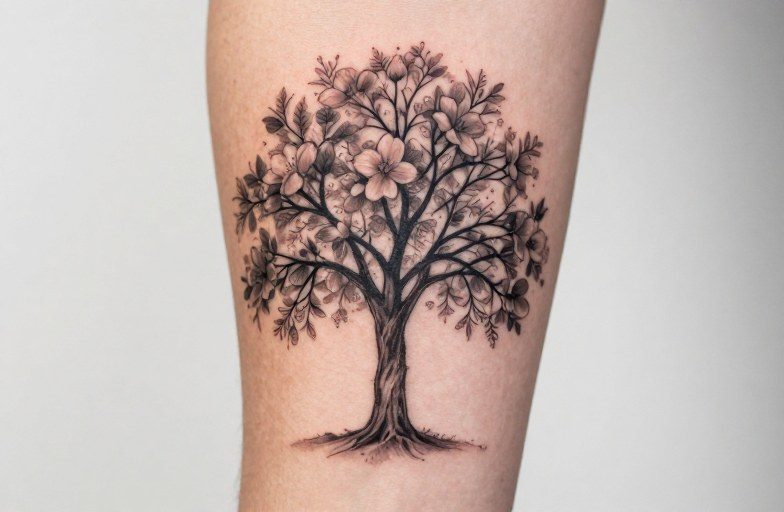
A tree with flowers tattoo holds together two impulses that usually pull apart: the wish to endure and the wish to bloom. The tree stays, roots deepening through drought and frost; the flowers arrive, open, and fall. Living with this image on your skin means accepting both conditions at once, the long work of remaining and the brief work of showing color.
Where the Image Comes From
Blooming World Trees
Norse Yggdrasil, often linked to later artistic depictions with flowering elements, suggests life persisting at edges rather than centers. The concept of a central tree bearing blossoms appears across Indo-European traditions, though specific visual details vary by region and era. Persian miniature painting offers the Tree of Life with blooms indicating divine blessing rather than botanical accuracy alone.
Japanese folklore gives us konohana-sakuya-hime, the blossom princess whose life erupts from volcanic soil, flowers on hardy mountain trees. Celtic traditions associated flowering trees with functional properties: hawthorn blossoms marked thresholds, rowan flowers offered protection. These were not decorative afterthoughts; they carried weight in ritual and seasonal practice.
Related reading: tree with flowers tattoo meaning | sword and rose tattoo meaning | cross with rose tattoo meaning | rose and diamond tattoo meaning
Transformation Stories
Metamorphosis myths often involve figures becoming trees that subsequently flower: Daphne’s laurel, Myrrha’s myrrh tree, Baucis and Philemon’s intertwined oaks. The flowering stage matters because it signals acceptance of the new form, not mere punishment or escape. A tattoo drawing on this tradition emphasizes becoming rather than being stuck, the eventual bloom that follows difficult change.
How Different Traditions Handle the Image
East Asian Ink Conventions
Chinese shanshui painting and Japanese sumi-e developed specific approaches to flowering trees that persist in tattoo adaptation. Cherry blossom branches (sakura) attached to gnarled trunks emphasize the contrast between aged wood and new bloom, a visual metaphor for mortality and renewal that predates modern Japanese tattooing by centuries. The handling matters: sparse branches with clustered blossoms, negative space suggesting sky or mist, trunk rendered in drier brushwork against wetter flower applications.
Plum blossom (ume) on ancient trunk carries different weight, blooming in winter cold, stubborn vitality rather than spring’s fleeting gathering. Korean minhwa folk painting often paired flowering trees with birds or insects, a compositional habit that still influences how these pieces are framed.
European Visual Habits
Flowering trees appear in medieval manuscript borders, Renaissance embroidery, and 18th-century decorative arts, though rarely with the symbolic density of Asian traditions. The distinction matters for your design: European visual traditions tend toward fuller, more symmetrical compositions, while East Asian approaches favor asymmetry and strategic emptiness. Choosing between these lineages means aligning with different spatial philosophies, not merely selecting aesthetics.
Common Variations and What They Require
- Cherry blossom on gnarled trunk: The most frequent Japanese-influenced request. Works best with significant vertical space: outer thigh, ribcage extending toward hip, full back piece. Pink saturation varies by substyle. Traditional Japanese (irezumi) uses limited, specific pinks; neo-Japanese allows broader palettes.
- Dogwood or magnolia on oak or maple: American regional favorite, particularly in Southeast and Pacific Northwest. Dogwood’s four-petaled cross shape carries Christian resonance for some; magnolia’s thick, waxy petals demand solid color packing or heavy black-and-gray contrast.
- Single branch with blooms: Forearm, collarbone, or behind-ear placement. More intimate scale, often chosen for a first larger piece. Line weight becomes critical. Too thin and the branch reads as twig; too heavy and flowers compete unsuccessfully.
- Roots visible, flowers overhead: Full-cycle imagery. Popular for calf, side torso, or pieces wrapping a limb. Roots require brown and black mixing that ages differently than flower colors; expect root saturation to hold longer than petal pinks.
- Seasonal split: One side flowering, one bare or autumnal. Effective for representing life stages, relationships, or personal transition. Compositionally challenging; easy to create visual imbalance if seasons are not weighted carefully.
Style-Specific Risks
Traditional American treatment of this subject remains rare; the motif demands more naturalism than that vocabulary typically allows. Fine-line and single-needle approaches have surged for floral-tree combinations, particularly among clients wanting botanical accuracy. The risk is real: fine lines in trunk bark texture blur within three to five years, softening the contrast that makes flowers pop. Watercolor backgrounds behind more defined linework offer a compromise, structured tree with atmospheric bloom.
Related Symbols and How They Differ
Tree of Life (crann bethadh in Irish tradition) overlaps significantly but typically lacks seasonal specificity. Its circular branch-root symmetry emphasizes eternal return rather than particular moments. Adding flowers to a Tree of Life shifts meaning toward temporal experience within eternal pattern.
Peony without tree trunk reads as pure beauty, prosperity, or boldness depending on cultural framing; anchored to wood, it gains narrative duration. Willow with hanging blossoms (often wisteria in Western interpretation) emphasizes melancholy or memory rather than growth, a different emotional register with similar visual vocabulary.
Bonsai with flowers operates as miniature version, control and cultivation made visible. The tattoo scale changes meaning: large flowering tree suggests natural process; bonsai suggests human intervention, patience, artifice.
What Clients Actually Ask For
Commemorative Use
Birth flowers combined with a tree representing family lineage: mother’s birth month bloom on grandmother’s favored tree species, for instance. This requires research that many clients have not done. A good consultation involves asking what specific species matter and why, not accepting generic “cherry blossom” as default. The difference between Yoshino cherry (Prunus yedoensis) and Kwanzan (Prunus serrulata ‘Kwanzan’) is visible and sometimes personally significant.
Recovery and Growth
Roots in dark soil, trunk scarred or twisted, flowers present despite damage: a common request among clients marking survival. The visual honesty matters more than uplift. A straight healthy trunk with perfect blooms reads as aspiration or denial; the same with visible damage reads as earned growth. Placement often follows this logic. Visible locations (forearm, calf) for owned narrative; covered locations (ribcage, upper thigh) for private processing.
Relationship and Family
Trunk as partnership or family system, branches as individuals, flowers as children or achievements. Multiple flower species on shared trunk can represent blended families or multiple influences. The compositional challenge is avoiding Christmas-tree ornamentation where every element competes equally. Hierarchy, larger trunk, selective branch emphasis, varied bloom scale, prevents symbolic overload.
Practical Design Considerations
- Color longevity: Flower pinks and magentas fade fastest; yellows shift toward mustard. Trunk browns and blacks hold. Plan for differential aging. Either accept that flowers will need refresh, or design with enough structural black that the piece reads as tree-with-suggestion-of-bloom even when color mutes.
- Scale minimums: Below four inches tall, trunk texture becomes indistinguishable from generic branch. Flower detail requires space; clustered tiny blossoms read as blobs over time. Minimum viable size for recognizable species specificity: approximately five to six inches vertical for most body placements.
- Background choices: Solid black behind flowers creates stained-glass effect but limits future expansion. Grey wash atmospheric background allows more flexibility. Wind bars or water elements common in Japanese tradition provide motion and context without competing focal points.
- Pairing with text: Script with flowering trees rarely succeeds; the organic forms fight linear letterforms. If text matters, consider placement on separate body areas, or integrating numbers or dates into bark texture rather than floating nearby.
Before You Decide
A tree with flowers tattoo succeeds when the tension between its two elements remains active. If the tree dominates completely, you have a landscape piece with ornament. If the flowers overwhelm, you have a floral study with confusing structure. The best versions let each element question the other: why does something this temporary grow from something this permanent?
Your consultation should include hard questions about species, season, and damage. The artist should push back on easy symmetry and easy uplift. This image works best when it carries some of the difficulty it depicts, roots that have encountered stone, blooms that have weathered late frost. The tattoo will age; plan for that. The flowers will fade faster than the trunk. This is not a flaw in the design. It is the design.
Frequently Asked Questions
What does a tree with flowers tattoo symbolize?
It holds together endurance and temporary beauty: the tree’s permanence against the flower’s brief bloom. Together they suggest living fully while staying rooted, growing through cycles rather than despite them.
Which flower and tree combinations work best for tattoos?
Cherry blossom on gnarled trunk is most common in Japanese-influenced work. Dogwood or magnolia on oak or maple suits American regional preferences. The key is choosing species that matter to you personally, not defaulting to generic imagery.
How well do flower colors age in these tattoos?
Poorly compared to trunk colors. Pinks and magentas fade fastest; yellows shift toward mustard. Browns and blacks hold. Plan for differential aging, either accepting future refresh sessions or designing with enough structural black that the piece reads clearly even muted.
What is the minimum size for a recognizable tree with flowers tattoo?
Approximately five to six inches vertical for most body placements. Below four inches, trunk texture becomes indistinguishable from generic branch, and clustered tiny blossoms blur into blobs over time.