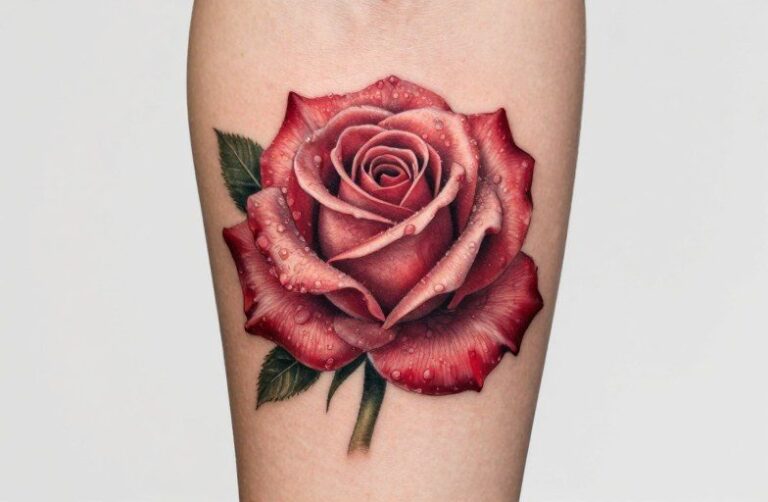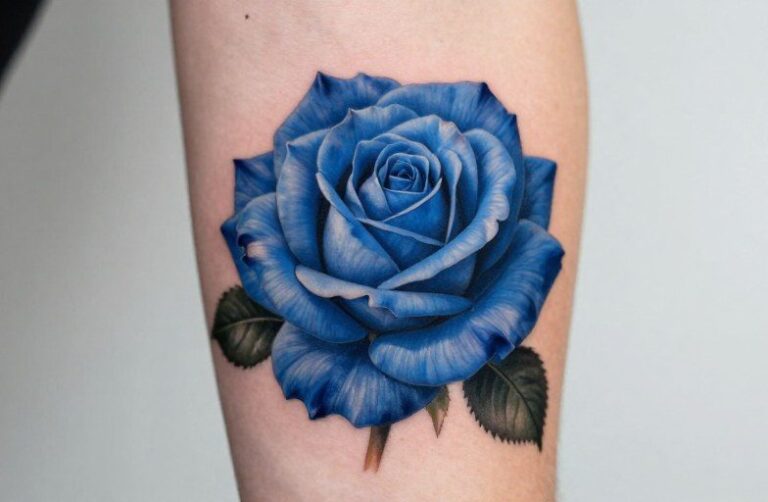
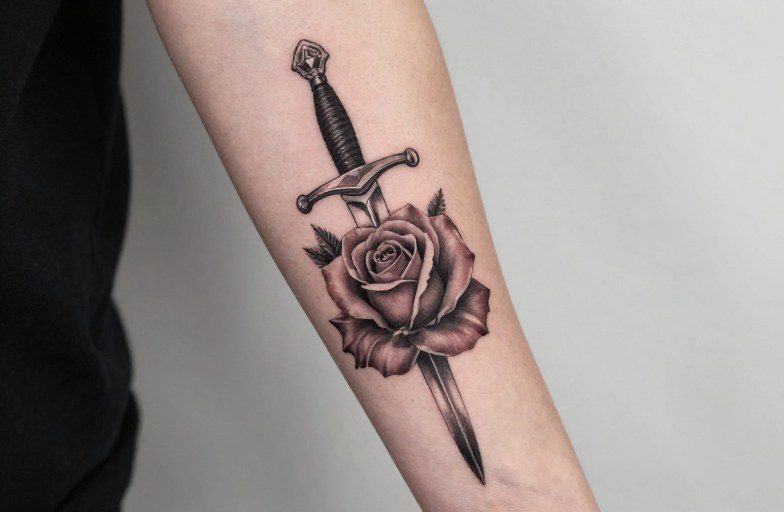
The sword and rose tattoo combines two powerful symbols: the rose, representing beauty, love, and the fleeting nature of life, and the sword, signifying strength, protection, and conflict. Together, they create a visual paradox that speaks to the tension between vulnerability and defense, passion and pain, creation and destruction. Most people who choose this design are drawn to that duality, acknowledging that love requires courage, that beauty exists alongside danger, and that strength often carries a cost.
History & Cultural Roots
The pairing of flowers with weapons has surfaced across centuries and continents, though pinning down a single origin point proves difficult. European heraldry sometimes combined roses with swords in family crests, suggesting nobility tempered by martial duty. During the Tudor period, the “Wars of the Roses” made the flower inseparable from English military and political identity, though direct sword-and-rose imagery from this era remains scarce in surviving artifacts.
Tattoo Tradition Context
American and European tattooing from the early-to-mid 1900s favored daggers through roses as a staple design, often linked to sailors and soldiers processing the proximity of death and desire. These pieces were typically rendered in bold black outlines with limited red shading, practical choices given available pigments and the need for quick completion. The modern sword-and-rose variation evolved from this lineage, swapping the dagger for a longer blade and expanding the symbolic vocabulary.
- Traditional American flash sheets from the 1930s-50s frequently included dagger-and-rose combinations
- The transition to swords allowed for more elaborate guards, hilts, and crossguard detailing
- Neo-traditional and Japanese-influenced styles pushed the design toward larger scales and more dynamic compositions
Best Placements
Where this design lands on the body changes how it reads and how well it ages. The sword’s long, narrow form naturally suits certain areas, while the rose’s rounded detail demands sufficient space to avoid muddying over time.
Forearm and Calf
These cylindrical surfaces accommodate the vertical sweep of a sword without excessive distortion. On the forearm, the blade can run from wrist toward elbow with the rose clustered near the hilt or the point, both compositions work, though hilt-at-wrist feels more natural in daily viewing. The calf offers similar length with slightly more width, allowing the rose to breathe. Lines hold crisp here; both areas experience moderate sun exposure, so consistent SPF application matters for longevity.
Thigh, Ribs, and Back
Larger canvases permit more elaborate interpretations: a full-length broadsword with multiple roses, or a wrapped vine connecting blade and bloom. The thigh’s fleshier tissue can soften fine detail over years, so heavier line weight proves wise. Ribs and back pieces suit committed collectors, these spots hurt more, heal slower, and restrict sleeping positions during recovery. The tradeoff is scale and privacy; a back piece remains hidden until deliberately shown.
- Inner bicep: intimate scale, limited visibility, curves affect blade straightness
- Chest: strong symbolic placement (heart proximity), but sternum bone makes lining challenging
- Hand/finger: generally inadvisable; the sword’s length compresses poorly, and finger ink fades fast
Mythology & Folklore
Stories of blades and blossoms thread through multiple traditions, though connections are often looser than modern tattoo symbolism suggests. Greek mythology offers no direct sword-and-rose pairing, but Aphrodite’s roses and Ares’s weapons exist in the same pantheon, love and war as siblings, or rivals. The Roman adaptation maintained this tension.
Medieval and Renaissance Symbolism
Alchemical texts sometimes depicted the “sword of discernment” alongside floral imagery representing the soul’s unfolding. In this framework, the sword cuts away illusion; the rose represents what remains, authentic beauty stripped of deception. Tarot’s Ace of Swords and rose associations in various decks echo this intellectual-spiritual pairing, though specific tarot-inspired tattoos are a more recent development.
Some trace the combination to Islamic garden poetry, where the rose and nightingale’s love affair unfolds under threat, a sword implied in the thorn, in the garden’s walls, in the lover’s willingness to suffer. Direct sword imagery in this context is less common, but the structural logic (beauty under guard, love requiring defense) resonates across cultures.
Design Tips & Pairings
Execution quality separates memorable sword-and-rose tattoos from forgettable ones. The design’s inherent drama, hard metal against soft petals, gives artists rich material, but also risks visual clutter if handled without restraint.
Line Weight and Contrast
The sword demands crisp, confident outlines; wobbling here destroys the illusion of forged metal. Many strong pieces use heavier outer lines for the blade with finer interior etching for fuller detail. The rose benefits from the opposite approach: softer edges, implied rather than overstated contour lines, allowing the flower to recede slightly behind the weapon’s assertive presence. Black-and-grey execution can work beautifully, but the rose traditionally reads as red, losing that color shifts the emotional temperature toward mourning or memorial rather than passionate love.
Complementary Elements
Snakes coiling the blade introduce temptation and transformation. Skulls beneath the rose root the design in memento mori tradition, beauty, death, and the weapon that connects them. Clocks or pocket watches add temporal urgency; the rose wilts, the sword rusts, time claims both. Some collectors incorporate script, though lettering ages poorly relative to imagery and can date a piece to its era of execution. Negative space, letting skin tone serve as highlight on blade or petal, prevents the composition from becoming oppressively dark.
- Consider blood drops: explicit but effective for pain-sacrifice readings
- Broken blades suggest conflict’s cost, or love’s survival despite damage
- Multiple roses: different family members, different loves, different losses
Common Variations & Styles
The core concept accommodates remarkably diverse visual languages. Your chosen style should align with your existing collection if applicable, and with your pain tolerance and budget, some approaches demand multiple sessions and significant investment.
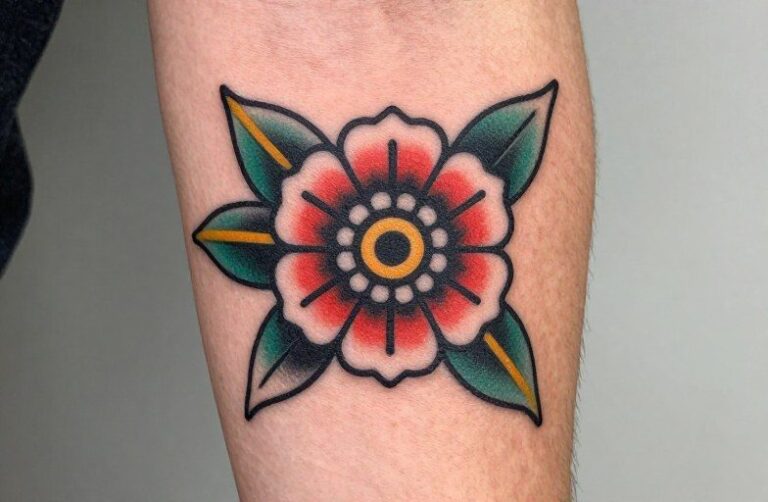
Traditional American remains the most direct lineage: bold black outlines, limited color palette (red rose, silver-grey blade, green leaves), stylized rather than realistic forms. These tattoos age well; the simplicity that reads as “classic” is actually practical engineering for decades of skin change.
Neo-traditional expands the color range and detail density while maintaining readable structure. Ornamental hilts, jeweled guards, and more anatomically considered roses distinguish this approach. Japanese-influenced pieces might render the sword as katana, the rose as cherry blossom or peony, cross-cultural fusion that requires genuine understanding of both source traditions to avoid shallow pastiche.
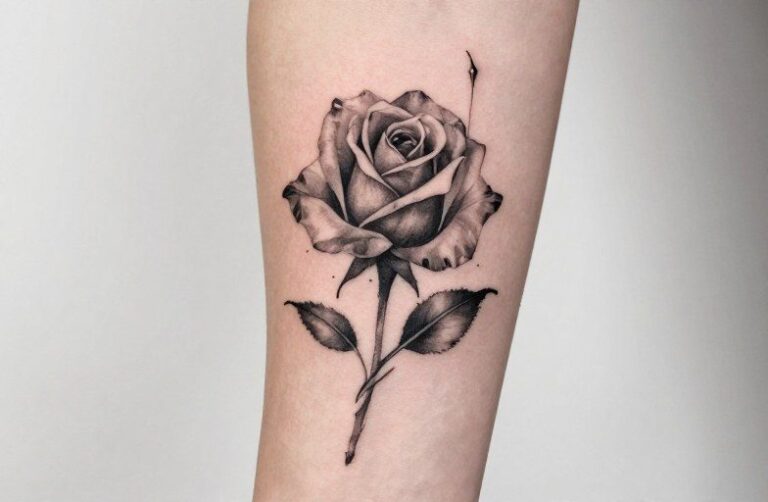
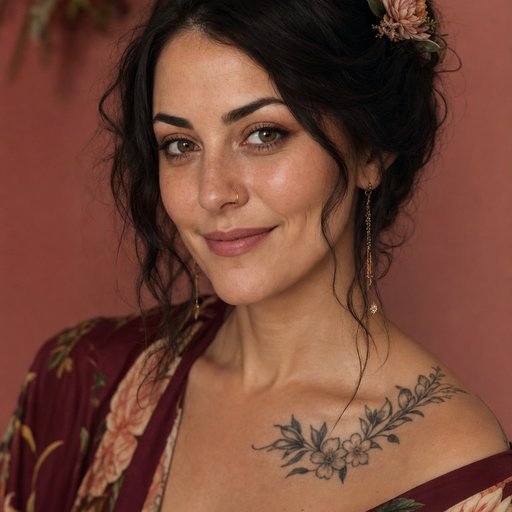
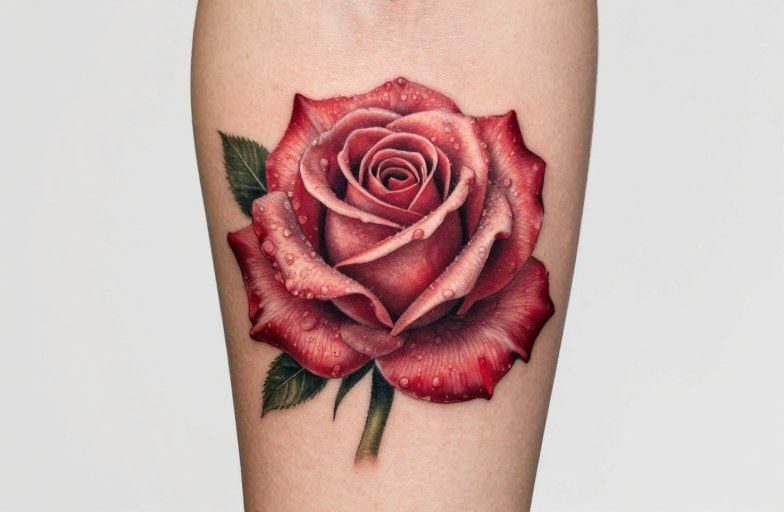
Blackwork and engraving-style interpretations strip color entirely, relying on precise line patterns to suggest texture. Photorealism attempts actual rose petal translucency and Damascus steel patterning; technically impressive, but the style’s micro-detail degrades faster than bolder approaches. Fine-line single-needle work has gained popularity, though the sword’s necessary assertiveness often overwhelms this delicate technique.
Religious & Spiritual Angles
Christian iconography offers the most direct religious connection: the sword as divine judgment or the “sword of the Spirit” from Ephesians, the rose as Marian symbol (the rosary’s name derives from “rose garden”). Medieval depictions of Mary sometimes include sword imagery referencing Simeon’s prophecy of a sword piercing her heart. Tattoo adaptations of this tradition range from subtle (a rosary-wrapped hilt) to explicit (sacred hearts integrated with the blade).
Eastern and Esoteric Interpretations
The sword of Manjushri in Buddhist tradition cuts through ignorance; pairing it with a lotus rather than rose maintains doctrinal coherence, though Western practitioners frequently substitute the more culturally familiar flower. Alchemical and hermetic traditions use sword and rose in initiatory contexts, the “Rosicrucian” name itself fuses rose and cross, with sword as guardian symbol in some rites. These connections are commonly associated with esoteric practice rather than mainstream religious observance.
Contemporary spiritual-but-not-religious interpretations often emphasize personal duality: the seeker as both warrior and lover, the soul’s need for both boundaries and openness. This framing resists institutional anchoring, which suits collectors who value symbolism without doctrinal commitment.
Key Takeaways
The sword and rose tattoo endures because its central tension, beauty and danger, love and defense, maps onto lived experience with uncomfortable accuracy. No single meaning dominates; the design accommodates grief, romantic commitment, personal strength, and philosophical paradox with equal facility. Technical execution matters enormously: the blade’s straightness, the rose’s color saturation, and the composition’s balance between hard and soft elements determine whether the piece communicates its intended complexity or collapses into visual noise. Choose placement with aging in mind, select artists whose portfolios demonstrate relevant strength in both botanical and metallic rendering, and allow the symbolism to remain slightly unresolved, its power lives in the question it poses, not any answer it pretends to offer.
Frequently Asked Questions
Does a sword through a rose mean something different than a sword beside a rose?
Penetration imagery generally reads as violence against beauty, loss of innocence, or love’s wound. Side-by-side placement suggests partnership or balance between two forces. The composition’s emotional weight shifts dramatically with this single choice.
How well does the red rose color hold up over time?
Red pigments have improved significantly but still fade faster than black. Expect softening to pink or coral within 5-10 years depending on sun exposure and skin type. Strategic touch-ups maintain vibrancy, but budget for them.
Is this design considered masculine or feminine?
The pairing transcends that binary in contemporary tattooing, though traditional flash leaned masculine. Current execution and personal context determine gendered reading more than the imagery itself. Many non-binary collectors specifically choose this design for its balanced duality.
What’s the typical price range for a quality sword and rose tattoo?
A palm-sized piece in established shops runs $300-600; forearm or calf scale with detail typically $800-1500. Major city rates, artist reputation, and session count push figures higher. Extremely low quotes usually signal corner-cutting you will regret.