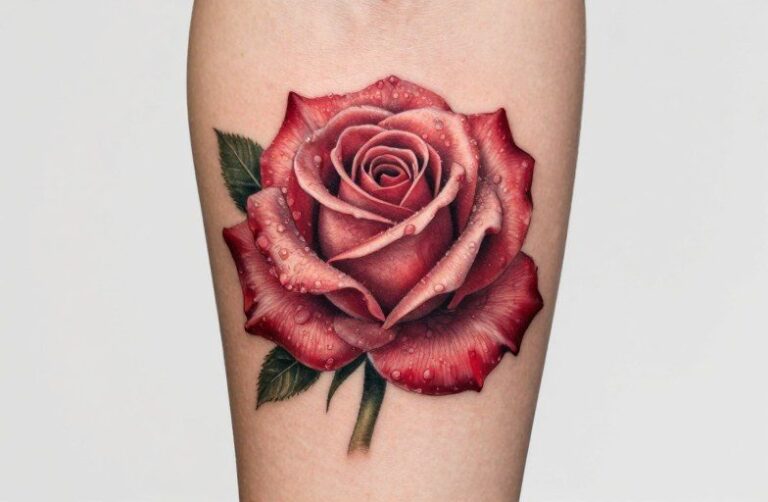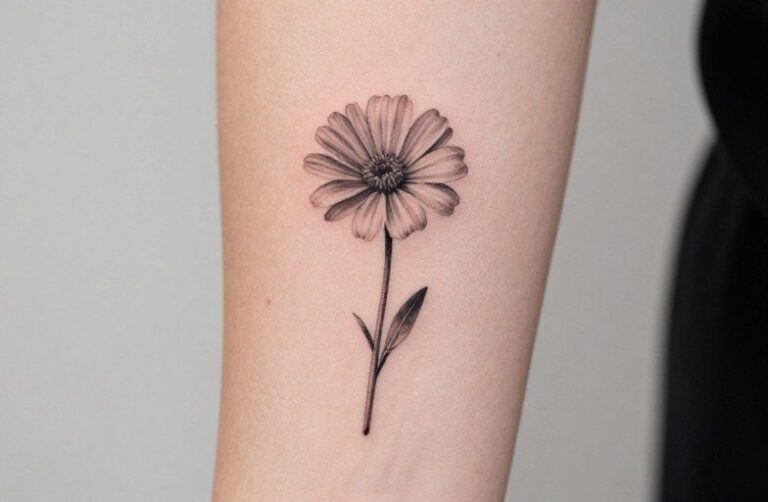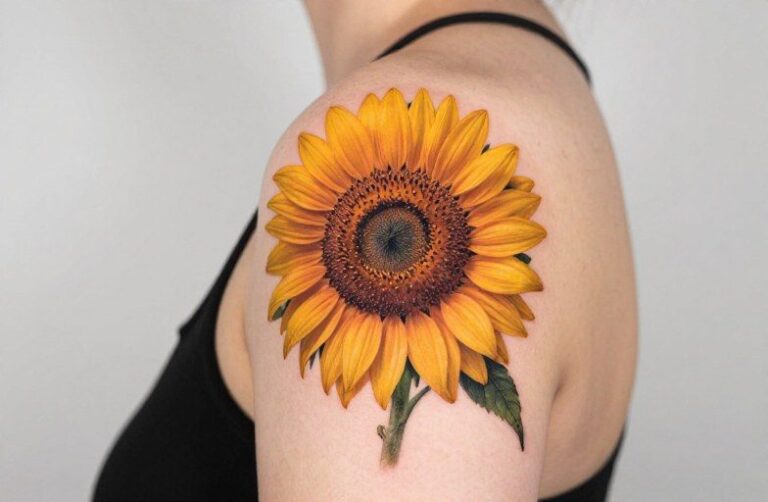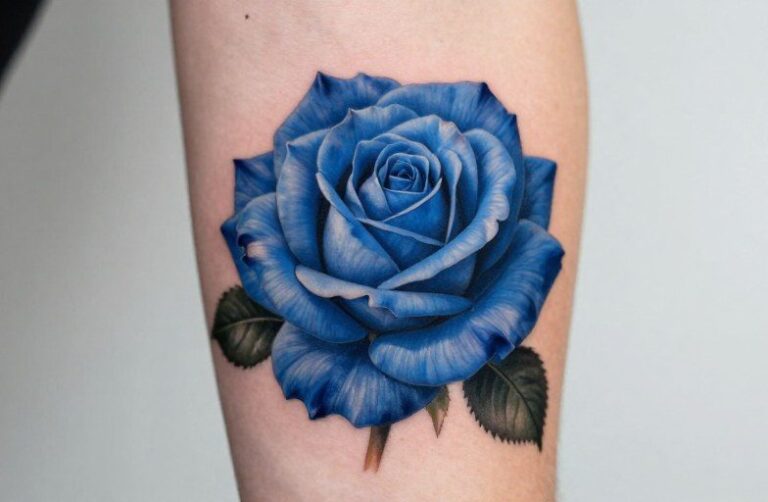
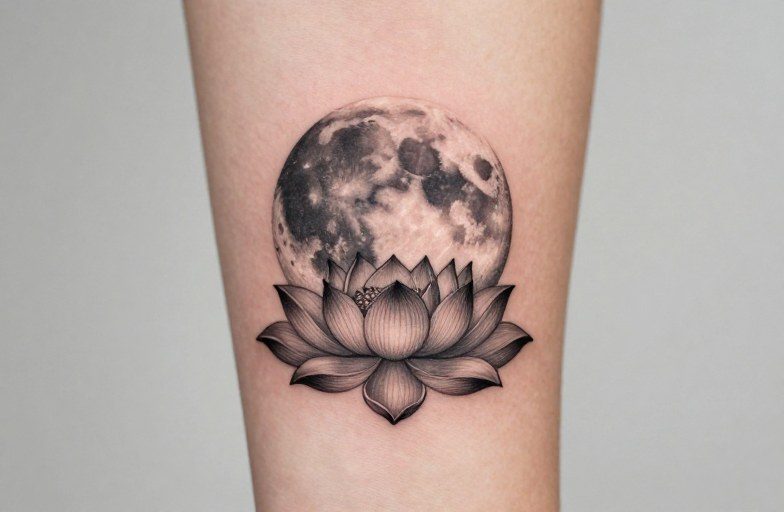
A moon and lotus tattoo combines two of the most loaded symbols in tattoo culture. The moon governs cycles, intuition, the unconscious, and the passage of time. The lotus pushes through mud to bloom on the water’s surface, representing emergence, resilience, and spiritual unfolding. Together, they create a layered image about growth through darkness, finding clarity in flux, and the beauty of impermanent states.
Best Placements
Upper Back and Shoulder Blade
The broad, flat canvas of the upper back lets the moon arc over the lotus in a natural composition. This placement accommodates detail in the lotus petals and soft gradation in the moon’s surface. Healing is straightforward here, minimal friction from clothing, easy to keep clean, and the skin doesn’t stretch as dramatically as lower back or stomach areas. A piece spanning shoulder to shoulder reads as a complete scene; tucked to one side, it frames the body asymmetrically.
Forearm and Inner Bicep
Forearm placement keeps the image visible, which matters when the symbolism carries personal weight you want to recall daily. The cylindrical shape suits a vertical lotus with a crescent moon nested above or below. Inner bicep offers more privacy and softer skin that holds fine lines well, though it hurts more and heals with more plasma buildup due to the area’s heat and movement. Either arm placement allows the moon to face outward or inward depending on whether you want the tattoo addressing the world or yourself.
Ribcage and Sternum
These placements hurt. The bone proximity, thin skin, and constant breathing movement make the session a grind. But the lotus over the heart, moon phases trailing along the ribs, creates an undeniably powerful bodily integration. The tattoo moves with breath, literally expanding and contracting. Sternum pieces between the breasts or pectorals center the symbolism on the chest cavity, life, emotion, vulnerability. Rib work extends the composition vertically, letting moon phases stack above a rooted lotus.
Thigh and Calf
Thighs provide substantial real estate for larger compositions: a full moon cradling an open lotus, water rendered beneath. The muscle padding makes the tattooing more tolerable, and healing avoids the complications of waistband friction. Calf placement wraps the image around the leg’s curve, which can distort a rigid geometric design but suits organic, flowing interpretations. Both areas age well; the skin isn’t as sun-exposed as arms or chest, and the ink stays crisper longer.
Common Variations & Styles
Geometric and Dotwork
Geometric versions structure the lotus into mandala-like symmetry, with the moon rendered as a clean circle containing phase patterns or crater textures built from stippled dots. Dotwork demands patience from the artist and the sitter, thousands of individual points create tone, and any inconsistency in needle depth shows as blotching. The result ages into a softer, more atmospheric piece than solid blackwork. Fine-line geometric moons with lotus outlines stay crisp for years if the line weight stays moderate; hair-thin lines blur faster on most skin types.
Japanese-Influenced and Watercolor
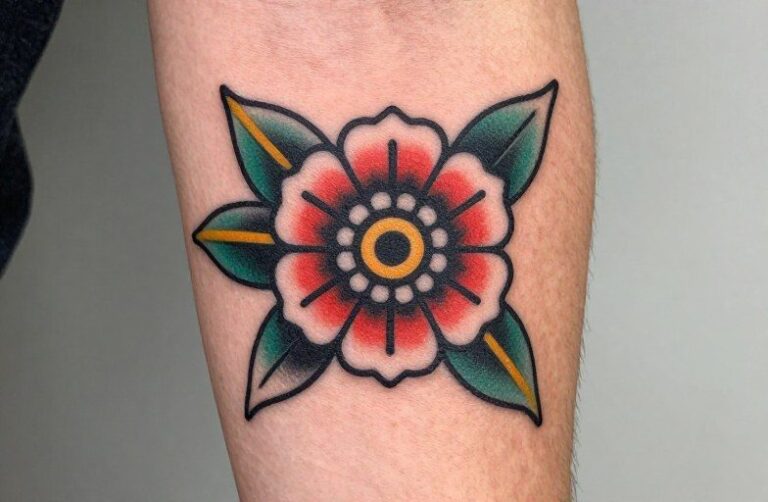
Japanese tattoo tradition often pairs lotus with Buddhist imagery, and the moon appears frequently in ukiyo-e prints as a melancholic or transcendent element. A tattoo drawing on this lineage might use bold outlines, limited but saturated color, and background waves or wind bars. Watercolor style abandons outlines entirely, letting the lotus bleed into the moon in washes of pigment. This looks striking fresh but ages unpredictably, without black holding the structure, colors migrate and soften faster. Touch-ups become essential maintenance.
Minimalist and Single-Needle
Minimalist interpretations reduce both elements to essential contours: a crescent’s curve, a lotus silhouette. Single-needle work creates delicate, almost drawn-on effects. The risk is longevity; less ink deposited means faster fading, especially on hands, feet, or anywhere with frequent sun exposure. These pieces suit placements with stable skin and owners committed to sunscreen discipline.
Color vs Black and Grey
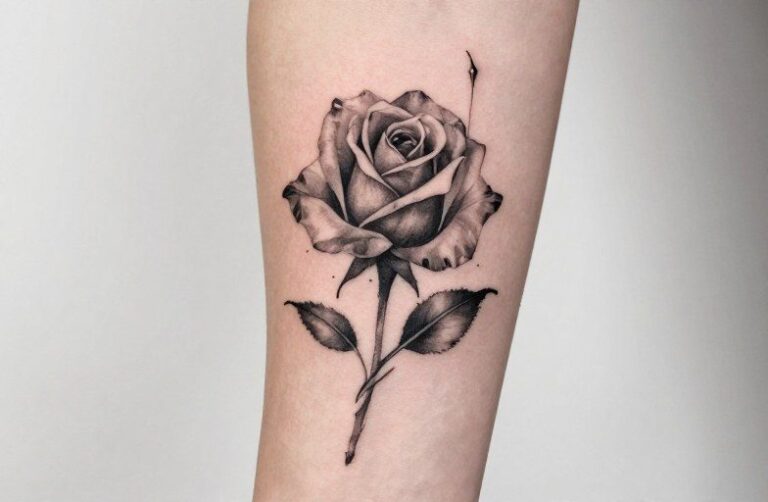
Black and grey emphasizes the moon’s cratered texture and the lotus’s dimensional petal structure through shading alone. The limited palette forces contrast through value, deep blacks in the moon’s shadows, bright skin-tone highlights on petal edges. This approach ages gracefully; black ink is the most stable pigment, and grey washes hold consistency better than most colors. A well-executed black and grey piece looks intentional decades later, even with some softening.
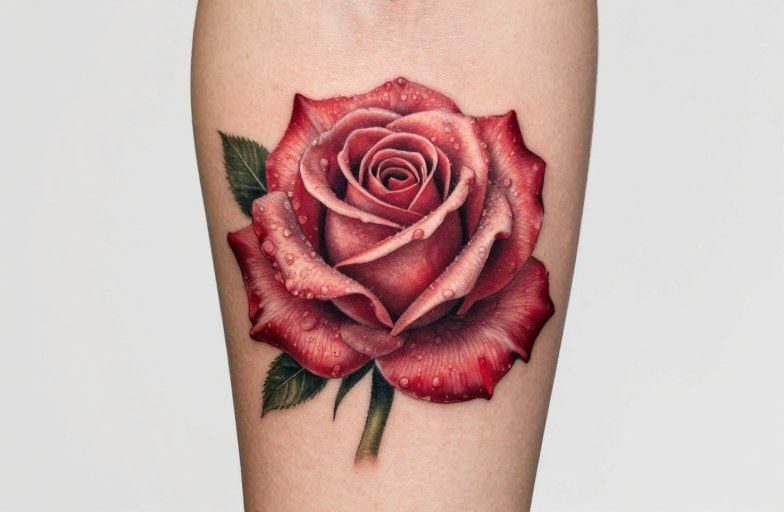
Color introduces specific associations. Pink lotus connects to the heart and compassion in Buddhist iconography; blue or purple lotus often represents wisdom and esoteric knowledge. The moon gains atmosphere through muted blues, pale golds, or blood-orange eclipse tones. Realistically, color demands more aftercare vigilance. Reds and yellows fade fastest; blues and greens hold better but can heal patchy on darker skin tones. White ink as highlight on moon craters or petal tips almost always yellows or disappears within a few years, it’s a temporary effect, not a permanent element.
Skin tone fundamentally affects both approaches. On very dark skin, black and grey must be saturated enough to read clearly; subtle grey washes disappear. Color needs to be bold and opaque, not pastel or translucent. A skilled artist adjusts value ranges and pigment choices to the specific canvas, not applying a one-formula-fits-all approach.
Personal & Modern Meanings
Contemporary wearers often layer personal narrative onto these ancient symbols. The moon’s phases map onto lived experience, new beginnings, fullness, diminishment, return. Someone marking recovery from depression or addiction might choose a waxing moon with a lotus just breaking the water’s surface. The image becomes a private marker of process, not destination.
The lotus specifically resonates with people who’ve emerged from difficult environments. “No mud, no lotus” isn’t just a bumper sticker; it’s a lived recognition that growth requires uncomfortable conditions. Paired with the moon’s monthly death and rebirth, the tattoo can represent cyclical resilience rather than linear triumph. This appeals to people who don’t want a static symbol of “overcoming” but a dynamic one of continuing.
Modern placements also shift meaning. A moon and lotus on the throat speaks differently than one on the ankle. Visible tattoos declare the symbolism as part of public identity; hidden ones keep it as internal reference. The choice itself becomes part of the meaning.
Mythology & Folklore
Asian Traditions
The lotus appears across Hindu, Buddhist, and Jain narratives, often linked to creation and purity. In some Hindu accounts, the universe emerges from a lotus growing from Vishnu’s navel. The moon carries extensive associations in Chinese folklore, Chang’e’s exile there, the jade rabbit, the Mid-Autumn Festival’s reunion symbolism. A tattoo drawing on these threads might incorporate specific visual references: the rabbit in the moon, particular lotus positions (closed bud, full bloom, seed pod) that correspond to different stages of enlightenment or time.
Western and Global Threads
Greek and Roman lunar goddesses, Selene, Artemis, Diana, connect the moon to hunting, childbirth, and the wild. The lotus less so in European traditions, though the Egyptian blue lotus (actually a water lily) appears in funerary art and is often linked to rebirth and the sun’s cycle. Some trace the moon-lotus pairing to 19th-century Orientalist art, where Western artists romanticized Eastern spirituality. The tattoo’s popularity may partly descend from this visual tradition, not purely from direct religious practice.
Religious & Spiritual Angles
In Buddhism, the lotus is unavoidable, seats for deities, metaphors for mind training, representations of the path from ignorance to awakening. The moon appears in Zen poetry as the mind’s original nature, clouded by thought but always present. A tattoo combining both can function as devotional reminder, though practitioners vary on whether bodily marking aligns with specific lineages’ teachings.
Hindu traditions associate the lotus with Lakshmi (prosperity), Saraswati (knowledge), and Vishnu’s creative power. The moon connects to Shiva’s matted locks, to soma, to the mind’s fluctuating nature. Tattooing these symbols requires some awareness of context; wearing them purely as aesthetic without acknowledgment of living religious practice can read as appropriation, particularly for non-South Asian wearers choosing elaborate sacred geometries.
Modern spiritual-but-not-religious use dominates much contemporary tattooing. The moon and lotus become personal emblems of mindfulness, feminine energy, or natural cycles without doctrinal attachment. This usage is valid but distinct from the symbols’ embedded religious histories. Being clear about which layer you’re engaging, devotional, cultural, personal, helps both in choosing imagery and in explaining it when asked.
Key Takeaways
- The moon and lotus tattoo merges cyclical transformation (moon) with emergent resilience (lotus), meaning shifts with which element you emphasize and how they interact compositionally.
- Placement determines visibility, pain level, healing ease, and how the image ages; back and forearm offer the most reliable results for detailed work.
- Black and grey prioritizes longevity and texture; color adds specific symbolic associations but demands more maintenance and skin-tone consideration.
- Religious and mythological roots run deep, Buddhist, Hindu, Chinese, Egyptian, so research matters if you want to engage respectfully rather than superficially.
- Style choices (geometric, watercolor, Japanese-influenced, minimalist) affect not just appearance but how the tattoo holds up over years; discuss aging explicitly with your artist.
Frequently Asked Questions
Does the moon phase matter in a moon and lotus tattoo?
Yes, the phase changes the meaning significantly. A crescent suggests beginnings or potential; a full moon indicates completion or illumination; waning phases can represent release or introspection. Most people choose based on what resonates personally rather than following a fixed code.
Can a moon and lotus tattoo work as a cover-up?
It can, depending on the existing tattoo. The lotus’s layered petals and the moon’s solid dark areas provide coverage opportunities, but the design needs to be large enough to incorporate the old work. Consult an artist experienced in cover-ups, someone who can adapt the composition rather than forcing a stock image over existing ink.
How do I keep the fine details from blurring over time?
Start with adequate line weight, too fine and it spreads. Protect from sun exposure consistently; UV radiation degrades ink faster than aging alone. Moisturize the skin generally; dry, damaged skin makes tattoos look older. Plan for a touch-up at 5-10 years depending on placement and your skin’s behavior.
Is there a masculine or feminine version of this design?
The symbolism itself is gender-neutral, though some stylistic conventions lean one way. Bold blackwork, geometric structuring, and darker moon tones often read as more masculine in current tattoo culture; softer shading, brighter colors, and flowing lines code feminine. These are trends, not rules. A good artist designs to your body and preference, not a gendered template.