Small lotus tattoos can heal on the surface in about 2 to 3 weeks, while complete healing takes roughly 2 to 3 months. The design matters, but placement and line weight matter more than people admit. I’ve learned that fine-line spacing needs breathing room if you want crisp ink years later. Start here!
- Try the Behind-the-Ear Lotus
- Is the Wrist the Right Place for a Minimal Lotus?
- Dotwork Gives the Rib Lotus a Gritty Edge
- Blackwork or Open Petals? The Thigh Decision
- Trace the Collarbone with a Delicate Lotus
- Watercolor on the Ankle: A Controlled Risk
- What Should the Script Say?
- Keep the Finger Lotus Bold and Simple
- The Shoulder Lotus and Its Tiny Leaves
- Crescent or Lotus First? Build Around Meaning
- The Mandala Lotus: Sacred Detail at Forearm Scale
1Try the Behind-the-Ear Lotus
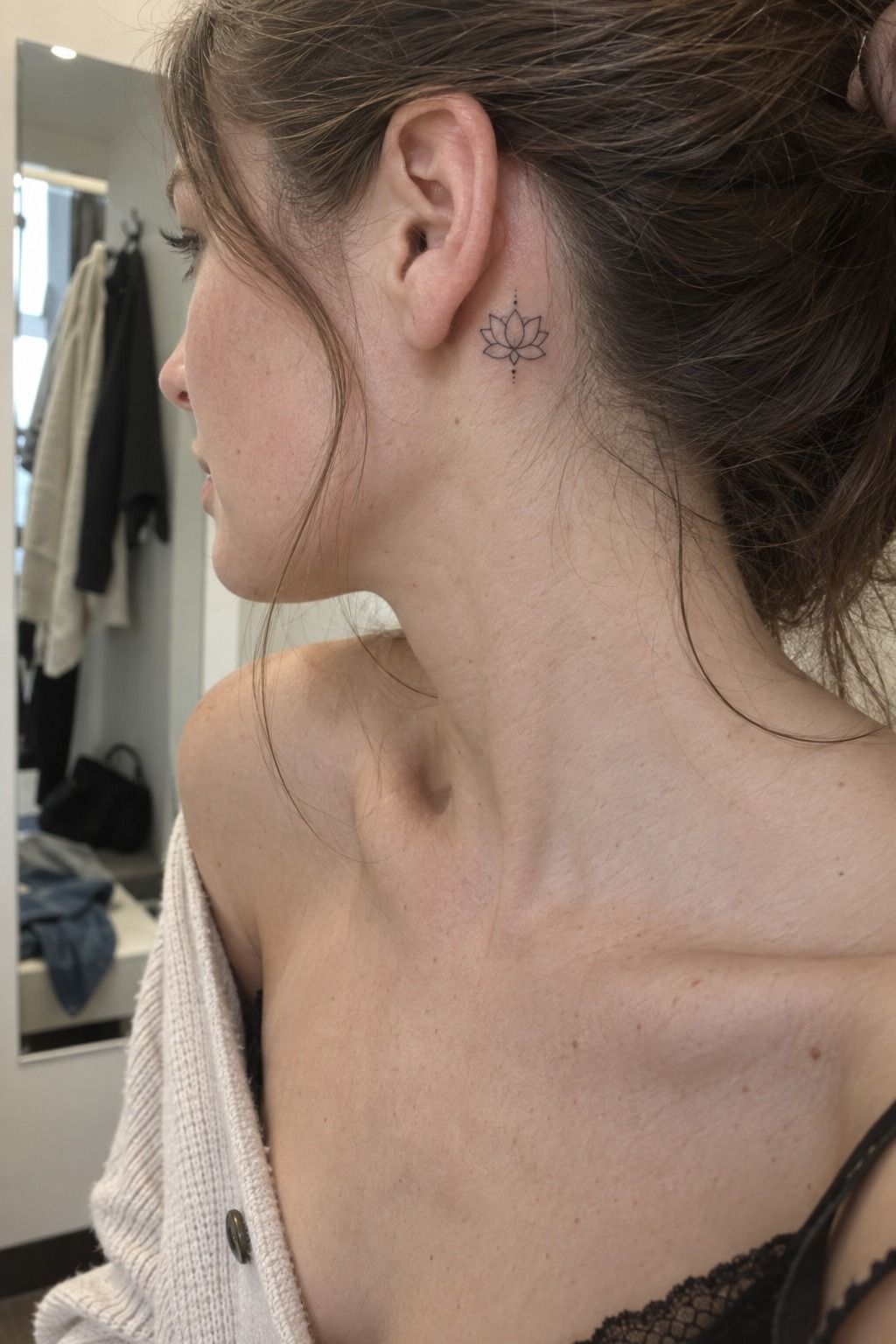
Behind the ear suits a single-needle lotus because the placement keeps the design discreet without making it forgettable. A front-facing bloom feels delicate and personal, with thin petals opening upward instead of spreading wide across the neck. If you’re choosing this spot, you’ll want a stencil that follows the curve rather than sitting perfectly flat.
Ask your artist to keep the petal intersections crisp. Fine lines can soften or widen over time, especially with regular sun exposure, so an intricate design needs open skin between each mark.
I’d skip five tiny interior petals if the total design is very small. A simpler outline will stay more expressive.
Your artist should adjust the contrast to your undertone. Black tattoo ink gives the flower a sharp edge, while a few untouched spaces keep it from looking heavy.
You won’t need a complicated routine, but you do need consistency. Gentle aftercare means washing carefully, moisturizing lightly, and avoiding direct sun while the surface heals. Don’t scratch it, even if the flaky stage feels annoying.
For more symbolic direction, compare this idea with these small floral tattoo ideas. The lotus is meaningful on its own, and a restrained version behind the ear can feel quietly empowering.
2Is the Wrist the Right Place for a Minimal Lotus?
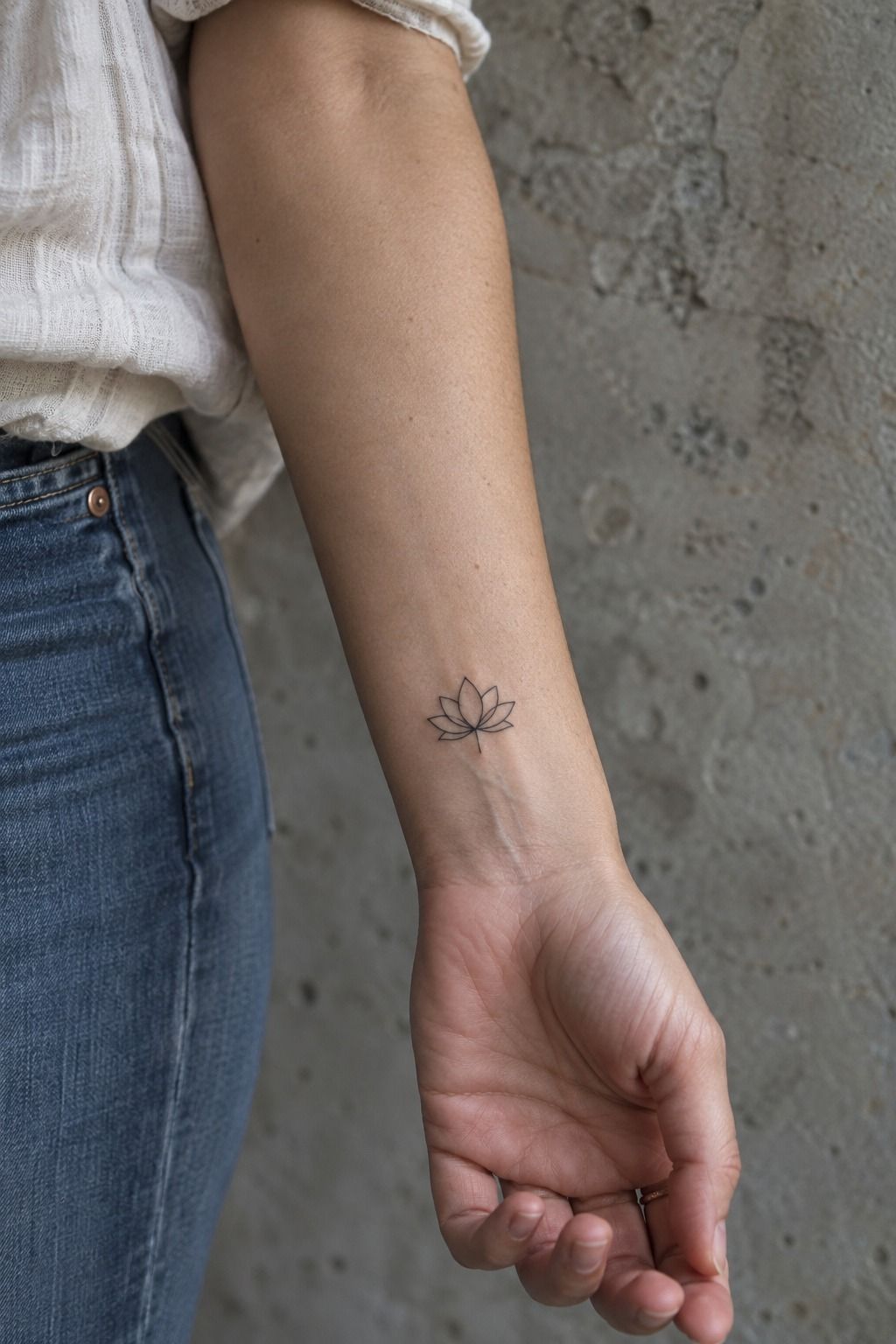
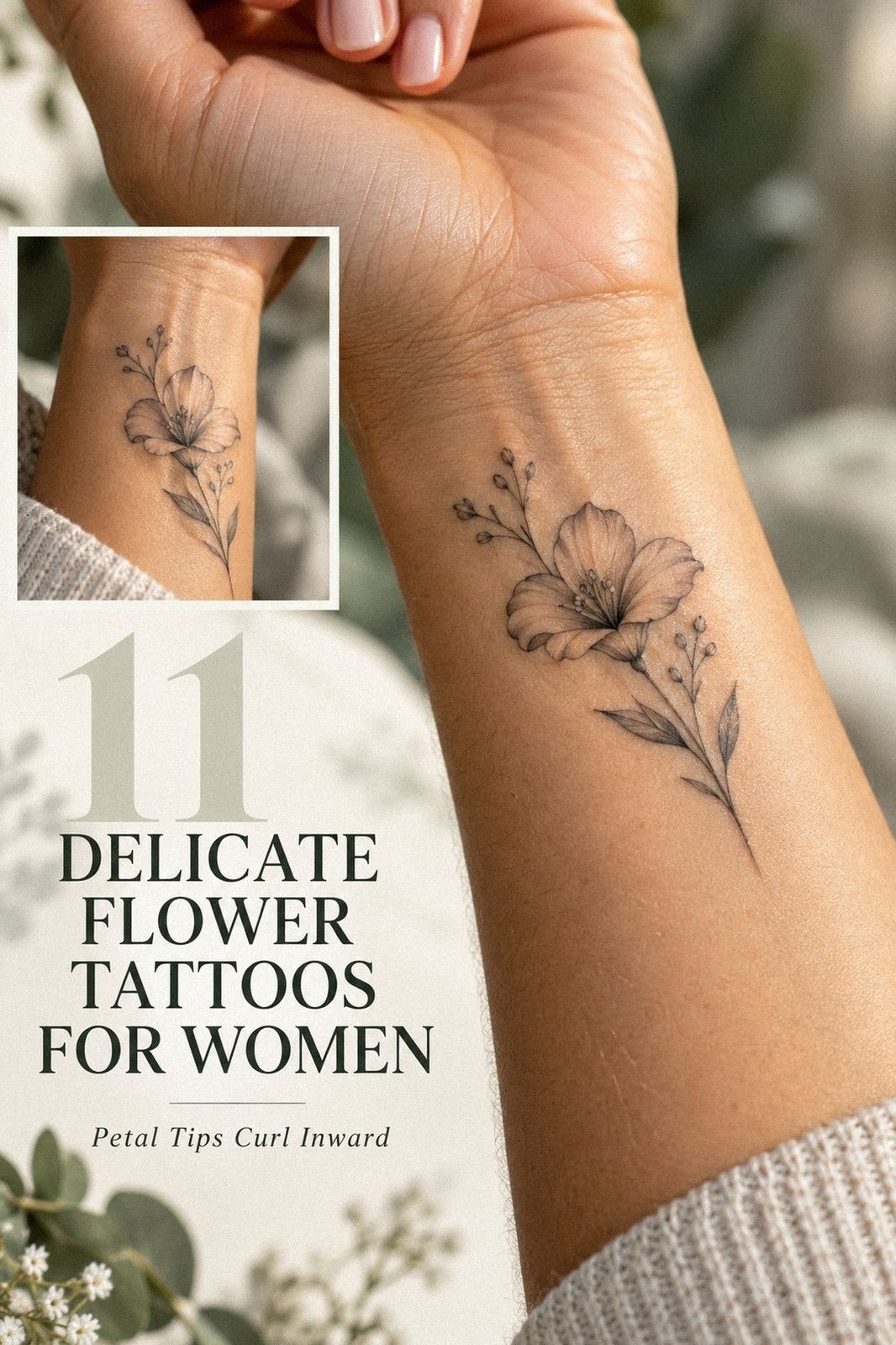
A wrist lotus works best when the composition is minimal, symmetrical, and easy to read at a glance. If you want something visible but still understated, this placement gives your small lotus tattoos a polished presence.
I’d choose fine-line blackwork here instead of pale gray ink. The wrist moves constantly, catches sunlight, and rubs against clothing, so a clear black outline has a better chance of remaining legible. A tiny wash of gray can work inside the center, but too much shading will make the bloom look muddy.
Think about stencil orientation before you approve it. You may want the flower facing you when your arm rests naturally, or facing outward so other people see it first. Both are valid, but you shouldn’t let the artist decide that detail while you’re already in the chair.
The wrist can be more sensitive than the forearm because the skin is thinner and the area stays active. Wrist skin also bends constantly, so keep the final design simple enough that the artist isn’t working for hours.
If you’re collecting small lotus tattoo ideas, pair this placement with a small rose tattoo guide. A rose and lotus use different petal rhythms, so you can compare which outline feels more personal.
3Dotwork Gives the Rib Lotus a Gritty Edge
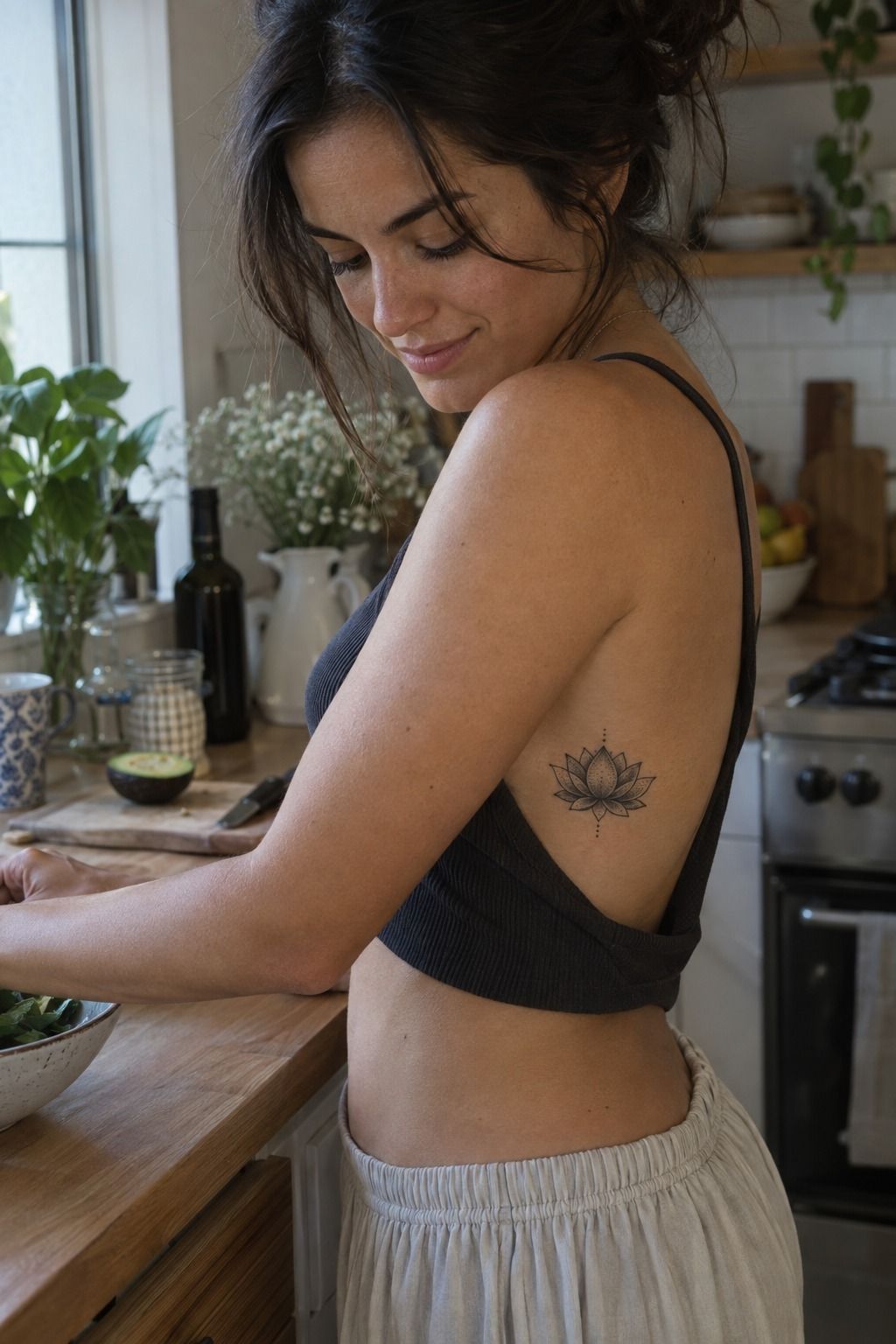
Dotwork gives a rib lotus a gritty, textured finish without filling the entire flower with solid ink.
4Blackwork or Open Petals? The Thigh Decision

Geometric blackwork gives a small lotus a bold structure, especially on the thigh where the artist has more room to balance the shape. If you want a powerful design, this is the direction I’d choose!
The thigh is usually more tolerable than ribs, feet, hands, or the sternum, but the inner thigh can feel more sensitive. Thigh placement should be checked while your leg is relaxed, because the design can shift visually when the skin is stretched.
Use solid black geometry sparingly. A thin diamond, circle, or pair of angled lines can sharpen the lotus, but a dense frame will overpower the flower. I’d skip a full black background for a small piece because it steals the negative space that makes the petals readable.
Your artist should choose ink density based on your skin and the size of the stencil, not copy a generic reference exactly. Strong black lines can look iconic when the open petals remain the visual anchor.
For another bold botanical direction, browse these unique flower tattoos for women. The most polished designs usually commit to one main structure instead of mixing every technique.

5Trace the Collarbone with a Delicate Lotus

A flash sheet can help you compare proportions before committing. Aged paper flash often shows several hand-drawn lotus designs in fine line, each one shaped for the collarbone’s long curve. If you’re choosing from a sheet like this, hold the stencil against your body before settling on the final version.
The collarbone rewards a flowing composition. A lotus with a narrow base and slightly open top will follow the bone better than a perfectly circular emblem. Hand-drawn flash linework can feel more personal than a heavily symmetrical digital design, particularly if you want an elegant mark with a little irregularity.
I’d choose one flower, not a row of five tiny blooms. Multiple flowers may look charming on paper, but the collarbone needs breathing space between the design and the shoulder. A single dainty lotus will age more gracefully and remain easier to read from a distance.
Ask your artist whether the stencil position needs to shift closer to the chest or shoulder. Your posture changes the visual line, and you won’t see the final relationship clearly while standing stiffly in front of a mirror. Take a few natural photos first.
For more inspiration, look through these small sunflower tattoos. The comparison can help you decide whether your preferred style is narrow and delicate or more graphic and open.
6Watercolor on the Ankle: A Controlled Risk
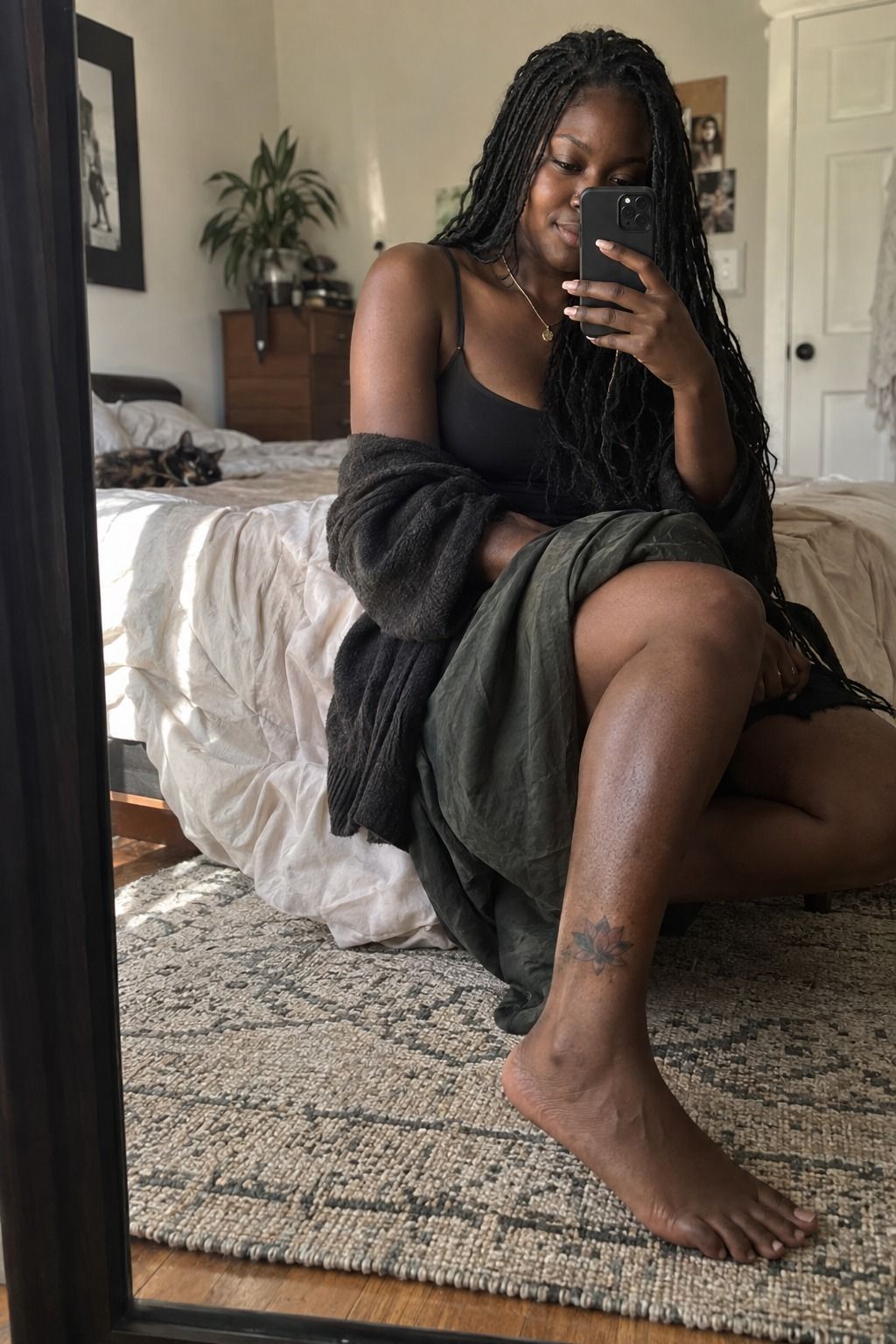
A watercolor lotus can look vibrant on the ankle when the color is used as a controlled accent rather than a blurred cloud.
7What Should the Script Say?
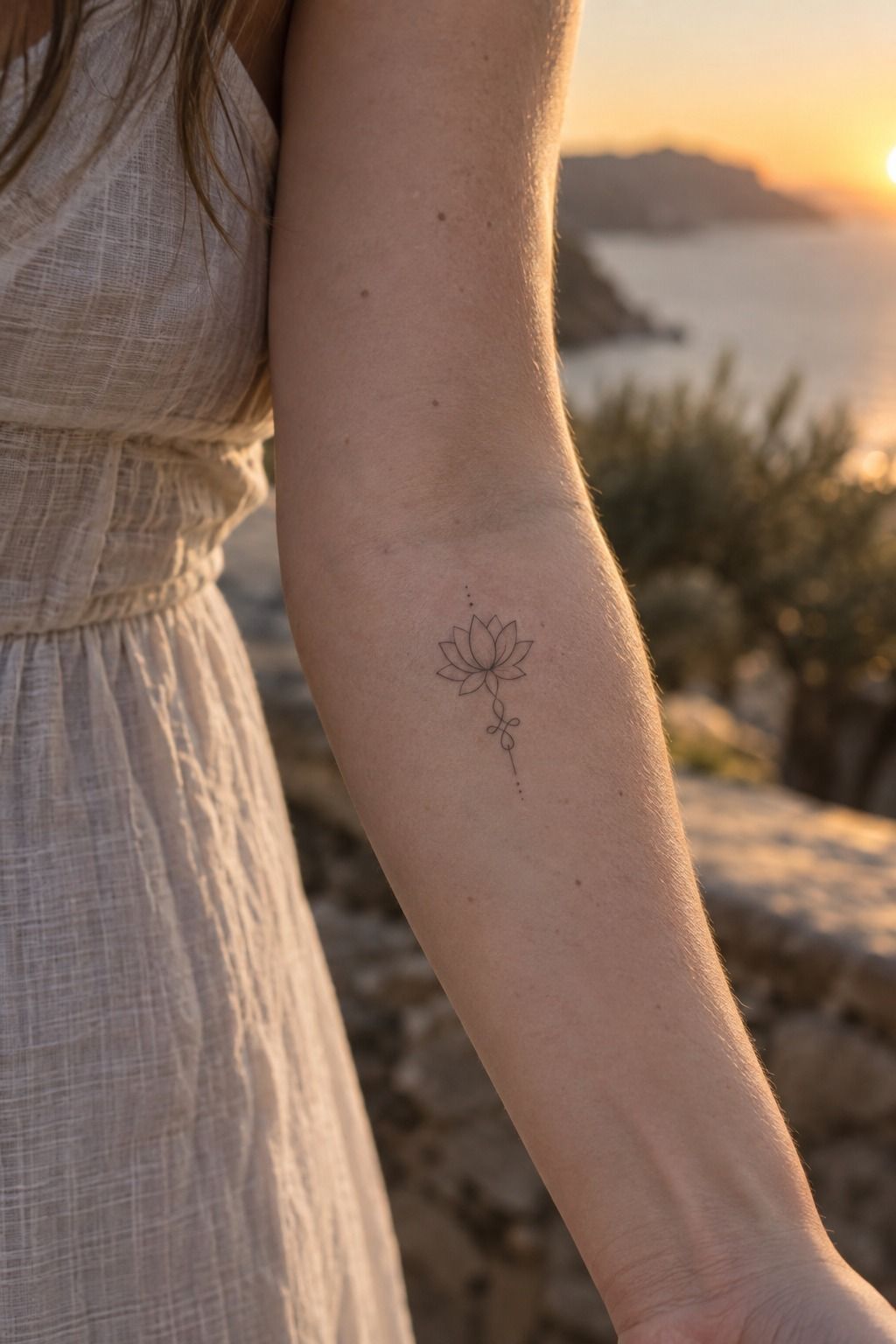
Pairing a lotus with script can turn a small tattoo into a meaningful reminder, but the wording must earn its space. Lettering layout works best when the flower stays front-facing and the text sits beside it rather than cutting through the petals. If you’re adding lettering, you’ll want the message to remain readable without shrinking the lotus too far.
Choose fine script lettering only after checking the artist’s healed work. Tiny letters can close together as they settle, particularly if the phrase has repeated vertical strokes. I’d rather see two meaningful words in a clean style than a full sentence that becomes difficult to read.
Ask to see the exact phrase in the proposed size. Lettering scale can reveal whether the words feel balanced beside the flower or crowded against it.
And don’t choose a quotation just because it sounds poetic. Your lotus may represent resilience, renewal, faith, or a person you carry with you. Personal wording should add meaning, not explain what the image already says.
You can compare this pairing with the symbolism in a watercolour lotus tattoo meaning guide. The result can feel graceful and personal when the words stay short.
8Keep the Finger Lotus Bold and Simple
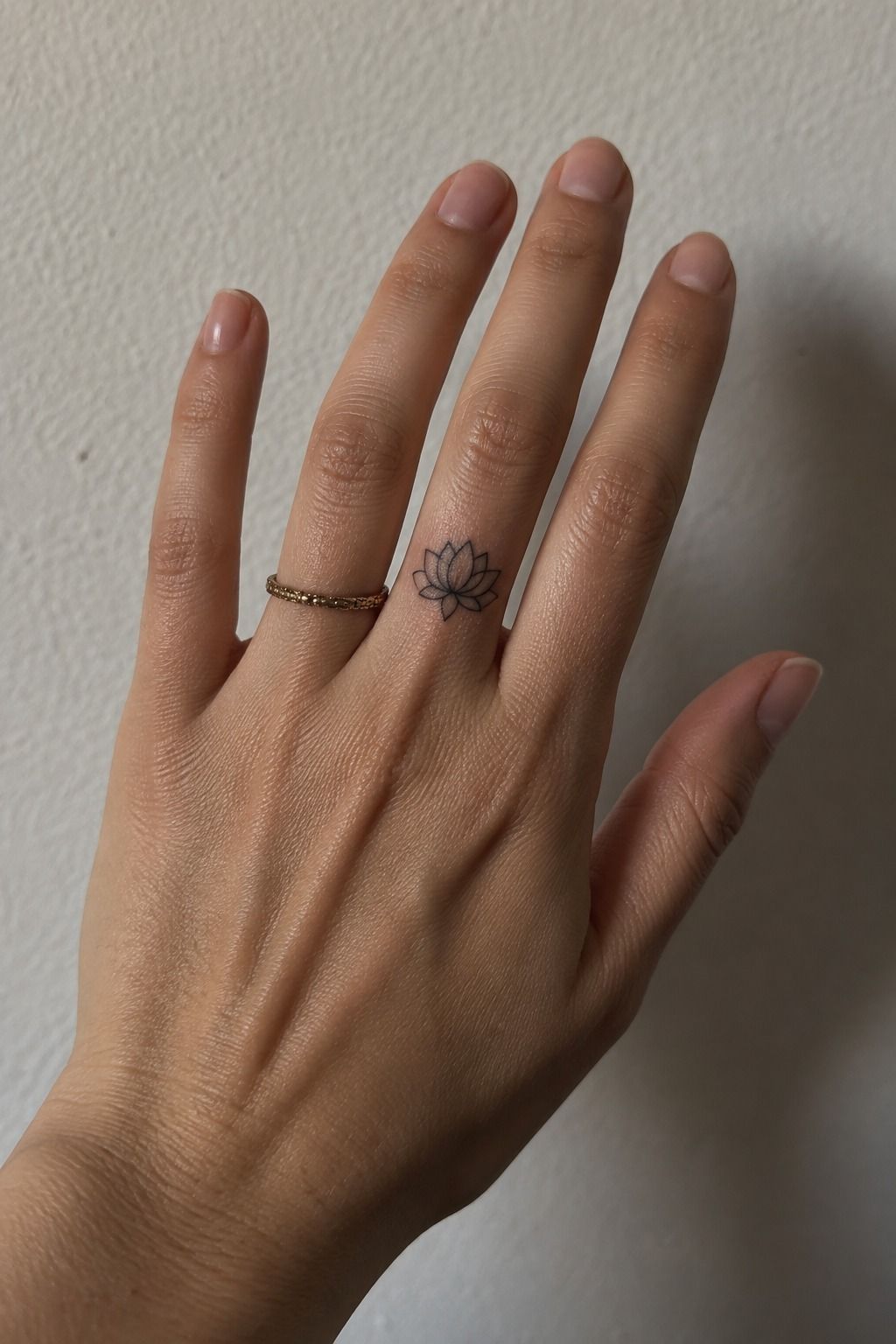
Finger tattoos need a realistic approach because the skin receives constant friction and movement.
9The Shoulder Lotus and Its Tiny Leaves

Tiny leaves can make a lotus feel more organic without stealing attention from the bloom. Botanical leaves extending from the base create a gentle vertical shape and give the flower a little movement. If you’re drawn to botanical small lotus tattoos, this is a graceful way to add direction.
I’d keep the leaves lighter and thinner than black botanical stems. The flower should remain the visual anchor, while the leaves guide the eye downward. Too many leaves can make a small lotus resemble a generic sprig, which weakens the symbolic center.
The shoulder is a fairly forgiving placement for many people, and shoulder placement gives your artist enough space to preserve the petal gaps. It also offers a practical choice if you want the tattoo covered for work but visible with sleeveless clothing.
Ask for a healed portfolio image with similar line weight. Fresh fine-line work can look almost perfect, but healed photographs show whether the leaves stayed separate from the flower. You’ll learn more from that evidence than from a heavily edited studio image.
For a broader botanical comparison, explore these small floral tattoos. A lotus with leaves can feel timeless, symbolic, and quietly feminine without becoming overly ornate.
10Crescent or Lotus First? Build Around Meaning

A crescent can cradle the flower, but it shouldn’t crowd the outer petals.
11The Mandala Lotus: Sacred Detail at Forearm Scale

A mandala center gives this forearm lotus a sacred, geometric character, and warm brown skin can make the black structure especially striking. The design uses a front-facing bloom with measured details inside the petals. If you want a meaningful focal point, this combination has presence without needing a large tattoo.
The key is scale. Geometric mandala linework needs enough room for each spoke, circle, and gap to stay distinct.
I’d remove two interior rings before shrinking the design too far. A simpler mandala will remain polished, while a crowded one can turn into a dark spot.
The forearm is usually more tolerable than ribs, feet, hands, or sternum, and forearm surface offers a flatter working area. Your artist can place the flower along the natural line of the arm, but you should check it from both the front and side before approving the stencil.
Black ink ages more reliably than delicate pale shading, although every tattoo changes with time. Ultraviolet protection will help preserve the contrast. You’ll still see natural softening, but the central lotus should remain recognizable.
If you’re comparing spiritual floral designs, take a look at this tribal lotus tattoo meaning guide. I’d keep the mandala refined and expressive rather than adding every symbolic mark you can find.
The Lotus Details I’d Keep
I’ve seen people choose a small lotus because it looks simple, then ask for so many details that the original clarity disappears. My opinion is firm: the best small lotus tattoo has one dominant idea, one supporting technique, and enough untouched skin to let both breathe. A dominant design idea might be a delicate outline with a tiny center, a bold silhouette with one geometric accent, or a watercolor wash held inside a crisp bloom.
Your artist’s healed portfolio matters more than a flawless fresh photograph. A healed portfolio lets you study line spacing, petal openings, and the way black ink sits against different skin tones. I made the mistake of judging a tattoo only by its first-day sharpness once.
The healed version taught me that restraint was doing more work than detail.
The placement should also match your real habits. A placement choice affects visibility, friction, sensitivity, and how often you’ll see the tattoo while it heals.
You can choose a striking design and still keep it understated if the scale is honest. What do you want to recognize first five years from now?
For planning, save references from small floral tattoo ideas and unique flower tattoos for women. Pick the image whose structure you’d still want if the color, trend, and social reaction disappeared.
Small Lotus Tattoo Costs And Healing Benchmarks
Prices vary by artist, region, placement, and studio minimum, so use the figures below as typical US reference points rather than a promise. Tattoo pricing may start around $100 to $300 for a small lotus, while some shops set a minimum around $50 to $100. Hourly rates commonly fall around $100 to $250.
The surface can look settled before the deeper healing is complete. The healing timeline depends on your skin, placement, aftercare, and the amount of ink used. You’ll want to wash gently, moisturize as directed, and avoid direct sun and swimming while the tattoo heals.
A small tattoo isn’t automatically inexpensive if the artist specializes in fine line, watercolor, or geometric work. I’d pay for a skilled portfolio before chasing the lowest quote. An artist portfolio is part of the value, along with a clean stencil and strong hygiene.
If you’re comparing the design with another floral subject, browse small rose tattoos and small sunflower tattoos. The same budget can produce very different results depending on detail and placement.
You can also compare symbolism before you choose a color or technique. The meaning reference in this flower tattoo meaning guide may help you decide whether the lotus should represent renewal, faith, resilience, or something more private.
Before You Book a Small Lotus Tattoo
Start with a clear consultation. An artist consultation gives you a chance to discuss size, placement, skin tone, line weight, color, and how much detail can realistically survive. Bring references, but let the artist explain what needs to be simplified.
Ask to see the design at its actual size. A stencil test can show whether the petals remain open, whether the text is readable, and whether the placement follows your body when you move naturally.
You should also ask about hygiene practices, licensing requirements in your area, disposable equipment, and aftercare instructions. These details are practical, not fussy. A meaningful tattoo deserves a safe process.
Finally, ask how the artist handles touch-ups. A small lotus may need a minor refresh years later, particularly on fingers, wrists, ankles, or areas exposed to regular sun.
Before you settle on one concept, save a few references from floral tattoo meaning and symbolism. You’ll spot which shapes keep calling you back.
What Healing Actually Changes
The first few days can make a tattoo look darker, sharper, or more swollen than expected. The healing surface may flake and feel tight, while the deeper layers continue settling underneath.
Do not judge the final design too early. Sun exposure can fade contrast over time, and picking at flakes can disturb the surface while it is closing. Follow the artist’s instructions rather than adding products at random.
A healed tattoo may look slightly softer than the fresh version. A touch-up policy can be useful if a line loses clarity, but a touch-up cannot restore a design that was overcrowded from the beginning.
If you’re unsure what normal healing looks like, compare the advice with these small floral tattoo ideas. Your artist’s instructions should remain the priority.
How I’d Choose One Design
Begin with the meaning you want to carry. Personal meaning might involve renewal, resilience, faith, grief, family, or simply the shape of the lotus itself. You don’t need a dramatic explanation for a tattoo to matter.
Then choose one visual anchor. A visual anchor could be open petals, a crescent, a mandala center, a short word, or a controlled wash of color. Everything else should support that decision.
Before the appointment, check the final stencil while standing, sitting, and moving naturally. The final stencil should still feel balanced from the angles you’ll actually see, not only in a straight mirror pose.
I’d also compare the lotus with other floral references, including these flower tattoos for women. That comparison can clarify whether your preferred result is more feminine, masculine, neutral, or entirely personal.
The Questions Worth Answering First
How much does a small lotus tattoo usually cost?
A small lotus tattoo usually costs about $100 to $300 in the US, though a shop minimum may be around $50 to $100 and hourly rates may run about $100 to $250. Your final price depends on the artist, region, placement, and amount of detail.
Are small lotus tattoos a good idea for a first tattoo?
Yes, small lotus tattoos can suit a first tattoo because you can choose a manageable placement and a clear design. A simple outline is easier to assess during healing, but you’ll still want an artist with clean healed linework and strong hygiene practices.
How do I choose a tattoo artist for small lotus tattoos?
Review the artist’s portfolio for crisp linework, healed photos, and examples on varied skin tones. A healed portfolio tells you more than fresh images. Check the studio’s hygiene standards and choose someone who regularly tattoos your preferred style.
How much do small lotus tattoos hurt?
Pain varies by placement. Ribs, feet, hands, and the sternum can feel more painful, while the forearm, thigh, and shoulder are often more tolerable. Placement changes comfort, so ask your artist what they’ve observed in that specific area.
How long do small lotus tattoos take to heal?
The surface usually heals in about 2 to 3 weeks, while complete healing can take about 2 to 3 months. Gentle aftercare includes washing carefully, moisturizing as directed, and avoiding sun and swimming during the early healing stage.
What’s the best placement for small lotus tattoos?
The forearm and shoulder are practical choices because they’re often more tolerable and give linework enough space. A visible placement helps you monitor healing, while behind the ear, ribs, or ankle can feel more private but may be more sensitive.
For additional symbolism, you can read this lotus meaning guide. I’d use it to confirm your own interpretation, not to replace it.
Where I’d Start First
If I had to pick one, I’d start with the minimal wrist lotus. The wrist lotus keeps open petals readable, stays easy to monitor, and doesn’t depend on fragile shading to make sense.
You can pin the idea for later and compare it with this lotus meaning guide before booking. I’d also revisit the unique flower tattoo guide if you’re still deciding between a simple outline and a more expressive botanical version.
The best choice is the one you’ll still recognize as yours after the novelty fades. That’s my pick!