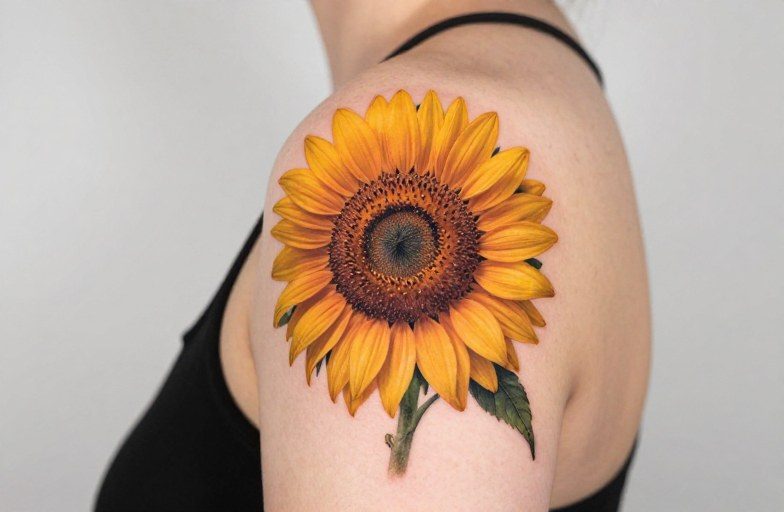
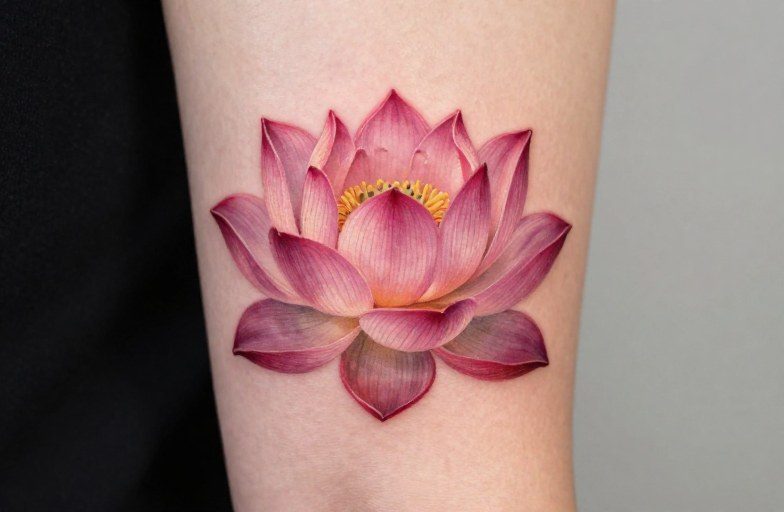
A lotus tattoo’s color does the heavy lifting on meaning. The flower itself stands for rising above difficulty, roots in mud, bloom on the surface, but the specific hue turns that general idea into something precise. A black lotus reads as rebellion or loss; a pink one points toward Buddhist enlightenment traditions. Before you commit, know what your color choice actually signals, because in tattooing, color isn’t decoration. It’s definition.
Religious & Spiritual Angles
The lotus carries serious weight across several traditions, and color codes shift between them.
Buddhist Color Symbolism
In Buddhist iconography, the lotus color hierarchy is specific. The pink lotus, often linked to the historical Buddha, represents the highest spiritual attainment. A red lotus typically signals the heart, love, and compassion, tied to Avalokiteshvara and other bodhisattva figures. White lotus tattoos point toward purity of mind and spiritual perfection, the “mental lotus” that rises unstained. Blue lotus imagery, commonly associated with wisdom and knowledge, connects to the victory of the spirit over the senses. If you’re drawn to this lineage, placement matters too: a pink lotus on the chest or upper back reads as devotional in a way that a wrist placement doesn’t.
Hindu Associations
Lakshmi, the goddess of wealth and prosperity, is often depicted seated on a pink lotus. Vishnu holds a lotus in one hand as a symbol of divine beauty and the unfolding of creation. A red lotus here connects to passion and fertility. The white lotus in Hindu contexts, called the puṇḍarīka, carries associations with beauty and non-attachment. Some trace the eight-petaled lotus to cosmic renewal and the cycles of existence. If you’re mixing Hindu and Buddhist symbolism, know the traditions: a lotus with eight petals means something different in each system.
Common Variations & Styles
Style changes how color reads, sometimes more than the hue itself.
Watercolor and Abstract Approaches
Watercolor lotus tattoos let color bleed beyond linework, creating a softer, less doctrinal feel. A blue-to-purple gradient suggests transition and ambiguity rather than fixed “wisdom.” The style works best on larger pieces, upper thigh, ribs, full shoulder, where the wash has room to breathe. On small scales, watercolor can muddy into a bruise-like blob as it ages. Solid color saturation holds up better over five to ten years than delicate washes.
Black and Grey with Color Accents
A black and grey lotus with a single colored petal or center creates focal emphasis. That one red petal against monochrome reads as a wound, a heart, a specific memory, much more narrative than an all-red bloom. This approach also ages gracefully; the black linework maintains structure even if the color accent fades slightly. Line weight matters here: too thin, and the grey wash swallows the detail; too bold, and the lotus looks cartoonish.
Personal & Modern Meanings
Contemporary tattooing has loosened traditional color codes, but not erased them.
Purple lotus tattoos, less common in classical iconography, have gained traction for their association with mysticism and esoteric spirituality. Some wearers choose purple to signal recovery from addiction, a modern overlay on the “rising from mud” core metaphor. Yellow or gold lotus designs often link to personal optimism rather than Buddhist joy; the color’s warmth translates across contexts. Green lotus tattoos remain rare, but when they appear, they usually connect to growth, new beginnings, or environmental consciousness.
The key modern shift is personalization over prescription. A blue lotus might mean “I liked the color” rather than “I studied Buddhist wisdom texts.” Both are valid, but the tattoo will be read through traditional lenses by viewers who know the symbolism. Decide if you’re comfortable with that friction.
Design Tips & Pairings
What you pair with the lotus changes its color meaning.
- Koi fish + lotus: A classic Japanese pairing. The koi’s color now enters the equation, black koi with a pink lotus creates tension between struggle and enlightenment that a standalone lotus doesn’t have.
- Mandala background: Geometric framing pushes the lotus toward spiritual territory regardless of color. A red lotus in a mandala reads more “sacred geometry” than “romantic love.”
- Script or lettering: Text anchors meaning. A white lotus with a name beneath it becomes memorial; the same lotus with a Sanskrit mantra reads as practice.
- Moon phases: Adds cyclical time. A blue lotus with waning moons suggests wisdom through loss; with waxing moons, growth and gathering knowledge.
Color saturation technique also affects longevity. Bright reds and yellows fade fastest in sun-exposed placements. Blues and greens tend to hold but can shift toward grey. Black linework around colored petals slows the visual bleed as the tattoo ages.
Mythology & Folklore
Beyond the major religions, the lotus appears in stories that color its meaning.
Egyptian Connections
The blue lotus, Nymphaea caerulea, actually a water lily despite the name, held significance in ancient Egyptian practice. Often linked to rebirth and the sun’s daily return, it appears in tomb imagery and creation narratives. The color blue here connects to the Nile and the primordial waters, not Buddhist wisdom. A blue lotus tattoo with Egyptian styling (profile eye, papyrus columns) carries entirely different cultural weight than the same color in a Japanese or Tibetan composition.
Chinese Traditions
The lotus, he or lian, sounds like words for harmony and continuity. Red lotus imagery connects to marriage and union. A white lotus paired with a fish forms a rebus for ” abundance year after year.” These meanings are specific and visual; the tattoo needs the paired element to activate the symbolism.
Best Placements
Color intensity varies by skin tone and location.
On medium to darker skin tones, lighter colors, white, pale pink, soft yellow, need to be built up with more saturation to read clearly. They can also appear ashy or muted. Bold blues, deep reds, and saturated purples pop more reliably. On lighter skin, the full pastel range opens up, but all tattoos fade faster on areas with frequent sun exposure.
Specific placements carry their own logic:
- Upper back/shoulder blade: Large canvas for detailed multi-color work. Protected from sun, so colors stay true longer. Visible when you choose, hidden when needed.
- Forearm: High visibility means the color statement is public. A red lotus here is a declaration; a black one, a shield. Expect faster fading without consistent sun protection.
- Ribs/side: Painful placement, but the stretch and compression of the area means simpler color fields work better than intricate petal gradients. Solid color blocks hold shape during body movement.
- Ankle/foot: Poor color retention due to skin thickness and friction from footwear. If you want a colored lotus here, expect touch-ups and consider darker, more saturated hues.
- Behind the ear: Small scale limits color complexity. A single-color lotus or black outline with one accent color works best. The placement’s intimacy suits personal rather than public symbolism.
Before You Decide
Color choice in a lotus tattoo isn’t just aesthetic preference, it’s communicative commitment. The same flower in red versus white sends different signals to viewers who know the traditions, and no amount of “but I mean it my own way” fully overrides centuries of established symbolism. That doesn’t mean you must follow the old codes. It means you should know them, then choose to align with, complicate, or reject them intentionally.
Look at healed photos, not just fresh work. Colors settle. Bright pink becomes dusty rose. Electric blue quiets to slate. Ask your artist specifically about how your chosen colors age on your skin tone, in your planned placement, with your sun exposure habits. The lotus rises from mud, that’s the metaphor. Your tattoo shouldn’t look like it’s sinking back into it after three years.
Frequently Asked Questions
Does a black lotus tattoo mean something negative?
Not inherently. Black lotus tattoos often signal rebellion, mourning, or rejection of traditional color symbolism. The absence of color becomes its own statement. Some wearers choose black for the graphic strength and cleaner aging, not darkness of meaning.
Will a white lotus tattoo stay visible on my skin?
White ink alone tends to fade into invisibility or heal with a yellowish cast, especially on darker skin tones. Most artists build white lotus tattoos with a pale grey or very light pink base to maintain structure, using pure white only for highlights.
Can I combine multiple lotus colors in one tattoo?
Yes, but with intention. A multi-colored lotus can represent stages of growth or blended traditions. Without clear design logic, though, it risks reading as decorative rather than meaningful. Discuss the color transitions with your artist, harsh jumps between hues look less natural than gradual shifts.
Is a blue lotus always spiritual or Buddhist?
No. The blue lotus carries Egyptian associations with rebirth and the Nile, and modern wearers often choose it simply for the color’s calm, cool aesthetic. Context, surrounding imagery, style, placement, determines which reading dominates.