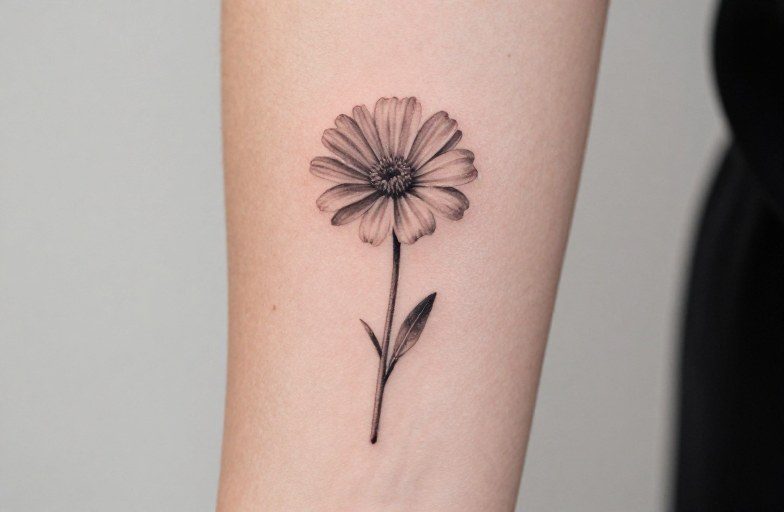
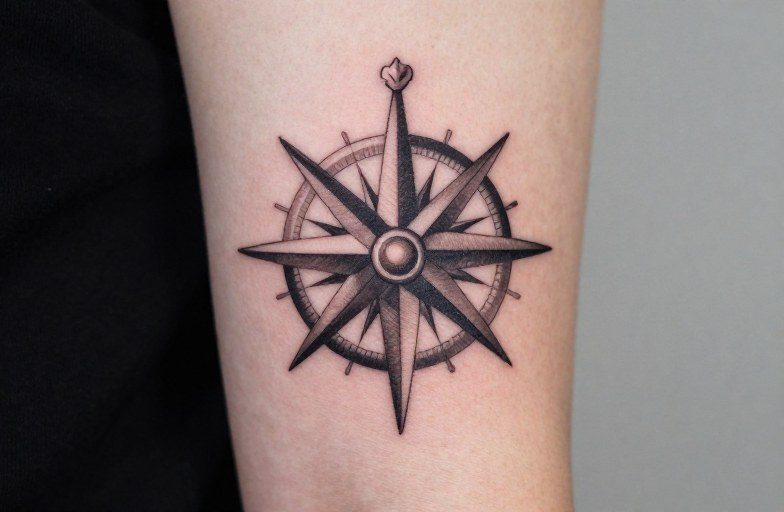
A compass flower tattoo joins two symbols that carry weight on their own: the compass, with its suggestions of direction and purpose, and the flower, with its associations of growth and change. Together they create something more layered than either element alone. The combination tends to attract people who want to mark a period of finding their way while still allowing themselves room to change. It works for those at actual crossroads, for those who have recently regained footing after feeling lost, and for anyone who wants a reminder that guidance and growth are not opposing forces.
How Artists Combine the Elements
The compass flower is not a fixed image. The way an artist merges the two symbols changes how the tattoo reads on skin and what it communicates to others.
Integrated and Adjacent Approaches
In integrated designs, petals replace or extend from compass points, or floral filigree fills the compass face itself. These read as one unified symbol, the navigation and the organic life inseparable. Adjacent placements keep the compass and flower as distinct but connected elements: a compass above a rose on a forearm, a flower whose stem wraps around a compass on a calf, two images held together by background shading or a shared banner. Integrated designs suit smaller areas like wrists, ankles, or behind the ear. Adjacent compositions need more space, usually the upper arm, thigh, or side torso, to avoid crowding.
Linework and Shading Decisions
Bold linework with minimal shading emphasizes the graphic, navigational quality of the compass. It reads clearly from distance and ages well. Heavy black shading and soft grey washes push the flower forward, making the botanical element dominate and softening the overall impression. Dotwork stippling on the compass face creates texture without adding bulk, which ages cleanly on hands or feet where ink tends to spread over time. Watercolor-style color splashes behind a black-and-grey compass flower add visual movement but require more frequent touch-ups, especially on high-friction areas like the outer arm or collarbone.
Style categories that commonly appear:
- Traditional/Americana: bold outlines, limited color palette, roses or nautical flowers paired with classic compass roses
- Neo-traditional: expanded color range, more illustrative detail, often peonies or chrysanthemums
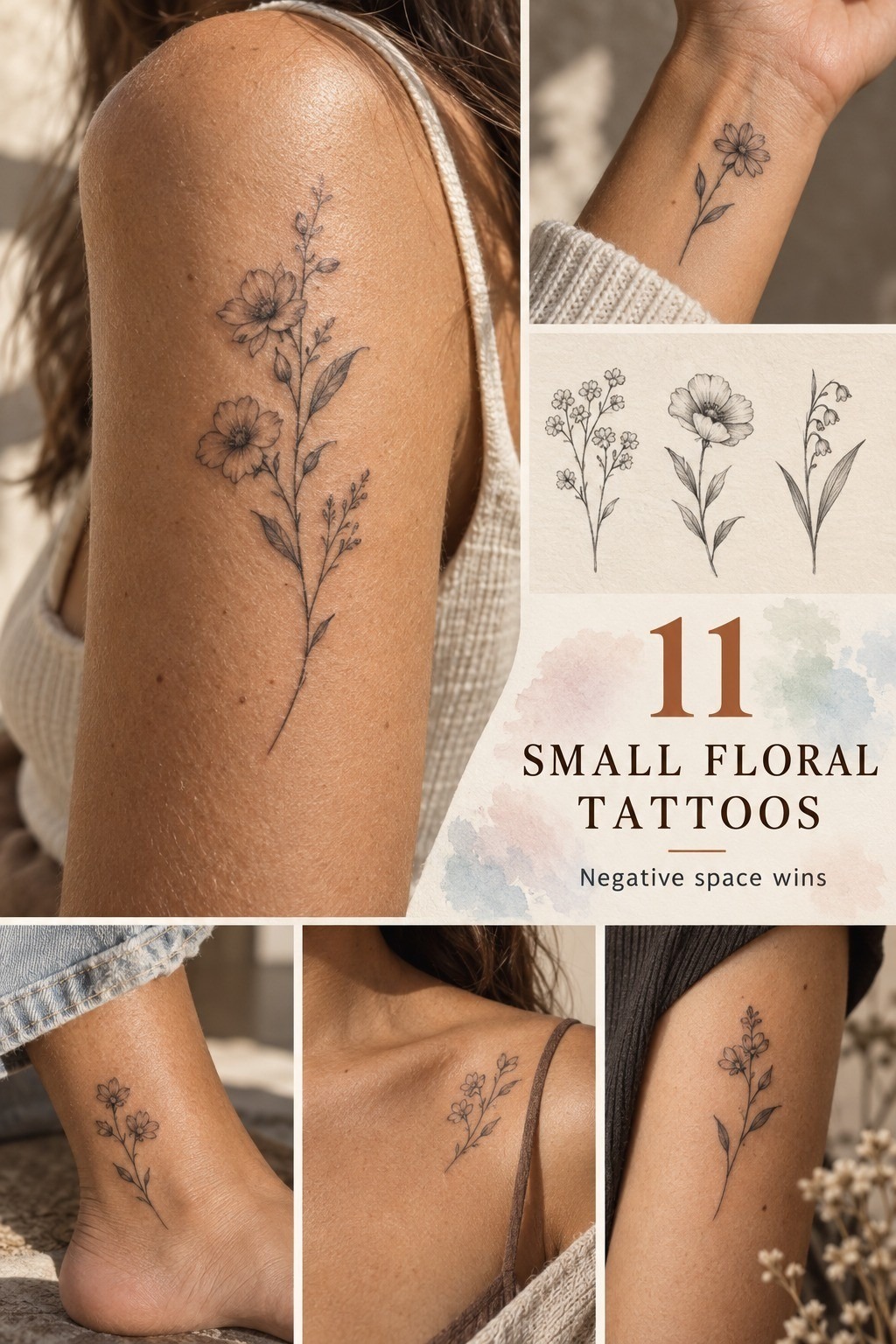
- Fine-line single needle: delicate, minimal, popular on collarbones and behind ears
- Geometric: compass rendered with precise angles, flower abstracted into mandala-like patterns
What the Compass Flower Stands Against
Understanding nearby symbols helps clarify what makes this combination specific and worth choosing over alternatives.
The Compass Alone
The traditional compass rose, sometimes called a wind rose, carries maritime heritage and the idea of finding true north. Without the flower, it skews more utilitarian, more tied to travel and adventure as masculine-coded pursuits. Adding the flower introduces organic life, softens the mechanical edge, and shifts the meaning from “where I am headed” to “how I am becoming.” The compass alone is about arrival and navigation. The compass flower is about navigation while still growing.
Flowers with Other Symbols
Flowers paired with maps, coordinates, or anchors share symbolic territory with the compass flower but differ in emphasis. Coordinates with blooms specify a place of significance: birth, loss, love, a fixed point in space. Anchors with flowers suggest staying grounded while growing, stability as the precondition for change. The compass flower differs by emphasizing active, ongoing navigation rather than fixed location or stability. It is about the journey as process, not the destination pinned down.
Other combinations that sit nearby:
- Clock and flower: mortality, carpe diem, time’s passage
- Arrow and flower: forward movement, specific goals
- Butterfly and compass: transformation with direction
Spiritual Readings
The compass flower rarely carries formal religious doctrine, but spiritual interpretations attach naturally to its two elements.
Guidance and Providence
For some, the compass represents divine guidance, God as true north. The flower becomes the soul’s response, blooming under that direction. This interpretation often appears in recovery communities, where “finding north” means finding a higher power or restored moral compass. Crosses sometimes replace the compass needle, or a small ichthys hides in the petals, though these edge the design toward explicitly Christian territory and away from the broader appeal of the basic combination.
Earth-Based and Pagan Interpretations
The compass quarters map onto elemental directions: north and earth, south and fire, east and air, west and water. A flower at center or emerging from each point can represent the fifth element, spirit, or the living world’s interconnection. These designs often use specific flowers with traditional associations: mugwort for protection, lavender for peace, vervain depending on the practitioner’s path. The compass flower here functions as a personal talisman rather than a statement of faith to onlookers. Its meaning is held privately, activated by the wearer’s intention.
Color and Black and Grey
The choice between color and monochrome changes both immediate impact and how the tattoo ages over decades.
Color: Symbolism and Practical Demands
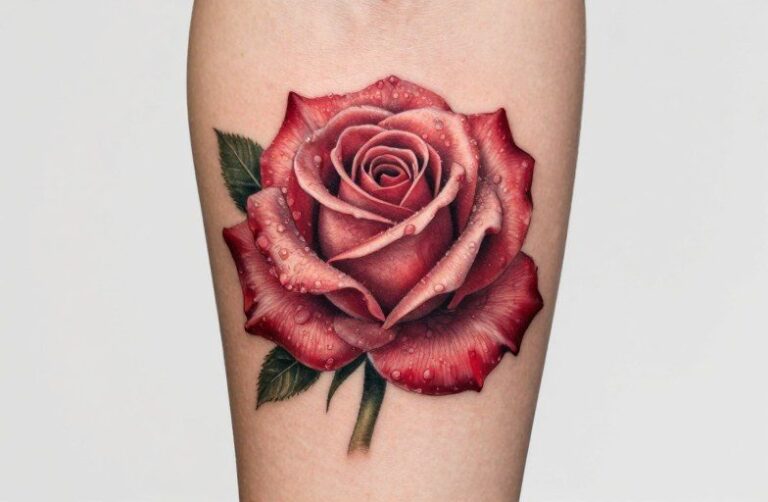
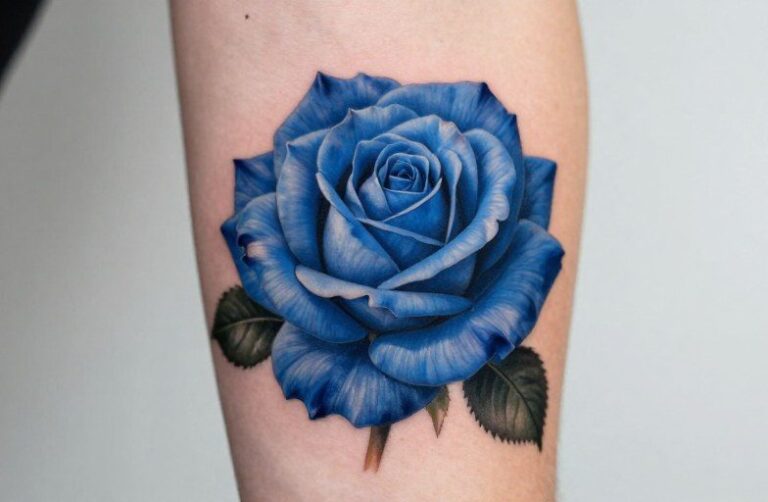
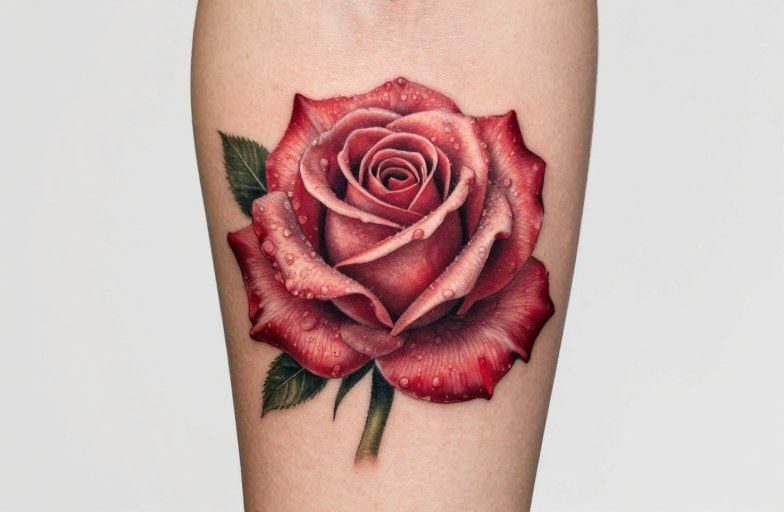
Red roses with gold compass hardware read romantic, passionate, vintage. Soft pink cherry blossoms with silver-grey compass faces suggest transience, spring, Japanese influence. Deep purple irises with bronze tones feel regal, tied to wisdom and valued since antiquity. Color demands larger scale to prevent muddiness as pigments settle and fade over years. Yellows and light greens fade fastest; deep blues and reds hold longest. On darker skin tones, color needs to be bold and saturated to remain visible; pastels often disappear into healing and are not recommended.
Black and Grey: Longevity and Mood
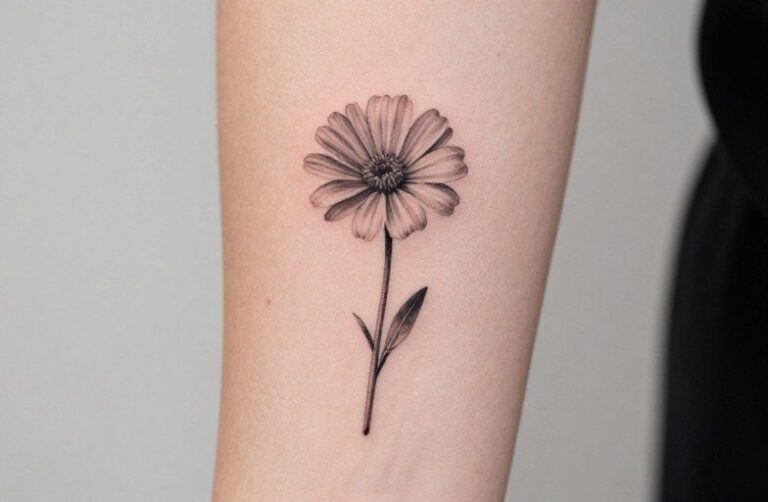
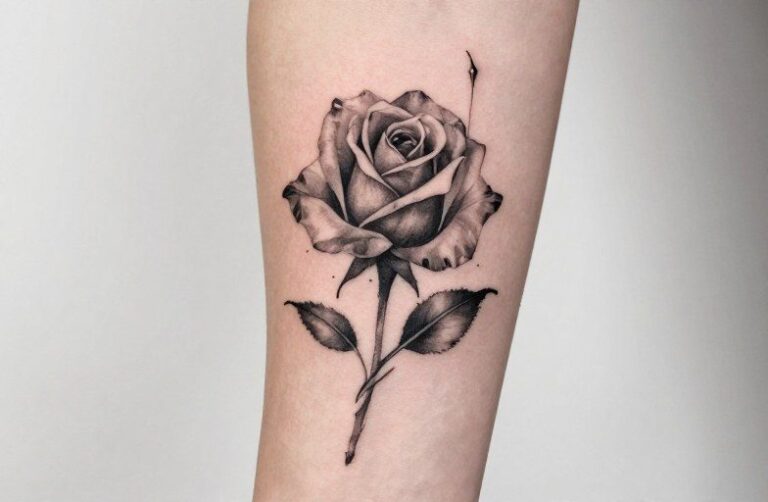
Black and grey relies on contrast between solid blacks, soft greys, and skin tone. A compass flower in this palette ages gracefully because linework carries the design even as shading softens and spreads slightly. The flower’s form stays readable through contrast rather than hue. This approach suits smaller sizes and detailed areas like fingers, where color would blur into illegibility within a few years. The mood shifts too: more somber, more timeless, less decorative. It suits people who want the symbol without the ornament.
Who This Tattoo Serves
Certain life circumstances and personality types gravitate toward this specific combination, though any generalization should be held lightly.
Transition and Recovery
People emerging from major life shifts, divorce, career changes, sobriety, geographic relocation, often choose compass flowers. The compass acknowledges they needed to find direction; the flower acknowledges they are still growing, not merely surviving. These clients typically want the design somewhere they can see it: forearm, wrist, or upper chest. The visibility matters because the tattoo functions as a daily reminder, not a private secret. It is a tool as much as an ornament.
Travelers and the Mobile
Those who move frequently, work remotely, or identify as nomads sometimes reject the compass as too settled, too fixed. But paired with a flower, it becomes about finding direction within motion rather than toward a static point. Wildflowers work particularly well here: poppies, lupines, fireweed, species that colonize disturbed ground and move with conditions. These designs sometimes incorporate coordinates of meaningful places into the compass face or hidden in petals, but the overall message is about navigation through change rather than arrival.
History and Cultural Background
Neither compasses nor flowers are new to skin, but their combination is a relatively modern development without deep traditional roots.
Compass Imagery in Tattooing
Nautical tattooing, often linked to 18th-century European sailors, popularized the compass as protection against getting lost at sea. The compass rose specifically appeared in tattoo flash by the early 20th century, associated with artists like Sailor Jerry and his contemporaries, though the exact lineage is debated among historians. These were practical marks, functional amulets for working people. The compass as pure personal metaphor, separated from maritime labor, gained traction in the 1990s and 2000s as tattooing broadened beyond military and sailor demographics into mainstream practice.
Botanical Traditions and the Modern Pairing
Flower tattoos carry Victorian language-of-flowers symbolism, Japanese irezumi seasonal references, and various folk traditions. The specific pairing with compasses does not trace to any single cultural origin. It emerged organically as tattoo clients began requesting custom combinations that reflected personal narratives rather than selecting from flash sheets. Some trace the compass flower’s popularity to the mid-2000s rise of image-sharing platforms, where visual mashups spread rapidly. Others see it as part of a broader trend toward symbolic hybrid tattoos that began in the 1990s custom tattoo movement. The combination works because both symbols are immediately legible across cultures. No one needs specialized knowledge to understand direction and growth.
Placement and Practical Considerations
Where you place the tattoo affects both its visibility and how it ages.
High-Visibility Sites
Forearm, wrist, and upper chest placements keep the tattoo where you can see it daily. This suits the reminder function many seek from the compass flower. These areas also expose the tattoo to sun, which fades pigment over time. Sunscreen becomes part of maintenance.
Protected Areas
Upper arm, thigh, ribcage, and back offer less sun exposure and slower fading. The tradeoff is reduced visibility to the wearer. These sites suit larger, more detailed compositions and adjacent designs that need space to breathe. They also tend to hurt less than bone-adjacent placements.
Aging and Touch-Ups
All tattoos soften over time. Linework spreads slightly, shading lightens, color dulls. The compass flower holds up well because both elements are structurally simple: a circle with radiating lines, a blossom with recognizable silhouette. Avoid excessive fine detail in small sizes, as it will blur together. Plan for a touch-up at ten to fifteen years, sooner if color was used or if the tattoo sees heavy sun.
What to Remember
The compass flower tattoo works because it holds two qualities together that many people want in their lives: structure and softness, direction and openness, purpose and the willingness to change. It does not demand a single interpretation. Travelers, survivors, seekers, gardeners, navigators all find their own reflection in it. If you are considering one, the most important choice is not the exact flower or compass style. It is whether the combination genuinely represents your own tension between knowing where you are going and allowing yourself to grow along the way. A good artist will help you find the visual language for that tension. The best ones will tell you if your idea needs simplifying, not complicating, to last.
Frequently Asked Questions
What flowers work best with compass designs?
Roses and peonies are most common due to their recognizable silhouettes and strong cultural associations. Wildflowers like poppies or lupines suit nomadic or nature-focused interpretations. Cherry blossoms suggest transience. The best choice is one that carries personal meaning and will remain visually readable as the tattoo ages.
Does a compass flower tattoo have to be large?
No, but integrated designs work better at small sizes than adjacent ones. Fine-line single needle approaches can achieve delicacy on wrists or behind ears. Color generally needs more space to prevent muddiness over time. Discuss minimum readable size with your artist based on their linework precision.
How do I choose between color and black and grey?
Consider your skin tone, pain tolerance for longer sessions, willingness to get touch-ups, and the mood you want. Black and grey ages more gracefully and suits smaller sizes. Color has more immediate impact but fades faster, especially yellows and light greens. On darker skin, bold saturated color works better than pastels.
Is there a specific cultural meaning I should know about?
The compass flower is a modern combination without deep roots in any single tradition. Neither element is culturally restricted, the compass rose is global maritime heritage, flower symbolism crosses many cultures. The meaning you assign is the primary one. Avoid claiming tribal or indigenous significance that does not belong to you.