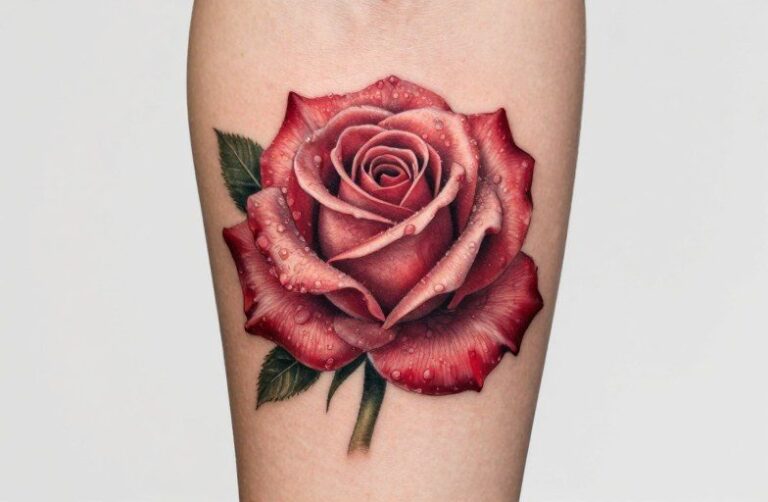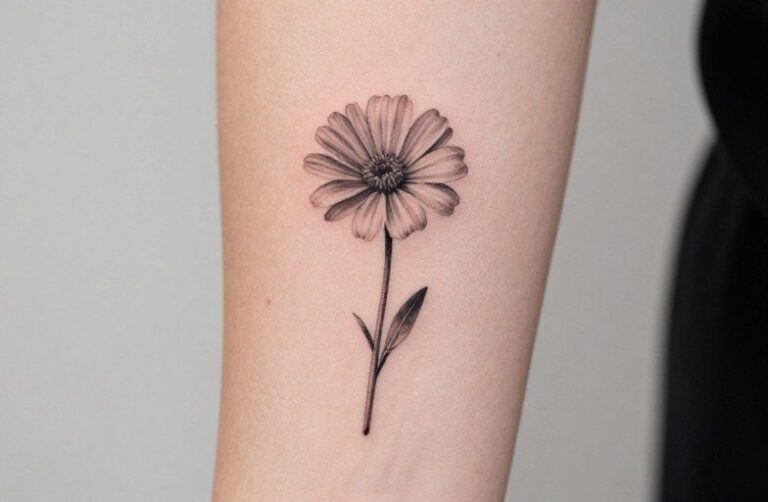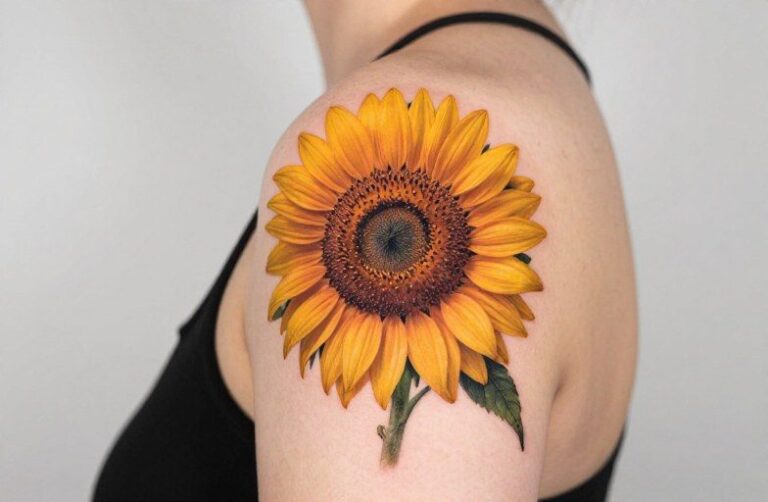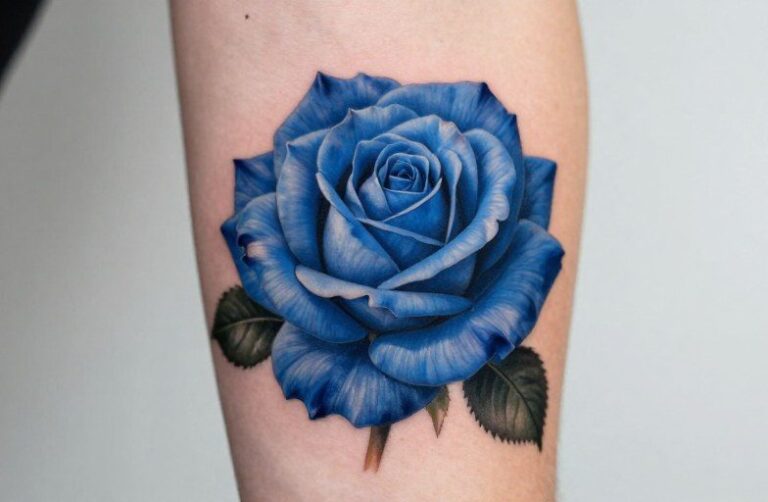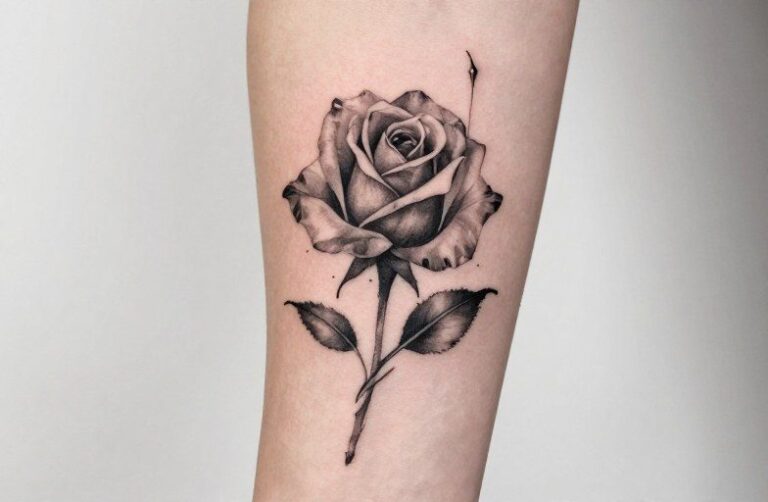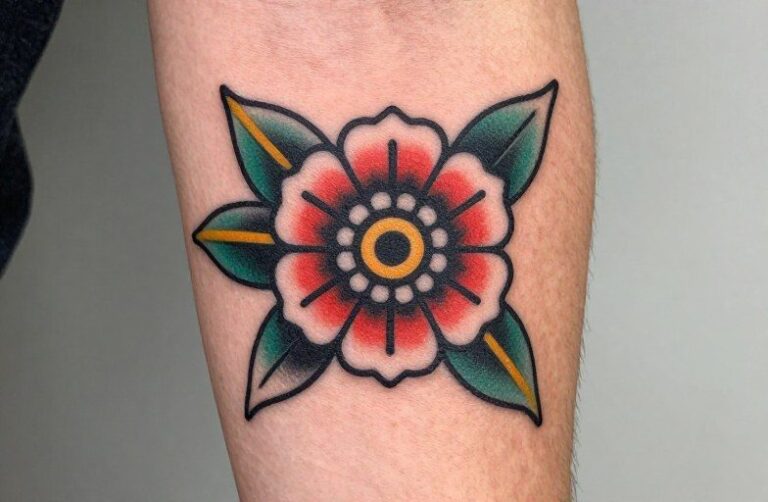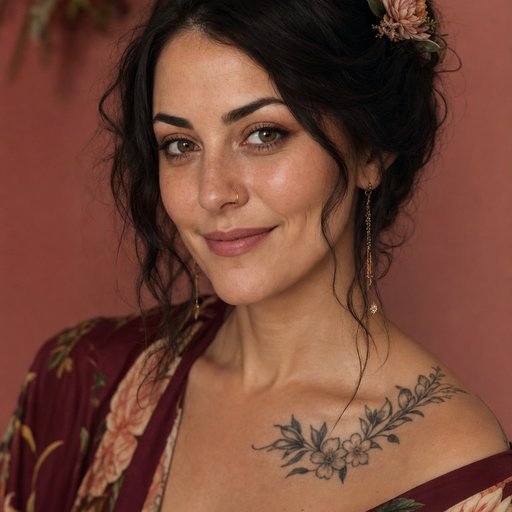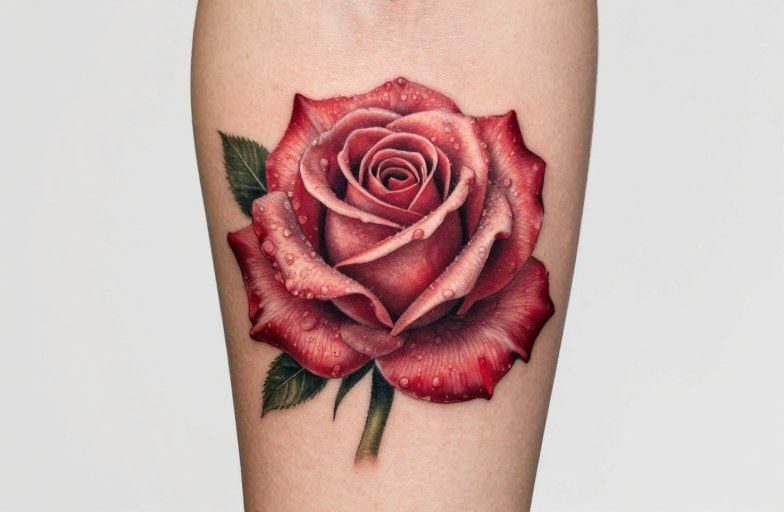
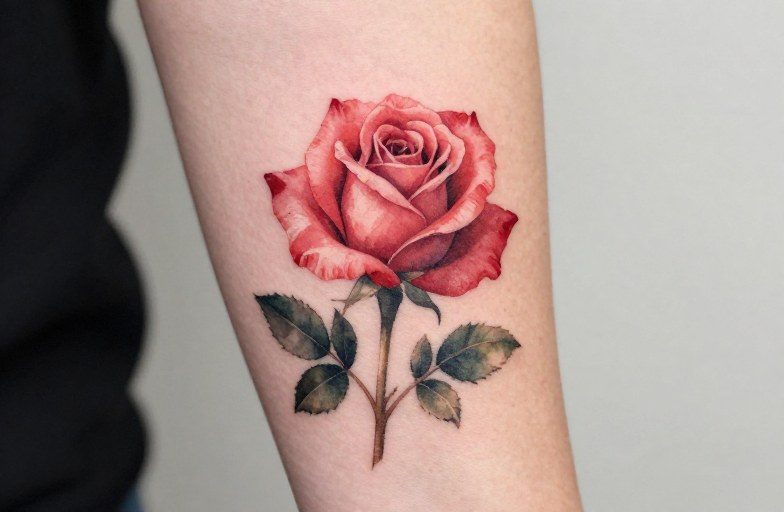
A watercolour rose tattoo typically symbolizes love and beauty rendered through a lens of emotional fluidity and personal expression. The splashy, bleeding edges replace hard outlines with something softer, less about declaring permanence and more about capturing a feeling in motion. The rose itself carries centuries of romantic and symbolic weight, while the watercolour technique signals a willingness to let that meaning breathe, blur, and evolve.
History & Cultural Roots
From Botanical to Body Art
Roses entered tattoo culture through sailor traditions and European folk art, where they stood for love left behind or the hope of return. The flower itself has been cultivated for roughly 5,000 years, with the Chinese, Persian, and Roman empires all prizing it for gardens and ceremonial use. In tattooing, the rose became shorthand for devotion, beauty balanced by thorns, and the bittersweet nature of attachment.
The watercolour technique applied to tattoos emerged more recently, as artists began translating fine-art painting methods into skin work during the 2000s and early 2010s. Unlike traditional tattoo styles that rely on bold black outlines and saturated color packing, this approach mimics the transparent washes and bleeding pigments of actual watercolour painting. Some trace it to artists experimenting with color realism who wanted to escape the graphic, comic-influenced look that dominated Western tattooing for decades.
East Asian Brushwork Connections
The aesthetic often linked to watercolour tattooing shares DNA with Chinese and Japanese ink wash painting, where controlled chaos and negative space carry as much meaning as the subject itself. In those traditions, a rose or peony rendered with bleeding edges suggests transience, beauty that cannot be held. That philosophical layer gets carried over, consciously or not, when someone chooses this style for their skin.
How It Ages on Skin
The Fading Reality
Watercolour tattoos age differently than traditional work, and anyone considering one should understand the trade-offs. Without black outlines to contain the pigment, the soft edges blur faster. On high-friction areas like the inner forearm, wrist, or ankle, those delicate color washes can spread or fade within five to eight years. The effect is sometimes compared to a watercolor painting left in rain, still recognizable, but softened to the point of abstraction.
- Placement on the upper arm, shoulder blade, or ribs (protected from sun and friction) preserves detail longer
- Yellows and pale pinks fade fastest; deeper magentas and crimsons hold better
- Touch-ups every few years keep the piece bold, though each pass deposits more ink and can muddy the original transparency
- Black “spatter” or “splatter” accents sometimes added to watercolour roses actually help anchor the composition and slow visual deterioration
Skin Tone Considerations
The translucent nature of watercolour technique means underlying skin tone becomes part of the palette. On darker skin, the bright, airy washes that look striking on pale complexions can appear muddy or disappear entirely. Experienced artists adjust by using more saturated pigments, deeper reds, and strategic negative space rather than relying on pale washes. This is not a limitation of the skin but a parameter of the technique, one that skilled artists plan for from the stencil stage.
Symbolism & Core Meaning
The rose carries layered symbolism that shifts with color, number of blooms, and presence of thorns. A watercolour treatment adds another dimension: the deliberate choice of impermanence as aesthetic.
- Red roses: Romantic love, desire, courage, classic and unambiguous
- Pink roses: Grace, admiration, gentler affection than the red’s intensity
- White roses: Purity, new beginnings, sometimes memorial or spiritual connection
- Yellow roses: Friendship, joy, occasionally jealousy depending on cultural context
- Black or dark crimson roses: Grief, farewell, rebellion against the flower’s conventional sweetness
In watercolour execution, the bleeding edges can suggest memory dissolving, emotion that cannot be contained, or beauty accepted as fleeting. The thorns, when included, become more striking against soft color, pain made visible but not graphic. Some choose this style specifically to reject the “toughness” associated with traditional tattooing, embracing vulnerability as the point.
Personal & Modern Meanings
Gender and the Watercolour Rose
Historically, rose tattoos were coded masculine in Western sailor culture and feminine in Victorian flower-language traditions. The watercolour style has complicated that binary. Men now request these pieces without the old stigma, often pairing roses with geometric frames, skulls, or script to hybridize softness with edge. Women have used the style to reclaim the rose from overly sentimental or “girly” associations, choosing aggressive color palettes or fragmented compositions.
Commemoration and Transformation
Many who choose watercolour roses are marking transitions rather than static states. The dissolving edges suit memorial work, grief that doesn’t resolve cleanly. They suit recovery narratives, where the rose might emerge from abstract color rather than stem and leaf. The technique’s relative youth as a tattoo style means it carries less accumulated cultural baggage than traditional roses, allowing more personal interpretation.
Placement choices often reinforce this: behind the ear for intimacy, across the shoulder for visibility controlled by clothing, on the hip or thigh for private significance. The watercolour rose works as a secret or a declaration depending entirely on where it sits.
Mythology & Folklore
Greek and Roman Threads
The rose is often linked to Aphrodite and Venus, goddesses of love, though the specific connection to watercolour technique has no ancient parallel. In Greek myth, the rose’s red color came from Aphrodite’s blood pricked by thorns as she rushed to her wounded lover Adonis. That origin story, beauty born from pain, color from sacrifice, resonates with those who choose thorned roses in bleeding pigment.
Roman banquets featured roses as symbols of secrecy, giving us the term “sub rosa” for confidential matters. A watercolour rose, with its edges that seem to dissolve into the skin, literalizes that hidden quality.
Christian and Medieval Layers
The rose became associated with the Virgin Mary in medieval Europe, often called the “rose without thorns” for her sinlessness. Counter-reformation and later Protestant imagery sometimes reversed this, emphasizing thorns as the necessary cost of earthly love. A watercolour rose that includes or excludes thorns quietly signals where the wearer sits in that symbolic spectrum, redemption or realism, idealization or acceptance of pain.
Common Variations & Styles
Artists execute watercolour roses along a spectrum from tightly controlled to near-abstract.
- Botanical watercolor: Detailed petals with accurate anatomy, color bleeding only at the outer edges; closest to scientific illustration
- Splatter/abstract: Minimal recognizable rose form, heavy on pigment splashes and negative space; risks becoming generic if the artist lacks intention
- Watercolour with linework: Thin, often single-needle outlines defining the rose while color bleeds beyond them; offers slightly better aging than pure wash
- Geometric watercolor: Rose contained within or emerging from geometric frames, circles, triangles, mandala fragments, creating tension between organic and structured
- Trash polka influence: Bold black graphic elements (sometimes photorealistic fragments, sometimes lettering) paired with chaotic red or pink watercolour; high contrast, visually aggressive
Color choices beyond naturalistic reds have expanded: teal roses, ultraviolet petals, grayscale with single accent colors. Each variation shifts the symbolic register. A blue watercolour rose reads as melancholy or impossible love; an orange one as fierce, almost aggressive vitality.
Final Thoughts
The watercolour rose tattoo occupies a specific niche: it carries the rose’s accumulated cultural weight but refuses its traditional presentation. That refusal is itself meaningful. It suggests someone who wants the symbolism without the hardness, the romance without the cliché, or perhaps the beauty with full acknowledgment that it will fade. Choosing this style means accepting that the tattoo will age visibly, will soften, will become something slightly different than what was inked. For some, that’s a flaw to mitigate through careful placement and maintenance. For others, it’s the entire point.
Frequently Asked Questions
Do watercolour rose tattoos need more touch-ups than traditional roses?
Yes, generally. Without black outlines to hold pigment in place, the soft edges blur and fade faster. Plan for touch-ups every 5-7 years, sooner on high-friction areas like wrists or ankles.
Can watercolour roses be done entirely without black ink?
Technically yes, but most experienced artists add at least minimal black spatter or fine linework to anchor the composition. Pure color washes tend to age into unrecognizable blurs within a decade.
What’s the best placement to preserve a watercolour rose tattoo?
Upper arm, shoulder blade, ribs, or upper back, areas with less sun exposure and friction. Avoid hands, feet, inner wrists, and anywhere that rubs against clothing regularly.
Does a watercolour rose cost more than a traditional rose tattoo?
Usually, yes. The technique requires advanced color blending skills and often takes longer to execute. Expect to pay a premium for an artist who specializes in this style and has a portfolio proving they can make it last.