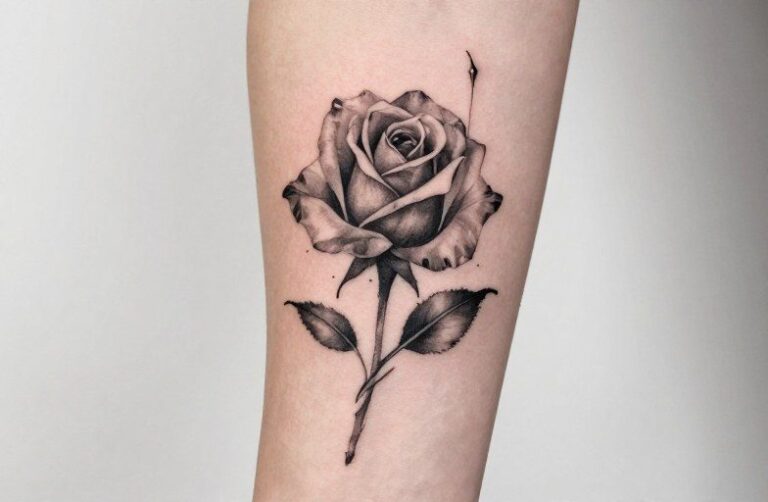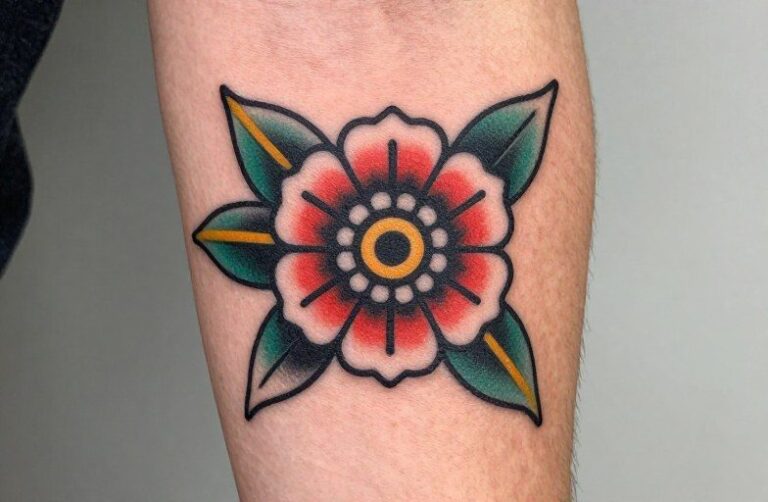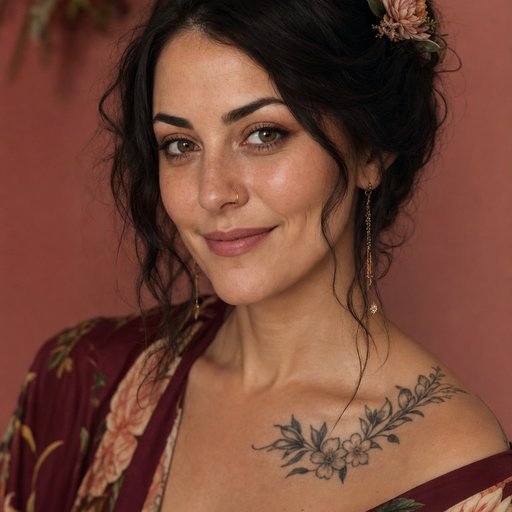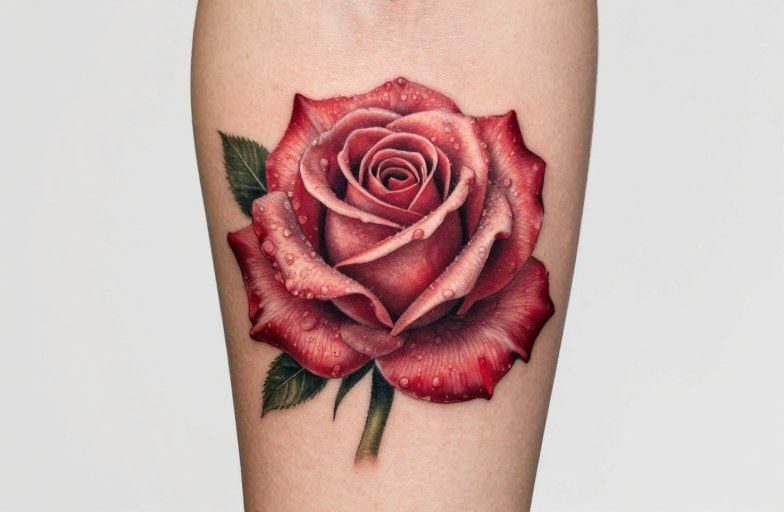
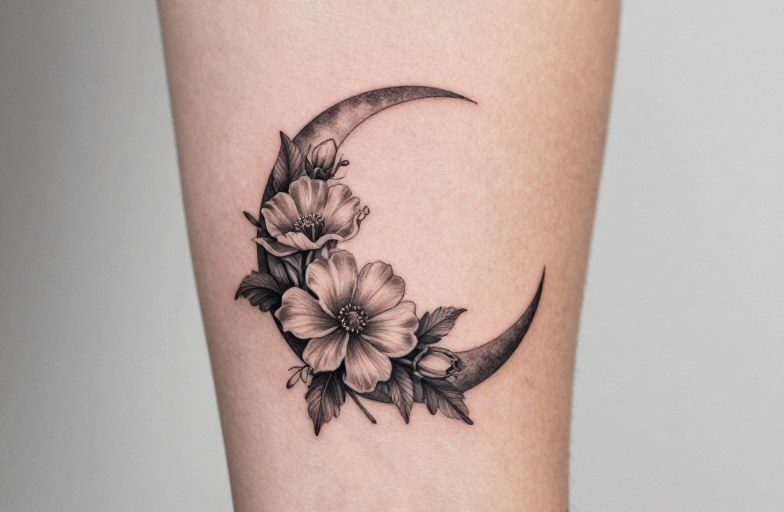
A crescent moon with flowers tattoo combines lunar cycles with botanical growth to represent transformation, renewal, and the beauty of impermanence. The crescent itself marks transition, waxing toward fullness or waning toward release, while flowers ground that celestial motion in organic, earthly life. Together, they speak to people who want their skin to carry something about becoming, not being finished.
Personal & Modern Meanings
Feminine Energy & Intuition
The crescent moon has long carried associations with feminine cycles, creativity, and intuitive knowledge. Add flowers, roses, peonies, wildflowers, lotuses, and the design amplifies that connection without locking it to any single definition. Some choose this pairing after major life shifts: leaving a relationship, recovering from illness, becoming a parent, or simply recognizing their own capacity for reinvention. The moon doesn’t demand constant brightness; the flower doesn’t bloom year-round. That mutual acceptance of phases appeals to people who reject static, one-note symbolism.
Grief & Remembrance
Not every crescent moon with flowers celebrates forward motion. The waning crescent paired with wilting or falling petals can honor loss without the permanence of a tombstone aesthetic. Dried flowers, moonflowers that open only at night, or specific blooms tied to a person’s memory create space for mourning that still acknowledges natural cycles. This reading has grown more visible in recent years as tattoo clients seek imagery that holds contradiction, beauty and sadness coexisting without resolution.
Similar & Related Symbols
The crescent moon rarely stands alone in tattoo culture, and understanding its neighbors helps clarify what this specific pairing offers.
- Full moon with flowers: Completion, peak energy, less emphasis on process or becoming
- Crescent with stars: Guidance, navigation, cosmic scale, more detached from earthly cycles
- Floral mandala or sun: Radiating energy, outward expression; the moon turns that inward
- Snake and moon: Shedding, transformation with sharper edges; flowers soften that same theme
- Moth to moon/flame: Obsession, fatal attraction; the flower-moon pairing lacks that destructive charge
What distinguishes the crescent-flower combination is its gentleness. Where a snake-moon design might signal painful necessary change, this pairing tends toward organic, gradual growth. It suits people who want their transformation narrative to feel earned rather than traumatic.
Who Chooses This Tattoo
Placement Patterns
Behind the ear and along the collarbone rank among the most requested placements for smaller versions, letting the curve of the crescent follow natural body lines. Ribs and hips accommodate larger compositions with trailing vines or multiple flower varieties. The upper arm and thigh offer flat planes where fine linework stays crisp, while the forearm demands simpler designs since the surface twists and flexes. People choosing this motif often want visibility with softness, something that reads as decorative first, symbolic second, to casual observers.
Style Preferences
Fine line and single-needle work dominate this subject matter, though American traditional bold outlines with limited color palettes have their practitioners too. The illustrative middle ground, clear outlines with soft shading, botanical accuracy with stylized moon, probably represents the largest share. Watercolor backgrounds behind a defined crescent and flowers trended heavily in the mid-2010s and now read dated; current preferences lean toward either disciplined minimalism or dense, almost scientific botanical detail.
Design Tips & Pairings
Specific flowers carry their own vocabulary that modifies the moon’s meaning. Night-blooming jasmine or moonflower literally tie to lunar cycles. Poppies introduce sleep, dreams, or commemoration. Cherry blossoms compress the beauty-brevity equation into a single recognizable image. Peonies suggest prosperity and honor in East Asian contexts, while wildflowers reject cultivation and predictability.
Composition matters enormously. A crescent cradling a single flower reads protective, almost maternal. Flowers climbing the moon’s horn suggest aspiration, reaching. Scattered petals across or below the crescent imply passage, falling away. The moon’s orientation, facing right or left, cupped upward or downward, changes the emotional register more than most clients initially realize.
- Line weight: Thin crescent with bold flowers creates visual hierarchy; matched weight flattens the image
- Negative space: Leaving the moon’s interior empty versus filling it with stippled texture or gradient
- Stem handling: Delicate connecting vines versus flowers floating independently near the moon
- Scale: Tiny designs (under 2 inches) lose petal detail; oversized moons (6+ inches) can carry full botanical portraits
Color vs Black and Grey
Color Realities
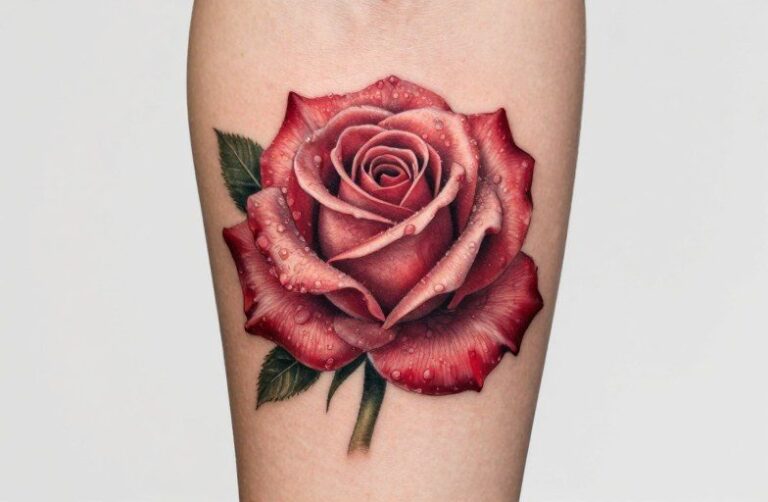
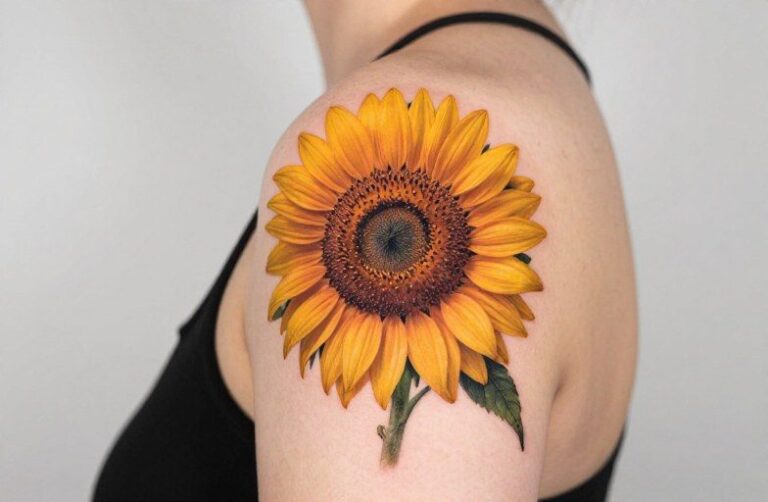
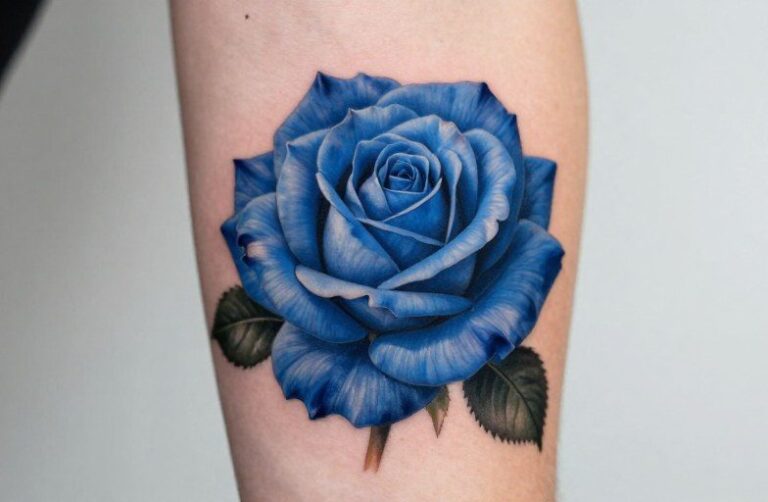
Soft pinks, muted mauves, and dusty blues dominate color versions of this motif, though saturated traditional palettes hold up better over decades. Pastel work photographs beautifully fresh but requires touch-ups within 3-5 years as lighter pigments fade fastest. Yellows and pale greens particularly struggle; deep burgundy, forest green, and navy maintain longer. Color allows specific flower identification, a red rose versus a pink peony, but demands more skin real estate to read clearly.
Black and Grey Advantages
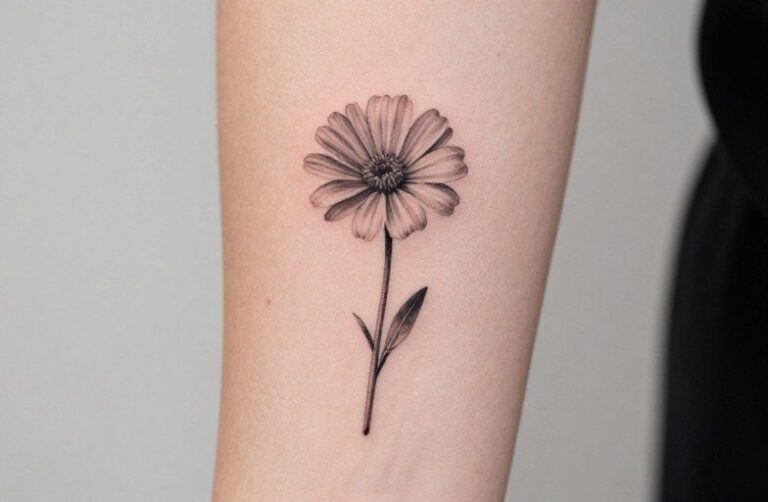
Black and grey execution emphasizes form over hue, letting the moon’s curve and petal structure carry the design. Healing tends to be more predictable without color variables. Aging reads more gracefully; a grey-wash flower softens naturally where a once-vivid pink can muddy to an indeterminate flesh tone. For people whose professional environments discourage visible color, black and grey offers compromise without sacrificing the image’s emotional content. The trade-off is specificity: without color, a rose and a peony can become interchangeable to the untrained eye.
How It Ages on Skin
Linework spread affects this design acutely because the crescent’s thin horn points are vulnerable. A line that starts at 0.3mm may double in perceived width over ten years, blunting what was meant to be delicate. Flowers with dense petal layering suffer similarly; inner details merge into grey blobs if initially too fine or too close together.
Placement on high-friction areas, wrists, fingers, sides of feet, accelerates fading and line spread. The rib cage and upper thigh, protected from sun and abrasion, preserve detail longest. Sunscreen application matters more for color versions but benefits black and grey too; UV exposure degrades ink particles regardless of pigment.
Touch-up timing: most crescent moon with flowers tattoos benefit from a refresh at 7-10 years, earlier if color was light or if the original artist worked extremely fine. Waiting until the image looks significantly degraded makes correction harder; subtle reinforcement every few years maintains crispness with less trauma to the skin.
Final Word
The crescent moon with flowers endures because it adapts without emptying out. Same image, worn by different people, carries genuinely different weight, grief, hope, cyclical self-acceptance, quiet rebellion against constant productivity. The moon doesn’t judge which phase you’re in. The flower doesn’t apologize for wilting. That permission to be incomplete, to be in process, explains why this design keeps finding new skin after decades of popularity. Choose your specific flower, your moon’s direction, your line weight deliberately; the template is common, but your version doesn’t have to be.
Frequently Asked Questions
Does a crescent moon with flowers always mean the same thing for everyone?
No. The combination holds flexible symbolism around change and growth, but specific flower choices, moon orientation, and personal context create individual meaning. A moonflower carries different weight than a rose, and a waning versus waxing crescent suggests different emotional directions.
What’s the best size for keeping detail in a flower and moon tattoo?
Minimum 2.5-3 inches for any hope of petal definition, with 4-5 inches allowing real botanical specificity. Smaller than 2 inches forces the artist to simplify heavily, and the moon’s points become vulnerable to blurring as lines age.
Can this design work for someone who doesn’t want a feminine-looking tattoo?
Yes, though it requires deliberate stylistic choices. Geometric framing, heavier black fill, or pairing with non-floral elements like stone texture or architectural lines can shift the register. The core motif does carry feminine associations, but execution matters enormously.
How painful is the rib placement compared to other spots for this design?
Ribs rank among the more painful placements due to thin skin over bone and the constant movement of breathing during the session. The flat surface preserves detail beautifully, but expect a harder sit than an arm or thigh. Most people break a rib piece into multiple sessions.