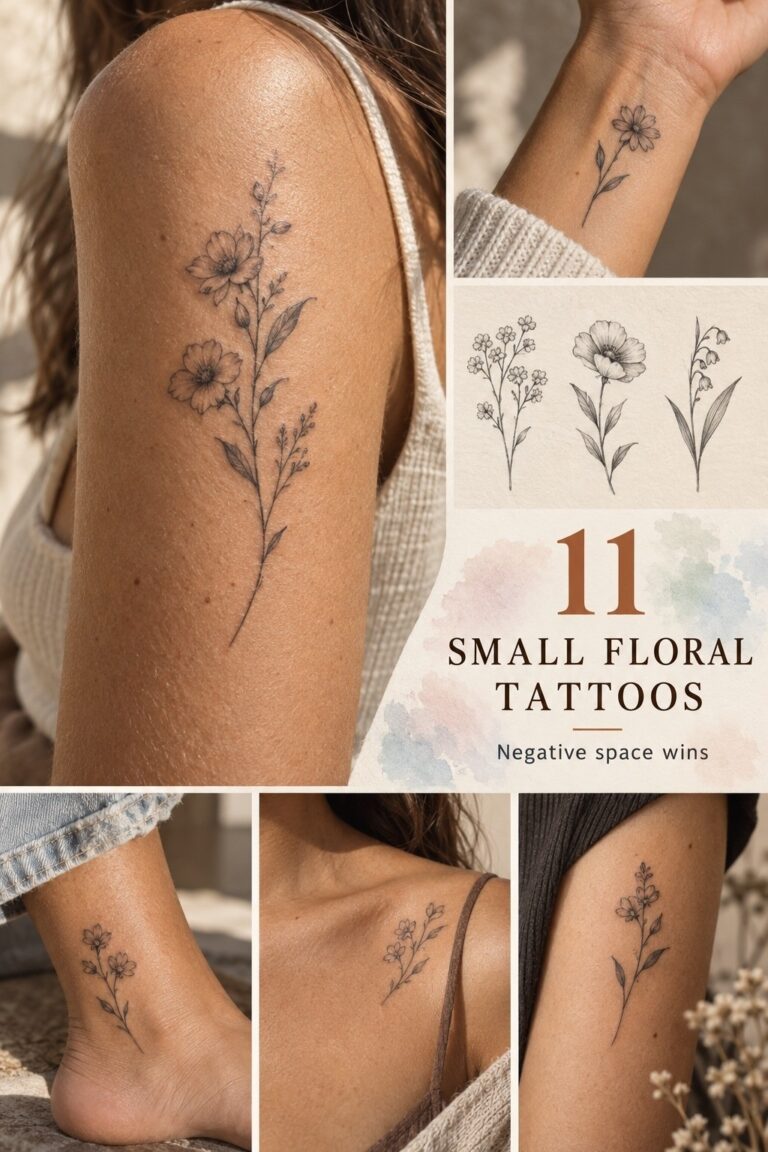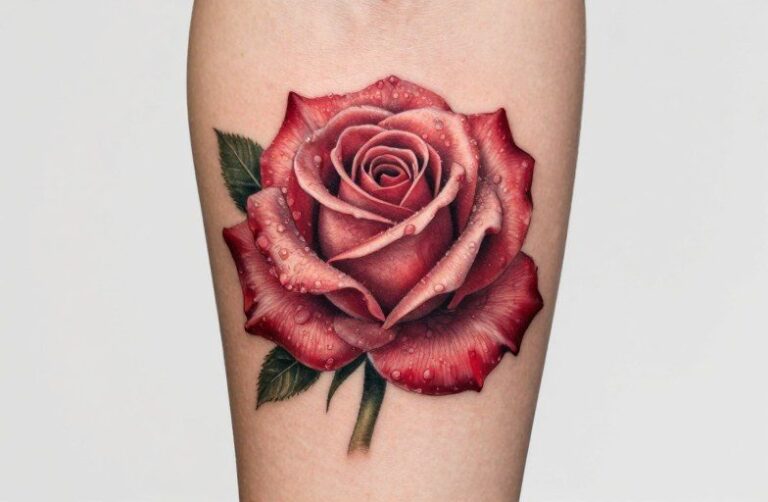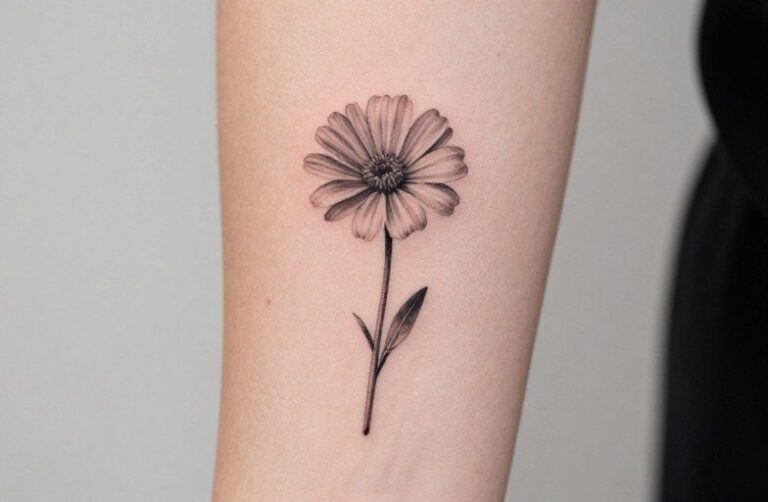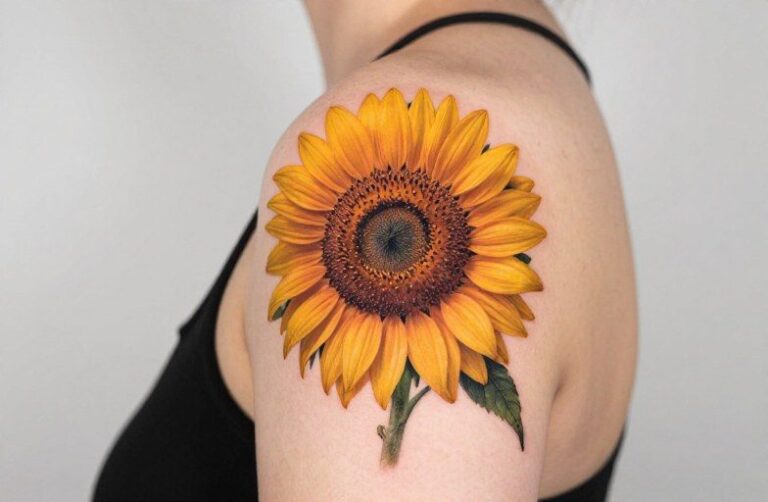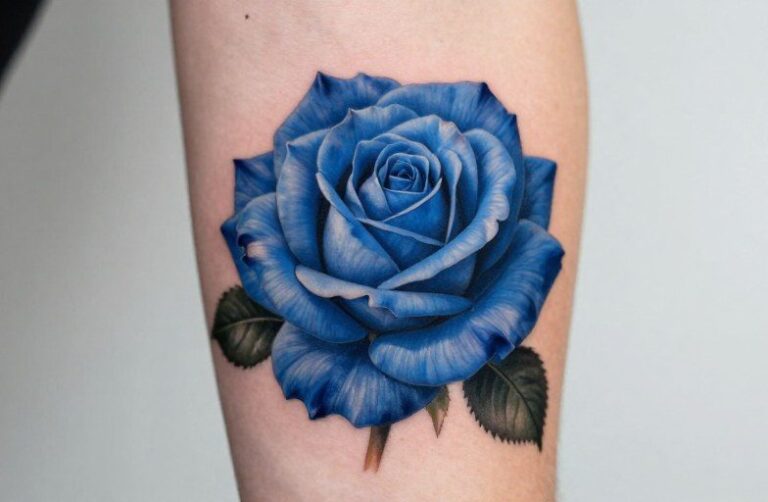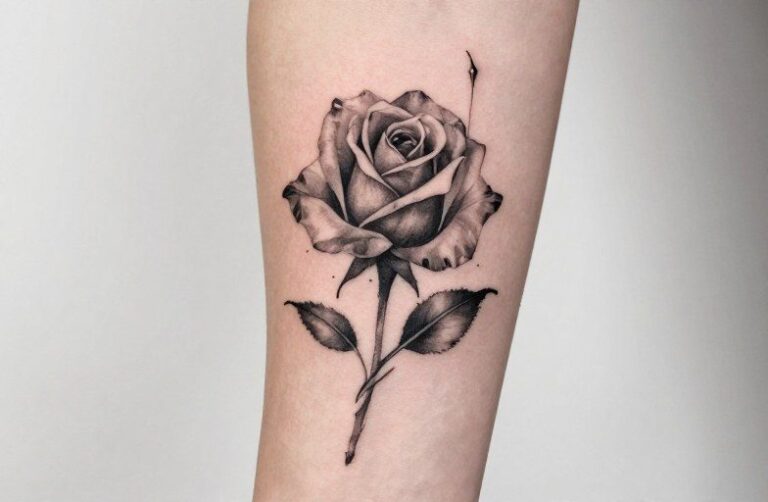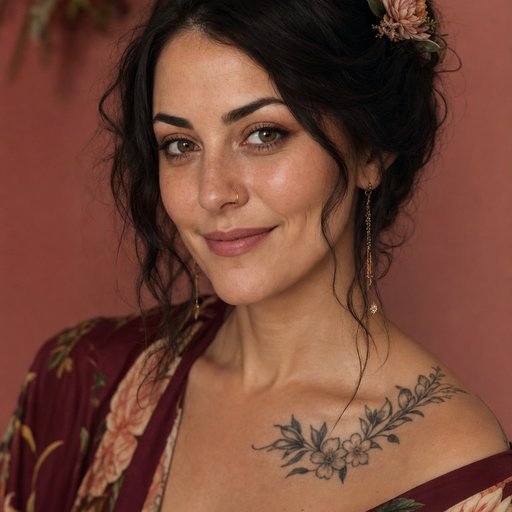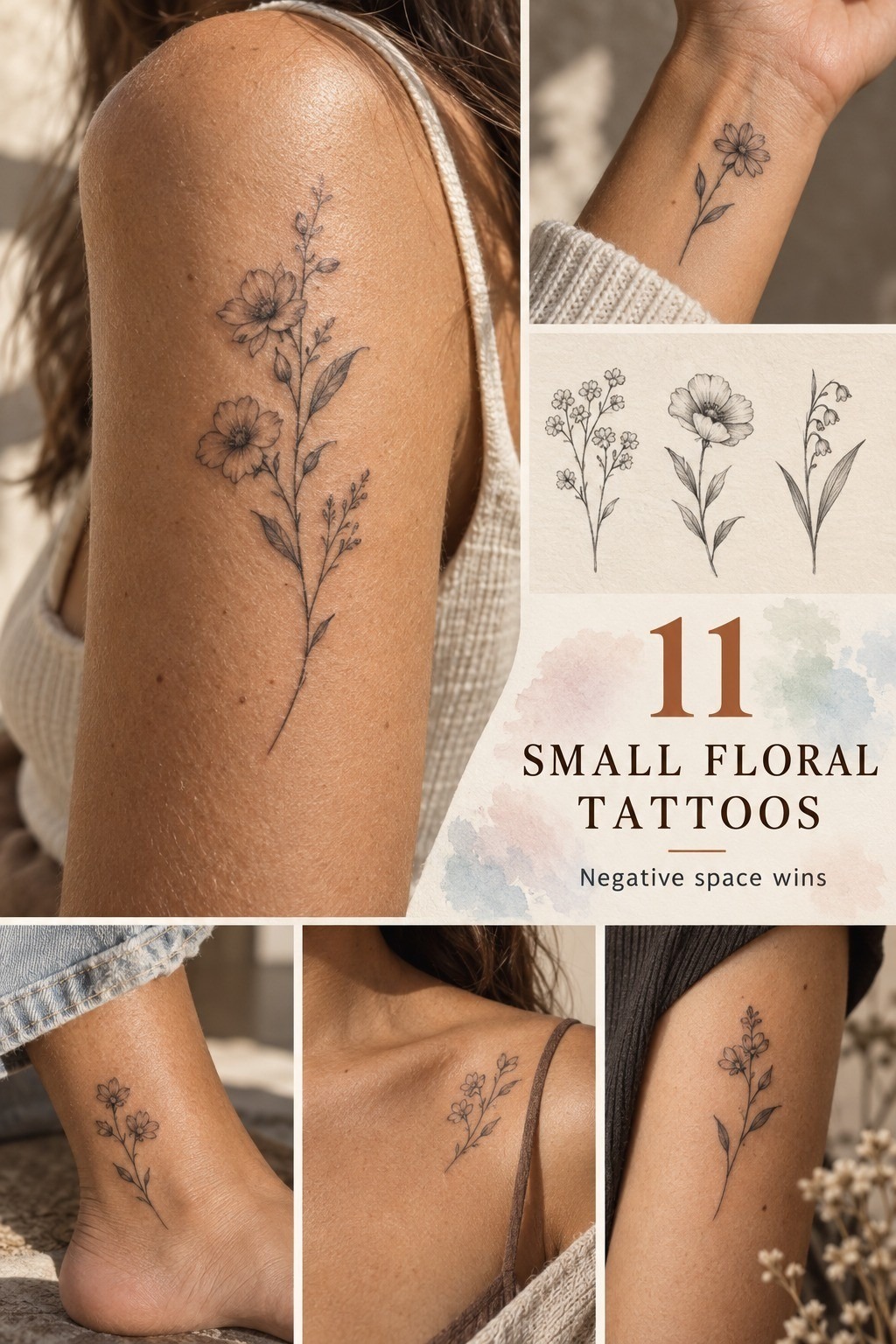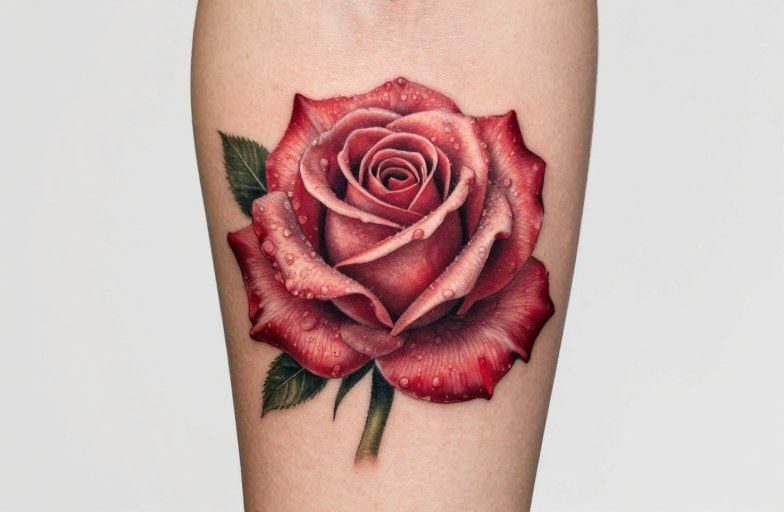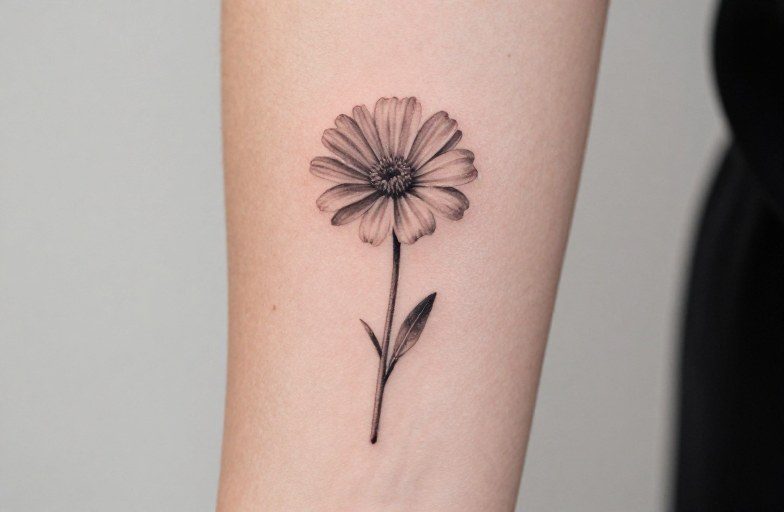
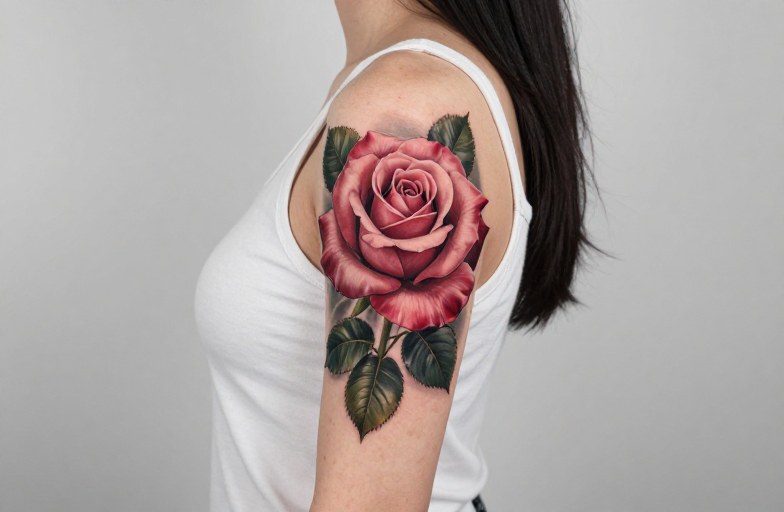
A female rose sleeve tattoo carries layered meaning: the rose speaks to beauty that persists through hardship, while the sleeve format transforms that symbol into a narrative of endurance visible across the entire arm. Most who choose this design aren’t after a single statement, they’re building a visual account of growth, loss, love, or survival that unfolds as the arm moves and ages.
Who Chooses This Tattoo
The rose sleeve attracts a specific kind of commitment. Full sleeves demand dozens of hours under the needle, significant cost, and a willingness to let one theme dominate a visible body area for life. That filters out casual impulse.
Life Transition Markers
Many who commit to rose sleeves are marking definitive before-and-after moments: sobriety, surviving illness, ending a marriage, starting a career that finally fits. The rose works here because its symbolism accommodates pain and beauty simultaneously. Thorns aren’t decorative afterthoughts in these designs, they’re emphasized, drawn sharp, sometimes wrapping the wrist as a permanent reminder of what was survived. The sleeve format lets that story unfold chronologically, with blooms opening or closing as the eye travels shoulder to wrist.
Collectors Building Coherent Work
Some arrive at rose sleeves after years of scattered smaller tattoos. A sleeve unifies existing pieces under one botanical theme, or covers older work entirely. Roses excel at this integration, their stems curve naturally around arm anatomy, their leaves fill awkward gaps between older designs, and their color range (deep burgundy to pale blush to near-white) can bridge tattoos done years apart in different palettes.
Best Placements
“Sleeve” technically means full arm coverage, but execution varies dramatically. The female arm’s muscle structure, thinner skin in certain areas, and societal visibility concerns all shape how these get built.
Full Sleeve vs. Three-Quarter
Full sleeves run from shoulder cap to wrist bone. They offer maximum narrative space but require commitment to visibility in all sleeveless contexts. Three-quarter sleeves stop above the wrist, leaving a “watch band” gap that many prefer, easier to conceal professionally, less hand swelling during healing, and the wrist itself stays open for future additions or keeps the option of a bracelet tattoo later.
Flowering Around Anatomy
Skilled rose sleeve design works with, not against, the arm’s structure. The deltoid cap often carries a single dominant bloom viewed from above. The outer bicep, with its flatter plane, suits detailed botanical illustration, veins on petals, dewdrops, insect damage. The inner arm’s softer skin and more frequent movement traditionally gets leaves, thorns, or looser composition since fine line here blurs faster. The elbow ditch, notoriously painful and prone to blowout, gets dark centers or dense foliage to hide healing irregularities. Forearm placement depends on lifestyle: palm-up vs. palm-down viewing, how much keyboard or childcare work happens, whether the person wants to see their own tattoo or have it face outward.
Religious & Spiritual Angles
Roses carry heavy spiritual lifting across traditions, though specific meaning depends heavily on which system the wearer draws from.
In Catholic iconography, the rose connects to the Virgin Mary, mystical rose, rosa mystica, thornless paradise flower versus Eve’s thorned curse. Some sleeves incorporate explicit religious elements: rosary beads twined through stems, a sacred heart nested in bloom petals, or the seven sorrows of Mary represented by seven roses in specific color stages. The sleeve becomes wearable devotion, visible prayer.
Buddhist and Hindu interpretations often emphasize the rose’s impermanence, blooms that open and die within days, teaching non-attachment. A sleeve designed with this intention might show full roses at the shoulder, wilting stems mid-arm, and fallen petals at the wrist. The progression reads as meditation on mortality rather than tragedy.
Contemporary spiritual-but-not-religious wearers frequently adopt rose symbolism from tarot tradition: the rose as balance, the thorned wand and blooming flower representing life’s dual nature. These sleeves tend toward symmetrical composition, mandala-like arrangements, or single dominant blooms with geometric framing rather than naturalistic vine growth.
Symbolism & Core Meaning
Beyond specific traditions, the rose accumulates universal associations that make it sleeve-worthy.
Beauty Under Pressure
The thorn is non-negotiable botany, roses don’t grow without them. Sleeve designs that emphasize this pairing (thorns wrapping forearms, blooms emerging from blood-pricked stems) speak to beauty that doesn’t exist despite difficulty but because of it, through it. The full-arm format lets that relationship develop across the body’s length rather than compressing it into a single image.
Temporal Layers
Rose buds, half-open blooms, full flowers, and deadheads can represent stages of life or relationship. A sleeve might place tight buds at the wrist (beginnings, potential), mature blooms at the heart of the arm (fullness, present moment), and seed pods or skeletal stems toward the shoulder (completion, legacy). This isn’t mandatory, some prefer all blooms at peak, or all wilting, but the option exists and gets used.
Mythology & Folklore
Rose mythology offers design depth without requiring literal illustration. Knowledge of these stories shapes how wearers and artists choose specific elements.
The Greek connection to Aphrodite, rose born from her tears and Adonis’s blood, grounds the flower in love’s violent dimensions, not just romance. Sleeves drawing on this might include subtle red droplets, not obviously blood, integrated into petal gradients or dew designs.
The Roman rosalia, festivals of rose-adornment for the dead, survives in some European traditions of placing roses on graves. Memorial rose sleeves sometimes incorporate specific dates in stem scrollwork, or portrait elements where a loved one’s features emerge from bloom centers, a technically demanding choice that requires exceptional portraiture skill to avoid visual confusion.
Islamic and Persian traditions emphasize the rose as symbol of divine beauty and the soul’s unfolding toward God. The nightingale’s love for the rose (found in Hafez and Rumi) inspires sleeve compositions where bird and flower intertwine, the impossible love made visible through permanent ink.
Color vs Black and Grey
This choice fundamentally alters a rose sleeve’s emotional register and practical longevity.
Color Realism
Traditional red roses carry immediate recognition: passion, love, courage, respect. But contemporary sleeves explore the full spectrum. Deep burgundy reads as sophisticated, almost gothic. Pale pink suggests newness, gentleness, sometimes memorial for infant loss. Yellow, historically friendship and jealousy both, now often signals Texas or California state pride, or simply personal preference. White roses in color work require maintenance, the lightest pigments fade fastest, and on skin with any warmth, white ink can heal toward ivory or disappear entirely. Purple, historically associated with royalty and enchantment, now frequently represents pancreatic cancer awareness or domestic violence survival.
Color saturation demands larger needle groupings and more passes, meaning longer sessions and more trauma to the skin. Heavier saturation also ages faster, bright reds become orange-pink, deep purples muddy toward brown. The tradeoff is impact: a well-saturated color rose sleeve photographs dramatically and reads clearly across a room.
Black and Grey Botanical
Black and grey rose sleeves emphasize form over hue. Without color distraction, the eye focuses on petal architecture, how light falls across curved surfaces, the negative space between elements. This approach suits detailed, almost scientific illustration, think botanical prints from the 18th century. It also ages more gracefully; black ink shifts toward blue-green on some skin tones, but grey washes simply soften rather than change hue unexpectedly.
Many black and grey sleeves incorporate ornamental framing: filigree, lace patterns, baroque scrollwork. The rose becomes one element in a larger decorative system rather than the sole subject. This can feel more integrated with formal or professional wardrobes, less “statement piece,” more “elegant garment.”
The Bottom Line
A female rose sleeve tattoo means whatever the accumulated choices make it mean: which blooms open or close, where thorns concentrate, whether color shouts or grey whispers, what traditions get invoked or ignored. The sleeve’s scale demands that coherence, there’s too much skin, too many hours, too much visibility for randomness to hold. What separates memorable rose sleeves from forgettable ones isn’t technical skill alone, though that matters enormously. It’s the specificity of the vision: not “a rose sleeve” but this rose, this stem’s curve responding to this arm’s particular shape, this color chosen for this reason, this thorn pattern that the wearer will trace with her opposite hand for decades. The meaning lives in those particulars, built needle-stroke by needle-stroke, until the arm becomes unreadable without them.
Frequently Asked Questions
How long does a full rose sleeve typically take to complete?
Most full sleeves require 25-40 hours across multiple sessions, spaced 3-6 weeks apart for healing. Dense color realism takes longer than black and grey. The forearm and outer bicep heal faster than inner arm and elbow ditch areas.
Will a rose sleeve look bad as I age or if I gain or lose weight?
Moderate weight fluctuations affect sleeves less than stomach or thigh tattoos because arm skin retains elasticity longer. Major muscle changes (bodybuilding, significant weight loss) can distort stem lines. Roses with looser, more organic composition age better than geometrically rigid designs.
Can I start a rose sleeve if I already have unrelated tattoos on my arm?
Yes, but integration requires planning. Existing tattoos can be incorporated as background elements, surrounded by rose foliage, or covered entirely if small enough. A consultation with an artist experienced in sleeve-building is essential, covering or working around old work demands different skills than fresh skin tattooing.
What’s the most painful part of getting a rose sleeve?
The elbow ditch (inner elbow) and wrist bone area cause the most discomfort due to thin skin over bone and nerve concentration. The outer bicep and forearm are generally manageable. Inner arm near the armpit also ranks high for sensitivity. Most people find sessions beyond 4-5 hours increasingly difficult regardless of location.