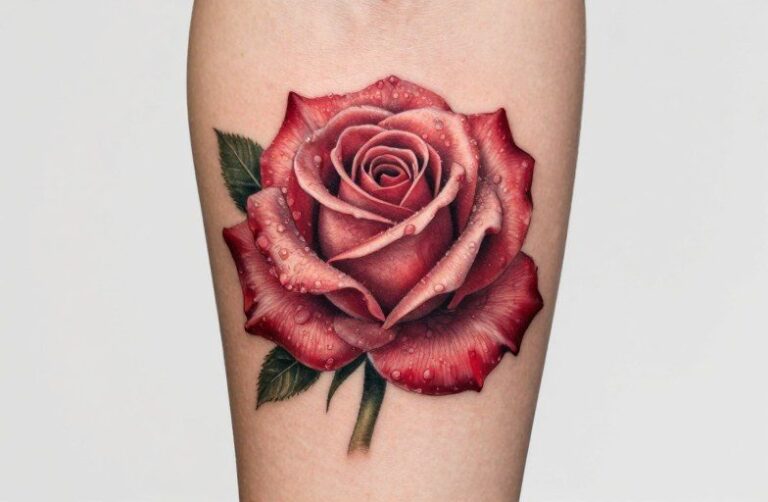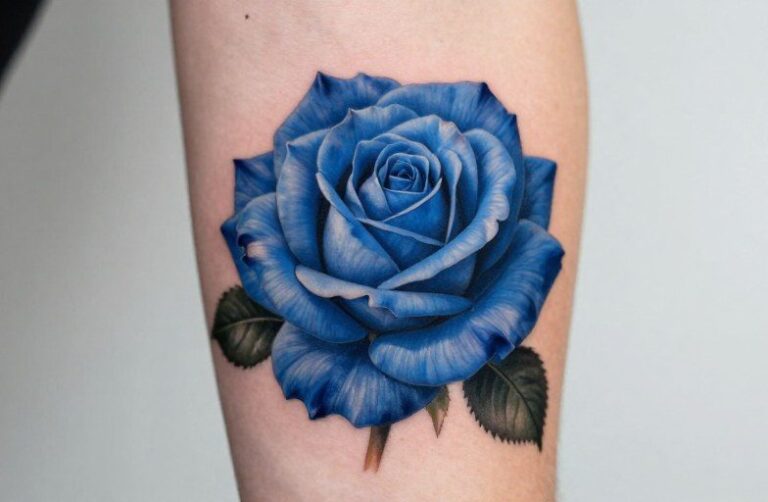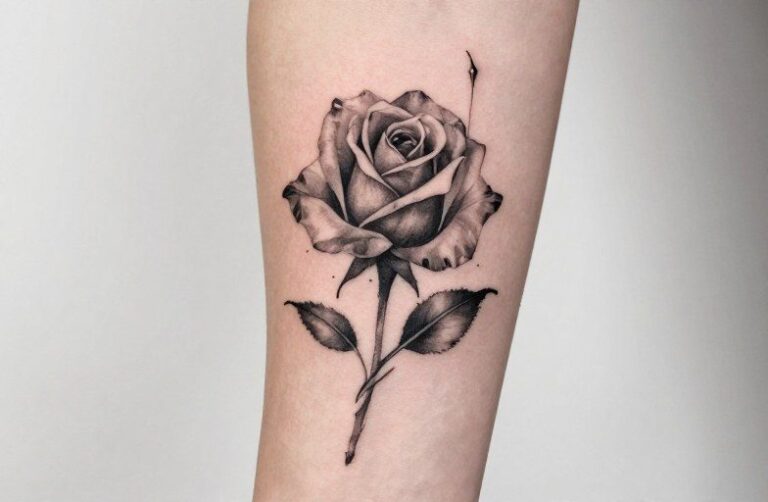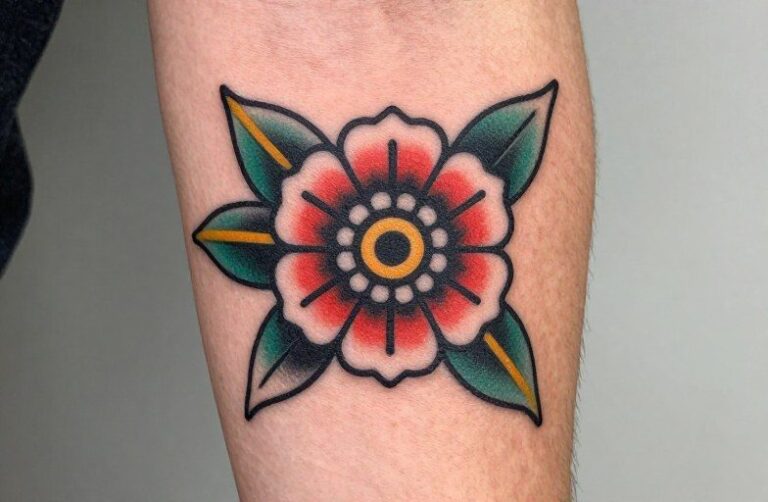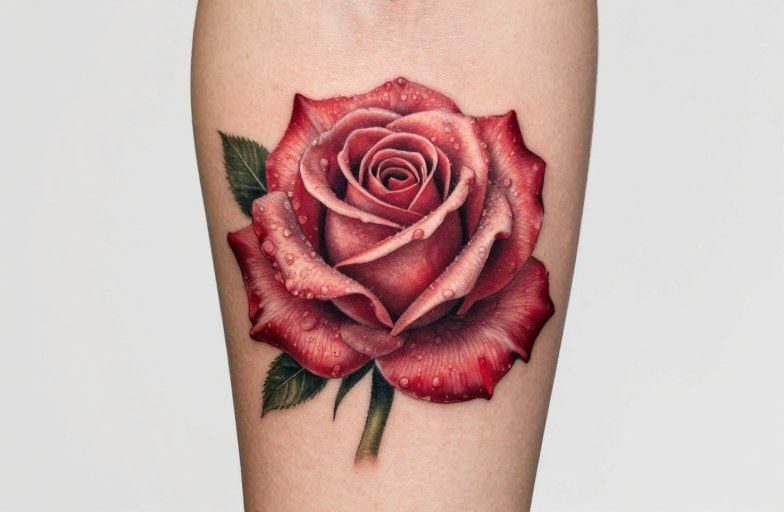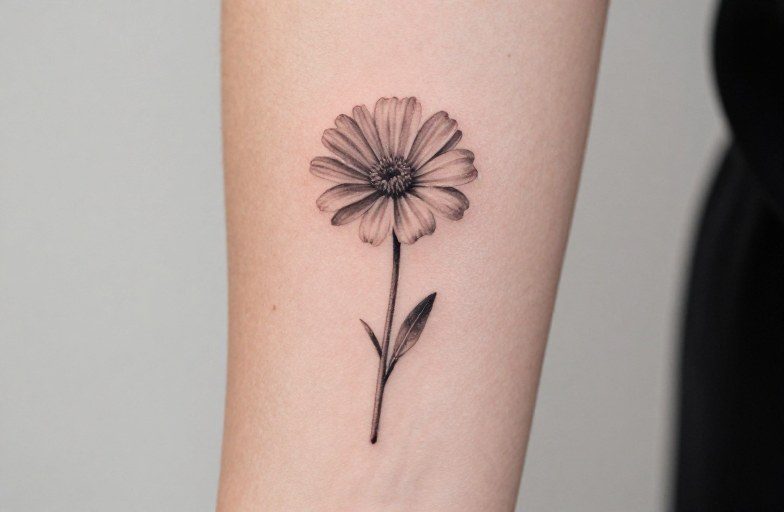
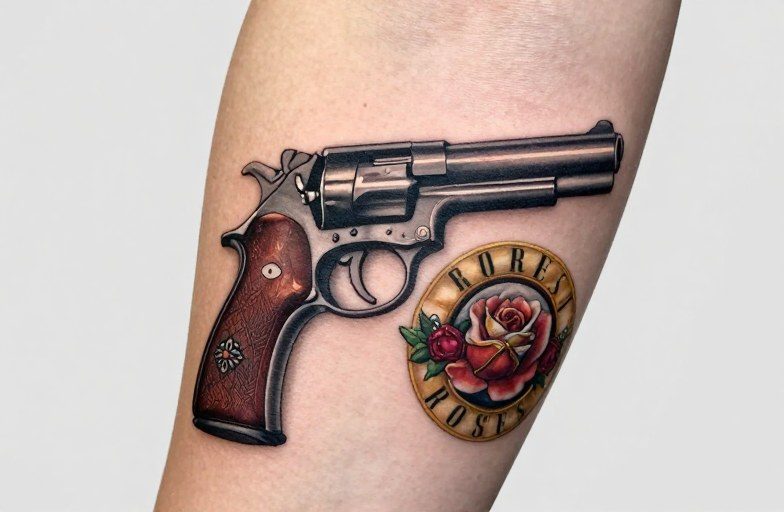
The gun and roses tattoo means contrast. It pairs a tool of destruction with an emblem of beauty, creating a visual argument about duality itself. Most people who choose this design are drawn to the tension between hard and soft, danger and delicacy, or the protective instinct that can turn violent. The specific meaning depends heavily on the gun style, the rose type and color, and where the image sits on the body.
How It Ages on Skin
This design lives or dies on fine detail, and fine detail is the first thing time attacks. Guns have straight edges, small mechanical parts, and trigger guards that blur into grey mush within five to eight years if the line work is too tight. Roses, with their layered petals and soft gradients, hold up better but can lose their depth if over-shaded.
Placement and Scale
Forearms and outer biceps give the clearest long-term readability. The flat planes keep the gun’s geometry from distorting. Ribs, stomach, and thighs stretch and compress; a revolver cylinder there can look like a smudged coin after weight fluctuation. Hands and feet are high-wear zones. The rose petals will need touch-ups, and the gun’s barrel can blow out along the finger edges. For longevity, keep the gun slightly larger than life and the roses bold enough that each petal reads as a distinct shape from three feet away.
Line vs. Shading Strategy
- Line-heavy guns with minimal shading age cleaner than photorealistic renderings. A solid black silhouette of a pistol with white highlights lasts decades; a grey-wash .45 with every screw head drawn in becomes soup.
- Roses need black backing to survive. A red rose without dark outlines or deep shadow pockets fades to pink scar tissue. Traditional-style roses with thick black stems and leaves hold color better than soft, single-needle petal work.
- The intersection point, where barrel meets bloom, is the weakest link. Two different textures crammed together create friction in the skin. A good artist leaves negative space or a hard black border between the elements so they don’t bleed into each other.
Who Chooses This Tattoo
Not everyone with this design is making a statement about violence. The pairing attracts people who occupy contradictory roles: soldiers who garden, bouncers who write poetry, survivors who found beauty after damage. It also shows up on people with no personal connection to firearms, some simply like the visual balance of organic and mechanical shapes.
Gender and Variation
Men often lean toward larger, more aggressive compositions: a Colt Python crushing a single stem, or a rifle with roses spilling from the muzzle. Women frequently prefer smaller, more integrated pieces, a derringer tucked behind a full bouquet, or the gun and rose sharing equal space in a symmetrical design. These are trends, not rules. The best pieces ignore them entirely.
Personal vs. Decorative Intent
Some wearers treat the gun as literal: a symbol of protection, military service, or a specific event. Others treat it as metaphorical, the rose doing most of the emotional lifting. The ratio matters. A tiny rose wrapped around a massive shotgun reads differently than a delicate pistol with a single oversized bloom. Artists can spot the intent in the first consultation by which element the client describes first.
Color vs Black and Grey
Color changes the emotional temperature dramatically. Red roses against blued steel create a classic, almost romantic feel, think album art, vintage posters. The contrast is immediate and readable from distance. Black and grey pushes the design toward somber territory: memorial pieces, prison-style origins, or a more serious meditation on mortality.
Red Specifics
Red ink has a reputation for fading faster and causing more skin reactions than other pigments. Modern reds are safer than a decade ago, but they still require saturation. A washed-out red rose looks like a skin irritation, not a flower. Deep crimson with dark burgundy shadowing ages to a respectable maroon. Bright fire-engine red without backing becomes orange-pink in sun-exposed placements.
Metallic Effects
Gun metal is almost never actual metallic ink, which ages poorly and can cause granulomas. Skilled artists fake gunmetal with cool grey washes, white highlights, and strategic black. The best gun tattoos read as reflective without using a single drop of silver or gold. This matters for longevity, metallic pigments are unpredictable and many shops won’t use them.
Similar & Related Symbols
The gun and rose belongs to a family of juxtaposed images that tattooing has explored for over a century. Understanding the neighbors helps clarify what this specific pairing does differently.
- Skull and rose: Mortality and beauty, more explicitly about death than the gun version. Less ambiguous, less contemporary.
- Snake and dagger: Betrayal, danger, temptation. The tension is narrative rather than symbolic.
- Heart and dagger: Romantic pain, often literal heartbreak. More sentimental than the gun variant.
- Pistol and playing cards: Gambling, risk, outlaw culture. The gun is active here, not paired with something it destroys.
The gun and rose stands apart because both elements are complete symbols on their own. A skull needs the rose to become poetic; a gun with a rose remains functional even in its contradiction. That self-sufficiency makes it more flexible for the wearer.
Religious & Spiritual Angles
Christian iconography sometimes pairs the sword with lilies or roses, symbols of Mary’s purity and Christ’s sacrifice. The gun replaces the sword in modern secular versions, though this substitution makes some traditionalists uncomfortable. The rose itself carries Marian weight: the rosary, the mystical rose, the flower that blooms from blood in certain martyrdom imagery.
Non-Christian Readings
In Buddhist contexts, the pairing can represent the destruction of attachment, gun as severance, rose as the beautiful illusion being severed. This is less common in Western tattooing but appears in Japanese-influenced work. Some practitioners of Santería and Vodou have used similar imagery in protective talismans, though the specific combination is not traditional to those faiths.
Mythology & Folklore
There is no direct myth of a gun and a rose, firearms are too recent for classical mythology. But the underlying structure, weapon and flower, appears repeatedly. In Greek tradition, the spear of Ares and the anemone flower are often linked to the death of Adonis. The rose itself is Aphrodite’s flower, born from her tears and the blood of her lover.
Romantic and Outlaw Traditions
The 19th-century language of flowers gave the rose specific meanings: deep red for passionate love, white for purity, yellow for jealousy. Guns in that same era signified dueling honor, protection of virtue, or revolutionary violence. The combination emerged naturally in broadside ballads and later in punk and rock visual culture, where working-class romance and danger intertwined. The specific phrase and imagery became widely recognized through popular music, though the tattoo predates that particular fame.
Before You Decide
Think about which element you want to dominate. A gun overwhelming a crushed rose reads as aggression conquering beauty. A rose wrapping and softening a weapon reads as redemption or protection. Equal weight creates unresolved tension, which can be the point, but should be intentional.
Consider the gun type carefully. Revolvers carry Western, outlaw, and older military associations. Semi-automatics read more modern, tactical, urban. Antique dueling pistols suggest historical romance. The wrong choice for your intended meaning creates dissonance you may not notice until years later.
Finally, respect the subject matter. This is not a design to choose because it looks cool on Pinterest. The combination of lethal force and organic beauty carries weight. Wear it with awareness of what you’re claiming, even if your personal meaning is private and specific.
Frequently Asked Questions
Does a gun and roses tattoo always mean something violent?
No. Many people choose it for the visual contrast between mechanical and organic shapes, or as a metaphor for protection rather than aggression. The meaning depends on which element dominates and how the wearer explains it.
What style works best for this design to last?
Bold traditional or neo-traditional approaches age better than photorealism. Thick black outlines on the roses and simplified geometry on the gun prevent the details from blurring together over time.
Is it offensive to get this if I’ve never served in the military or owned a gun?
Generally not, though context matters. The gun as a generic symbol of power or protection is common in tattoo culture. Avoid specific military insignia or unit markings if you haven’t earned them.
How big should the tattoo be for the details to hold up?
At minimum, the gun should be large enough that the trigger guard and cylinder or slide remain distinct shapes. For most designs, that means no smaller than four to five inches on a flat area like the forearm or thigh.