A geometric wildflower tattoo can look personal without announcing itself across the room. I once chose a placement before thinking about sleeves, sun exposure, or how fine lines change over time. That was careless. These designs balance crisp geometry, delicate petals, and placements you can show when you want to.
- Where Should a Small Geometric Wildflower Tattoo Sit?
- Build a Fine-Line Geometric Wildflower Tattoo on the Forearm
- Sacred Geometry, Not Perfect Symmetry
- Behind the Ear: A Dainty Geometric Wildflower
- Use Dotwork Shading to Sharpen the Petals
- Minimal on the Ankle, Clear at a Glance
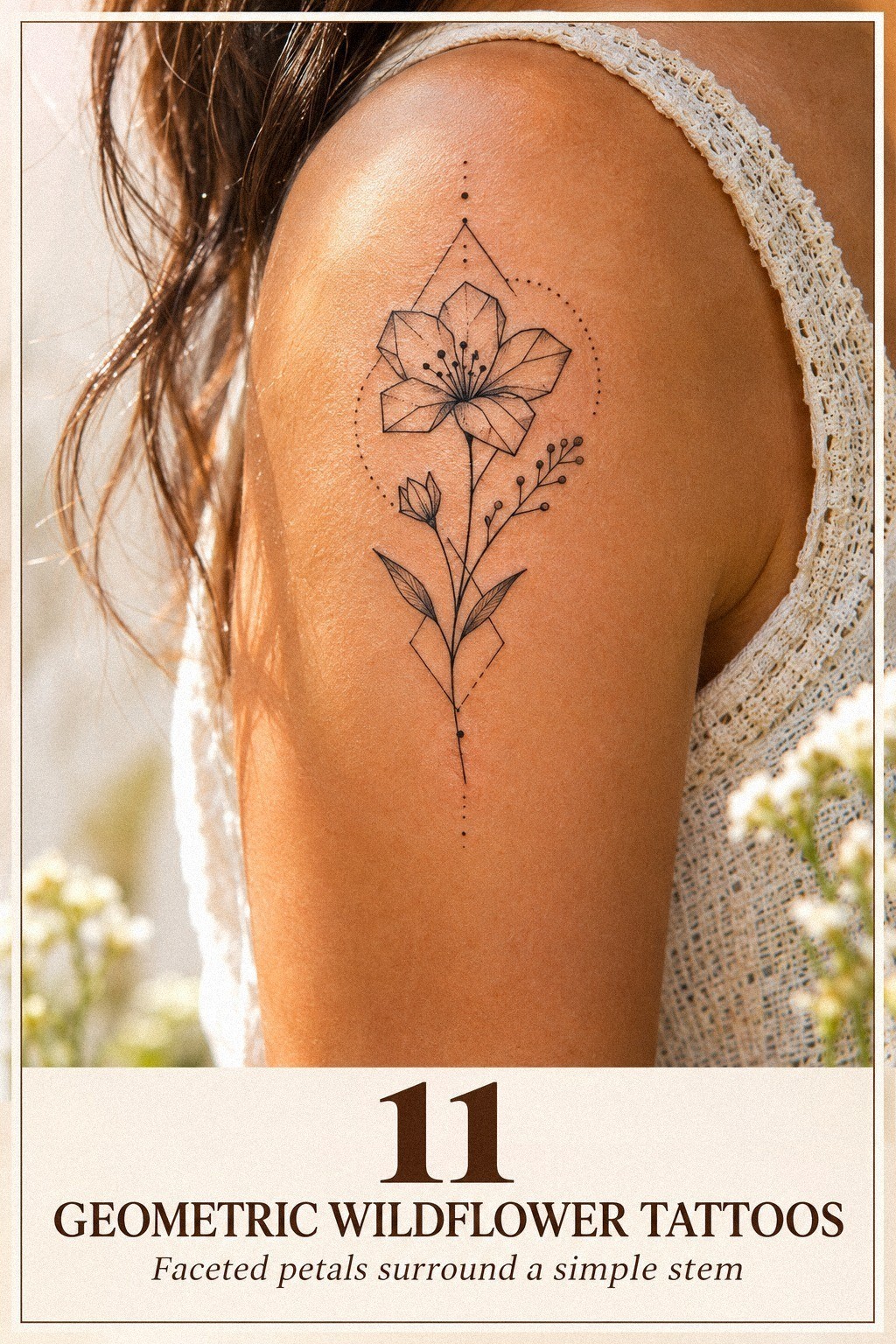
- Let the Shoulder Carry a Bold Bloom
- Would Moon Phases Strengthen the Flower?
- Ribs or Sternum? Keep the Geometry Open
- Color Accents: Test the Healed Version
- The Collarbone Choice
1Where Should a Small Geometric Wildflower Tattoo Sit?
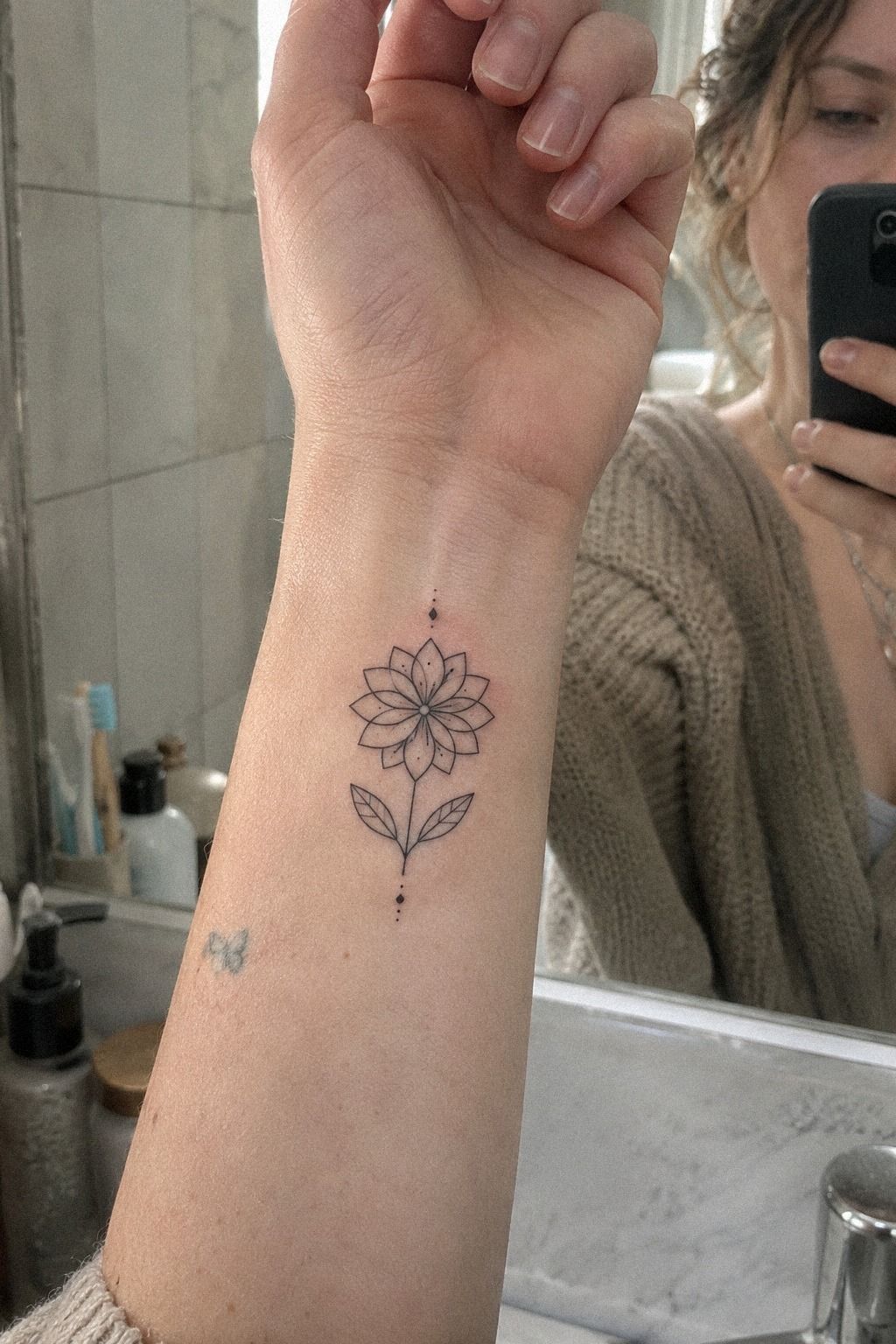
A small geometric wildflower tattoo on the wrist works because the wrist placement keeps the design visible to you while staying easy to cover. The single stem and layered petals feel delicate, but the angular center gives the piece a striking edge. If you want a private reminder, this is a thoughtful place to start!
Ask your artist for clean single-needle linework with enough breathing space between the petals. I’d keep the flower around 1 to 2 inches so the stem doesn’t collapse into the wrist crease. You’ll want the lower edge slightly above the joint, where your skin moves less.
A tiny geometric diamond behind the petals can frame the flower without making it feel crowded. Don’t ask for six tiny interior lines if you want the design to age clearly. Less detail often creates more value when the finished tattoo needs to stay readable.
You can pair this idea with the symbolism in our wildflower tattoo meaning guide, especially if your flower represents resilience or a private milestone. Your artist should still redraw the reference for your wrist rather than copying it exactly.
I’d choose this over a micro tattoo with no structure because the negative space gives your eye somewhere to land. It’s understated, personal, and easy to hide beneath a watch band when you’re not ready to explain it.
2Build a Fine-Line Geometric Wildflower Tattoo on the Forearm
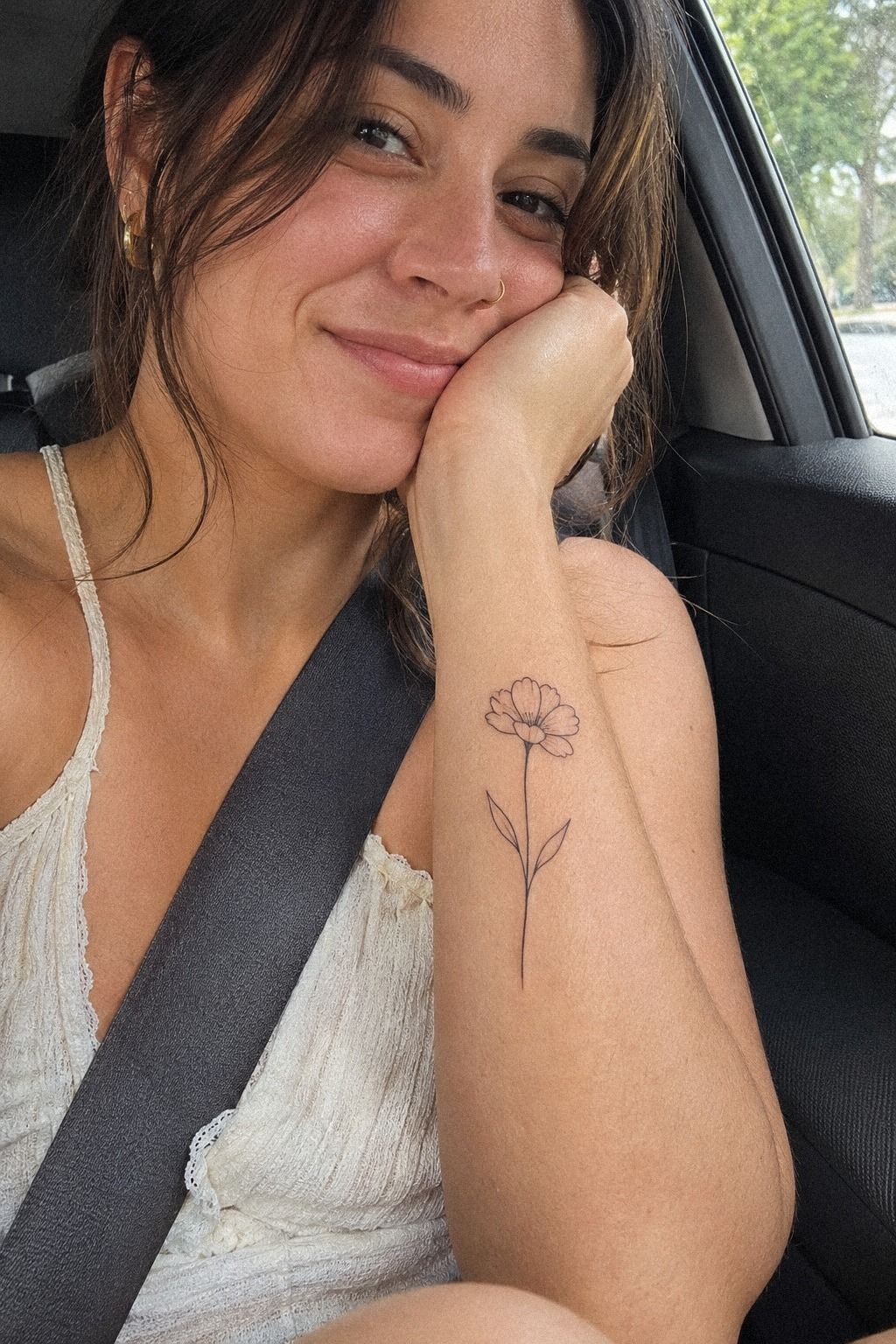
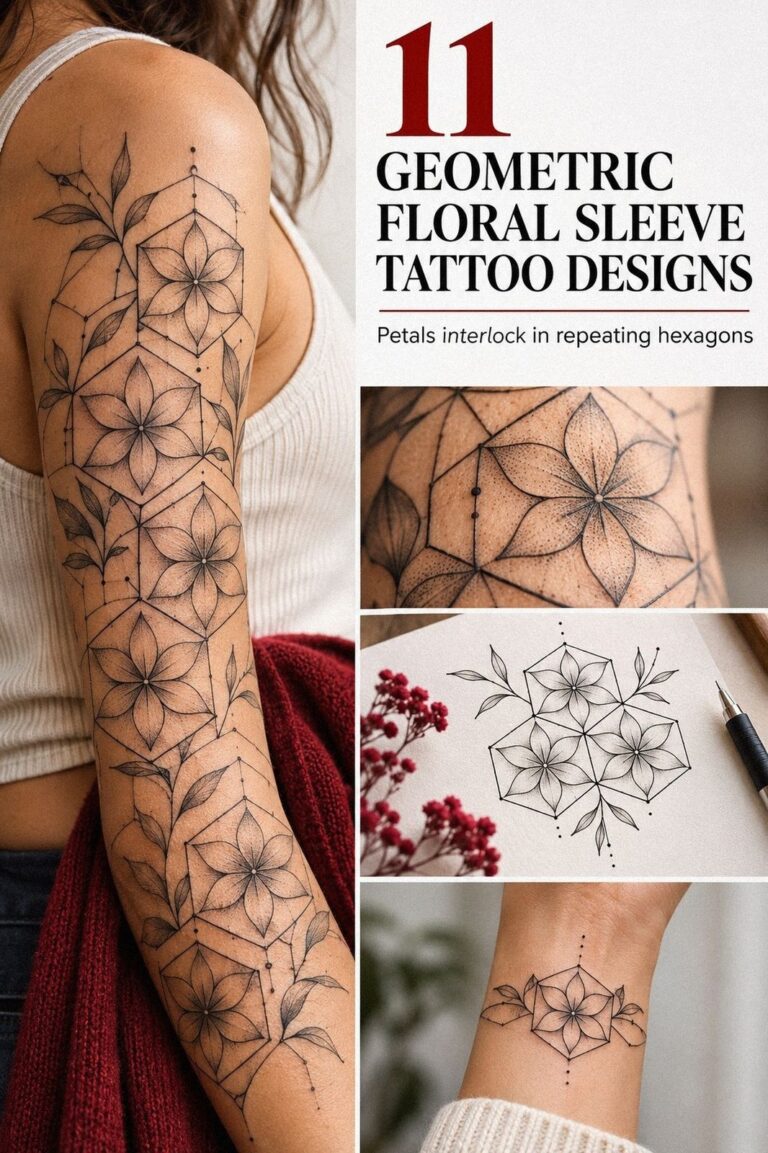
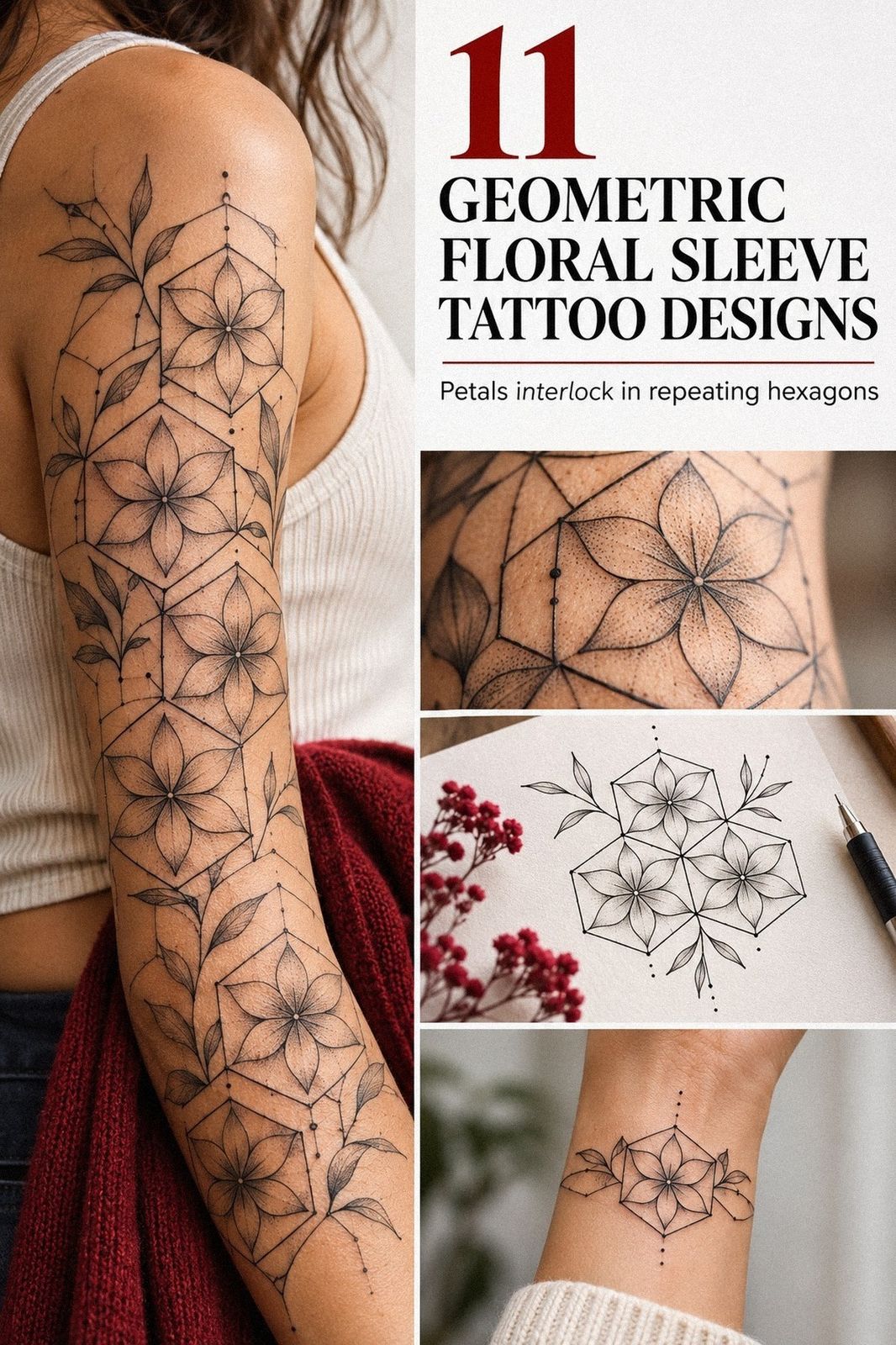
A fine line geometric wildflower tattoo on the forearm gives you more space for a long stem, layered petals, and a controlled flowing shape. This version looks elegant because the geometry supports the flower instead of competing with it. If you’re nervous about visibility, place it on the inner forearm and turn it toward you.
Ask for a fine-line clay-toned ink design with one stronger contour around the flower head. You’ll get contrast without filling every shape solid. That balance keeps the tattoo crisp while giving the petals space to breathe.
I made the mistake of treating fine line as “as small as possible.” It isn’t. Your artist may suggest a slightly larger design so the negative space remains readable after healing, and you shouldn’t dismiss that advice just to save a little money.
A narrow botanical stem can follow the forearm’s natural length, while three angular petals create the geometric anchor. If you like this restraint, compare it with these minimalist wildflower tattoo ideas before your consultation.
You’ll have more control over visibility here than on the hand or neck. I’d skip an overly dense geometric frame around the flower because it’ll pull attention away from the stem and make this otherwise crisp design feel busy.
3Sacred Geometry, Not Perfect Symmetry
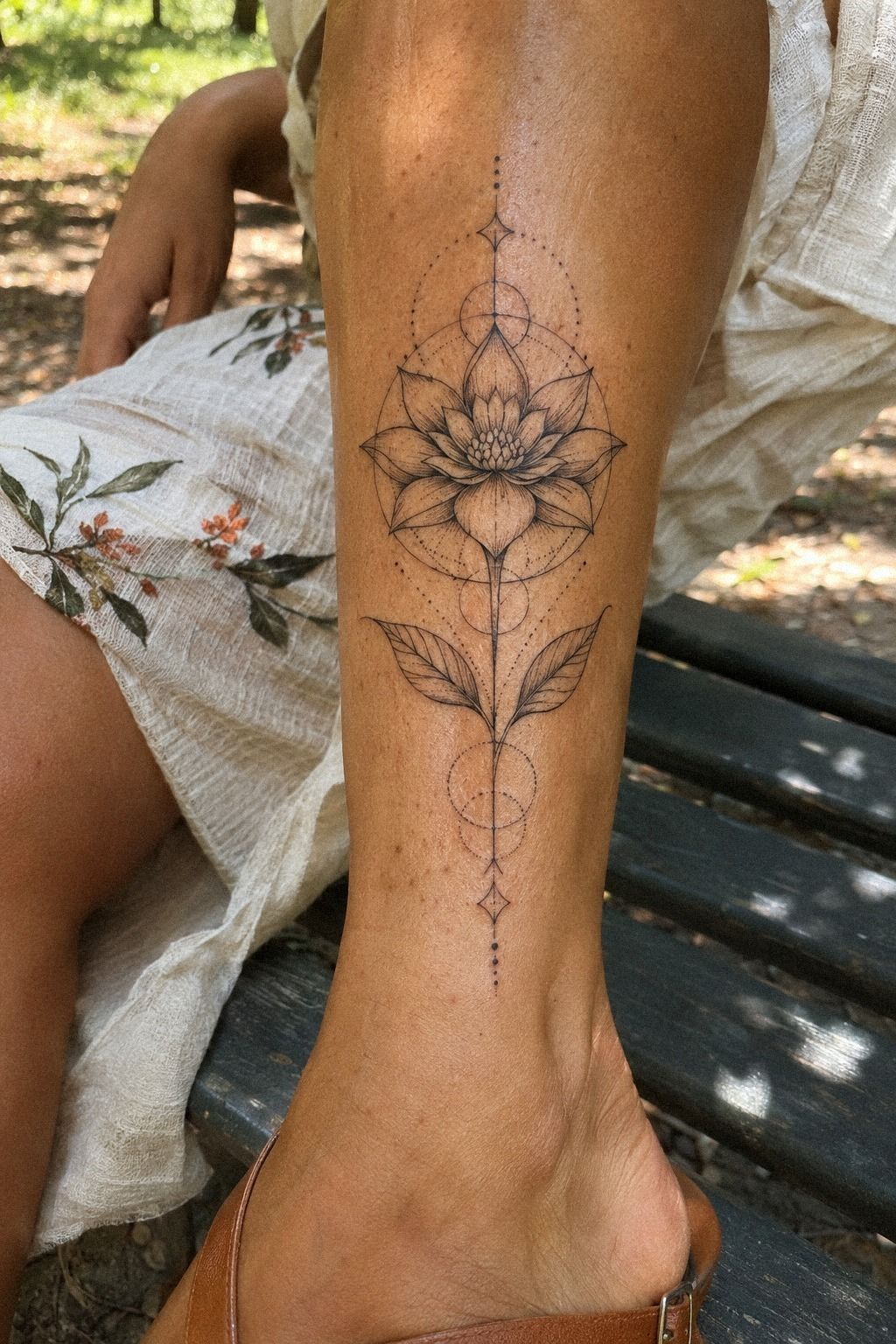
A geometric wildflower tattoo with sacred geometry gives the flower a more symbolic structure. The ankle placement lets the layered petals sit above a thin geometric frame, creating a sacred feeling without turning the design into a full ornament.
The strongest version uses a small hexagonal frame behind the bloom and a single stem dropping toward the ankle bone. You’ll want the frame open in a few places, since solid borders can make a small tattoo look heavier than intended.
Your artist should choose ankle line weight with movement in mind. I’d ask for a healed-photo portfolio, not only fresh work, because fine geometry can soften when the skin settles. That check is worth it before you commit your budget.
If you’re exploring floral symbolism, our geometric lotus flower tattoo ideas show how artists balance petals with measured shapes. Your version doesn’t need to imitate a lotus; it can borrow the spacing and sense of order.
Would you rather have a perfectly symmetrical frame or a flower that feels slightly wild? I’d choose the second. A little irregularity keeps this meaningful design from looking like a diagram printed onto your skin!
4Behind the Ear: A Dainty Geometric Wildflower

A unique geometric wildflower tattoo behind the ear is a dainty option with a surprisingly edgy placement.
5Use Dotwork Shading to Sharpen the Petals
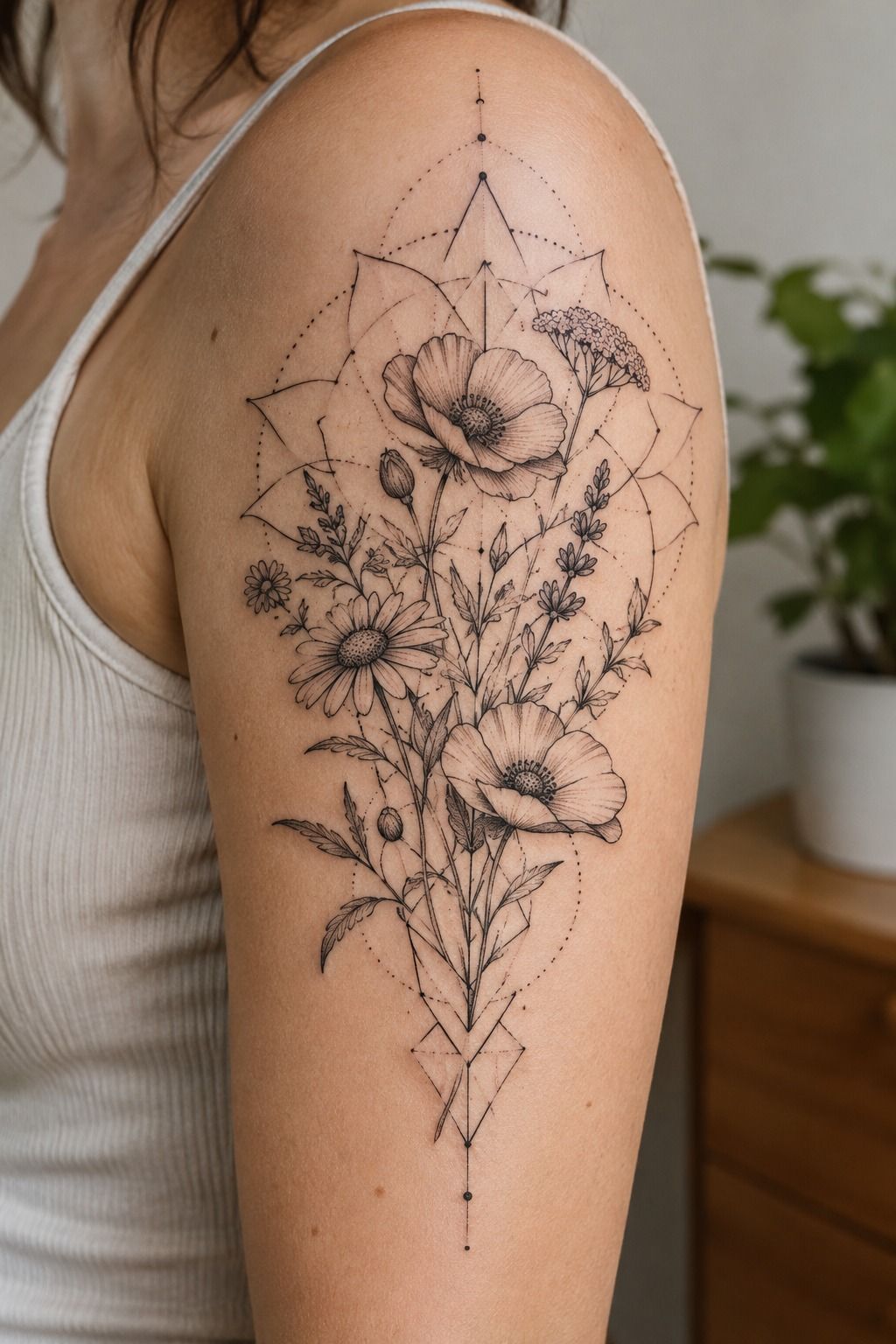
A geometric wildflower tattoo with dotwork shading gives a flash-sheet concept a more intricate finish. The hand-drawn flowers, stippled shadows, and varied contours feel vintage without becoming nostalgic.
For your own tattoo, ask for a dotwork gradient beneath the petals rather than solid emerald fill. The tiny points should become lighter as they move away from the center. That gives you depth while preserving the open spaces that make geometric flowers readable.
I like this approach for a collector who wants several related tattoos. You can choose one flower from a flash sheet, then let your artist adjust the stem, petal count, and frame for your chosen placement. Don’t treat flash as a limitation; it can be a strong starting point.
Our small wildflower tattoo collection can help you compare compact silhouettes before you book. If your skin is deeper, your artist may rely more on spacing and shape than on extremely pale shading.
The losing option here is a muddy emerald wash. I’d keep the dot spacing sharp and intentional, because gritty texture works when you can still see every petal edge. Too much shading will erase the open quality that makes this concept special.
6Minimal on the Ankle, Clear at a Glance

A minimal geometric wildflower tattoo on the ankle can look minimal and polished at the same time. A single-stemmed flower with layered petals, open negative space, and a strong silhouette doesn’t depend on pale ink to feel complete.
Ask your artist to use solid forest-green ink for one small anchor, such as the flower center or a short section of the stem. That contrast helps the design hold its shape while the surrounding lines remain light. You’ll get a clearer tattoo than you would from uniformly thin marks.
The ankle is close to bone, so many people find it more uncomfortable than the forearm, thigh, or shoulder. Your session may be short, but you’ll still want to arrive rested, hydrated, and ready to follow the studio’s healing instructions.
I’d place the flower slightly forward of the ankle bone rather than directly on top of it. You can compare that position with our minimal wildflower tattoo guide before deciding how visible you want the piece to be.
This is the right choice if you want a quiet design with strong structure. It’s timeless, but it won’t look generic because the petal geometry gives the flower its own language.
7Let the Shoulder Carry a Bold Bloom

A bold geometric wildflower tattoo across the shoulder gives you more space for powerful petals, a stronger stem, and a larger arrangement. The shoulder placement lets the flower follow the body’s natural curve without forcing every line into a tiny area.
Here, I’d use a bold charcoal outline around the outer petals and leave the interior mostly open. You’ll get a design that reads from several feet away without turning the entire flower into a dark patch.
The shoulder is often more tolerable than the ribs, feet, hands, or sternum, though everyone’s experience differs. Your artist may suggest a 2 to 3 hour session if the geometry becomes more detailed, so ask about session length and breaks before you start.
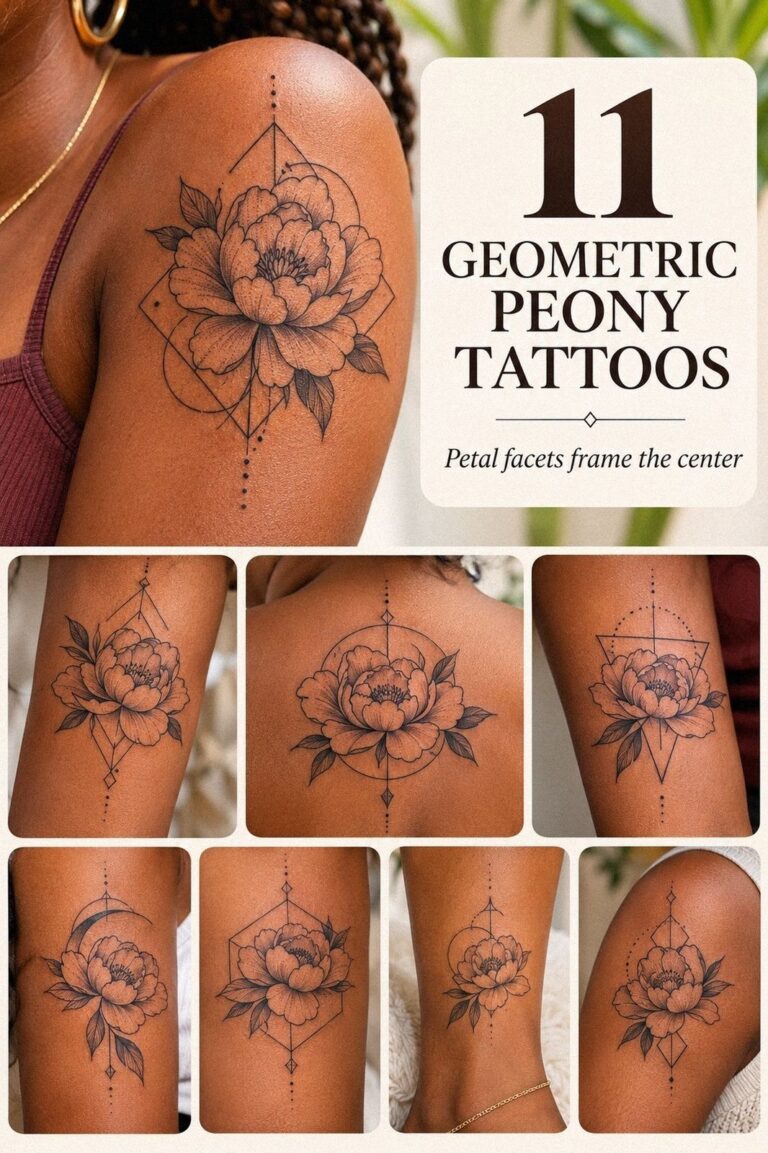
A soft arc can connect the flower to the shoulder without making it look like a full band. If you want another structured floral reference, our geometric peony tattoo guide shows how larger blooms can keep their shape.
I’d choose this over a tiny shoulder tattoo if you want the placement to feel intentional. The extra scale gives the petals space to breathe, and the result feels fierce rather than merely enlarged. That petal scale can be worth it!
8Would Moon Phases Strengthen the Flower?

A geometric wildflower tattoo with moon phases combines ethereal imagery with a precise botanical frame. On the calf, the vertical layout feels graceful when you walk, while the flower remains the central subject.
Use a black crescent sequence above or below the flower, not scattered around every petal. Your artist can keep the moon phases small and evenly spaced so the design has a clear visual hierarchy.
The calf gives you more space than the ankle, which means you can protect the negative space instead of shrinking every symbol. I’d ask for a composition around 2 to 4 inches tall, depending on your anatomy and how much detail you want.
For a softer floral direction, compare this with our watercolor wildflower tattoo ideas. You don’t need watercolor pigment to make the moon concept feel dreamy; careful spacing can do more than extra color.
Would you rather have the moon phases above the flower or beneath it? I’d put them above, because the eye follows the stem direction upward and the composition feels more romantic without becoming ornamental.
9Ribs or Sternum? Keep the Geometry Open

A delicate geometric wildflower tattoo on the rib can feel intimate and personal, especially when the flower follows the body’s vertical line. The hidden placement keeps the tattoo mostly for you.
Rib skin moves with breathing, so your artist should avoid squeezing too many tiny angles into the flower. A single fine midnight-blue contour around the outer petals and a clean stem will age more gracefully than a crowded geometric web.
The ribs and sternum are commonly reported as more painful areas because they sit close to bone and have less padding. You’ll want to discuss the expected session length, break schedule, and placement before you arrive, particularly if this is your first tattoo.
I’d keep the lower stem pointed toward your waist and the bloom angled slightly forward. You can use the wildflower tattoo meaning article to clarify what you want the flower to represent before you reduce it to a few lines.
This placement isn’t for someone who wants constant visibility. It’s understated, meaningful, and a little haunting when the design appears briefly beneath an open shirt.
10Color Accents: Test the Healed Version

A geometric wildflower tattoo with colored accents lets you compare a fresh stencil-style design with the same piece after it has healed. Vibrant accents can settle while the black structure remains the visual anchor.
I’d choose one muted sage-green accent or a small cream detail rather than several competing colors. Your artist can place pigment inside the flower center or one petal, leaving the geometric outline black for stability.
Color can soften over time, especially with regular UV exposure, so your aftercare matters. You’ll need to wash gently, moisturize as directed, and avoid swimming and strong sun while the colored pigment settles over roughly 2 to 3 weeks.
If you want to compare a softer approach, see these watercolor wildflower tattoo references. The healed side is the part you should study, since fresh ink can look darker and sharper than the settled result.
I’d skip a rainbow accent scheme here. One controlled color feels expressive and stylish, while several bright pigments can distract from the color palette that made you choose the design.
11The Collarbone Choice

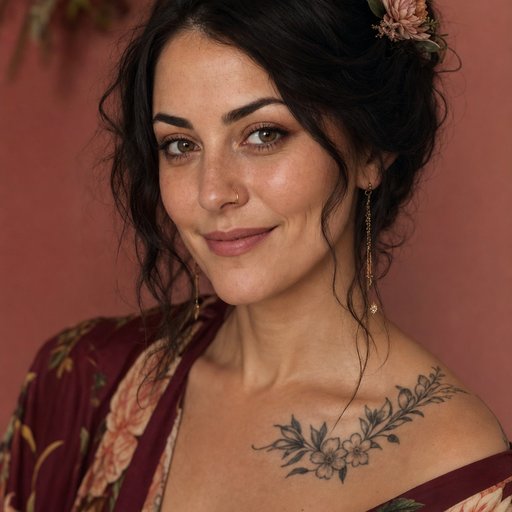
A meaningful geometric wildflower tattoo on the collarbone can feel empowering without taking over the neckline. The horizontal placement keeps the stem graceful while giving the flower a strong presence.
Ask for a healed blackwork tattoo portfolio from your artist, especially if you want fine lines across the collarbone. The skin can move and catch sunlight, so placement, spacing, and aftercare will matter more than a complicated symbol.
You might use a small triangle, circle, or open diamond to represent a personal idea, but don’t add geometric symbolism just because the style expects it. Your flower should still look like a flower when the meaning is not explained.
Our geometric flower crown tattoo ideas can help you study balanced floral arrangements, while our small wildflower tattoo guide is useful if you’re considering a shorter collarbone design.
I’d choose this placement when you want the tattoo to appear with a tank top but disappear beneath a higher neckline. It’s iconic, elegant, and quietly daring without needing a large composition.
The Negative-Space Rule I Trust
I’ve changed my mind about geometric tattoos more than once. At first, I thought the most impressive design would have the most lines, the most symbols, and the most precise little details.
Then I watched fine marks soften on real skin. The designs that stayed readable weren’t always the most ornate ones.
They were the ones with negative space.
That’s why I’d rather remove one petal than squeeze it into a design that’s too small. Your artist isn’t being difficult when they suggest a larger scale or fewer interior lines. They’re thinking about how the tattoo will look after the surface settles, after sunlight reaches it, and after your skin has carried it for years.
For me, the best geometric wildflower tattoos have a small tension inside them. The flower is organic, but the frame is measured.
The stem can be slightly uneven, while the central shape stays crisp. That contrast feels more raw and expressive than perfect symmetry.
If every curve is forced into a ruler-straight pattern, the flower loses its life.
I’d also make placement part of the meaning. A wrist piece can become a private daily cue.
A rib tattoo can stay almost hidden until you choose otherwise. A collarbone flower can mark a change you’re ready to show.
None of those choices is more valid than another, but your reason should guide the line weight and scale.
The practical side matters, too. Surface healing often takes about 2 to 3 weeks, while complete settling can take roughly 2 to 3 months. UV protection helps preserve contrast, and black ink with sensible spacing tends to age more clearly than crowded fine lines.
Your favorite reference is only the beginning. The finished tattoo should belong to your body, your tolerance, and your story.
Cost, Scale, and the Value of Patience
The cost of a geometric wildflower tattoo depends on more than the flower itself. Placement, artist experience, color, line density, and the time needed for a custom redraw all affect the final quote.
A smaller tattoo isn’t automatically better value. If the design becomes so tiny that the petals merge, you may spend less at first and feel less satisfied later. Paying for readable scale can be worth it.
I’d set a budget before the consultation, then leave room for the artist’s recommendation. A slightly larger custom redraw may cost more, but it can protect the meaning and structure you cared about in the first place.
Ask whether the shop has a minimum, whether the quote is hourly or flat-rate, and what happens if the appointment runs longer. Clear answers make the pricing structure easier to judge.
The best value is a tattoo you still understand years from now. That usually comes from restraint, healed work, and an artist who can explain why a detail belongs.
A Quick Budget Check
Before you book, write down the size, placement, color plan, and the questions you want answered. That gives your artist enough information to discuss the likely cost instead of guessing from a vague design brief.
A lean budget can still support a striking result. Choose one ink color, fewer interior lines, and a placement with enough skin for the design to remain legible.
Don’t cut the aftercare supplies from your budget. Washing gently, moisturizing as directed, and protecting the tattoo from strong sun are part of keeping your investment clear.
If the quote feels high, ask what change would lower the cost without damaging the design. Removing one accent or simplifying a geometric frame may preserve more value than shrinking the entire flower.
Before You Book: Questions Worth Asking
Ask to see healed tattoos with similar line density, not only fresh work. Fresh ink can look sharp and saturated, while healed lines show whether the geometry remains distinct.
Ask how the artist adapts designs for different skin tones and body movement. You’re not looking for one universal formula; you’re looking for thoughtful decisions.
Ask whether the artist is comfortable making changes during the stencil stage. A tattoo can be meaningful and still need a different angle, scale, or stem length once it sits on your body.
Ask about the appointment length, breaks, payment schedule, and studio requirements. Those details may seem ordinary, but they affect whether the appointment details feel manageable.
Finally, ask yourself whether the design still feels personal without an explanation. If it does, you’re probably close to the right idea.
Aftercare Is Part of the Design
Your artist’s aftercare instructions take priority, because products and healing timelines can vary. Follow the guidance you receive instead of layering on advice from several unrelated sources.
The surface often heals in about 2 to 3 weeks. During that time, avoid swimming, strong sun, unnecessary rubbing, and picking at flakes or scabs.
Complete settling takes longer. Fine lines and color can look different as the skin calms, so don’t judge the final result during the first few days.
Once healed, sun protection can help preserve contrast. A crisp design needs care if you want its negative space and small geometry to stay distinct.
A Few Things Worth Answering
How much does a geometric wildflower tattoo usually cost?
A typical US geometric wildflower tattoo costs about $100 to $300, depending on size, placement, artist, and region. Many shops have a minimum of roughly $50 to $100, while hourly rates often fall near $100 to $250. Ask for a quote before booking, since detail affects the final cost.
Are geometric wildflower tattoos a good idea for a first tattoo?
Yes, they can be a good first tattoo when you choose a manageable placement and a readable scale. An appropriate tattoo size gives your artist room to work, while the flower’s symbolism keeps the design personal. You’ll want a healed portfolio before committing.
– Forearm or shoulder placement. – Clear black linework. – One meaningful flower. – A design you won’t need to explain.
How do I choose a tattoo artist for geometric wildflower tattoos?
Choose an artist whose portfolio shows clean geometry, consistent linework, and healed photos. You should also check studio hygiene, consultation quality, and whether the artist listens to your placement concerns.
Don’t book from one perfect image alone. Look for repeated results across different skin tones.
How much do geometric wildflower tattoos hurt?
Pain varies, but ribs, feet, hands, and sternum are often more uncomfortable than the forearm, thigh, or shoulder. Your session may feel sharp, hot, or scratchy rather than identical from start to finish. A rested body and honest breaks can make the experience easier.
How long does a geometric wildflower tattoo take to heal?
The surface usually heals in about 2 to 3 weeks, while complete settling can take roughly 2 to 3 months. Follow your artist’s aftercare instructions, wash gently, moisturize as directed, and avoid strong sun and swimming during early healing.
What tattoo color works best for geometric wildflowers in 2026?
Black remains the most reliable anchor for geometric wildflowers, while one restrained accent such as burgundy, ochre, or muted blue can add personality. You’ll get a clearer result when color supports the structure instead of covering every petal.
Can I design or tattoo one myself on a budget?
You can sketch a reference yourself, but you shouldn’t tattoo your own skin or use an unlicensed setup. A budget-friendly plan is a smaller design, one ink color, and a placement that doesn’t require excessive detail. Bring your sketch to a licensed artist for a safe redraw.
Where I’d Start First
If I had to pick one, I’d start with the fine line geometric wildflower tattoo on the forearm. You’ll see it easily, the placement is more tolerable than ribs or feet, and the extra skin gives the petals room to age clearly. Pin it for later and compare it with our tiny wildflower tattoo guide.