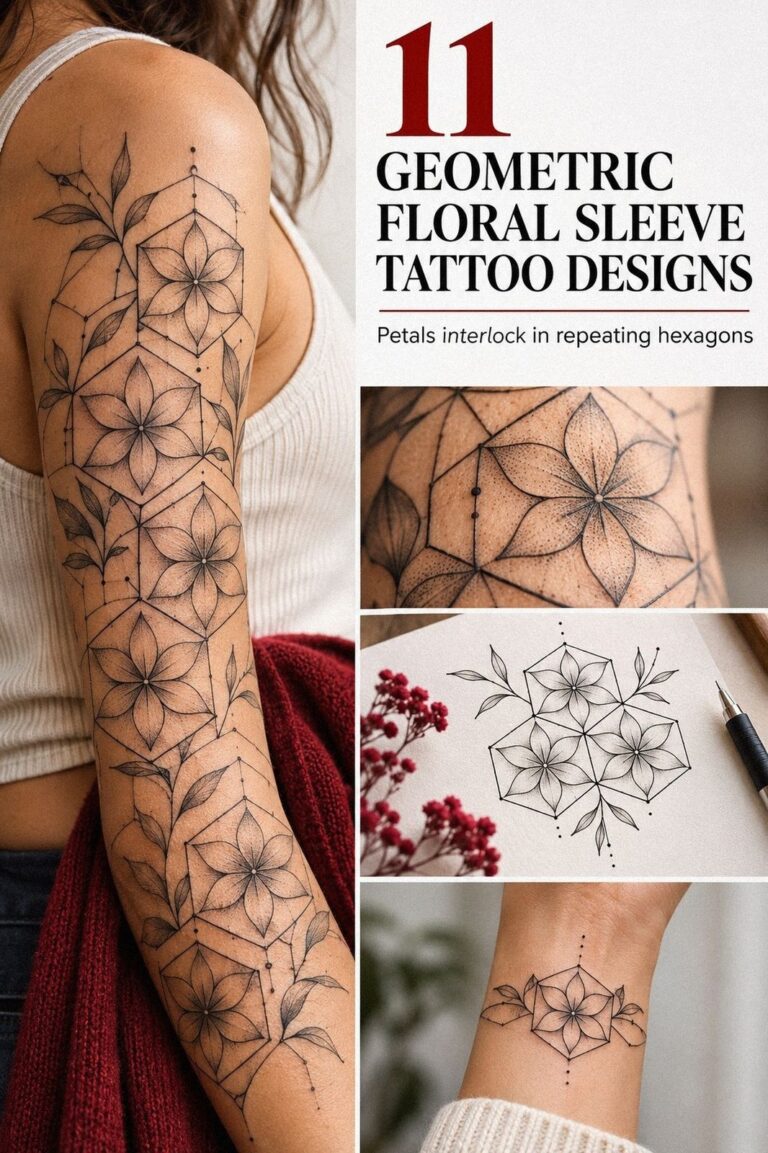
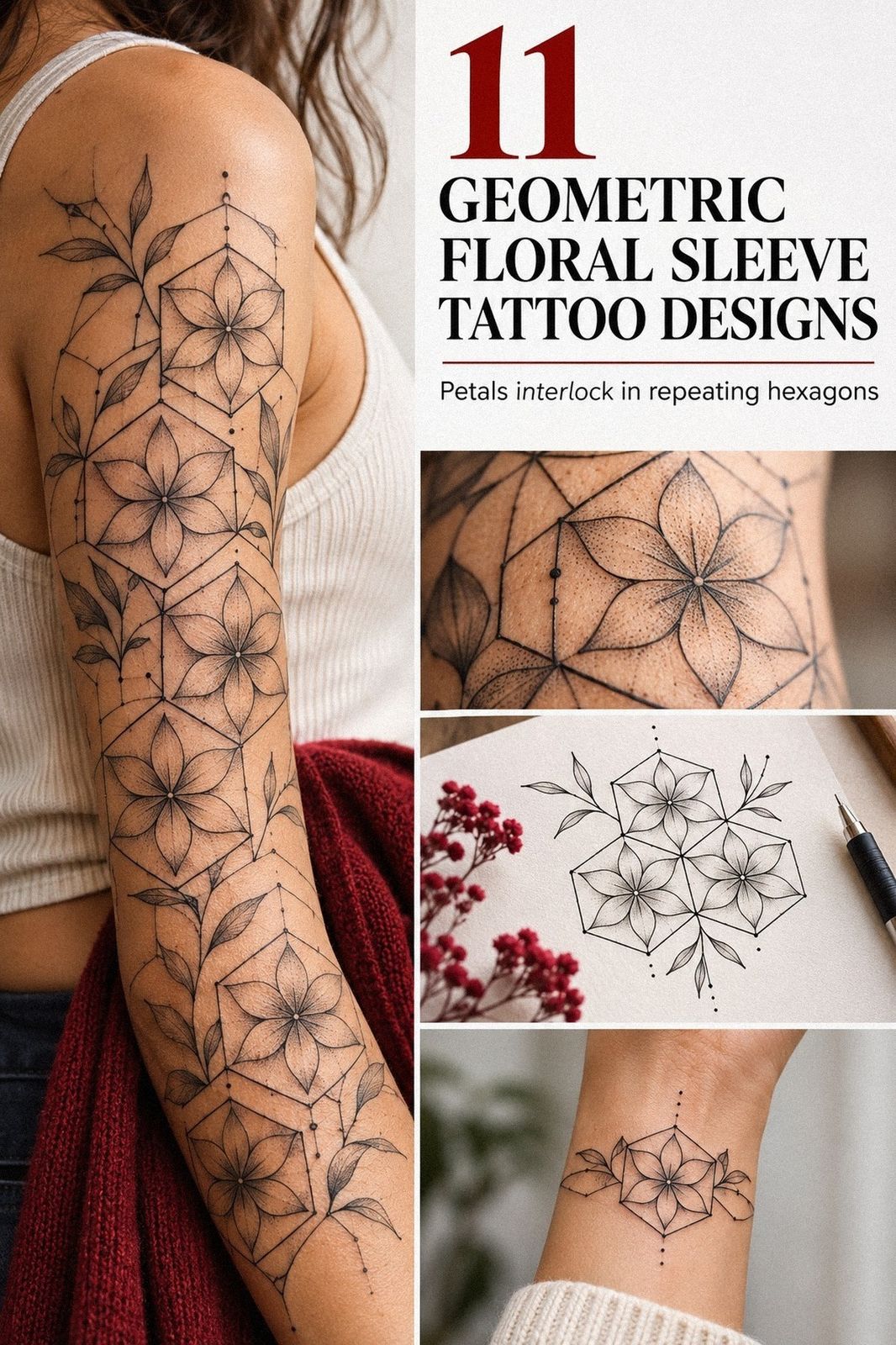
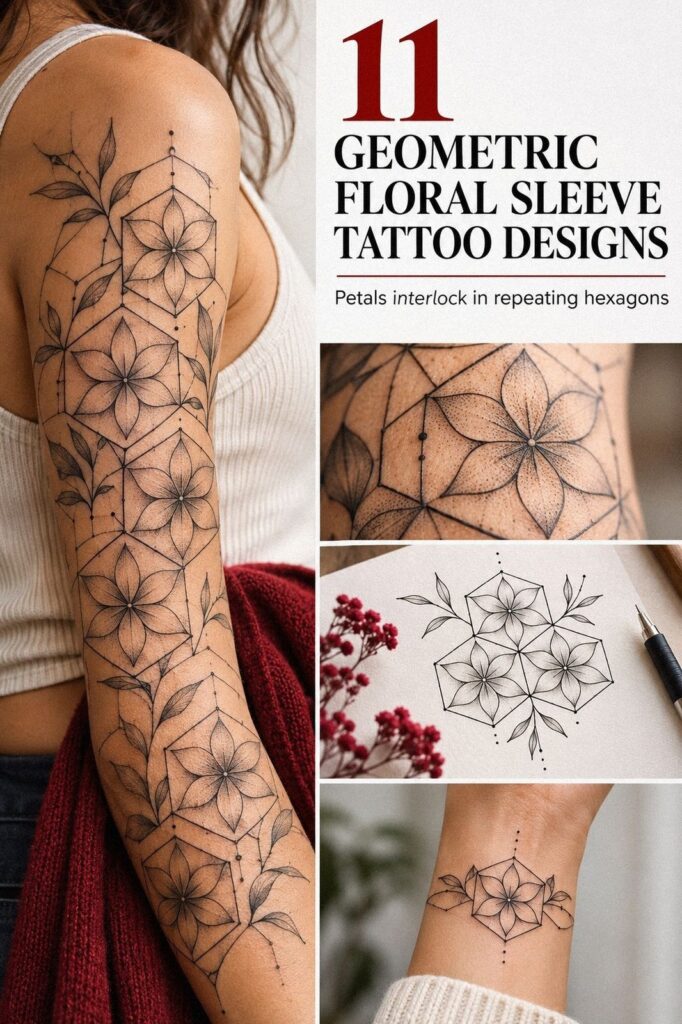
Geometric flower tattoos for women can stay crisp for years when the design has enough breathing space, strong placement, and line weight suited to your skin. I look at clean edges first, then symbolism. These 11 ideas keep the shape personal and meaningful!
- Let a Small Geometric Flower Lead on the Wrist
- Behind the Ear: Fine Lines with a Playful Edge
- Can a Bold Shoulder Bloom Stay Legible?
- Trace a Sacred Geometric Flower Along the Spine
- The Ankle Option: Delicate, Not Disappearing
- Make the Forearm Flower Unmistakably Yours
- Is Minimal Ribcage Geometry Worth It?
- Thigh Geometry with a More Ornate Finish
- A Sternum Symbol with Real Weight
- Collarbone Softness, Clear Geometry
- Choose Color on the Upper Arm with Intention
1Let a Small Geometric Flower Lead on the Wrist

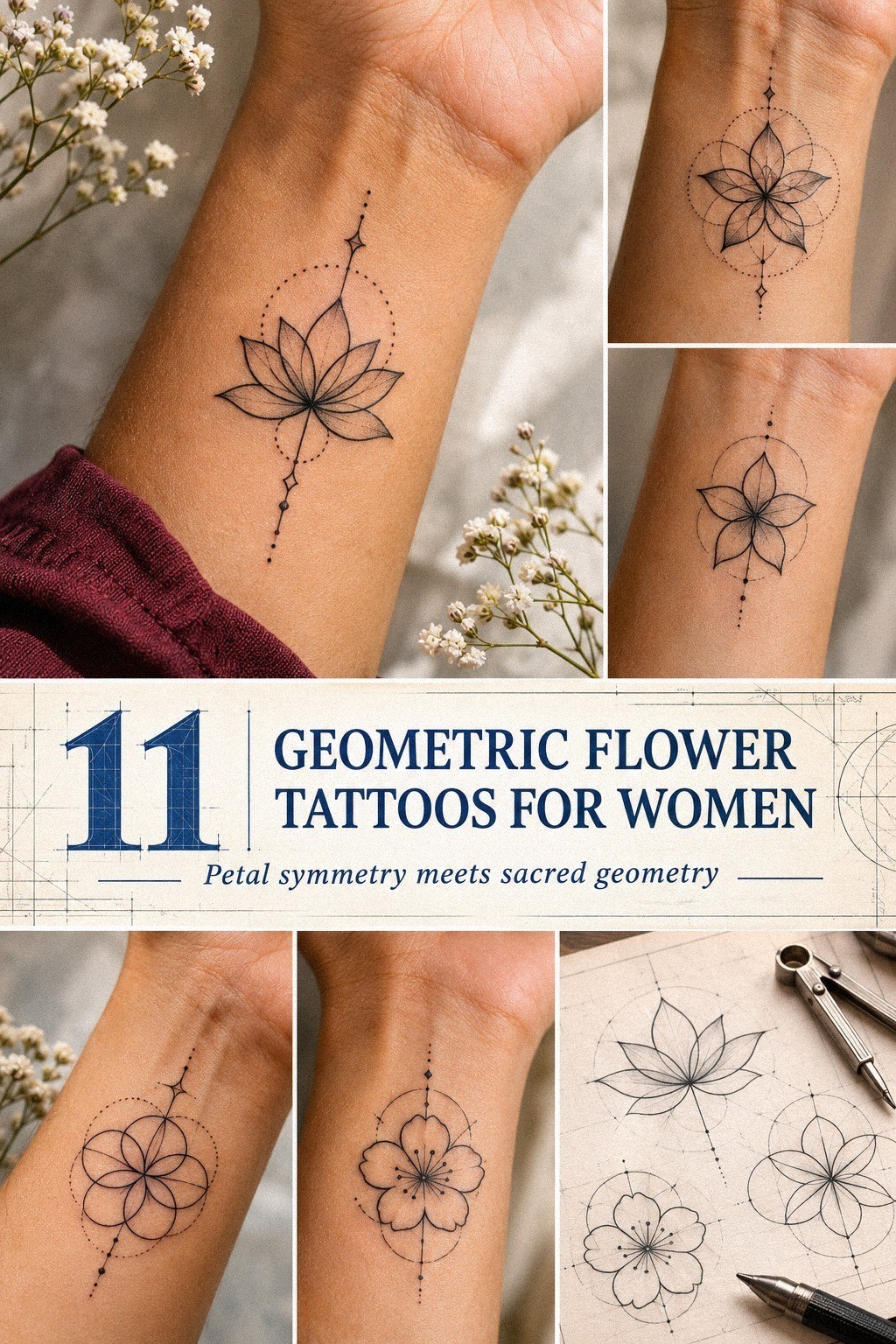
A small wrist flower works best when the stem follows the natural length of your arm instead of sitting like a stamp. You’ll want layered petals, a clean center, and enough open skin between each angle. A single-stem flower keeps the design dainty without making it disappear.
I’d choose crisp terracotta linework with olive accents here, rather than a barely-there grey wash. The wrist gets sunlight, friction, and frequent washing, so a faint design can soften sooner than you’d expect. If you’re drawn to tiny symbols, compare it with these tiny flower tattoo ideas for women before you commit.
Keep the flower around a size your artist can read clearly from a few feet away. You don’t need a large bloom to make your tattoo expressive. You need a recognizable silhouette, a graceful stem, and a center that won’t collapse into one dark spot.
I’d skip packing five petals into the smallest possible space. Your wrist deserves breathing room, and the more negative space you leave between the petals, the more timeless the result will look. It’s a delicate choice, but it can still feel bold!
2Behind the Ear: Fine Lines with a Playful Edge
Behind the ear is a playful place for a fine line flower because the design can stay discreet until you turn your head. You’ll want a short stem, restrained petal geometry, and a shape that follows the curve behind your ear. A fine-line flower gives the placement an elegant, intimate quality.
This area can be sensitive, especially close to the bone, so your session may feel sharper than the tattoo’s size suggests. I’d keep the design simple rather than asking for dense shading. A few precise intersections will look more graceful than an overcrowded mandala.
If you’re comparing delicate options, this guide to geometric fine line flower tattoos will help you notice how spacing changes the whole mood. Look closely at healed examples, not only fresh work.
Your artist should also check how the design looks when your hair is tucked behind your ear. That movement matters. If you wear glasses, headphones, or earrings every day, you’ll want the ear placement away from constant rubbing.
3Can a Bold Shoulder Bloom Stay Legible?

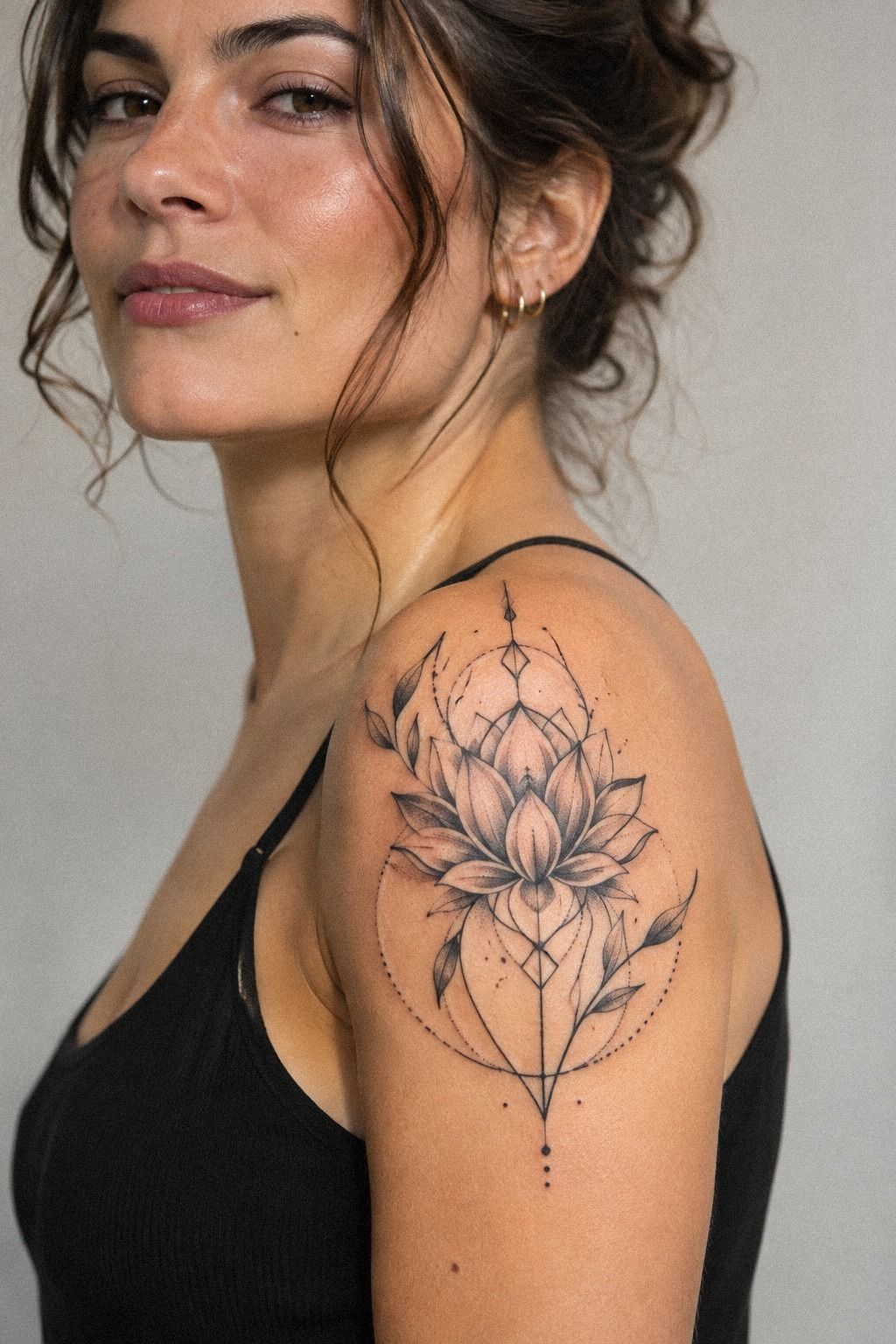
A shoulder flower gives you more space to build a powerful center, layered petals, and a stem that follows the round muscle. The shoulder placement can support a bold design without making the bloom feel crowded!
4Trace a Sacred Geometric Flower Along the Spine

A spine flower feels sacred because the stem creates a quiet vertical path down the center of your body. You’ll want the bloom to be narrow, balanced, and aligned carefully with your spine. A vertical floral motif can look graceful from the shoulders to the lower back.
This placement rewards patience during stencil alignment. Sit, stand, bend slightly, and look at the design again.
If you’re choosing a long stem, your artist should account for how your posture changes the line. I’d rather spend fifteen extra minutes adjusting placement than live with a crooked center.
You could borrow the layered structure from a geometric lotus flower tattoo while keeping the flower species personal. Lotus petals read clearly from a distance, and their shape gives the design a symbolic, powerful foundation.
Spine tattoos can feel more intense because the skin is close to bone. Your artist may divide the work into shorter sessions if the piece is detailed. If you’re worried about healing, loose clothing and gentle washing will make the first 2 to 3 weeks easier.
Build that healing plan into your schedule!
5The Ankle Option: Delicate, Not Disappearing
The ankle suits a delicate geometric flower with a short stem, pointed petals, and a small halo of open skin. Since the placement is narrow, you’ll want the design to look intentional from both the front and side.
A flower that wraps slightly can feel more flowing than one that sits rigidly in one spot. Ankle placement rewards restraint!
This idea also works well as a flash-sheet starting point. Study whether the artist’s sample shows a clean center, even angles, and linework that doesn’t wobble. If you’re choosing from a page of designs, your favorite should still feel like you when it’s separated from the flash design.
I’d avoid placing the darkest part directly over the ankle bone. That spot can feel sharp during the session, and the skin gets friction from socks and shoes. A slightly offset flower often wears more comfortably and looks graceful.
Your artist can scale the petals without losing the concept. Ask to see the stencil in the exact stencil size planned for your ankle.
It’s easy to fall for a whimsical design on paper, but your body needs a version that remains readable. That balance usually gives you better long-term value!
6Make the Forearm Flower Unmistakably Yours
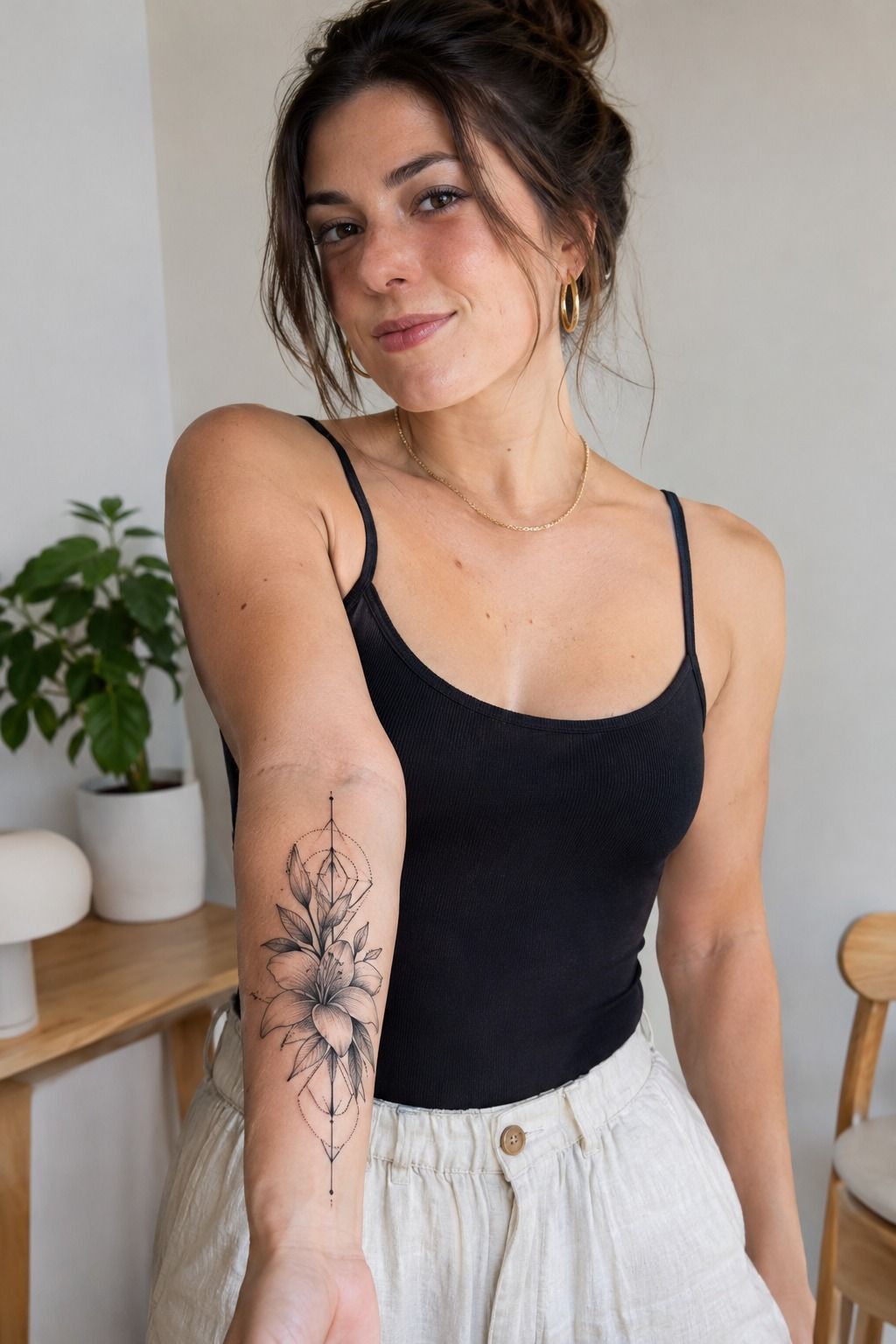
A forearm flower gives you space for a more expressive design with angled petals, a long stem, and a deliberate diagonal flow. You’ll see the design often, so your choices should feel personal rather than copied from a trend board.
I’d begin with the flower’s meaning, then choose the geometry. Let the forearm design feel like yours!
The forearm is one of the more tolerable placements for many people, although everyone’s experience differs. You’ll want your artist to check how the flower reads when your arm rotates.
A design that looks balanced palm-up may feel tilted when your hand turns. Test the arm rotation before committing.
For a softer direction, compare it with minimalist flower tattoo ideas. Then decide whether your version needs a heavier center or more open petals. I prefer a clear forest-green outline with selective rust shading because it gives the flower a crisp edge without filling the whole arm.
Before you book, set a realistic budget for the artist you actually trust. A lower quote is not automatically better value when the portfolio lacks healed geometric work. Your forearm tattoo plan should include the design, session minimum, aftercare, and a possible touch-up.
7Is Minimal Ribcage Geometry Worth It?
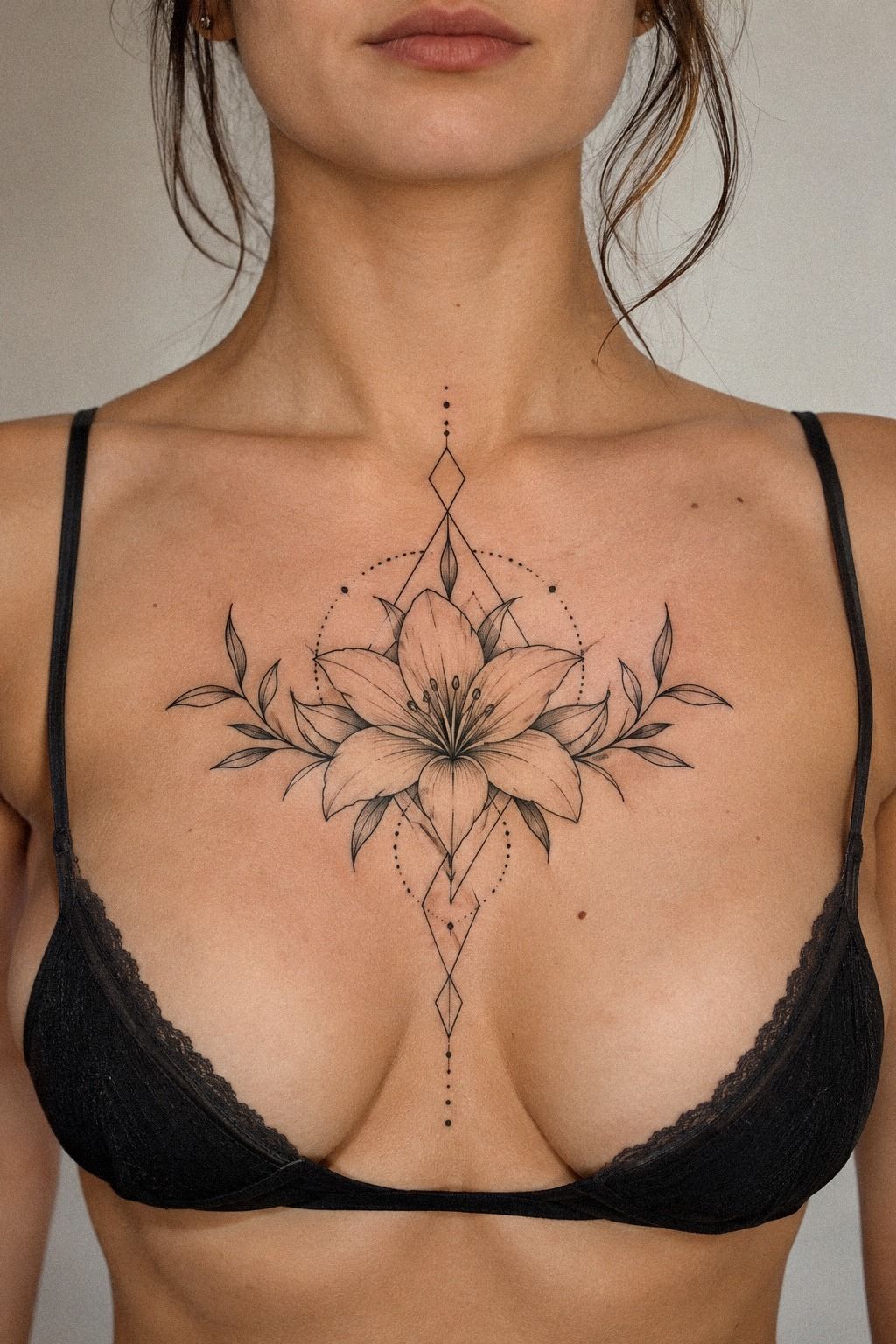
A ribcage flower can be minimal and still carry a lot of emotion. The strongest version usually has one central bloom, a thin stem, and only a few geometric divisions.
You’ll want the placement to follow the natural curve of your ribs rather than forcing a perfectly straight vertical line. A ribcage flower needs room to breathe!
This area is often more painful because the skin is close to bone and moves with breathing. I’d choose a design your artist can complete without unnecessary passes. A smaller tattoo with confident linework will feel understated rather than crowded.
If you’re unsure about scale, look through fine line flower tattoos for women. Pay attention to healed spacing and how much skin remains visible between each petal. That gap is doing real work.
Your artist should stencil the flower while you’re standing and sitting. If you’re planning a beach trip, leave enough time for the healing window before swimming or strong sun exposure. The design may be quiet, but the placement demands careful planning, especially when you’re deciding whether the result is worth it.
8Thigh Geometry with a More Ornate Finish

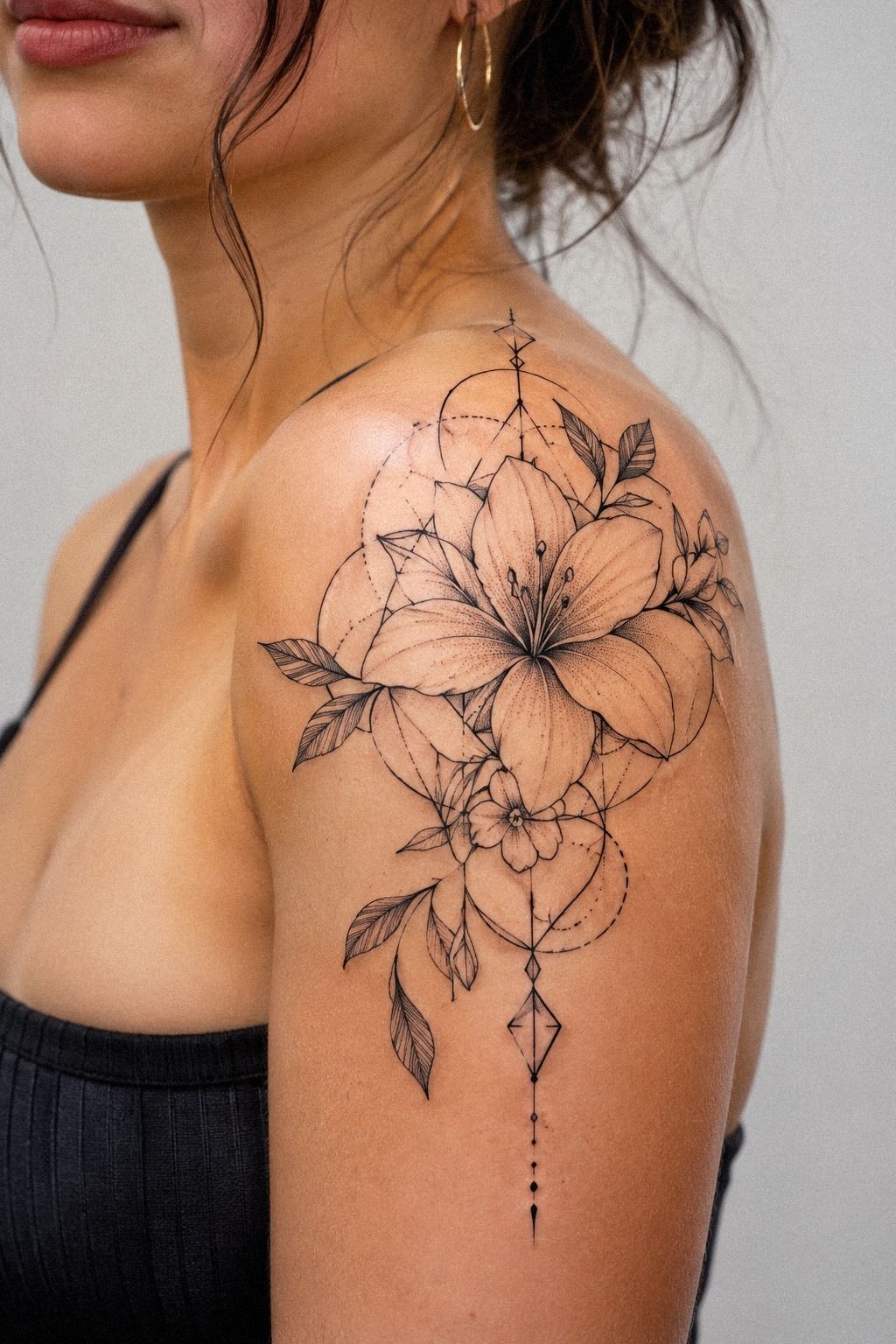
The thigh gives you space to make an ornate floral composition with layered petals, a geometric border, and controlled black shading. A ornate composition can feel dramatic without losing its structure!
9A Sternum Symbol with Real Weight
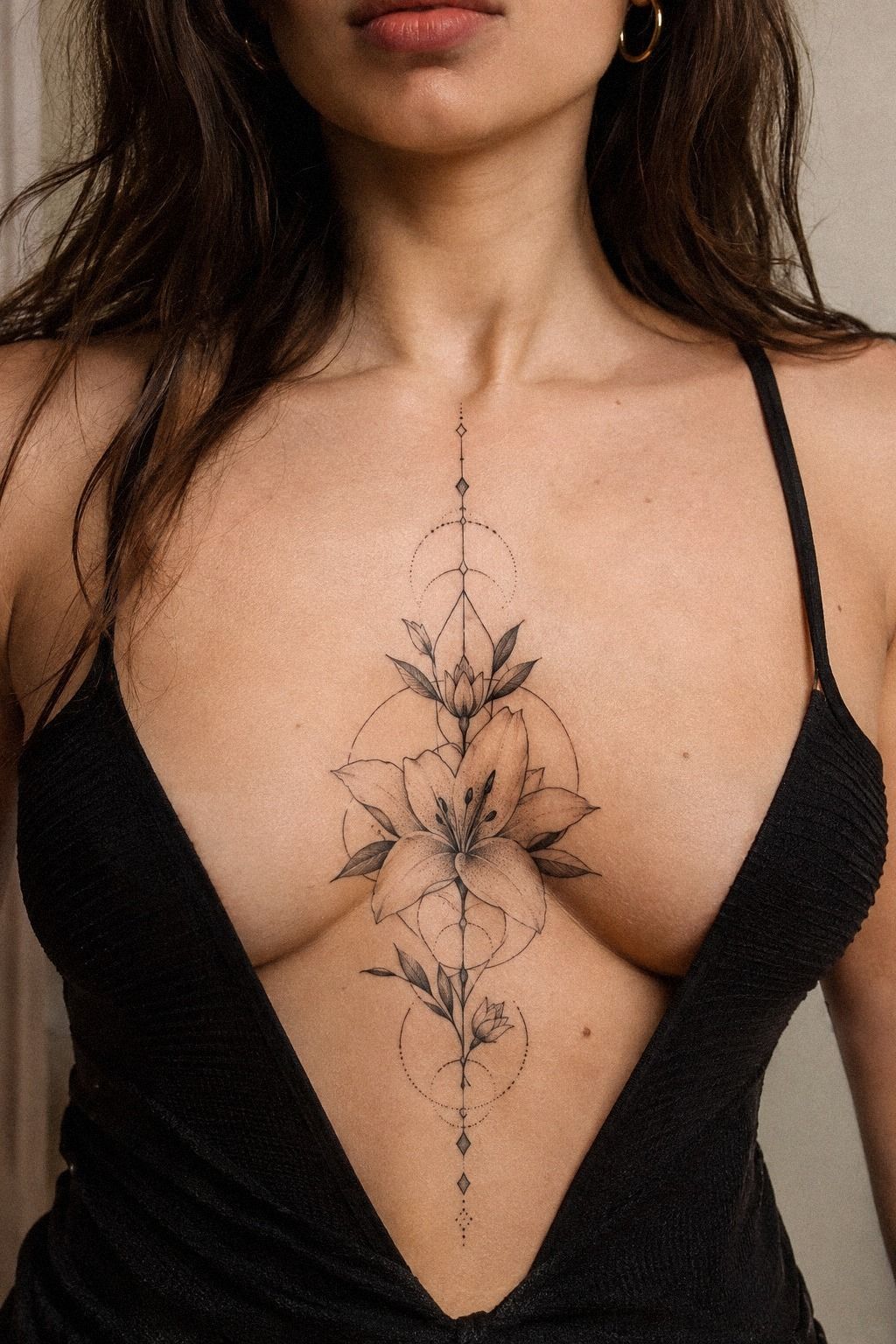
A sternum flower can feel deeply symbolic because it sits close to the center of your body. You’ll want a design with a clear vertical axis, layered petals, and a center that rests naturally between the breasts. A central floral emblem can represent growth, protection, grief, or a private turning point.
This placement is more sensitive than the forearm or shoulder. Your artist may recommend a slower pace, especially if the geometry includes repeated lines.
I’d keep the shape symmetrical but not sterile. One slightly organic petal can make the design feel more expressive.
Repeated lines should stay precise!
Before your appointment, ask to see the stencil while you’re standing. Body shape changes the spacing, and the flower should remain centered when you move.
If you’re considering a lotus variation, this geometric lotus flower reference can help you compare petal structures. Confirm the stencil placement twice!
Your aftercare plan matters here because clothing can rub the area. Wear something loose, follow your artist’s washing instructions, and avoid swimming while the surface heals.
What would you rather have, a crowded center or a little open skin that keeps the symbol legible? Follow the aftercare plan carefully!
10Collarbone Softness, Clear Geometry
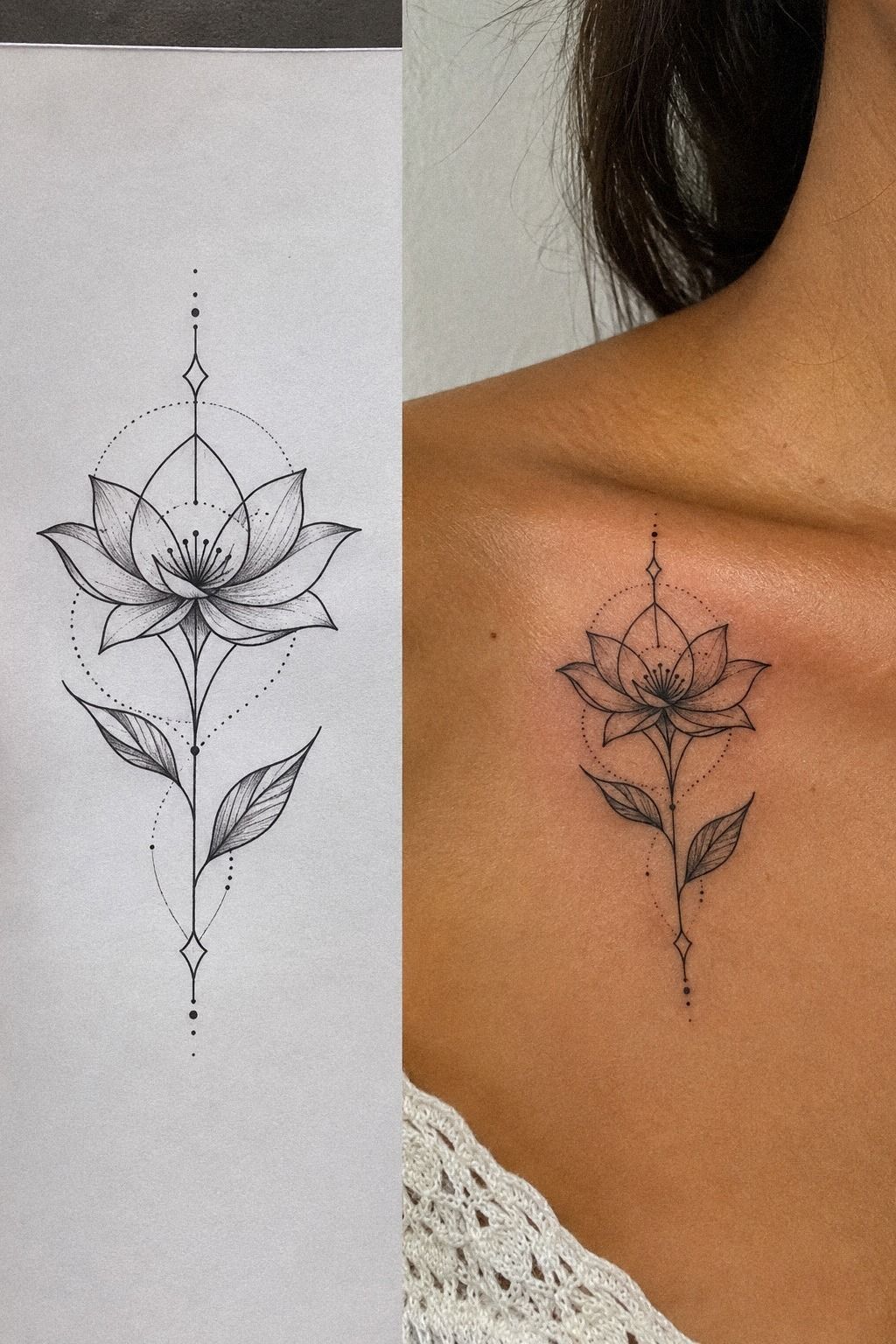
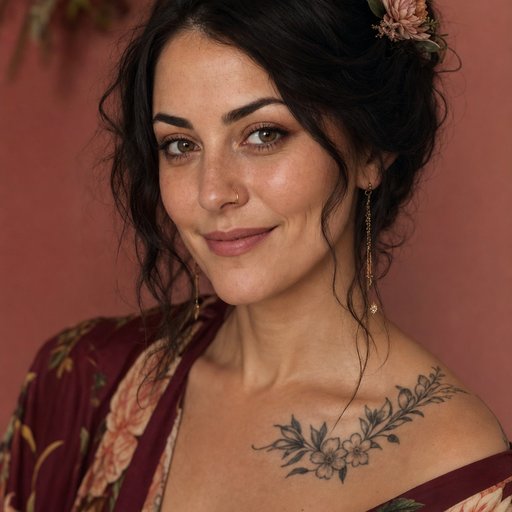
The collarbone is a graceful place for a feminine geometric flower because the natural bone line gives the design direction. You can place one bloom beneath the collarbone or let the stem travel along it. I’d choose a shape that feels personal rather than relying on softness alone.
Let the collarbone line guide the flow.
A clean stencil-to-healed comparison is especially useful for this placement. Fresh lines can look darker and sharper than they’ll appear after the surface settles. You’ll want to see how the same flower behaves once the skin has recovered, particularly if the design uses fine outlines.
For more ideas, explore watercolor flower tattoos for women, even if you’re staying with black ink. The color placement can teach you about balance, open skin, and how a flower follows the collarbone. I’d still choose black geometric linework for the cleanest long-term read.
The collarbone gets sun and movement, so use sun protection on the healed tattoo. Your artist can also adjust the stencil to suit your shoulder width. It’s a romantic placement, but the best result comes from precise alignment, not from adding more petals.
Include that care in your budget before you book.
11Choose Color on the Upper Arm with Intention

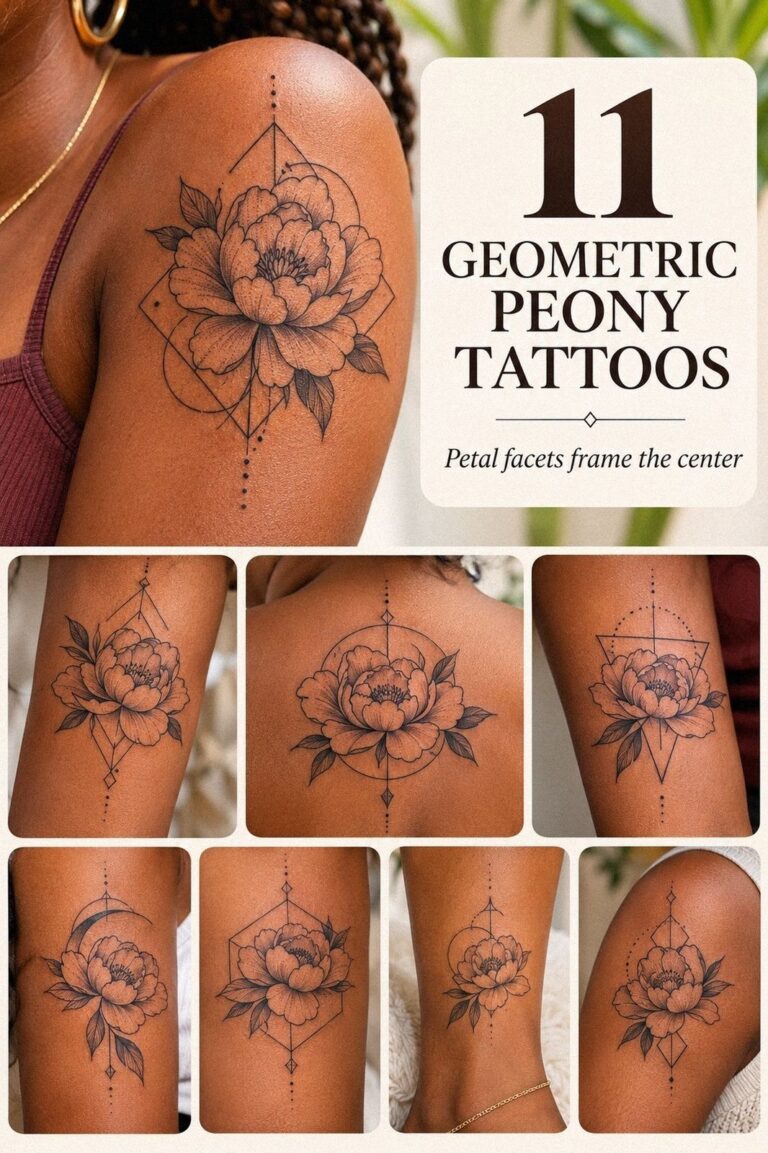
An upper-arm flower gives you space for a vibrant geometric bloom with rich petals, a defined center, and a controlled upper-arm flower palette that keeps everything readable. You’ll want the colors limited enough to feel intentional. Two or three strong shades can look more vibrant than a rainbow packed into every section.
On deep brown skin with warm undertones, your artist should discuss how each pigment is expected to heal and appear. The stencil should show the structure before color is added.
I’d prioritize a strong silhouette first, because color can’t rescue a flower whose geometry is unclear. Start with the ink palette!
You might pair terracotta, stone, and olive accents in a controlled palette. Ask your artist for healed color work on similar skin tones, not only fresh pieces. That conversation will help you choose a palette that feels bold and realistic for your skin.
The upper arm is also a practical placement if you want control over visibility. Your sleeve can cover it, while a sleeveless top can reveal the whole flower.
If you’re building a collection, leave visual space around the design so your next tattoo won’t crowd it. That collection plan protects the value of the piece!
A Fast Way to Judge Spacing
Start by reducing the design to its clearest silhouette. If you can’t identify the flower without its tiny interior marks, the structure may be too dependent on detail. A readable silhouette gives the tattoo strength before shading, color, or symbolism enters the conversation.
Next, look at the gaps between petals, the center, and the outer geometry. Those petal gaps should feel intentional rather than accidental. When every section is filled, even an intricate design can lose its crispness as the skin changes.
Three Questions Before You Book
Ask whether the artist has healed examples with a similar line weight, placement, and skin tone. Fresh work can look sharp in every portfolio, but a healed portfolio shows how the design actually settles. I’d also ask what the artist would simplify if the stencil feels crowded.
Then ask how the session is priced. A studio minimum, hourly rate, design fee, and touch-up policy can change the final quote. Knowing the studio minimum early makes it easier to compare artists fairly instead of choosing from a single headline number.
Match the Flower to Your Skin and Schedule
Your skin tone, daily clothing, sun exposure, and movement all affect the design decision. A delicate ankle piece may need different contrast from a bold shoulder flower. The most stylish option on paper is not always the most practical option for your daily routine.
Think about healing time before choosing a placement. A sternum or ribcage tattoo may need more care around clothing, while an ankle can face friction from socks and shoes. If you have travel, swimming, or outdoor work planned, schedule around the healing time.
Think about your work, exercise, and travel plans, too. If you have outdoor work or regular swimming ahead, a different placement may be more practical. Make room for that outdoor work reality before you book.
The Best Value Is Not Always the Smallest Piece
Tiny tattoos can be affordable, but small scale does not remove the need for thoughtful design. A crowded miniature flower may require a later adjustment, while a slightly larger version can preserve the petals and center more clearly. That is why I don’t treat the lowest price as the best value for tiny tattoos.
Your quote should reflect judgment, hygiene, placement time, and line control. A written tattoo quote gives you something concrete to compare. Ask what is included, whether a deposit applies, and how the artist handles a necessary touch-up.
Ask whether the artist includes a touch-up policy in the quote. Knowing that detail early can prevent confusion later, especially with delicate lines or color.
What I’d Decide Before You Book
I’ve changed my mind about geometric flowers more than once. At first, I thought the smallest possible design would be the safest choice, but a cramped flower can lose its identity faster than a slightly larger one with open skin.
Now I ask three questions: Can I recognize the bloom from a distance? Does the placement support the direction?
Will the line weight survive normal movement and sunlight?
Your artist’s portfolio should show healed tattoos, clean linework, and designs on skin tones similar to yours. I’d choose a specialist portfolio over a polished page filled only with fresh work. Ask how the artist approaches fine lines, solid black, color, and touch-up decisions.
You’re hiring judgment as much as technique. Prioritize healed work!
The most timeless choice isn’t always the most delicate one. A crisp black center, sensible spacing, and thoughtful placement usually matter more than chasing the newest look. If you’re still comparing directions, revisit geometric fine line flower tattoos and small flower tattoo ideas with your own placement in mind.
I made the mistake of treating aftercare like an afterthought once. Don’t repeat that.
Wash gently, moisturize as directed, avoid pools and strong sun during healing, and give the surface roughly 2 to 3 weeks to settle. Complete healing can take about 2 to 3 months, so your patience matters.
Aftercare protects the final result.
These are planning ranges, not promises. You’ll want a written quote from the studio, and you shouldn’t choose an artist by price alone. A healed blackwork example tells you more than a bargain rate ever will.
The Questions I Get Asked Most
How much does a geometric flower tattoo for women usually cost?
A small geometric flower tattoo usually runs about $100 to $300 in the US, while studio minimums may sit around $50 to $100 and hourly rates around $100 to $250. The final quote depends on size, placement, artist, and region. You’ll want to ask for the minimum before booking.
Are geometric flower tattoos for women a good idea for a first tattoo?
Yes, especially on the forearm, upper arm, shoulder, or thigh, where many people find the experience more tolerable. Clear geometry gives your first tattoo structure and meaning. You’ll still want a design with enough spacing, rather than an ultra-tiny flower filled with fragile details.
How do I choose a tattoo artist for geometric flower tattoos?
Look for clean linework, healed photographs, consistent symmetry, and experience with your preferred style. A strong healed portfolio is the best trust signal. You should also ask about studio hygiene, stencil placement, touch-ups, and how the artist works with your skin tone.
How much do geometric flower tattoos hurt?
Ribcage, feet, hands, and sternum placements tend to feel more intense because they’re close to bone or have less padding. Forearm, thigh, and shoulder tattoos are often more tolerable. Pain varies from person to person, so you’ll want to plan for breaks and honest communication around ribcage placement.
How long does a geometric flower tattoo take to heal?
The surface generally heals in about 2 to 3 weeks, while complete healing can take roughly 2 to 3 months. Gentle washing and careful aftercare protect the final result. You’ll need to avoid swimming, strong sun, picking, and tight friction while the skin reaches surface healing.
What’s the best placement for a geometric flower tattoo?
The forearm, shoulder, upper arm, and thigh offer a useful balance of visibility, space, and comfort. Your best placement depends on how you want to live with the tattoo. You’ll also want to consider sunlight, clothing friction, pain level, and whether you want easy coverage.
Is it better to choose fine lines or bold blackwork?
Bold blackwork generally gives the strongest long-term contrast, while fine lines can look graceful when the design has enough space. The right line weight matches the size and placement. I’d avoid squeezing delicate detail into a space too small for the flower to breathe.
Where I’d Start First
If I had to pick one, I’d start with the wrist flower. Its clean stem and open petals stay readable without demanding a large commitment, and you’ll see the meaning every day. Pin this idea for later and compare it with these minimalist flower tattoo designs.