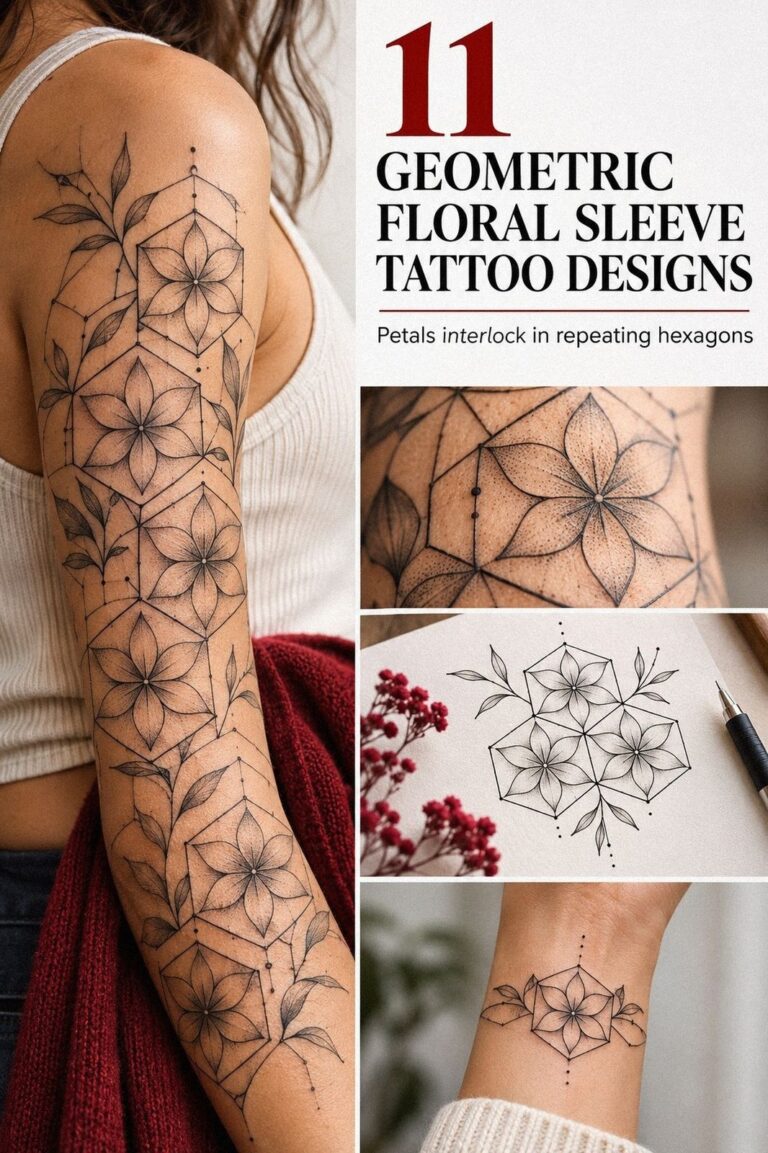
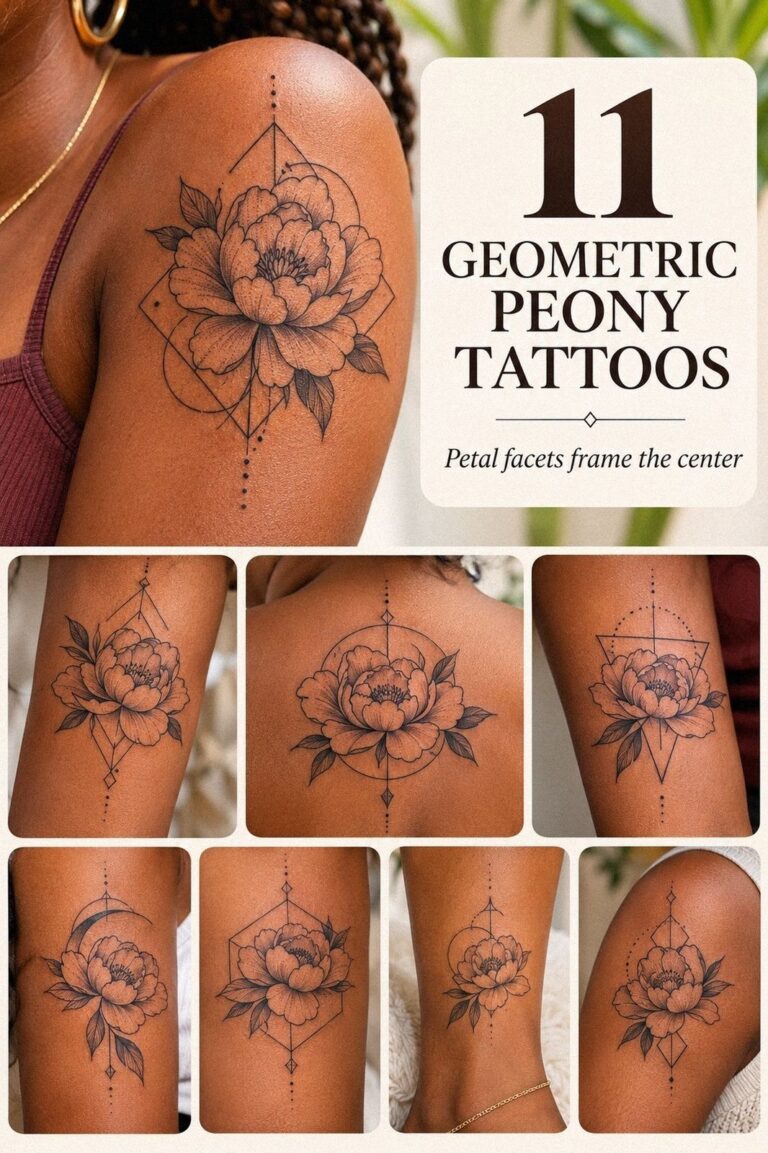
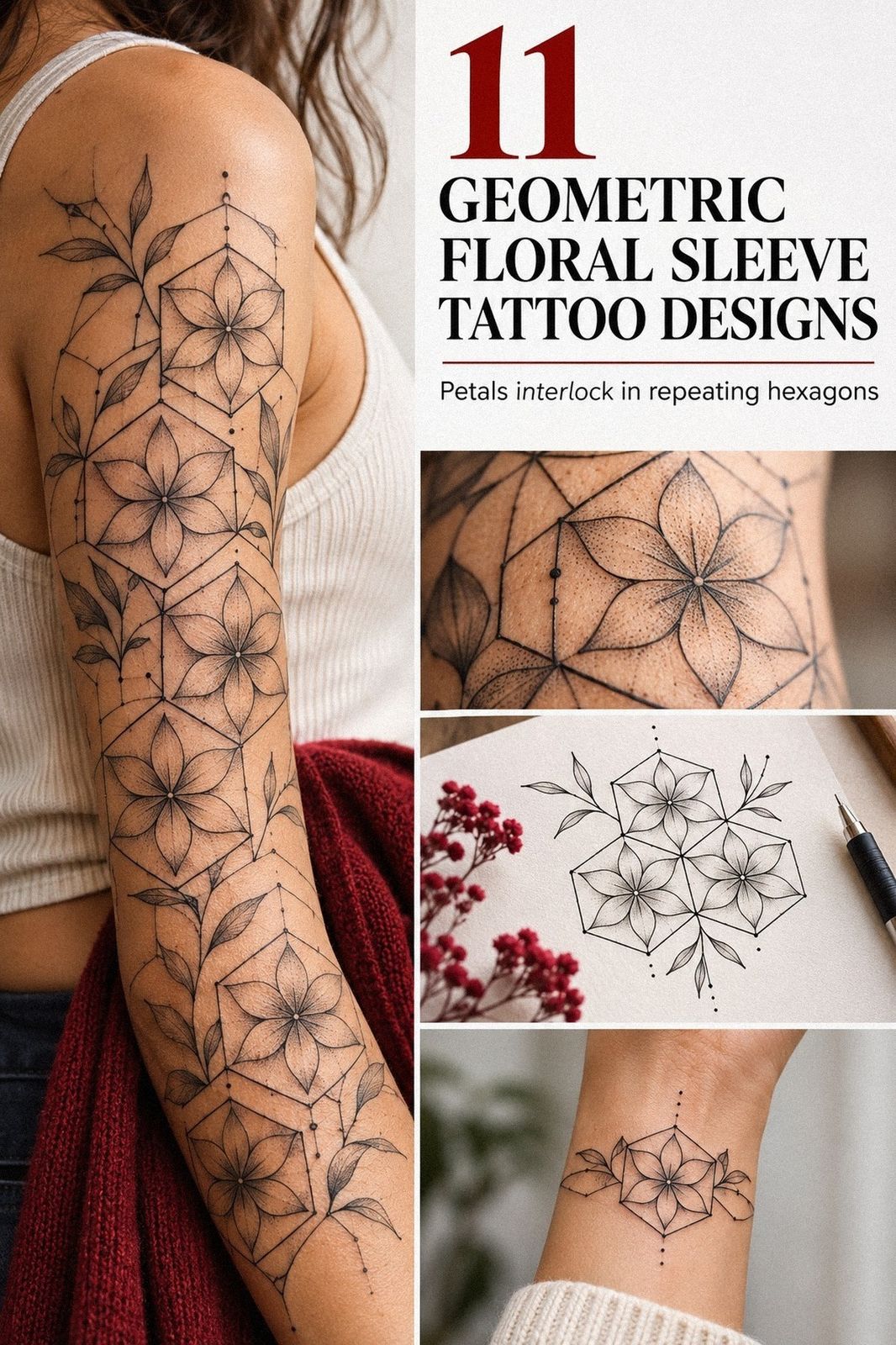
*Geometric flower crown tattoos can be striking without explaining themselves to everyone who sees them. I once chose detail over readability and regretted the blur that followed. These ideas keep the symbolism personal, the shapes crisp, and the placement intentional. That choice can save you from a soft, unclear result later!
You’ll find delicate, bold, and meaningful options for different skin tones, placements, and comfort levels.
- Choose a Small Geometric Flower Crown
- Why Fine-Line Geometry Works on the Collarbone
- Hide Meaning in a Rib-Cage Crown
- Let a Calf Placement Go Bold
- Test Scale with a Wrist Flash Sheet
- Build Contrast for Deep Ebony Skin
- Follow the Shoulder’s Curve
- Keep a Minimal Crown Legible
- Make the Sacred Symbol Personal
- Blackwork or Fine Line? Compare the Tradeoff
- Give Colorful Geometry Room on the Thigh
1Choose a Small Geometric Flower Crown
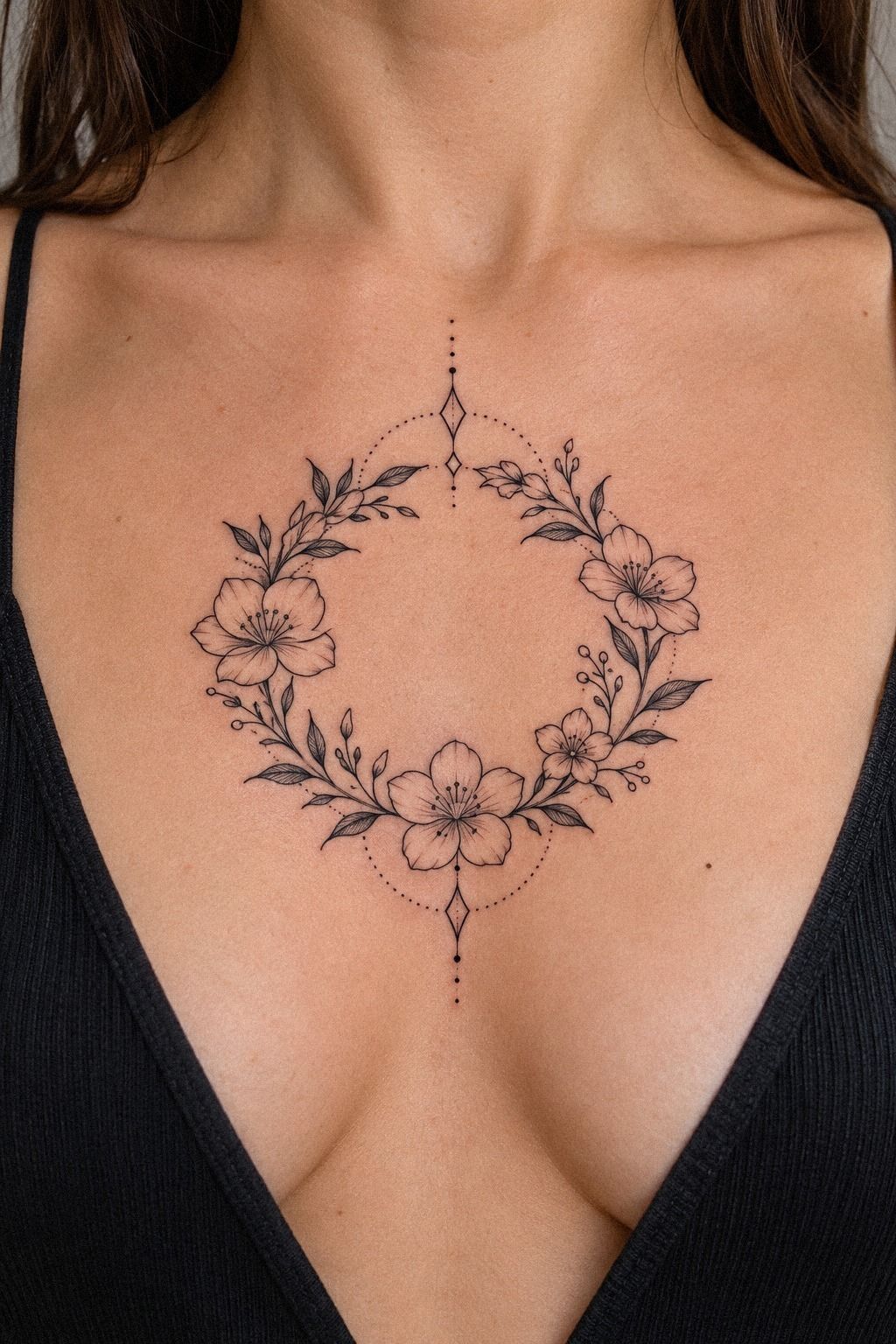
A small sternum design can feel intimate without disappearing into the skin. The flower should have a clear center and enough open skin around it to preserve the shape.
The single-stem floral design creates a clean path from the flower head to the stem. Layered petals can make the crown intricate, but the structure still needs to read from a normal distance.
If you want a dainty piece, ask for generous negative space between each petal. A one-inch tattoo may look crisp on paper but lose tiny interior shapes after healing. A slightly larger design often gives your artist more control.
Compare the scale with these small flower crown tattoo ideas before deciding. You may find that a two-inch version feels more balanced than the tiniest option.
I’d keep the crown compact and skip extra leaves here. Your sternum already creates a natural centerline, so too many details can make the design feel crowded.
The terracotta-and-olive tattoo ink should stay concentrated in the outer geometry. The inner petals can rely on skin breaks, which keeps the piece crisp, personal, and quietly expressive.
If you’re nervous about sternum placement, ask about session length and short pauses. You don’t have to prove anything by sitting through an unnecessarily long appointment!
2Why Fine-Line Geometry Works on the Collarbone

A fine-line geometric crown can follow the collarbone with a sleek, elegant rhythm. The flower rises from one stem, while layered petals create a small crown without making the tattoo feel heavy.
This placement can work beautifully with a muted clay accent when the artist chooses clear contrast. The design shouldn’t be so faint that your chosen symbol disappears after the surface settles.
Ask your artist to balance fine-line tattoo work with a few stronger anchor marks. Delicate tattoos can look polished on appointment day and lose their structure later. A few crisp lines can protect the overall silhouette.
The most intricate detail belongs in the flower head, not every millimeter of the stem. You’ll get a more graceful result if the outer petals stay open and the center carries the visual weight.
For comparison, browse this geometric fine line flower tattoo guide. Notice how small changes in spacing alter the mood.
Your artist may discuss a specific needle configuration, but the healed portfolio matters more than a trendy number. Fresh lines can look sharper than they’ll look after the skin settles.
If your budget is limited, spend on a strong consultation and healed examples before adding complexity. The extra planning can be more valuable than another layer of detail.
3Hide Meaning in a Rib-Cage Crown

A rib-cage crown tattoo gives the design a fierce, expressive quality. It can feel private without making the symbol obvious to everyone who sees it.
The layered petal geometry can remain symbolic without becoming literal. I like a crown that reveals its pattern slowly, with one dominant flower and quieter details around it.
Use plum-grey shading only beneath the lowest petals if you want depth. A restrained rose-gold accent can add contrast without flattening the design.
I’d avoid filling both leaves completely, because the rib cage already creates strong vertical movement. Your design should follow the body instead of fighting it.
For additional direction, browse these delicate flower crown tattoo examples. Compare the open spacing and the way each crown handles the ribs.
Rib tattoos can feel more intense than forearm or shoulder tattoos. Ask whether your piece can be completed in a shorter session, especially if this is your first tattoo.
The two-leaf botanical border adds balance, but you don’t need more symbols. Tell your artist which detail carries the meaning, and let that element stay visually dominant.
4Let a Calf Placement Go Bold

A calf placement gives you enough surface area for a daring crown. Navy-and-white accents can keep the flower readable while preserving a clear geometric structure.
5Test Scale with a Wrist Flash Sheet

A wrist tattoo silhouette should stay strong because the skin is visible, active, and exposed to friction. Small designs need more discipline than large ones.
I like a flash-sheet scale test because you can compare symmetry, line density, and size before committing. The final design should be adapted to your wrist rather than copied blindly from a page.
Look for a crown with an ornate center and open petals. A design that depends entirely on hair-thin interior marks may lose clarity as the wrist bends and moves.
You can compare the direction with these tiny flower crown tattoo ideas and these small flower crown tattoo references. Keep the option that still feels intentional while your hand is moving.
The shop minimum may matter more than the hourly rate for a small wrist piece. Ask for a complete estimate before booking so your budget doesn’t depend on guesswork!
The wrist is a good test of whether the idea is truly minimal or simply underdeveloped. Remove one weak detail before adding another.
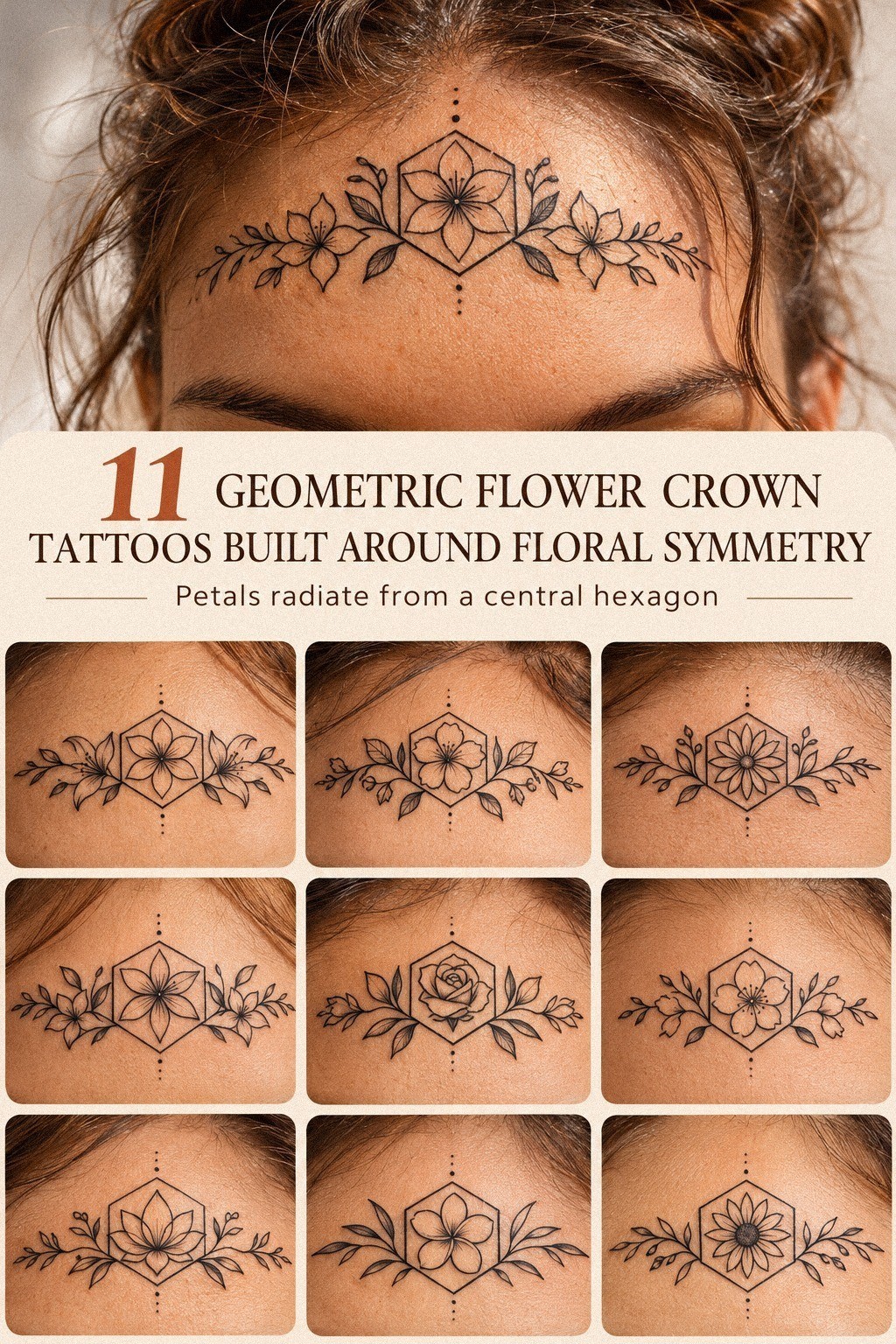
6Build Contrast for Deep Ebony Skin

The design can look vibrant on deep skin when it respects contrast instead of chasing a reference made for another complexion. A single flower, two leaves, and layered petals can remain crisp with thoughtful spacing.
Ask your artist how they’ll handle forest-green and rust saturation on deep skin. The goal isn’t to lighten your skin or force a pale reference to behave the same way.
It’s to choose line weight, spacing, and saturation that respect your natural tone. Your artist should be comfortable discussing healed results without making careless promises.
I’d keep the flower head slightly larger than the wrist version. A forearm composition can support a more intricate pattern, but every line still needs a reason.
The two leaves should frame the stem without creating a solid block that swallows the flower. A sharp outer contour can make the tattoo feel polished and timeless.
A black flower crown tattoo collection can help you compare line density, scale, and placement. Look for healed work from a range of skin tones.
The healed portfolio tells you more than a newly completed tattoo. Ask how the artist adjusts saturation and spacing for your skin.
Use a gentle cleanser, follow the recommended moisturizer routine, and avoid direct sun while the surface recovers. Long-term clarity depends on care as much as the original stencil.
7Follow the Shoulder’s Curve

A shoulder flower crown can follow the rounded body line in a graceful way. Keep the central flower clear and let the petals echo the shoulder’s natural movement.
8Keep a Minimal Crown Legible

The minimal version uses a single stem and layered petals on medium warm ivory skin. It’s sleek, restrained, and easier to wear every day than a large statement piece.
Use minimal black linework for the outer flower and leave the center open. I’d rather see three confident shapes than twelve uncertain marks.
Your artist can create a polished result by adjusting petal angles instead of adding more symbols. Minimal doesn’t mean unfinished. It means every mark has a job.
A small tattoo still needs thoughtful scale. Ask how the design will look when your wrist bends, because lines can appear closer together in motion.
For a softer comparison, explore these small lotus flower tattoo references. Compare the negative space and the way the flower remains recognizable.
The negative-space plan is where the value lives in a minimal tattoo. Removing one unnecessary mark can make the remaining symbol sharper and more meaningful.
If your wrist gets frequent sun, use UV protection after the tattoo has fully healed. Your minimal flower can stay crisp for years when you protect it from repeated exposure.
9Make the Sacred Symbol Personal

A sacred geometric flower crown can hold private meaning without becoming literal. Midnight-blue and ivory accents can keep the symbol powerful while copper details add a quiet focal point.
10Blackwork or Fine Line? Compare the Tradeoff

The dark blackwork structure uses heavier marks and deliberate skin breaks. A fine-line approach uses lighter marks and more open detail. Both can be striking, but they solve different readability problems.
Use dark saturation for the main flower structure and reserve skin breaks for the petals. I’d skip a design where every area is filled, because it can lose the crown shape as the tattoo ages.
A fine-line approach may suit a delicate or understated symbol. It needs careful spacing, especially when the design includes small petals or intersecting angles.
A healed reference tells you more than a fresh appointment result. Inspect the edges, the spaces between leaves, and the center of the flower.
The healed tattoo comparison should answer three questions. Are the edges still crisp? Is the flower still recognizable?
Does the design still feel sharp?
This black flower crown tattoo guide can help you compare heavier and lighter approaches. You can also revisit this minimalist flower crown tattoo guide before choosing a style.
Blackwork may be worth it if you want an iconic silhouette. Fine line may offer better value if your priority is delicate detail and a lighter visual presence.
Your artist consultation should include healed examples, line weight, placement, color, healing, and expected cost. Choose the approach that matches your patience, budget, and preferred upkeep.
11Give Colorful Geometry Room on the Thigh

A colorful geometric flower crown can feel vibrant without becoming visually chaotic. Terracotta, olive, and stone-colored accents can give the design personality while keeping the geometry readable.
What I’d Tell You Before Booking
I’ve changed my mind about geometric flower crown tattoos more than once. At first, I thought the most intricate reference would make the strongest tattoo. Then I saw how quickly crowded petals can lose their rhythm once the skin heals.
Now I’d choose a simpler flower with deliberate spacing over a complicated design that needs a magnifying glass to explain itself. That choice feels understated, but it often ages better.
Your artist portfolio matters more than the image you save. A polished collection is useful, but healed work tells you whether the artist understands line spread, saturation, and skin movement.
I’d study several healed tattoos and ask how designs are adapted for different skin tones. A careful answer is a good sign. A rushed answer is information too.
Placement changes the emotional volume of your tattoo. A sacred sternum placement can feel private.
A forearm piece can feel bold and visible. A thigh tattoo may give you more space for expressive geometry without asking you to show it every day.
The consultation plan should cover placement, size, line weight, color, healing, and expected cost. If the conversation feels rushed, keep looking. That isn’t being difficult; it’s protecting a permanent decision.
Match the Symbol to Your Skin and Style
Skin tone should shape the technical plan, not limit your choices. Every complexion can carry meaningful geometric work when the design respects contrast, spacing, and saturation.
Ask to see healed results on skin tones close to yours. This is especially useful when you’re considering fine lines, pale colors, or delicate internal details.
Your style can be edgy, romantic, classic, or completely personal. The artist’s role is to translate that feeling into marks that remain readable.
If you prefer a refined direction, keep the flower head symmetrical and the stem simple. If you want something raw, allow slight irregularity in the petals.
Plan Visibility Before the Appointment
Think about how often you want to see the tattoo. A forearm can feel direct and confident, while a rib or thigh placement can feel more private.
A visibility plan helps you choose without reacting only to a saved reference. Consider work, family, clothing, exercise, and whether you want strangers to ask about the symbol.
A personal placement decision can change the entire mood of the crown. The same design may feel quiet on the ribs and iconic on the forearm.
Ask your artist for a stencil check while your body is relaxed. Movement matters. So does the position from which you’ll usually see the tattoo.
Set a Realistic Tattoo Budget
The cost depends on size, placement, detail, location, and the artist’s rate. A shop minimum may apply, especially when the appointment requires careful setup.
A larger piece may be priced hourly or by the project. Request a written estimate that includes the likely session length and any follow-up appointment.
Spend first on healed-linework experience. Extra details won’t rescue a design if the artist hasn’t shown that their lines remain clear after healing.
You can reduce cost by simplifying the crown, not by rushing the consultation. A clean, minimal design may be more valuable than a cheaper appointment with uncertain results.
Protect the Design While It Heals
Follow your artist’s instructions for washing and moisturizing. Avoid swimming, soaking, and unnecessary friction during the early healing period.
The aftercare routine should be simple enough to follow consistently. Wash gently, pat dry, and use only the product your artist recommends.
Don’t judge the final result while the tattoo is peeling or irritated. The healing timeline changes from person to person, and the surface may look uneven before it settles.
Once healed, protect the tattoo from repeated sun exposure. A sharp design stays more polished when you treat UV protection as part of long-term care.
What People Always Want to Know
How much does a geometric flower crown tattoo usually cost?
A geometric flower crown tattoo usually costs about $100 to $300 in the United States for a smaller design. The artist, region, placement, size, and session length all matter.
Some studios list a minimum around $50 to $100, while hourly rates often fall near $100 to $250. Ask for a written estimate.
Are geometric flower crown tattoos a good idea for a first tattoo?
Yes, they can be a meaningful first tattoo when you choose manageable placement and readable linework. Forearm, thigh, and shoulder placements may be easier to tolerate than ribs, feet, hands, or sternum. I’d still review healed examples before choosing very fine details.
How do I choose a tattoo artist for a geometric flower crown tattoo?
Choose an artist with clean healed linework, strong geometric composition, and clear hygiene practices. Review recent work, ask for healed photos, and confirm that the artist works comfortably with your skin tone and preferred placement. A careful consultation is usually worth the extra time.
How much do geometric flower crown tattoos hurt?
Pain varies by person and placement. Forearm, thigh, and shoulder tattoos are often more tolerable, while ribs, feet, hands, and sternum can feel more intense. Your artist can suggest breaks if you need them, and you can plan a shorter appointment if that feels better.
How long does a geometric flower crown tattoo take to heal?
The surface usually heals in about 2 to 3 weeks, while complete healing can take around 2 to 3 months. Wash gently, moisturize as directed, avoid swimming during early healing, and protect the finished tattoo from direct sun once it’s safe.
What’s the best placement for a geometric flower crown tattoo?
The best placement depends on visibility and comfort. Forearm and shoulder placements are practical and often easier to tolerate, while sternum and ribs feel more private but can be more sensitive. Your artist should check the stencil while your body is relaxed before starting.
Where I’d Start First
If I had to pick one, I’d start with the forearm geometric flower crown tattoo. It gives your artist enough space for crisp petals, it’s easier to inspect while healing, and you can keep it visible or covered.
Pin that reference for later, then compare healed linework before booking. The right design should feel classic and personal, even after the reference board is gone. That is a strong place to start!