A fine line floral sleeve tattoo should feel personal before it feels fashionable. I once chose a flower because it looked delicate in an example, then regretted how little meaning it carried. Your design needs a clear symbol, sensible placement, and enough breathing room to stay crisp. These ideas will help you choose with confidence!
Editor’s note: the most striking floral sleeves usually begin with one meaningful flower. Build outward slowly. A symbolic stem can matter more than an intricate collection of blooms, and a polished design is worth more than a rushed one.
- Start With Wildflowers: A Delicate Forearm Path
- Where Should Fine Line Florals Sit on the Forearm?
- Orchid Movement: Make the Petals Speak
- Build Botanical Linework With One Strong Stem
- Birth Flowers, One Meaningful Lead
- From Shoulder to Wrist, Plan the Flow
- What Should Stay Hidden in the Sleeve?
- Let Climbing Vines Turn With Your Arm
- Negative Space or Full Coverage?
- Black Ink: Study the Healed Read
- Dotwork With a Deliberate Pause
1Start With Wildflowers: A Delicate Forearm Path

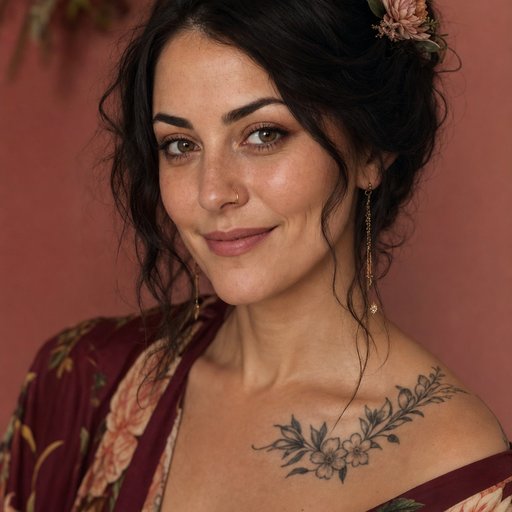
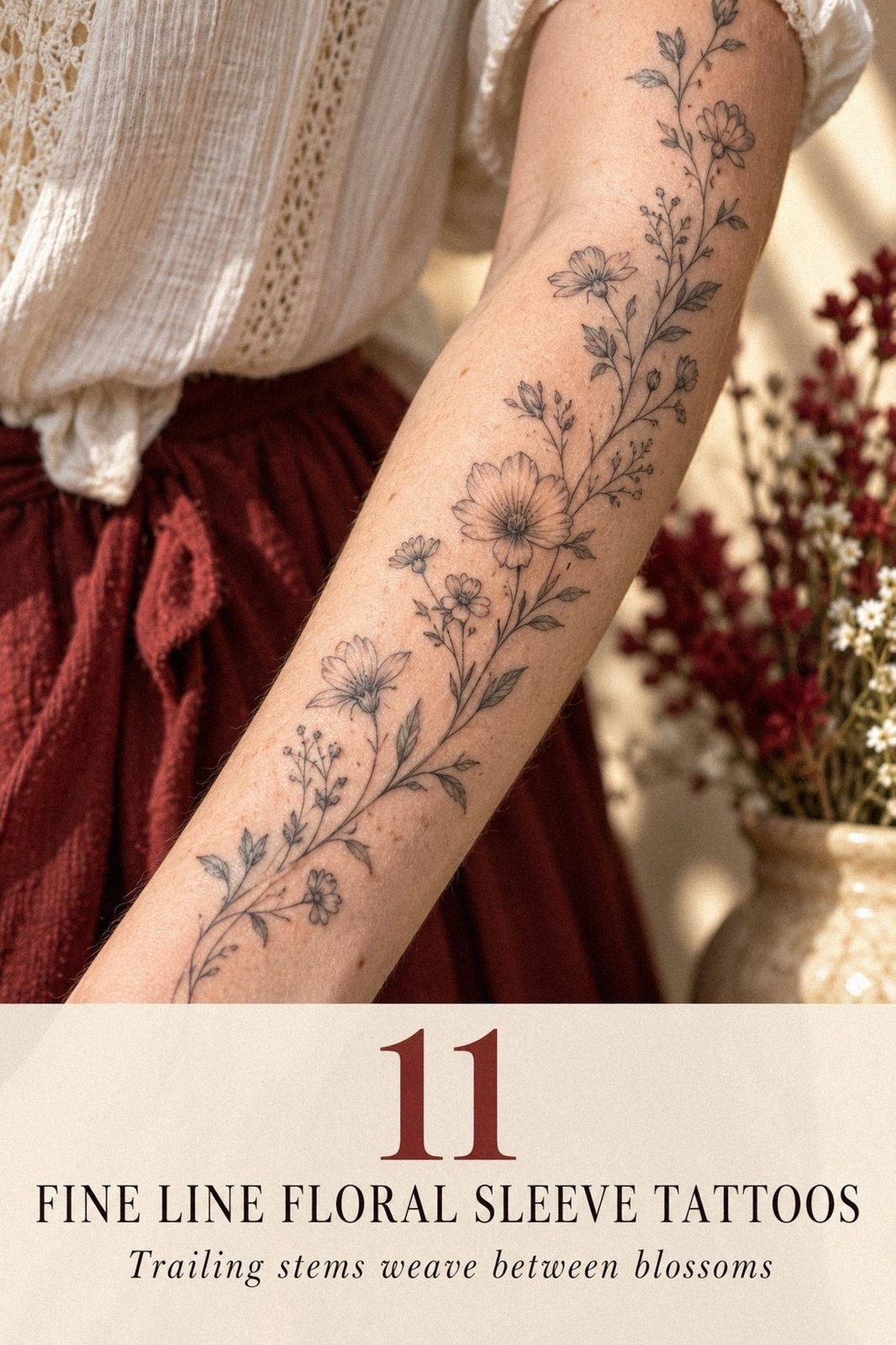
A small fine line floral sleeve tattoo works best when wildflowers follow the natural length of your forearm. Think one flowing stem, two or three open blooms, and plenty of skin between each detail. A single-use 3RL cartridge can create crisp lines, while a tiny black dot at each flower center keeps the design expressive without making it heavy.
Your artist should sketch the sprig with your wrist in mind, not only from one direction. I’d keep the smallest bloom near the wrist and let the taller stem travel toward the elbow. That creates a graceful visual path, and it’s more personal than copying somebody else’s sleeve.
Use solid black pigment for the stems and a whisper of greywash beneath one petal cluster. I’d skip filling every leaf. Dense shading can swallow the understated quality that makes wildflowers feel meaningful.
These fine line wildflower tattoo ideas can help you compare open spacing with a more intricate arrangement.
Before booking, show your artist the exact forearm position you prefer. A carbon stencil transfer should curve naturally around your arm, and you’ll want to check the design from several sides as well as straight on. That small step protects the flowing silhouette you’re paying for!
The value is in the restraint. A dainty wildflower sleeve may require less studio time than a packed botanical piece, but that doesn’t make it less powerful. You’re paying for placement, line control, and a design that still feels like you.
2Where Should Fine Line Florals Sit on the Forearm?

Fine line floral sleeve tattoo ideas for the forearm don’t need to fill every inch of skin. Forearm placement gives you visibility, a naturally elongated path, and enough flexibility to keep the flowers readable without forcing every detail into a narrow space.
3Orchid Movement: Make the Petals Speak

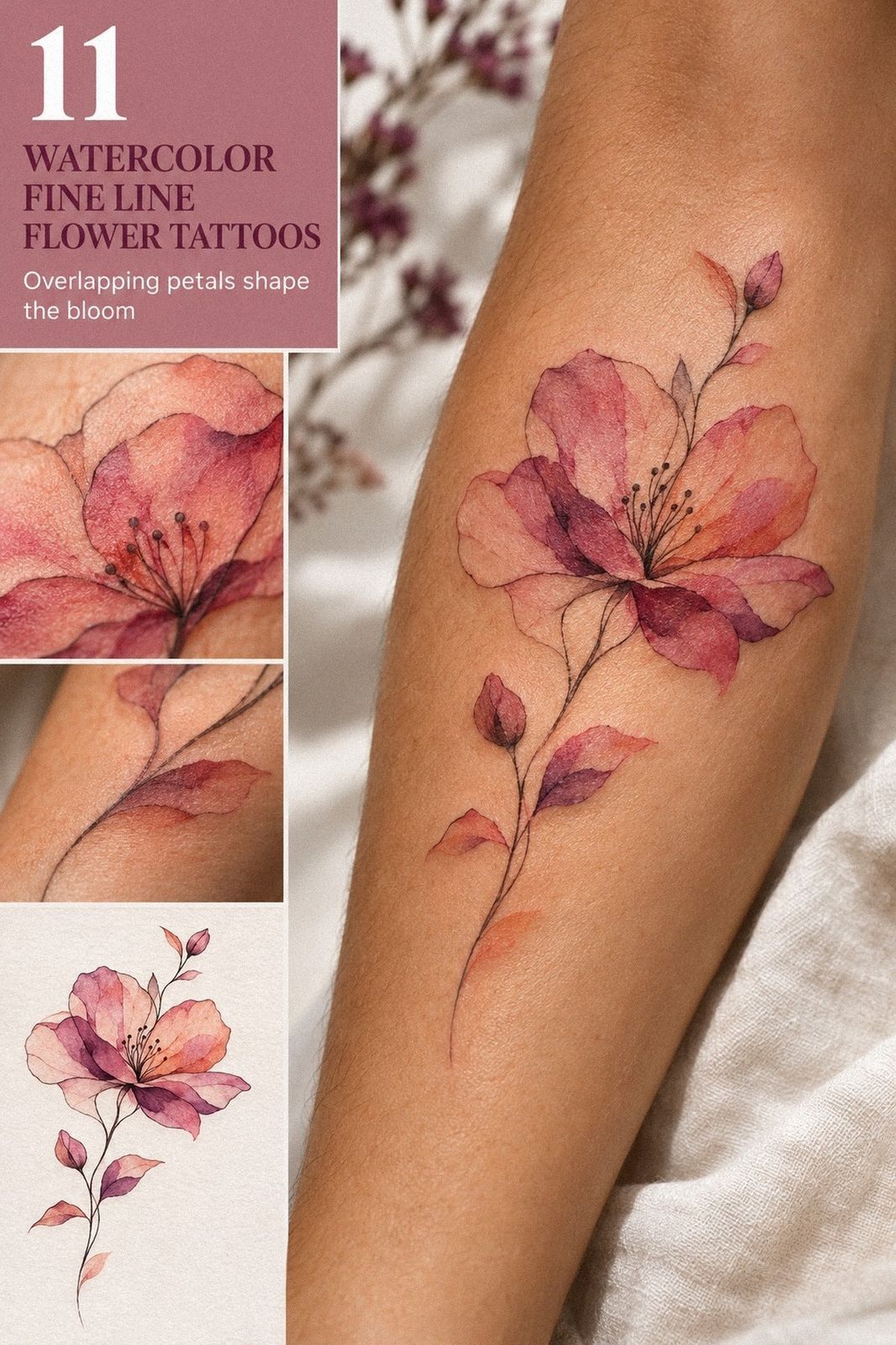
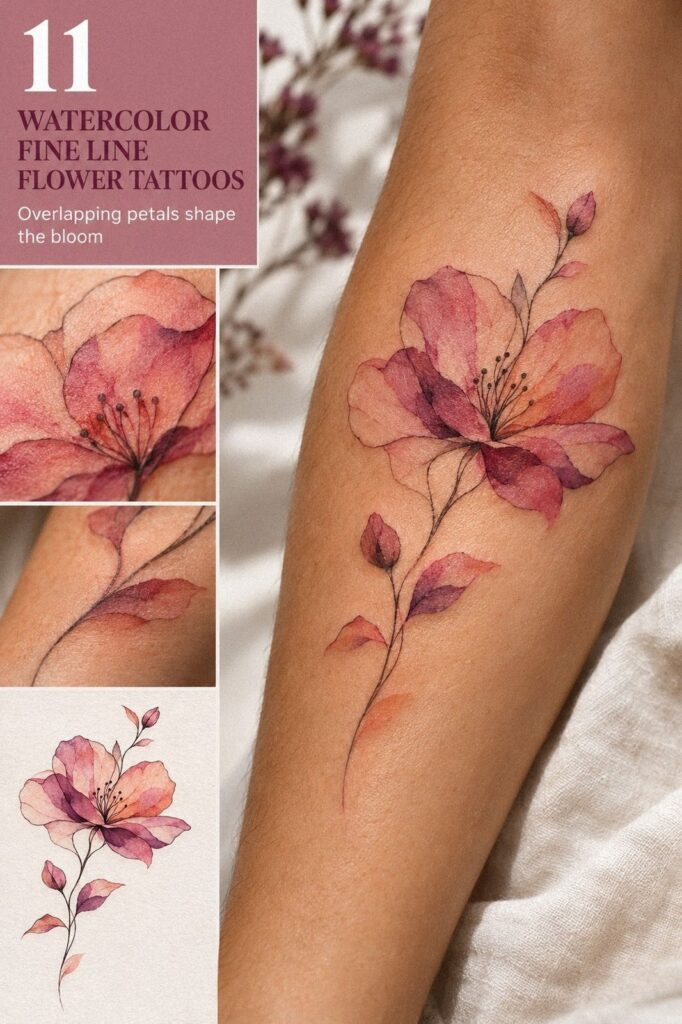
A fine line floral sleeve tattoo with orchids gives you a more elegant and slightly daring direction. Keep the petals open and recognizable instead of reducing them to generic loops. Orchid petal contours need clean spacing, especially around the throat of each bloom.
Your artist can place one orchid near the outer forearm and let smaller stems drift toward the wrist. That creates a romantic hierarchy without turning the piece ornate. I’d choose three main blossoms at different angles because repeated front-facing flowers can look stiff.
Use soft greywash beneath the lowest petal or inside one leaf. Fine line tattoos don’t need every surface shaded, and too much grey can blur as the work settles. If you want stronger contrast, one compact black center gives the orchid a crisp focal point while the surrounding marks stay ethereal.
For more flower-specific references, browse this fine line peony tattoo guide. Then tell your artist which petal movement you like. Your design shouldn’t become a peony by accident.
It should keep the orchid’s expressive, slightly mysterious shape.
An orchid sleeve can cost more than a simple sprig because the petals demand careful spacing. I’d ask for a clear quote before you commit. The added cost may be worth it if the artist has healed botanical work and a sharp understanding of fine line aging.
4Build Botanical Linework With One Strong Stem

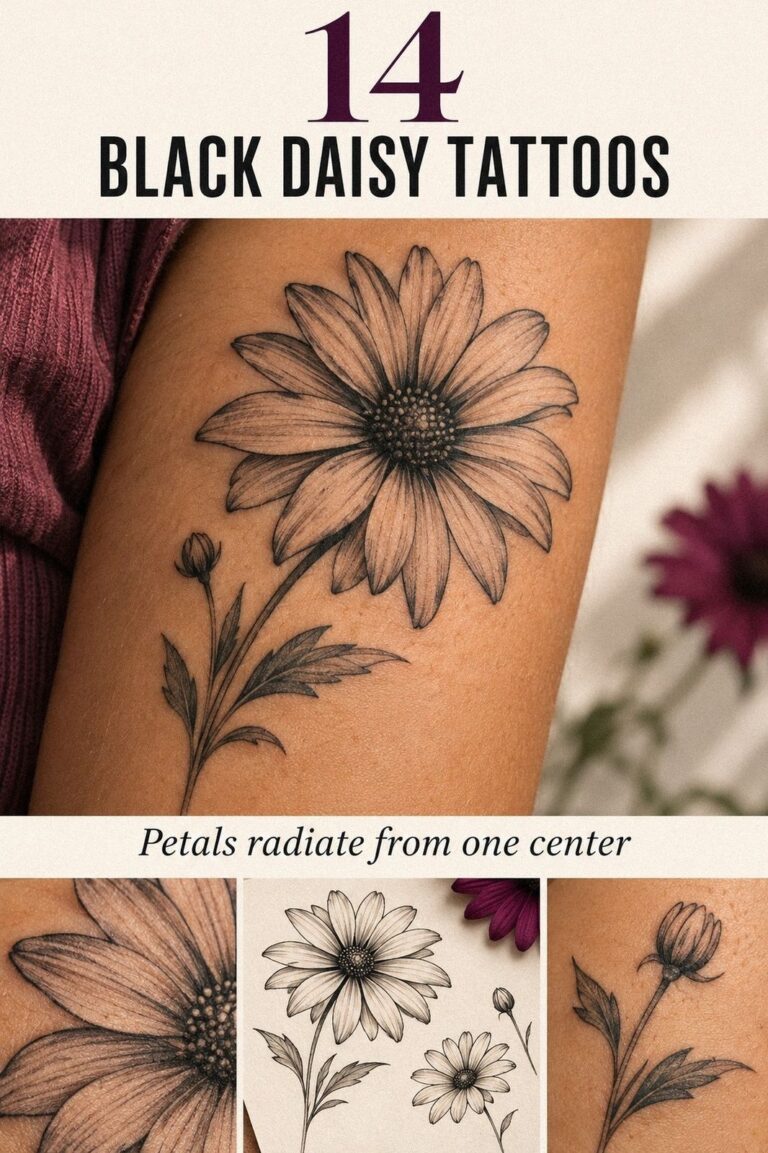
Fine line floral sleeve tattoo designs using botanical linework depend on restraint. Choose one real plant as the starting point, then add only a few supporting leaves. Botanical linework should describe the plant clearly, not bury it under decorative dots that don’t add meaning.
I’d ask for a reference sketch based on a fern, anemone, daisy, or lavender stem rather than a random blend. Each plant should have its own silhouette. Your artist can use a sterile 5RL cartridge for a slightly stronger outer contour while keeping internal marks lighter.
The most polished version usually has one dominant stem and several supporting branches. Here’s my favorite rhythm: one strong line, one curved branch, and one broken branch with visible skin between them. I’d skip perfect symmetry because a little irregularity makes the sleeve feel raw and personal.
You can study restrained compositions in these minimalist floral sleeve tattoo ideas. Your artist should also show healed examples, not only fresh work. Fresh black pigment looks sharp; healed linework tells you whether the spacing and weight were chosen wisely.
If you’re working within a budget, spend on the artist’s drawing and placement skills first. You can always add another flower later. A smaller, polished sleeve often has better long-term value than a larger design completed too quickly.

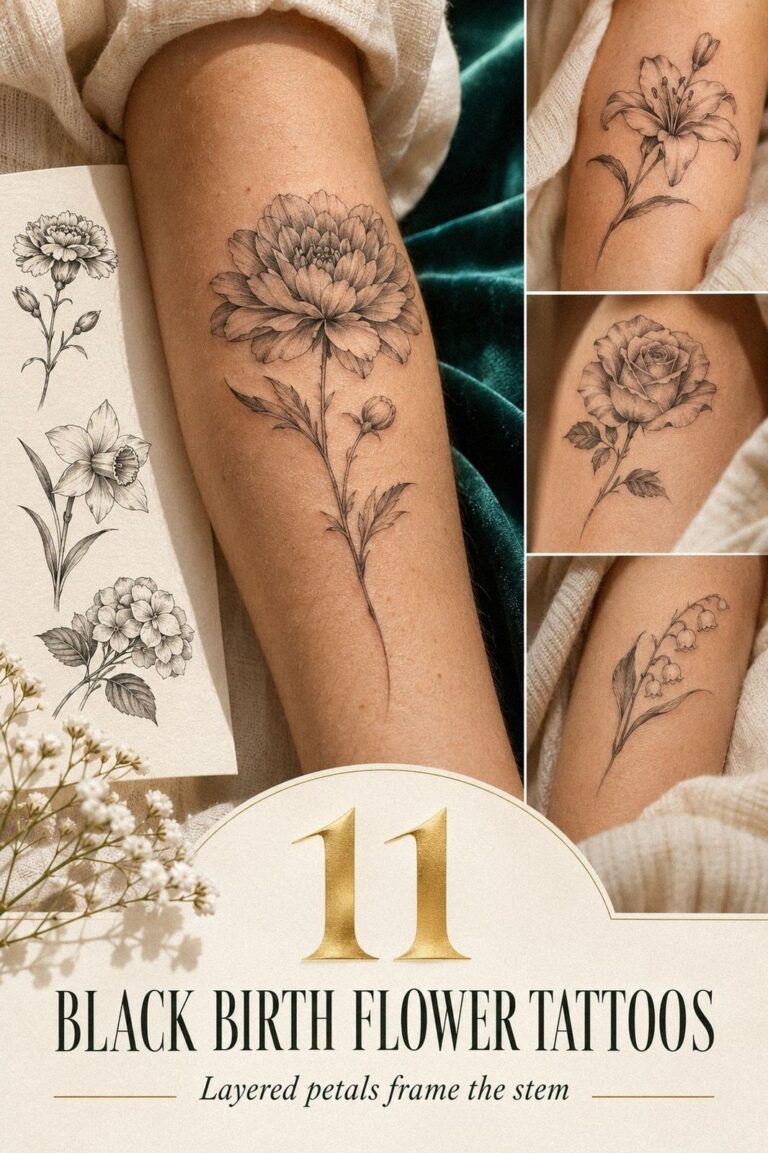
5Birth Flowers, One Meaningful Lead

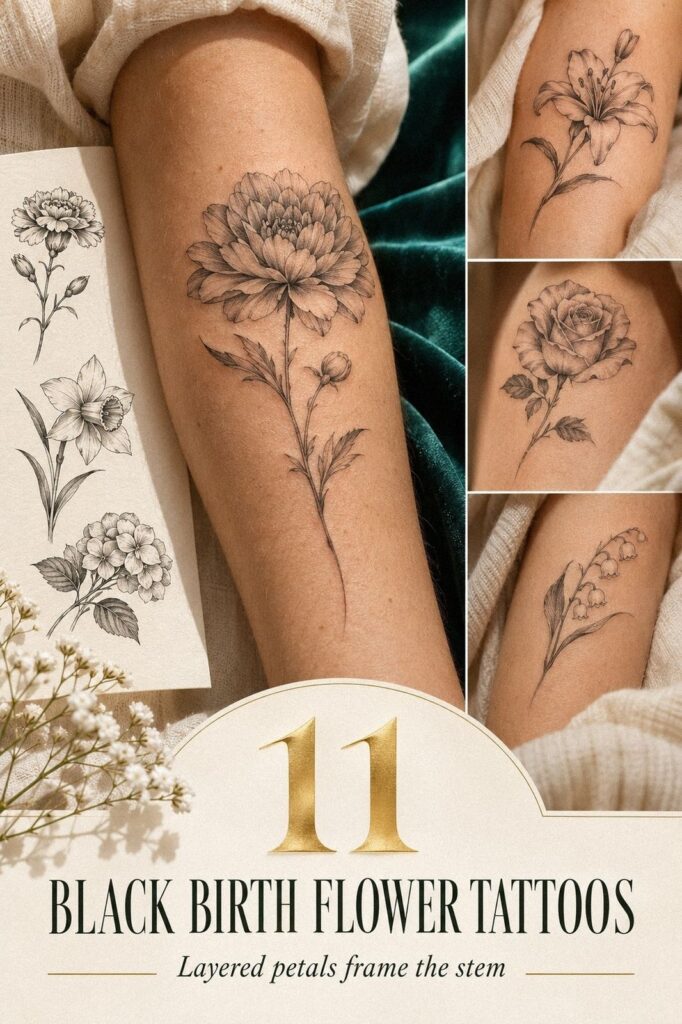
A delicate fine line floral sleeve tattoo with birth flowers can carry real family meaning without becoming a literal chart. Start by listing the birth months that matter to you, then choose one flower as the visual lead. Birth-month flowers can inspire a vintage mood, but fake scratches don’t belong in the finished tattoo.
Keep the stems connected and let each flower retain its recognizable petal shape. I’d avoid giving every family member an equally large bloom. One dominant flower creates a graceful hierarchy, while smaller flowers can remain symbolic and understated.
Your artist might use black ink with diluted greywash to separate the blooms without adding color. If you want one personal detail, place a tiny initial inside a leaf or hide a date in the number of petals. Keep it subtle so the flowers remain the first thing your eye sees.
The small floral sleeve tattoo gallery offers useful ideas for combining several symbols. Your sleeve can be feminine, masculine, or completely outside those labels. The meaningful part is the selection, not whether the arrangement follows a predictable style.
Birth flowers can become expensive when every month turns into a large, intricate bloom. I’d compare the price of one focused session with the cost of multiple appointments. A meaningful lead flower often gives you more emotional value than a crowded list.
6From Shoulder to Wrist, Plan the Flow

A fine line floral sleeve tattoo from shoulder to wrist needs stronger structure than a small forearm piece. Clear stems, open spacing, and flowers that remain readable from several feet away will make the full design more striking. High-contrast black pigment matters more here than excessive micro-detail.
Your artist should plan the sleeve in zones: a larger bloom near the upper arm, a narrower transition through the middle, and a lighter finish near the wrist. That creates a graceful taper instead of a piece that feels equally heavy everywhere. I’d avoid placing tiny petals at the wrist crease.
Use bold blackwork accents only on selected leaves or flower centers. Fine line doesn’t mean every line must be identical, and a controlled weight change can make the whole piece more expressive. If you’re considering a longer project, ask how each appointment will connect to the next.
Look at this tiny floral sleeve tattoo reference set for spacing ideas, even if your final sleeve will be larger. Your finished design should still breathe. A full sleeve doesn’t need to become visually dense to feel iconic!
A shoulder-to-wrist sleeve is a serious investment. Ask for the hourly rate, estimated sessions, deposit rules, and touch-up policy. The cheapest quote may not offer the best value if the artist has limited experience with long flowing compositions.
7What Should Stay Hidden in the Sleeve?

A fine line floral sleeve tattoo with hidden symbols can be personal without being obvious to everyone who sees it. You could tuck in a small moon, an initial, or a meaningful leaf shape. Symbolic micro-details work best when they follow the stem instead of floating beside it.
I’d hide one symbol in a flower center and another in the negative space between two leaves. Your artist can make the marks crisp with a single-use 3RL needle, but keep them slightly larger than the tiniest possible line. A clever paper sketch may lose clarity once the skin settles.
My preferred approach is simple: choose the visible flower story first, then add one detail only you understand. Place it where the composition already needs a pause. That keeps the design understated rather than crowded.
This minimalist fine line flower tattoo collection can help you compare quiet symbols with more decorative ideas. Your tattoo’s meaning doesn’t need to be explained. It only needs to remain recognizable to you.
Hidden symbols are usually worth the cost when they replace several louder details. I’d rather pay for one carefully drawn personal mark than fill the sleeve with tiny icons that compete for attention.
8Let Climbing Vines Turn With Your Arm

A fine line floral sleeve tattoo featuring climbing vines should follow your arm’s movement instead of drawing a rigid vertical stripe. Your arm’s natural movement can guide the vine from shoulder to wrist, with leaves that turn gradually rather than stopping at identical intervals.
9Negative Space or Full Coverage?
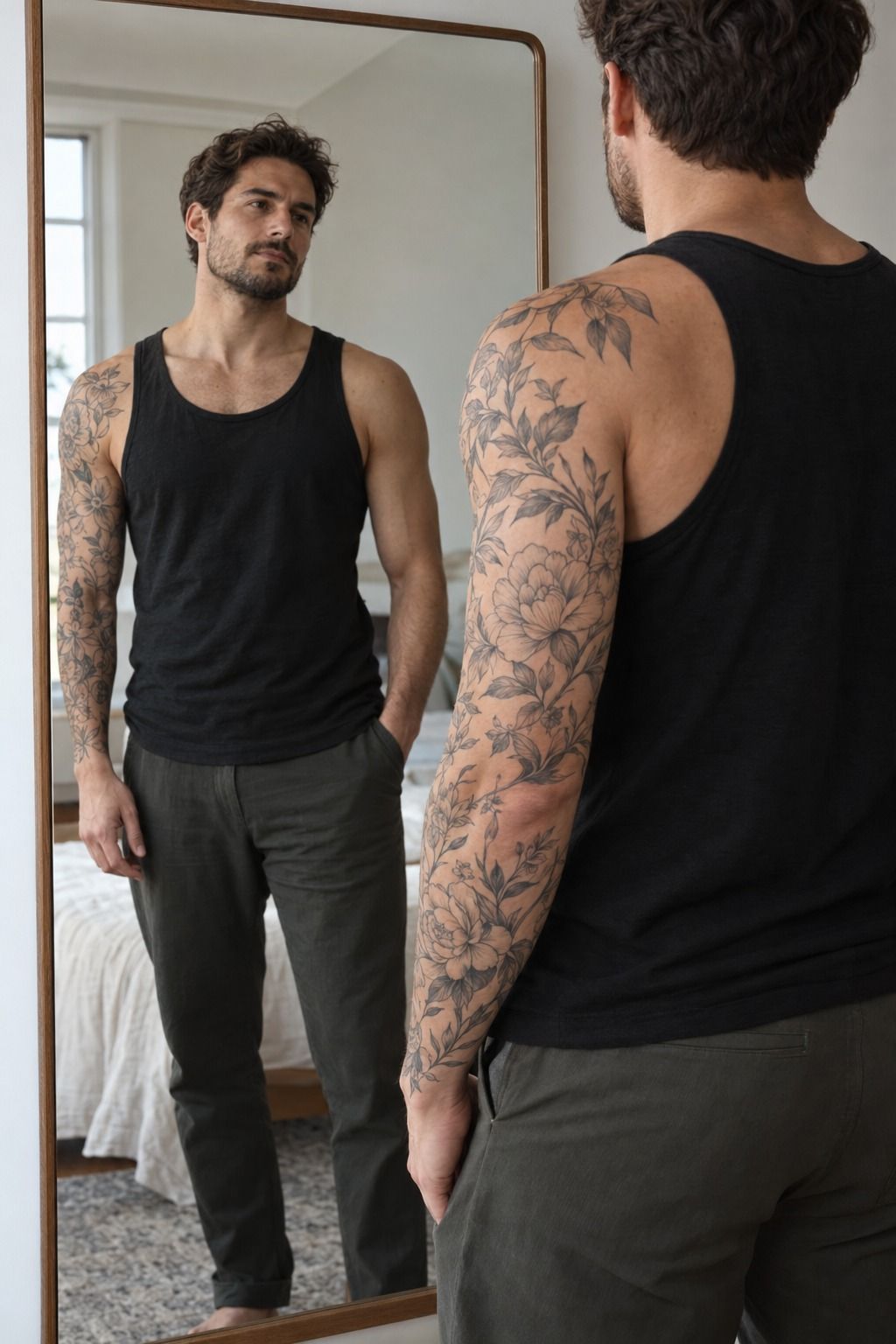
A fine line floral sleeve tattoo with negative space can look more powerful than a fully shaded sleeve. The open areas between the stems become part of the design. Intentional skin breaks separate the flowers, clarify the silhouette, and keep the overall result crisp.
Your artist should plan the empty areas as carefully as the inked ones. Leave a clean gap near the wrist, a wider opening beside the largest bloom, and smaller pauses around the leaves. I’d reject a design where every gap is accidental.
For longevity, use solid black anchor lines on the main stems and avoid stacking too many hair-thin details in one patch. Fine lines can soften or widen over time, especially with repeated UV exposure. Your aftercare still matters: wash gently, moisturize as directed, and avoid sun and swimming while the surface heals.
You can see how open compositions work in this fine line wildflower tattoo collection. The open-skin approach lets the tattoo look delicate and bold at once. Why force every inch to compete for attention?
If you’re deciding between full coverage and negative space, compare the long-term cost as well as the first-session price. Open spacing may reduce appointment time and can make future additions easier. That’s useful value if your budget is limited.
10Black Ink: Study the Healed Read

A fine line floral sleeve tattoo in black ink becomes easier to judge when you compare fresh work with healed work. Healed black ink is the side you should study before booking. Fresh tattoos often look darker, sharper, and more dramatic than they will after the surface settles.
Ask your artist for healed examples viewed in ordinary light, preferably after several months. I’d choose a slightly clearer line over an ultra-thin one if the design needs to survive daily movement and regular sun exposure. That choice may feel less delicate, but it can be more timeless.
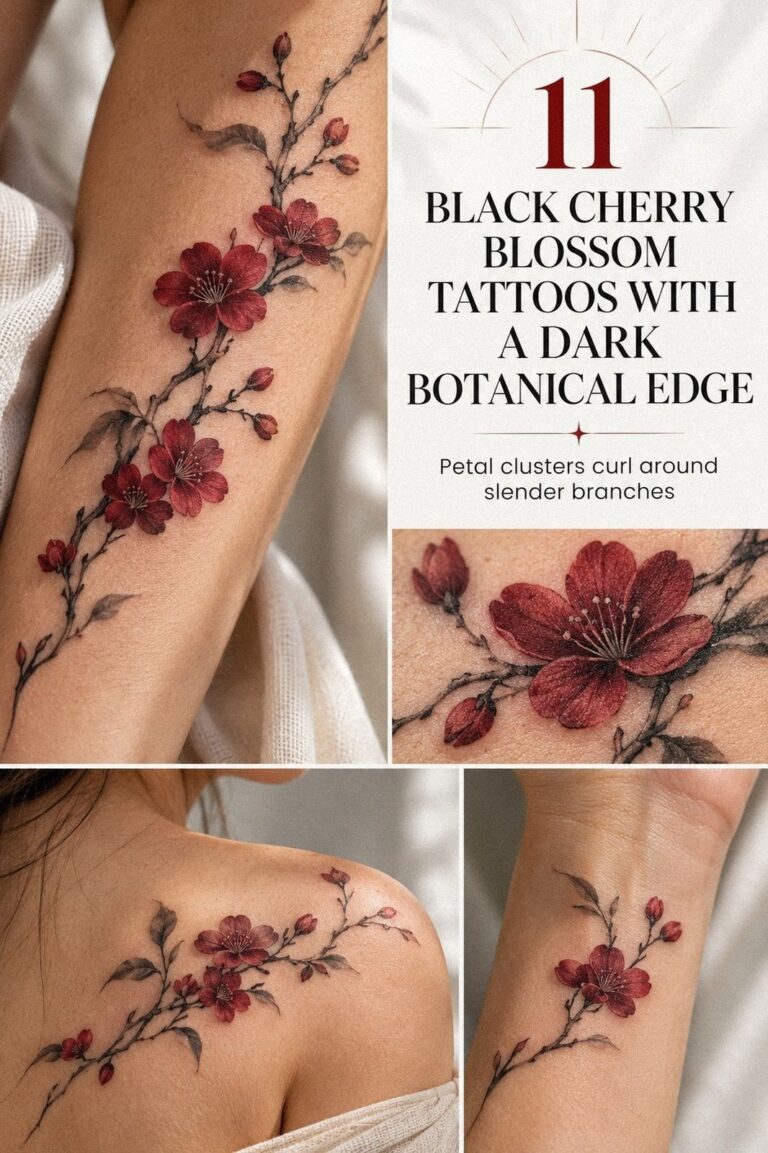
Use selective greywash rather than soft shading everywhere. A strong stem, a clean petal outline, and a few precise dots can create an elegant result without making it harsh. The best black ink floral sleeves aren’t loud by default; they’re clear, expressive, and confident.
This small fine line flower tattoo guide is useful when you’re comparing scale. Your artist should explain which details may soften and which placements protect readability. The forearm is often more tolerable than ribs, feet, hands, or sternum, but your own pain response matters.
When you compare artists, don’t compare price alone. Look at healed flower work, drawing quality, hygiene, and communication. Paying a little more can be worth it when the artist’s work shows polished results months later.
11Dotwork With a Deliberate Pause
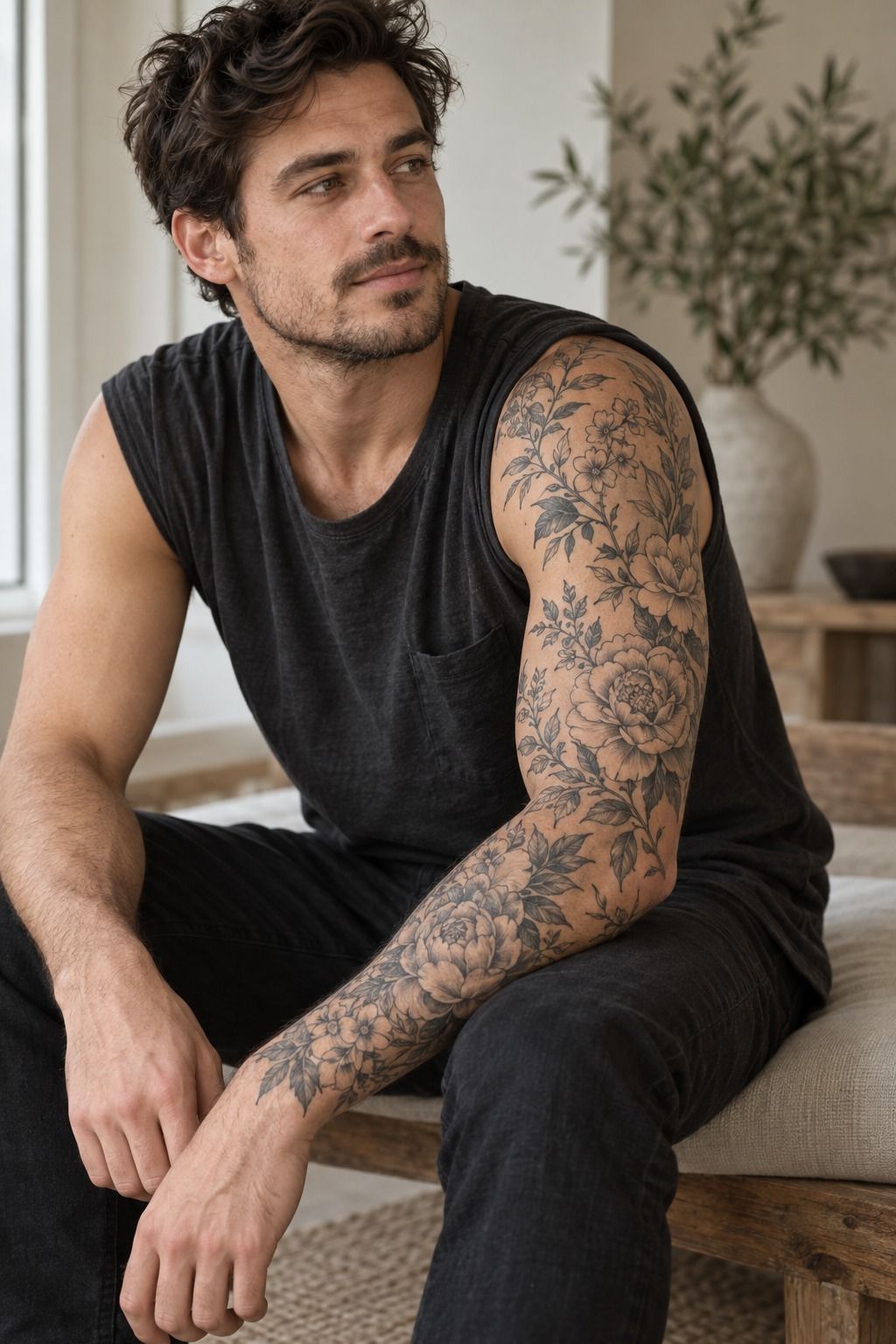
A fine line floral sleeve tattoo with fine dotwork can add texture without turning the design muddy. Keep the dotwork beneath one bloom or along a single leaf. Controlled stippling works best when it supports the black lines and leaves the petals open.
Your artist can build a soft gradient with separated dots rather than packed grey shading. I’d keep the dots larger and farther apart near the wrist, then allow a denser cluster around the central flower. That gives your eye a clear focal point.
Use sterile dotwork cartridges and ask how the artist manages pressure across different skin areas. Fine dotwork can look exquisite when spacing is disciplined, but random dots rarely age with the same clarity. Your reference should show both fresh and healed examples.
For a simpler comparison, review these minimalist floral sleeve tattoo designs. Your final piece doesn’t need dotwork everywhere. One carefully placed field of dots can make the flowers feel more dimensional and timeless.
Dotwork can increase session time, so ask whether the added texture is worth the extra cost. I’d choose one expressive shaded area over a lower-priced design covered in weak, uneven dots.
How I’d Compare Artists Before Booking
Start with portfolios, but don’t stop at fresh tattoos. Look for healed botanical linework, consistent spacing, clean stencil placement, and flowers that still read clearly after the skin has settled. You’re choosing an artist’s judgment as much as their hand speed.
Ask direct questions about needle groupings, skin-tone adjustments, touch-ups, and aftercare. A strong artist won’t promise that every line will stay identical forever. They’ll explain what may soften and how they plan around that reality.
The Real Cost of a Fine Line Floral Sleeve
The final cost depends on size, placement, detail, artist experience, location, and session length. A small floral piece may be affordable, while a shoulder-to-wrist sleeve can become a substantial investment. A written quote helps you compare artists without guessing.
Your budget should include a deposit, aftercare supplies, possible travel, and a future touch-up if needed. I’d rather delay the appointment than choose an artist whose healed work doesn’t inspire confidence. That patience usually protects the tattoo’s value.
A Better Way to Plan the Sleeve
Choose the main flower first. Then decide whether the supporting elements should be leaves, vines, buds, or hidden symbols. One clear visual lead makes the sleeve feel intentional and gives your artist a stronger starting point.
Bring references for line weight, movement, and mood, but don’t ask for an exact copy. Your arm has its own curves, proportions, and skin tone. A custom drawing should feel personal, not borrowed.
What I’d Protect First
Protect the outer silhouette, the main flower, and the breathing room around each bloom. Those choices will matter more than adding another tiny petal or decorative dot. The outer silhouette gives a fine line tattoo a better chance of staying readable.
Follow your artist’s aftercare instructions, limit early sun exposure, and don’t judge the final result while the tattoo is still settling. I know the fresh darkness can be exciting. The healed version is the one you’re actually buying.
What Fine Line Floral Sleeves Get Right in 2026
Fine line floral sleeves are having a meaningful moment because people want tattoos that feel personal without looking visually aggressive. I’ve watched the style move away from endless tiny details and toward clearer stems, stronger placement, and more honest conversations about aging. That’s a healthy shift.
The design choice I trust most is a simple flower with enough open skin around it. Your sleeve doesn’t need every birth flower, symbol, and botanical reference at once. Choose the image that carries the emotional weight, then let the rest support it.
A raw, expressive line often says more than a crowded arrangement.
I’ve also changed my mind about ultra-fine work. I used to think the thinnest possible line was automatically the most elegant. It isn’t.
A slightly stronger stem may age more gracefully, especially on exposed areas. Your artist should explain that tradeoff clearly.
The most empowering approach is to plan for the healed tattoo, not only the appointment-day reveal. Keep the placement practical, protect it from UV exposure, and follow the aftercare instructions.
Your sleeve should still feel like you when the first dramatic darkness has softened. That’s the point!
The Questions Worth Answering First
How much does a fine line floral sleeve tattoo usually cost?
In the US, a smaller fine line floral piece may run about $100 to $300, while shop minimums often sit near $50 to $100 and hourly rates commonly fall around $100 to $250. Your artist, city, size, and session length will change the final quote.
Are fine line floral sleeve tattoos a good idea for a first tattoo?
Yes, especially on the forearm, thigh, or shoulder, where many people find the experience more tolerable. A personal floral symbol can make the first tattoo feel meaningful rather than trend-led. Your artist should still discuss line weight, placement, and long-term clarity before starting.
How do I choose a tattoo artist for fine line floral work?
Look for a portfolio with clean healed linework, not only fresh tattoos. Check whether the artist regularly creates botanical designs, uses sterile single-use cartridges, and works in a hygienic studio. You’ll want to ask about skin tone, aging, touch-ups, and their usual session rate.
How much do fine line floral sleeve tattoos hurt?
Pain varies, but forearms, thighs, and shoulders are often more tolerable than ribs, feet, hands, or the sternum. Placement affects comfort more than the flower style itself. Your artist can pause when needed, and you shouldn’t treat pain tolerance as a test of commitment.
How long does a fine line floral sleeve tattoo take to heal?
The surface usually heals in about 2 to 3 weeks, while complete healing can take roughly 2 to 3 months. Wash gently, moisturize according to your artist’s instructions, and avoid direct sun and swimming during the early stage. Your tattoo may look different as it settles.
What’s the best placement for a fine line floral sleeve tattoo?
The outer forearm offers visibility and a long path for flowing stems, while the upper arm gives you more privacy and space for a larger composition. A balanced placement protects readability and lets your artist work with your arm’s natural curve instead of fighting it.
Can I design a fine line floral sleeve tattoo on a budget?
Yes, but keeping the design smaller and simpler is wiser than asking for a large, intricate sleeve at a rushed rate. Clear linework is worth protecting. Save for an artist with strong healed examples, choose one meaningful flower, and add future elements only when your budget allows.
Where I’d Start First
If I had to pick one, I’d start with the small wildflower sprig. It’s personal without being crowded, and the open spacing gives fine lines room to stay readable as they soften. Pin the small floral sleeve tattoo guide for later, then show your artist the flower that means something to you.