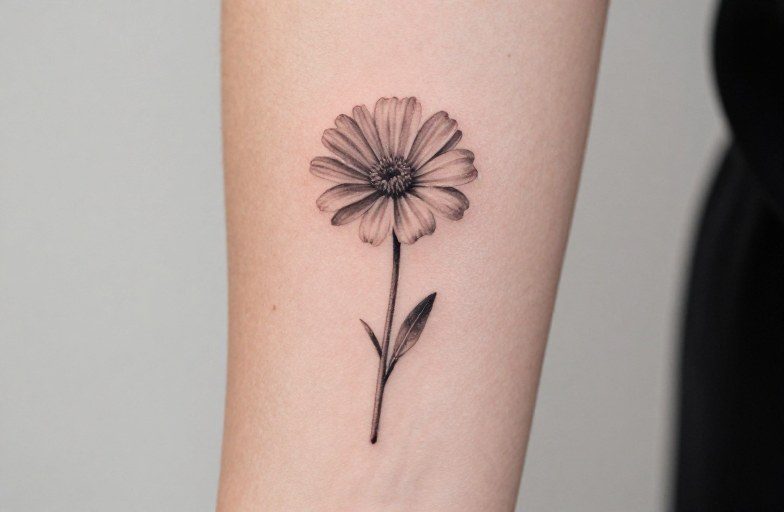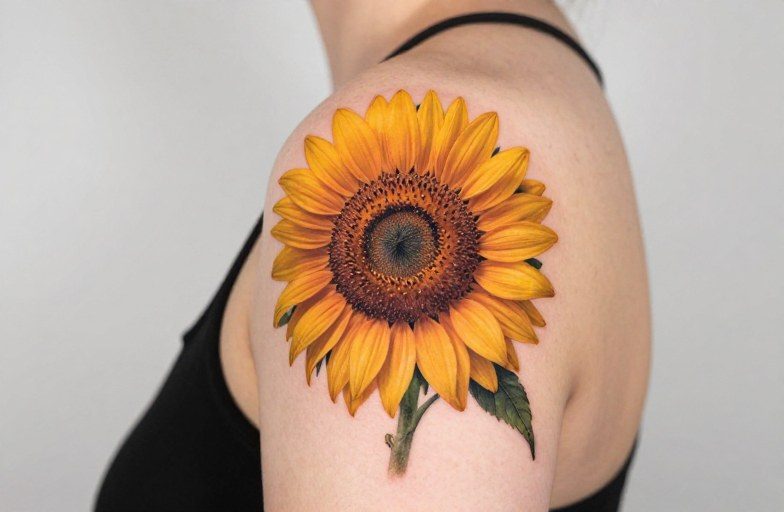
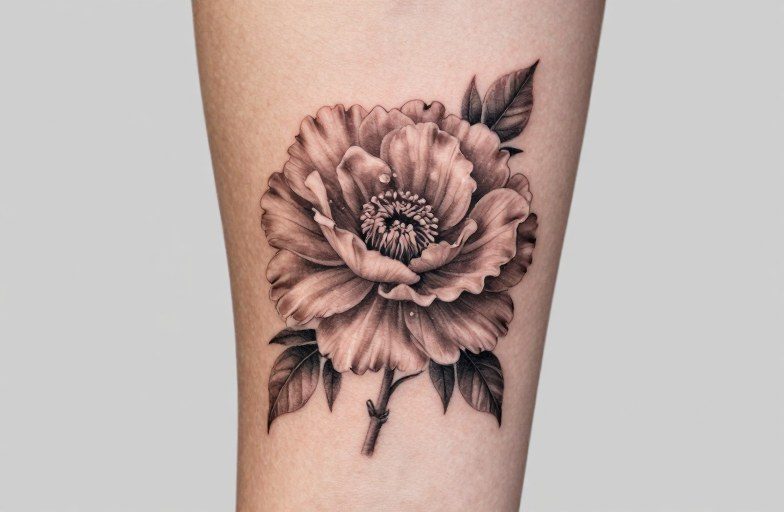
Famous flower tattoos draw from centuries of cultural shorthand, where specific blooms communicated what words could not. The rose signals passion and pain in equal measure. The lotus speaks to emergence from difficulty. The chrysanthemum, in Japanese tradition, marks autumn and the imperial family. What a flower tattoo “means” depends on which bloom, which culture, and how it’s rendered, line work versus saturated color, realistic versus stylized, solitary versus paired with other elements.
Common Variations & Styles
Traditional Western Blooms
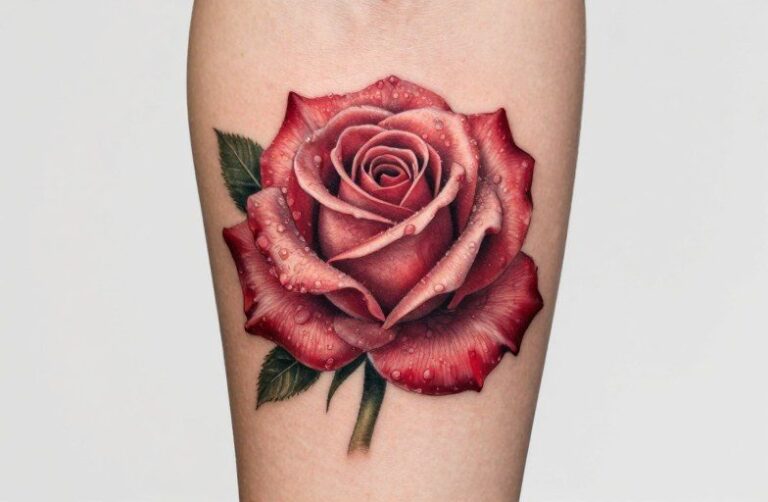
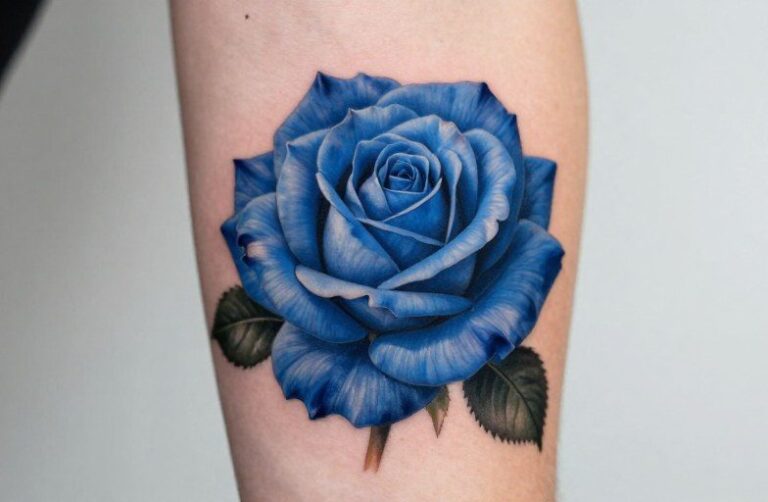
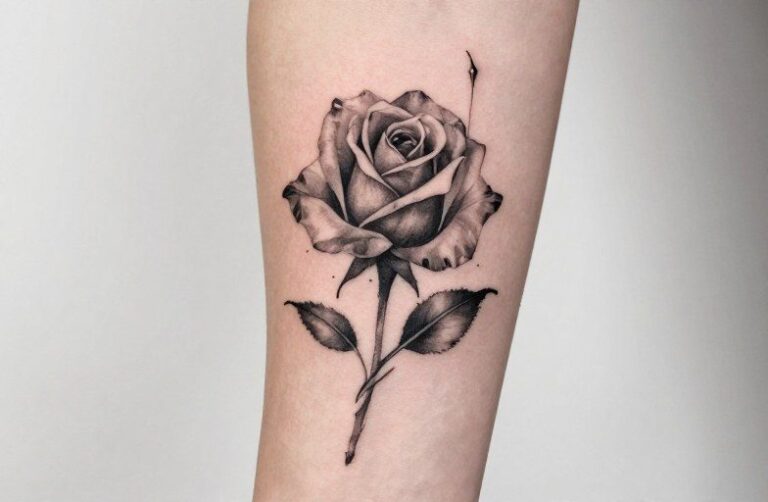
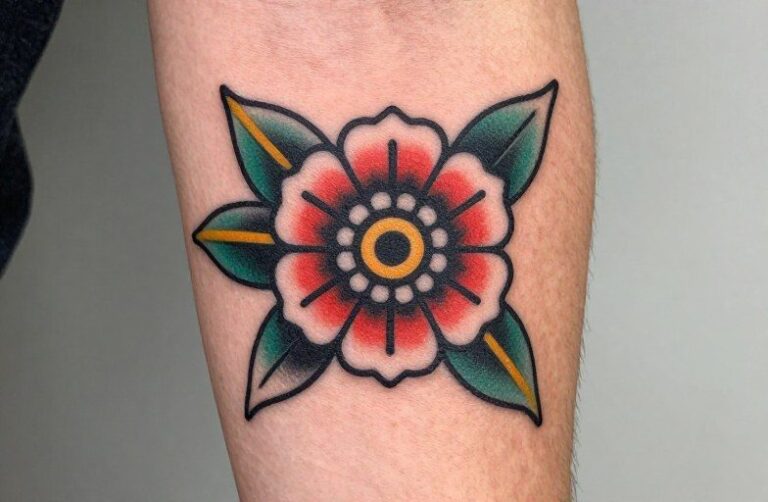
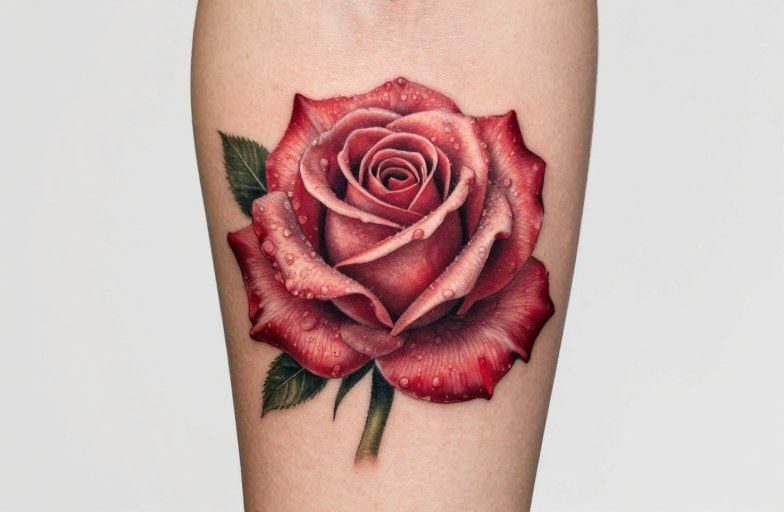
Roses dominate for good reason. In American traditional tattooing, the red rose meant true love, the yellow rose friendship or jealousy depending on context, and the black rose grief or rebellion. Sailor Jerry and his contemporaries standardized the dagger-through-rose motif, pairing beauty with violence. Peonies, increasingly popular in neo-traditional work, carry associations with prosperity and bashfulness in Victorian floriography. Their ruffled petals demand solid color packing or careful whip shading to read properly at scale.
Asian Floral Traditions
Japanese irezumi features specific flowers with rigid seasonal and symbolic associations. Cherry blossoms (sakura) represent the transient nature of life, their brief bloom period makes this unavoidable. Peonies (botan) symbolize wealth and masculine nobility, often paired with lions or foo dogs. Lotus flowers connect to Buddhist enlightenment, rising unstained from muddy water. These aren’t decorative choices in traditional Japanese work; they carry narrative weight within the full bodysuit composition.
- Black and grey realism: Popular for roses and lilies, emphasizes form and shadow over color symbolism
- Botanical illustration style: Scientific accuracy, often includes stems, leaves, and root systems
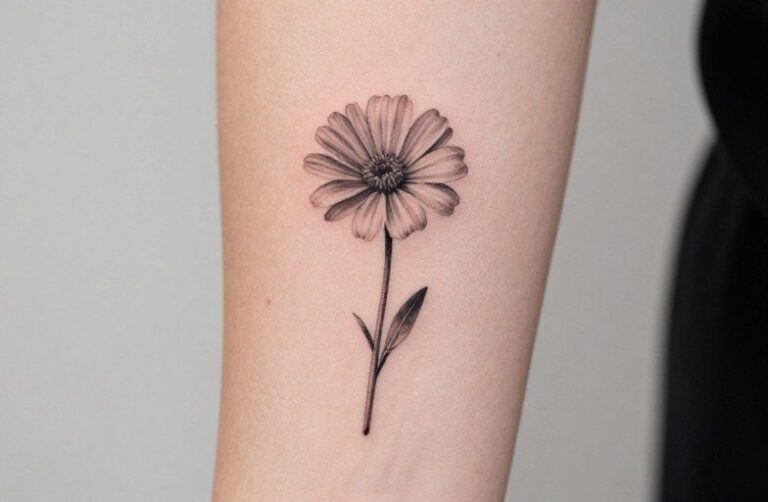
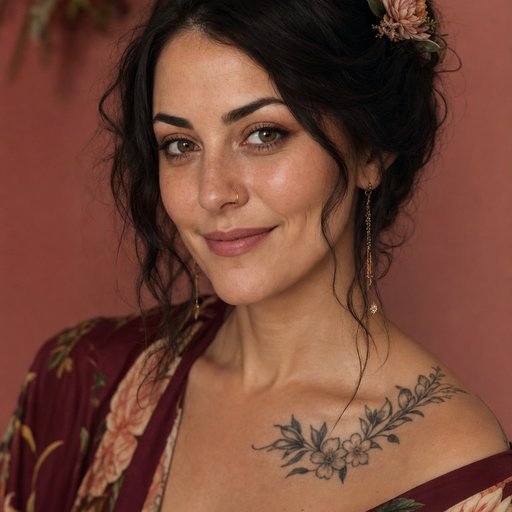
- Minimalist line work: Single-needle or fine-line blooms, relies on viewer recognition of the specific flower
- Trash polka/watercolor hybrids: Splattered backgrounds with realistic floral elements, relatively new, no traditional symbolic lineage
Religious & Spiritual Angles
Christian Iconography
The lily, specifically the Madonna lily, became Mary’s flower in medieval European art. White lilies in tattoo work still signal purity, resurrection, and the Annunciation. The rose window of Gothic cathedrals translated into tattoo form as geometric rose mandalas. The passion flower, with its complex structure of filaments and petals, was named by Spanish missionaries for Christ’s crucifixion, its parts read as the crown of thorns, the five wounds, the ten apostles. This isn’t universal knowledge now, so the symbolism often lands as “pretty unusual flower” unless the wearer specifically intends the religious reading.
Eastern Spiritual Traditions
The lotus remains the most spiritually loaded flower tattoo across Buddhist and Hindu contexts. Different colored lotus carry distinct meanings: white for mental purity, red for compassion, blue for wisdom, pink for the historical Buddha. In Tibetan thangka painting conventions, the lotus throne supports deities and enlightened beings. Tattooing this requires understanding the hierarchy, placing a lotus beneath a deity figure differs from a standalone bloom. The chrysanthemum in Chinese Taoist tradition represents longevity and the ninth lunar month, one of the “Four Gentlemen” of noble character alongside plum blossom, orchid, and bamboo.
Design Tips & Pairings
Flowers pair with complementary imagery to shift or sharpen their meaning. Skulls with roses create the classic memento mori, beauty alongside death. Clocks or pocket watches with wilting blooms emphasize time’s passage. Snakes coiled through flowers suggest temptation, poison, or transformation depending on the specific flower, often linked to Eve and the Garden, though that reading requires Christian cultural context.
Line weight matters enormously for floral tattoos. Thin lines on petals blur faster than bold outlines on leaves. A peony rendered in fine line will need touch-ups sooner than one with traditional bold outlines. Shading direction follows petal structure: radial shading from the center, or parallel lines following the curve. Color choice affects longevity, reds and oranges fade slower than yellows and pastels, which can shift to muddy brown within five years of sun exposure.
- With insects: Bees with flowers signal industry and cooperation; butterflies with specific blooms create seasonal or transformational narratives
- With text: Script banners through or beneath flowers risk looking dated; consider placement carefully
- With geometric frames: Mandala or sacred geometry behind flowers creates contrast between organic and structured
Best Placements
Large-Scale Floral Work
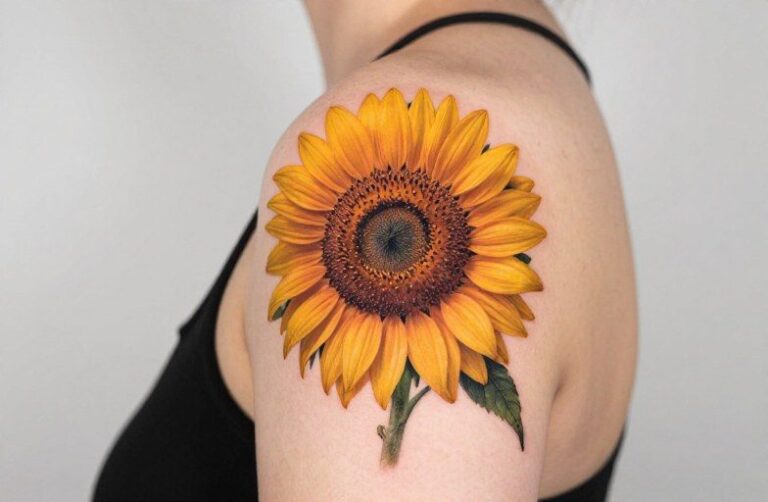
Full sleeves of Japanese floral sequences (cherry blossom to peony to chrysanthemum) follow the body’s natural lines. The upper arm’s curve suits the cupped shape of blooming flowers. Thigh pieces allow for large, detailed single blooms with visible stem structure. Back pieces accommodate branching compositions, wisteria cascading, or plum branches extending across the shoulder blades. These placements age well because the skin experiences less daily flexing and sun exposure than hands or feet.
Small and Hidden Placements
Behind the ear, small flowers read as decorative rather than deeply symbolic to most viewers. Finger flowers, popular for weddings or memorials, blur significantly within two to five years due to constant use and thin skin. Ribcage placement follows the body’s natural curve and works well for stems with directional growth. Ankle flowers, a longtime standard, sit on bone and can be painful to heal; the rubbing from socks and shoes complicates aftercare.
Personal & Modern Meanings
Contemporary tattooing has loosened the strict symbolic codes. Someone might choose a protea for South African heritage, or a bluebonnet for Texas roots, without caring about Victorian flower language. Birth month flowers function as personal identifiers, carnations for January, violets for February, daisies for April, similar to birthstones but with more visual complexity.
Memorial flowers carry specific personal weight: the bloom at a grandmother’s funeral, the variety planted in a childhood garden, the species that grew at a wedding venue. These meanings aren’t transferable to viewers, which is fine, the tattoo functions as private reference. The visual language still communicates “flower” generally, and the specific type signals to those who know the reference.
Some modern choices deliberately subvert traditional meaning. Black roses once meant death or anarchist politics; now they often read as aesthetic preference or gothic sensibility. The lotus, stripped of Buddhist context, becomes generic “spiritual” marker. This drift happens with all symbols, but flowers carry it faster because their primary function is decorative beauty.
History & Cultural Roots
European Flower Language
The Victorian “language of flowers” (floriography) systematized what had been scattered folk associations. Published dictionaries from the 1820s onward assigned specific meanings, often linked to classical mythology or Christian legend. This wasn’t ancient tradition; it was fashionable coded communication in a repressive social era. Tattooing these meanings requires recognizing their constructed, relatively recent origin. A “forget-me-not for true love” references 1840s sentimental culture, not medieval practice.
Asian Tattoo Traditions
Japanese flower tattoos emerged from the ukiyo-e woodblock print tradition, where actors and beauties were depicted with seasonal floral references. The full-body suit (irezumi) developed specific rules: certain flowers accompany certain figures, placed according to the body’s zones. This system, codified in the late Edo period, continues in modern Japanese tattooing. Chinese flower-and-bird painting tradition influenced tattoo composition differently, with less rigid body placement and more emphasis on brushstroke energy translated to needle work.
Polynesian and other Indigenous tattoo traditions rarely featured flowers before European contact, making floral motifs in those styles colonial borrowings rather than ancestral practice. Some contemporary Indigenous artists deliberately incorporate native flowers as land-based identity markers, but this represents modern innovation, not unbroken tradition.
What to Remember
Flower tattoos work because flowers are already designed to attract, evolution has optimized their visual appeal. The symbolism layered on top varies enormously by culture, era, and personal intention. Research the specific bloom’s associations in your relevant cultural context, not just generic tattoo-meaning websites. Consider how the flower’s structure suits the placement: radial blooms (roses, peonies) center well, while directional growth (wisteria, cherry branches) needs space to extend.
Color choice affects both meaning and longevity. Red roses carry different weight than black-and-grey roses. Yellow flowers fade fastest. White ink on light skin often disappears to invisibility within a few years. Talk through these practical realities with your tattooer, not just the symbolic content. The best flower tattoos balance what you want to say with what will actually read on skin over decades.
Frequently Asked Questions
Does a black rose tattoo always mean death or grief?
Not anymore. While black roses historically signaled mourning or anarchist politics, many people now choose them for aesthetic reasons or gothic style. Context matters, paired with a date or name, memorial intent is clearer. Standing alone, it could simply mean preference for dark imagery.
Which flower tattoos fade the fastest?
Yellows, pastels, and white ink fade quickest on most skin tones, shifting to muddy or invisible within five to ten years. Red and black hold longest. Fine-line work blurs faster than bold outlines regardless of color. Sun protection dramatically slows fading on any floral piece.
Can I mix flowers from different cultural traditions in one tattoo?
You can, but understand what you’re combining. A Japanese lotus with an American traditional rose creates visual contrast without inherent conflict, though purists of either tradition might notice the mix. Avoid pairing spiritually hierarchical elements (like a lotus throne beneath a deity) with unrelated cultural symbols unless you specifically intend that fusion.
What’s the difference between a birth flower and a zodiac flower tattoo?
Birth flowers follow calendar months (daisies for April, roses for June). Zodiac flowers connect to astrological signs, often linked to Greek mythology or planetary associations. These systems don’t always align, someone born in late March might have daffodils as their birth flower but Aries as their sign, with different associated blooms. Neither system is ancient or universal; both are modern frameworks for personal identification.