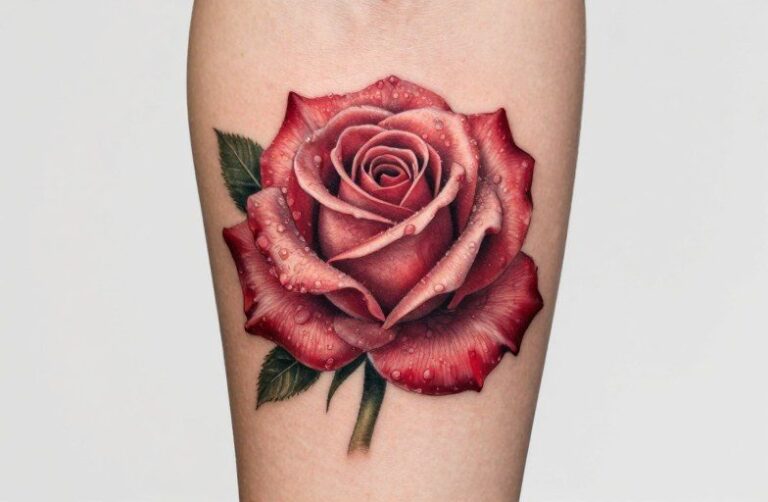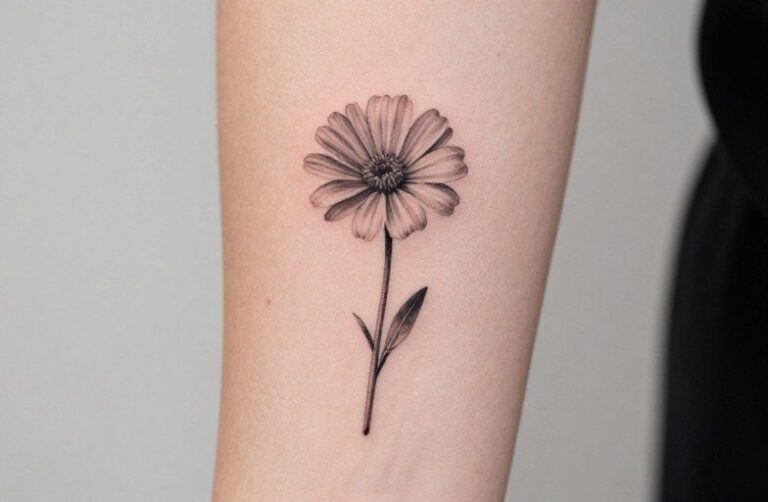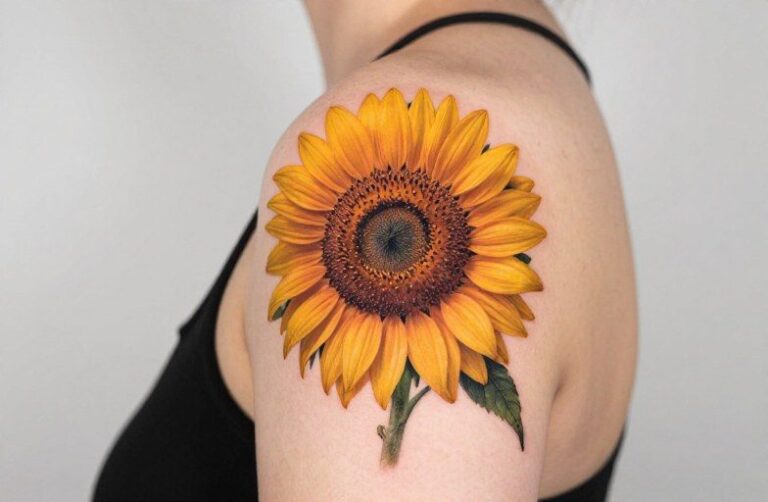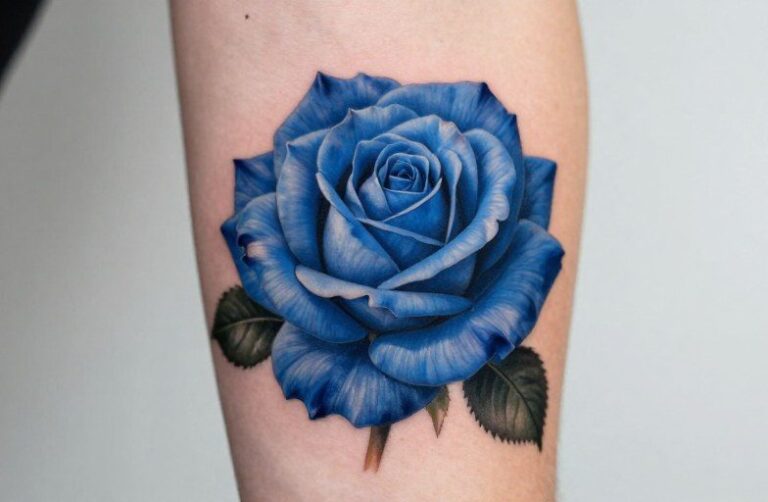
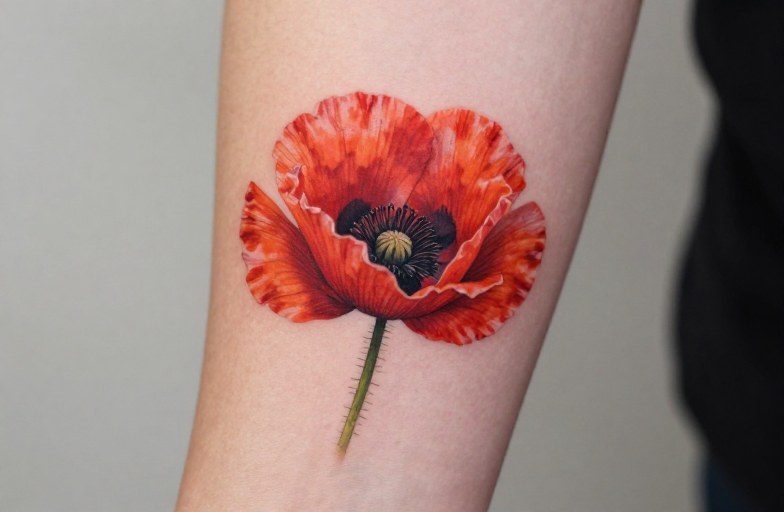
Poppy flower tattoos most commonly symbolize remembrance for the dead, particularly fallen soldiers, but also represent eternal sleep, peace, and the fragile beauty of life. The red poppy specifically carries weight from wartime poetry and memorial traditions, while other colors shift the focus toward success, imagination, or consolation. On skin, the poppy’s crinkled petals and slender stem offer tattoo artists a subject that reads clearly at small sizes and ages gracefully with proper technique.
Symbolism & Core Meaning
The Remembrance Connection
The red poppy’s link to war memorials traces to John McCrae’s 1915 poem In Flanders Fields, describing poppies growing among soldiers’ graves. This association spread through the Royal British Legion’s poppy appeal and similar veteran organizations worldwide. A tattoo drawing on this meaning typically uses the classic red-and-black palette: scarlet petals with a dark center. The imagery doesn’t require military service to resonate, many wear it for lost family members, or as a general meditation on mortality and sacrifice.
Less widely known, the poppy’s connection to sleep and death predates the World War association by millennia. The opium derived from Papaver somniferum produces unconsciousness, and the flower’s nodding bud resembles a drooping head. Greek and Roman myths often linked the poppy to Hypnos and Thanatos, sleep and death personified. A tattoo emphasizing this thread might use a closed bud, a drooping stem, or muted color to suggest the threshold between waking and oblivion.
Resilience and Transience
Poppies are pioneer plants, they colonize disturbed ground first. Fields torn apart by shelling, burned by fire, or scraped raw by construction sprout poppies before anything else. This ecological fact gives the tattoo a secondary meaning: beauty emerging from destruction, life persisting through ruin. The flower’s bloom lasts mere days, adding the familiar memento mori theme that permeates much botanical tattoo work. Unlike skulls or hourglasses, though, the poppy expresses this through softness rather than severity.
Mythology & Folklore
Mediterranean Roots
In Greek tradition, the poppy is often linked to Demeter, goddess of the harvest, and her daughter Persephone’s annual descent to the underworld. Some versions suggest the flower sprang from Demeter’s grief, or that she used it to soothe her sorrow and induce sleep. This maternal, sorrowing aspect carries into modern tattoos chosen by parents who have experienced loss. The imagery here tends toward fuller, more mature blooms rather than tight buds, flowers that have opened fully, suggesting completion of a life cycle.
The Roman cult of Ceres (Demeter’s Roman counterpart) used poppies in agricultural rituals, and the flower appeared on coinage as a symbol of prosperity and abundance. This agricultural thread persists in tattoos that pair poppies with wheat sheaves, sickles, or other harvest imagery. Such combinations usually emphasize gold and green tones over the memorial red.
European Folk Traditions
Across Northern Europe, poppies gathered various protective and prophetic associations. In some regions, placing poppies under a pillow was thought to bring dreams of a future lover, a folk practice that occasionally inspires romantic tattoo imagery. The flower’s seeds, numerous and tiny, connected it to fertility and prosperity in agricultural communities. These folk meanings rarely drive tattoo choices directly, but they inform the broader cultural vocabulary from which personal symbolism draws.
Common Variations & Styles
Color Symbolism and Technical Considerations
Red dominates poppy tattoos for obvious symbolic reasons, but the flower occurs naturally in orange, pink, white, purple, and near-black. Each color carries distinct associations: white for consolation and peace, purple for imagination and success, orange for warmth and creativity. Yellow poppies, less common in tattooing, traditionally signify wealth and success. Black or very dark red blooms create a more somber, gothic tone, sometimes chosen for memorial work without the patriotic connotation.
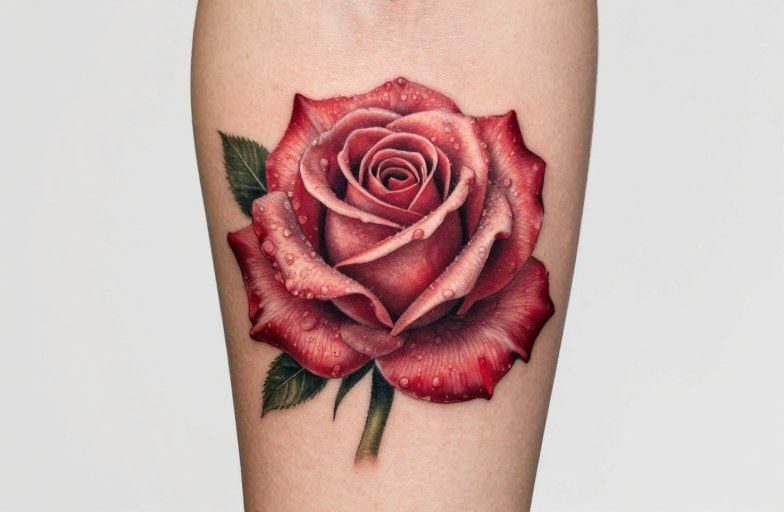
From a technical standpoint, red ink presents specific challenges. It fades faster than black and can shift toward pink or orange as it ages. High-quality pigments and proper saturation help, but a red poppy tattoo will require more frequent touch-ups than black-and-grey work. White highlights on petals add dimension but tend to disappear within a few years on most skin tones, skilled artists often substitute light yellow or simply leave negative space.
Stylistic Approaches
- Botanical illustration: Fine linework capturing the papery texture of petals and the distinctive seed pod. Works best at medium to larger sizes where detail holds.
- Watercolor: Loose color bleeding outside linework, mimicking the flower’s delicate, almost translucent quality. Risky for longevity, colors blur and fade unevenly.
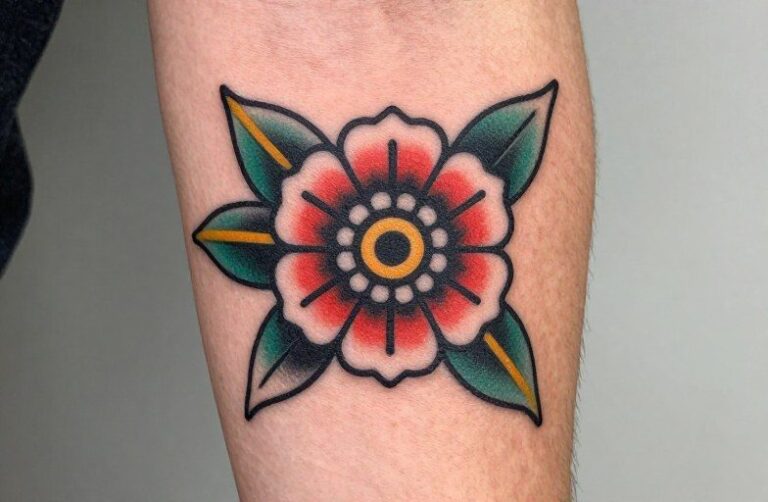
- Traditional/Americana: Bold outlines, limited palette, stylized rather than realistic form. Reads clearly at small sizes and ages well.
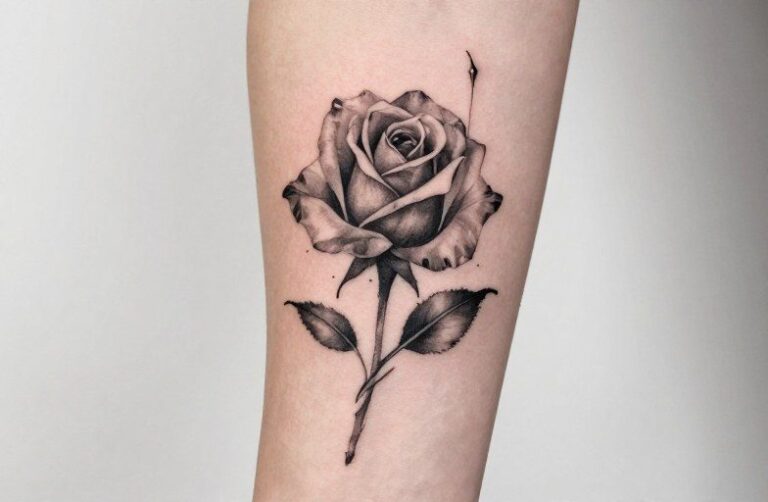
- Black and grey: Removes the color symbolism entirely, focusing on form and texture. Often chosen for aesthetic preference over specific meaning.
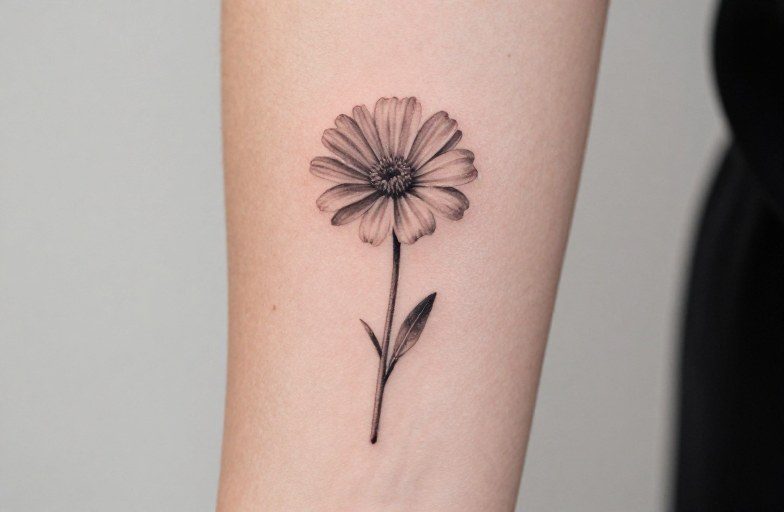
- Single needle/fine line: Extremely delicate, emphasizes the flower’s fragility. Requires experienced artist; thin lines blur and can disappear.
Best Placements
The poppy’s vertical growth habit and relatively simple silhouette suit several body locations. The stem creates natural leading lines that tattoo artists use to extend the composition and flow with muscle structure.
High-Visibility Placements
Forearms and wrists accommodate single-stem designs that wrap slightly or stand straight. The inner forearm offers enough flat surface for detail work while remaining visible to the wearer. Collarbones and shoulder fronts frame the flower naturally, with the stem dropping toward the chest. These placements suit memorial tattoos meant to be seen and acknowledged.
Behind the ear and along the side of the neck work for smaller, simpler designs, often a single bud or a few petals rather than full blooms. These locations carry social visibility considerations; the poppy’s generally positive associations rarely provoke negative reactions, but neck and hand tattoos still carry professional implications in many fields.
Concealed and Intimate Placements
Ribs and hip areas provide larger canvas for multi-flower compositions or designs incorporating additional elements like dates, names, or quotation fragments. The curvature of ribs challenges straight stems, so artists often adapt the composition to flow with the body’s geometry. Upper thighs and calves offer similar space with less distortion, and can be easily covered or displayed depending on context.
Who Chooses This Tattoo
Memorial tattoos draw the most obvious poppy clientele, family members of veterans, active service members, and those connected to military communities. The choice often coincides with Remembrance Day or Armistice Day observances, or with personal anniversaries of loss. These tattoos tend toward traditional styling, explicit red color, and may incorporate regimental badges, dates, or names.
Beyond military connection, the poppy attracts people drawn to its aesthetic qualities who then adopt or adapt its symbolic weight. The flower’s brief, brilliant bloom resonates with those who have experienced sudden loss or who identify with themes of resilience. Botanical enthusiasts and gardeners sometimes choose accurate species representations, Papaver rhoeas (common poppy) versus Papaver somniferum (opium poppy), with less emphasis on traditional symbolism.
The sleep and dream associations draw a smaller but distinct group: people with insomnia, those in recovery from addiction (acknowledging the opium connection rather than celebrating it), or individuals drawn to liminal, threshold imagery. These tattoos often use closed buds, moonlight color palettes, or paired imagery like moths or night-blooming flowers.
Personal & Modern Meanings
Contemporary tattoo culture increasingly separates imagery from fixed symbolic dictionaries. A poppy might commemorate a specific person, mark a period of depression and recovery, or simply appeal aesthetically without deeper narrative. The flower’s cultural prominence gives it recognizable weight even when worn idiosyncratically.
Some modern interpretations emphasize the poppy’s status as a “weed”, undesirable to conventional horticulture, thriving in neglected spaces. This reframing appeals to people identifying with outsider status, or those who find beauty in overlooked places. The tattoo becomes a quiet claim of value without mainstream validation.
Climate and environmental awareness occasionally surface in poppy tattoos paired with barren landscapes, cracked earth, or single blooms in unlikely settings. The pioneer ecology that once symbolized resilience after war now extends to resilience after human environmental destruction. These compositions tend toward muted palettes and more realistic rendering, emphasizing documentary over decorative intent.
What to Remember
Red ink demands commitment to maintenance, budget for touch-ups every few years if you want the color to stay true. The flower’s popularity means many artists have executed poppy designs, but quality varies enormously; examine portfolios for healed results, not just fresh photos. The papery petal texture that makes poppies visually distinctive is technically difficult to render in skin, look for artists who handle similar thin-membrane botanical subjects like nasturtiums or certain orchids.
Symbolically, the poppy carries enough established meaning that viewers will project assumptions onto your tattoo. If you’re choosing it purely for aesthetics, that cultural weight still attaches. Whether you embrace, redirect, or ignore that weight is personal, but it’s worth anticipating. The best poppy tattoos acknowledge the flower’s loaded history while making it genuinely individual, specific color choices, unexpected placements, or paired imagery that shifts the narrative away from default interpretation.
Finally, the opium poppy’s legal status in some jurisdictions creates minor but real considerations. While tattoo imagery has no regulatory weight, extremely realistic Papaver somniferum renderings with visible scoring marks (the cuts made to harvest raw opium) could theoretically attract unwanted attention in specific contexts. Most artists and clients never encounter this, but it’s worth avoiding if your professional life involves security clearances or international travel to regions with strict drug enforcement.
Frequently Asked Questions
Does a poppy tattoo always mean someone died?
No. While the red poppy strongly connects to war memorials, many people choose it for resilience, sleep and dream symbolism, or simply aesthetic appeal. Color choice and accompanying imagery usually clarify personal intent.
How well does red ink hold up in poppy tattoos?
Red fades faster than black and can shift toward pink or orange over time. Proper saturation and quality pigment help, but expect touch-ups every 3-5 years to maintain vibrancy, especially on high-exposure areas like hands and forearms.
What’s the difference between a common poppy and an opium poppy in tattoo imagery?
The common poppy (Papaver rhoeas) has four crinkled petals and a rounded, bristly seed pod. The opium poppy (Papaver somniferum) shows fuller, more layered blooms and a distinctive bulbous pod with a crown-like ring underneath. Most tattoos blend features or stylize beyond strict accuracy.
Can a poppy tattoo work in black and grey without losing meaning?
Absolutely. Removing color shifts emphasis toward form and texture rather than specific symbolic association. Black and grey poppies often read more universally, memorial without explicit military reference, or botanical without loaded cultural weight.