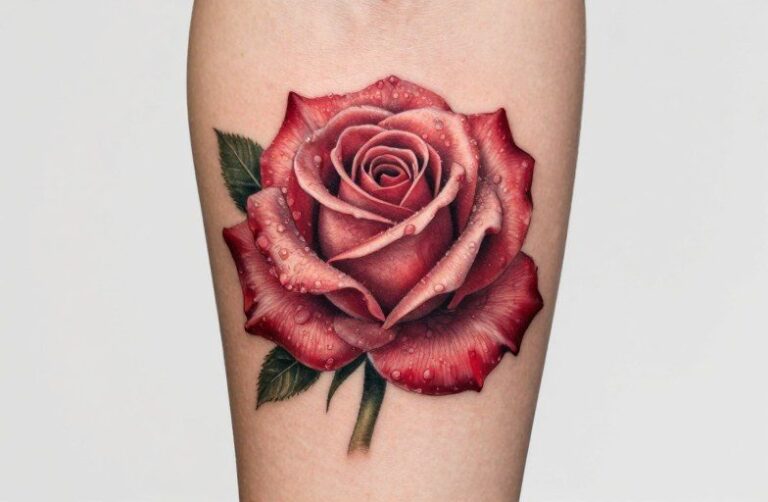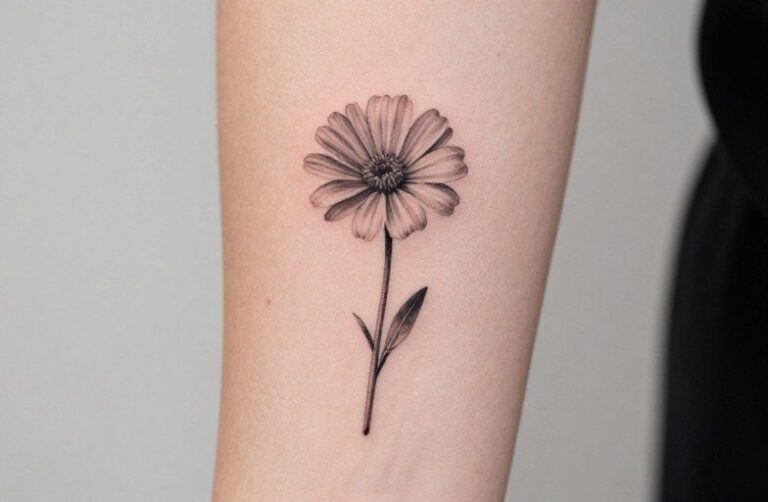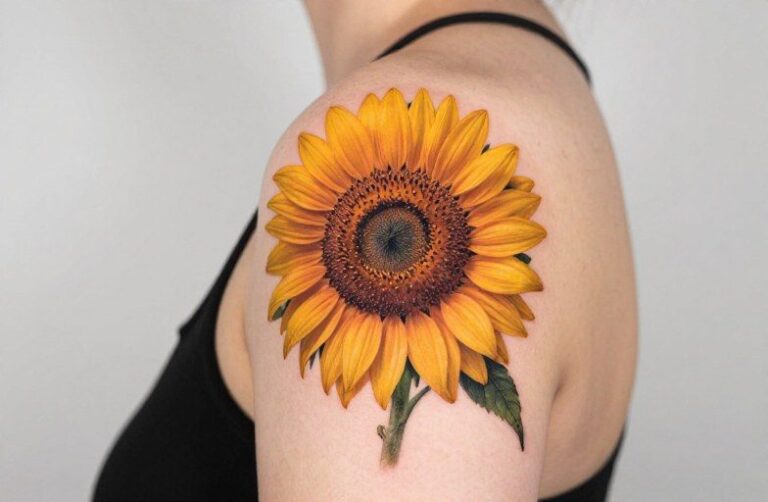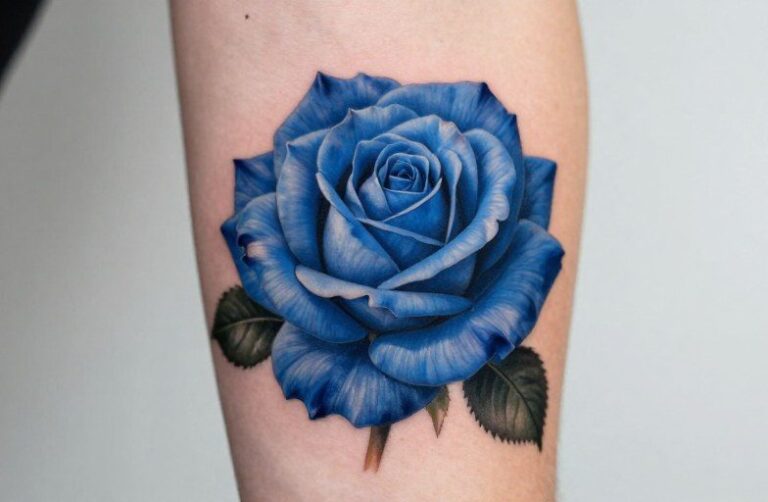
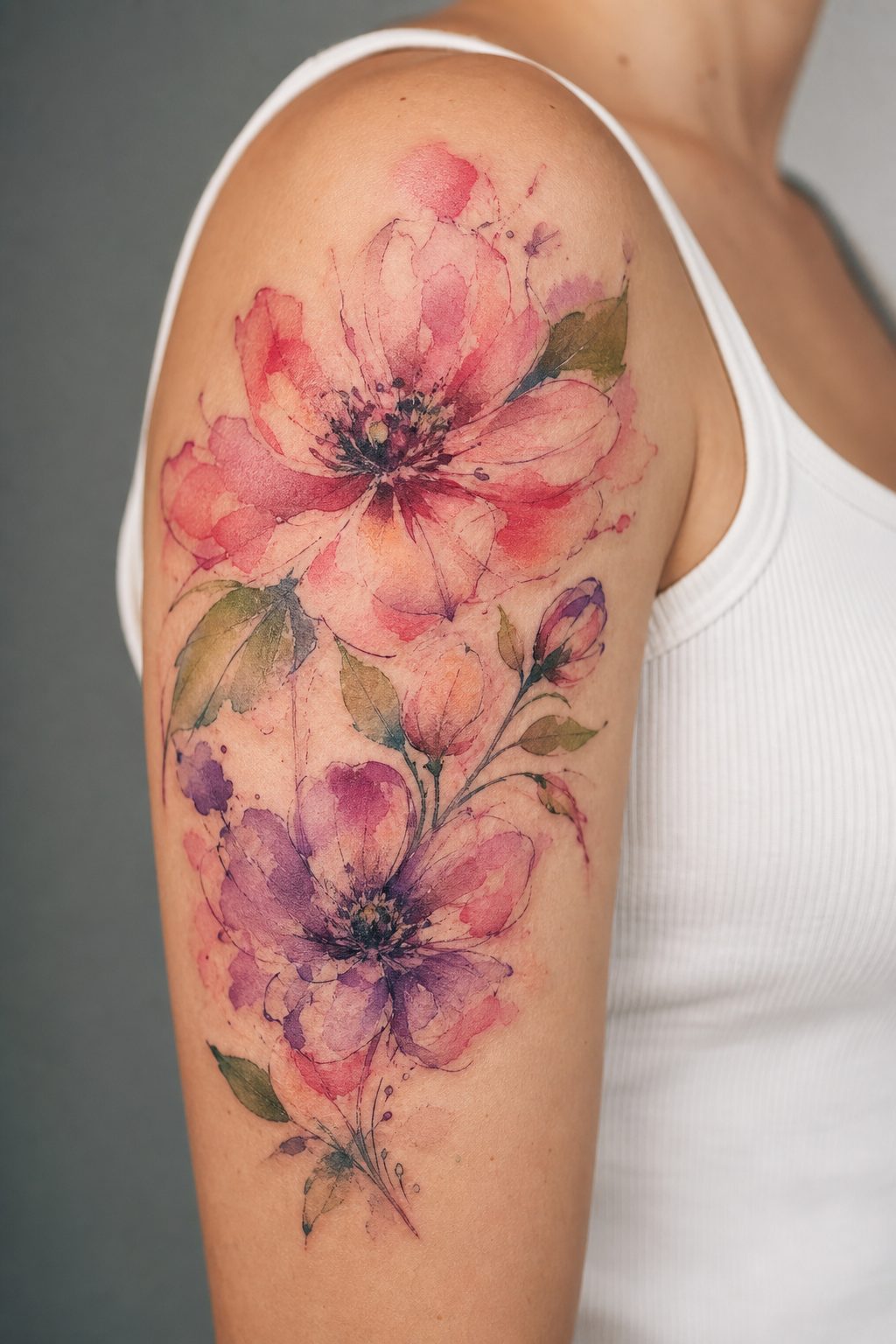
A watercolor flower tattoo typically represents beauty, growth, and emotional expression rendered through a painterly, free-flowing style. The watercolor technique itself adds layers of meaning: spontaneity, impermanence, and the acceptance of life’s unpredictable edges. Unlike traditional linework that contains and defines, watercolor allows the image to bleed, soften, and dissolve, suggesting that beauty doesn’t require rigid boundaries.
Religious & Spiritual Angles
Christian and Buddhist Symbolism
Flowers carry weight across spiritual traditions. The lotus, often linked to Buddhist and Hindu practice, rises from murky water to bloom clean, a narrative of spiritual emergence that pairs naturally with watercolor’s fluid medium. Some trace Christian lily imagery to depictions of the Virgin Mary, where white petals signal purity and resurrection. Watercolor’s ethereal quality amplifies these associations; the dissolving edges can suggest transcendence, the physical world giving way to something immaterial.
Not every watercolor flower carries deliberate religious intent. Many people simply respond to the visual language without doctrinal attachment. Still, the style’s softness lends itself to spiritual themes more readily than bold traditional work. A watercolor rose on a shoulder might read as devotional or purely aesthetic depending on surrounding context, paired hands, a cross, or script versus standalone botanical study.
The Ephemeral as Sacred
Japanese Buddhist concepts of mono no aware, the pathos of things, beauty in transience, find natural expression here. Cherry blossoms, peonies, and chrysanthemums rendered in watercolor literally embody this: the flower that falls, the ink that bleeds. The technique becomes the message. This isn’t about belief in a specific tradition so much as a philosophical stance toward existence.
Personal & Modern Meanings
Emotional Processing and Memorial
People often choose watercolor flowers to mark grief, recovery, or significant transition. The style’s looseness accommodates emotional ambiguity better than crisp linework. A memorial piece for a mother might use her favorite flower with colors that drift and pool rather than hold firm boundaries, suggesting presence that lingers without solid form. Someone finishing chemotherapy might select a watercolor bloom to reclaim their body as a site of beauty rather than medical intervention.
- Birth flowers rendered in watercolor connect personal identity to natural cycles
- Color choices carry specific emotional weight: cool blues for calm or melancholy, warm oranges for energy and change
- The “unfinished” quality appeals to people who reject the idea that healing means returning to a previous state
Femininity and Its Rejection
Flowers have been coded feminine in Western tattoo culture, sometimes dismissed as “basic” or safe. Watercolor technique complicates this. The same rose that reads as conventional in traditional style becomes something else when pigment explodes beyond expected boundaries. Some people choose this specifically to reclaim floral imagery from gendered dismissal. Others embrace the feminine association without apology. The meaning depends on the wearer’s relationship to that cultural baggage, not the image itself.
Best Placements
Where the Technique Thrives
Watercolor demands skin real estate. The effect requires space for gradients to develop, for negative space to breathe. Small areas force compression that kills the technique’s impact. The upper arm, outer thigh, ribs, and shoulder blade offer the flat planes and room that watercolor needs. Curved surfaces like the inner bicep or calf can work but require design adaptation, the artist must account for how the shape wraps.
Forearms and wrists present challenges. These high-movement, high-visibility areas expose the tattoo to sun and friction, both of which degrade watercolor faster than lined work. The style’s reliance on subtle value shifts means fading shows quickly. If you want watercolor on a wrist, expect maintenance or accept that it will soften significantly within five years.
Placement and Composition
Watercolor flowers work well as central pieces with space around them, or as extensions of existing tattoos where the bleed effect bridges hard edges. A common successful approach: a defined flower head near the shoulder with color washing down toward the elbow, the pigment becoming increasingly abstract. This creates movement and uses the body’s natural lines rather than fighting them.
Back pieces allow for full watercolor landscapes, multiple flower species with atmospheric background. The rib cage, despite pain levels, offers a canvas where the technique’s softness flatters the body’s curves. Ankle and foot placements generally disappoint; too small, too much bone, too much wear.
History & Cultural Roots
Technique Origins
Watercolor tattooing as a recognizable style emerged in the early 2000s, commonly associated with artists in Russia and Eastern Europe who began experimenting with painterly approaches to skin. The technique borrows from actual watercolor painting’s principles, wet-on-wet application, color bleeding, absence of hard contour, but translates them through tattoo machines and ink. It’s not a direct transfer; skin isn’t paper, and the physics differ significantly.
Some trace the aesthetic influence to illustration and graphic design trends of the same period, where loose, hand-drawn styles gained commercial traction. The tattoo style followed broader visual culture rather than developing in isolation. This matters because it explains why watercolor tattoos can feel dated quickly, their reference points are contemporary fashion as much as timeless art.
Botanical Tattoo Precedents
Flowers in tattooing carry deeper historical roots. Japanese irezumi incorporated peonies, cherry blossoms, and chrysanthemums for centuries, always with bold outlines and saturated color. Victorian England saw discreet floral tattooing among women, small blue ink pieces that suggested refinement. American traditional work used roses as standard filler and central motifs. Watercolor flowers represent a departure from all these, no outline, no black, no holding line to contain the image.
Who Chooses This Tattoo
First-Timers and Collectors
Watercolor flowers attract a specific crossover crowd: people who want tattooing’s permanence without its typical visual language. First-timers often gravitate toward the style because it reads as “art” before “tattoo,” less threatening to professional environments or family expectations. Established collectors sometimes add watercolor pieces for contrast, a soft interruption in an otherwise heavy traditional or blackwork collection.
The choice often signals prior engagement with visual art. People who paint, work in design, or collect prints respond to the technique’s art-historical references. That said, plenty of people without art background simply find the style beautiful and accessible. There’s no single demographic profile, age, gender, and profession vary widely.
The Commitment Question
Watercolor flower tattoos require different commitment than traditional work. The fading is faster, the touch-ups more frequent, the long-term appearance less predictable. People who choose this style often prioritize immediate visual impact over longevity. That’s a valid choice, but it should be conscious. The person who wants a tattoo to look “the same in thirty years” should look elsewhere.
Design Tips & Pairings
Technical Considerations
Successful watercolor tattooing requires specific technical choices. The artist needs to understand how different pigments behave when diluted, some hold saturation, others disappear into the skin. A true watercolor effect uses minimal black, sometimes none. Adding a “splash” effect around a traditionally lined flower isn’t watercolor; it’s a hybrid that often ages poorly as the black stays and the color leaves.
- Line-free designs age more gracefully than attempts to combine watercolor with heavy blackwork
- White ink highlights generally fail; they yellow or disappear within months
- Color saturation must be strategic, too light and it vanishes, too heavy and it reads as solid fill
- Reference actual watercolor paintings, not other tattoos, when discussing design with your artist
Complementary Elements
Watercolor flowers pair well with geometric frames, the contrast between organic bleed and rigid structure creates visual tension. Script, when included, should be minimal and integrated rather than floating nearby. Birds and insects (bees, hummingbirds, butterflies) extend the natural theme without competing. Abstract brushstroke backgrounds can suggest weather, atmosphere, or emotional state without literal depiction.
Some people incorporate personal symbols into the watercolor field: a constellation, a significant date in faint lettering, a silhouette of a place. These work best when subtle, allowing the flower to remain dominant. The watercolor medium forgives integration in ways that lined styles don’t; elements can genuinely merge rather than sit adjacent.
The Bottom Line
A watercolor flower tattoo means what you bring to it, but the style itself carries inherent suggestions: acceptance of impermanence, value placed on process over final form, willingness to let boundaries dissolve. The technique is demanding, of the artist’s skill, of the wearer’s maintenance commitment, of the skin’s cooperation. It offers in return a visual language that traditional tattooing can’t replicate, something closer to painting than to the medium’s graphic roots.
Choose this if you respond to the aesthetic genuinely, not because it seems gentler or more acceptable than other tattoo styles. It isn’t. It requires dedicated aftercare, sun protection for life, and periodic refreshment. The meaning you invest will last; the crispness of the image won’t. That’s not a flaw in the concept, it’s the concept itself, made visible on your skin.
Frequently Asked Questions
Do watercolor flower tattoos fade faster than traditional tattoos?
Yes, generally they do. The technique relies on subtle color gradients without black outlines to hold shape, so sun exposure and skin aging blur the image more quickly. Expect to need touch-ups every few years to maintain clarity, and plan for diligent sun protection.
Can any tattoo artist do watercolor style well?
Not really. Watercolor requires specific understanding of pigment behavior, dilution ratios, and how color heals in skin without outline support. Look at an artist’s healed work specifically, not just fresh photos. Many who claim the style actually do color splashes around lined flowers, which ages differently.
What’s the best flower choice for watercolor technique?
Flowers with natural softness work best: peonies, roses, cherry blossoms, wildflowers. Hard-edged flowers like orchids or birds of paradise fight the technique. The flower should have enough visual structure to remain recognizable even as edges bleed and soften.
How much should a watercolor flower tattoo cost?
Expect to pay for the artist’s time and expertise, not just size. Watercolor often takes longer than equivalent traditional work because of color mixing and layering. Good practitioners typically charge hourly rates comparable to their other work. Extremely cheap watercolor usually means corners cut on technique or pigment quality.