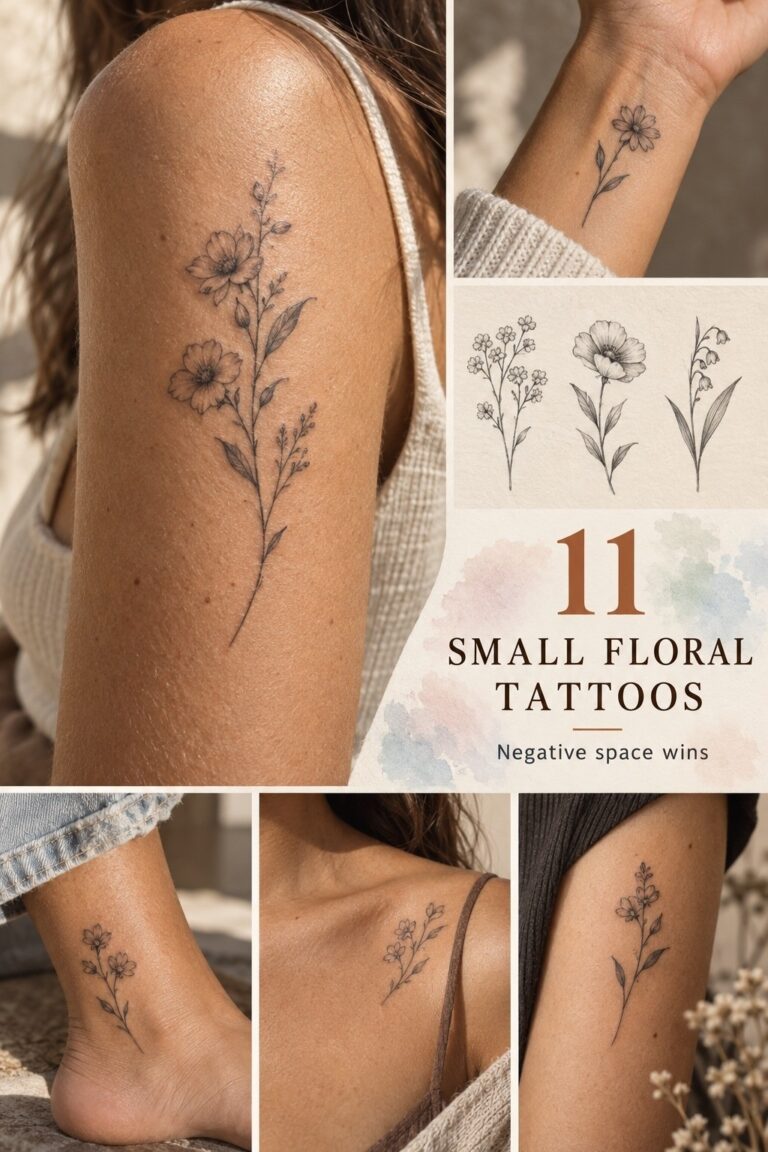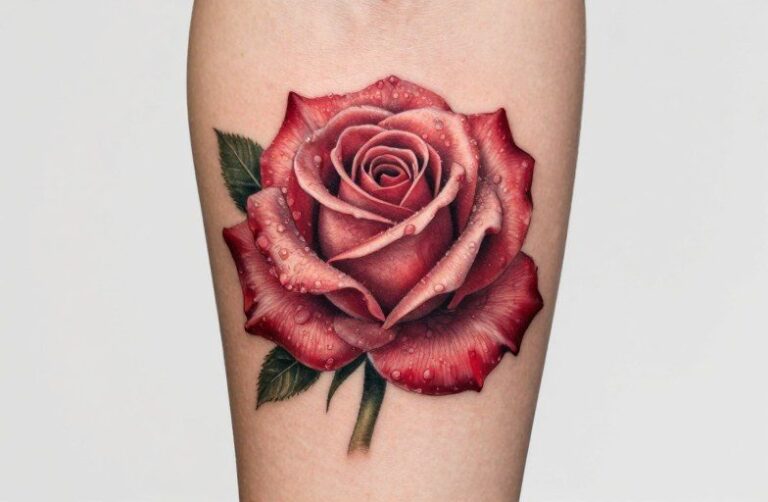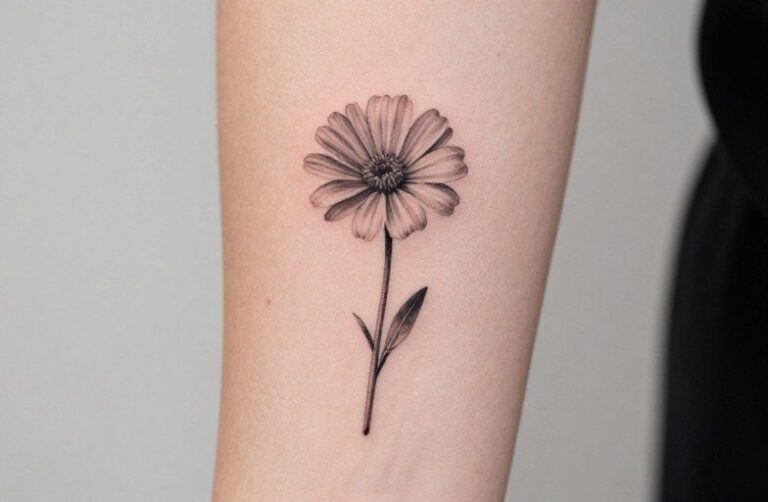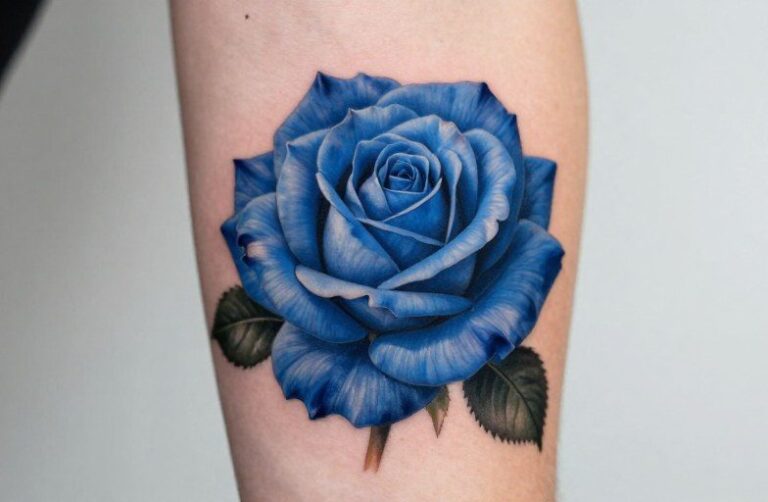
Snowdrop tattoos speak to hope that survives darkness, resilience that pushes through frozen ground, and the quiet courage of being first. The flower’s natural habit, blooming in late winter while snow still clings to the earth, gives it a specific emotional weight no other blossom carries. On skin, this translates to memorial pieces, recovery markers, and quiet personal emblems of endurance.
Symbolism & Core Meaning
What the Flower Actually Does
Galanthus nivalis breaks dormancy when soil temperatures hit roughly 46°F, often pushing through actual frost. This biological fact shapes every symbolic reading: the snowdrop doesn’t wait for ideal conditions. It arrives when everything else remains dormant. Tattoo collectors drawn to this motif typically connect with that specific quality, action despite circumstance, not the promise of spring but the refusal to delay.
The white coloration carries its own vocabulary. Unlike red roses or bold sunflowers, snowdrops operate in near-monochrome. On skin, this reads as restraint, understatement, privacy. Someone who chooses a snowdrop over more visually assertive flowers usually wants meaning held close, not broadcast.
Common Personal Associations
- Recovery from depression or addiction, blooming after internal winter
- Memorial for someone lost in winter months or to illness
- Marking a decision made against conventional timing (career shifts, coming out, leaving relationships)
- January birthdays, as snowdrops are the month’s birth flower
- Connection to Celtic heritage, where the flower holds specific folkloric weight
History & Cultural Roots
European Folklore
Some trace the snowdrop’s symbolic life to German and Eastern European traditions, where it was often linked to Candlemas and the gradual return of light. In Victorian England, the flower developed a more somber association, frequently planted in churchyards and appearing in funeral arrangements, which led to a superstition against bringing snowdrops indoors. This duality, sacred and slightly ominous, gives the tattoo range: it can whisper of mortality without becoming morbid.
The flower’s scientific name reinforces this. Galanthus derives from Greek gala (milk) and anthos (flower), while nivalis means “of the snow.” The milk-white quality suggests purity in some readings, but also the pallor of winter itself, absence of color rather than color’s presence.
Military and Wartime Usage
During World War I, the snowdrop became commonly associated with the Royal Army Medical Corps and appeared on memorials for nurses who died in service. This creates a specific historical anchor for medical professionals or military family members choosing the motif. The connection isn’t universal knowledge, which suits collectors who prefer symbolism with hidden depth.
Similar & Related Symbols
The snowdrop occupies a particular niche between several better-known motifs. Understanding where it diverges helps clarify whether it’s the right choice.
- Lotus: Emerges from mud into full sun; more triumphant, more explicitly spiritual. The snowdrop stays in cold, partial light, its victory quieter, less complete.
- Cherry blossom: Fleeting beauty, mono no aware. The snowdrop shares transience but adds stubbornness; it fights to arrive, not merely to depart.
- Forget-me-not: Direct memorial, less layered. The snowdrop can memorialize without naming itself as such.
- Wren (Celtic tradition): Both associated with winter perseverance in Irish and Scottish folklore; pairing them creates regional coherence.
- Snowflakes: Share the cold-weather register but lack the living, growing quality. Snowdrops push upward; snowflakes fall.
Butterflies paired with snowdrops create a tension some collectors seek: transformation versus endurance, the dramatic versus the incremental. This pairing works best when the butterfly species itself carries meaning, mourning cloak butterflies, for instance, overwinter as adults and appear in early spring, mirroring the snowdrop’s timing.
Design Tips & Pairings
Placement and Scale
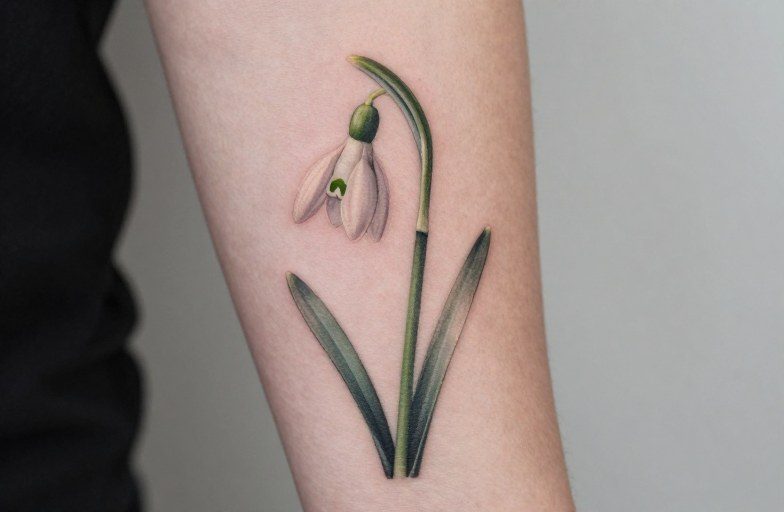
Snowdrops are structurally small flowers, six tepals, three outer larger than three inner, with a green marking at the notch of each inner tepal. This scale reality shapes placement. At wrist or behind-ear size, the green mark becomes a single dot of color, the flower’s most identifiable feature. Larger pieces on ribs or thighs allow the nodding habit to read: snowdrops hang downward, never face-on.
That downward tilt matters compositionally. A snowdrop facing upward reads botanically wrong, like a sunflower drooping. Experienced artists preserve the natural posture, which means the collector’s body position affects how the tattoo presents. Ribs work well because the flower’s natural droop follows the body’s curve when standing.
Line Work vs. Shading
Single-needle linework captures the snowdrop’s delicacy but risks becoming illegible as it ages. The green inner markings provide crucial contrast; without them, a white flower on light skin disappears into a blur. Options include:
- Dotwork stippling for shadow beneath the bloom, grounding it without heavy black
- Negative space for the flower itself, with graywash background suggesting snow or earth
- Strategic color: even pale green at the tepal bases prevents the “faded white blob” problem
- Botanical illustration style with cross-section or root bulb included, adding structural interest
Script pairings work when the text curves beneath the drooping flower, following its gravitational logic. Straight horizontal banners above or below fight the natural form.
How It Ages on Skin
White ink presents the central challenge. On fair skin, white heals to a subtle raised scar tone, visible in certain light, invisible in others. On darker skin tones, white can ash out to gray or yellow, depending on the specific ink formulation and the artist’s packing technique. The green markings become the tattoo’s anchor, the element that remains readable when the white tepals soften.
Line weight matters disproportionately for this subject. Hairline stems blur within five to seven years. Slightly heavier lines, still delicate but not wispy, maintain the botanical accuracy without premature aging. The bulb at the base, often omitted in flash designs, provides visual weight that balances the composition and ages more gracefully than unsupported stems.
Sun exposure accelerates fading dramatically for white-dominant pieces. Placement under clothing (ribs, upper thigh, upper arm) preserves clarity longer than hand, wrist, or collarbone exposure.
Religious & Spiritual Angles
Christian Contexts
The snowdrop’s late-winter appearance often links it to Candlemas (February 2), the presentation of Christ at the temple and the purification of Mary. In medieval English tradition, snowdrops were permitted in church during this feast when other flowers remained absent. For Christian collectors, this creates a specific liturgical anchor: hope made flesh, light entering darkness, the ordinary made sacred through timing rather than grandeur.
The flower’s association with Eve, in some apocryphal traditions, adds complexity. Legend holds that snowdrops bloomed from Eve’s tears after exile from Eden, suggesting divine mercy persisting even after fall. This reading suits redemption narratives without requiring explicit cruciform imagery.
Pagan and Earth-Based Practice
Imbolc, the Celtic festival marking the first signs of spring, falls February 1-2. Snowdrops, often the only available bloom, became natural offerings. For practitioners of reconstructed Celtic spirituality or modern witchcraft, the flower carries specific seasonal energy: not the full force of Beltane, but the turning point, the first crack in winter’s shell. Tattooed as part of a seasonal wheel or with Brigid’s cross, it functions as personal liturgical marker.
Final Thoughts
The snowdrop tattoo rewards collectors who want meaning without declaration. Its visual quietness demands that viewers look closer, and its botanical specifics, downward nod, green inner markings, winter timing, give artists concrete elements to work with rather than generic floral treatment. The aging challenges are real: white ink, fine lines, the risk of muddiness. But these constraints also enforce good design decisions, pushing toward placement under clothing, strategic color use, and compositions that don’t rely on a single bold element.
What separates the snowdrop from more aggressively symbolic flowers is its relationship to difficulty. The rose assumes love; the lotus assumes enlightenment. The snowdrop assumes struggle, then persists anyway. That distinction, subtle but definite, makes it one of the most precisely weighted motifs in botanical tattooing.
Frequently Asked Questions
Does a snowdrop tattoo work on dark skin tones?
Yes, but the design needs adjustment. White ink often heals ashy or yellow on melanin-rich skin, so artists typically emphasize the green inner markings and use negative space or darker backgrounds rather than relying on white pigment alone. A skilled artist will show healed examples on similar skin tones.
How much does a snowdrop tattoo typically cost?
Small, simple designs run $150-$300, while detailed botanical pieces with multiple flowers or background elements reach $400-$800. The precision required for readable fine lines and the color mixing for accurate green markings justify rates at the higher end of a shop’s pricing structure.
Can snowdrops be combined with other flowers in a bouquet tattoo?
Botanically, snowdrops pair poorly with summer blooms in realistic arrangements, they’re out of season. Artists often solve this by grouping them with other late-winter flowers (hellebores, crocuses) or by using illustrative rather than realistic style, where seasonal logic matters less.
What’s the best way to make sure the green markings stay visible over time?
Request that your artist saturate the green slightly darker than the reference image shows; all tattoo pigment lightens 15-20% during healing. Avoid placing the tattoo where it will receive constant sun exposure, and plan for a touch-up at the one-year mark to refresh the color that carries the design’s readability.