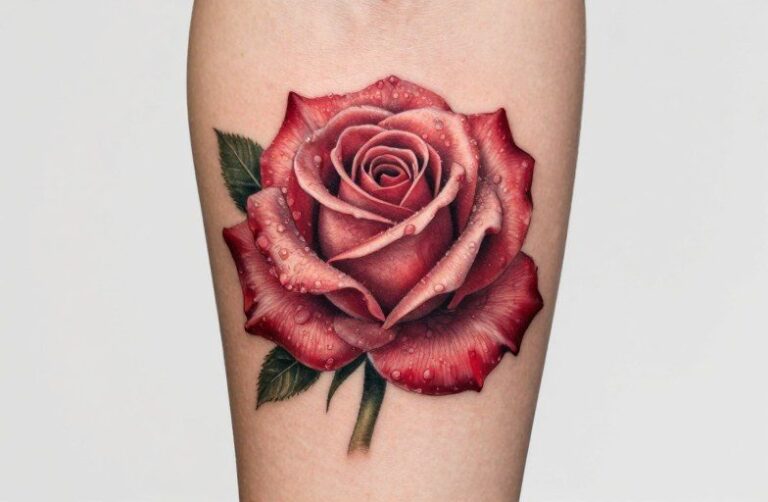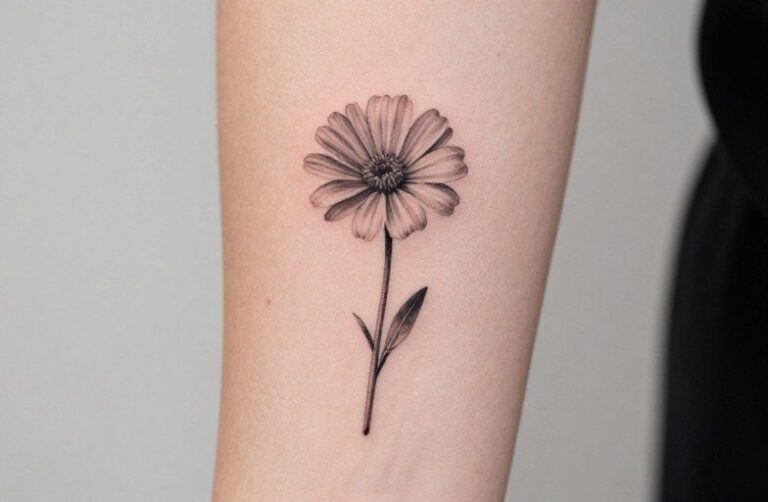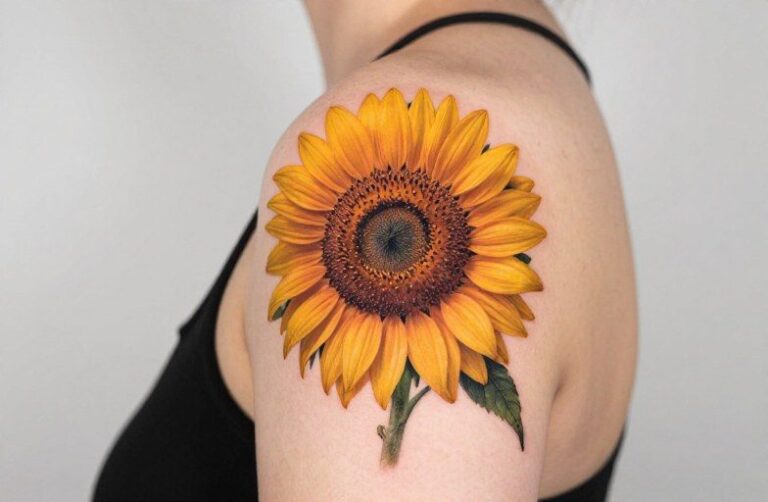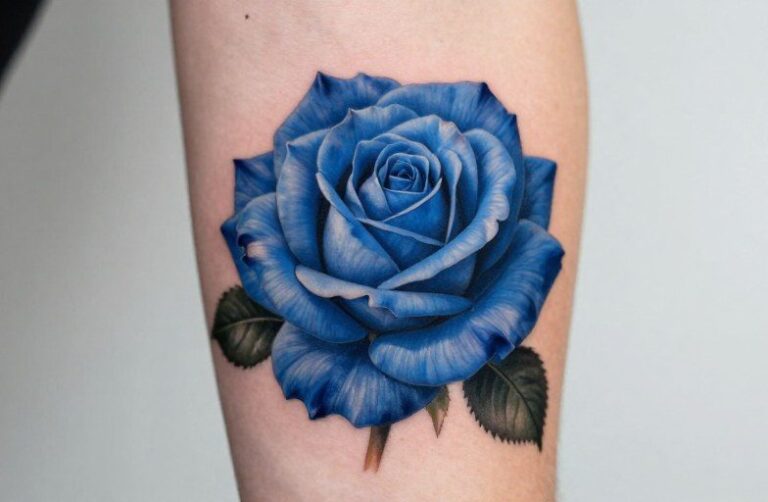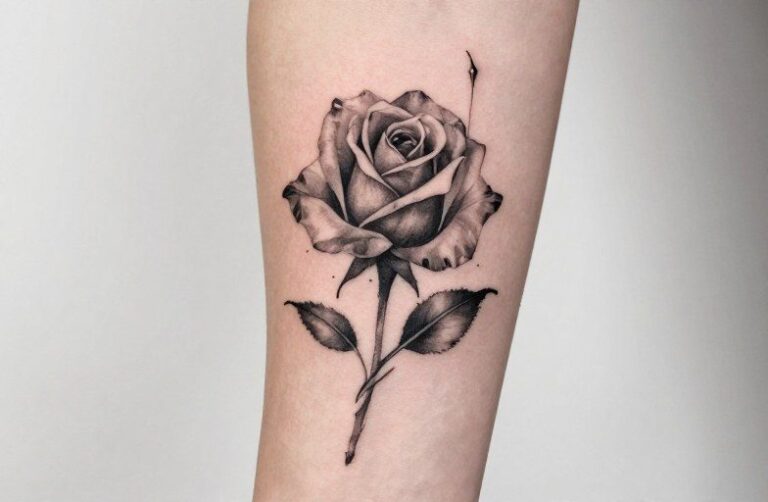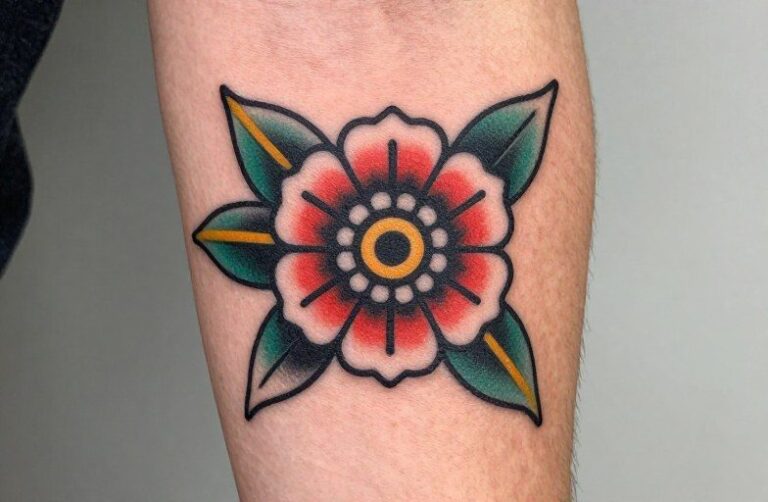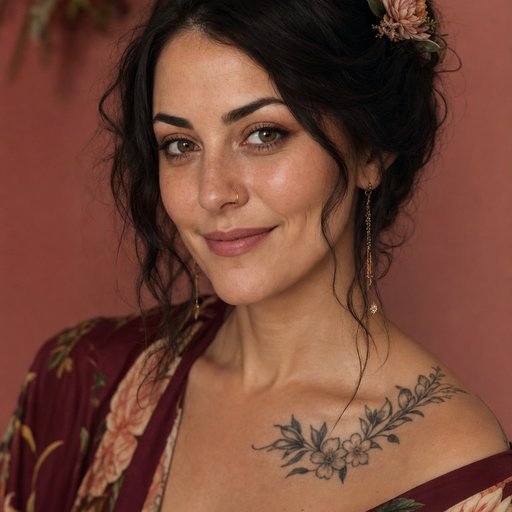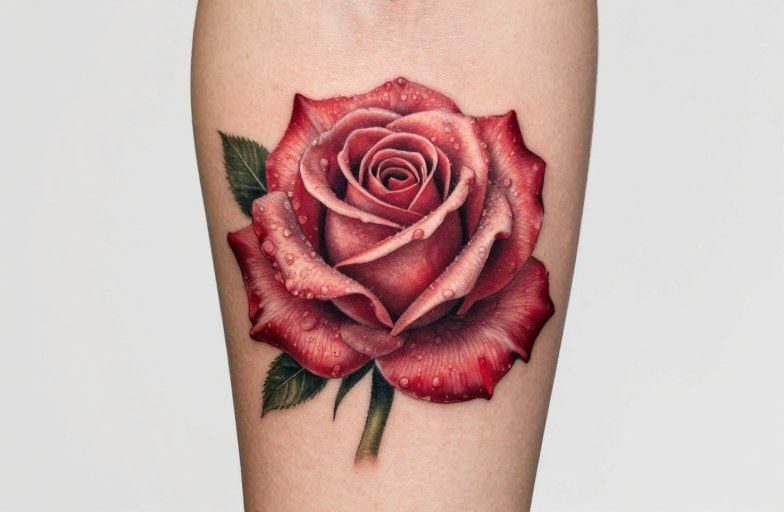
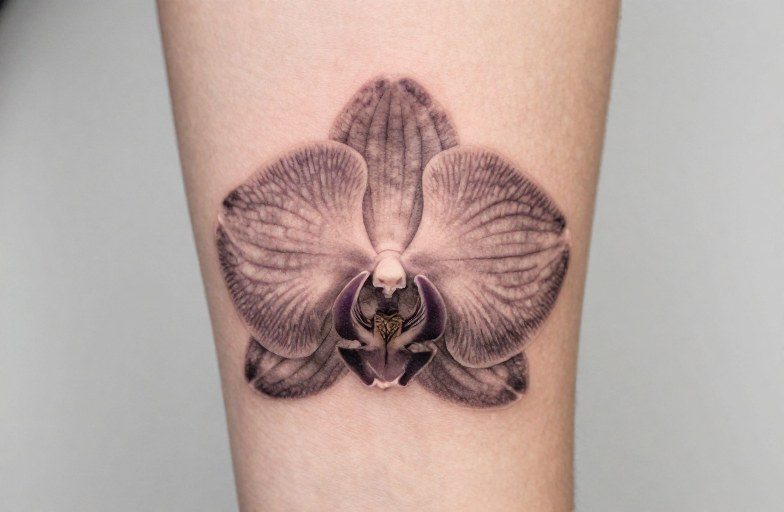
An orchid flower tattoo most commonly signals rare beauty, refined sensuality, and surprising resilience. Unlike roses or lilies with more fixed cultural readings, the orchid holds space for contradiction, delicate appearance, tough biology; exotic association, personal intimacy. That flexibility makes it one of the most requested floral designs in shops today, and one that rewards thoughtful placement and color choice.
Symbolism & Core Meaning
The orchid’s symbolic range runs wider than most flowers. In Victorian flower language, it conveyed luxury and rare beauty, difficult to cultivate, impossible to ignore. Japanese tradition often links it to nobility and strength, particularly the samurai association with courage. Contemporary wearers gravitate toward more personal readings: survival through hardship, fertility and growth, or unapologetic sensuality without vulgarity.
What the Biology Reinforces
Orchids grow on every continent except Antarctica. They thrive in bark, not soil. Some species bloom for years on the same stem. That biological stubbornness gives the tattoo weight beyond decoration, it’s a flower that persists in conditions that kill others. For someone marking recovery, relocation, or quiet endurance, this matters more than any dictionary definition.
Placement as Meaning
- Behind the ear or collarbone: intimacy, something kept close rather than displayed
- Upper arm or thigh: confidence in the symbol’s sensual dimension
- Ribcage or sternum: protection, the flower as armor over vulnerable anatomy
- Forearm or calf: visibility, a commitment to the meaning without apology
Mythology & Folklore
Greek origin stories often link the orchid to virility and fertility, the name derives from orchis, testicle, referring to the root’s shape. Ancient Greeks believed consuming the root could determine a child’s sex. Chinese tradition traces the orchid to Confucius, who compared the flower to noble character, refined, understated, persisting where showier plants fail.
Aztec and Mesoamerican Threads
The vanilla orchid carries specific weight in Mesoamerican history. Totonac people of present-day Veracruz cultivated it centuries before Spanish contact. Their origin myth describes the blood of two lovers transforming into the orchid vine, a reading of sacrifice and transformation that some contemporary Mexican and Chicano tattoo traditions still reference.
Color vs Black and Grey
Color choice reshapes the orchid’s meaning more dramatically than with many flowers. A purple orchid reads royal, spiritual, or mourning depending on saturation. Deep violet near-black approaches gothic; bright lavender stays playful. White orchids in Japanese and Korean contexts often signal mourning or reverence, while in Western bridal tradition they mean pure luxury.
Black and Grey Specifics
Without color, the orchid relies on structure. The labellum, the specialized lower petal, becomes the focal point. Good black and grey work emphasizes the flower’s architectural quality: column, throat, spur. This reads more timeless, less decorative. It also ages better, since purple and pink pigments are notoriously fugitive.
Color Durability Reality
- Purples often shift toward blue or grey within 3-5 years
- Pinks fade fastest in sun-exposed placements
- Yellows and whites require more frequent touch-ups to maintain brightness
- Black and grey hold value contrast for decades with proper sun protection
How It Ages on Skin
Orchid designs live or die on line weight and negative space. The flower’s natural silhouette has thin edges, petals that taper, stems that narrow. Too fine, and those details blur into indistinct grey within five years. Too bold, and the orchid loses its characteristic delicacy.
Technical Recommendations
Experienced artists typically use a minimum 3rl for the thinnest lines in an orchid, with 5rl or 7rl for structural edges. Shading should graduate from light to dark with enough contrast that the flower’s form remains readable even as skin texture changes. The throat of the orchid, the patterned center, needs particular attention; dotwork or whip shading hold better than smooth gradients over time.
Placement affects aging significantly. Orchids on the inner bicep or side of the ribcage experience less sun and mechanical wear than forearm or ankle placements. The flower’s vertical stem format works well with the body’s natural lines, but curved placements (wrapping a forearm, for instance) require the artist to adjust the bloom’s angle so it doesn’t appear twisted at rest.
Who Chooses This Tattoo
There’s no single demographic. The orchid attracts people who want floral symbolism without the obviousness of roses or lotuses. It’s common among those marking specific life transitions, career changes, relationship endings, health recoveries, because the flower accommodates private meaning without demanding explanation.
Gender and Style Associations
While orchid tattoos are often coded feminine in mainstream culture, traditional Japanese and neo-traditional styles frequently render them in masculine contexts, full sleeves, chest pieces, back panels. The botanical illustration style, with scientific accuracy and minimal stylization, appeals across gender presentation. Single-needle fine line orchids trend younger and more minimalist; bold traditional or watercolor approaches skew toward collectors with established tattoo history.
Similar & Related Symbols
People considering orchids often also look at lotus (spiritual emergence), cherry blossom (transient beauty), or magnolia (Southern dignity, feminine strength). The orchid distinguishes itself through its combination of exoticism and accessibility, it doesn’t require Eastern religious context, nor does it carry the regional specificity of magnolia or dogwood.
Pairings That Work
- Orchid with snake: danger and beauty intertwined, transformation
- Orchid with geometric frame: contrast between organic and structured
- Orchid with moth or butterfly: pollination, fleeting encounter, mutual dependence
- Orchid with script: typically names or dates, though the flower itself usually carries enough weight to stand alone
Before You Decide
Bring reference of the specific orchid species you want, not just “an orchid.” Phalaenopsis (moth orchid) has broad, rounded petals. Cattleya has ruffled edges and a pronounced lip. Dendrobium grows in cascading clusters. Each reads differently visually and symbolically. A good artist will adapt the reference to your body’s scale and movement, but starting with precision matters.
Consider the stem. Orchid tattoos often focus so tightly on the bloom that the stem becomes an afterthought, but the stem’s curve determines how the design flows with your body. A straight stem reads static; a gentle arc follows muscle or bone structure. The stem also provides opportunity for green, one of the few tattoo pigments that ages relatively reliably.
Finally, the orchid’s meaning is genuinely flexible, but that flexibility requires your own clarity. Because it carries so many possible readings, sensuality, survival, luxury, mourning, vague intention produces a decorative result. Know which quality you’re anchoring to, and let that guide placement, color, and accompanying elements.
Frequently Asked Questions
Does an orchid tattoo always mean something sexual because of its Greek root?
Not in contemporary practice. While the Greek etymology is accurate, most people today choose orchids for resilience, rare beauty, or personal transformation. The meaning depends on your intention and context, not ancient linguistics.
What’s the best size for an orchid tattoo to keep detail over time?
Palm-sized or larger preserves the throat detail and petal edges that define the flower. Smaller than two inches risks the center becoming a blurry blob within a few years, especially on high-movement areas.
Can an orchid tattoo work in a mostly black and grey sleeve?
Absolutely. The orchid’s strong silhouette and architectural structure make it excellent for black and grey work. Focus on contrast between the dark column and lighter petals rather than relying on color for definition.
Which orchid species do tattoo artists prefer for reference?
Phalaenopsis and Cattleya dominate because their broad petals and distinct lips photograph clearly and translate well to skin. Dendrobium works better for cascading compositions like back pieces or rib panels.