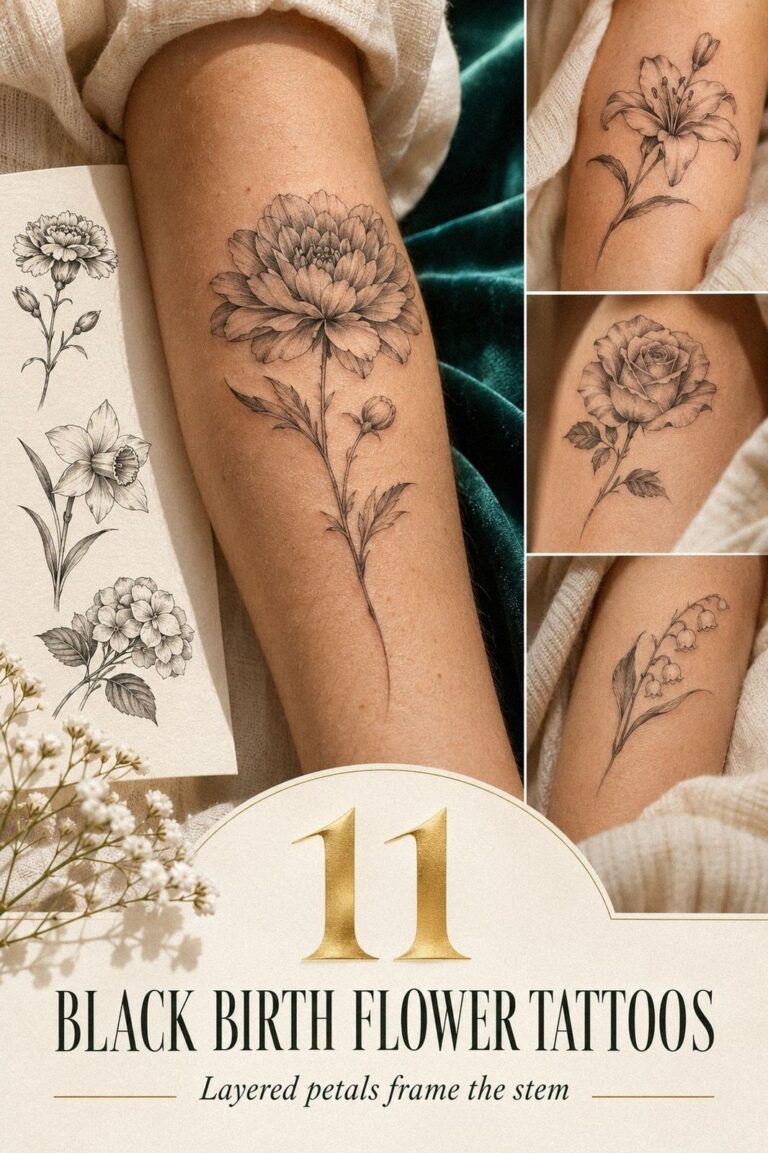
A minimalist floral sleeve tattoo works best when the design follows your arm instead of fighting it. I learned that a delicate sprig can look striking for years when you plan symbolism, spacing, line weight, and healing before booking. You don’t need a crowded sleeve. You need a personal one.
That’s the first win! A delicate sprig can feel meaningful without becoming predictable.
The composition should leave enough skin visible. The strongest sleeves usually have one clear idea, not ten competing ones.
You’ll also want a first tattoo plan for placement, cost, pain, and future additions. A sleeve doesn’t have to be completed in one dramatic appointment.
Editor’s note: Treat negative space as part of the artwork. It protects each flower’s identity and gives the full design an understated rhythm.
Before you book, make a booking plan with your artist. Ask for healed examples.
Discuss line weight. Be honest about how much visibility you want.
Before You Start: The Three-Reference Rule
Before you contact an artist, collect three references in one reference folder. Use one for the botanical, one for placement, and one for line quality.
Your first reference might show a minimalist wildflower tattoo. The second could show a long forearm curve.
The third might show crisp, delicate stems. This combination gives your artist direction without asking for a copy.
You can begin with this minimalist wildflower tattoo collection if you need a clear starting point. Look for the rhythm of the stems, not just the flower you like most.
Your budget needs the same clarity. A typical shop minimum in the United States may run from $50 to $100. Hourly rates often land between $100 and $250.
A larger sleeve may need more than one session. Ask how the artist prices design time, deposits, and touch-ups. You’ll avoid an awkward surprise later.
Keep the folder focused. A single detailed botanical reference is more useful than twenty unrelated tattoo images. If you’re drawn to a fine-line floral tattoo, note what attracts you.
Is it the negative space? The symbolic flower?
The narrow stem? The soft balance between skin and black pigment?
You can also compare floral tattoo ideas for women before you settle on a direction. Save only references that share a similar visual language.
I’d also save one healed photograph, not only fresh work. Fresh lines can look crisp, polished, and striking before the skin settles.
Healed photographs show what your design may look like after the first surface-healing period. That period commonly takes about two to three weeks.
You don’t need a finished sleeve in your head. You need a clear starting point, an honest budget, and a flexible artist consultation. Good planning pays off!
A Cost Snapshot for Your First Sleeve
Tattoo prices vary by region, artist, size, and detail. Use the numbers below as planning ranges, not promises.
A full sleeve can cost more than a small floral tattoo. It can also take several months when you space appointments around healing.
Before paying a deposit, ask for the estimate in writing. Confirm whether design time, touch-ups, and additional sessions are included.
If you’re comparing styles, minimalist wildflower tattoo references can help you see why two designs with similar sizes may still require different amounts of work.
- Start With a Fine Floral Linework Base
- Which Botanicals Still Mean Something to You?
- Place Stems Along Your Natural Arm Curve
- Why Does Negative Space Matter?
- Plan a Small Minimalist Floral Sleeve Composition
- Let Leaves Build a Flowing Sleeve Silhouette
- Choose Crisp Line Weight for Lasting Clarity
- Bold Accents or Dainty Petals?
- Map Pain-Sensitive Areas Before Booking Sessions
- Protect Fresh Ink During Sleeve Healing
- Refine Unique Details During Your Tattoo Consultation
1Start With a Fine Floral Linework Base

Begin with one botanical sprig that can carry the rest of your sleeve. Choose a flower with a recognizable silhouette. Let smaller leaves and stems support it.
That approach feels minimalist because the design leaves plenty of skin visible. It also creates a graceful foundation for later additions.
Ask your artist to show the main stem at the actual size they recommend. Don’t judge the design only as a tiny digital sketch.
You’ll notice whether the petals remain readable. You’ll also see whether the stem looks graceful when your arm is relaxed.
I’d skip an ultra-tiny copy of a detailed bouquet. The petals can merge as the tattoo ages. A simpler shape may stay more expressive.
For your first piece, choose one dominant flower and two supporting forms. A narrow fine-linework base may suit delicate contours.
Your artist should decide how much detail your skin and placement can safely hold. The thinnest possible line isn’t automatically the best line.
A narrow 3RL needle may suit certain details. The number alone doesn’t guarantee a clean result.
Your artist should choose equipment based on skin, placement, and the line they can control consistently. Good technique matters more than a trendy specification.
If you want a more personal starting point, compare this minimalist wildflower tattoo guide before choosing a reference. Look for designs that feel expressive rather than merely stylish.
Your strongest base should have a clear visual hierarchy. If you can’t tell which flower leads the composition, your artist won’t have a strong structure to follow.
2Which Botanicals Still Mean Something to You?

Choose flowers with flower symbolism you’ll still care about when the trend has moved on.
3Place Stems Along Your Natural Arm Curve

Turn your arm slowly before you approve the forearm curve. A long sprig should follow the movement of the arm instead of sitting like a sticker.
That flowing direction helps the sleeve read naturally from the wrist, side, and inner arm. It also makes the design feel more connected.
Ask your artist to mark the stem while your arm is in the position people will see most often. A design can look elegant with your palm facing down.
It may twist when your hand turns outward. I’ve seen clients love a stencil from one angle, then lose the rhythm when they rotate their arm.
Use the longest stem as your visual guide. It can travel diagonally toward the elbow. Smaller leaves can point into open skin.
Your artist may shift the stencil by a few millimeters. That small change can protect the curve and keep the central bloom graceful.
A shorter sleeve can still feel complete. If you want more visible skin between pieces, compare these small floral sleeve tattoo examples before deciding how far the design should travel.
Pay attention to wrist movement, too. That area bends, rubs against clothing, and receives regular sunlight.
A narrow stem needs enough breathing space to remain sleek rather than cramped. Placement should serve the design, not force it into a fixed template.

4Why Does Negative Space Matter?

Leave visible negative space between the flowers, leaves, and stems. Skin breaks give each element definition.
This matters even more when the design uses thin lines and small petals. Each mark needs room to remain crisp.
Without enough skin breaks, a minimalist sleeve can become muddy. The flowers may look beautiful on appointment day, but crowded details can soften together as the tattoo ages.
Ask your artist to explain the planned petal spacing before the stencil is applied. You should understand which gaps are deliberate.
You should also know which marks are essential to the composition. That conversation can prevent unnecessary detail.
If you’re comparing compact layouts, browse these tiny floral tattoo references and notice how much skin surrounds each motif. Keep the quiet space! It’s doing real visual work.
Negative space can make a design feel powerful without making it large. It gives a fierce flower room to breathe beside dainty leaves.
A Quick Check Before the Stencil
Stand in front of a mirror with your arm relaxed. Then turn your wrist, bend your elbow, and raise your arm.
Look for the focal flower first. If your eye jumps between equal details, the composition may need a clearer lead.
Check the design from a short distance, too. A tattoo should read as a whole before someone studies every petal.
Your artist can adjust the design before the stencil touches your skin. That’s the best moment to make a bold change.
5Plan a Small Minimalist Floral Sleeve Composition

Plan the full shape on paper before your first appointment. This helps even when you’re tattooing only one section now.
A simple composition map lets you see whether the flowers form a graceful path or several disconnected marks. It also gives future additions a sensible place to go.
Draw your arm as a simple front and side outline. Place the largest bloom first. Then add the stems that guide the eye.
You can test a small sleeve with a removable body-safe marker. That’s useful if you’re unsure whether the wrist or forearm should carry the visual weight.
A strong composition usually has one focal flower, two or three supporting blooms, and smaller leaves that create continuity.
I’d skip giving every flower equal size. The sleeve can lose its hierarchy. A focal bloom makes the surrounding dainty details feel intentional.
Use your artist’s flash as a starting point, not a catalog you must reproduce. Your arm has its own movement and proportions.
If you like the quiet arrangements in these minimalist floral sleeve tattoo ideas, ask how the rhythm could change for your arm and chosen botanicals.
Your sleeve plan can remain flexible. The polished result may come from moving one flower, shortening one stem, or leaving a larger patch of skin open.
A polished plan doesn’t need to look rigid. The best version may emerge during a thoughtful consultation.
6Let Leaves Build a Flowing Sleeve Silhouette

Add leaves after the main flowers are placed.
7Choose Crisp Line Weight for Lasting Clarity

Choose line weight based on longevity, not only on how fine the tattoo looks on appointment day. Very thin marks may soften or widen as they age.
Ultraviolet exposure can affect black pigment over time. This is especially true on exposed areas.
Ask your artist how sun exposure may influence the lines. Ask whether certain details need slightly more strength.
Request a healed portfolio with examples several months or years old. A fresh photograph can’t answer the question your future self will have.
Your artist may combine delicate outlines with slightly stronger stems. That contrast gives the eye a path through the sleeve.
It also protects the main structure if tiny petal lines soften. I’d avoid asking for every mark to have identical weight.
A uniform line can make the result look flat and less intricate. Variation gives the botanical drawing more life.
A small amount of black pigment can help the design hold its shape. This doesn’t mean turning the piece into heavy blackwork.
It means placing controlled accents where they support readability. Those accents can keep the botanical silhouette sharp.
If you’re comparing fine-line approaches, save this minimalist peony tattoo reference and ask which details are likely to stay readable. You’ll make a better choice when you plan for healed skin.
8Bold Accents or Dainty Petals?

Pair one bold accent with several smaller details. A stronger stem, dark leaf, or compact center can give the eye somewhere to land.
Dainty petals work best when they’re supported by clear structure. Too many tiny outlines can make the tattoo feel busy.
One expressive bloom can keep the composition meaningful. It can also make the surrounding details feel more delicate.
If you’re drawn to a symbolic centerpiece, compare these peony tattoo meaning ideas before deciding how much detail the flower needs.
An ornate bloom may require more space than a simple outline. Your artist can help you choose a readable version.
The goal is visual contrast, not visual noise. A fierce accent beside delicate petals can make both elements more noticeable.
A crisp center can be enough. You don’t need dark detail in every petal.
9Map Pain-Sensitive Areas Before Booking Sessions

Map your arm by sensation before you choose the first appointment location.
A Simple Pain and Healing Check
Think about your schedule before booking. Don’t place a fresh tattoo right before swimming, travel, or intense training.
Plan for clean clothing and a calm healing period. You’ll be more comfortable when aftercare doesn’t compete with a busy week.
Tell your artist if you’re worried about pain. A professional can explain breaks, timing, and placement without making you feel dramatic.
Your first session should feel informed. It doesn’t need to feel fearless.
10Protect Fresh Ink During Sleeve Healing

Protect the design during the healing window. Your aftercare choices affect how the final lines settle.
Follow your artist’s instructions for washing, moisturizing, and covering the tattoo. A gentle wash and a light layer of recommended moisturizer are common parts of aftercare.
Wear clean clothing that won’t rub the area. Don’t soak the tattoo in a pool, bath, or open water while it heals.
Avoid direct sun during the early period. Keep using sun protection once the surface has healed.
Ultraviolet exposure can fade black pigment over time. Fine lines may also spread visually as they soften.
Don’t pick peeling skin. It can feel itchy and distracting, but pulling at flakes may interfere with surface healing.
I once treated a healing tattoo like ordinary dry skin. The impatience wasn’t worth it.
For a compact botanical plan, compare these minimalist lavender tattoo ideas and imagine how the stems might look after two or three months.
A romantic design still needs practical care. Beauty doesn’t replace patience.
A botanical motif can stay vibrant when you protect it early. Sensible sun habits matter later, too. Trust the pause!
11Refine Unique Details During Your Tattoo Consultation

Bring your references, but arrive ready to discuss changes. Your consultation notes should cover placement, size, line character, symbolism, cost, and touch-ups.
Ask your artist how they would adapt the flower to your skin tone, movement, and preferred visibility. Discuss whether you want the sleeve facing inward, outward, or wrapping slightly around the forearm.
Bring three specific decisions. Choose your focal flower, your preferred line character, and the area you’re willing to leave open.
You can also ask for a healed portfolio, studio hygiene information, and the artist’s policy on touch-ups. Clear questions are empowering.
Your artist’s healed portfolio matters more than a feed filled only with fresh tattoos. Look for clear lines, varied skin tones, balanced spacing, and designs that still look intentional after settling.
If you want a softer flower, compare these minimalist tulip tattoo designs before your appointment. They may give you better language for the conversation.
Ask about the artist hygiene policy without apologizing. A professional should explain setup, sterilization, single-use supplies, and touch-up expectations clearly.
I’d walk away from a consultation that rushes your placement. I’d also leave if the artist dismisses healed examples.
No artist can promise that ultra-fine lines will never change. The empowering choice is an informed tattoo decision you understand before it reaches your skin.
The Fine-Line Ladder: What I’d Choose Again
I’ve changed my mind about minimalist sleeves more than once. At first, I thought the most delicate possible line would produce the most elegant result.
Then I studied healed work. I realized that clarity matters more than novelty.
Now I’d build the design in a simple ladder. First, I’d choose the botanical with the strongest personal meaning.
Second, I’d place the main stem along the arm’s movement. Third, I’d add the smallest details only after the composition reads clearly from a few feet away.
That design ladder feels understated, but it protects the idea. It also gives your artist a logical order to follow.
I’d spend more time studying the artist’s healed portfolio than scrolling through fresh appointment photos. Fresh tattoos are striking because the pigment is new and the skin is taut.
Healed tattoos reveal whether the artist understands spacing, pressure, line weight, and the practical limits of fine detail. That evidence is more useful.
The money decision deserves honesty, too. A lower studio quote may look tempting, but a minimalist tattoo gives you nowhere to hide uneven lines.
Experience with fine botanical work is worth prioritizing over a rushed appointment. A timeless tattoo needs patience.
What would I skip? I’d skip squeezing too many flowers into the first session.
A timeless sleeve has room for skin, change, and future expansion. Your design can grow, but it shouldn’t need more detail just because the first stencil feels quiet.
If you want another reference point, compare this minimalist peony tattoo collection with your saved designs. Ask which version still feels personal after the first excitement fades.
The Questions I Get Asked Most
How much does a minimalist floral sleeve tattoo usually cost?
I’d plan for about $100 to $300 for a smaller piece. A developing sleeve may cost $500 to $2,500 or more, depending on sessions, coverage, location, and artist experience. Shop minimums may range from $50 to $100, while hourly rates often fall between $100 and $250.
Is a minimalist floral sleeve tattoo a good idea for a first tattoo?
Yes, I think it can be a strong first tattoo. I’d choose a manageable placement, one meaningful botanical, and enough spacing for clear linework. You don’t need a large, crowded design to make an empowering first statement.
How do I choose a tattoo artist for minimalist floral sleeve tattoo work?
I’d choose an artist with clean linework, healed photographs, and botanical tattoos on varied skin tones. Ask about hygiene, consultation practices, deposits, and touch-ups. A strong healed artist portfolio should make those answers easier to judge.
How much do minimalist floral sleeve tattoos hurt?
In my experience, pain depends on placement, timing, and personal tolerance. Ribs, feet, hands, and the sternum are often more sensitive than the forearm, thigh, or shoulder. I’d start with a practical area if you’re anxious about your first session.
How long does a minimalist floral sleeve tattoo take to heal?
I’d expect the surface to heal in about two to three weeks. The tattoo can take two to three months to settle completely. Gentle washing, moisturizing as directed, avoiding sun, and staying out of pools can support a steady aftercare routine.
What’s the best placement for a minimalist floral sleeve tattoo?
I’d usually consider the outer forearm first because it offers visibility, room for flowing stems, and a manageable starting point. The shoulder or thigh can offer more space.
Hands and feet may need extra care because of friction and sunlight. These tiny floral tattoo references can help you compare compact placements.
Where I’d Start First: The Negative-Space Rule
If I had to pick one step, I’d start with the negative-space rule. It protects every delicate flower from merging as the tattoo ages.
It also lets your arm remain part of the composition. Save your favorite minimalist wildflower tattoo collection, then ask your artist to show the stencil from every angle before you book.
Start small! A striking first bloom, a flowing stem, and a little open skin can create a meaningful sleeve with room to become your own.