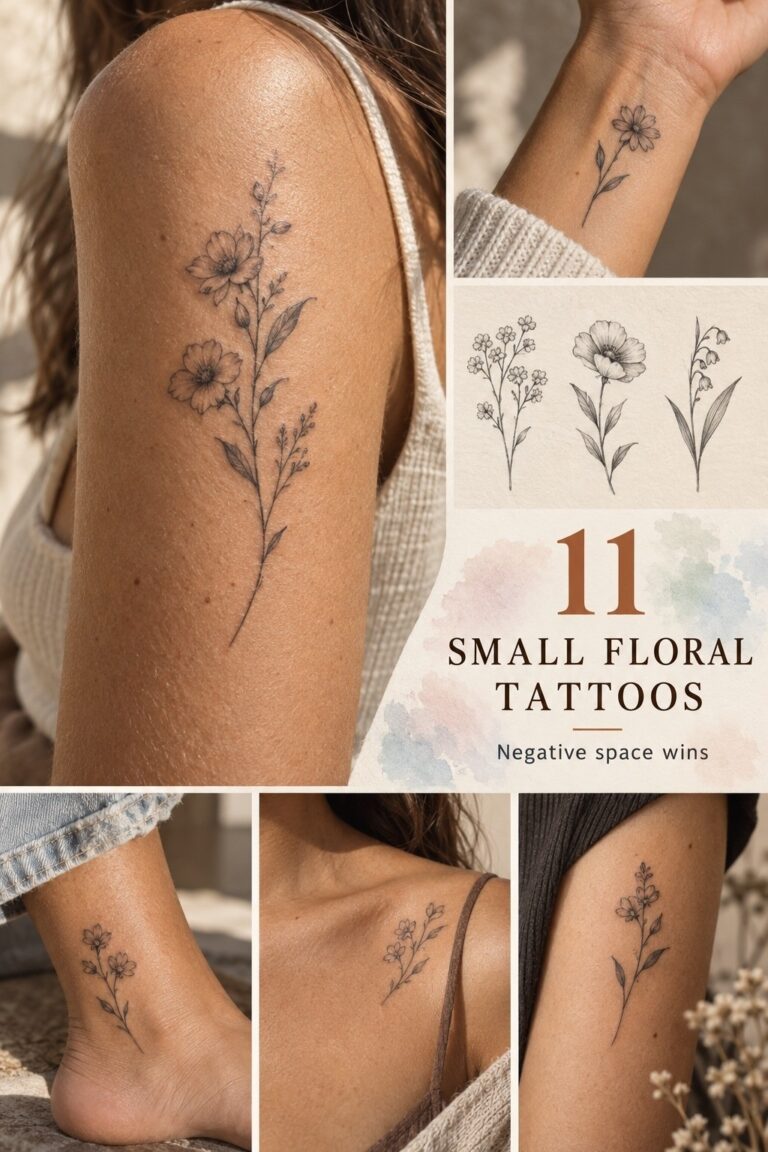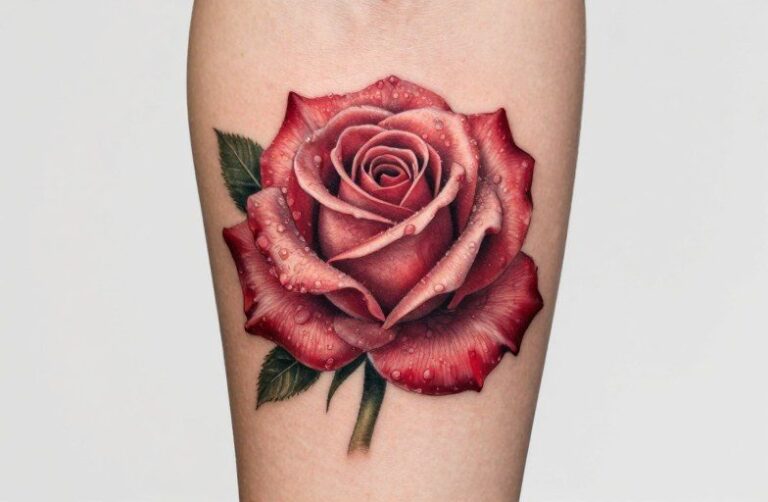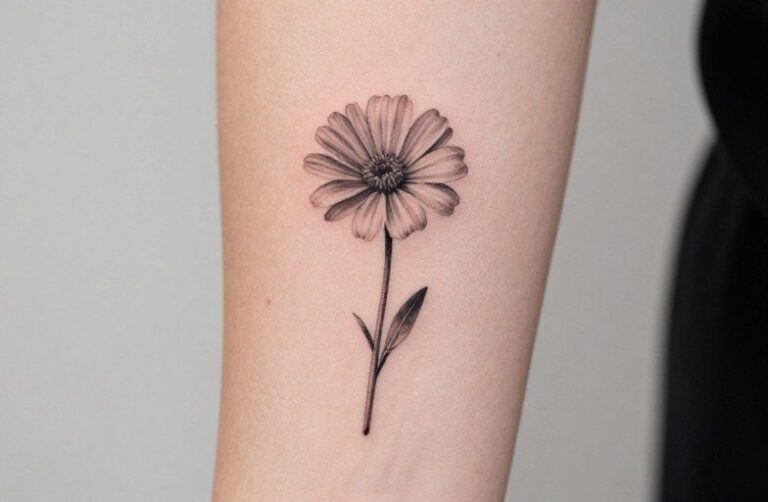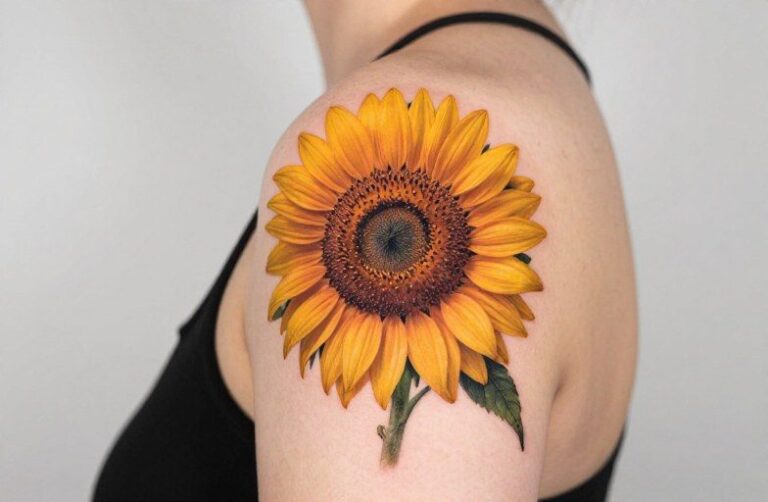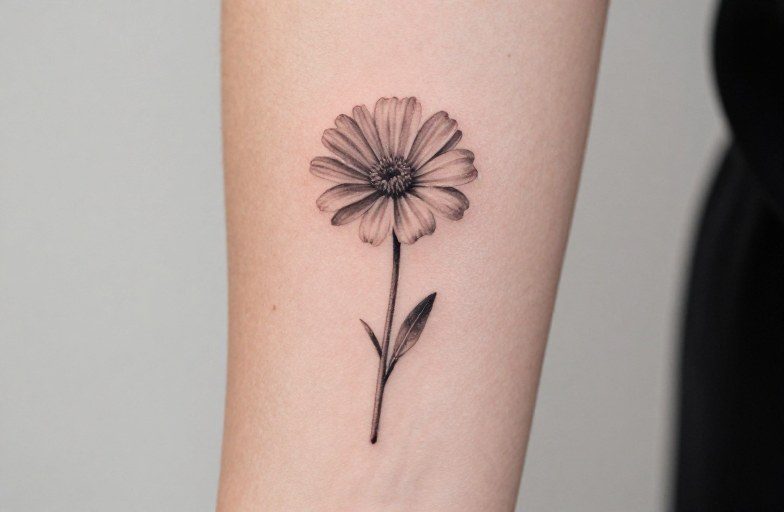
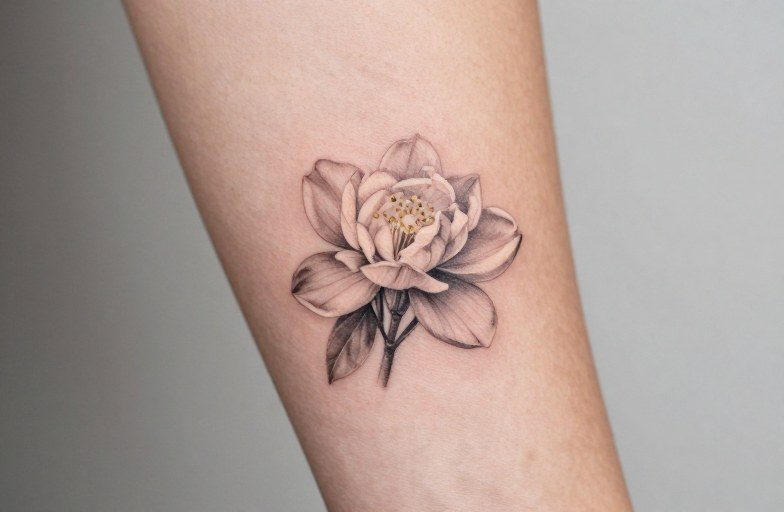
The jasmine flower tattoo most commonly signals love, sensuality, and spiritual purity all at once. Unlike bolder floral choices, jasmine carries a particular duality: delicate white petals that release their strongest fragrance after dark. That night-blooming quality gives the design its edge, it’s not merely pretty, but quietly intense.
Symbolism & Core Meaning
The Dual Nature of Jasmine
White jasmine dominates tattoo imagery, and its color associations run toward innocence and new beginnings. Yet the flower’s actual behavior contradicts this surface reading. Jasmine opens in evening hours, its scent intensifying in darkness. This creates a natural tension in the symbolism, purity paired with nocturnal sensuality, restraint with hidden intensity. Many who choose jasmine specifically want that balance, not a single straightforward message.
Yellow jasmine carries different weight. In several cultural contexts, it’s tied to friendship and joy rather than romance. The color shift matters significantly in design choices. Pink jasmine exists too, though it’s less common in tattoo work and tends to read as softer, more domestic.
What the Vine Structure Adds
Jasmine grows as a climbing vine, and this growth pattern translates symbolically. The vine wraps, persists, finds paths upward. In tattoo form, this often determines placement, wrist to forearm, ankle winding upward, ribcage trailing toward shoulder. The vine structure suggests endurance, the ability to thrive attached to something else without losing distinct identity. That’s a specific psychological resonance many carriers recognize without naming it.
- White jasmine: love, purity, spiritual awakening, nocturnal intensity
- Yellow jasmine: friendship, happiness, warmth without romantic charge
- Vine form: persistence, adaptability, quiet strength in attachment
Who Chooses This Tattoo
Placement Patterns and What They Reveal
Behind the ear and along the collarbone rank as the most frequent placements for single-bloom jasmine. These spots keep the design intimate, visible when chosen, easily concealed. The fragrance association plays here: jasmine sits close to pulse points where perfume would go. That parallel isn’t accidental.
Larger vine pieces typically run along the side body, following rib contours, or wrap ankles and calves. These placements accommodate the trailing growth pattern. People selecting larger jasmine work often have personal history with the plant itself, gardeners, those who grew up around blooming vines, individuals marking a specific memory tied to scent.
Gender and the Design
Jasmine carries feminine coding in Western tattoo culture, though this dissolves somewhat with stylistic choices. Blackwork or heavy linework versions read more neutral. Small, delicate, color-saturated designs remain predominantly chosen by women. The flower’s association with traditional femininity in advertising and bridal imagery influences this, though the actual plant is tough, invasive in many climates, hard to kill once established.
Common Variations & Styles
Linework vs. Shading: How They Age
Single-needle linework jasmine tattoos look exquisite fresh. The fine lines match the flower’s actual delicacy. The problem is longevity. Those thin stems and tiny petal outlines blur faster than bolder designs. Within five to seven years, fine-line jasmine can lose definition significantly, especially on high-movement areas like wrists or inner arms.
Shaded or stippled approaches hold better. Some artists build jasmine from dotwork clusters, creating texture that reads as petal softness without relying on hair-thin lines. Others use heavier outline weights with selective shading, sacrificing some botanical accuracy for longevity. Watercolor-style jasmine exists but ages poorly; the color bleeds and fades asymmetrically, leaving muddy shapes where flowers once read clearly.
Combinations That Work
Jasmine pairs naturally with moon imagery, reinforcing the night-blooming association. Moths and night-blooming cactus appear alongside it occasionally. In some East Asian-inspired compositions, jasmine shares space with tea ceremony elements, cups, steam, minimal table settings. These combinations work because they share a contemplative, sensory quality rather than competing for attention.
- Linework: fresh precision, faster aging, best for low-friction placement
- Dotwork/stippled: better longevity, maintains texture as it settles
- Black and grey: reads clearly longer, suits larger vine compositions
- Color realism: requires skilled saturation, fades to grey-green tones
Mythology & Folklore
Mediterranean and Middle Eastern Threads
Jasmine’s mythological presence is often linked to love deities across several traditions. In some Greek-derived stories, the flower connects to Aphrodite’s domain, though this association is less fixed than rose or myrtle. Persian poetry uses jasmine as a symbol of beauty that specifically belongs to night, unreachable, fragrant, temporary. The Hafiz and Rumi traditions employ it repeatedly as an image for divine love that arrives in darkness.
South and Southeast Asian Roots
In Indian contexts, jasmine, particularly mogra and juhi varieties, holds concrete religious function. It’s strung into garlands for deities, worn in hair by women, used in wedding rituals. Some trace its association with Lakshmi and other goddesses to these practices, though specific regional variation is enormous. Thai tradition uses jasmine similarly, and the flower appears in Indonesian ceremonial dress. Tattoo wearers drawing from these backgrounds often choose jasmine as heritage marker rather than generic exoticism, though the line requires sensitive navigation.
Religious & Spiritual Angles
Christian monastic traditions occasionally employed jasmine in enclosed gardens as a symbol of the soul’s progress toward divine union, the flower’s climbing nature, its white color, its sweet scent all mapping onto spiritual aspiration. This usage is documented but not widespread, more common in specific contemplative orders than in general Christian symbolism.
Hindu and Buddhist practice gives jasmine more consistent spiritual placement. The flower’s impermanence, blooms last hours, scent lingers briefly, makes it a natural meditation object. Some practitioners use actual jasmine in mindfulness practice; the tattoo extends this into permanent reminder. The spiritual angle here isn’t about the flower representing a deity directly, but about its qualities pointing toward attention, presence, sensory awareness.
Neo-pagan and contemporary spiritual tattoo choices often select jasmine for its moon associations, its night-blooming cycle read as lunar sympathy. This is modern interpretation rather than historical reconstruction, but it’s a coherent symbolic system many find personally meaningful.
Similar & Related Symbols
Flowers It Gets Confused With
Small white flowers cause constant identification problems. Gardenia, stephanotis, and certain cherry blossoms all read similarly at tattoo scale. Jasmine’s five-petal structure and vine origin distinguish it, but casual viewers often misidentify. Some wearers don’t mind this; the personal significance matters more than public recognition. Others specify jasmine explicitly in design consultations to avoid generic “small white flower” reading.
Meaningful Alternatives
Night-blooming cereus offers similar nocturnal symbolism with more dramatic visual impact, large, showy, brief. For those wanting the darkness association without jasmine’s romantic coding, this substitute works. Orange blossom carries comparable wedding and purity traditions in Mediterranean cultures. Tuberose shares the intense night fragrance but reads more funereal in some contexts, Victorian associations with death and sensuality combined.
- Gardenia: similar white bloom, more formal, Southern U.S. associations
- Night-blooming cereus: same temporal symbolism, more dramatic form
- Orange blossom: overlapping purity/wedding meanings, different cultural anchor
- Wisteria: similar vine growth, purple coloration, more melancholic tone
The Takeaway
Jasmine flower tattoos work best when the wearer connects to at least one layer of their actual complexity, the night blooming, the climbing persistence, the scent-memory trigger, the cultural specificity. The design fails when reduced to generic “pretty white flower.” For longevity, prioritize slightly heavier linework than initial impulse suggests, and consider placement with movement and sun exposure in mind. The ribcage and outer upper arm age jasmine designs more gracefully than finger or wrist placement. Whatever your specific association, make sure the artist understands if you’re after botanical accuracy or symbolic stylization, the two directions produce markedly different results.
Frequently Asked Questions
Does jasmine tattoo color affect the meaning significantly?
White jasmine dominates and carries the full range of love, purity, and night-blooming intensity. Yellow shifts meaning toward friendship and warmth, while pink is uncommon and reads softer. Most symbolic weight sits with white, so color choice substantially changes what’s communicated.
How well does fine-line jasmine hold up over years?
Poorly on high-movement areas. The delicate stems and small petals blur faster than bolder designs. Consider dotwork or slightly heavier outlines for longevity, especially on wrists, fingers, or inner arms where constant motion accelerates aging.
What’s the best placement for a jasmine vine versus a single bloom?
Single blooms work behind the ear, collarbone, or inner wrist, intimate, pulse-point adjacent. Vines need length: ribs wrapping toward back, calf to ankle, forearm flowing toward wrist. The growth pattern demands space to read as climbing rather than crowded.
How do I make sure my jasmine doesn’t look generic?
Specify the species-influenced structure: five petals, vine origin, perhaps night-blooming context through moon or moth pairing. Bring reference photos of actual jasmine, not other tattoo interpretations. Discuss with your artist whether botanical accuracy or stylized symbolism matters more to you.