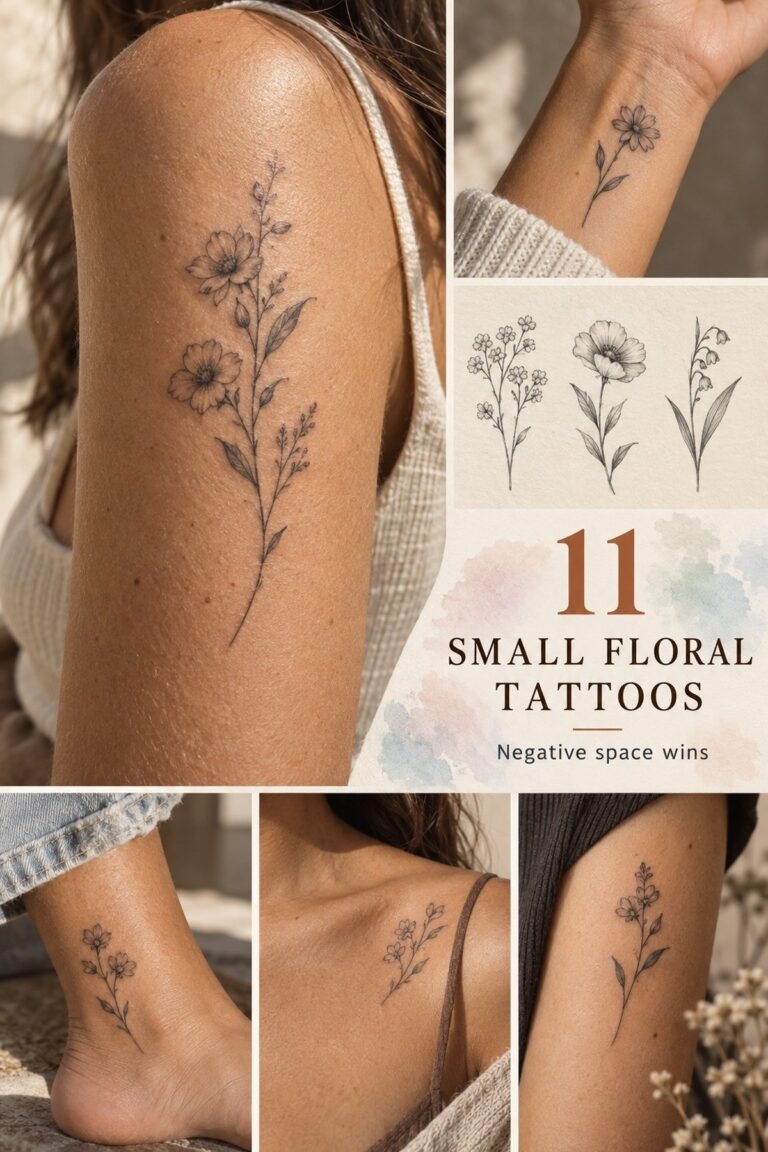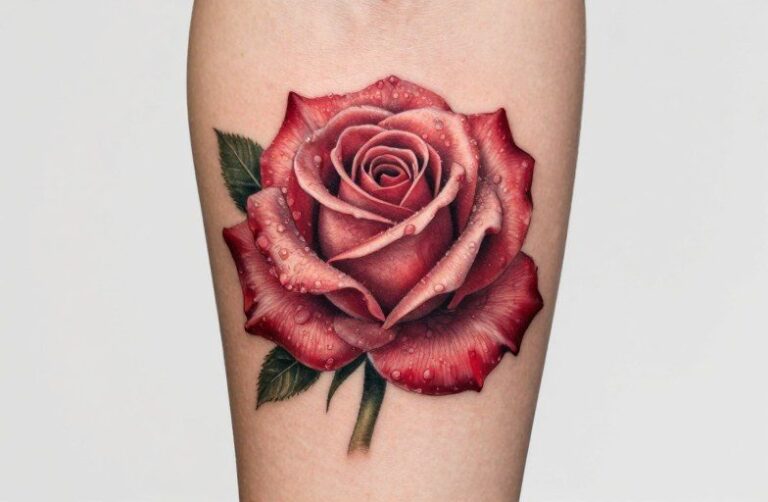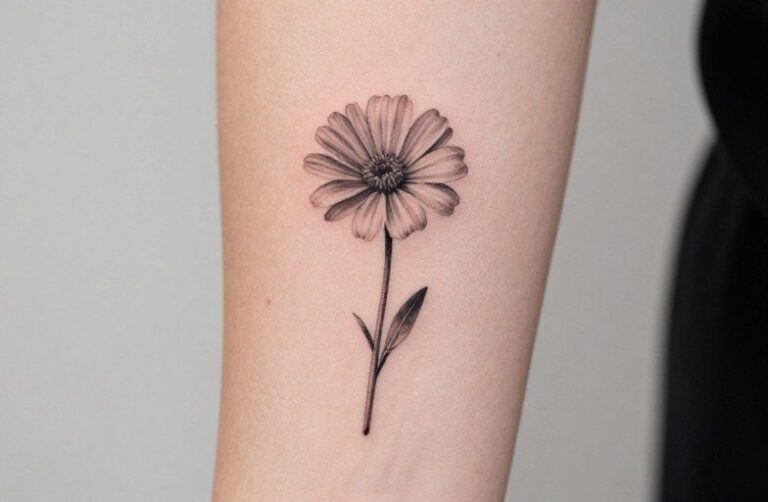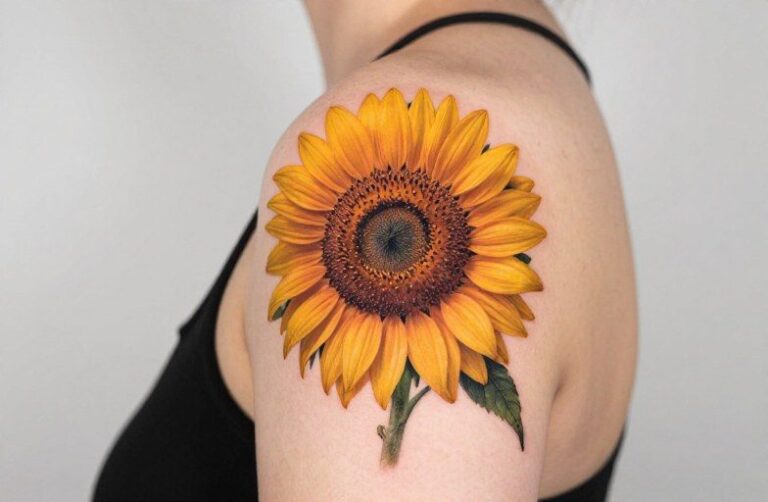
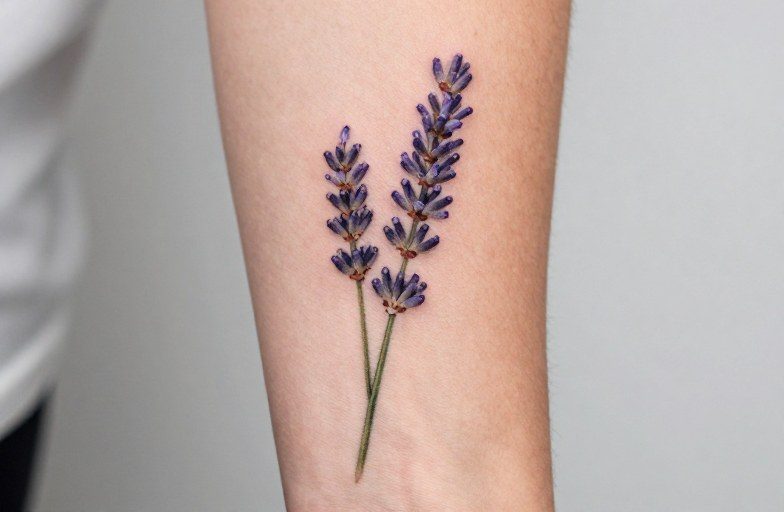
A lavender tattoo most commonly signals calm, devotion, and remembrance. The purple bloom carries long-standing associations with tranquility, restful sleep, and the quiet endurance of love that outlasts distance or loss. For many, it also marks a personal boundary, a symbol of peace kept close, visible only when chosen.
Symbolism & Core Meaning
Serenity and Nervous System Resonance
Lavender’s meaning starts with its scent. The plant’s essential oil has been used for millennia in baths, pillows, and pressed against temples. A tattoo of the flowering spike transfers that sensory association to skin, visual calm without the fragrance. The purple color itself sits at the short-wavelength end of the visible spectrum, which may contribute to its cultural link with slowing down, introspection, and the liminal state before sleep. People drawn to lavender tattoos often want a permanent marker of a period when they found or needed stillness.
Devotion and Remembrance
In Victorian floriography, lavender denoted devotion and sometimes silent love. The plant’s dried flowers retain their scent for years, making it a natural emblem for memory that persists. This translates directly to tattoo choices: a lavender sprig for a grandmother who grew it, a single stem for a relationship maintained across distance, or a bundle for grief that doesn’t demand the drama of lilies or roses. The symbolism is gentle but durable, which suits people who prefer understated memorials.
Queer and Feminist Reclamation
Lavender has been both slur and reclaimed badge. The “Lavender Menace” was a derogatory term for lesbians in mid-20th century America; activists seized it as a proud label. A lavender tattoo can carry this specific political weight, resilience against erasure, softness as defiance. The purple also bridges the pink and blue of the gender binary, making it resonant for nonbinary and trans identities. This layer of meaning is more recent and more geographically specific than the botanical associations, but it’s increasingly relevant in contemporary tattoo culture.
Common Variations & Styles
Botanical Realism vs Stylized Sprigs
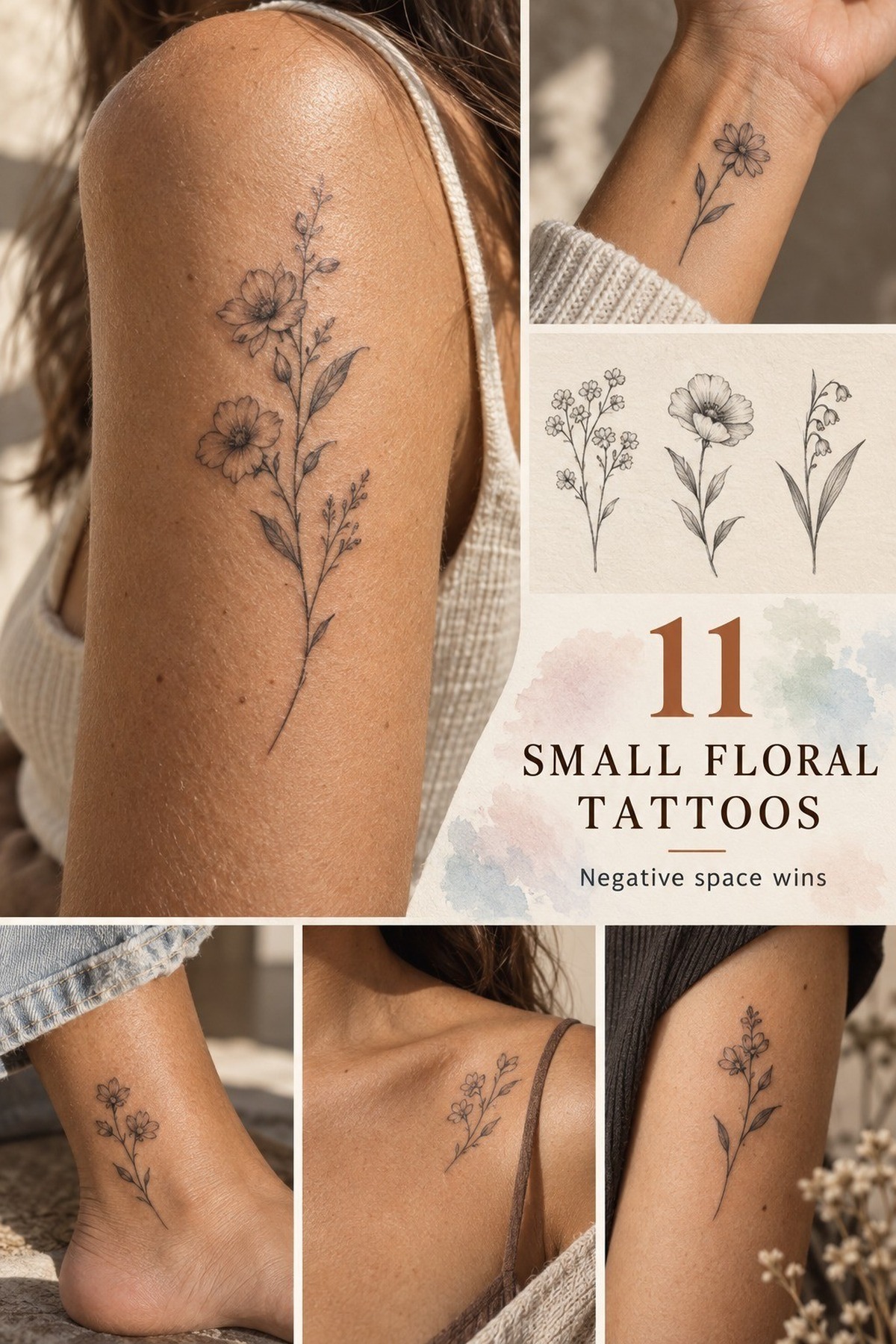
Realistic lavender tattoos typically show the full flowering spike with individual buds rendered in fine detail, often paired with a stem and narrow leaves. These work best at medium scale, three to five inches, so the bud structure remains readable. Stylized versions reduce the plant to a few curved lines suggesting the spike’s silhouette, sometimes with a single dot or diamond shape per bud. The minimalist approach ages better at small sizes and suits placements like the wrist, behind the ear, or along the collarbone where a detailed piece would blur.
- Single stem: Most common, versatile for vertical placements like the forearm, rib, or ankle.
- Bundle or bouquet: Adds narrative weight; pairs well with other herbs (rosemary for remembrance, sage for cleansing) or with a ribbon, scissors, or book.
- Field or landscape: Rows of lavender stretching to a horizon line; demands larger canvas like thigh, back, or upper arm.
- Pressed/dried aesthetic: Flattened perspective, muted colors, sometimes with visible stem texture; popular for a vintage scientific illustration look.
Integration With Other Imagery
Lavender frequently appears in compositions with bees, honeycomb, or butterflies, emphasizing pollination, productivity, and the sweetness that follows labor. It also pairs with moon phases, particularly crescents, to underscore the sleep and dream associations. Less commonly, it’s rendered emerging from a cracked surface or skull, the softness against hardness creating visual tension that speaks to growth through difficulty.
Color vs Black and Grey
The Purple Problem
Lavender’s signature color is notoriously difficult in tattoo ink. Purple pigments, especially the lighter, pinker lavenders, contain magenta bases that fade faster than blue or black. A bright violet fresh from the chair will likely soften to a greyed mauve or dusty pink within five to seven years, depending on sun exposure and skin tone. Darker purples, closer to violet or indigo, hold longer but read less distinctly as “lavender” and more as generic purple flower.
Black and Grey Solutions
Many artists recommend black and grey with subtle purple undertones rather than full color saturation. This approach uses the value contrast to define the bud structure, with a hint of purple in the highlights or as a wash in the background. The result ages into a softer but still identifiable lavender tone. For those committed to color, placing the tattoo on less sun-exposed skin (ribs, upper inner arm, thigh) and diligent SPF use will preserve the hue longer than a forearm or ankle placement.
How It Ages on Skin
Lavender’s fine details are its aging vulnerability. The individual bud shapes, each a tiny oval with a pointed tip, rely on crisp edges and subtle color gradation. As skin changes and ink spreads slightly, these can merge into a purple blur. The stem and leaf structure, being longer lines with less intricate detail, remain readable longer.
- Line weight matters: Bud outlines should be at least 0.5mm; finer single-needle work looks delicate for two years then loses definition.
- Negative space: Leaving skin tone between buds preserves the sense of individual flowers even as color softens.
- Background: A light grey or lavender wash behind the main stem can provide contrast that outlasts the flower’s own color.
- Placement: Areas with thin, stable skin (inner forearm, calf) show aging more predictably than joints or high-movement zones.
Touch-ups every five to eight years will restore color saturation, but the linework foundation determines whether the piece remains a lavender or becomes an abstract purple shape.
Similar & Related Symbols
Botanical Neighbors
Rosemary shares the remembrance association but reads more medicinal, more aggressively green. Lilac overlaps in color but carries a different temporal weight, brief spring bloom, youthful innocence, nostalgia rather than endurance. Wisteria, with its cascading clusters, suggests abundance and romantic longing; lavender’s upright spike is more contained, more self-possessed. For those wanting the purple without the sleep connotations, thistle offers protection and pride, particularly Scottish heritage.
Non-Floral Alternatives
The moon in its crescent phase shares lavender’s nocturnal, intuitive associations. A simple circle or mandala in purple can abstract the same calm without botanical specificity. For the queer political resonance, the labrys (double-headed axe) or violet itself are more explicit historical symbols. Some choose lavender’s color alone, a purple gradient bar or geometric shape, when the meaning matters more than the plant.
Mythology & Folklore
Meditanean and European Threads
The name itself is often linked to the Latin lavare, to wash, reflecting Roman use in bathwater. Some trace it to the older Greek nerdil or Syrian lufse, though etymological certainty is elusive. In medieval European folklore, lavender placed under a pillow was believed to prevent nightmares and ensure sleep untroubled by spirits. This practical magic, herbal protection during unconsciousness, feeds directly into modern tattoo choices for those who struggle with anxiety or insomnia.
Christian and Folk Traditions
Lavender is sometimes associated with the Virgin Mary, particularly in Provence where it grows abundantly. The legend, likely apocryphal, claims she dried the Christ child’s swaddling clothes on lavender bushes, giving the plant its scent. Whether or not this story has historical roots, it has shaped the flower’s association with maternal care, purity, and domestic sanctity. In English folk practice, a sprig of lavender in the wedding dress was meant to ensure a husband’s fidelity, a meaning occasionally transferred to couple tattoos or commitment markers.
Final Word
A lavender tattoo works best when the wearer understands its dual nature: visually soft but structurally demanding, historically peaceful but politically charged for those who choose that layer. The plant’s real resilience, drought-tolerant, perennial, fragrant even dried, mirrors the quality many seek to mark on their bodies. Whether as a small stem behind the ear or a full field across a shoulder, it’s a symbol that rewards simplicity in design and honesty in intention. The purple will fade; the meaning, if genuinely held, does not depend on it.
Frequently Asked Questions
Does a lavender tattoo have to be purple to be recognizable?
No. Black and grey lavender tattoos are common and often age better. The distinctive spike shape with small buds reads as lavender even without color, though purple adds immediate recognition.
What’s the best size for a lavender tattoo to keep detail?
A single stem needs at least three inches of height for the bud structure to remain clear over time. Smaller than two inches, and the individual buds blur together within a few years.
Can lavender cover up an older tattoo?
Lavender’s vertical structure and dense bud clusters can work for cover-ups, but the light color values limit what it can hide. Darker purples or integrating black leaves and stems improves coverage.
Is there a difference in meaning between fresh lavender and dried lavender in tattoo form?
Fresh lavender typically signals growth, presence, or current peace. Dried or bundled lavender leans toward memory, preservation, and the endurance of past connections. Both are valid but carry slightly different emotional weight.