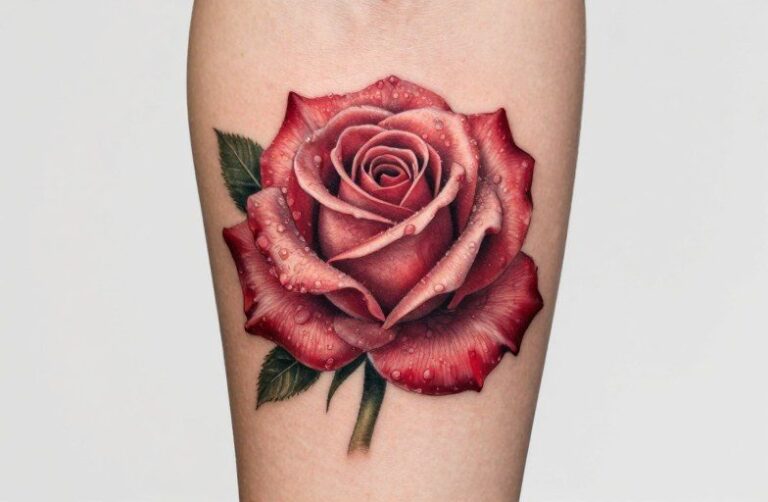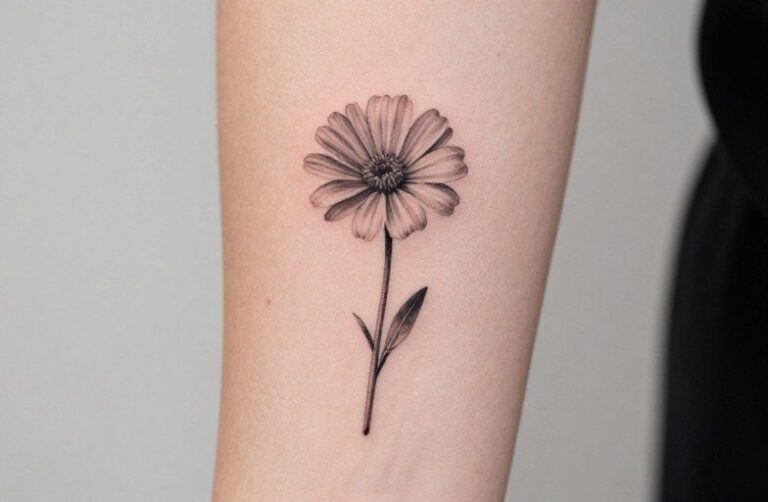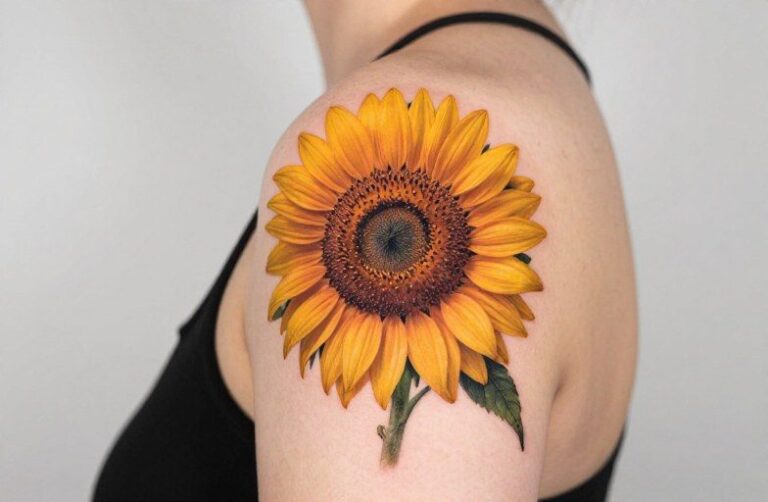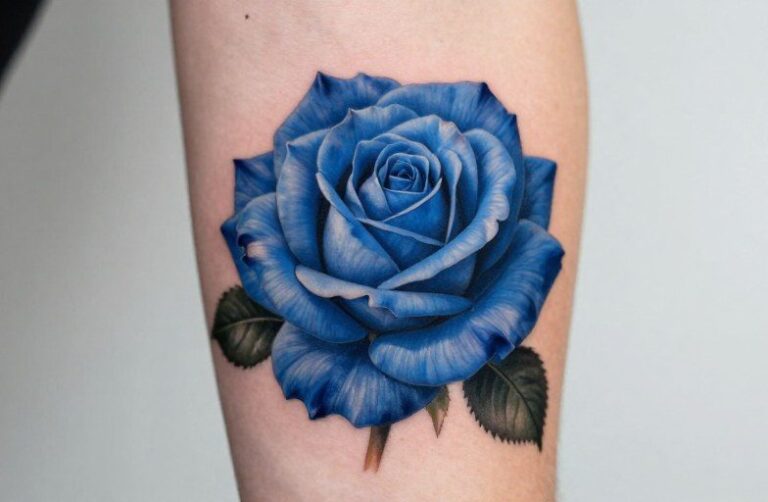
A watercolor floral tattoo typically represents natural beauty, emotional growth, and the fleeting nature of life. The watercolor technique adds layers of meaning: the bleeding edges and soft washes suggest impermanence, memory, and feeling over rigid structure. Specific flowers carry their own language, roses for love, peonies for prosperity, lotus for resilience, while the painterly style signals creativity and a willingness to embrace chaos.
Best Placements
These tattoos need room for the wash to breathe. Tight spaces kill the effect.
Where the Technique Shines
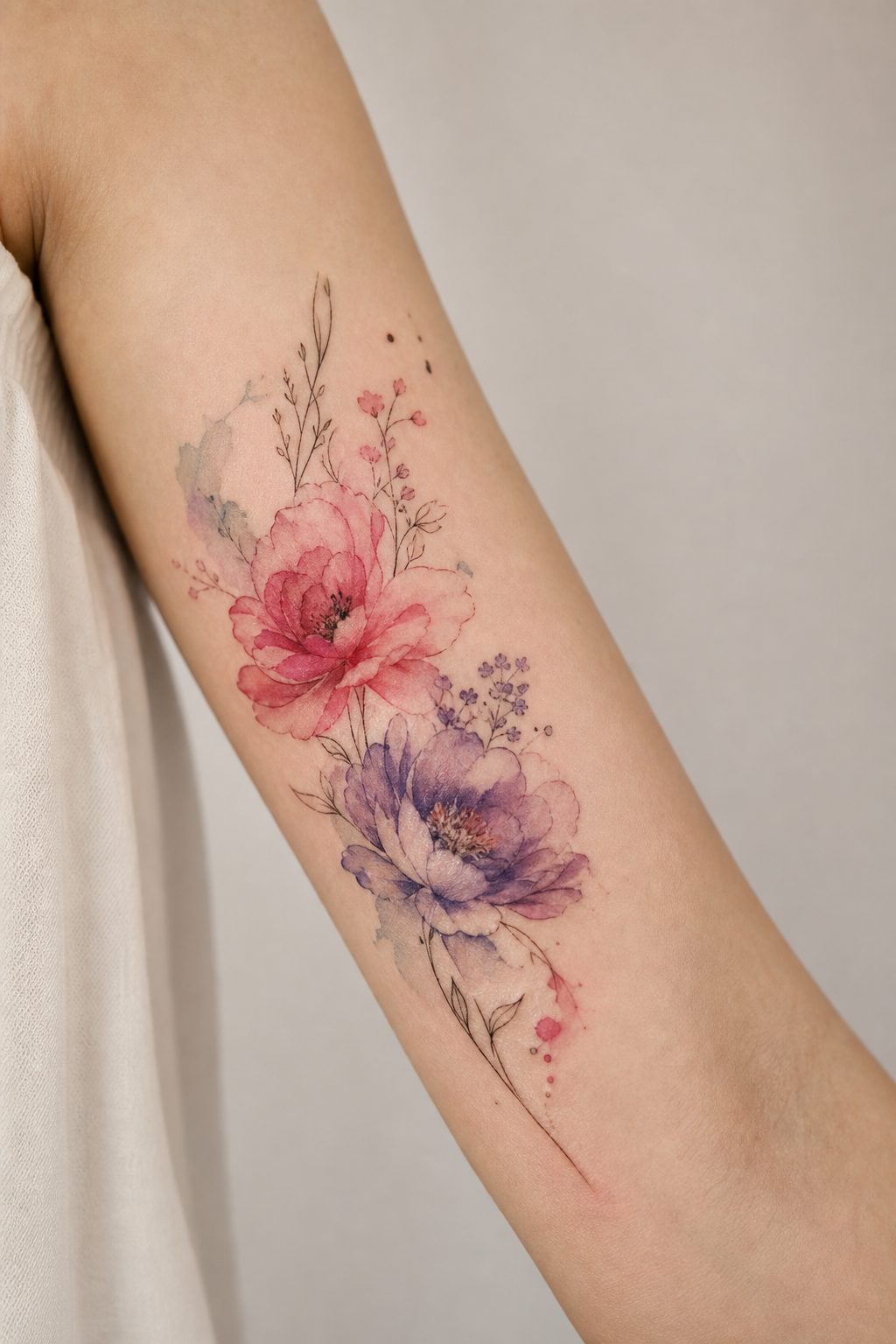
- Upper arm/shoulder: The natural curve lets petals arc with muscle. Plenty of flat canvas for splatter and gradient.
- Thigh: Large, relatively stable skin. Good for big peonies or trailing vines with loose pigment edges.
- Ribcage side: Vertical space suits stem-to-bloom compositions. The watercolor drip reads as intentional gravity here.
- Forearm: Visible, but beware: frequent sun and movement accelerate fade. Best for bolder color saturation.
Spots to Reconsider
Hands, feet, and fingers spell trouble. The watercolor effect relies on smooth ink dispersion; thick palm skin and constant friction turn soft washes into blurry smudges within months. Neck and behind the ear offer limited real estate, too small for the technique to read as watercolor rather than “faded color.”
Color vs Black and Grey
Full color watercolor florals dominate Instagram, but black and grey versions hold their own.
Color Dynamics
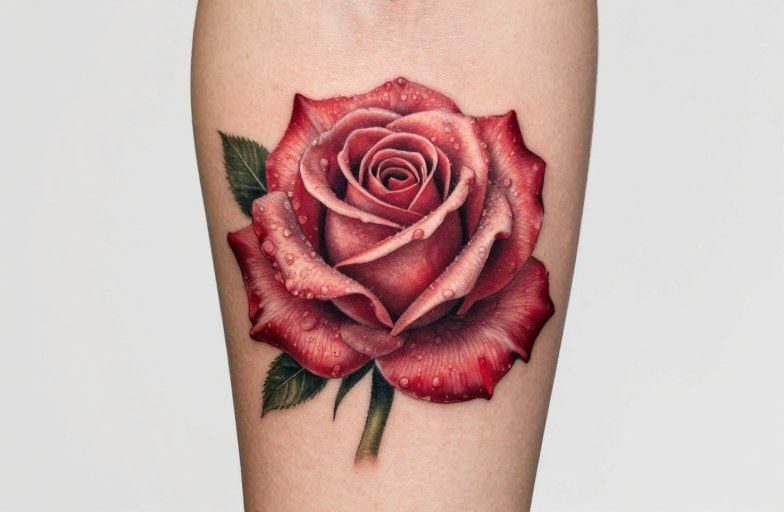
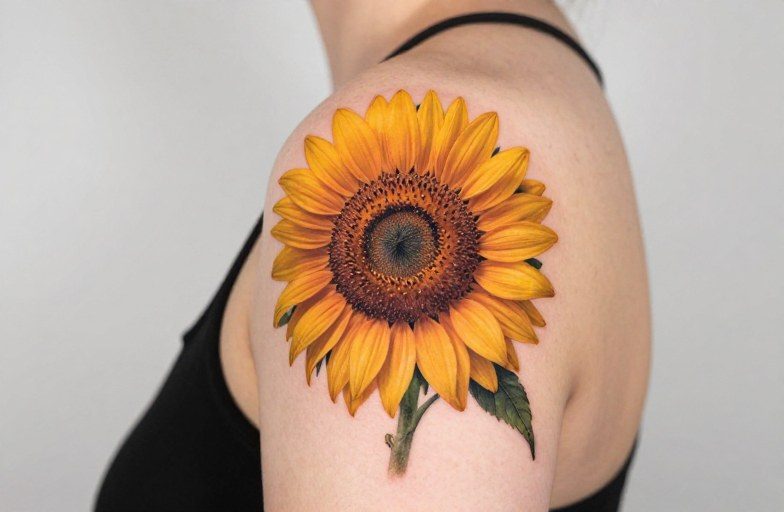
Bright magentas, coral pinks, and sap greens pop against skin, but they demand maintenance. Yellows and light oranges fade fastest, often to a peachy ghost within three years without religious sunscreen. Deep purples and blues linger longer. A skilled artist balances “hero colors” (the ones that stay) against “sacrificial highlights” (the ones that fade intentionally, adding to the aged-watercolor look).
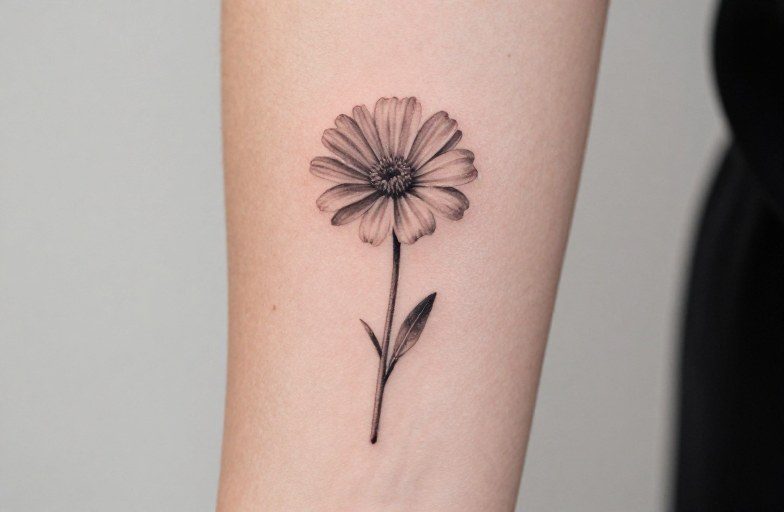
Black and Grey Approach
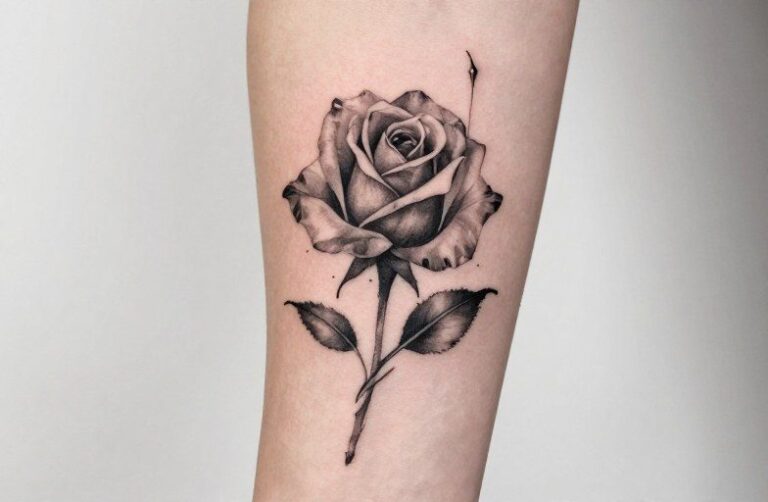
Without hue, the tattoo relies on value contrast: how light the grey wash sits against the skin, how dark the linework anchors it. This ages more gracefully, no color shift, just gradual greying. The mood shifts too: less garden-party, more ink-wash painting, often reading as more somber or contemplative.
History & Cultural Roots
The watercolor tattoo style itself is relatively recent, emerging around the early 2000s as artists experimented with airbrush techniques and painterly approaches. The floral motif, though, carries weight across centuries.
Botanical illustration traditions, often linked to Victorian flower language and Eastern ink painting, inform the aesthetic. Japanese sumi-e brushwork particularly shaped how tattooers approach negative space and spontaneous stroke. The combination, floral symbolism rendered in loose, painterly pigment, represents a collision of fine art training entering tattoo culture, not a tradition with deep indigenous roots.
Some trace the specific “splatter and drip” look to experimental artists in Russia and Eastern Europe around 2005-2010, though pinpointing exact origins proves difficult. What matters: the style gained traction because it offered an alternative to bold traditional outlines, appealing to collectors wanting softer, more “feminine” aesthetics (though that framing has rightfully loosened).
Common Variations & Styles
Not all watercolor florals look alike. The category breaks into distinct approaches.
Strict Watercolor
No black lines at all. The image holds together through color value alone, light pinks against dark greens, warm against cool. Risky for longevity; without outline anchor, migration and fade blur the image faster. Requires exceptional artist skill in saturation and contrast.
Hybrid: Line with Wash
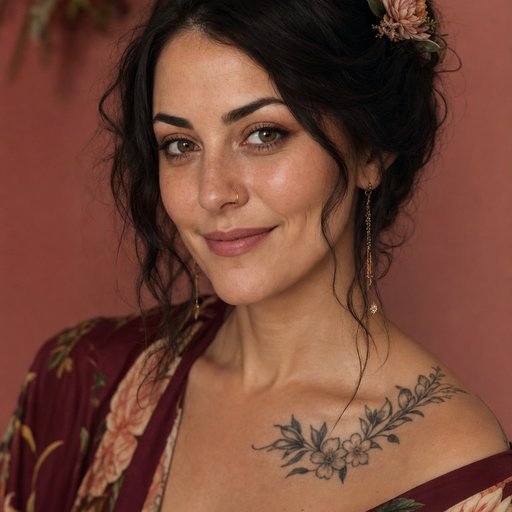
Black or dark grey botanical linework with watercolor “fill” bleeding beyond the edges. More durable, the line preserves structure as color softens. Most common, most practical. The line can be tight illustrative or loose sketch-style.
Abstract Floral
Suggestive rather than literal. A few petal shapes, color suggesting flower without defining it. Heavy on negative space. Often reads as more artistic, less literal flower-identification.
- Single bloom vs. bouquet: One large flower carries more visual impact; multiple small flowers risk reading as scattered unless carefully composed.
- With geometric elements: Circles, triangles, or mandala patterns behind or integrated with the floral, adds structure, sometimes reads as “contemporary” rather than purely organic.
- Incorporated script: Names, dates, or phrases woven through stems. Requires careful typographic choice; flowing script suits the aesthetic better than block letters.
Design Tips & Pairings
Building a watercolor floral that works means thinking like a painter, not just a tattoo collector.
Composition matters more than individual flower choice. The eye needs a path: typically from darker, more saturated stem or center, lightening through petals, bleeding to nothing at the edges. Reversing this, light center, dark edges, creates a hole effect, visually heavy.
Background elements need restraint. Too much splatter behind the main image becomes noise. Effective backgrounds use 2-3 large “blooms” of wash, not twenty tiny specks. Think watercolor paper: the white space is as active as the pigment.
Meaningful Pairings
- Birth flowers: Personal, specific. January carnation, September aster. The watercolor style softens potentially dated “birth flower” imagery into something contemporary.
- Memorial dates: Subtle integration, Roman numerals trailing a stem, or a small butterfly (transformation) near a bloom.
- Animals: Hummingbirds, bees, or moths interacting with the flower. Adds narrative without needing literal scene-building.
Skin tone affects color choice significantly. On darker skin, the watercolor effect requires higher saturation and more contrast; pastel washes disappear. Experienced artists adjust: deeper magentas instead of soft pinks, emerald rather than mint. This isn’t limitation, it’s specificity.
How It Ages on Skin
Watercolor tattoos age differently than traditional work. Understanding this prevents disappointment.
The Fade Pattern
Light washes fade first, within 2-4 years, depending on sun exposure and skin type. The “bleeding edge” softens further, sometimes migrating outward slightly. What was a crisp petal edge becomes a gentle suggestion. This isn’t necessarily failure; it’s the style’s nature, like watercolor paper yellowing.
Maintaining the Look
- Sunscreen, always: UV breaks down pigment particles fastest in light, dispersed washes. A watercolor floral without sun protection greys and blurs dramatically within five years.
- Touch-up timing: Plan for a refresh at 3-5 years. Not because the tattoo looks bad, but because the watercolor effect relies on intentional contrast that time erodes.
- Skin changes: Weight fluctuation, pregnancy, or muscle building distorts large floral pieces more than small, tight tattoos. The thigh and upper arm, common placements, are relatively stable.
Migration risk: very light grey washes and white highlights often disappear entirely or settle into uneven patches. A good artist builds “aging insurance” into the design, darker values underneath that emerge as top layers fade, rather than leaving bare skin.
The Takeaway
A watercolor floral tattoo means beauty held lightly, growth acknowledged as temporary, emotion rendered in pigment rather than outline. The style demands specific placement, realistic aging expectations, and an artist who understands paint logic, not just tattoo mechanics. Choose flowers with personal resonance, commit to sun protection, and embrace that the soft edges you love today will soften further tomorrow. That impermanence, paradoxically, is part of the point.
Frequently Asked Questions
Do watercolor floral tattoos need more touch-ups than traditional tattoos?
Generally yes. The light washes and lack of bold outline mean faster visible fade. Plan for a refresh every 3-5 years, sooner if you get significant sun exposure. Darker, more saturated pieces age slower than pastel ones.
Can watercolor florals work on dark skin tones?
Absolutely, but color choice shifts. Pastels and light washes disappear; deeper magentas, saturated blues, and strong emerald greens create the same effect. A skilled artist adjusts value and saturation, not just hue.
Why do some watercolor florals look muddy after healing?
Overworking the skin during application, too many competing colors in one area, or poor aftercare can cause colors to blend into brown-grey tones. The technique requires restraint, fewer colors, cleaner negative space, and precise saturation levels.
Is it better to get a watercolor floral with or without black outlines?
For longevity, hybrid work with some linework anchors the design as color fades. Pure watercolor without any outline relies entirely on contrast that time erodes faster. If you want the softest possible look now, accept more maintenance later.