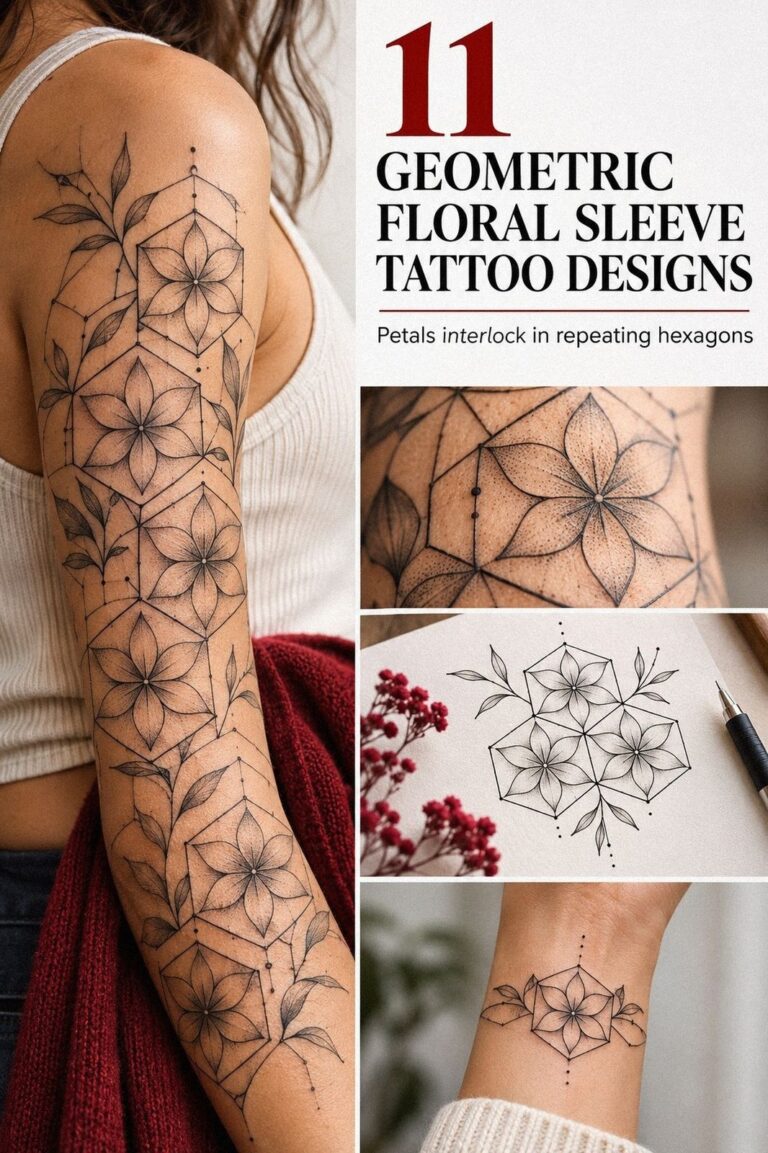
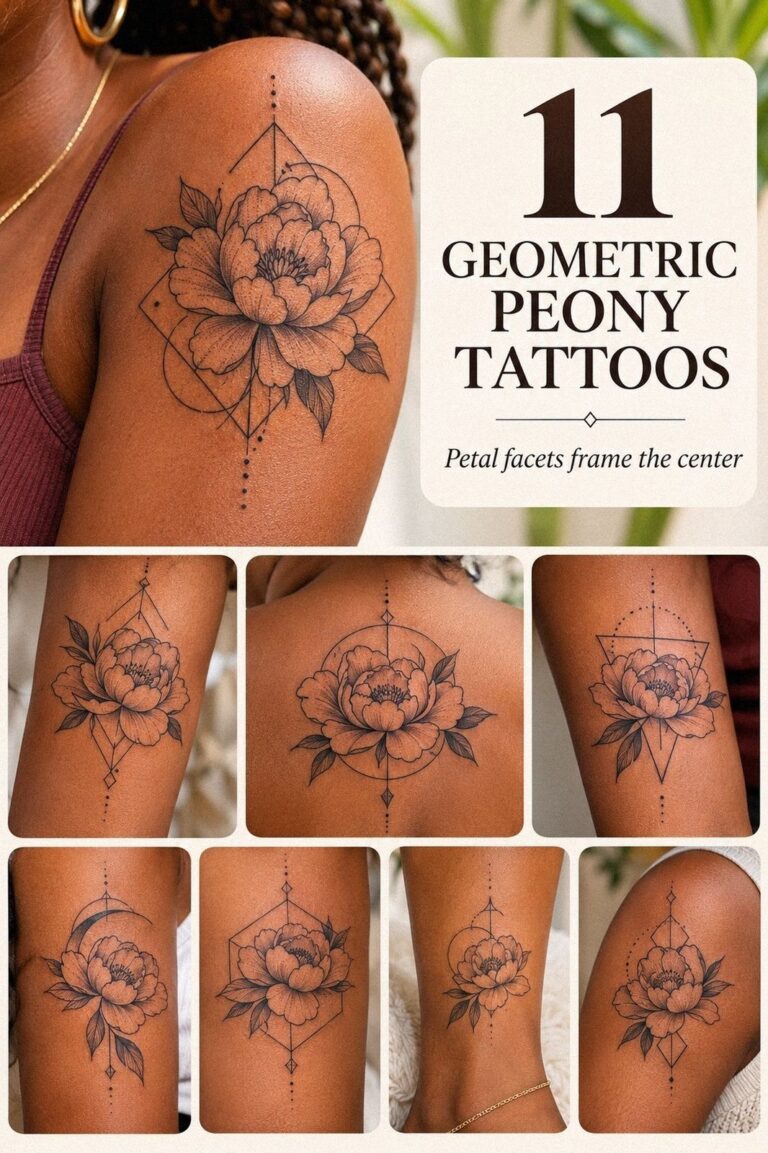
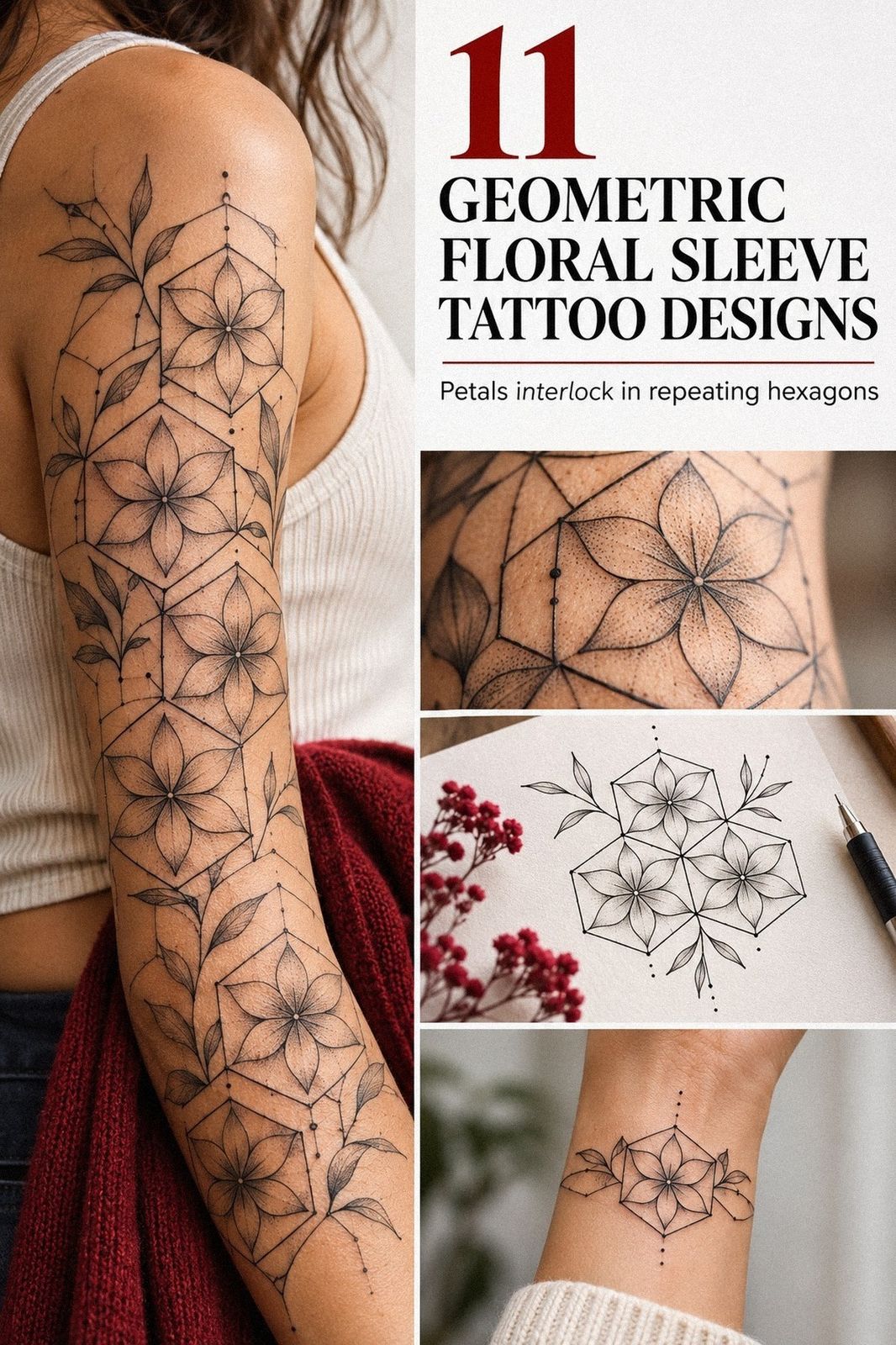
Geometric floral tattoos can look intricate without turning your appointment into an endurance test. I learned that placement matters more than bravado after choosing a bony spot too soon. A thigh, collarbone, or forearm can give your design room to breathe. Start there with a geometric floral tattoo.
Editor’s note: The strongest tattoos usually combine one expressive flower, one crisp geometric rhythm, and one understated personal detail. Keep the idea minimal at first. You can always add complexity later, but removing it is harder.
- Start With a Geometric Floral Finger Tattoo
- Fine Linework and Geometric Floral Tattoos
- Should a Collarbone Design Follow the Bone?
- Choose Blackwork for a Strong Silhouette
- Symmetry: Let One Symbol Lead
- Place a Floral Tattoo Behind the Ear
- Roses or Polygons? Build the Contrast Carefully
- Wear a Forearm Design Vertically
- Add Color Without Losing the Geometry
- Geometry vs Botanical Softness
- Build a Botanical Mandala With Breathing Space
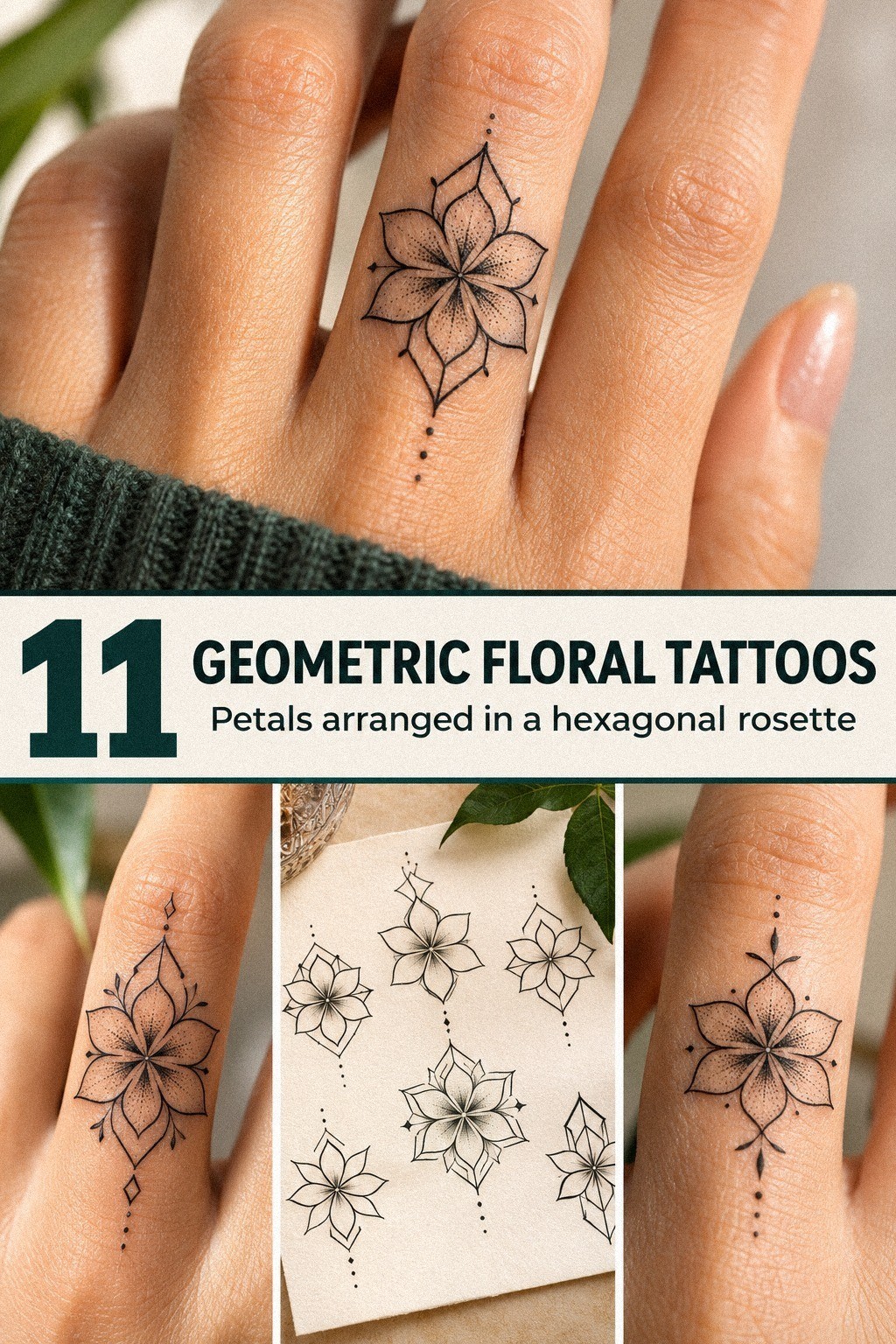
1Start With a Geometric Floral Finger Tattoo
Finger tattoos feel personal and symbolic when the design stays restrained. You’ll want a delicate wildflower sprig, a crisp stem, and one small geometric shape.
Leave open skin around the petals. That helps the tattoo remain readable with thoughtful finger placement.
A 3RL single-needle grouping can create the fine stem and angular petals you want. Your best version won’t copy every botanical detail.
Choose one flower, one polygon, and one sharp meeting point. That’s enough.
If you’re comparing this placement with other small ideas, browse these tiny floral tattoos before you book. You can also compare small floral tattoos for softer proportions. Five symbols fighting for attention won’t improve the design.
A small finger piece can still look bold! The catch is friction.
Your hands see washing, sunlight, and constant movement. Terracotta-and-olive ink accents give the tattoo a personal starting point, but fine lines may soften sooner here than on your thigh.
Ask how the design may change as it heals. Aftercare instructions matter more on a high-friction placement. Use sunscreen once the skin has healed.
Expect that a future touch-up may be part of the plan.
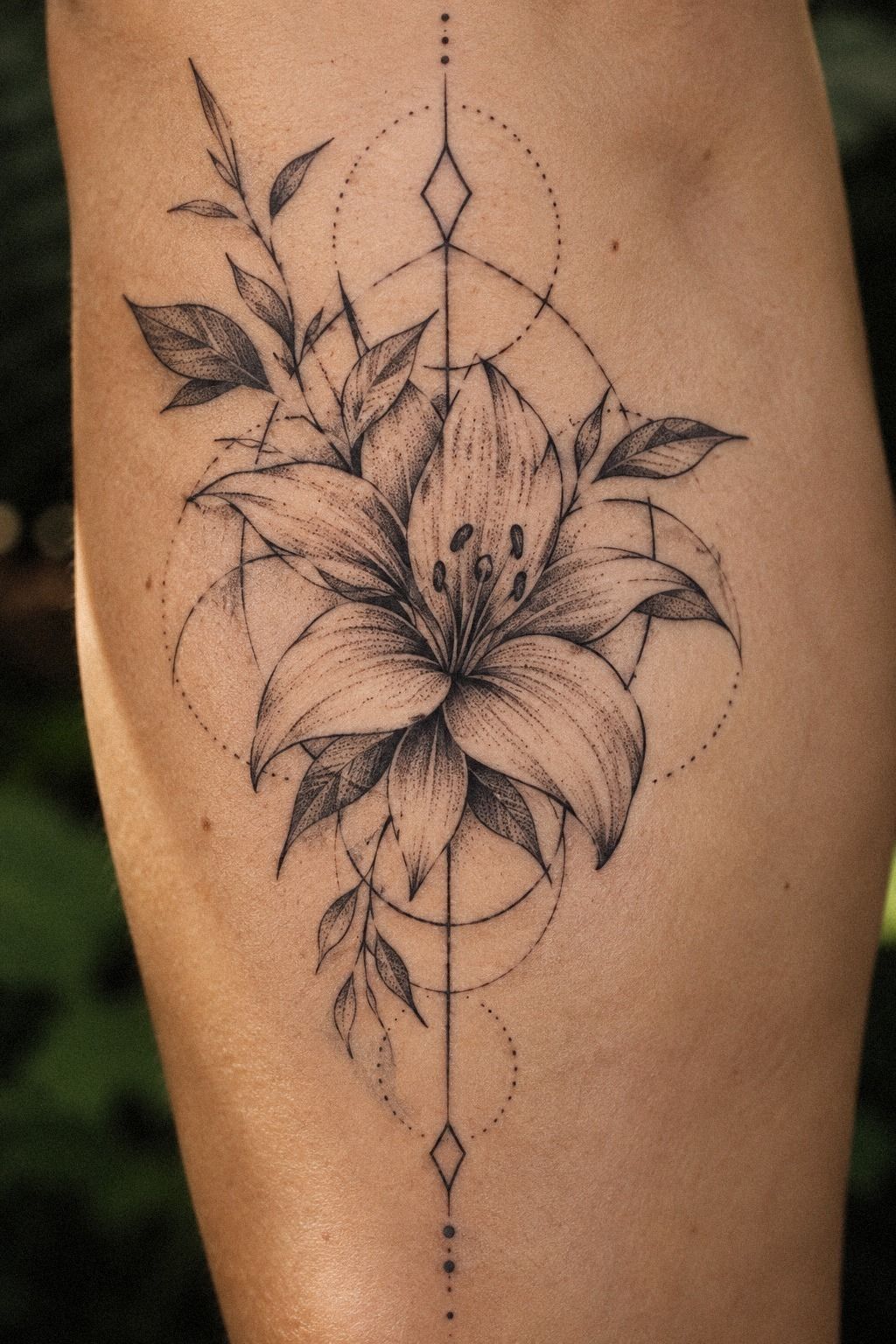
2Fine Linework and Geometric Floral Tattoos

Fine linework turns a wildflower sprig into something graceful and almost architectural. Fine-line tattooing can keep the result delicate, especially when the structure stays simple.
3Should a Collarbone Design Follow the Bone?

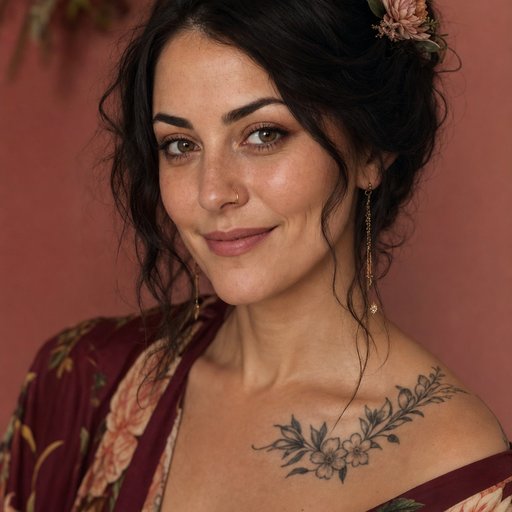
A collarbone tattoo can feel romantic and symbolic at once. You’ll want the wildflower to follow the natural line of the bone.
Place the geometric detail slightly below or beside the stem. I’d avoid forced symmetry because bodies aren’t rulers. Let the collarbone line guide the design.
The strongest version uses collarbone placement as part of the composition. The bone creates a graceful path. The flower can follow it, while small circles or triangles interrupt the line with a sharper rhythm.
The negative-space petals keep the piece minimal. Your skin becomes part of the design around the thin leaves and small circles. That open rhythm lets the collarbone remain visible.
If you’re weighing visibility, compare this placement with small floral tattoos. You can show a collarbone piece with a low neckline. You can also cover it with a shirt.
That flexibility may help if your work or style changes. Visibility deserves a deliberate choice.
For different complexions, your artist may adjust line weight so the design stays crisp without looking harsh. Plum-and-grey ink can give the geometry a sharp anchor, while a restrained rose-gold accent keeps the flowers gentle.
Ask for a stencil first. Move your shoulder and neck before approving it. Stencil transfer can look perfect while you’re still, then shift once your body relaxes.
4Choose Blackwork for a Strong Silhouette
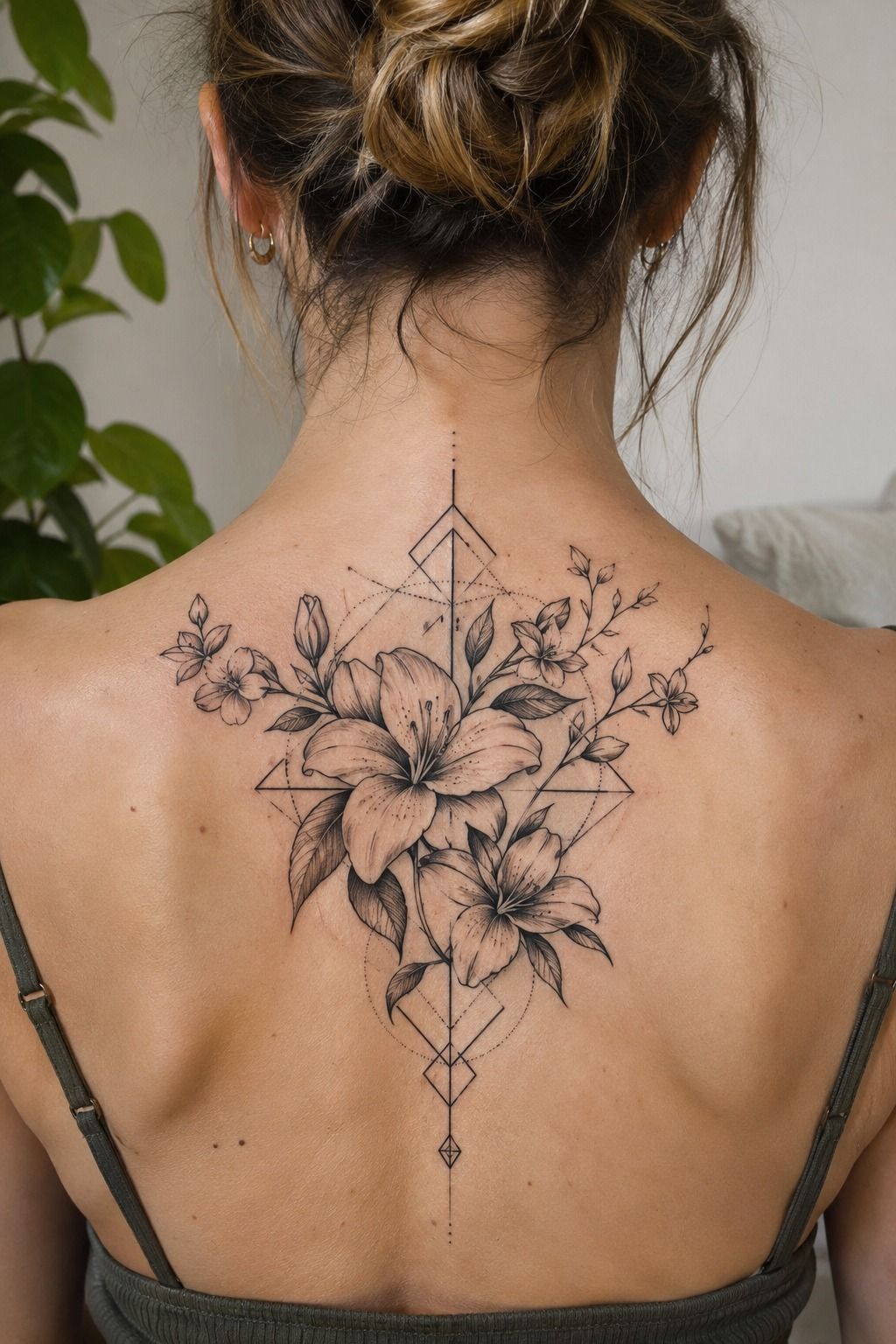
Deep navy blackwork gives a delicate wildflower a fiercer outline, especially across the upper back, shoulder, or thigh.
5Symmetry: Let One Symbol Lead

A symmetry flash sheet gives you several directions before you sit for a session. You may see floral rosettes, triangles, circles, and mirrored stems. I like this format because you can compare options side by side.
The most meaningful option often combines one flower with one repeated geometric rhythm. Hand-drawn geometry can feel ornate without becoming overly elaborate when the outer shape stays simple. Your artist may refine the spacing, but the central symbol should remain yours.
Good geometry should serve the flower! Ask yourself what the shape means.
A circle may suggest continuity. A triangle may feel directional.
A broken ring may express change through symbolic geometry.
If you want a softer reference set, compare the sheet with these delicate floral tattoos. Delicate doesn’t have to mean generic. Your choice might be a three-petal form, a circular halo, or a diamond around a wildflower.
Look for delicate references that still feel meaningful.
Bring the sketch to full size before the appointment. Full-size stencil testing shows whether the design still works outside a tiny screen. I’d skip a tattoo that only looks good when it’s miniature.
Choose an iconic form you can live with.
6Place a Floral Tattoo Behind the Ear

Behind-the-ear tattoos are dainty and more noticeable than you’d expect when your hair moves. You’ll want a short stem, a small flower head, and one geometric accent that follows the curve.
Keep the composition compact because this placement has limited visual space. Micro-linework can make the flower feel detailed, but too many marks may merge as the tattoo settles.
Your artist can place the bloom near the hairline while keeping the angular shape visible from the side. That slight side reveal makes the tattoo feel personal without losing its edgy quality.
Before booking, compare healed work with these delicate floral tattoos. Behind-the-ear skin can be sensitive.
Your comfort may change during the session. You don’t need to prove anything with a dense design.
A hairline placement plan should account for hair products, headphones, and daily friction. Forest-green and rust accents can help the flower stand out. Open skin can keep the final result understated.
7Roses or Polygons? Build the Contrast Carefully
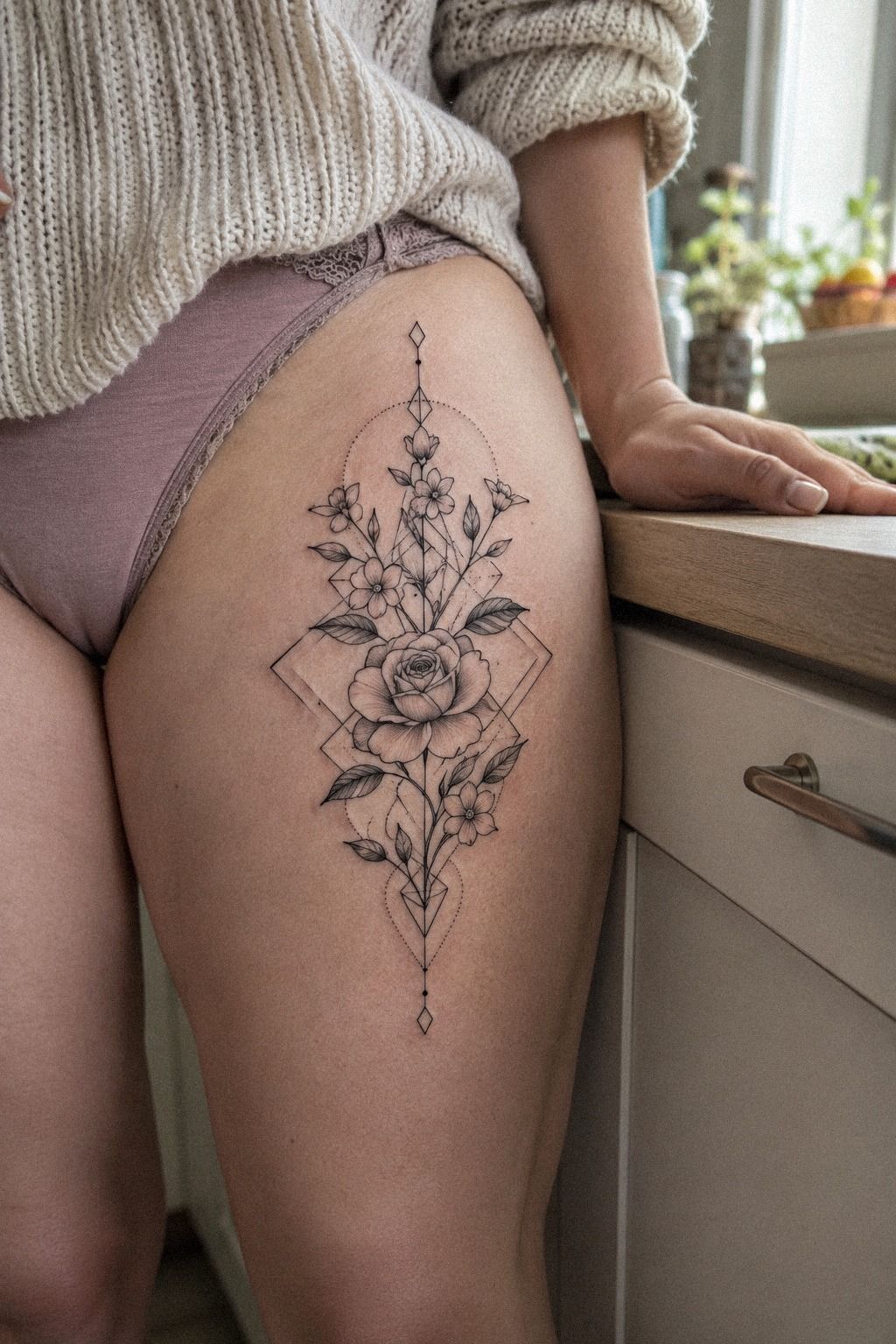
Roses and polygons create a daring contrast. One form feels organic.
The other feels measured and sharp. You’ll want the rose to remain recognizable, with angular lines framing rather than cutting through the petals.
Consider the rose-and-polygon balance before adding detail.
The most expressive version uses layered rose petals with polygon framing. Your artist can keep the outer petals flowing and place a triangle, hexagon, or broken circle behind the bloom.
That tension is the point! The design can feel raw and polished at the same time.
I’d avoid forcing the polygon through the rose. Let each form keep its identity through organic contrast.
If roses are pulling you toward color, compare this concept with watercolor floral tattoos. You may decide that charcoal geometry suits you better than soft washes.
Charcoal pigment gives the structure a strong anchor. For a thigh placement, your artist has more space to balance the rose and the geometry. Sit with the stencil.
Bend your leg. Check the polygon while your body moves.
8Wear a Forearm Design Vertically
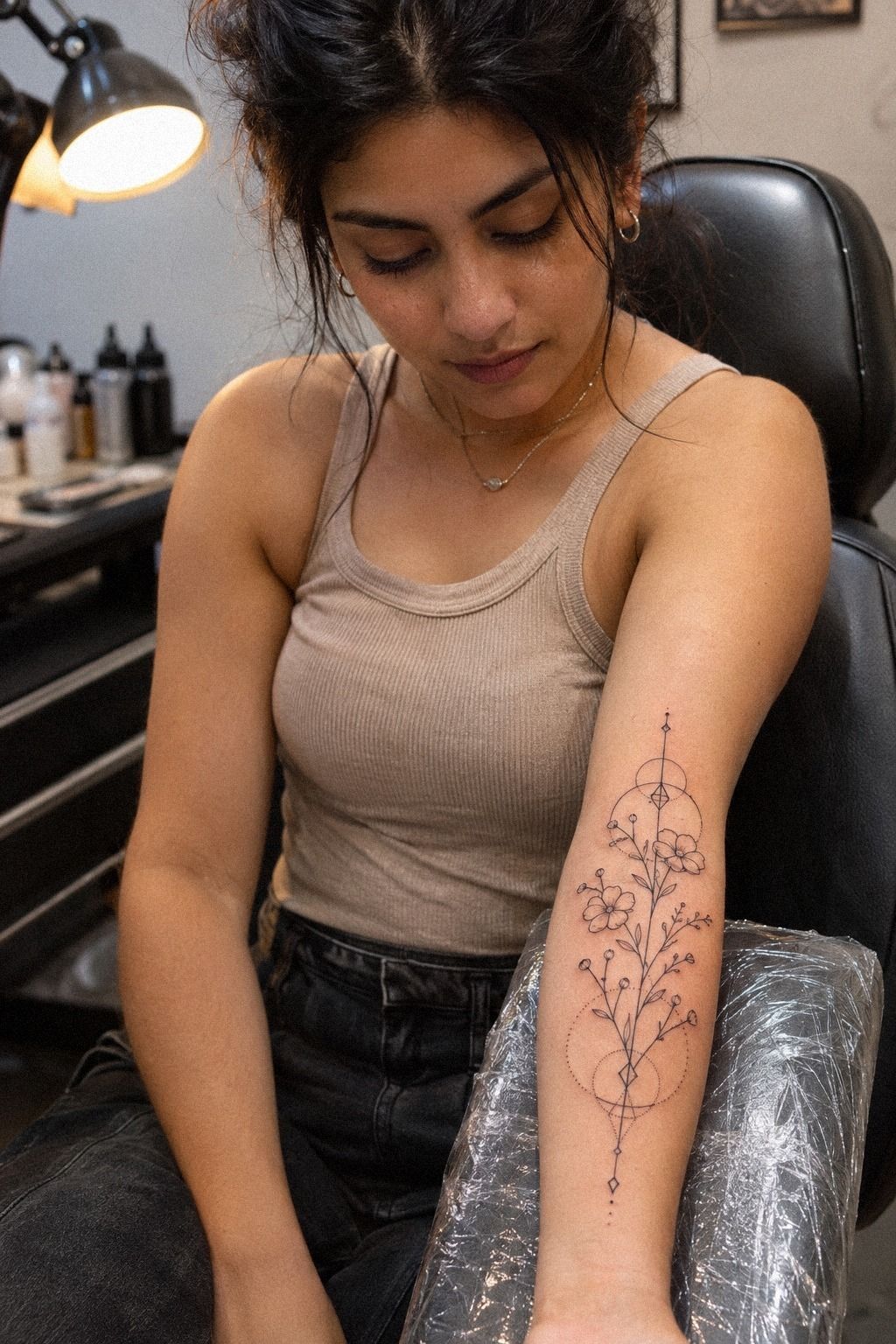
The forearm gives you a visible canvas for a design that feels personal without demanding a huge composition. You’ll want a wildflower sprig running with the arm, not across it. Start with a clear forearm orientation.
That orientation follows your natural length and can look elegant in motion. Vertical botanical stencil work may combine pointed leaves, a small circle, and one diamond around the flower.
Your artist should leave enough skin between each element for the lines to stay legible. A forearm placement plan also lets you check visibility from the palm side and the outside edge.
For more references, explore minimalist floral tattoos. You’ll see how a restrained design can still feel iconic when its proportions are deliberate.
Your forearm tattoo will be visible often, so choose a symbol you won’t resent seeing every morning. Bishop Wand machine work may come up if your artist uses that equipment. The real priority is consistent depth and clean control.
9Add Color Without Losing the Geometry

Color can make geometric floral tattoos feel vibrant and playful. You’ll want the gemstone detail to support the flower rather than compete with it. A small midnight-blue, copper, or ivory accent can turn a restrained black design into something more personal.
That color story should feel intentional.
The strongest approach uses muted gemstone color inside a clear black framework. Your artist can outline the flower in black, then add color to one central shape or a few petals.
I’d avoid filling every geometric space. Too much color can erase the design’s rhythm. A narrow palette often feels more stylish.
If you’re considering a softer palette, compare this idea with watercolor floral tattoo meaning. You may prefer crisp color blocks over loose washes. Your choice should reflect how often you want to see the tattoo.
Midnight-blue pigment can look whimsical when fresh, but every color needs sun protection after healing. Ask which pigments your artist trusts and how they expect them to settle.
10Geometry vs Botanical Softness
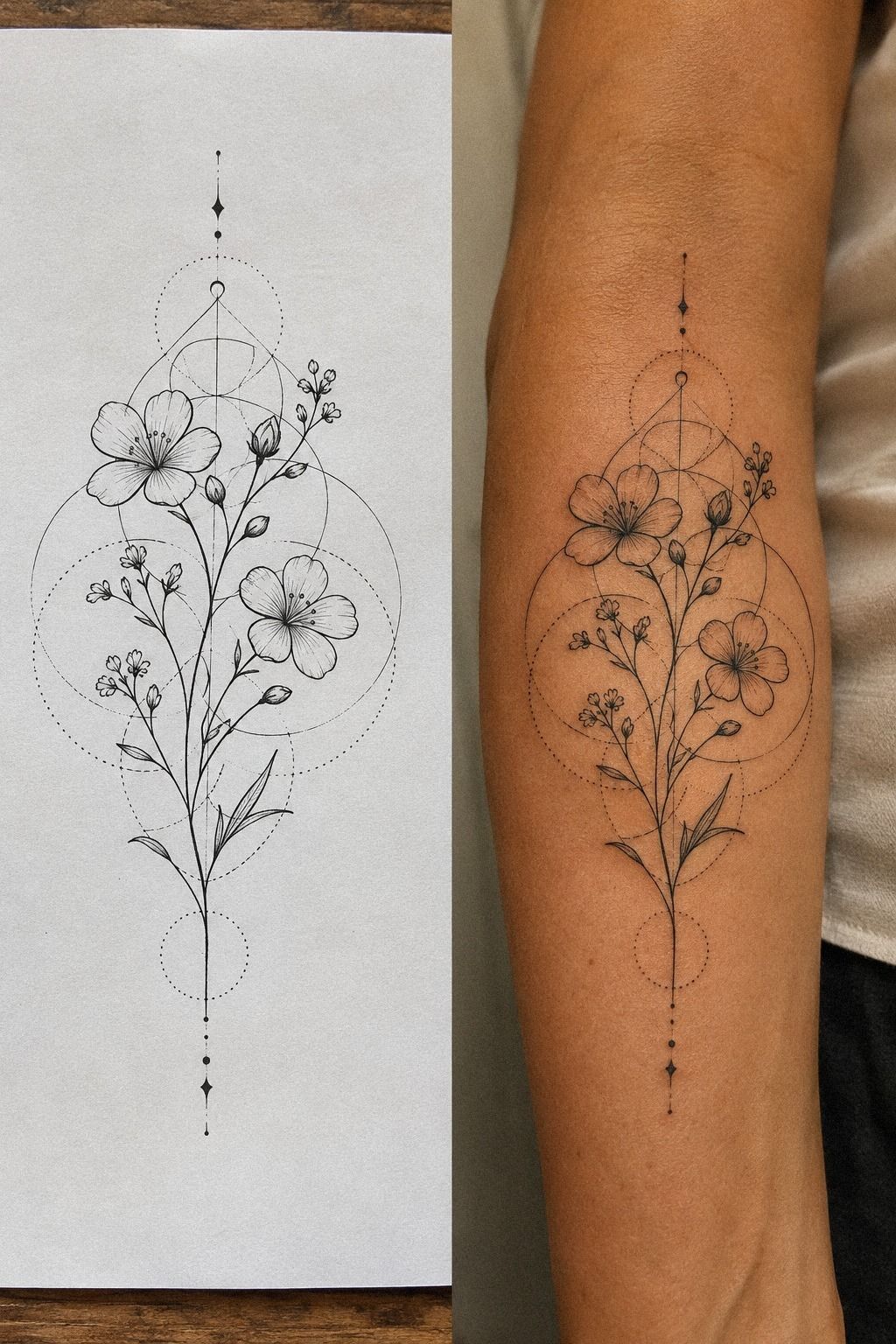
This split concept helps you compare intention with outcome. Botanical geometry can stay sleek when the flower leads and the pattern supports it.
11Build a Botanical Mandala With Breathing Space
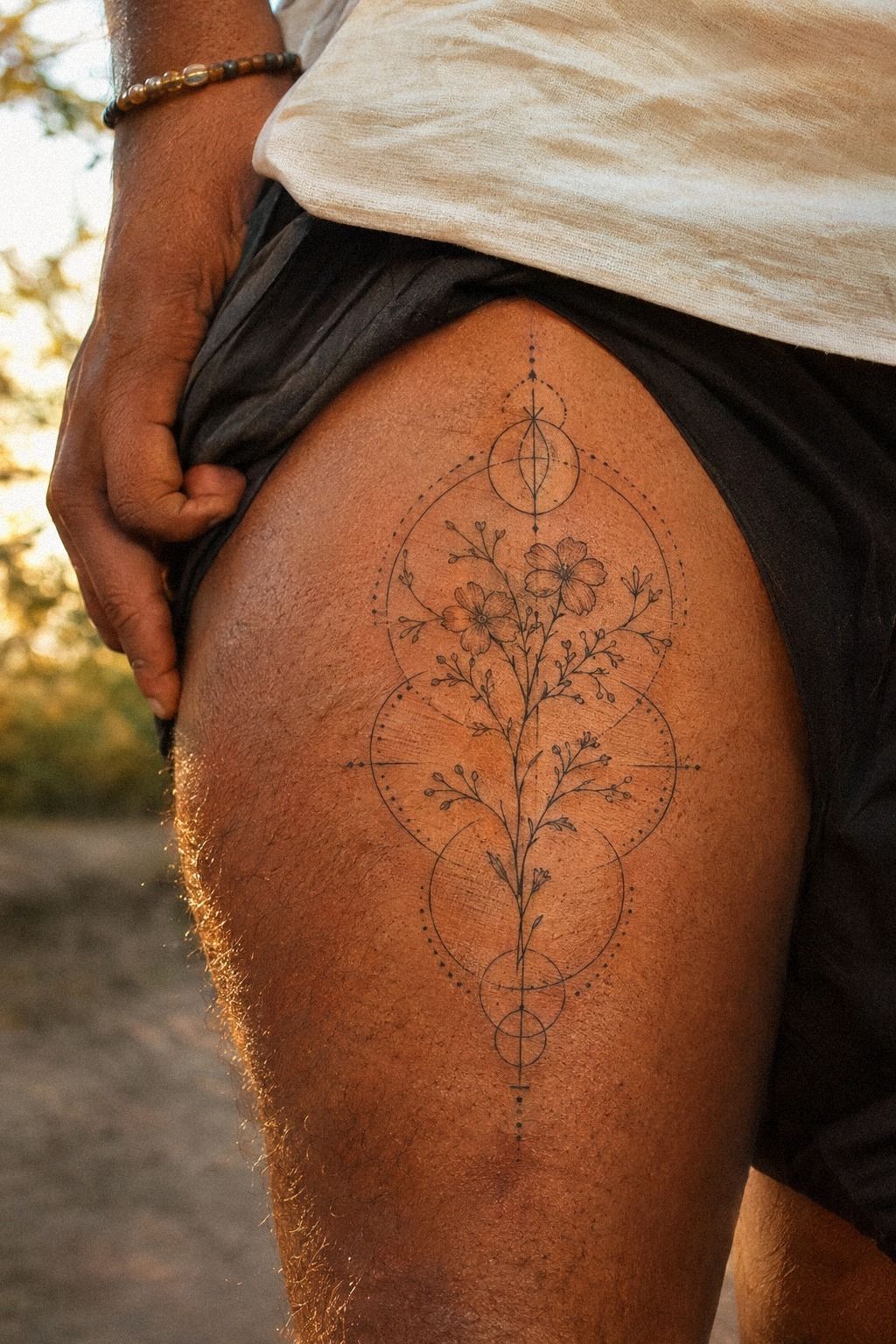
A botanical mandala on the thigh can feel ornate and deeply personal without becoming overly formal. You’ll want the central flower to lead the eye.
Repeated leaves and geometric arcs can expand around it. Let the thigh mandala stay proportional.
Keep the outer ring slightly open so the piece doesn’t become a heavy patch. Botanical mandala spacing gives each petal and arc enough room to remain readable.
A mandala can feel sacred, ethereal, or haunting depending on the symbol at its center. The meaning should guide the pattern. Decoration alone won’t make the tattoo personal.
Start with sacred meaning.
The terracotta, stone, and olive palette in this concept gives the botanical geometry a graphic presence. Terracotta-and-olive ink accents can define the main structure, while carefully spaced lines preserve smaller floral details.
For more understated references, compare this style with minimalist floral tattoos. You may choose a full mandala, or borrow only the repeated leaf rhythm.
For a larger thigh composition, your artist can use 5RL linework for selected outlines and finer groupings inside. Place the stencil while standing and sitting. The skin shifts with movement.
That check can prevent an elegant mandala from looking tilted when your leg relaxes. Healed readability matters more than how dramatic the fresh tattoo looks.
How Should You Plan Fine Lines?
Start with placement, then size, then detail. You’ll make a better decision if you choose a tolerable area such as the forearm, thigh, or shoulder. Think placement first.
Ribs, feet, hands, and sternum placements can feel sharper because they sit closer to bone. A tiny floral tattoo can help you compare scale before choosing a more exposed area.
Your artist should show you a stencil, discuss line weight, and explain how the design may change as it heals. Healed linework examples are more useful than fresh tattoo references.
They show spacing, softness, and areas that needed correction. I’d never book from a portfolio showing only day-one tattoos. Look for healed detail.
Bring references, but don’t ask for an exact copy of another person’s tattoo. You’ll get a more personal result by combining one flower, one geometric structure, and one symbol. That creates a personal design.
A fine-line design can still feel fierce when the choices belong to you. Single-use sterile cartridges won’t remove every sensation, but clear communication can make the process feel controlled.
If you’re nervous about pain, say so before the appointment. Your comfort matters.
A good artist won’t treat questions like weakness. Lead with honest communication.
Your small floral tattoo can be meaningful without becoming an endurance challenge.
What Will Age Best?
Black ink with sensible spacing usually gives geometric floral tattoos a stronger chance of staying readable. You’ll want to avoid packing dozens of tiny lines into a small area. Prioritize black ink spacing.
Fine lines can widen. Sunlight can soften contrast. Well-spaced blackwork gives the design room to change without losing its main shape.
Your forearm, thigh, or shoulder may be easier to manage than a finger or foot. I’d choose breathing space over miniature precision, especially for a first tattoo.
Regular sun protection helps preserve contrast after healing. Cover the tattoo early as directed. Later, use a broad-spectrum sunscreen whenever the skin is exposed.
Aftercare is simple but non-negotiable. The surface commonly heals in about two to three weeks. Complete healing can take around two to three months.
Protect the early healing period.
You’ll wash gently, moisturize as advised, and avoid pools and direct sun early on. Fragrance-free aftercare lotion can support the early healing period when used according to your artist’s instructions.
But aging isn’t a reason to avoid fine linework. Your tattoo may soften.
A thoughtful design can still remain expressive and recognizable. Thoughtful linework matters more than chasing permanence.
Ask about a touch-up plan before you book.
Where Does Pain Change the Choice?
Pain varies by person, artist, placement, and session length. You shouldn’t treat one person’s experience as a guarantee.
Forearms, thighs, and shoulders often feel more tolerable. Consider your pain tolerance honestly.
Ribs, feet, hands, and sternum can feel sharper. Placement sensitivity matters more than trying to predict one universal pain score.
A shorter fine-line session may feel easier than a dense blackwork appointment. Your artist should decide the timing after seeing the design and placement.
You’ll want scheduled breaks if needed, water nearby, and an honest conversation before the stencil goes on. A gritty session is not a badge of honor.
What matters most is choosing a design you won’t rush through. Sterile studio setup matters for safety, while placement and line density affect comfort.
Ask questions, eat normally beforehand if your artist advises it, and remember that stopping briefly doesn’t make the experience less empowering!
Why Do Geometric Floral Tattoos Keep Working?
Geometric floral tattoos last as an idea because they hold two opposing feelings at once. The flower flows. The geometry stays controlled.
I’ve always preferred that tension to a design that tries to look polished from every angle. That contrast gives floral geometry its staying power.
The mistake I see most often is choosing complexity because it looks impressive in a sketch. A sheet full of tiny circles and intersecting lines can look iconic in theory. Design complexity should never replace meaning.
Your tattoo needs to work on a moving body. I’d rather see one flower with clean spacing than an ornate composition that loses its center. Prioritize body movement.
Placement deserves more credit than it gets. A simple forearm sprig can become striking when it follows the arm’s length. A collarbone flower can feel romantic because it follows the bone.
A thigh mandala can look powerful because the artist has space to build proportion. Balanced geometric linework gives the design a strong silhouette, while open skin preserves floral softness.
The style can feel feminine, masculine, or entirely outside those labels. The important part is ownership. Personal symbolism will keep the tattoo meaningful after the first compliments fade.
What Should a Tattoo Quote Include?
A useful quote should explain the artist’s minimum, hourly rate, estimated session length, and deposit policy. Ask whether a redraw or stencil adjustment is included. Those quote details should be clear.
Those details help you judge the total cost before the appointment. Written tattoo estimates are easier to compare than vague messages.
Your reference should show the desired placement and approximate size. Ask whether color, shading, touch-ups, and travel affect the final number. Include the reference size.
The cheapest option isn’t always the best value. A clean portfolio, healed examples, and careful consultation may matter more than saving a small amount. Look for technical consistency.
Look for an artist whose process matches the design. A stylish portfolio is useful, but technical consistency matters more. Healed portfolio work can reveal how the lines settle.
If the estimate feels too high, simplify the geometry instead of rushing the decision. A smaller tattoo may still feel meaningful when the central idea is strong.
Deposit policy should be clear before you pay. Ask about rescheduling, cancellations, and how long the deposit remains valid. Those questions protect both sides.
The Questions I Get Asked Most
How much does a geometric floral tattoo usually cost?
A geometric floral tattoo may cost about $100 to $300 in the US. Boutique minimums can run about $50 to $100, while hourly rates may reach $100 to $250. Your artist, region, placement, and detail level will change the quote.
Ask for a written quote before booking.
Are geometric floral tattoos a good idea for a first tattoo?
Yes, especially on a forearm, thigh, or shoulder where the sensation may be more tolerable. Clear linework and personal symbolism give you a meaningful design without requiring a huge composition. Start with a size and placement you can comfortably show or cover.
How do I choose a tattoo artist for geometric floral tattoos?
Choose an artist with clean geometric work, healed photographs, and strong floral examples. You’ll want to inspect line consistency, spacing, and studio hygiene. Compare their portfolio with fine line floral tattoos and ask how they adapt designs to your skin.
How much do geometric floral tattoos hurt?
Pain depends on placement and your sensitivity. Ribs, feet, hands, and sternum often feel more intense.
Forearms, thighs, and shoulders are commonly more tolerable. Placement comfort matters more than trying to predict one universal pain score.
How long does a geometric floral tattoo take to heal?
The surface usually heals in about two to three weeks. Complete healing can take around two to three months. You’ll wash gently, moisturize as directed, and avoid pools and direct sun during early healing.
Follow your artist’s written aftercare instructions.
What’s the best placement for geometric floral tattoos?
Forearms, thighs, shoulders, and collarbones give floral geometry space to read. You’ll also have more control over visibility and sun exposure. Delicate floral tattoos can help you compare smaller placements before deciding.
Where I’d Start First
If I had to pick one, I’d start with the fine-line thigh sprig. You’ll get space for clean geometry, less friction than a finger, and a graceful shape that won’t depend on heavy shading. It feels like a timeless starting point.
Pin the idea for later and compare it with small floral tattoos before booking. My final choice would be a fine-line thigh placement with one flower, one geometric rhythm, and enough open skin for both ideas to stay visible.