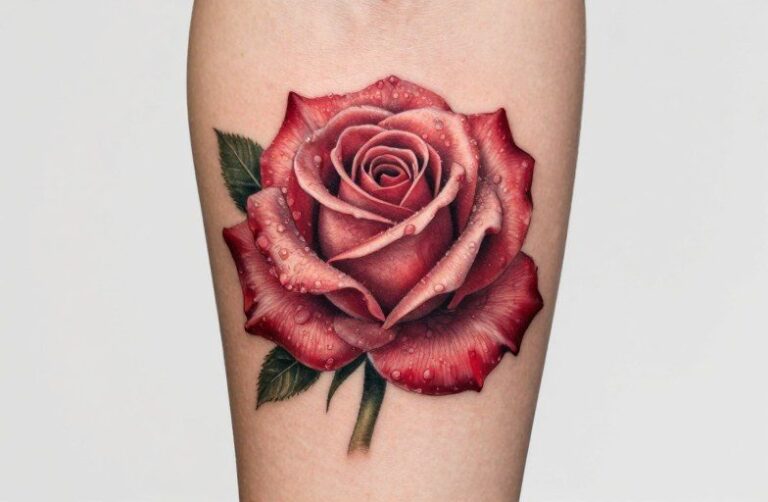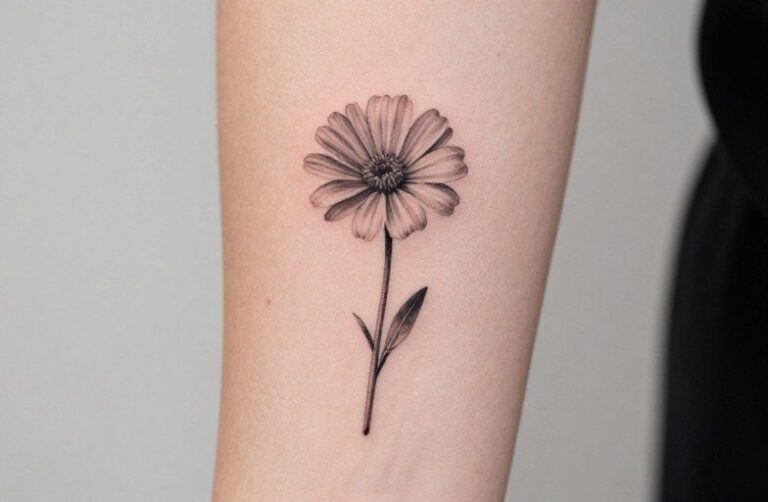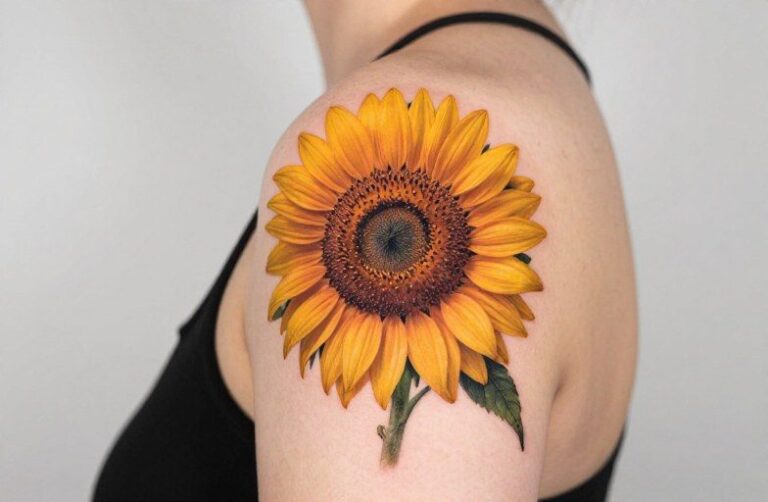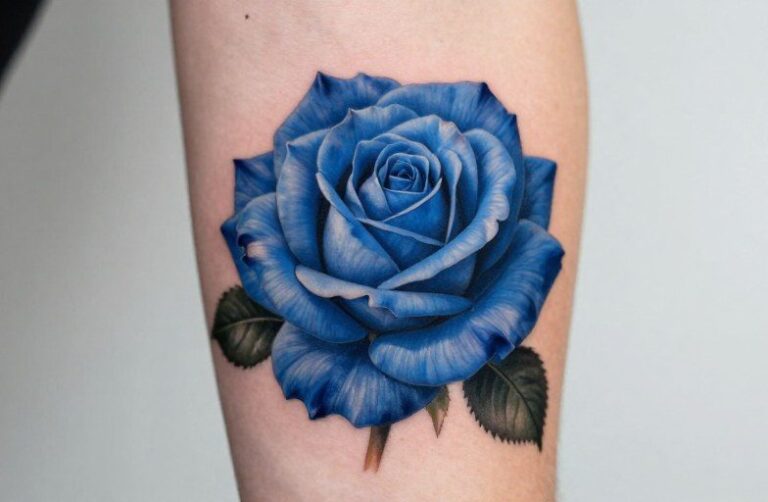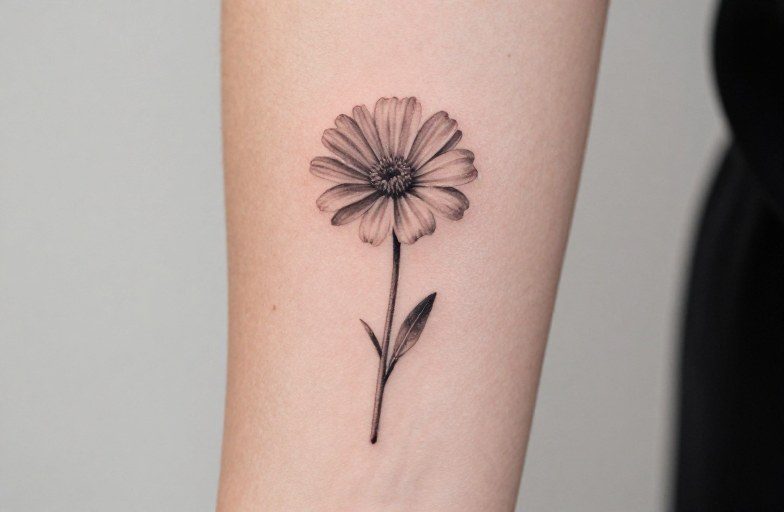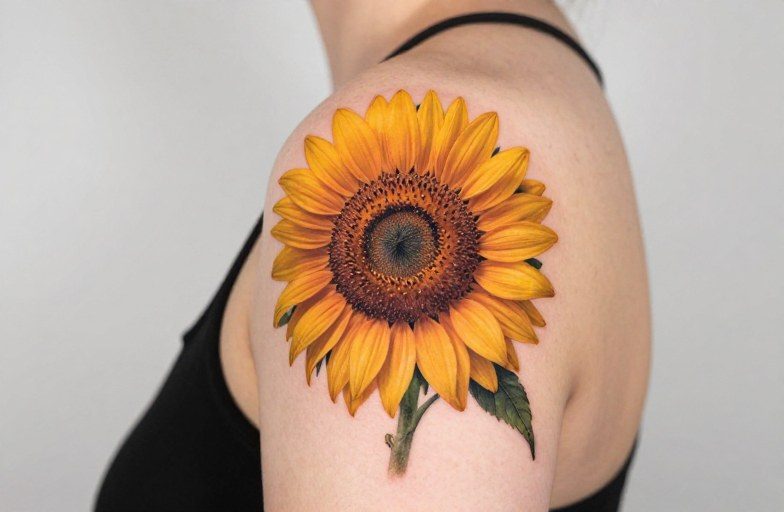
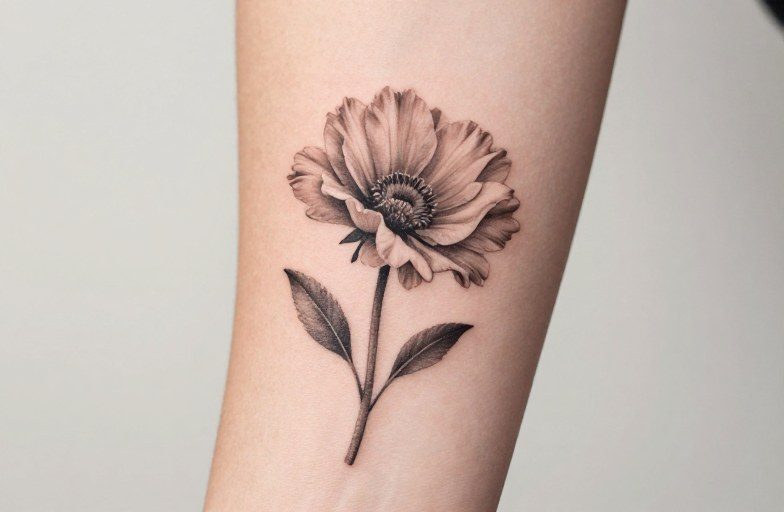
A gentle flower tattoo typically represents softness as a form of strength, the beauty of quiet existence, and an embrace of vulnerability rather than armor. Unlike aggressive or dominant imagery, this motif honors what persists without forcing itself, blooming, withdrawing, returning. People choose it to mark recovery from hardship, a shift toward self-acceptance, or simply an aesthetic preference for delicate, unpretentious art that ages gracefully on skin.
Symbolism & Core Meaning
The Paradox of Fragile Persistence
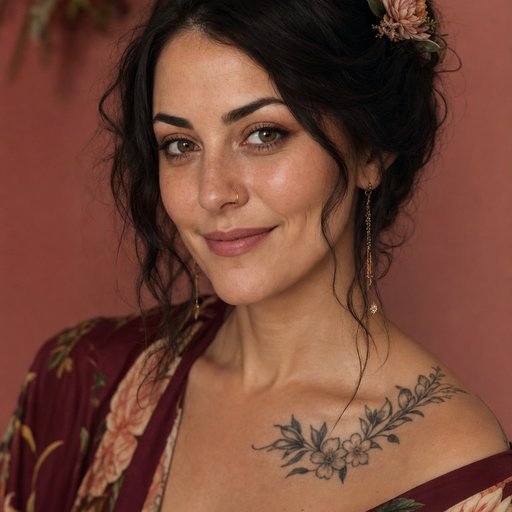
Flowers that read as gentle, lily of the valley, violet, cherry blossom, forget-me-not, soft wildflowers, share a symbolic contradiction. They appear vulnerable yet return seasonally, survive compression, propagate through unnoticed means. A gentle flower tattoo can signal that the wearer has learned to trust their own quiet endurance rather than perform toughness. The meaning tightens with placement: inner forearm suggests personal reminder; behind the ear, intimacy; ribcage, protection of something tender.
Feminine Power Without Performance
This motif frequently reclaims softness from cultural dismissal. Where “feminine” tattoos sometimes lean into overt sensuality or maternal archetypes, the gentle flower occupies a middle space, unapologetically delicate without being decorative for someone else’s gaze. The symbolism here is agency through refusal of hardness. Not weakness, but selected gentleness as discipline.
Design Tips & Pairings
Line Weight and Composition
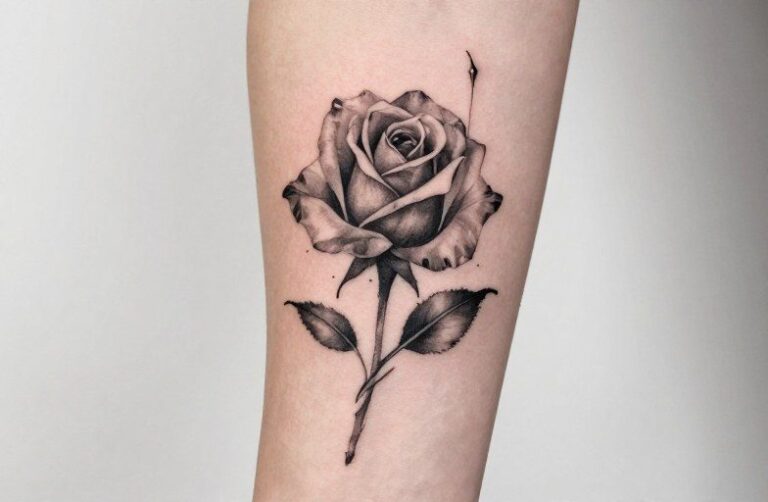
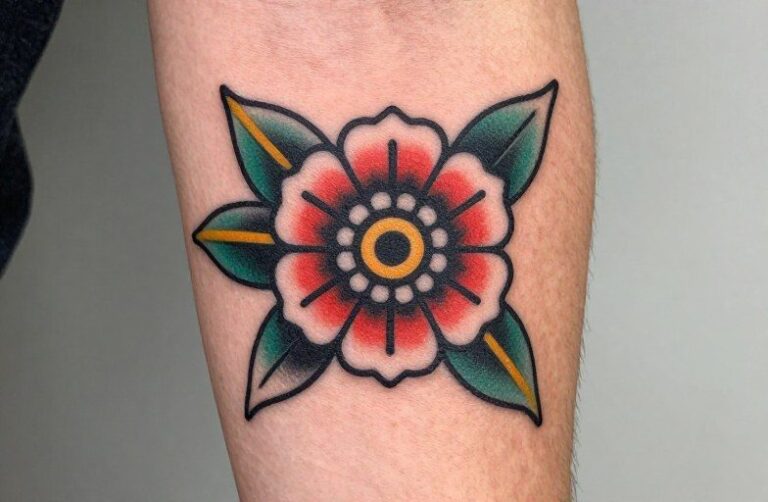
Single needle or fine-line work (3RL or tighter) suits this subject best. Heavy bold lines contradict the concept; they turn gentle flowers into graphic icons rather than living specimens. Consider stem curvature that follows muscle flow, collarbone, shoulder cap, along the iliac crest. Clustered small blooms read as meadow-picked; a single stem with root system suggests deliberate growth from something buried.
What Pairs Well
- Handwritten text in thin script, matching the line weight
- Small insects, bee, moth, ladybug, at scale, not cartoonish
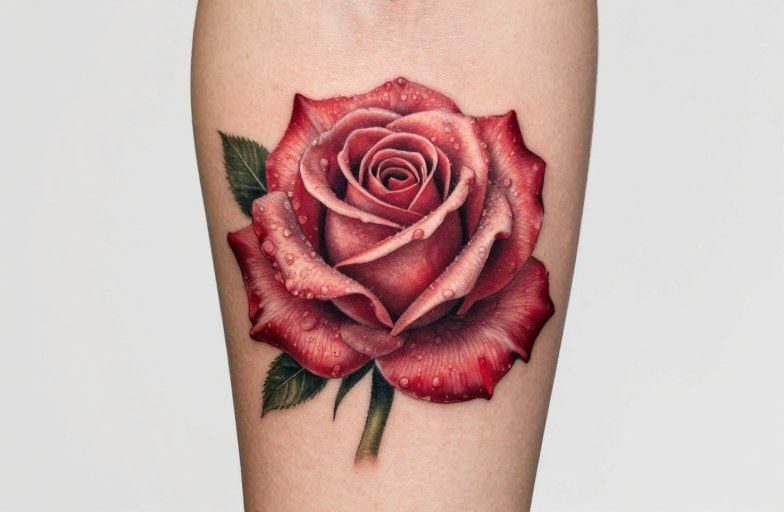
- Dewdrops or rain, rendered as single-needle circles with subtle highlight
- Negative-space leaves, letting skin tone carry the form
- Minimalist vases or ribbon loops, keeping the flower dominant
Avoid heavy geometric frames, thick black ornamental borders, or aggressive juxtaposition (skulls, daggers) unless the specific intent is contrast, and even then, the gentle flower usually loses.
Common Variations & Styles
Botanical illustration style offers scientific accuracy: visible stamens, leaf venation, slight asymmetry from natural growth. This reads as studied appreciation rather than romantic abstraction. Korean minimalist style reduces the flower to essential curves, often with extended negative space and muted color, contemporary, gallery-adjacent.
Watercolor wash, when done well, uses actual pigment diffusion rather than the tattooed imitation of splatter. The gentle flower in watercolor needs a structural anchor, fine line stem, defined center, so the color doesn’t dissolve into meaningless blur over years. Traditional Japanese approaches (though less common for explicitly “gentle” subjects) can soften through hikae composition, letting the flower breathe within larger negative space.
Pressed-flower style, directly referencing herbarium specimens, has gained traction. Flattened perspective, visible stem tape, slight browning at edges, this carries nostalgia, preservation, the act of keeping something ephemeral. It ages distinctly: the flat color holds, but the “browning” must be carefully considered against how warm tones (yellows, oranges) fade faster than cool.
Mythology & Folklore
European and East Asian Threads
The lily of the valley is often linked to Norse mythology as the flower of Ostara, though this connection is more revivalist than ancient. Some trace it to medieval Christian lore where the flower sprang from Eve’s tears upon exile from Eden, apocryphal, but culturally persistent. Cherry blossom carries clearer documented symbolism in Japanese tradition: mono no aware, the pathos of things, beauty inseparable from transience. For a gentle flower tattoo, this layers mortality into softness, not tragic, but honest.
Floriography and Secret Language
Victorian flower language assigned specific meanings: violet for modesty, forget-me-not for faithful love, white heather for protection. A tattoo drawing on this tradition can encode private communication, chosen flower, chosen meaning, legible only to those who know the code or the wearer who explains. The tattoo becomes gentle in method too: understated, requiring closeness to read.
Religious & Spiritual Angles
Christian iconography uses the lily for Mary’s purity, the rose for the Virgin, the passion flower for Christ’s crucifixion. A gentle flower tattoo in this context typically selects the quieter Marian symbols, lily of the valley, sometimes called “Our Lady’s Tears”, rather than triumphant rose windows. The spirituality here is contemplative, not declarative.
Buddhist and Hindu contexts favor the lotus, though lotus tattoos often read as strength-through-adversity rather than gentleness specifically. For a softer interpretation, consider the utpala (blue lotus) or the less common water lily, which lacks the lotus’s dramatic emergence-from-mud narrative. The gentle flower in spiritual practice suggests receptive meditation rather than active striving, being present, not becoming.
Contemporary spiritual-but-not-religious wearers often choose gentle flowers to mark earth-based practice, seasonal observation, or simply alignment with natural cycles rather than human urgency. The tattoo becomes a small anchor to slower time.
Color vs Black and Grey
How Each Ages
Color gentle flower tattoos, soft pinks, lavender, pale yellow, look exquisite fresh. The reality: these light pigments fade toward skin tone within 5-10 years, depending on sun exposure and skin chemistry. What remains is the outline and any darker values. A pink cherry blossom becomes a ghost flower unless the design builds in contrast: darker centers, stems in black or deep green, color as enhancement rather than carrier of form.
Black and grey gentleness relies entirely on subtle value shifts. The risk is muddiness: too many similar greys, and the flower becomes indistinct blob. Successful pieces use whip shading for petal softness, stipple for texture variation, and strategic skin-breaks for highlight. Black and grey ages more predictably but demands more technical precision from the artist.
Muted Color as Compromise
Dusty rose, sage green, slate blue, colors with grey built in, offer middle ground. They read as gentle without the vulnerability of pure pastels. These tones shift with age toward softer versions of themselves rather than disappearing. Consider this for larger pieces where reworking would be complex; reserve bright pastels for small tattoos where future touch-ups are trivial.
What to Remember
The gentle flower tattoo succeeds when the technical execution matches the concept. Delicate does not mean poorly done. Fine lines require an artist who understands how skin holds detail over time, where to place slightly heavier anchors, how to let negative space do the work. Research portfolios for healed results, not just fresh photography.
Meaning crystallizes through specificity. “Flower” is generic; lily of the valley blooming in May, picked by your grandmother, pressed in a book you still own, that specificity carries weight the tattoo can hold. The gentleness becomes real when it connects to actual gentleness you’ve known or chosen.
Finally, this motif resists trend cycles better than most. Where aggressive styles date themselves, quiet botanical work maintains. The flower that was gentle in 1995 remains gentle now. The commitment is to a quality of presence, not a moment of fashion.
Frequently Asked Questions
What flower works best for a gentle flower tattoo if I want something less common than cherry blossoms?
Consider lily of the valley, bluebells, windflowers, or meadow cranesbill. These carry similar softness without the visual saturation of cherry blossoms in tattoo culture. Your artist can adapt reference photos to emphasize delicate stem curvature and small scale.
Do gentle flower tattoos hurt more because of the fine-line work?
Pain depends on placement and your sensitivity, not line weight specifically. Single-needle work sometimes requires more passes to build tone, which can extend session time. Ribs, feet, and inner arm generally hurt more than outer arm or thigh regardless of style.
How do I keep a pastel-colored gentle flower from fading to nothing?
Build the design with darker values at the center and stem so structure remains as color softens. Use SPF 30+ consistently once healed, and plan for a refresh session at 5-7 years. Your artist can pre-design where color will naturally retreat.
Can a gentle flower tattoo cover older, heavier work?
Generally no, light, delicate imagery cannot conceal dense black or saturated color. The reverse works: a gentle flower can be surrounded or integrated with existing work through transitional elements like soft foliage or atmospheric shading. Consult specifically for your existing piece.